If you've ever driven through Texas, you know Buc-ee's isn't just a gas station — it's a cultural institution. Clean bathrooms, brisket sandwiches, and enough parking to host a county fair. But for EV drivers, the burning question is practical: does Buc-ee's have Tesla chargers? The short answer is yes — but the full picture involves a rapidly expanding network of Superchargers, CCS-compatible stations, and a lot of nuance about what "charging at Buc-ee's" actually looks like in 2026.
This guide answers the Buc-ee's question in detail, then zooms out to cover everything you need to know about EV charging at home and on the road — from Level 2 install costs to DC fast-charging speeds, connector compatibility, and real cost-per-mile math.
Buc-ee's and Tesla Superchargers: What's Actually There in 2026
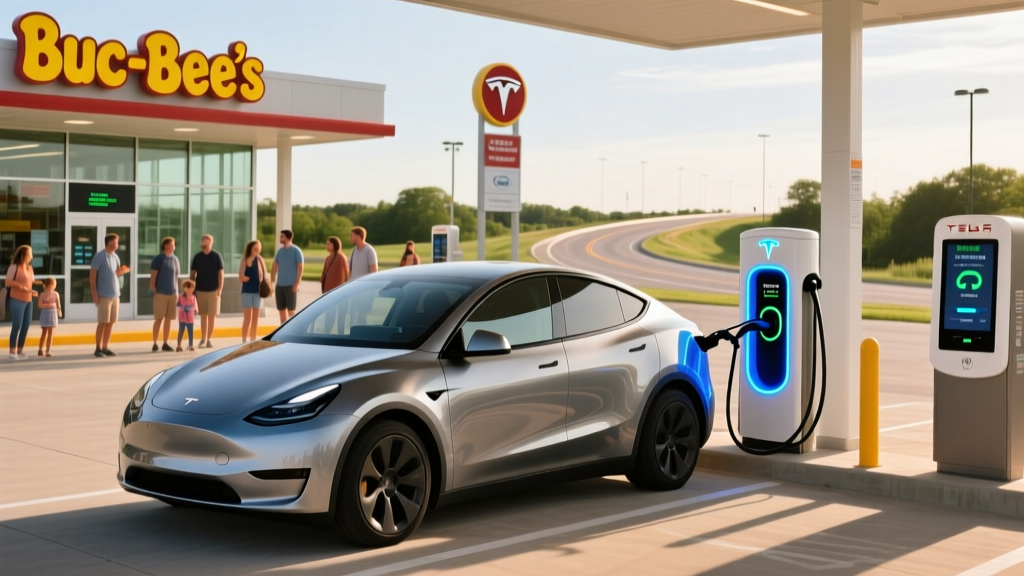
Tesla began installing Supercharger stalls at select Buc-ee's locations starting in 2022, and the partnership has expanded significantly. As of early 2026, over 35 Buc-ee's locations across Texas, Alabama, Georgia, Florida, Tennessee, and the Carolinas feature Tesla Superchargers, typically with 8 to 20 V3 or V4 stalls per site. V3 stalls deliver up to 250 kW peak power; V4 stalls, now rolling out at newer travel-center locations, can deliver up to 350 kW to compatible vehicles.
Not every Buc-ee's has chargers, though. The largest locations — New Braunfels, Bastrop, and Richmond on I-10 — were among the first to get Superchargers. Smaller or urban-adjacent Buc-ee's locations may not have them yet. The best way to confirm is through the Tesla app or in-car navigation, which shows real-time stall availability.
Charging Levels Explained: Speeds, Power, and Range Added
Before diving into home setup or public networks, you need to understand the three charging levels. The critical distinction: kW (kilowatts) measures power — how fast energy flows into your battery. kWh (kilowatt-hours) measures energy — the total capacity of your battery. Think of kW as the width of a hose and kWh as the size of the bucket.
| Level | Power (kW) | Voltage | Miles of Range Added per Hour | Typical Use Case |
|---|---|---|---|---|
| Level 1 | 1.0–1.9 kW | 120V AC | 3–5 mi/hr | Overnight top-off, PHEV charging |
| Level 2 | 3.3–19.2 kW | 240V AC | 12–75 mi/hr | Home daily charging, workplace |
| DC Fast Charging | 50–350 kW | 200–800V DC | 150–1,000+ mi/hr (peak) | Road trips, quick top-ups |
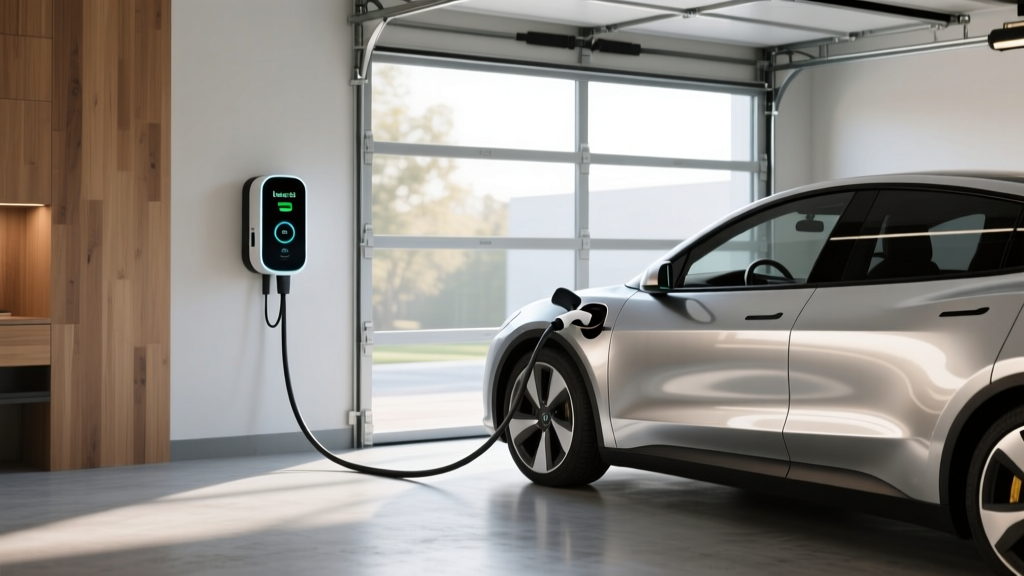
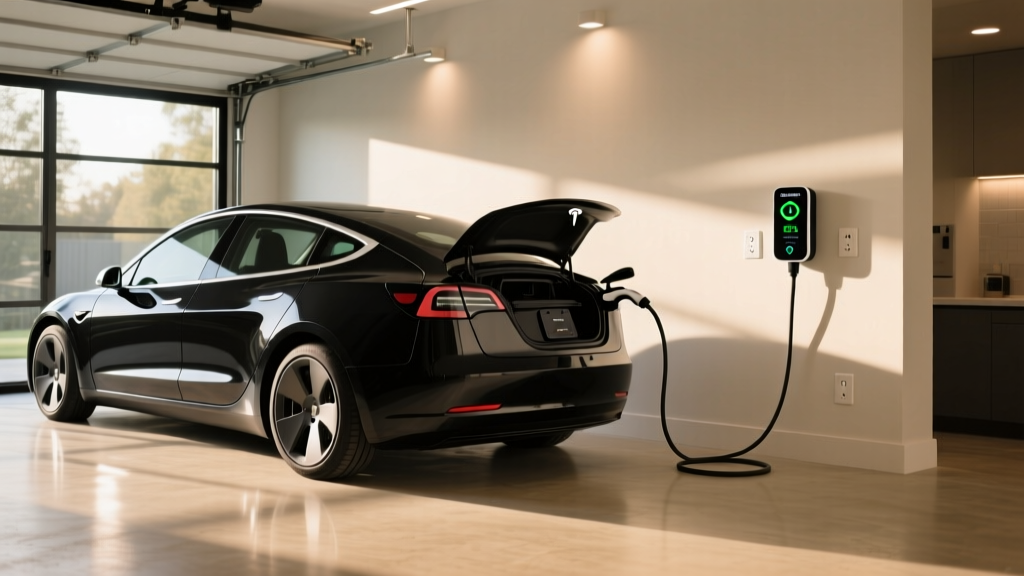
A practical example: a Tesla Model Y Long Range with a 75 kWh usable battery charging at a 250 kW V3 Supercharger at Buc-ee's will add roughly 200 miles of range in about 15 minutes (10–80% State of Charge). That same vehicle on a 48-amp Level 2 home charger (11.5 kW) needs about 7 hours for a full 10–100% charge — perfect for overnight.
How Much Does It Cost to Install a Home EV Charger?
Home Level 2 charging is where most EV owners do 80–90% of their charging. But installation costs vary enormously depending on your electrical panel, the distance from panel to charger location, and local permit requirements.
Here's a realistic breakdown for a typical 48-amp Level 2 wall connector installation:
| Component | Typical Range | Notes |
|---|---|---|
| Level 2 charger (hardware) | $300–$750 | 48A Wi-Fi-enabled models; basic units from $200 |
| Electrician labor | $400–$1,500 | Depends on run length, conduit, wall type |
| Permit & inspection | $50–$250 | Required in most jurisdictions; varies by city |
| Electrical panel upgrade (if needed) | $1,500–$4,000 | Older 100A panels often need upgrade to 200A |
| Total (no panel upgrade) | $750–$2,500 | Most modern homes with 200A service |
| Total (with panel upgrade) | $2,250–$6,500 | Homes built before ~1990 or with heavy existing loads |
Electrical Requirements for Level 2 Charging
A 48-amp Level 2 charger requires a dedicated 60-amp, 240-volt circuit (NEC code requires circuits be rated at 125% of continuous load — so 48A continuous draw needs a 60A breaker). The wire is typically 6 AWG copper for runs under 50 feet; longer runs may require 4 AWG to prevent voltage drop.
If your home has a 100-amp main panel and you're already running central A/C, an electric dryer, and an electric range, adding a 60-amp EV circuit may exceed your panel's capacity. A licensed electrician will perform a load calculation to determine if an upgrade is needed. Don't skip this — undersized panels are a fire hazard.
Safety and Code Considerations
- Dedicated circuit: Your EV charger must be on its own breaker — no sharing with other appliances.
- GFCI protection: NEC 2020 and later require GFCI protection for outdoor receptacles; hardwired chargers may be exempt in some jurisdictions, but many electricians include it anyway.
- Outdoor rating: If mounting outside, ensure the charger is NEMA 4-rated (weatherproof). Most premium wall connectors are rated for indoor/outdoor use.
- Permit: Most municipalities require an electrical permit for new 240V circuits. Skipping the permit can void homeowner's insurance coverage for electrical fires.
Which Connector Is Compatible with My EV?
The connector landscape has consolidated significantly since 2024, when Ford and GM adopted the NACS (Tesla) standard. Here's where things stand for 2026 model-year vehicles:
| Connector | Vehicles Using It (2026) | Adapter Needed? |
|---|---|---|
| NACS (Tesla) | Tesla (all), Ford, GM, Rivian, Volvo, Polestar, Mercedes, Fisker, Lucid (2025+) | None for native NACS vehicles; CCS vehicles need CCS-to-NACS adapter (~$200) |
| CCS1 | Hyundai, Kia, BMW, VW, Stellantis, legacy 2023–2024 models | NACS-to-CCS adapter needed for Tesla Superchargers |
| CHAdeMO | Nissan Leaf (legacy only — discontinued for 2026) | CHAdeMO-to-NACS adapters available but limited DCFC support |
If you're pulling into a Buc-ee's Supercharger station in a Ford F-150 Lightning or a Rivian R1T (both NACS-native as of 2025), you plug in directly. If you're driving a 2024 Hyundai Ioniq 5 with CCS1, you'll need a Tesla-approved CCS-to-NACS adapter — available from Tesla's shop or third-party suppliers like Lectron or A2Z.
Charging Cost Per Mile: EV vs. Gas
This is where EV ownership economics get compelling — but the numbers depend heavily on where and when you charge.
| Scenario | $/kWh | Cost per Mile* | Annual Cost (12,000 mi) |
|---|---|---|---|
| Home, off-peak utility rate | $0.08–$0.12 | $0.024–$0.036 | $288–$432 |
| Home, standard rate | $0.13–$0.18 | $0.039–$0.054 | $468–$648 |
| Public Level 2 (ChargePoint, etc.) | $0.20–$0.35 | $0.06–$0.105 | $720–$1,260 |
| DC Fast (Supercharger / EA) | $0.30–$0.55 | $0.09–$0.165 | $1,080–$1,980 |
| Gas car (28 MPG, $3.20/gal) | — | $0.114 | $1,368 |
*Based on a vehicle consuming 3.0 kWh per mile (typical for a midsize crossover like the Tesla Model Y or Hyundai Ioniq 5). Efficiency varies: a Ford F-150 Lightning consumes ~4.5–5.0 kWh/mi, raising per-mile costs proportionally.
The takeaway: home charging at off-peak rates is 3–5x cheaper per mile than gasoline. Even exclusive DC fast charging is roughly cost-competitive with gas at 2026 fuel prices. The savings compound over ownership — over 5 years and 60,000 miles, home-charging an EV saves roughly $4,000–$5,500 compared to a 28 MPG gas car.
Recommended Home Chargers for 2026
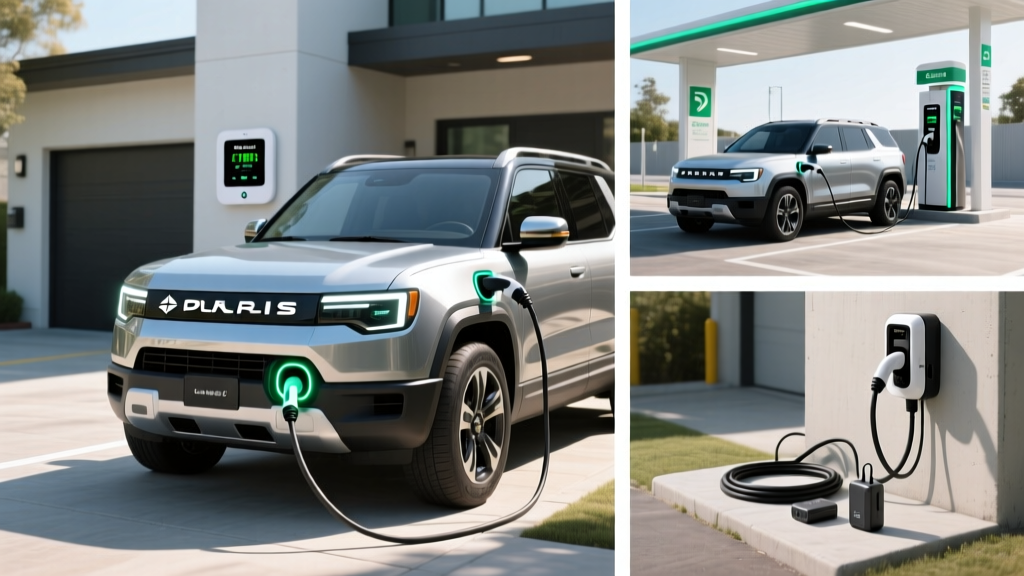
Not all Level 2 chargers are equal. Here are three proven units across different budgets, all hardwire-capable and Wi-Fi-enabled for scheduling and energy monitoring:
Tesla Wall Connector (Gen 4)
- Power: 11.5 kW (48A) on 60A circuit
- Connector: NACS native; J1772 adapter included
- Cable length: 24 ft
- Smart features: Wi-Fi scheduling, OTA updates, load sharing (pair up to 6 units on one circuit), Tesla app integration
- Price: ~$450
- Best for: Tesla owners and NACS-native vehicle buyers
ChargePoint Home Flex
- Power: Up to 12 kW (50A) on 60A circuit; adjustable amperage down to 16A for smaller circuits
- Connector: J1772 (CCS-compatible) or NACS version available
- Cable length: 23 ft
- Smart features: Wi-Fi, Alexa integration, flexible amperage dial, detailed energy tracking in app
- Price: ~$550–$700
- Best for: Multi-EV households, flexible circuit sizing
Emporia Vue Level 2 Charger
- Power: 11.5 kW (48A) on 60A circuit
- Connector: J1772 (NACS adapter available separately)
- Cable length: 24 ft
- Smart features: Integrates with Emporia Vue energy monitor for whole-home load tracking, solar-aware charging, TOU scheduling
- Price: ~$350–$400
- Best for: Budget-conscious buyers, solar-panel owners
For homes with solar panels, the Emporia or ChargePoint offer solar-excess charging modes that use only surplus solar generation — effectively making your driving free and grid-independent during sunny months.
Public Charging Networks Beyond Buc-ee's
While Buc-ee's Superchargers are excellent for Texas and Southeast road trips, a comprehensive public-charging strategy involves multiple networks:
- Tesla Supercharger network: 7,000+ stalls in the US, now open to NACS-equipped non-Tesla vehicles. Reliability consistently rated highest among DC fast networks. Pricing averages $0.30–$0.45/kWh depending on location and time of day.
- Electrify America: Largest non-Tesla DC fast network, with 4,000+ stalls. Supports CCS1 and some NACS. Pricing: $0.31–$0.52/kWh; Pass+ subscription ($4/month) reduces rates by ~25%.
- EVgo: 3,500+ stalls, often in urban and suburban retail locations. Pricing: $0.30–$0.48/kWh.
- ChargePoint: Dominates Level 2 public charging (workplaces, shopping centers, hotels). DC fast presence growing. Pricing varies by host.
Pro tip for road trips: use A Better Route Planner (ABRP) or your vehicle's native route planner to pre-condition the battery before arriving at a DC fast charger. Battery preconditioning warms the pack to optimal temperature, which can reduce 10–80% charge time by 20–30% in cold weather.
Charging Time Examples for Common EV Battery Sizes
How long does it actually take to charge? Here are 10–80% DC fast-charge times for popular 2025–2026 EVs, based on manufacturer data and independent testing:
| Vehicle | Battery (kWh usable) | Peak DC Charge Rate | 10–80% Time | EPA Range |
|---|---|---|---|---|
| Tesla Model Y Long Range | 75 kWh (NMC) | 250 kW | ~18 min | 320 mi |
| Hyundai Ioniq 5 (Long Range) | 77.4 kWh (NMC) | 240 kW (800V architecture) | ~18 min | 305 mi |
| Ford F-150 Lightning (Extended) | 131 kWh (NMC) | 150 kW | ~41 min | 320 mi |
| Chevrolet Equinox EV (3RS) | 85 kWh (NMC) | 150 kW | ~28 min | 319 mi |
| Tesla Model 3 Standard Range | 57.5 kWh (LFP) | 170 kW | ~22 min | 272 mi |
Frequently Asked Questions
Does every Buc-ee's have Tesla Superchargers?
No. As of 2026, roughly 35+ Buc-ee's travel centers have Tesla Superchargers, concentrated in Texas, the Southeast, and along major interstate corridors. Always check the Tesla app or your vehicle's navigation before assuming a specific location has chargers. Buc-ee's locations without Superchargers may still have third-party Level 2 chargers in the parking lot.
Can non-Tesla EVs charge at Buc-ee's Superchargers?
Yes — if your vehicle has a NACS charge port (Ford, GM, Rivian, Volvo, and others from 2025 onward) or you carry a Tesla-approved CCS-to-NACS adapter. Tesla's "Magic Dock" built-in adapter is available at select Supercharger stalls, but not all. Check the Tesla app for stall-specific compatibility before relying on it.
How much does it cost to charge at a Buc-ee's Supercharger?
Tesla Supercharger pricing varies by location and time of day but typically ranges from $0.28 to $0.48 per kWh in 2026. For a Model Y Long Range charging from 10–80% (adding ~52 kWh), expect to pay roughly $15–$25 per session. Tesla's off-peak pricing at some locations can drop rates by 20–30%.
What electrical upgrades might I need for a home charger?
If your home has a 200-amp electrical panel with available capacity, you likely need only a new 60-amp double-pole breaker and a wire run to the charger location. Homes with 100-amp panels, heavy existing loads (electric heat, dual A/C units, hot tubs), or panels at capacity will need a service upgrade to 200A — typically $1,500–$4,000 depending on utility requirements and trenching. A licensed electrician's load calculation is the definitive answer. Some utilities offer rebates of $200–$500 for panel upgrades tied to EV adoption.
Is Level 1 charging (120V) practical for a full EV?
Level 1 adds only 3–5 miles of range per hour — roughly 36–60 miles overnight. This works for plug-in hybrids (PHEVs) with small batteries (10–20 kWh) or for BEV owners who drive under 30 miles daily and can top off over multiple nights. For anyone regularly driving 40+ miles per day, Level 2 is effectively mandatory. Source: fueleconomy.gov EV technology guide.
How fast will each charging level add range?
Level 1 (120V): 3–5 miles per hour. Level 2 (240V, 48A): roughly 30–44 miles per hour for a midsize crossover. DC fast charging (150–250 kW): 150–300+ miles in 15–20 minutes, depending on battery size, state of charge, and battery temperature. Remember that DC fast-charging speed tapers significantly above 80% SoC.
Whether you're pulling into Buc-ee's for a brisket sandwich and a 250 kW top-up or wiring a Level 2 charger in your garage, understanding the numbers behind kW, kWh, connectors, and costs is what separates confident EV ownership from frustration. The infrastructure is here — and it's expanding every quarter.