If you've been searching "how much are Dodge Chargers" in 2026, you've likely noticed the lineup has split into two very different camps: the all-electric Charger Daytona and the returning gas-powered Charger with the Hurricane twin-turbo inline-six. Pricing, fueling costs, and ownership economics diverge sharply between them. This guide covers exactly what each model costs to buy, and — for the Daytona EV — what you'll actually spend to charge at home, at public stations, and on DC fast chargers.
Dodge Charger Lineup Pricing: EV Daytona vs. Gas Charger
For the 2026 model year, Dodge offers the Charger in both electric and internal-combustion configurations. The Charger Daytona rides on Stellantis' STLA Large platform with an 800-volt architecture, while the gas Charger uses the 3.0-liter Hurricane twin-turbo I6. Here's where MSRP stands across trims:
| Model | Powertrain | Horsepower | 0-60 mph | Base MSRP |
|---|---|---|---|---|
| Charger Daytona R/T | BEV (AWD) | 496 hp | 4.7 sec | $59,595 |
| Charger Daytona Scat Pack | BEV (AWD) | 670 hp | 3.3 sec | |
| Charger R/T | Gas (Hurricane I6) | 420 hp | 4.4 sec | $51,595 |
| Charger Scat Pack | Gas (Hurricane I6) | 550 hp | 3.9 sec | $58,595 |
The Daytona EV carries a price premium, but that gap narrows when you factor in fuel savings and potential tax incentives. The IRS §30D federal tax credit may apply to the Daytona depending on battery sourcing, MSRP caps, and buyer income limits — consult a tax professional for your specific eligibility. The gas Charger does not qualify for §30D.
Charging Levels Explained: Speeds in kW and Miles Per Hour
Before calculating what it costs to fuel a Charger Daytona, you need to understand the three charging levels. The critical distinction: kW (kilowatts) measures power — how fast energy flows into the battery. kWh (kilowatt-hours) measures energy capacity — how much the battery holds. Think of kW as the width of the hose and kWh as the size of the bucket.
| Level | Voltage | Max Power (kW) | Miles of Range Added Per Hour | Best For |
|---|---|---|---|---|
| Level 1 | 120V AC | 1.4–1.9 kW | 3–5 mi/hr | Overnight trickle; PHEVs |
| Level 2 | 240V AC | 7.2–19.2 kW | 20–65 mi/hr | Daily home/workplace charging |
| DC Fast Charge | 400–800V DC | 50–350+ kW | 150–600+ mi/hr (peak) | Road trips; rapid top-ups |
The Charger Daytona's 800V architecture enables peak DC fast charging at up to ~260 kW, which on a compatible 350 kW charger (like Electrify America's ultra-fast stations) can take the battery from 10–80% state of charge in roughly 22–27 minutes under ideal thermal conditions. However, real-world charge curves taper significantly above 80% — expect a full 10–100% session to take closer to 40 minutes. The onboard AC charger supports up to 11.5 kW on Level 2, meaning a full overnight charge from near-empty takes approximately 9–10 hours on a 48A circuit.
How Much Does It Cost to Install a Home EV Charger?
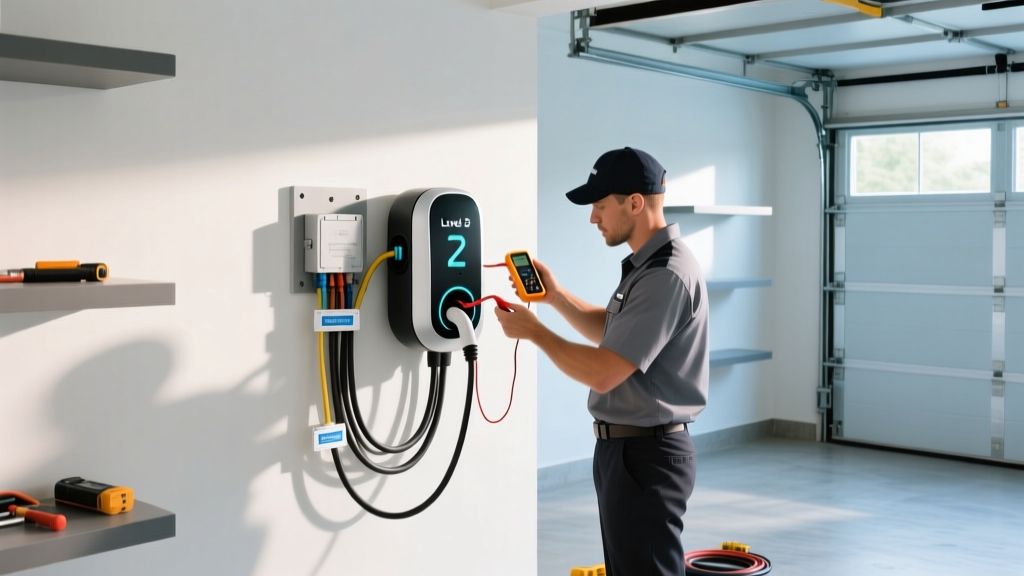
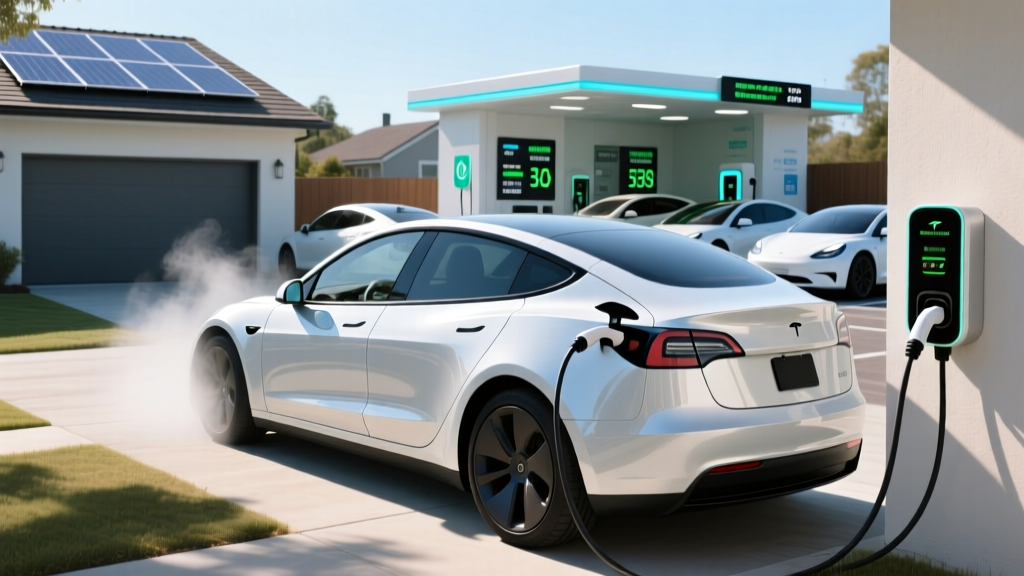
For Charger Daytona owners, Level 2 home charging is the economic sweet spot. Most daily driving can be replenished overnight at the lowest electricity rates. But installation costs vary dramatically based on your home's electrical infrastructure.
| Component | Typical Cost Range | Notes |
|---|---|---|
| Level 2 Charger Unit | $400–$750 | Hardwired 48A units; smart WiFi models at upper end |
| Electrician Labor | $500–$2,000 | Depends on run length from panel to garage |
| Electrical Permit | $50–$250 | Varies by municipality |
| Panel Upgrade (if needed) | $1,500–$3,500 | Required if existing panel is 100A or has no spare slots |
| Total (no panel upgrade) | $950–$3,000 | Most homes with 200A service |
| Total (with panel upgrade) | $2,450–$6,500 | Older homes with 100A service |
The panel upgrade gotcha: A Level 2 charger on a 60A circuit (to deliver 48A continuous) draws substantial load. Homes built before the 1990s often have 100A panels that simply cannot accommodate a 48A EV circuit alongside existing loads like HVAC, electric range, and dryer. A licensed electrician will perform a load calculation per NEC Article 220 to determine if your panel has capacity. Don't skip this — an overloaded panel is a fire risk.
Charging Cost Per Mile: EV vs. Gas Charger
This is where the Daytona EV's ownership economics shift dramatically. Electricity costs vary by region, time of use, and whether you're charging at home or on the road. Here's a realistic breakdown using the Daytona's estimated efficiency of roughly 2.8–3.0 kWh per mile (approximately 100–107 MPGe combined, per fueleconomy.gov data for comparable STLA Large EVs):
| Scenario | Rate / Price | Cost Per Mile |
|---|---|---|
| Home Level 2 (off-peak utility rate) | $0.09/kWh | ~$0.027/mi |
| Home Level 2 (national avg. residential) | $0.17/kWh | ~$0.051/mi |
| Public Level 2 (ChargePoint, EVgo) | $0.25–$0.39/kWh | ~$0.075–$0.117/mi |
| DC Fast Charge (Electrify America) | $0.43–$0.56/kWh | ~$0.129–$0.168/mi |
| Gas Charger R/T (20 MPG combined, $3.40/gal) | $3.40/gallon | ~$0.170/mi |
| Gas Charger Scat Pack (17 MPG combined, $3.40/gal) | $3.40/gallon | ~$0.200/mi |
At home off-peak rates, the Daytona costs roughly 85% less per mile than the gas Charger R/T. Even at expensive DC fast-charging stations, the EV still edges out the gas Scat Pack on a per-mile basis. Over 15,000 miles per year, a home-charged Daytona at $0.12/kWh national average saves approximately $1,600–$2,100 annually versus fueling the gas R/T.
Connector Compatibility: What Plug Does the Charger Daytona Use?
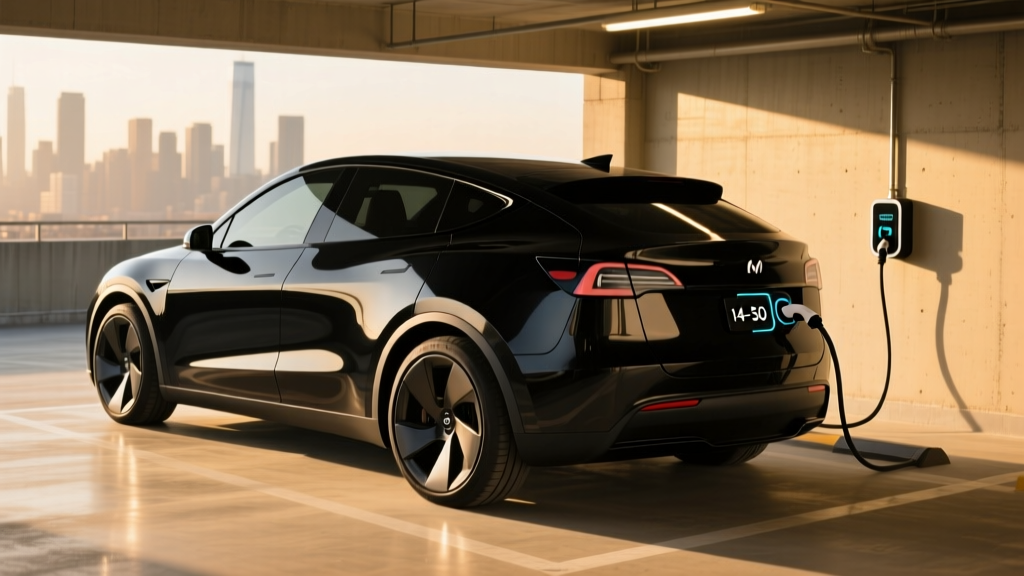
The 2026 Charger Daytona ships with the NACS (North American Charging Standard) connector — the Tesla-derived plug now adopted by most major automakers. This is a significant advantage for public charging access, as it grants native compatibility with the Tesla Supercharger network (17,000+ stalls in North America) without an adapter.
| Connector Type | Native Support? | Network Access | Adapter Needed? |
|---|---|---|---|
| NACS (J3400) | Yes — factory-equipped | Tesla Supercharger, Electrify America (NACS stalls), Rivian Adventure Network | No |
| CCS1 (Combo) | No (legacy standard) | Electrify America (CCS stalls), EVgo, ChargePoint DC | Yes — NACS-to-CCS adapter (~$150–$200) |
| CHAdeMO | No | Limited; mostly legacy Nissan Leaf infrastructure | Not recommended — adapters unreliable for high power |
| J1772 (Level 2 AC) | Yes — with included adapter | All public Level 2 stations | NACS-to-J1772 adapter (usually included) |
If you live in an area where CCS chargers still outnumber NACS stalls — common in parts of the Southeast and rural Midwest — budget for a NACS-to-CCS adapter. Brands like Lectron and A2Z offer certified adapters rated for up to 250 kW DC. Always check the adapter's maximum kW rating before purchasing; a 50 kW-rated adapter will bottleneck the Daytona's ~260 kW peak capability.
Recommended Home Chargers for the Charger Daytona
Not all Level 2 chargers are created equal. The Daytona's 11.5 kW onboard charger means you need at minimum a 48A unit to unlock its full Level 2 speed. Here are three proven options across price tiers:
Emporia Vue Level 2 Charger
- Power Output: 48A / 11.5 kW (240V)
- Cable Length: 24 ft
- Connector: J1772 (NACS adapter included)
- Smart Features: WiFi scheduling, solar integration, energy monitoring via Emporia app
- Price: ~$399
- Best For: Budget-conscious buyers who want smart scheduling for off-peak rates
ChargePoint Home Flex
- Power Output: Up to 50A / 12 kW (240V, adjustable)
- Cable Length: 23 ft
- Connector: J1772 or NACS (select at purchase)
- Smart Features: Alexa integration, ChargePoint app scheduling, load sharing with second unit
- Price: ~$649 (NACS version)
- Best For: Two-EV households (load-sharing mode lets two units share one 60A circuit)
Tesla Wall Connector
- Power Output: 48A / 11.5 kW (240V)
- Cable Length: 24 ft
- Connector: NACS native
- Smart Features: WiFi firmware updates, power sharing, Tesla app integration
- Price: ~$450
- Best For: NACS-native convenience at a mid-range price; no adapter needed for Daytona
Pro tip: The Tesla Wall Connector is the most cost-effective match for the Daytona's NACS port. At $450 with native NACS, you eliminate the J1772 adapter entirely. Just ensure your electrician installs a NEMA 14-60 receptacle or hardwires the unit to a dedicated 60A breaker.
Safety, Code, and Electrical Requirements
EV charger installation is regulated by the National Electrical Code (NEC) and your local authority having jurisdiction (AHJ). Key requirements for a Charger Daytona home setup:
- Dedicated circuit: The charger must be on its own breaker — no shared circuits with other appliances. A 48A continuous load requires a 60A breaker (NEC requires 125% derating for continuous loads: 48A × 1.25 = 60A).
- GFCI protection: NEC 2023 (and most 2026 local adoptions) requires GFCI protection for all EV charging outlets. Hardwired units often have built-in ground-fault protection; receptacle-based installs need a GFCI breaker.
- Outdoor rating: If your charger is installed outdoors or in an unenclosed carport, the unit must carry a NEMA 4 or NEMA 4X weather rating. All three chargers above meet this standard.
- Wire gauge: A 60A circuit requires 4 AWG copper wire (or 2 AWG aluminum) for typical run lengths. Longer runs may require upsizing to prevent voltage drop.
- Permit and inspection: Virtually all jurisdictions require an electrical permit and post-installation inspection. Skipping this can void home insurance coverage in the event of an electrical fire.
Frequently Asked Questions
How much are Dodge Chargers in 2026?
The 2026 Dodge Charger starts at $51,595 for the gas-powered R/T with the Hurricane twin-turbo I6. The all-electric Charger Daytona R/T starts at $59,595, and the Daytona Scat Pack tops the range at approximately $73,595. Federal tax credits under IRS §30D may reduce the Daytona's effective price by up to $7,500 depending on battery mineral sourcing, your income, and MSRP caps — but eligibility is not guaranteed. Verify current rules with a tax professional.
How fast will each charging level add range to the Daytona?
On Level 1 (120V), expect roughly 3–5 miles of range per hour — essentially useless for a 100 kWh battery unless you drive under 30 miles daily. On Level 2 (240V, 48A), the Daytona gains approximately 35–38 miles per hour, fully replenishing overnight. On DC fast charge at peak ~260 kW, the Daytona can add roughly 150–180 miles in 15 minutes under optimal conditions, though sustained rates taper as the battery fills.
What electrical upgrades might I need for a home charger?
The most common and costly upgrade is a panel replacement from 100A to 200A service, typically required in homes built before 1990. This costs $1,500–$3,500 including the new panel, labor, and utility coordination. Other potential upgrades include adding a sub-panel in the garage ($400–$900), trenching conduit for detached garages ($500–$2,000), and upgrading the meter base if your utility requires it for 200A+ service.
Does the Charger Daytona qualify for the $7,500 federal tax credit?
Possibly, but it depends on several factors that change frequently. Under §30D, the vehicle must meet critical mineral and battery component sourcing thresholds, the buyer's AGI must fall below income caps ($150K single / $300K joint), and the MSRP must not exceed $55,000 for sedans. The Daytona R/T at $59,595 may exceed the sedan MSRP cap — though some configurations classified differently could qualify. The fueleconomy.gov tax credit lookup is the most reliable source for current eligibility. Always verify before purchasing.
How much does DC fast charging cost on a road trip?
At Electrify America's current rates of approximately $0.43–$0.56/kWh (varies by state and membership), a 10–80% session on the Daytona (~70 kWh added) costs roughly $30–$39. That's comparable to filling a gas car with 8–10 gallons. The cost advantage of EVs is strongest when you charge at home — DC fast charging is a convenience premium for road trips, not a daily strategy.
Is the Charger Daytona's real-world range close to the EPA estimate?
The Daytona's EPA-estimated range is approximately 317 miles (R/T) and 260 miles (Scat Pack, due to performance tires and higher consumption). In real-world highway driving at 70–75 mph, expect 260–285 miles from the R/T in mild weather. In cold weather (below 30°F), range can drop 15–25% due to battery chemistry limitations and cabin heating loads — plan for roughly 210–240 miles of usable range in winter highway conditions. Preconditioning the battery before fast charging (using the car's navigation-routed preconditioning) helps recover some of this loss by warming the cells for optimal charge acceptance.