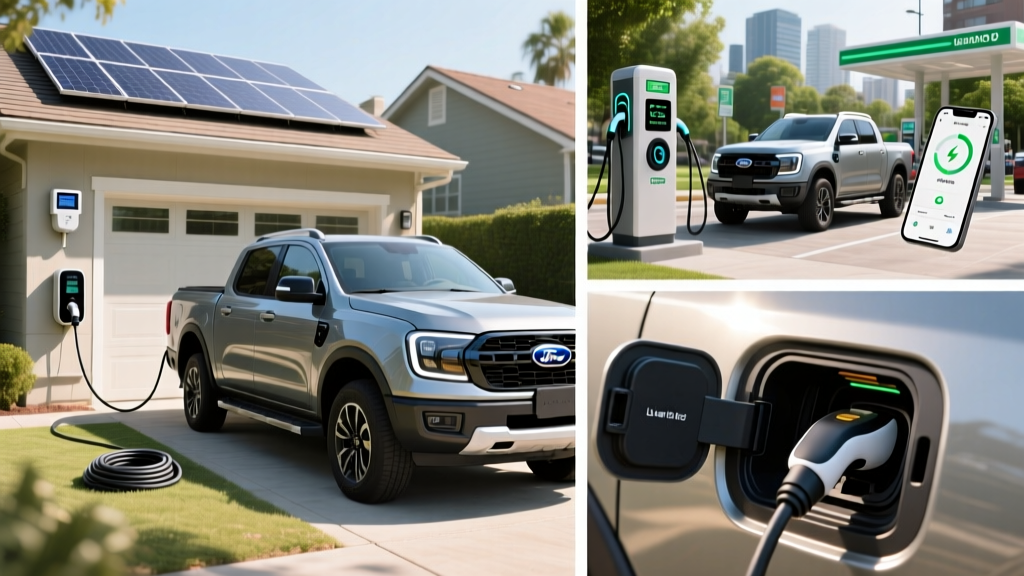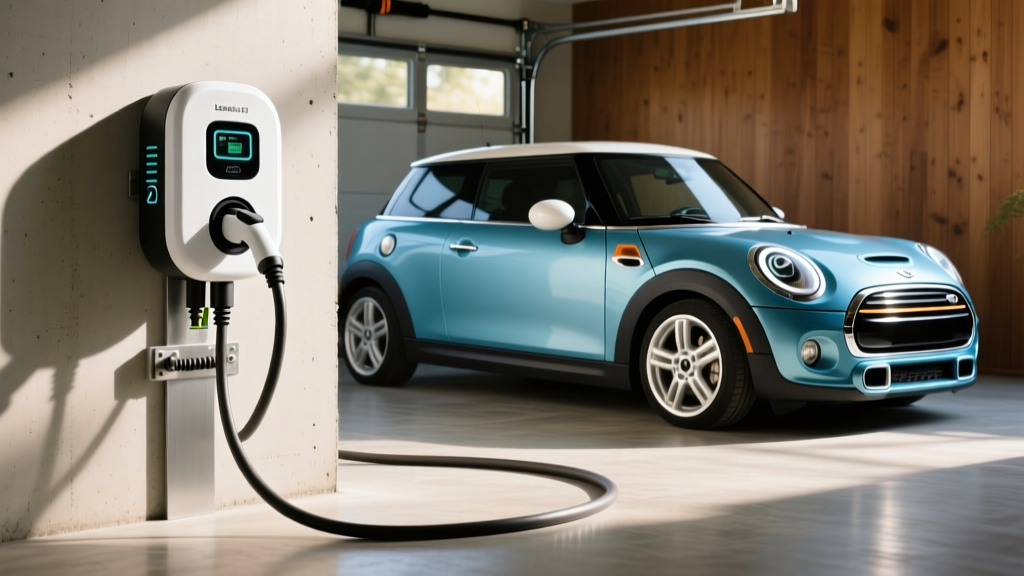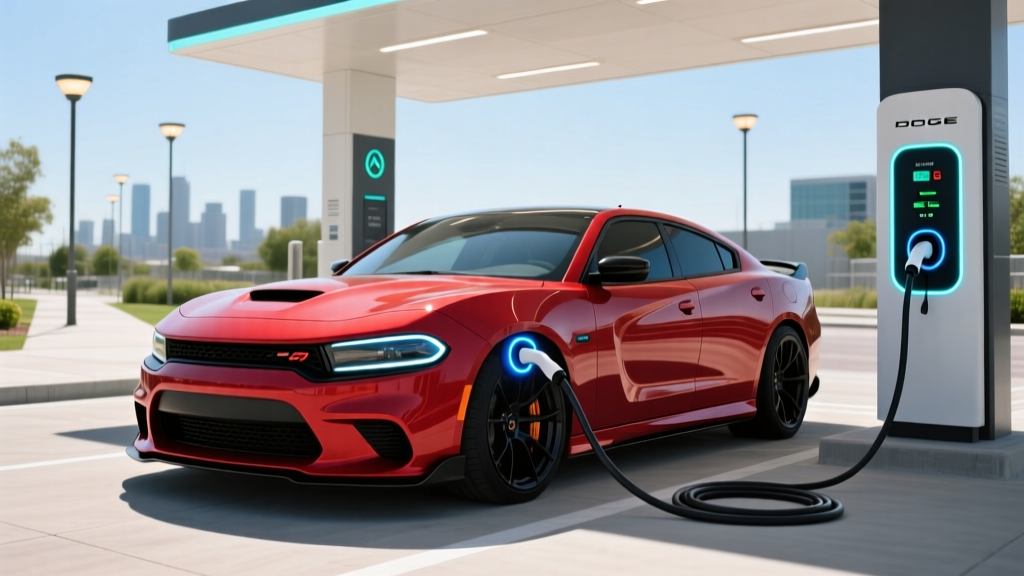
The Dodge Charger Daytona EV channels the spirit of the Hell Cat era — 670 horsepower on the R/T, up to 800 horsepower in the Scat Pack — into a 100.5 kWh battery-electric muscle car. But raw output only matters if you can actually keep the pack fed. This guide breaks down exactly how to charge the Charger Daytona at home and on the road, what electrical upgrades your garage might need, and what you will actually spend per mile compared to the supercharged V-8 it replaces.
Dodge Charger Daytona Charging Specs at a Glance
| Specification | Charger Daytona R/T | Charger Daytona Scat Pack |
|---|---|---|
| Battery Capacity (usable) | 100.5 kWh (NMC) | 100.5 kWh (NMC) |
| EPA Range | ~317 miles (est.) | ~260 miles (est.) |
| Architecture Voltage | 400V nominal | 400V nominal |
| Peak DC Fast Charge Rate | ~260 kW | ~260 kW |
| 10–80% DC Fast Charge Time | ~27 minutes (claimed) | ~27 minutes (claimed) |
| Level 2 AC Onboard Charger | 11.5 kW | 11.5 kW |
| Charge Port / Connector (2025–2026) | CCS1 (NACS adapter available) | CCS1 (NACS adapter available) |
| 0–60 mph | 4.7 sec | 3.3 sec |
| Horsepower | 496–670 hp | 670 hp (Stage upgrades to 800 hp) |
| Battery/Powertrain Warranty | 8 yr / 100,000 mi | 8 yr / 100,000 mi |
| Base MSRP (2025) | ~$59,590 | ~$73,590 |
Real-world range caveat: EPA figures for the Charger Daytona were still being finalized at launch. Expect highway range to drop 15–25% at sustained 75+ mph speeds, and cold-weather (sub-32°F) range loss of 20–30% is typical for NMC packs without aggressive heat-pump preconditioning. The Scat Pack's wider tires and higher output trim range further.
Charging Levels Explained: kW, Miles Per Hour, and What They Mean
The single most common EV confusion is mixing up kW (power — how fast energy flows) with kWh (energy — how much the battery stores). Think of kW as the width of a hose and kWh as the size of the bucket. The Charger Daytona's bucket is 100.5 kWh; the hose width changes depending on your charging level.
| Level | Voltage / Power | Typical kW Output | Miles of Range Added Per Hour | Best For |
|---|---|---|---|---|
| Level 1 | 120V / 12–16A | 1.4–1.9 kW | ~4–6 mi/hr | Overnight trickle, emergencies, PHEVs |
| Level 2 (Home/Public AC) | 240V / 32–48A | 7.7–11.5 kW | ~25–40 mi/hr | Daily home charging, workplace, hotels |
| DC Fast Charging | 400–800V DC | 50–260 kW (peak) | ~150–650 mi/hr (at peak) | Road trips, quick top-ups |
For the Charger Daytona's 100.5 kWh battery, Level 1 is essentially unusable as a primary strategy — a full charge would take 55+ hours. Level 2 at 11.5 kW (the car's onboard charger ceiling) replenishes the pack from empty in roughly 9–10 hours, perfect for overnight. DC fast charging at the claimed 260 kW peak can add ~150 miles in about 10 minutes under ideal conditions, but see the charge-curve section below for the reality of sustained speeds.
Home Charger Installation: Costs, Electrical Requirements, and Panel Gotchas
Installing a Level 2 home charger for a 100+ kWh muscle car is not the same as plugging in a phone. Here is what your electrician will assess:
Electrical Requirements
- Circuit: A dedicated 60A breaker (for a 48A continuous charger) or 50A breaker (for 40A continuous). The Charger Daytona can accept up to 48A / 11.5 kW on Level 2.
- Wire: 6 AWG copper (for 60A) or 8 AWG (for 50A), run in conduit if exposed.
- Outlet vs. hardwired: NEMA 14-50 outlet offers portability; hardwired is often cheaper, safer, and avoids the NEC requirement for a GFCI breaker on receptacles (which can add $150–$300 and nuisance-trip issues).
- Panel capacity: Your main service panel must have physical space for a double-pole breaker AND sufficient ampacity headroom. A 200A panel running near capacity (electric dryer, range, HVAC) may require a panel upgrade to 400A or a load-management device.
Installation Cost Breakdown
| Component | Typical Cost Range | Notes |
|---|---|---|
| Level 2 Charger (Equipment) | $400–$750 | Smart Wi-Fi chargers; basic units from ~$300 |
| Electrician Labor | $500–$2,000 | Depends on run length, conduit, wall type |
| Permit & Inspection | $50–$300 | Varies by municipality; some waive for EV |
| Panel Upgrade (if needed) | $1,500–$4,000 | 200A→400A service upgrade; older homes common |
| Load Management Device (optional) | $200–$600 | Alternatives to full panel upgrade (e.g., Span, Wallbox) |
| Total (no panel upgrade) | $950–$3,050 | Most homes with 200A service and short runs |
| Total (with panel upgrade) | $2,500–$7,000+ | Older homes, long conduit runs, urban installs |
Federal incentive: The IRS Residential Clean Energy Credit (IRC §25D) covers 30% of home charging equipment and installation costs, capped at $1,000 per year through 2032. This is separate from the §30D vehicle purchase credit. Check income and eligibility rules with a tax professional — rules vary by tax year and census-tract eligibility for the alternative fuel vehicle refueling property credit (§30C) which replaced the older EVSE credit for some taxpayers.
Safety and Code Considerations
- Dedicated circuit: Never share the EV charger circuit with other appliances. Continuous 40–48A loads for 8+ hours stress shared wiring.
- GFCI protection: NEC 2020+ requires GFCI on 240V receptacles in garages. Hardwiring the charger avoids this requirement and reduces nuisance trips.
- Outdoor rating: If your charger is outside, ensure NEMA 4 (weather-resistant) rating. Most quality chargers (ChargePoint, Emporia, Wallbox) meet this.
- Cable management: A 25-foot cable is standard; 18-foot cables save cost but limit parking flexibility.
Connector Compatibility: NACS, CCS1, and the Adapter Landscape
The 2025–2026 Dodge Charger Daytona ships with a CCS1 (Combined Charging System) port. However, the North American charging landscape is rapidly shifting to Tesla's NACS (North American Charging Standard), now adopted by nearly every major automaker for 2025+ models.
| Connector | Description | Charger Daytona Compatibility |
|---|---|---|
| CCS1 | Standard for most non-Tesla EVs through 2024; J1772 AC + 2 DC pins | ✅ Native — built-in port |
| NACS (Tesla) | Tesla's connector, now SAE J3400; smaller, lighter | ⚠️ Via adapter (CCS-to-NACS) for Supercharger access |
| CHAdeMO | Legacy DC connector (Nissan Leaf, older Mitsubishi) | ❌ Not compatible; network is sunsetting |
| J1772 | AC-only connector for Level 1/2 | ✅ Native (CCS1 includes J1772 for AC) |
Practical advice: If you plan to use Tesla Superchargers — which now outnumber Electrify America and other CCS networks — invest in a quality CCS-to-NACS adapter ($150–$250 from brands like Lectron or A2Z). Dodge has indicated future model years may ship with native NACS. For now, CCS1 gives you access to Electrify America, EVgo, ChargePoint, and Ionity (abroad), while the adapter unlocks ~20,000+ Supercharger stalls.
Charging Time Reality: The Curve Behind the 260 kW Headline
Dodge claims the Charger Daytona can peak at ~260 kW on a DC fast charger, achieving 10–80% in approximately 27 minutes. That headline number requires context.
How charge curves work: Lithium-ion batteries accept peak power only at low states of charge (SoC). As the pack fills, the battery management system (BMS) tapers current to protect cell health. A 260 kW peak might sustain for only 10–15% of the session before dropping to 150 kW, then 80 kW, then 40 kW as you approach 80%. This is why 10–80% time is the industry-standard metric rather than 0–100%.
Charging time estimates for the 100.5 kWh pack:
- Level 1 (120V, 1.4 kW): 10–80% in ~50 hours — emergency use only.
- Level 2 (240V, 48A / 11.5 kW): 10–80% in ~6.5–7 hours — ideal overnight.
- DC Fast (350 kW station, 260 kW peak): 10–80% in ~27 minutes (manufacturer claim).
- DC Fast (150 kW station): 10–80% in ~40–45 minutes — common at older Electrify America sites.
- DC Fast (50 kW station): 10–80% in ~1 hour 45 minutes — legacy CHAdeMO/CCS sites.
Preconditioning matters: The Charger Daytona's thermal management system can warm the battery before a fast-charge session, improving charge acceptance in cold weather. Always navigate to a DC charger using the car's built-in navigation (if equipped with route preconditioning) or manually precondition via the app before arriving at the station.
Cost Per Mile: Charging the Charger Daytona vs. Fueling a Hell Cat
The last supercharged 6.2L Hell Cat V-8 Charger returned roughly 15 MPG combined. At $3.50/gallon, that is $0.233/mile. How does the electric Charger Daytona compare?
| Scenario | Rate | Efficiency | Cost Per Mile |
|---|---|---|---|
| Home Level 2 (off-peak utility rate) | $0.12/kWh | ~2.5 kWh/mi (est.) | $0.030 |
| Home Level 2 (avg. US residential) | $0.17/kWh | ~2.5 kWh/mi | $0.043 |
| Public Level 2 (ChargePoint, EVgo) | $0.25–$0.39/kWh | ~2.5 kWh/mi | $0.063–$0.098 |
| DC Fast (Electrify America, EA Pass) | $0.43–$0.56/kWh | ~2.5 kWh/mi | $0.108–$0.140 |
| DC Fast (Tesla Supercharger, w/ adapter) | $0.28–$0.40/kWh | ~2.5 kWh/mi | $0.070–$0.100 |
| Hell Cat V-8 (15 MPG, $3.50/gal) | — | 15 MPG | $0.233 |
Even at the most expensive public DC fast-charging rates, the Charger Daytona costs roughly half per mile compared to the Hell Cat. At home off-peak rates, the savings are 85%+. Over 15,000 miles/year, home charging saves approximately $3,000 annually versus the supercharged V-8.
Efficiency note: The Charger Daytona is a heavy, powerful muscle car (~5,800+ lbs). Expect efficiency around 2.3–2.8 kWh/mile depending on driving style, temperature, and tire choice. Aggressive driving will push this higher, reducing range and increasing cost per mile.
Recommended Home Chargers for the Charger Daytona
With an 11.5 kW onboard charger, you want a Level 2 unit that can deliver 48A continuous on a 60A circuit. Here are proven options as of 2025–2026:
ChargePoint Home Flex
- Power: Up to 11.5 kW (48A) on 60A circuit; configurable down to 16A
- Connector: J1772 (CCS1 compatible for AC)
- Cable Length: 23 ft
- Smart Features: Wi-Fi, app scheduling, energy tracking, Alexa/Google
- Price: ~$550–$700
- Best For: Most EV owners; flexible amperage for older panels
Emporia Vue / Emporia Level 2 Charger
- Power: Up to 11.5 kW (48A)
- Connector: J1772
- Cable Length: 24 ft
- Smart Features: Wi-Fi, real-time energy monitoring, integrates with Emporia Vue panel monitor
- Price: ~$400–$500
- Best For: Budget-conscious buyers who want energy data
Wallbox Pulsar Plus
- Power: Up to 11.5 kW (48A)
- Connector: J1772
- Cable Length: 25 ft
- Smart Features: Wi-Fi + Bluetooth, Power Sharing (two chargers on one circuit), Eco mode
- Price: ~$550–$650
- Best For: Two-EV households; compact form factor
Grizzl-E Smart
- Power: Up to 10 kW (40A) on 50A circuit
- Connector: J1772
- Cable Length: 24 ft
- Smart Features: OCPP-compatible, adjustable amperage, extreme cold-rated (-40°C)
- Price: ~$450–$550
- Best For: Cold climates; Canadian-built durability
Note: The Grizzl-E tops out at 40A / 10 kW, slightly below the Charger Daytona's 11.5 kW ceiling. You will still charge overnight comfortably, but you leave ~1.5 kW on the table. For maximum speed, choose the ChargePoint or Wallbox at 48A.
Frequently Asked Questions
How much does it cost to install a home EV charger for the Charger Daytona?
Expect $950–$3,050 for a standard installation (equipment + electrician + permit) if your 200A panel has capacity. If you need a panel upgrade to 400A, total costs can reach $2,500–$7,000+. The IRS §25D Residential Clean Energy Credit covers 30% of equipment and install, up to $1,000, through 2032.
How fast will each charging level add range to the Charger Daytona?
Level 1 (120V): ~4–6 miles per hour. Level 2 (240V, 48A): ~25–40 miles per hour. DC fast charging at 260 kW peak: up to ~150 miles in 10 minutes under ideal conditions, tapering significantly above 80% SoC.
Which connector and charger is compatible with my Charger Daytona?
The 2025–2026 Charger Daytona uses CCS1 natively. For Tesla Supercharger access, you need a CCS-to-NACS adapter. For home Level 2, any J1772 charger works (CCS1 includes J1772 for AC charging).
How much does charging the Charger Daytona cost per mile vs. a Hell Cat?
Home charging at off-peak rates costs roughly $0.03/mile. Public DC fast charging runs $0.07–$0.14/mile. The Hell Cat V-8 at 15 MPG and $3.50/gallon costs ~$0.23/mile. The EV saves 50–85% per mile depending on where you charge.
What electrical upgrades might I need for a Level 2 charger?
You need a dedicated 50A or 60A, 240V circuit. Homes with older 100A or 150A panels, or 200A panels already near capacity (electric range, dryer, HVAC), may need a panel upgrade to 400A ($1,500–$4,000) or a load-management device ($200–$600) that dynamically limits charger draw when other appliances cycle on.
Can I charge the Charger Daytona at Tesla Superchargers?
Yes, with a CCS-to-NACS adapter ($150–$250). Dodge has not yet shipped the Charger Daytona with a native NACS port, but this is expected in future model years. Tesla's Magic Dock (built-in CCS adapter at some stalls) also works without a personal adapter at select locations.
Does the Charger Daytona qualify for the $7,500 federal EV tax credit?
The §30D Clean Vehicle Credit has strict requirements: MSRP caps ($55,000 for sedans; the Charger Daytona likely exceeds this at ~$59,590–$73,590 base), buyer income limits ($150K single / $300K joint), and battery critical-mineral and component sourcing rules. Check the latest eligibility at fueleconomy.gov and consult a tax professional — rules change frequently and the sedan MSRP cap may disqualify higher trims.
Sources: Dodge Charger Daytona official specifications, IRS Residential Clean Energy Credit (§25D), fueleconomy.gov.