The 2025 Dodge Charger Daytona EV marks Stellantis's first serious entry into the performance electric coupe segment, and its 800-volt architecture promises some of the fastest DC charging in its class. But owning an EV is only half the battle — understanding how to charge it efficiently at home, on the road, and at what cost is what separates a satisfied owner from a frustrated one. This guide covers everything Charger Daytona buyers and prospective buyers need to know about charging infrastructure, electrical requirements, connectors, and real-world costs heading into the 2026 ownership cycle.
2025 Dodge Charger Daytona EV: Battery and Charging Specs at a Glance
Before we break down charging levels, here are the key numbers for the Charger Daytona R/T and Scat Pack trims. Both use a lithium-ion NMC (nickel manganese cobalt) battery pack, with the R/T carrying a 100.5 kWh total capacity (approximately 92 kWh usable) and the Scat Pack the same pack tuned for higher output.
| Spec | Daytona R/T | Daytona Scat Pack |
|---|---|---|
| Battery (total / usable) | 100.5 kWh / ~92 kWh | 100.5 kWh / ~92 kWh |
| EPA Range | 317 miles | 260 miles |
| Architecture | 800V nominal | 800V nominal |
| Peak DC Fast Charge Rate | ~200 kW | ~200 kW |
| 10–80% DC Fast Charge Time | ~27 minutes | ~27 minutes |
| Level 2 AC Charge Rate | 11 kW (onboard charger) | 11 kW (onboard charger) |
| Connector (2025 model year) | CCS1 (NACS adapter available) | CCS1 (NACS adapter available) |
| Base MSRP | $59,595 | $73,595 |
Charging Levels Explained: How Fast Will Each Level Add Range?
Understanding the difference between kW (kilowatts — the rate of power delivery, like water pressure from a hose) and kWh (kilowatt-hours — the total energy stored or delivered, like gallons in a bucket) is essential. Your battery holds kWh; your charger delivers kW. The higher the kW, the faster kWh flow into the battery.
| Level | Voltage / Amperage | Power (kW) | Miles of Range Added per Hour | 10–80% Time (~70 kWh needed) |
|---|---|---|---|---|
| Level 1 (Standard Outlet) | 120V / 12A | ~1.4 kW | ~3–5 miles | ~50+ hours (impractical) |
| Level 2 (Home / Public AC) | 240V / 32–48A | 7.7–11.5 kW | ~22–35 miles | ~7–9 hours (overnight) |
| DC Fast Charging | 400–800V DC | 50–200+ kW | ~150–500+ miles (peak rate) | ~27 minutes (10–80%) |
Level 1 is useful only for topping off a PHEV or maintaining charge on a parked EV. For the Charger Daytona's 100.5 kWh pack, Level 1 is essentially useless for daily needs — you'd add roughly 40 miles overnight, which barely covers a short commute.
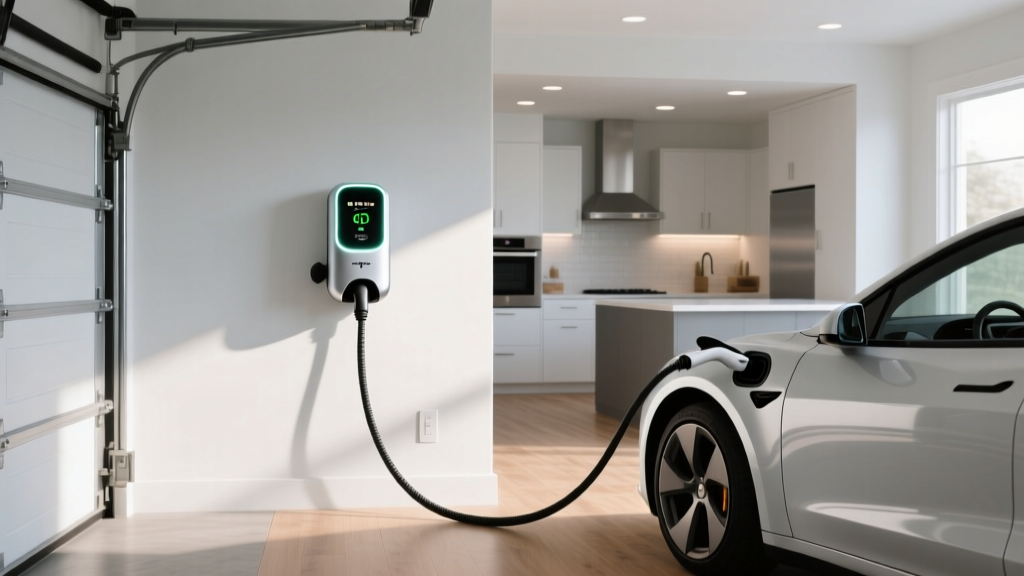
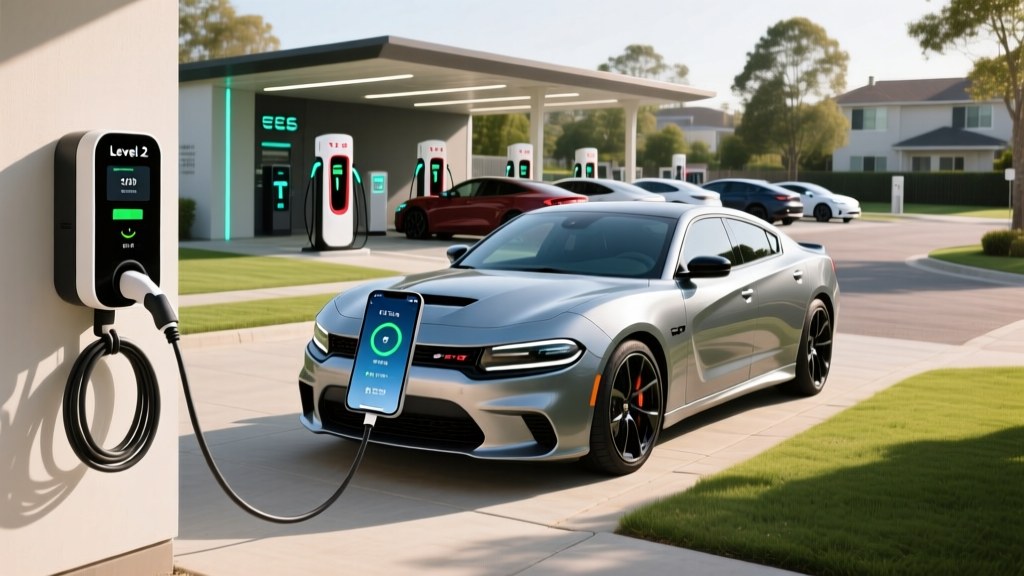
Level 2 is where 90% of EV charging happens. The Charger Daytona's 11 kW onboard charger means it can accept the full output of a 48-amp Level 2 circuit (which delivers up to 11.5 kW). A full overnight charge from 10% to 100% takes roughly 8–9 hours — perfectly suited for a standard sleep cycle.
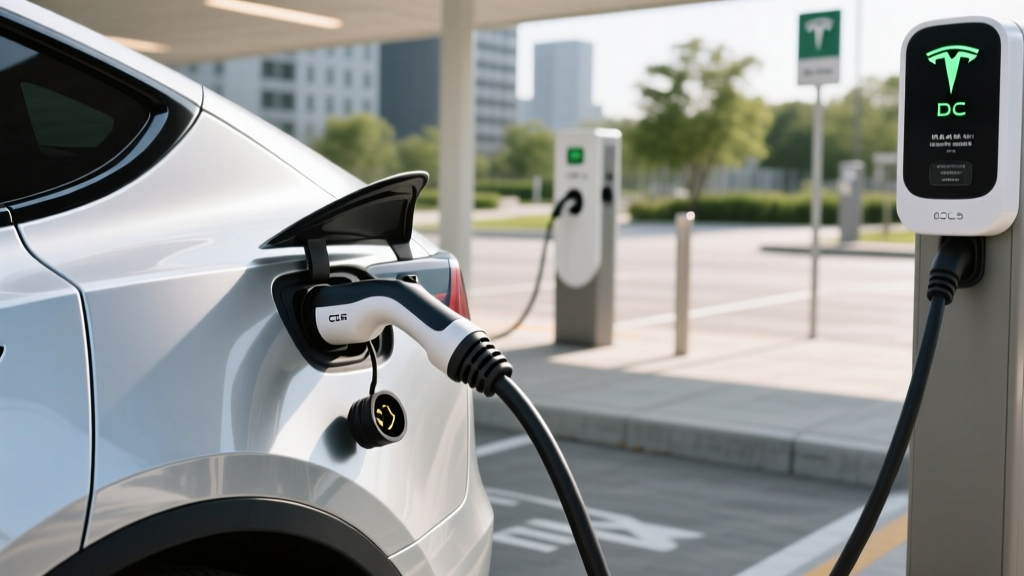
DC Fast Charging bypasses the onboard charger and sends DC current directly to the battery. The Daytona's 800V architecture allows it to accept up to ~200 kW at compatible stations. However, that peak rate only holds between roughly 10–40% state of charge. Above 50%, the charge curve tapers significantly — a common characteristic of NMC chemistry to protect battery longevity. Expect 10–80% in approximately 27 minutes at a 350 kW-capable station, but 10–80% in roughly 40–45 minutes at a 150 kW station.
Home Charger Installation: Electrical Requirements and Costs
Installing a Level 2 home charger is the single most impactful upgrade for EV ownership. Here's what the Charger Daytona requires and what it will cost.
Electrical Requirements
- Circuit: A dedicated 240V circuit, minimum 50 amps (to support a 40A continuous-load charger) or 60 amps (for a 48A charger that maxes out the Daytona's 11 kW onboard charger)
- Wire gauge: 6 AWG copper for 50A; 4 AWG for 60A runs over 50 feet
- Breaker: Double-pole breaker sized to 125% of continuous load (50A breaker for 40A charger, 60A breaker for 48A charger)
- Outlet vs. hardwired: NEMA 14-50 outlet offers portability; hardwired is preferred for 48A+ units and eliminates GFCI nuisance-trip issues common with 14-50 receptacles
Panel Upgrade Considerations
If your home has a 100-amp electrical panel — common in homes built before the 1990s — adding a 50–60 amp EV circuit may exceed your panel's capacity, especially if you already run electric range, dryer, and HVAC. A panel upgrade to 200 amps typically costs $1,500–$3,000. Homes with existing 200A panels usually have sufficient headroom, but a licensed electrician must perform a load calculation per NEC Article 220.
| Component | Low-End Estimate | High-End Estimate | Notes |
|---|---|---|---|
| Level 2 Charger (Equipment) | $350 | $750 | 32A–48A smart chargers |
| Electrician Labor | $500 | $1,500 | Depends on run length, wall type, conduit |
| Materials (wire, breaker, conduit) | $150 | $500 | Longer runs = higher wire cost |
| Permit & Inspection | $50 | $300 | Varies by municipality |
| Panel Upgrade (if needed) | $1,500 | $3,000 | 100A → 200A service upgrade |
| Total (no panel upgrade) | $1,050 | $3,050 | Most homes with 200A panels |
| Total (with panel upgrade) | $2,550 | $6,050 | Older homes with 100A service |
The IRS §30D credit does not cover home charger equipment for new vehicles as of 2026 — the Alternative Fuel Vehicle Refueling Property Credit (§30C) was the relevant provision, but eligibility depends on census tract qualifications and has specific income and location requirements. Check with a tax professional before assuming eligibility.
Connector Compatibility: CCS1, NACS, and Adapters
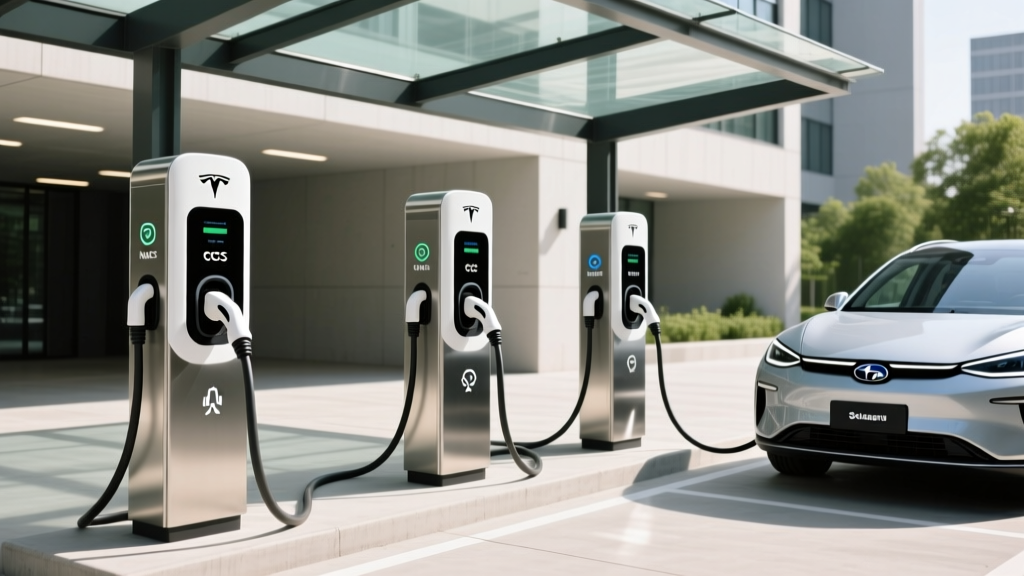
The 2025 Dodge Charger Daytona ships with a CCS1 (Combined Charging System) port. However, the North American charging landscape is rapidly shifting toward the NACS (North American Charging Standard) connector pioneered by Tesla. Here's how that affects Charger Daytona owners:
| Network / Standard | Native Compatibility | Adapter Required? | Notes |
|---|---|---|---|
| Electrify America (CCS1) | Yes — native | No | Largest CCS1 DC network; 350 kW stalls available |
| EVgo (CCS1) | Yes — native | No | Good urban coverage; mix of 50–350 kW |
| ChargePoint (CCS1 / J1772) | Yes — native | No | Strong Level 2 presence; limited DC |
| Tesla Supercharger (NACS) | No — requires adapter | Yes (CCS1-to-NACS) | Stellantis has announced adapter programs; confirm availability for 2025 MY |
| CHAdeMO | No | Not available | Legacy standard; irrelevant for new EVs |
The critical takeaway: if you want access to Tesla's Supercharger network — which remains the most reliable and extensive DC fast-charging network in the U.S. with over 25,000 stalls — you'll need a CCS1-to-NACS adapter. Stellantis has been working on NACS integration for future model years, but for the 2025 Charger Daytona, CCS1 is your native port. Purchase an adapter rated for at least 200 kW DC from a reputable manufacturer (such as the official Tesla CCS adapter or an aftermarket equivalent from A2Z or Lectron) to unlock Supercharger access.
Cost to Charge: Home vs. Public vs. Gas Comparison
The economics of EV ownership hinge on your charging mix. Here's a realistic breakdown for the Charger Daytona R/T (92 kWh usable battery).
| Scenario | Rate ($/kWh) | Cost for 10–80% (~65 kWh) | Cost per Mile (est.) |
|---|---|---|---|
| Home (off-peak utility rate) | $0.08–$0.14 | $5.20–$9.10 | $0.02–$0.04 |
| Home (standard residential avg.) | $0.16 | $10.40 | $0.04–$0.05 |
| Public Level 2 (ChargePoint, etc.) | $0.25–$0.49 | $16.25–$31.85 | $0.06–$0.12 |
| DC Fast (Electrify America) | $0.35–$0.56 | $22.75–$36.40 | $0.09–$0.14 |
| DC Fast (Tesla Supercharger, avg.) | $0.28–$0.40 | $18.20–$26.00 | $0.07–$0.10 |
| Gas equivalent (25 MPG, $3.50/gal) | — | — | $0.14 |
At home on off-peak rates, the Charger Daytona costs roughly $0.03 per mile to "fuel" — less than a quarter of the cost of a comparable gas-powered Challenger or Charger at 25 MPG combined. Even at public DC fast chargers, you're generally paying less per mile than gasoline, though the gap narrows at the most expensive networks.
A full home charge from 10–100% (~83 kWh at $0.12/kWh) costs approximately $10. That same range in a gas muscle car at 18 MPG combined and $3.50/gallon would cost roughly $46. Over 15,000 annual miles with 80% home charging, annual fuel savings can reach $1,200–$1,800 depending on local electricity and gas prices.
Recommended Home Level 2 Chargers for the Charger Daytona
The Daytona's 11 kW onboard charger can accept up to 48 amps from a 240V circuit. Here are chargers that pair well with its capabilities:
Emporia Vue Level 2 Charger
- Power Output: 48A / 11.5 kW (maxes out Daytona's onboard charger)
- Connector: J1772 (CCS1 compatible for AC)
- Cable Length: 24 ft
- Smart Features: Wi-Fi, energy monitoring, scheduling, solar integration
- Price: ~$399
- Best for: Budget-conscious buyers who want full 48A output
ChargePoint Home Flex
- Power Output: Up to 50A / 12 kW (configurable 16–50A)
- Connector: J1772
- Cable Length: 23 ft
- Smart Features: Wi-Fi, app scheduling, Alexa, load sharing
- Price: ~$549
- Best for: Flexibility in amperage settings for older panels
Wallbox Pulsar Plus
- Power Output: 40A / 9.6 kW
- Connector: J1772
- Cable Length: 25 ft
- Smart Features: Wi-Fi + Bluetooth, app control, Power Sharing
- Price: ~$449
- Best for: Compact size, good for tight garages
Tesla Wall Connector (with J1772 adapter)
- Power Output: 48A / 11.5 kW
- Connector: NACS (requires J1772 adapter for Daytona)
- Cable Length: 24 ft
- Smart Features: Wi-Fi, OTA updates, power sharing
- Price: ~$475 (+ ~$30 adapter)
- Best for: Households with both Tesla and non-Tesla EVs
For the Charger Daytona, we recommend a 48-amp charger on a 60-amp circuit to fully utilize the 11 kW onboard charger. A 32-amp charger will work but will take approximately 50% longer to charge — extending an overnight charge from 8 hours to 12 hours for a near-depleted battery.
Safety, Electrical Code, and Installation Best Practices
EV charging draws sustained high current for hours — this is not the same as plugging in a dryer for 45 minutes. Safety and code compliance matter:
- Dedicated circuit: Your EV charger must be on its own dedicated breaker — never shared with other appliances.
- GFCI protection: NEC 2020 and later require GFCI protection for 14-50 receptacles used for EV charging. Hardwired installations bypass this requirement and avoid nuisance trips, which is why most electricians now recommend hardwiring for 48A+ units.
- Outdoor rating: If your charger is installed outside (driveway, carport), ensure the unit carries a NEMA 4 or IP65 rating. The ChargePoint Home Flex, Wallbox Pulsar Plus, and Tesla Wall Connector all meet outdoor standards.
- Permit and inspection: Most jurisdictions require an electrical permit for a new 240V circuit. The inspection ensures proper wire gauge, breaker sizing, grounding, and bonding. Skipping the permit risks insurance claim denial if an electrical fire occurs.
- Load management: If your panel is near capacity, consider a smart charger with load management (like the Emporia or Wallbox with Power Sharing) that dynamically adjusts charge rate based on available household capacity.
Frequently Asked Questions
How much does it cost to install a home EV charger for the Dodge Charger Daytona?
Expect $1,050–$3,050 for a standard installation on an existing 200A panel, including the charger ($350–$750), electrician labor ($500–$1,500), materials ($150–$500), and permit ($50–$300). If your home needs a panel upgrade from 100A to 200A, add $1,500–$3,000, bringing the total to $2,550–$6,050.
How fast will each charging level add range to the Charger Daytona?
Level 1 (120V) adds approximately 3–5 miles per hour — essentially useless for a 100.5 kWh pack. Level 2 (240V, 48A) adds 30–35 miles per hour, fully charging overnight in 8–9 hours. DC fast charging at 200 kW can add up to 180+ miles in 15 minutes during the peak portion of the charge curve (10–40% SoC).
Which connector is compatible with the 2025 Dodge Charger Daytona?
The 2025 Daytona uses CCS1 natively for both AC (J1772 portion) and DC fast charging. To use Tesla Superchargers, you'll need a CCS1-to-NACS adapter. CHAdeMO is not compatible and is no longer relevant for new EVs.
How much does charging cost per mile compared to gas?
At home on average residential rates ($0.12–$0.16/kWh), the Charger Daytona costs approximately $0.03–$0.05 per mile. A comparable gas-powered muscle car at 18–25 MPG with $3.50/gallon fuel costs $0.14–$0.19 per mile. Home charging saves $0.09–$0.16 per mile, or roughly $1,350–$2,400 annually at 15,000 miles per year.
What electrical upgrades might I need for a home charger?
The most common upgrade is a panel replacement from 100A to 200A service ($1,500–$3,000) if your existing panel lacks capacity for a new 50–60A circuit. You may also need a conduit run from the panel to the garage or driveway if the charger location is far from the electrical service. In rare cases, your utility may need to upgrade the service drop to your home.
Does the Charger Daytona qualify for the federal EV tax credit?
The Charger Daytona R/T at $59,595 falls under the IRS §30D new clean vehicle credit MSRP cap of $80,000 for non-SUVs. However, eligibility depends on battery component sourcing, critical mineral requirements, and buyer income limits ($150,000 single / $300,000 joint AGI). The credit amount varies — it is not a guaranteed $7,500 for all buyers. Verify current-year eligibility on IRS.gov or with a qualified tax professional, as sourcing rules tighten annually.
For additional efficiency data, consult the EPA's fueleconomy.gov listing for the Charger Daytona, which provides official MPGe ratings and annual fuel cost estimates based on your local electricity rates.