Do Buc-ee's Have Tesla Chargers? The Short Answer
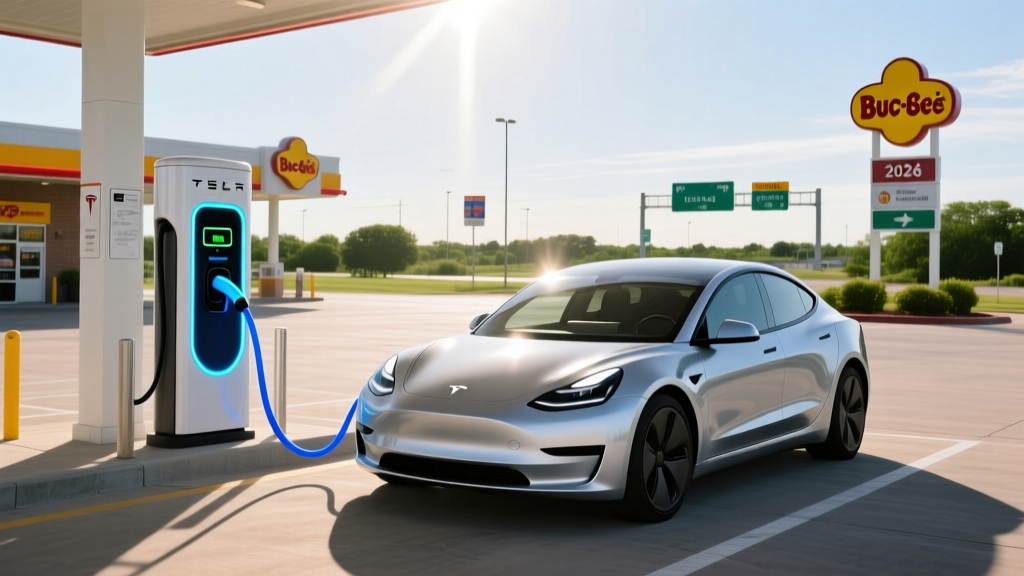
Yes — as of early 2026, a growing number of Buc-ee's travel centers across Texas, Alabama, Georgia, Florida, and other states host Tesla Supercharger stations on-site or immediately adjacent. However, not every Buc-ee's has Tesla chargers, and the ones that do are not exclusively Tesla-only anymore. Thanks to Tesla's North American Charging Standard (NACS) opening to other automakers, many Supercharger stalls at Buc-ee's locations now serve Ford, Rivian, GM, and other NACS-equipped or adapted EVs.
If you're planning a road trip and counting on a Buc-ee's stop for charging, this guide breaks down exactly which locations have chargers, what speeds you can expect, and how to plan for non-Tesla EVs. We'll also cover the full picture of EV charging — from home Level 2 installation to public DC fast-charging costs — so you can budget and plan with real numbers, not guesswork.
Buc-ee's Locations With Tesla Superchargers: What We Know
Buc-ee's and Tesla have developed a well-known partnership, particularly in Texas, where both brands have deep roots. As of 2026, confirmed Supercharger installations at or adjacent to Buc-ee's include locations in:
- Texas: Bastrop, Wharton, Temple, New Braunfels, Richmond, Denton, Terrell, and several more along I-10, I-35, and I-45 corridors
- Alabama: Auburn, Leeds (Birmingham area)
- Georgia: Warner Robins
- Florida: St. Augustine, Daytona Beach area
- Colorado: Johnstown (I-25 corridor)
- Tennessee: Sevierville
Most of these stations feature V3 Superchargers capable of up to 250 kW, with some newer installations rolling out V4 cabinets that can deliver up to 350 kW to compatible vehicles. Typical stall counts range from 8 to 20 chargers per location.
Can Non-Tesla EVs Charge at Buc-ee's Superchargers?
It depends on the specific station. Tesla has opened select Supercharger locations to non-Tesla EVs through the "Charge Your Non-Tesla Vehicle" program in the Tesla app. Vehicles with native NACS ports (2025+ Ford F-150 Lightning, GM Ultium-based models, Rivian R1T/R1S) can plug in directly at any open Supercharger. CCS1-equipped vehicles need the Magic Dock adapter, which is built into select Supercharger stalls — not all of them. Always check the Tesla app for the specific station before relying on it.
Charging Levels Explained: Speeds, kW, and Miles Per Hour
Whether you're charging at a Buc-ee's Supercharger, a public Electrify America station, or at home, understanding the three charging levels is essential. The key distinction: kW (kilowatts) measures power — how fast energy flows into your battery. kWh (kilowatt-hours) measures energy — the total capacity of your battery. Think of kW as the width of a hose and kWh as the size of the bucket.
| Level | Voltage / Power | Typical kW | Miles of Range Added Per Hour | Best For |
|---|---|---|---|---|
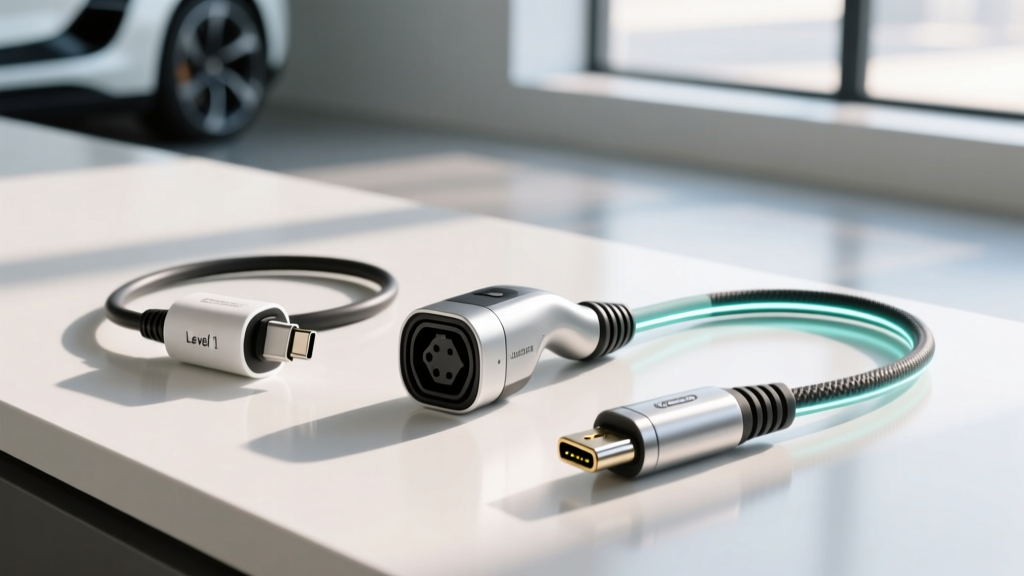
| Level 1 | 120V AC / standard outlet | 1.0–1.4 kW | 3–5 miles/hr | Overnight top-ups, PHEVs, emergencies |
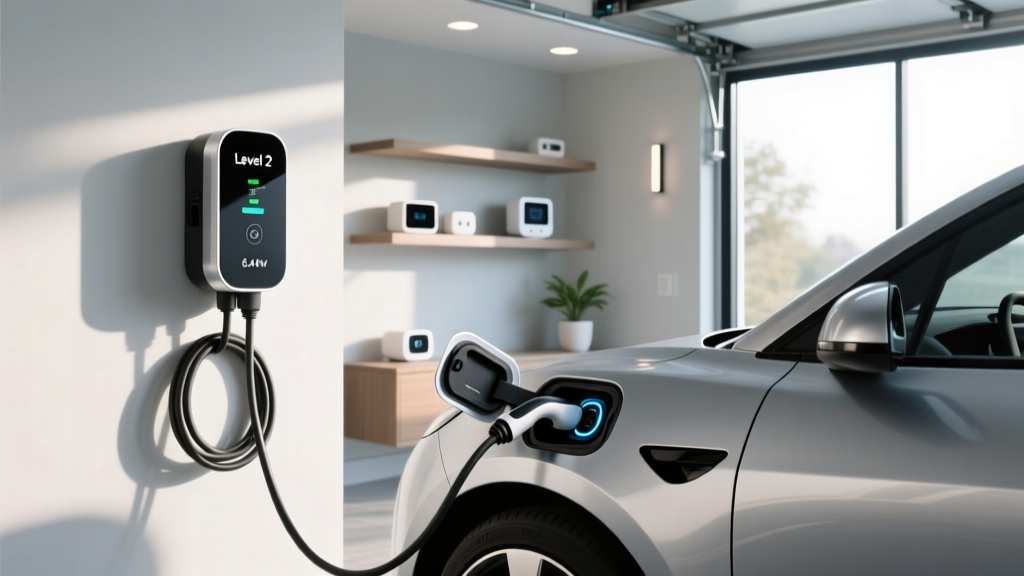
| Level 2 | 240V AC / dedicated circuit | 7.2–19.2 kW | 25–65 miles/hr | Daily home charging, workplaces, hotels |
| DC Fast Charge | 400–800V DC direct | 50–350 kW | 150–1,000+ miles/hr (peak) | Road trips, rapid top-ups (10–80%) |
Real-world charging time examples (10–80% SoC):
- Tesla Model Y (75 kWh battery): ~25 minutes on a 250 kW V3 Supercharger; ~8–10 hours on a 7.2 kW home Level 2
- Ford F-150 Lightning Extended Range (131 kWh battery): ~40 minutes on a 150 kW DC fast charger; ~14–16 hours on a 7.2 kW Level 2
- Hyundai Ioniq 5 (77.4 kWh battery): ~18 minutes on a 350 kW charger (800V architecture); ~10 hours on a 7.2 kW Level 2
Keep in mind that DC fast charging follows a charge curve: your vehicle will pull peak kW only up to roughly 50–60% SoC, then taper significantly. Charging from 80% to 100% on a DC fast charger can take as long as the 10–80% portion. For road trips, plan your stops around 10–80% charges for the best time efficiency.
How Much Does It Cost to Install a Home EV Charger?
Installing a Level 2 home charger is the single biggest ownership upgrade most EV buyers make. Costs vary enormously based on your home's electrical panel, the distance from panel to garage or driveway, and local permit fees. Here's a realistic breakdown for 2026:
| Cost Component | Low End | Typical | High End |
|---|---|---|---|
| Level 2 Charger (hardware) | $250 | $400–$600 | $750 |
| Electrician labor (240V/40–50A circuit) | $300 | $600–$1,200 | $2,000+ |
| Electrical permit | $50 | $100–$200 | $350 |
| Panel upgrade (if needed: 100A → 200A) | $1,500 | $2,000–$3,000 | $4,500+ |
| TOTAL (no panel upgrade) | $600 | $1,100–$2,000 | $3,100 |
| TOTAL (with panel upgrade) | $2,100 | $3,100–$5,000 | $7,600+ |
Electrical Requirements for Home Level 2 Charging
A standard Level 2 home charger requires:
- Voltage: 240V (same as a dryer or oven outlet)
- Amperage: 40A circuit for a 32A charger, or 50A circuit for a 40A charger (NEC code requires circuits rated at 125% of continuous load)
- Dedicated circuit: The charger must have its own breaker — no sharing with other appliances
- GFCI protection: Required by NEC 2020 and later for outdoor installations and many jurisdictions for garage installations
- NEMA 14-50 outlet or hardwired: Hardwired is preferred for 48A+ chargers and avoids the $80–$150 cost of a quality industrial-grade receptacle
Connector Compatibility: NACS, CCS1, and CHAdeMO
The connector landscape in North America has shifted dramatically. As of 2026, NACS (Tesla's North American Charging Standard) has effectively won the connector war, with nearly every major automaker adopting it for new vehicles. Here's where things stand:
| Connector | Vehicles Using It (2026) | Public Network Access | Adapter Needed? |
|---|---|---|---|
| NACS (Tesla) | All Tesla models, 2025+ Ford, GM, Rivian, Volvo, Polestar, others | Tesla Superchargers + growing third-party networks | None for NACS-native vehicles |
| CCS1 | 2024 and older Ford/GM/Hyundai/Kia/VW; many current models still in production | Electrify America, EVgo, ChargePoint, Ionity | CCS-to-NACS adapter (~$200) for Supercharger access |
| CHAdeMO | Nissan Leaf (legacy); essentially discontinued for new vehicles | Declining; some Electrify America and EVgo stations | CHAdeMO-to-NACS adapters are rare and expensive |
If you drive a CCS1-equipped EV and want access to Tesla Superchargers (including those at Buc-ee's), you'll need a CCS-to-NACS adapter. Tesla sells one for approximately $200, and third-party options from brands like Lectron and A2Z are available for $130–$180. Ford and GM also offer their own branded adapters. Verify compatibility with your specific model year before purchasing.
How Much Does EV Charging Cost Per Mile vs. Gas?
The economics of EV charging depend heavily on where and when you charge. Home charging on off-peak electricity rates is dramatically cheaper than gas. Public DC fast charging narrows the gap but still usually beats gasoline per mile.
| Scenario | Rate ($/kWh) | Vehicle Efficiency | Cost Per Mile | Annual Cost (12,000 mi) |
|---|---|---|---|---|
| Home off-peak (utility rate) | $0.08–$0.12/kWh | 3.5 mi/kWh (avg EV) | $0.025–$0.034 | $300–$410 |
| Home standard rate | $0.14–$0.18/kWh | 3.5 mi/kWh | $0.040–$0.051 | $480–$615 |
| Public Level 2 (ChargePoint, etc.) | $0.20–$0.35/kWh | 3.5 mi/kWh | $0.057–$0.100 | $685–$1,200 |
| DC Fast Charge (Tesla Supercharger) | $0.25–$0.40/kWh | 3.5 mi/kWh | $0.071–$0.114 | $855–$1,370 |
| DC Fast Charge (Electrify America) | $0.35–$0.55/kWh | 3.5 mi/kWh | $0.100–$0.157 | $1,200–$1,885 |
| Gasoline (25 MPG avg, $3.30/gal) | $3.30/gallon | 25 mi/gal | $0.132 | $1,584 |
The bottom line: if you charge primarily at home on standard or off-peak rates, your per-mile fuel cost is 60–80% lower than a comparable gas vehicle. Even exclusive DC fast charging is typically cheaper than gas — though the gap narrows considerably on expensive networks like Electrify America during peak hours. For data on specific vehicle efficiency ratings, check fueleconomy.gov, which lists kWh/100mi and MPGe for every EPA-rated EV.
Best Home EV Chargers for 2026: Equipment Picks
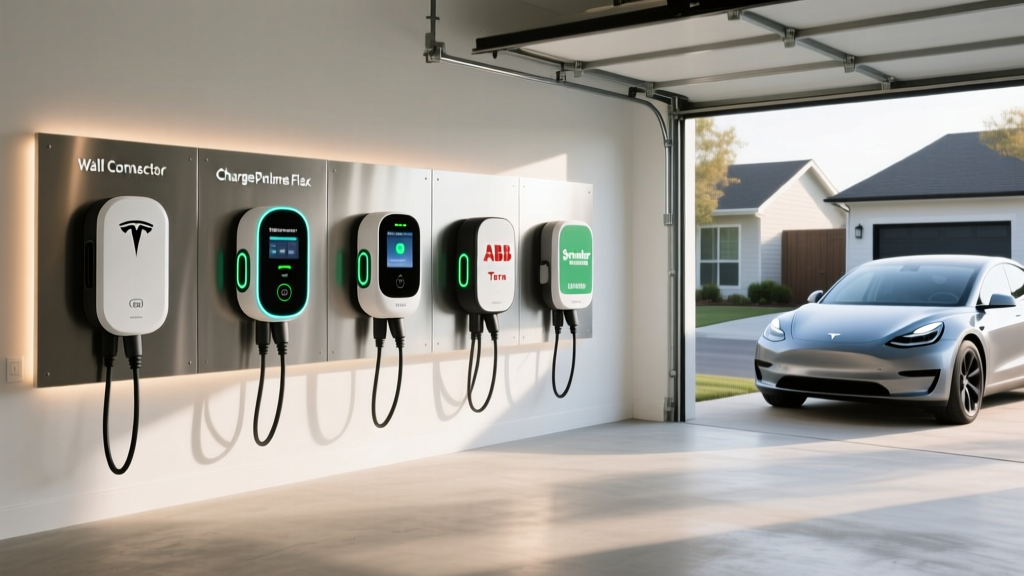
We evaluate home chargers on four criteria: power output (kW), connector type, cable length, and smart features (Wi-Fi scheduling, load management, utility integration). Here are our top picks:
Tesla Wall Connector
- Power: Up to 11.5 kW (48A) on a 60A circuit
- Connector: NACS native; J1772 adapter available
- Cable: 24 feet
- Smart features: Wi-Fi, OTA updates, Power Sharing (link multiple units), load management
- Price: ~$475
- Best for: Tesla owners and NACS-native vehicles
ChargePoint Home Flex
- Power: Up to 12 kW (50A) configurable from 16A–50A
- Connector: J1772 (NACS adapter included in newer models)
- Cable: 23 feet
- Smart features: Wi-Fi, app scheduling, Alexa integration, utility demand-response compatible
- Price: ~$550–$650
- Best for: Multi-EV households, CCS/J1772 vehicles
Emporia Vue Level 2
- Power: Up to 11.5 kW (48A)
- Connector: J1772 (NACS version available)
- Cable: 24 feet
- Smart features: Wi-Fi, solar integration, real-time energy monitoring, load balancing with Emporia panel monitor
- Price: ~$400
- Best for: Solar-equipped homes, budget-conscious buyers
For most homeowners, a 40A or 48A charger on a 50A or 60A circuit provides the best balance of charging speed and electrical-panel headroom. A 48A charger adds roughly 35–40 miles of range per hour for a typical EV — enough to fully replenish any daily commute overnight.
Safety, Code, and Permit Considerations
EV charging equipment draws sustained high current for hours — this is fundamentally different from intermittent loads like a microwave. Proper installation is non-negotiable for safety and insurance coverage.
- Dedicated circuit required: Your EV charger must have its own breaker. Never share a circuit with other high-draw appliances.
- NEC 125% rule: Because EV charging is classified as a "continuous load" (3+ hours), the circuit must be rated at 125% of the charger's maximum amperage. A 40A charger needs a 50A circuit. A 48A charger needs a 60A circuit.
- GFCI protection: Required for outdoor installations under NEC 2020 and later. Many jurisdictions now require it indoors as well. Hardwired chargers often have built-in GFCI; receptacle-based setups may need a GFCI breaker ($50–$80 additional).
- Outdoor rating: If installing outside, ensure the charger is rated NEMA 4 (weatherproof). Most quality chargers carry this rating, but verify before purchasing.
- Permit and inspection: Virtually all jurisdictions require an electrical permit for EV charger installation. Typical cost: $50–$350. The work must pass inspection to maintain your homeowner's insurance coverage. Never skip this step.
- Wire gauge: Your electrician will size wire based on amperage and run distance. For a 50A circuit, expect 6 AWG copper; for 60A, 4 AWG. Longer runs may require upsizing to prevent voltage drop.
Frequently Asked Questions
Do all Buc-ee's have Tesla Superchargers?
No. While many Buc-ee's locations — particularly in Texas — have Tesla Superchargers, it's not universal. Newer Buc-ee's locations are more likely to include chargers. Always verify using the Tesla app or Tesla's station map before relying on a specific location for charging.
Can I charge a non-Tesla EV at a Buc-ee's Supercharger?
Yes, at select locations. Tesla has opened many Supercharger stations to non-Tesla vehicles via the Tesla app. If your vehicle has a native NACS port (2025+ Ford, GM, Rivian, and others), you can plug directly into any open stall. CCS1 vehicles need the Magic Dock adapter, which is only available at certain stalls. Check the station details in the Tesla app for "Non-Tesla Vehicle" access before driving there.
How fast will a Tesla Supercharger at Buc-ee's charge my car?
Most Buc-ee's Supercharger installations are V3 cabinets delivering up to 250 kW. A Tesla Model Y (75 kWh battery) can charge from 10% to 80% in approximately 25 minutes at this speed. Newer V4 installations may deliver up to 350 kW to compatible vehicles, reducing 10–80% times to under 18 minutes for vehicles with 800V architectures like the Hyundai Ioniq 5 and Kia EV6.
How much does it cost to charge at a Tesla Supercharger?
Tesla Supercharger pricing varies by location and time of day. In 2026, typical rates range from $0.25 to $0.40 per kWh. Some locations offer off-peak discounts. For a Tesla Model Y with a 75 kWh battery, a 10–80% charge (about 52 kWh) costs roughly $13–$21. Non-Tesla vehicles typically pay a 10–20% surcharge unless they have a Tesla charging subscription ($12.99/month, which brings non-Tesla rates in line with Tesla rates).
What other charging networks are near Buc-ee's locations?
Many Buc-ee's locations that don't have Tesla Superchargers are near Electrify America, EVgo, or ChargePoint DC fast-charging stations. Buc-ee's themselves have begun installing ChargePoint and other Level 2 chargers at some locations. Use apps like PlugShare or A Better Routeplanner to find all charging options near your planned Buc-ee's stop.
Is it worth installing a home charger if I can use Buc-ee's and public stations?
Absolutely. Public DC fast charging costs $0.25–$0.55/kWh, while home charging costs $0.08–$0.18/kWh. If you drive 12,000 miles per year in an average EV, home charging saves $600–$1,200 annually compared to exclusive public charging. A $1,500 home charger installation pays for itself in 1–3 years for most drivers. Plus, the convenience of starting every morning with a full battery eliminates range planning for daily driving.
What electrical upgrades might my home need for an EV charger?
The most common upgrade is a panel capacity increase from 100A to 200A service, which costs $1,500–$4,500 depending on your utility and local requirements. Other potential needs include: adding a sub-panel closer to the garage ($400–$800), upgrading the service drop from the utility ($500–$2,000 if the utility charges for this), or installing a smart load-management device ($200–$400) that allows you to add an EV circuit without a panel upgrade by automatically reducing charger power when other appliances draw heavily. A licensed electrician can assess your specific situation — always get a professional evaluation before committing to equipment.
For the latest federal EV charging tax credit information (up to $1,000 for home charger hardware and installation under IRS §30C), visit irs.gov. Eligibility depends on income limits, census tract qualifications, and placement-in-service dates. Consult a tax professional for your specific situation.