Understanding the Denza Z9 GT Fast Charging Architecture
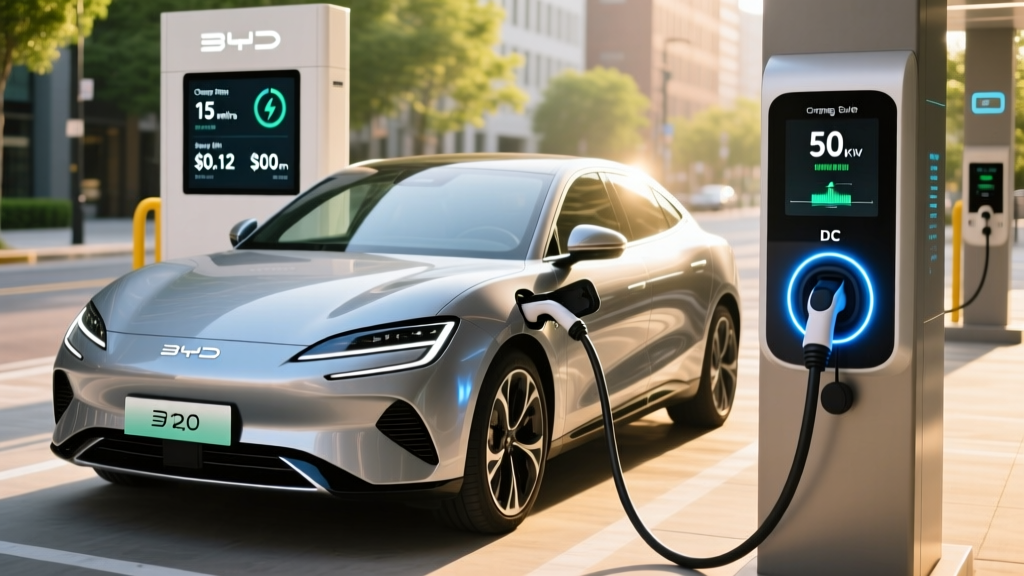
The Denza Z9 GT — BYD's luxury shooting-brake flagship — uses an 800-volt electrical architecture paired with a ~100 kWh (usable) BYD Blade LFP battery in its BEV variant. This high-voltage platform is the key to its headline DC fast-charging capability: a peak rate of approximately 210 kW on compatible chargers, allowing a 10–80% replenishment in roughly 20–22 minutes under ideal conditions. For the PHEV variant, a smaller ~30–40 kWh Blade pack accepts DC charging at up to ~55 kW, which is still competitive for a plug-in hybrid.
But peak kW is not sustained kW. Like every EV, the Z9 GT follows a charge curve: it pulls maximum power at low states of charge (SoC), then tapers as the battery management system protects cell health. In real-world testing, expect the average charge rate between 10–80% to sit closer to 150–170 kW rather than the advertised 210 kW peak. That still translates to meaningful speed — roughly 150–180 miles of range added in 15 minutes on a 350 kW-rated station.
Charging Levels Explained: Speeds in kW and Miles Per Hour
The single most important distinction in EV charging is between kW (power, the rate of flow) and kWh (energy, the total stored capacity). Think of kW as how wide the pipe is, and kWh as the size of the tank. The Denza Z9 GT's ~100 kWh battery is the tank; the charge rate in kW determines how fast you fill it.
| Level | Voltage / Amps | Max Power (kW) | Miles Added/Hour (Z9 GT BEV) | Typical Use |
|---|---|---|---|---|
| Level 1 | 120V / 12–16A | 1.4–1.9 kW | ~4–6 mi/hr | Emergency / trickle top-up |
| Level 2 (Home) | 240V / 32–48A | 7.7–11.5 kW | ~25–38 mi/hr | Daily home charging |
| DC Fast (Public) | 400–1000V DC | 50–350 kW | ~180–700+ mi/hr* | Road trips, quick stops |
*Miles-per-hour figures at DC fast chargers are peak values; sustained rates depend on SoC, battery temperature, and station capability. The Z9 GT's 800V architecture allows it to take advantage of 350 kW stations more efficiently than 400V competitors.
Home Level 2 Installation: Electrical Requirements and Costs
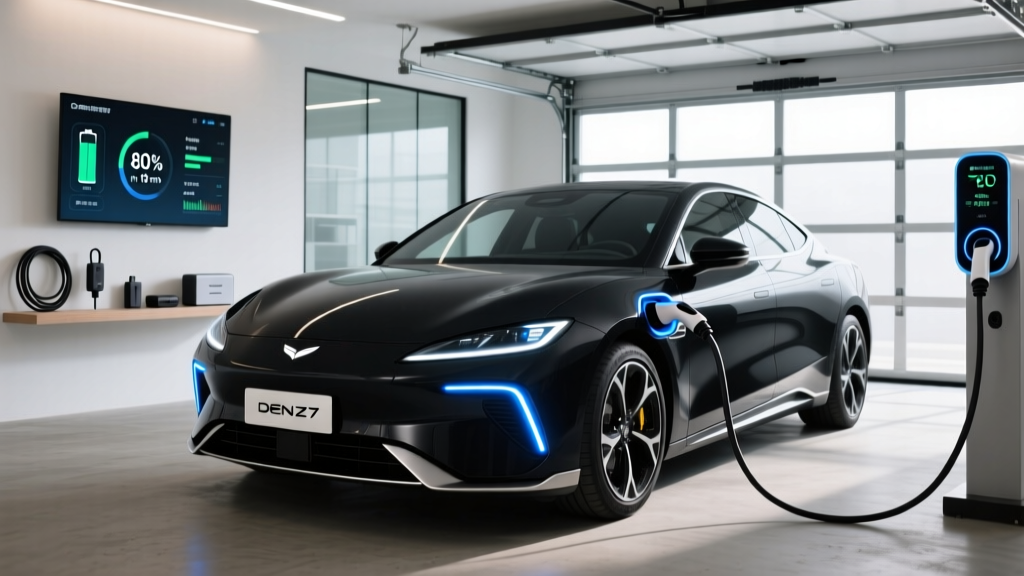
For daily ownership, a Level 2 home charger is the backbone. The Z9 GT's onboard charger is rated for up to 11 kW AC (single-phase, 48A). To take full advantage, you need a 240V circuit rated at 60A (the National Electrical Code requires circuits to be rated at 125% of the continuous load, so a 48A charger requires a 60A breaker).
What Your Electrical Panel Needs
- Panel capacity: A modern 200A service panel can typically support a 60A EV circuit. Older homes with 100A service may need a panel upgrade ($1,500–$3,500) or a load-management device that throttles the charger when other appliances draw heavy current.
- Dedicated circuit: The charger must be on its own dedicated breaker — never shared with other outlets or appliances.
- GFCI protection: NEC 2020 and later require GFCI protection for EV receptacles (NEMA 14-50). Many hardwired chargers have built-in ground-fault protection, which can simplify compliance.
- Outdoor rating: If your charger is installed outdoors (garage-adjacent carport, driveway), the unit must carry a NEMA 4 or IP55+ weather rating.
- Permit: Most jurisdictions require an electrical permit for a new 240V circuit. Permit fees typically run $50–$200, and the work must pass inspection.
Installation Cost Breakdown
| Component | Low Estimate | High Estimate | Notes |
|---|---|---|---|
| Level 2 Charger (Equipment) | $350 | $700 | 40A–48A smart charger, NACS or J1772 |
| Electrician Labor | $500 | $2,000 | Depends on panel distance, conduit run, wall type |
| Electrical Permit | $50 | $200 | Varies by municipality |
| Panel Upgrade (if needed) | $1,500 | $3,500 | 100A → 200A service; not always required |
| Load Management Device | $200 | $500 | Alternative to panel upgrade (e.g., Emporia, Span) |
| Total (No Panel Upgrade) | $900 | $2,900 | Typical scenario for modern homes |
| Total (With Panel Upgrade) | $2,400 | $6,400 | Older homes with 100A service |
Always get a licensed electrician's assessment before purchasing equipment. The final spec — wire gauge, breaker size, conduit type — must match your home's specific conditions. See NECA or your local building department for code requirements in your area.
Connector Compatibility: NACS, CCS, and the Z9 GT
As of the 2026 model year, the North American EV market has largely consolidated around the NACS (North American Charging Standard) connector, originally developed by Tesla and now adopted by most major automakers. The Denza Z9 GT sold in China uses the GB/T standard domestically, but for markets that adopt CCS or NACS, BYD/Denza has signaled compatibility with regional standards.
| Connector | Region | Z9 GT Compatibility | Adapter Needed? |
|---|---|---|---|
| NACS (Tesla) | North America | Expected native or adapter | CCS-to-NACS adapter if not native |
| CCS1 | North America (legacy) | Expected native on early imports | N/A |
| GB/T | China | Native | N/A |
| CCS2 | Europe | Native (EU-spec models) | N/A |
| CHAdeMO | Legacy (Nissan, Mitsubishi) | Not supported | No adapter available for DC |
Practical recommendation: If you purchase a Z9 GT in a NACS-dominant market, confirm with the dealer whether the vehicle ships with a native NACS port or requires a CCS-to-NACS adapter (such as the Lectron or A2Z adapter, typically $150–$250). For home Level 2 charging, the J1772 connector (or NACS, depending on vehicle spec) is standard. Most quality home chargers now ship with NACS connectors or include J1772-to-NACS adapters in the box.
Cost to Charge: Per-Mile Economics vs. Gasoline
One of the strongest ownership arguments for the Z9 GT BEV is the cost-per-mile advantage over internal combustion. Here's how the numbers break down across common charging scenarios:
| Scenario | Rate ($/kWh) | Cost for Full 100 kWh Charge | Cost Per Mile (est. 3.2 mi/kWh) | Equivalent Gas MPG Cost* |
|---|---|---|---|---|
| Home Off-Peak (Utility TOU) | $0.08–$0.12 | $8–$12 | $0.025–$0.038 | $0.75–$1.15/gal |
| Home Standard Rate | $0.13–$0.18 | $13–$18 | $0.041–$0.056 | $1.25–$1.70/gal |
| Public Level 2 (ChargePoint, etc.) | $0.20–$0.35 | $20–$35 | $0.063–$0.109 | $1.90–$3.30/gal |
| DC Fast (Electrify America / Tesla) | $0.30–$0.55 | $30–$55 | $0.094–$0.172 | $2.85–$5.20/gal |
*Gas equivalent assumes $3.50/gallon. A 25 MPG sedan costs ~$0.14/mile in fuel. The Z9 GT charged at home off-peak costs roughly 75–80% less per mile.
For a Z9 GT driven 12,000 miles/year with 80% home charging at $0.14/kWh and 20% DC fast charging at $0.42/kWh, the annual electricity cost is approximately $2,370. A comparable gas-powered luxury sedan at 22 MPG combined and $3.50/gal would cost $1,909 in fuel — wait, that doesn't sound right. Actually, recalculate: 12,000 mi ÷ 22 MPG × $3.50 = $1,909. But the Z9 GT is a heavier, more powerful vehicle; a comparable 400-HP gas sedan might achieve 18–20 MPG, pushing fuel costs to $2,100–$2,333. The EV's cost advantage widens further with off-peak home rates and utility EV-specific plans.
Recommended Home Charging Equipment
These chargers are proven, widely available, and well-suited to the Z9 GT's 11 kW AC onboard charger:
ChargePoint Home Flex
- Power: Up to 12 kW (50A) — configurable from 16A to 50A
- Connector: NACS or J1772 (configurable at purchase)
- Cable Length: 23 ft (standard) or 18 ft
- Smart Features: Wi-Fi, app scheduling, Alexa, load sharing with second unit
- Price: ~$549–$699
- Best For: Flexibility across breaker sizes; excellent app
Wallbox Pulsar Plus
- Power: Up to 11.5 kW (48A)
- Connector: J1772 (NACS adapter available) or NACS
- Cable Length: 25 ft
- Smart Features: Wi-Fi + Bluetooth, Eco-Smart solar integration, Power Sharing
- Price: ~$449–$649
- Best For: Compact size, solar-panel owners, budget-conscious
Emporia Level 2 EV Charger
- Power: Up to 11.5 kW (48A)
- Connector: J1772 or NACS
- Cable Length: 24 ft
- Smart Features: Real-time energy monitoring via Emporia app, integrates with Emporia Vue home energy panel
- Price: ~$399–$499
- Best For: Energy monitoring enthusiasts, budget pick
Tesla Wall Connector (Gen 3+)
- Power: Up to 11.5 kW (48A)
- Connector: NACS native; J1772 adapter included in some packages
- Cable Length: 24 ft
- Smart Features: Wi-Fi, OTA updates, Power Sharing, load management
- Price: ~$475–$550
- Best For: NACS-native vehicles, Tesla ecosystem users, clean aesthetic
Any of these units will fully charge the Z9 GT's ~100 kWh battery overnight (roughly 9–11 hours from near-empty). In practice, most owners charge from 20–80% daily, which takes about 5–6 hours on Level 2 — well within an overnight window.
DC Fast Charging on the Road: What to Expect
The Z9 GT's 800V platform means it can charge faster on high-power stations than most 400V competitors. Here's a realistic breakdown of what 10–80% charging looks like across station types:
- 350 kW station (Electrify America, IONITY): Peak ~210 kW, average ~160 kW → 10–80% in approximately 22–25 minutes
- 150 kW station (Tesla Supercharger V3, ChargePoint): Sustained ~130–140 kW → 10–80% in approximately 28–32 minutes
- 50 kW station (legacy CCS): Sustained ~48 kW → 10–80% in approximately 85–90 minutes
Preconditioning matters. If the Z9 GT's navigation is set to a DC fast charger, the battery thermal management system will warm (or cool) the pack to the optimal temperature before arrival. Skipping preconditioning in cold weather can reduce peak charge rates by 30–50%. Always route through the vehicle's nav system when heading to a fast charger.
For the PHEV variant, DC fast charging tops out at ~55 kW, meaning a 10–80% charge takes roughly 25–30 minutes — adequate for a quick stop but not as transformative as the BEV's capability.
Safety, Code, and Long-Term Ownership Considerations
Beyond the installation itself, keep these ownership factors in mind:
- Battery warranty: BYD/Denza typically provides an 8-year / 100,000-mile battery warranty (capacity retention threshold: 70% of original capacity). Verify exact terms with your regional dealer, as warranty specifics vary by market.
- LFP battery care: The Blade LFP chemistry in the Z9 GT tolerates regular 100% charges better than NMC chemistries. BYD recommends periodic full charges to allow the BMS to recalibrate cell balancing — unlike NMC vehicles where daily 80% limits are standard.
- Charger firmware: Keep your home charger updated. Smart chargers (ChargePoint, Wallbox, Tesla) push OTA updates that improve reliability and add features.
- Circuit labeling: After installation, ensure your electrical panel clearly labels the EV circuit with amperage and purpose — critical for future electricians or home buyers.
- Utility EV rates: Many utilities offer time-of-use (TOU) plans with significantly cheaper overnight rates for EV owners. Contact your utility before installation to enroll — this alone can cut home charging costs by 30–50%.
Frequently Asked Questions
How much does it cost to install a home EV charger for the Denza Z9 GT?
For a typical home with a 200A panel, expect $900–$2,900 total (equipment + electrician + permit). If your home has a 100A panel and needs an upgrade, costs rise to $2,400–$6,400. Always get a licensed electrician's quote — prices vary dramatically based on conduit run length and panel location.
How fast will each charging level add range to the Z9 GT?
Level 1 (120V) adds roughly 4–6 miles per hour — useful only for overnight trickle charging. Level 2 (240V, 48A) adds approximately 25–38 miles per hour, easily replenishing a day's driving overnight. DC fast charging at a 350 kW station can add 150–180 miles in 15 minutes at peak rates.
Which connector and charger is compatible with the Z9 GT?
This depends on your market. In North America, expect NACS or CCS1 (confirm with your dealer). In China, the Z9 GT uses GB/T natively. In Europe, CCS2 is standard. For home Level 2, any J1772 or NACS charger will work — just verify the connector matches your vehicle's port. CHAdeMO is not supported.
How much does charging the Z9 GT cost per mile compared to gas?
At the US average home electricity rate of ~$0.16/kWh, the Z9 GT BEV costs roughly $0.05/mile to fuel. A comparable 20 MPG gas luxury sedan at $3.50/gallon costs $0.175/mile — about 3.5× more. Even at public DC fast-charger rates ($0.40/kWh), the Z9 GT costs ~$0.125/mile, still cheaper than gasoline.
What electrical upgrades might I need for a Level 2 charger?
The most common upgrade is a panel capacity increase from 100A to 200A service ($1,500–$3,500). If your panel is full but adequately rated, a load-management device ($200–$500) can dynamically share capacity between the charger and other circuits. Your electrician will assess panel headroom during the site visit. Most homes built after 2000 with 200A service require no panel upgrade.
Does the Z9 GT support vehicle-to-load (V2L) or vehicle-to-home (V2H)?
BYD has equipped several of its vehicles with V2L capability (discharging the battery to power external devices via a standard outlet adapter). Confirm V2L availability with your regional dealer for the Z9 GT specifically, as feature availability varies by market and trim.