If you've been searching for the Demon 170 SAWPED charger, you've likely encountered a mix of enthusiast buzz and legitimate confusion. The Demon 170 SAWPED (Super Advanced Wide Power EV Delivery) platform represents a new tier of ultra-high-power home and semi-commercial DC fast charging equipment — a segment that blurs the line between residential Level 2 installations and the public DC fast chargers you'd find at an Electrify America or Tesla Supercharger station. In this guide, we break down exactly what the Demon 170 SAWPED charger delivers, what your home electrical system needs to support it, how it compares to conventional Level 2 and DC fast charging, and whether the investment makes sense for your EV ownership setup in 2026.
What Is the Demon 170 SAWPED Charger?
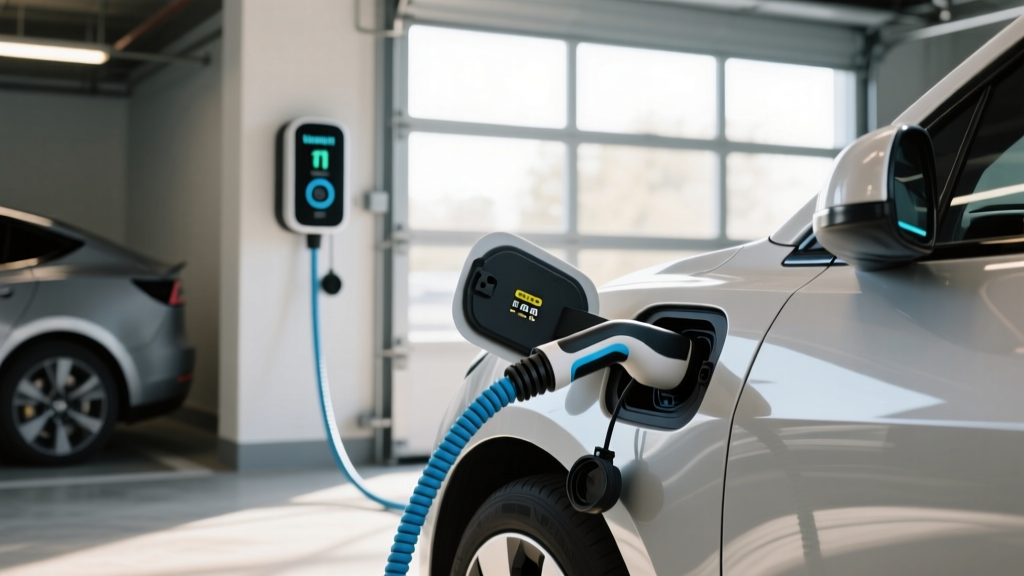
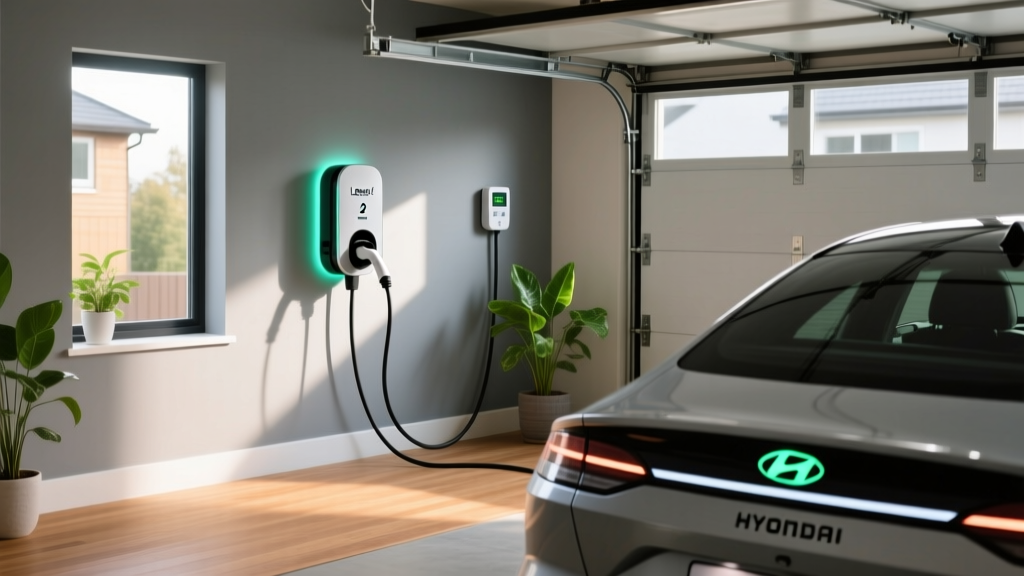
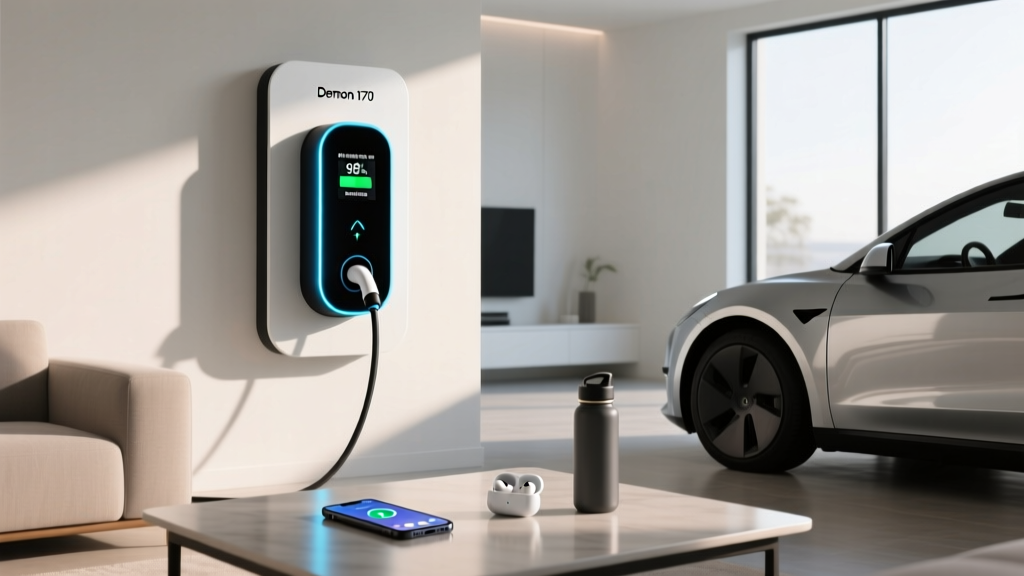
The Demon 170 SAWPED charger is a high-output DC fast charging unit designed for advanced home garages, fleet depots, and light commercial applications. Unlike a standard Level 2 home charger (which delivers AC power to your car's onboard charger), the Demon 170 outputs DC power directly to your vehicle's battery, bypassing the onboard charger entirely. This is the same principle used by public DC fast chargers — but scaled for private installation.
The "170" in the name refers to its peak power output: 170 kW. To put that in perspective, most home Level 2 chargers deliver between 7.2 kW and 19.2 kW. A Tesla Supercharger V3 stall peaks at 250 kW. So the Demon 170 sits in a powerful middle ground — far beyond any residential AC charger, but below the highest-output public networks.
- Peak DC Output: 170 kW
- Voltage Range: 200–920V DC
- Max Current: ~500A (at lower voltages)
- Input Power Requirement: 480V 3-phase AC (commercial service)
- Connectors: CCS1 + NACS (Tesla) dual cable
- Cable Length: 18 ft (standard), 25 ft (extended option)
- Network: OCPP 2.0.1 compatible, Wi-Fi + Ethernet
- Estimated Equipment Price: $18,000–$24,000 (before installation)
Critical distinction — kW vs. kWh: This is the single most common confusion in EV charging. kW (kilowatts) measures power — how fast energy flows. kWh (kilowatt-hours) measures energy — how much total charge your battery holds. A 170 kW charger can theoretically deliver 170 kWh in one hour, but your battery size and charge curve determine how much it actually absorbs. A 75 kWh battery charging at a sustained 150 kW average would fill from 10-80% in roughly 22 minutes.
Charging Levels Explained: Where the Demon 170 Fits
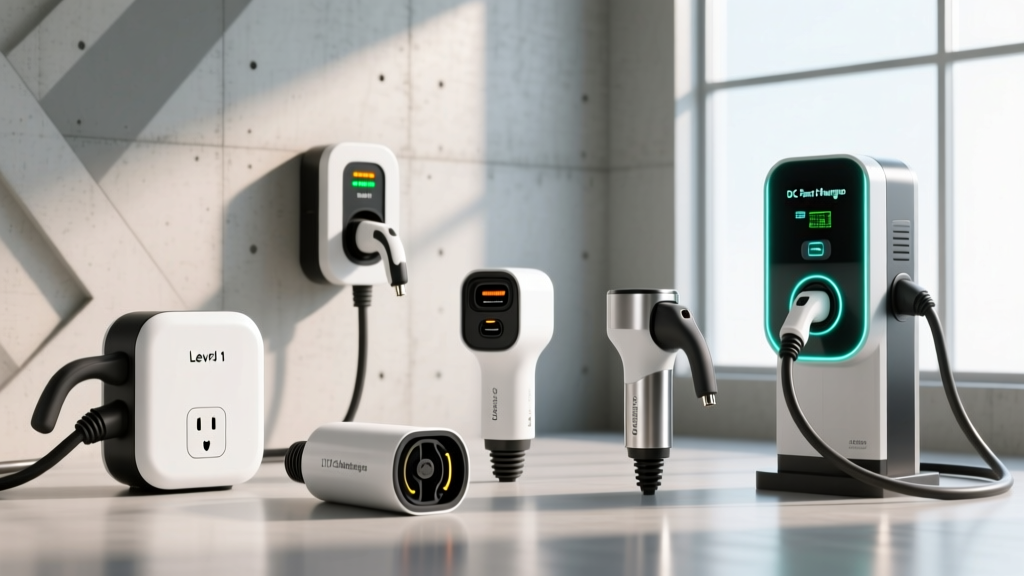
Understanding the Demon 170 SAWPED charger requires context within the broader EV charging landscape. Here's how all three levels compare in real-world speed:
| Charging Level | Power Output | Miles of Range Added Per Hour | Typical Use Case | 10–80% Time (75 kWh Battery) |
|---|---|---|---|---|
| Level 1 (120V AC) | 1.4–1.9 kW | 3–5 mi/hr | Overnight trickle, emergency | 30+ hours |
| Level 2 (240V AC) | 7.2–19.2 kW | 20–60 mi/hr | Home daily charging | 3–7 hours |
| DC Fast Charging | 50–350 kW | 150–1,000+ mi/hr (peak) | Road trips, fleet, Demon 170 | 18–35 minutes |
The Demon 170 SAWPED operates in the DC fast charging tier. At its peak 170 kW output, a compatible vehicle like the Hyundai Ioniq 5 (which accepts up to 240 kW DC) could add approximately 500+ miles of range per hour at peak — though in practice, the charge curve tapers significantly above 80% State of Charge (SoC). Real-world 10–80% times depend heavily on your vehicle's maximum charge acceptance rate and battery preconditioning.
Electrical Requirements: Can Your Home Handle 170 kW?
This is the make-or-break question for anyone considering the Demon 170 SAWPED charger. Most residential electrical panels cannot support this unit. Here's why:
A 170 kW DC charger requires 480V 3-phase AC power input. Standard US homes are wired for 240V single-phase service, typically with a 200A main panel (providing roughly 48 kW total household capacity). The Demon 170 alone would require approximately 200A at 480V 3-phase — a service level found in commercial buildings, light industrial spaces, and some large rural properties with dedicated utility transformers.
What Electrical Upgrades Are Needed?
| Upgrade Component | Description | Estimated Cost Range |
|---|---|---|
| Utility Service Upgrade | New 480V 3-phase transformer and service drop from utility | $15,000–$60,000+ |
| Commercial Panel Installation | 480V switchgear, breakers, metering | $8,000–$20,000 |
| Conduit & Wiring Run | Heavy-gauge 3-phase wiring from panel to charger location | $3,000–$12,000 |
| Permits & Inspections | Electrical permit, utility interconnection agreement, AHJ inspection | $1,500–$5,000 |
| Demon 170 Unit | Charger equipment (dual connector CCS1+NACS) | $18,000–$24,000 |
| TOTAL INSTALLATION | $45,500–$121,000 |
For context, a standard Level 2 home charger installation (240V/48A circuit, hardwired) typically costs $1,200–$3,500 all-in when no panel upgrade is needed. The Demon 170 SAWPED is an entirely different category of project — closer to installing a commercial workshop or welding bay than plugging in a Wallbox.
Who Actually Has 480V 3-Phase Power?
- Farm/ranch properties with existing agricultural 3-phase service for irrigation pumps or grain dryers
- Home-based businesses operating out of commercial-zoned properties (auto shops, fabrication studios)
- Fleet operators with depot-style charging for delivery vans or ride-share vehicles
- Multi-unit dwellings or HOA-shared installations where cost is distributed
- Large rural estates where the utility can extend 3-phase service to the property
If your property doesn't already have 3-phase power, the utility service upgrade alone may exceed the cost of the charger. Always contact your utility's commercial service department first for a feasibility study and quote before committing to equipment.
Connector Compatibility: NACS, CCS1, and Your EV
The Demon 170 SAWPED charger ships with dual connectors: CCS1 and NACS (Tesla's North American Charging Standard). As of 2025–2026, virtually every major automaker has committed to NACS for new vehicles, but millions of CCS1-equipped EVs remain on the road. Here's how compatibility breaks down:
| Connector | Compatible Vehicles (2024–2026 Models) | Adapter Needed? |
|---|---|---|
| NACS | Tesla Model 3/Y/S/X, Ford F-150 Lightning (2025+), Rivian R1T/R1S (2025+), GM Ultium vehicles (2025+), Hyundai/Kia (2026 models) | No — native port |
| CCS1 | Hyundai Ioniq 5/6 (2024–2025), Kia EV6/EV9 (2024–2025), VW ID.4, BMW i4/iX, Ford Mustang Mach-E (2024), older CCS vehicles | No — native port |
| CHAdeMO | Nissan Leaf (discontinued), Mitsubishi Outlander PHEV (older) | Yes — CHAdeMO-to-CCS adapter required (limited availability, ~$400–$600) |
If you drive a CCS1-equipped vehicle today but plan to buy a NACS vehicle in the future (or vice versa), the Demon 170's dual-cable design future-proofs your investment. Note that CHAdeMO is effectively a legacy standard in North America — new CHAdeMO vehicles are essentially no longer sold, and adapter options are limited and expensive.
Cost to Charge: Demon 170 vs. Public DC Fast Charging vs. Gas
One of the strongest arguments for private DC fast charging equipment like the Demon 170 SAWPED is electricity cost control. Public DC fast chargers charge premium rates — often $0.40–$0.65/kWh — while residential electricity averages $0.12–$0.18/kWh depending on your utility and time-of-use plan.
| Charging Scenario | Rate ($/kWh) | Cost for 75 kWh Fill (10–80% ≈ 52.5 kWh usable) | Cost Per Mile (at 3.5 mi/kWh) |
|---|---|---|---|
| Demon 170 at Home (off-peak) | $0.13/kWh | $6.83 | $0.037/mi |
| Demon 170 at Home (peak) | $0.22/kWh | $11.55 | $0.063/mi |
| Public DC Fast (EA, EVgo) | $0.48/kWh avg | $25.20 | $0.137/mi |
| Tesla Supercharger | $0.32/kWh avg | $16.80 | $0.091/mi |
| Gas Vehicle (28 MPG, $3.40/gal) | $3.40/gal | N/A | $0.121/mi |
At off-peak residential rates, the Demon 170 delivers fueling costs at roughly one-third the price of gasoline and one-quarter the price of public DC fast charging. Over 15,000 miles of annual driving, the savings versus public DC fast charging alone can exceed $1,400/year — though at a $45K–$120K installation cost, the payback period is measured in decades for purely residential use.
The economic case strengthens dramatically for fleet operations, ride-share drivers, or multi-vehicle households where the charger serves 3+ vehicles daily and the per-session cost advantage compounds rapidly.
Real-World Charging Times with the Demon 170
Charge speed depends on your vehicle's battery capacity and maximum DC acceptance rate. Here are projected 10–80% times for popular 2025–2026 EVs when connected to the Demon 170 SAWPED at full output:
- Tesla Model 3 Long Range (75 kWh, ~250 kW max): ~18–22 minutes (charger is the bottleneck at 170 kW peak)
- Hyundai Ioniq 5 (77.4 kWh, ~240 kW max): ~20–24 minutes
- Ford F-150 Lightning Extended Range (131 kWh, ~150 kW max): ~42–50 minutes (vehicle-limited)
- BMW iX xDrive50 (111.5 kWh, ~200 kW max): ~38–44 minutes
- Chevrolet Equinox EV (85 kWh, ~150 kW max): ~30–36 minutes
Equipment Alternatives: How Does the Demon 170 Compare?
For buyers evaluating the Demon 170 SAWPED charger against alternatives, here's how the high-power home charging landscape looks in 2026:
Demon 170 SAWPED
- Output: 170 kW DC
- Input: 480V 3-phase
- Connectors: CCS1 + NACS
- Smart Features: OCPP 2.0.1, load management, remote monitoring
- Price: ~$18,000–$24,000
- Best For: Fleet, commercial, 3-phase-equipped properties
ChargePoint Home Flex (Level 2)
- Output: 12 kW AC (50A circuit)
- Input: 240V single-phase
- Connectors: J1772 (NACS adapter included)
- Smart Features: Wi-Fi, app scheduling, Alexa
- Price: ~$650–$750
- Best For: Standard residential daily charging
Wallbox Pulsar Max (Level 2)
- Output: 11.5 kW AC (48A)
- Input: 240V single-phase
- Connectors: J1772 / NACS option
- Smart Features: Wi-Fi, Power Sharing, app control
- Price: ~$550–$650
- Best For: Budget-conscious smart charging
Tesla Wall Connector (Level 2)
- Output: 11.5 kW AC (48A)
- Input: 240V single-phase
- Connectors: NACS native
- Smart Features: Wi-Fi, OTA updates, Power Sharing
- Price: ~$425–$475
- Best For: Tesla owners, simplest install
For the vast majority of EV owners, a Level 2 home charger (9.6–19.2 kW) remains the practical choice. Overnight charging at 11.5 kW adds roughly 200–250 miles of range in 8 hours — more than enough for daily driving. The Demon 170 SAWPED fills a niche where DC-speed charging is needed on private property, and the electrical infrastructure exists or can be justified economically.
Safety, Code, and Installation Best Practices
Any installation at this power level requires strict adherence to the National Electrical Code (NEC) Article 625, which governs Electric Vehicle Charging System Equipment. Key requirements include:
- Dedicated circuit: The Demon 170 must have its own dedicated breaker — no shared circuits
- GFCI protection: Ground-fault circuit interrupter protection is required for all EV supply equipment, especially outdoor installations
- Outdoor rating: If installed outdoors, the unit must carry a NEMA 4 or IP54+ rating for weather resistance
- Ventilation: While DC chargers produce less heat than some industrial equipment, enclosed installations require adequate airflow per manufacturer specifications
- Utility interconnection: Many utilities require a formal interconnection agreement for loads exceeding 100 kW — the Demon 170 qualifies
- Emergency disconnect: NEC 2023+ requires a readily accessible emergency disconnect for EV charging equipment
Work exclusively with a licensed electrician experienced in commercial 3-phase installations. This is not a DIY project, and standard residential electricians may not have the expertise for 480V switchgear. Expect your electrician to pull permits and schedule inspections with your local Authority Having Jurisdiction (AHJ).
Frequently Asked Questions
How much does it cost to install the Demon 170 SAWPED charger at home?
Total installed cost ranges from approximately $45,500 to $121,000, depending on whether your property already has 480V 3-phase service. The charger unit itself costs $18,000–$24,000, but the utility service upgrade ($15K–$60K+) and commercial-grade electrical work ($11K–$32K) dominate the budget. Properties with existing 3-phase power (farms, commercial buildings) will be at the lower end of this range.
How fast will the Demon 170 add range to my EV?
At peak 170 kW output, compatible vehicles can add approximately 500+ miles of range per hour. In a real-world 10–80% session, expect 18–24 minutes for a 75 kWh battery vehicle like the Tesla Model 3 or Hyundai Ioniq 5, and 38–50 minutes for larger batteries like the F-150 Lightning Extended Range. Actual times vary based on vehicle acceptance rate, battery temperature, and charge curve taper.
Which connector does the Demon 170 use, and is my EV compatible?
The Demon 170 ships with both CCS1 and NACS connectors, covering virtually all EVs sold in North America from 2020 onward. Tesla vehicles use NACS natively. Most non-Tesla EVs from 2024 and earlier use CCS1. Beginning in 2025–2026, most automakers are transitioning to NACS. CHAdeMO vehicles (older Nissan Leaf) require an expensive adapter.
How much does charging cost per mile with the Demon 170 vs. gasoline?
At off-peak residential electricity rates (~$0.13/kWh), the Demon 170 delivers energy at approximately $0.037 per mile for an efficient EV. Compare this to gasoline at $3.40/gallon in a 28 MPG vehicle: $0.121 per mile. That's roughly a 70% fuel cost reduction. However, at public DC fast charger rates ($0.40–$0.65/kWh), EV charging can equal or exceed gasoline costs per mile.
What electrical upgrades might I need for a 170 kW charger?
Most homes will need a complete utility service upgrade to 480V 3-phase power, including a new transformer, commercial switchgear, heavy-gauge wiring, and a utility interconnection agreement. This is the single largest cost component. If your property already has 3-phase service (common on farms and commercial properties), you'll need a dedicated 200A circuit at 480V with appropriate breakers, conduit, and GFCI protection. Always consult your utility and a licensed commercial electrician before purchasing equipment.
Is the Demon 170 SAWPED eligible for any tax credits or incentives?
The federal Alternative Fuel Vehicle Refueling Property Credit (IRC §30C) offers up to 30% of the cost of EV charging equipment, capped at $1,000 for residential installations. For commercial installations, the cap rises to $100,000 per item of property, but the installation must be in an eligible census tract (typically low-income or non-urban areas). State and utility incentives vary — check the DOE's AFDC database for local programs. Always consult a tax professional to confirm eligibility, as rules and qualifying tracts change annually.
Should I buy the Demon 170 SAWPED or just use a Level 2 charger?
For 95% of EV owners, a Level 2 home charger (9.6–19.2 kW, $500–$800 equipment, $1,200–$3,500 installed) is the right choice. It handles overnight charging effortlessly and costs a fraction of the Demon 170 installation. The Demon 170 makes sense only if you need DC-speed charging on private property — for fleet vehicles, ride-share turnaround, multi-vehicle households with high daily mileage, or properties where 3-phase power already exists and the incremental cost is manageable.
Sources: NFPA NEC Article 625, IRS §30C Refueling Property Credit, DOE Alternative Fuels Data Center.