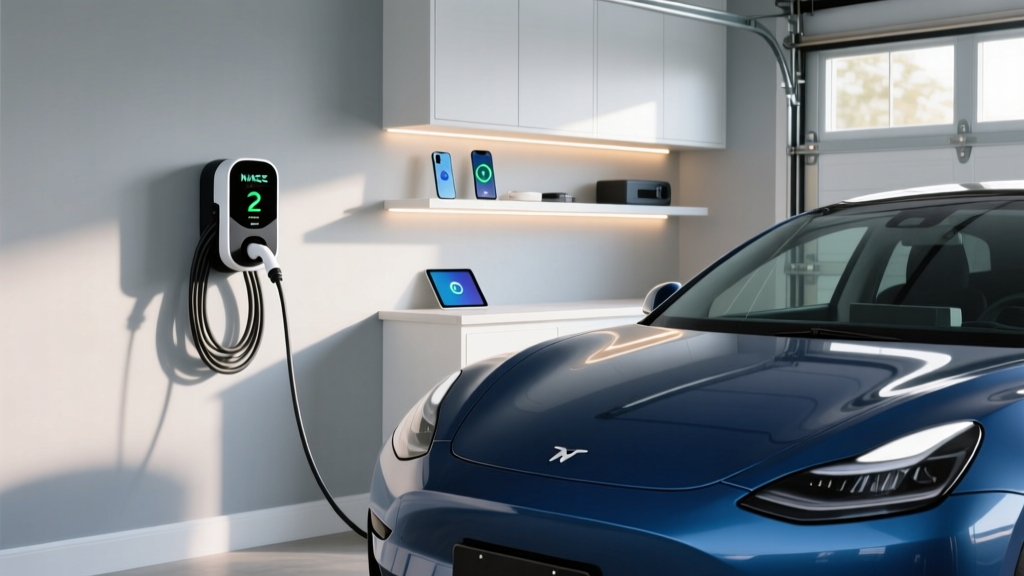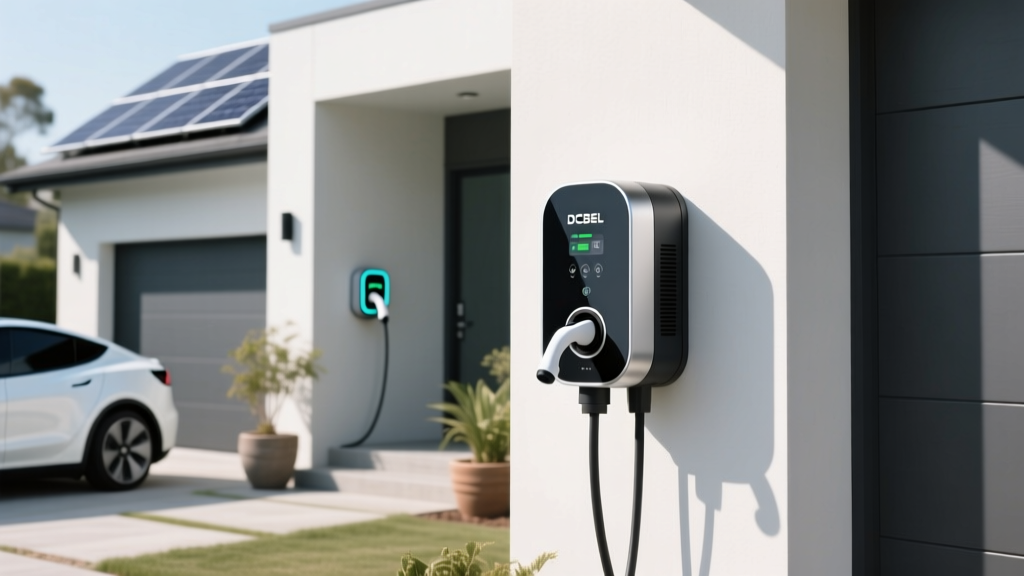
Most home EV chargers push energy one way: from your electrical panel into your car's battery. The dcbel bidirectional charger reverses that equation. Marketed as a home energy hub as much as an EV charger, dcbel's flagship R2 unit can send stored battery energy back into your home during an outage — a capability known as Vehicle-to-Home (V2H). For EV owners in areas with unreliable grids or frequent storms, that proposition turns a parked car into a 60–100 kWh backup generator.
But bidirectional hardware is expensive, installation is complex, and not every EV supports it. After analyzing dcbel's published specifications, real-world installer quotes, and the current V2H-compatible vehicle landscape, here's exactly what you need to know before committing.
What the dcbel Bidirectional Charger Actually Does
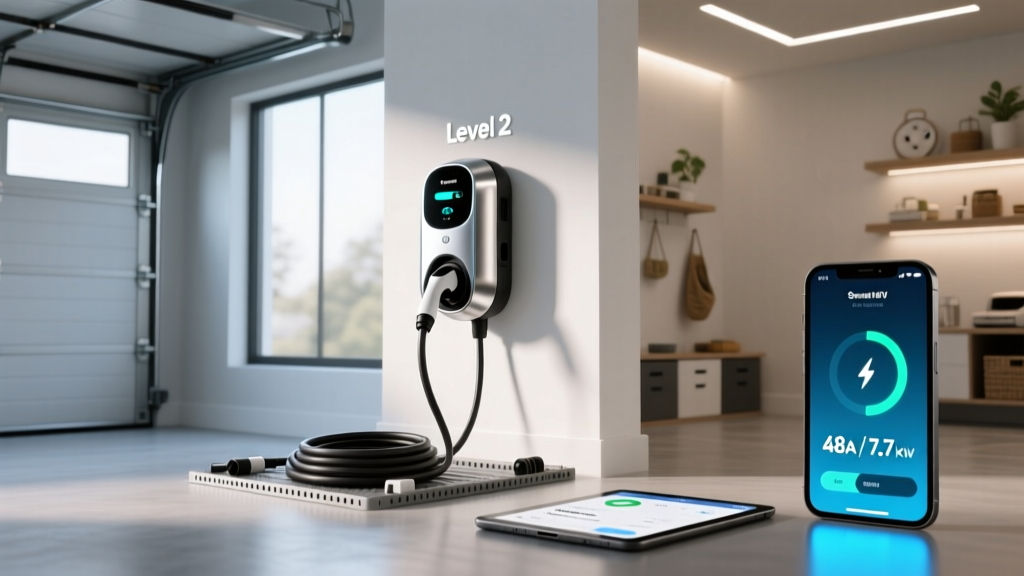
The dcbel R2 is a wall-mounted, Level 2 bidirectional charger rated for up to 19.2 kW of charging power (80A at 240V) and up to 19.2 kW of discharge power back to the home. That's roughly enough to run essential circuits — refrigerator, lights, internet, a window AC unit — for multiple days when paired with a large EV battery like the Ford F-150 Lightning's 131 kWh extended-range pack.
Unlike a standalone home battery (such as a Tesla Powerwall at ~13.5 kWh and $8,000+ installed), the dcbel system leverages the battery you already own: your electric vehicle. The trade-off is that bidirectional charging requires three things to align:
- A bidirectional-capable charger (the dcbel R2 or a competitor like the Wallbox Quasar 2)
- A V2H-compatible vehicle with the necessary onboard software and hardware
- A home electrical system with a transfer switch or energy management system to isolate circuits during outages
Charging Levels Explained: Level 1, Level 2, and DC Fast
Before evaluating the dcbel R2 specifically, it helps to understand the full charging landscape. The dcbel unit operates as a Level 2 charger for daily use and adds bidirectional discharge capability on top.
| Level | Voltage / Amperage | Power (kW) | Miles of Range Added Per Hour | Typical Use Case |
|---|---|---|---|---|
| Level 1 | 120V / 12–16A | 1.4–1.9 kW | 3–5 mi/hr | Overnight trickle; PHEVs; emergency |
| Level 2 | 240V / 32–80A | 7.7–19.2 kW | 25–65 mi/hr | Daily home/work charging; dcbel R2 operates here |
| DC Fast Charge | 400–900V DC | 50–350 kW | 150–1,200+ mi/hr | Road trips; 10–80% in 18–40 min |
At its maximum 19.2 kW output, the dcbel R2 adds roughly 60 miles of range per hour for an efficient sedan like the Hyundai Ioniq 6 (which achieves about 3.5 mi/kWh). For a larger vehicle like the Rivian R1T (roughly 2.2 mi/kWh), that same 19.2 kW yields about 42 miles per hour.
Most EV owners don't need the full 80A. A typical commute of 30–40 miles round trip requires only 10–12 kWh to replenish — easily handled by a 32A (7.7 kW) Level 2 charger overnight. The 80A capacity matters most for large-battery trucks and for minimizing charge time when you need a quick turnaround.
Is Your EV Compatible with Bidirectional Charging?
This is the single biggest constraint. As of early 2026, only a handful of vehicles sold in the U.S. support V2H or V2L (Vehicle-to-Load) bidirectional energy flow, and compatibility depends on both the vehicle's hardware and the charger's communication protocol.
| Vehicle | Battery (kWh) | Bidirectional Type | Connector | dcbel R2 Compatible? |
|---|---|---|---|---|
| Ford F-150 Lightning (Extended Range) | 131 kWh (NMC) | V2H / Pro Power Onboard | NACS (2025+) | Yes (with NACS cable or CCS adapter) |
| Ford F-150 Lightning (Standard) | 98 kWh (NMC) | V2H / Pro Power Onboard | NACS (2025+) | Yes |
| Hyundai Ioniq 5 (2025+) | 84 kWh (NMC) | V2L (outlet only, not V2H) | NACS | No — V2L only, no grid-back |
| Kia EV9 (2025+) | 100 kWh (NMC) | V2L (limited V2H planned) | NACS | Partial — V2L now, V2H pending OTA |
| GMC Sierra EV (2025+) | 200+ kWh (NMC) | V2H capable (announced) | NACS | Expected — pending firmware validation |
| Tesla Cybertruck | 123 kWh (NMC) | V2L (Powershare); no V2H | NACS | No — Tesla V2H not yet enabled |
The critical takeaway: Ford's F-150 Lightning remains the most proven V2H platform as of 2026. Hyundai/Kia's V2L feature powers individual appliances through a 120V outlet in the car or charge port — useful for camping or a sump pump during an outage — but it doesn't integrate with your home's electrical panel the way true V2H does.
According to Ford's official F-150 Lightning specifications, the truck's Intelligent Backup Power system works with the Ford Charge Station Pro (80A), and Ford has been expanding compatibility with third-party bidirectional units through firmware updates. Always confirm current compatibility directly with dcbel and your vehicle manufacturer before purchasing.
Connector Compatibility: NACS, CCS1, and Adapter Needs
The North American charging landscape has consolidated heavily around NACS (North American Charging Standard), originally developed by Tesla and now adopted by nearly every major automaker for 2025+ models. The dcbel R2 ships with a NACS connector as standard, with CCS1 available as an option or via adapter.
| Connector | Standard On | Adapter Available? | Notes |
|---|---|---|---|
| NACS (J3400) | Tesla (all), Ford (2025+), GM (2025+), Rivian (2025+), Hyundai/Kia (2025+) | N/A — becoming the default | Smaller, lighter plug; supports bidirectional |
| CCS1 | Legacy models pre-2025, some VW ID.4, BMW iX | CCS-to-NACS adapters ($150–$250) | Being phased out on new vehicles |
| CHAdeMO | Nissan Leaf (discontinued 2025), Mitsubishi Outlander PHEV | Limited availability | Effectively obsolete for new EVs |
If you drive a 2025+ model year EV from Ford, GM, Hyundai, Kia, or Rivian, your vehicle almost certainly uses NACS. Older CCS1 vehicles can use the dcbel R2 with a CCS-to-NACS adapter, but bidirectional functionality may not pass through the adapter — confirm with dcbel before relying on V2H with a CCS vehicle.
Installation Costs: Equipment, Electrician, and Panel Upgrades
Bidirectional charger installation is more involved than a standard Level 2 setup. The dcbel R2 requires a dedicated 240V / 100A circuit (to support the full 80A continuous draw plus the 125% NEC safety margin), a transfer switch or energy management system for V2H operation, and potentially a panel upgrade if your home's electrical service is 100A or 150A.
| Component | Cost Range | Details |
|---|---|---|
| dcbel R2 unit | $5,500–$6,500 | Includes charger, mounting hardware, smart gateway |
| Electrician labor (install + wiring) | $1,200–$3,000 | Varies by run length, conduit, local rates ($75–$150/hr) |
| Transfer switch / energy management | $800–$2,000 | Required for V2H; isolates home circuits during outage |
| Permit + inspection | $150–$500 | Varies by municipality; required for code compliance |
| Electrical panel upgrade (if needed) | $2,000–$4,500 | 200A service upgrade; needed for older homes with 100–150A panels |
| Total (no panel upgrade) | $7,650–$12,000 | Typical for modern homes with 200A service |
| Total (with panel upgrade) | $9,650–$16,500 | Older homes needing full service upgrade |
For context, a standard non-bidirectional Level 2 charger (like a ChargePoint Home Flex at ~$600) typically costs $1,200–$2,800 installed — no transfer switch, lighter circuit requirements. The dcbel R2's premium reflects the bidirectional hardware, the energy management system, and the heavier electrical infrastructure.
What Does Charging (and Discharging) Actually Cost?
One of the strongest economic arguments for the dcbel R2 is the cost differential between home charging and public DC fast charging — plus the potential to offset peak electricity rates or avoid generator fuel costs during outages.
| Scenario | Cost per kWh | Cost per Mile (at 3 mi/kWh) | Annual Cost (12,000 mi) |
|---|---|---|---|
| Home charging (off-peak utility rate) | $0.09–$0.14/kWh | $0.03–$0.047/mi | $360–$564 |
| Home charging (standard rate, no TOU) | $0.15–$0.20/kWh | $0.05–$0.067/mi | $600–$804 |
| Public Level 2 (ChargePoint, EVgo) | $0.25–$0.40/kWh | $0.083–$0.133/mi | $996–$1,596 |
| DC Fast Charging (Electrify America, Tesla) | $0.35–$0.55/kWh | $0.117–$0.183/mi | $1,404–$2,196 |
| Gasoline vehicle (28 MPG avg, $3.40/gal) | — | $0.121/mi | $1,452 |
Home off-peak charging is roughly 3–4× cheaper per mile than gasoline. Even standard-rate home charging beats gas by about 2×. The dcbel R2's smart scheduling features let you set charging windows to coincide with your utility's lowest time-of-use (TOU) rates — typically overnight between 11 PM and 6 AM.
The V2H value proposition is harder to quantify in dollars but easy to understand in resilience terms: during a multi-day outage, a 131 kWh F-150 Lightning battery, discharged at an average home load of 2–3 kW, can power essential circuits for 2–4 days — without the fuel, noise, or maintenance of a gasoline generator.
Charging Time Examples: How Long Does the dcbel R2 Take?
At its peak 19.2 kW output, the dcbel R2 is one of the fastest residential Level 2 chargers available. Here's how that translates to real-world charge times for popular EV batteries:
- Ford F-150 Lightning Extended Range (131 kWh): 10–80% in approximately 5.2 hours (91.7 kWh added at 19.2 kW, accounting for ~10% charging inefficiency)
- Tesla Model Y Long Range (75 kWh usable): 10–80% in approximately 3 hours (52.5 kWh at 19.2 kW)
- Hyundai Ioniq 5 (84 kWh usable): 10–80% in approximately 3.4 hours (58.8 kWh at 19.2 kW)
- Chevrolet Equinox EV (85 kWh usable): 10–80% in approximately 3.4 hours
These are best-case numbers assuming the vehicle can accept the full 19.2 kW continuously. Most EVs taper charge rate slightly above 80% State of Charge (SoC) to protect battery longevity, and onboard charger limitations may cap acceptance below 19.2 kW. For example, many Tesla models cap AC charging at 11.5 kW (48A), meaning the R2's full 80A capacity goes unused. Check your vehicle's maximum AC charge rate — listed in the owner's manual or on fueleconomy.gov — to understand your actual charge speed.
Equipment Comparison: dcbel R2 vs Competing Bidirectional Chargers
The bidirectional home charger market in 2026 is still small but growing. Here's how the dcbel R2 stacks up against the main alternatives:
dcbel R2
- Max charge power: 19.2 kW (80A)
- Max discharge power: 19.2 kW
- Connector: NACS (CCS adapter available)
- Cable length: 25 ft
- Smart features: App scheduling, solar integration, V2H auto-switch, energy dashboard
- Outdoor rated: Yes (NEMA 4)
- Estimated price: $5,500–$6,500
Ford Charge Station Pro (80A)
- Max charge power: 19.2 kW (80A)
- Max discharge power: 9.6 kW (V2H via Intelligent Backup Power)
- Connector: NACS
- Cable length: 25 ft
- Smart features: FordPass app, Sunrun solar integration
- Outdoor rated: Yes (NEMA 4)
- Estimated price: $1,300–$1,600 (charger only)
Wallbox Quasar 2
- Max charge power: 11.5 kW (48A)
- Max discharge power: 11.5 kW
- Connector: NACS
- Cable length: 20 ft
- Smart features: myWallbox app, solar optimization, V2H
- Outdoor rated: Yes (IP55)
- Estimated price: $4,500–$5,500
The dcbel R2's standout spec is its symmetric 19.2 kW charge and discharge rate — the Wallbox Quasar 2 caps at 11.5 kW in both directions, and the Ford Charge Station Pro limits discharge to 9.6 kW. If you need maximum home backup power from your EV battery, the dcbel R2 offers the highest throughput.
However, the Ford Charge Station Pro is dramatically cheaper as hardware ($1,300–$1,600 vs $5,500+), and it's purpose-built for the F-150 Lightning with guaranteed firmware compatibility. If your primary vehicle is a Lightning and you don't need the full 19.2 kW discharge, the Ford unit with a Sunrun energy management system is the more economical path.
Safety, Code Compliance, and Electrical Requirements
The dcbel R2 must be installed by a licensed electrician to meet National Electrical Code (NEC) requirements and to maintain the unit's warranty. Key specifications and code considerations:
- Dedicated circuit: The R2 requires a dedicated 100A breaker (for 80A continuous operation per NEC 210.20, which mandates 125% overcurrent protection for continuous loads exceeding 3 hours)
- Wire gauge: Typically #2 AWG copper or #1/0 AWG aluminum for the 100A circuit, depending on run length and local code amendments
- GFCI protection: NEC 2023 (625.54) requires GFCI protection for all EV receptacles rated 150V to ground or less and 50A or less — hardwired units like the R2 may be exempt depending on jurisdiction, but your electrician will confirm
- Outdoor rating: The R2 carries a NEMA 4 rating, suitable for outdoor installation including rain, sleet, and hose-directed water. It is not rated for submersion or salt-spray environments
- Transfer switch: V2H operation requires a listed transfer switch or an energy management system (such as the dcbel smart gateway or a third-party unit like the Span panel) to prevent backfeeding the utility grid during an outage — a critical safety and code requirement
- Permit and inspection: Virtually all jurisdictions require an electrical permit for a circuit of this size. Budget $150–$500 for the permit and expect a municipal inspection after installation
Never attempt to bypass the transfer switch requirement. Backfeeding your home's panel without grid isolation can electrocute utility line workers — it's both illegal and lethal. The National Fire Protection Association's NEC guidelines are the governing standard, and your local inspector will enforce them.
Federal Tax Credits and Incentives for Home Charging Equipment
The Alternative Fuel Vehicle Refueling Property Credit (IRS §30C) covers up to 30% of the cost of home EV charging equipment and installation, capped at $1,000. This credit was extended through 2025 and may be renewed for 2026 — check the IRS §30C page for current-year eligibility.
Key caveats:
- The credit applies to equipment placed in service in an eligible census tract (generally non-urban or low-income areas — use the IRS locator tool to verify your address)
- It covers both the charger hardware and installation labor
- It is non-refundable (you must owe at least $1,000 in federal tax to claim the full amount)
- Bidirectional chargers qualify, as they are classified as EV refueling property
Some states and utilities also offer rebates for Level 2 charger installations — California's SGIP program, New York's Charge Ready NY, and various utility TOU incentives can stack with the federal credit. Check your state energy office and local utility for current programs.
Frequently Asked Questions
How much does it cost to install a dcbel bidirectional charger at home?
Total installed cost typically ranges from $7,650 to $12,000 for homes with an existing 200A electrical panel. If your home needs a panel upgrade from 100A or 150A to 200A, add $2,000–$4,500, bringing the total to roughly $9,650–$16,500. The dcbel R2 unit itself costs $5,500–$6,500, with the remainder covering electrician labor, the transfer switch, permits, and wiring.
How fast will the dcbel R2 add range to my EV?
At its maximum 19.2 kW output, the R2 adds approximately 42–65 miles of range per hour, depending on your vehicle's efficiency. A highly efficient sedan like the Hyundai Ioniq 6 (3.5 mi/kWh) gains about 65 miles per hour; a heavier truck like the F-150 Lightning (2.0 mi/kWh) gains about 38 miles per hour. These figures assume your vehicle's onboard charger can accept the full 19.2 kW.
Which EVs are compatible with the dcbel R2's bidirectional V2H feature?
As of 2026, the Ford F-150 Lightning is the most proven V2H-compatible vehicle. The GMC Sierra EV has announced V2H capability pending firmware validation. Hyundai/Kia V2L-equipped vehicles (Ioniq 5, EV9) can power individual appliances but cannot currently send energy back through the home's electrical panel via the dcbel R2. Always confirm vehicle-charger compatibility with dcbel before purchasing.
How much does home charging cost per mile compared to gasoline?
Home charging on off-peak electricity rates ($0.09–$0.14/kWh) costs approximately $0.03–$0.05 per mile for a typical EV. A comparable gasoline vehicle at 28 MPG and $3.40/gallon costs about $0.12 per mile. That's a 2.5–4× cost advantage for home EV charging. Public DC fast charging narrows the gap to roughly $0.12–$0.18 per mile.
What electrical upgrades might I need for a bidirectional charger?
The most common and costly upgrade is a 200A electrical panel upgrade, required if your home currently has 100A or 150A service. You'll also need a dedicated 100A breaker and circuit, a transfer switch for V2H isolation, and potentially upgraded service entrance conductors. A licensed electrician should perform a load calculation (NEC Article 220) to determine whether your existing panel can handle the additional 80A continuous load alongside your home's other circuits.