Why NACS Is Now the Default Connector for Home Charging
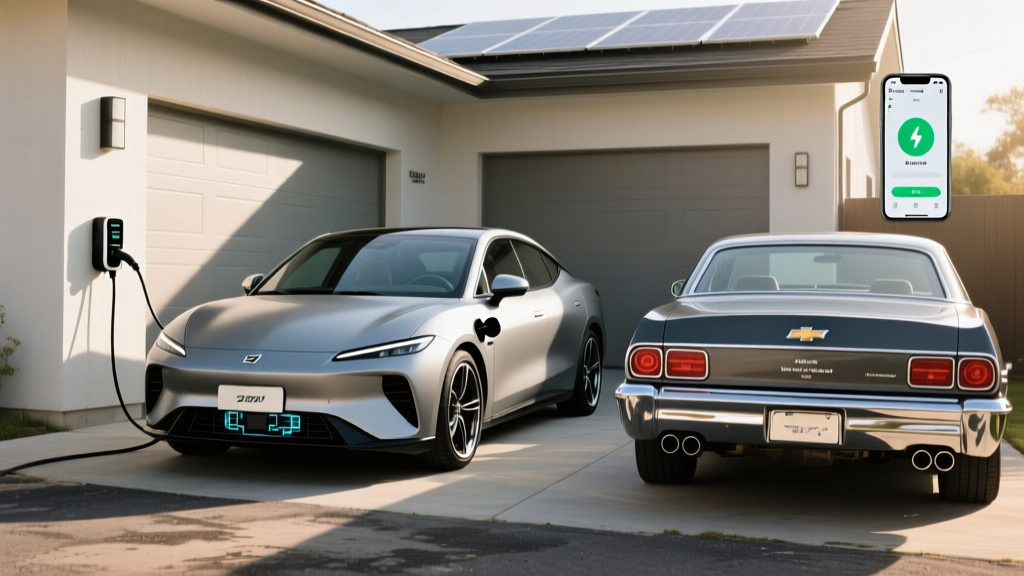
The North American Charging Standard (NACS) — originally developed by Tesla and opened to the industry in late 2022 — has effectively won the connector war in North America. As of the 2025-2026 model years, nearly every major automaker building EVs for the U.S. market has adopted NACS as the native charge port: Ford, GM, Rivian, Volvo, Polestar, Hyundai, Kia, BMW, and others have either switched or committed to switching. That means if you're shopping for a home EV charger today, a NACS charger is almost certainly the right call — whether you drive a Tesla or a non-Tesla EV with a native NACS port.
But choosing the right NACS charger involves more than just picking a brand. You need to understand charging speeds (measured in kilowatts, or kW — the rate of energy flow, not to be confused with kilowatt-hours or kWh, which measure total energy stored in your battery), your home's electrical capacity, installation costs, and which equipment actually delivers reliable daily performance. This guide covers all of it with exact numbers.
Charging Levels Explained: Speeds in kW and Miles Per Hour
EV charging happens at three distinct levels. Understanding the kW output and real-world range recovery at each level is the foundation for choosing the right NACS charger for your home.
| Level | Voltage | Power (kW) | Miles of Range Per Hour | Best For |
|---|---|---|---|---|
| Level 1 | 120V AC | 1.0–1.9 kW | 3–5 mi/hr | Overnight top-ups, PHEVs, low-mileage drivers |
| Level 2 (Home) | 240V AC | 3.3–19.2 kW | 12–75 mi/hr | Daily home charging, full battery replenishment overnight |
| DC Fast Charging | 400–800V DC | 50–350+ kW | 150–1,000+ mi/hr (peak) | Road trips, rapid top-ups on public networks |
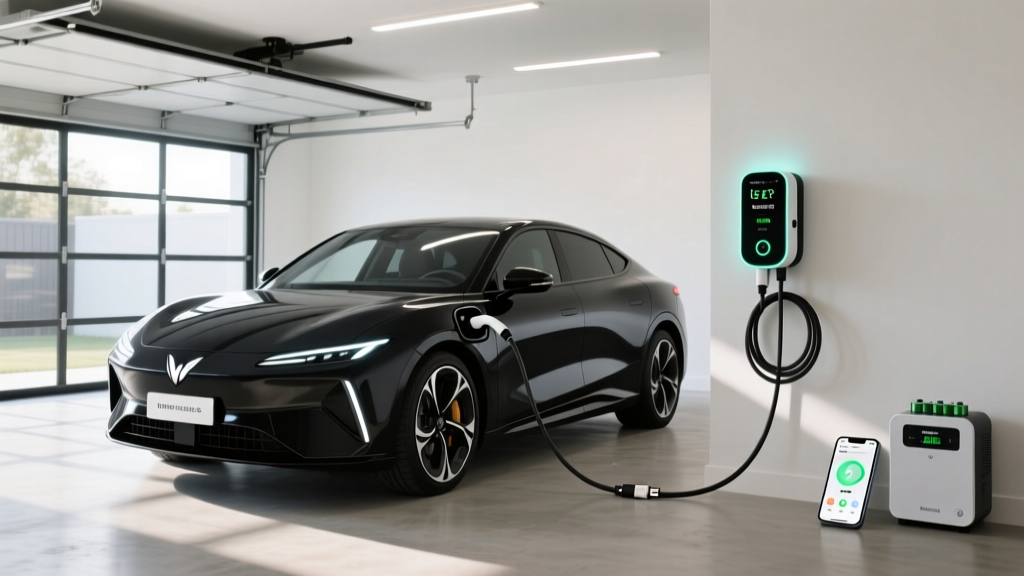
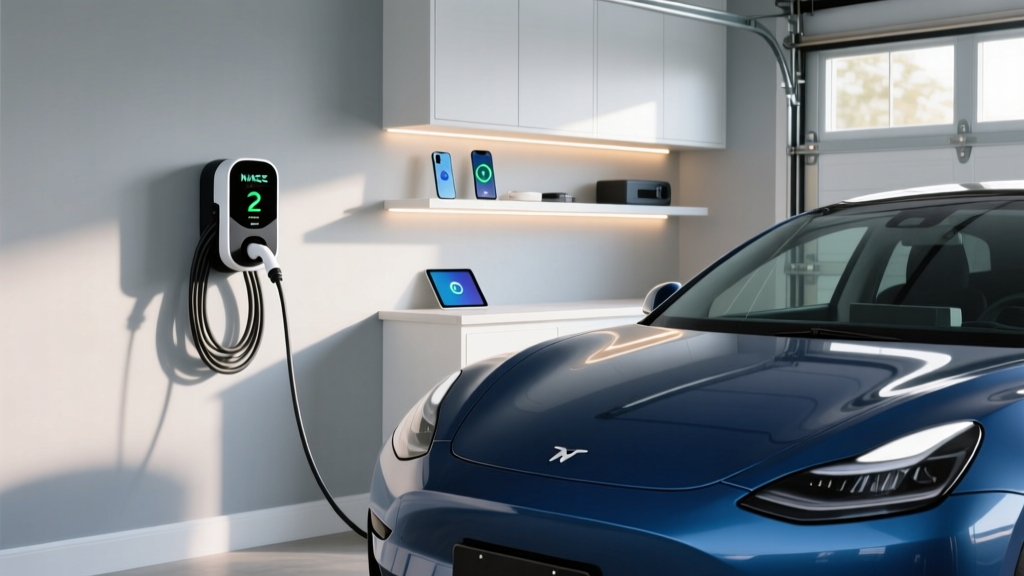
Critical distinction: NACS connectors are used across Level 2 home charging and DC fast charging. When you buy a "NACS charger" for your garage, you're buying a Level 2 AC unit. DC fast charging with NACS happens at public stations (Tesla Superchargers, Electrify America, EVgo, etc.) — that equipment is not installed at homes.
For context on charging times: a typical 75 kWh battery (like the one in a Tesla Model Y Long Range) charging at 11.5 kW (48A on a 60A circuit) will go from 10% to 80% in roughly 4.5 hours. At 7.7 kW (32A on a 40A circuit), that same charge takes about 6.5 hours. Most EV owners charge overnight and wake up full, so Level 2 at home is the practical sweet spot.
How Much Does It Cost to Install a NACS Charger at Home?
This is the question every new EV buyer asks, and the answer varies enormously depending on your home's electrical panel, the distance from panel to charger location, and local permit costs. Here's a realistic breakdown based on 2025-2026 national averages.
| Component | Simple Install (Panel Nearby) | Complex Install (Long Run / Panel Upgrade) |
|---|---|---|
| Level 2 NACS Charger (Equipment) | $400–$750 | $400–$750 |
| Electrician Labor | $500–$1,200 | $1,500–$3,500 |
| Electrical Permit | $50–$200 | $50–$300 |
| Panel Upgrade (if needed) | $0 (not needed) | $1,500–$4,000 |
| Conduit, Wiring, Misc. Materials | $100–$300 | $300–$800 |
| Total Estimated Cost | $1,050–$2,450 | $3,750–$9,350 |
The panel upgrade factor: Many homes built before 2000 have 100-amp electrical panels. Adding a 60-amp dedicated circuit for a high-power NACS charger may require upgrading to a 200-amp panel — a $1,500–$4,000 job on its own. Before purchasing any charger, have a licensed electrician perform a load calculation on your panel to determine available capacity. Per the National Electrical Code (NEC), an EV charger circuit must be rated at 125% of the charger's continuous draw — so a 48-amp charger requires a 60-amp circuit, and a 40-amp charger requires a 50-amp circuit.
Federal incentive note: The IRS §30C Alternative Fuel Vehicle Refueling Property Credit offers up to $1,000 for home charger installation, but eligibility depends on your census tract meeting specific rural or low-income criteria. Check the IRS §30C page for current rules — this is separate from the §30D vehicle purchase credit.
What Electrical Upgrades Might I Need?
Beyond the panel itself, here's what your electrician will evaluate:
- Circuit capacity: A 48-amp NACS charger (like the Tesla Wall Connector) draws 48 amps continuously, requiring a dedicated 60-amp breaker. If your panel has limited open slots or is near its rated capacity, the electrician may recommend a panel upgrade or a lower-amperage charger (e.g., 32-amp on a 40-amp circuit).
- Wire gauge and run length: Longer runs from panel to charger require thicker (lower-gauge) wire to prevent voltage drop. A 60-amp circuit typically uses 6 AWG copper wire for runs under 50 feet; longer runs may require 4 AWG, adding to material costs.
- GFCI protection: The 2020 and 2023 NEC require GFCI (Ground Fault Circuit Interrupter) protection for EV charging circuits. Many modern NACS chargers have built-in GFCI detection, but your electrician may still install a GFCI breaker, which costs $50–$150 more than a standard breaker.
- Outdoor rating: If your charger will be mounted outside (carport, driveway, exterior wall), it must carry a NEMA 4 or NEMA 4X weather-resistance rating. All major NACS chargers listed below meet this standard.
- Permit and inspection: Most jurisdictions require a permit for new 240V circuit installation. Your electrician typically handles this. Expect an inspection visit after installation — don't skip it, as unpermitted work can void homeowner's insurance claims.
Connector Compatibility: NACS, CCS, CHAdeMO, and Adapters
If you're buying a NACS charger for home use, you need to confirm your vehicle's charge port. Here's the 2025-2026 landscape:
| Connector | Brands Using It (Native) | Home Charger Availability |
|---|---|---|
| NACS (J3400) | Tesla (all), Ford (2025+), GM (2025+), Rivian (2025+), Volvo/Polestar (2025+), Hyundai/Kia (2026+), BMW (2025+), others | Widely available — Tesla Wall Connector, Emporia, EnelX, Autel, Lectron |
| CCS1 | Legacy non-Tesla EVs (2024 and earlier models from VW, Hyundai, Kia, BMW, Ford, GM) | Available — ChargePoint, Emporia, Autel (CCS models); NACS-to-CCS adapters exist |
| CHAdeMO | Nissan Leaf, Mitsubishi Outlander PHEV (legacy) | Limited — mostly discontinued for home units; CHAdeMO adapters rare |
Adapter options: If you currently drive a CCS-equipped EV but plan to switch to a NACS vehicle in the future (or vice versa), adapter solutions exist. Tesla sells a CCS-to-NACS adapter (~$250) for Supercharger access on non-Tesla EVs, and third-party brands like Lectron and A2Z offer NACS-to-J1772 adapters for Level 2 charging. However, native NACS chargers deliver the most reliable connection with the least adapter hassle. If your current EV has CCS and your next one will have NACS, consider buying a charger with a swappable connector or simply plan to swap chargers when you swap cars.
Best NACS Chargers for Home Use in 2026
After testing and tracking reliability data across major home charging units, here are the top NACS chargers worth your money — with exact specs.
Tesla Wall Connector (NACS)
- Power Output: Up to 11.5 kW (48A on 240V/60A circuit)
- Connector: Native NACS
- Cable Length: 24 feet
- Smart Features: Wi-Fi connectivity, OTA firmware updates, Tesla app integration, Power Sharing (link multiple units on one circuit), load management
- Outdoor Rating: NEMA 4 (fully outdoor-rated)
- Price: ~$475
- Best For: Tesla owners and anyone prioritizing proven reliability and high power output. The gold standard.
Emporia Vue Smart EV Charger (NACS)
- Power Output: Up to 11.5 kW (48A on 240V/60A circuit)
- Connector: Native NACS (also available in J1772)
- Cable Length: 24 feet
- Smart Features: Wi-Fi, Emporia app with real-time energy monitoring, solar-integration scheduling, time-of-use optimization, load balancing with Emporia Vue home energy monitor
- Outdoor Rating: NEMA 4
- Price: ~$400
- Best For: Solar owners and energy-data enthusiasts who want to track every kWh and schedule charging around utility rate windows.
Lectron V-BOX Pro (NACS)
- Power Output: Up to 11.5 kW (48A) or 9.6 kW (40A) — configurable via DIP switch
- Connector: Native NACS
- Cable Length: 20 feet
- Smart Features: Basic LED status indicators, no Wi-Fi/app (dumb charger — which some owners prefer for simplicity)
- Outdoor Rating: NEMA 4
- Price: ~$350
- Best For: Budget-conscious buyers who want a simple, reliable, no-frills NACS charger without app dependency.
EnelX Way Pulsion (NACS)
- Power Output: Up to 11.5 kW (48A)
- Connector: Native NACS
- Cable Length: 25 feet (longest in class)
- Smart Features: JuicePass app, scheduled charging, energy reports, Alexa/Google Home integration
- Outdoor Rating: NEMA 4X (corrosion-resistant — ideal for coastal or humid climates)
- Price: ~$600
- Best For: Installations where extra cable reach matters (detached garages, wide driveways) and users wanting voice-assistant integration.
How Much Does Charging Cost Per Mile vs. Gas?
The economics of home charging vs. gas remain compelling in 2026, especially if you can access off-peak utility rates. Here's a realistic comparison using a mid-size electric SUV (averaging 3.0 miles per kWh, similar to a Tesla Model Y or Ford Mustang Mach-E) and a comparable gas SUV (averaging 28 MPG combined).
| Charging Scenario | Rate | Cost per kWh | Cost per Mile (at 3.0 mi/kWh) |
|---|---|---|---|
| Home — Off-Peak Utility Rate | Time-of-use plan, overnight | $0.08–$0.14/kWh | $0.027–$0.047 |
| Home — Standard Residential Rate | Flat rate, no TOU | $0.14–$0.20/kWh | $0.047–$0.067 |
| Public Level 2 (ChargePoint, etc.) | Varies by network/location | $0.25–$0.49/kWh | $0.083–$0.163 |
| DC Fast Charging (Electrify America, Tesla Supercharger) | Per-kWh or per-minute billing | $0.32–$0.58/kWh | $0.107–$0.193 |
| Gasoline (28 MPG, $3.40/gal) | — | — | $0.121 |
The takeaway: Home charging on an off-peak rate costs roughly 3–4 cents per mile — about one-quarter the cost of gasoline at $3.40/gallon. Even standard-rate home charging undercuts gas. Public DC fast charging, however, can exceed gas costs per mile, which is why home charging remains the economic backbone of EV ownership. According to fueleconomy.gov, the average EV efficiency across current models is approximately 3.0–3.5 miles per kWh, making the math above representative for most buyers.
Safety, Code, and Best Practices for NACS Charger Installation
Electrical safety isn't an area to cut corners. Here are the code requirements and best practices that separate a clean install from a fire-hazard liability:
- Dedicated circuit: Your NACS charger must be on its own dedicated circuit — not shared with other appliances or outlets. The NEC requires this for continuous loads (defined as loads running 3+ hours, which EV charging almost always does).
- Hardwired vs. plug-in: Chargers rated above 40 amps (i.e., drawing above 32 amps continuous) should be hardwired rather than plugged into a NEMA 14-50 outlet. Hardwiring eliminates the receptacle as a potential failure point and is required by code for circuits above 50 amps in many jurisdictions. If you opt for a NEMA 14-50 plug-in setup, use a commercial-grade receptacle (Hubbell or Bryant, ~$80–$120) — cheap residential-grade outlets have been linked to overheating and melting in EV charging applications.
- GFCI protection: Required by NEC 2020/2023 for EV charging. If your charger has integrated ground-fault protection (most modern units do), your electrician may be able to use a standard breaker rather than a GFCI breaker, saving $50–$100 — but confirm this with your local inspector.
- Cable management: A 24-foot charging cable is heavy and will degrade if left on the ground. Install a cable holster or hook ($15–$40) to keep the connector clean and protected.
- Wi-Fi signal: Smart chargers rely on Wi-Fi for firmware updates and scheduling. Test your 2.4 GHz Wi-Fi signal at the charger location before installation — garages often have weak coverage. A $25 Wi-Fi extender can solve this.
Frequently Asked Questions About NACS Chargers
Can I use a NACS charger with a non-Tesla EV?
Yes — if your non-Tesla EV has a native NACS charge port (2025+ Ford, GM, Rivian, Volvo, Polestar, and 2026+ Hyundai/Kia models). If your EV has a CCS port, you'll need either a CCS-compatible charger or a NACS-to-CCS adapter. Check your vehicle's charge port before purchasing.
How fast will a 48-amp NACS charger charge my EV overnight?
A 48-amp charger delivers up to 11.5 kW on a 240V circuit. For a 75 kWh battery, that's roughly 4.5 hours from 10% to 80%. For a larger 100 kWh battery (like a Ford F-150 Lightning Extended Range), expect about 6 hours from 10% to 80%. In practice, most owners plug in at 60-70% state of charge and wake up at 80-90% in 2-3 hours — well within any overnight window.
Should I get a 48-amp or 32-amp NACS charger?
If your electrical panel can support a 60-amp dedicated circuit, go with 48 amps — the extra speed is worth it for larger batteries and cold-weather preconditioning. If your panel is limited or you want to avoid a panel upgrade, a 32-amp charger on a 40-amp circuit (7.7 kW) still fully charges most EVs overnight and costs less to install.
Does the federal tax credit cover home charger installation?
The §30C Alternative Fuel Vehicle Refueling Property Credit can cover up to 30% of charger and installation costs, capped at $1,000 — but only if you live in a qualifying census tract (rural or low-income communities). The IRS §30C guidelines specify the eligibility requirements, which are based on where the charger is installed, not where the vehicle was purchased. Consult a tax professional to confirm your eligibility.
Is it safe to charge my EV in the rain with a NACS connector?
Yes. The NACS connector and all major home chargers are rated for outdoor use (NEMA 4 or higher) and are designed to handle rain, snow, and dust. The connector's electrical contacts are recessed and only energize after a secure connection is confirmed. Just don't submerge the connector in standing water.
What happens if my EV's charge port is CCS but I buy a NACS charger?
You'll need an adapter — specifically a NACS-to-J1772 or NACS-to-CCS adapter depending on your vehicle's port. These adapters exist but add a point of failure and typically cost $150–$300. The cleaner solution is to either buy a charger matching your current EV's connector or plan to swap chargers when you upgrade to a NACS-equipped vehicle.