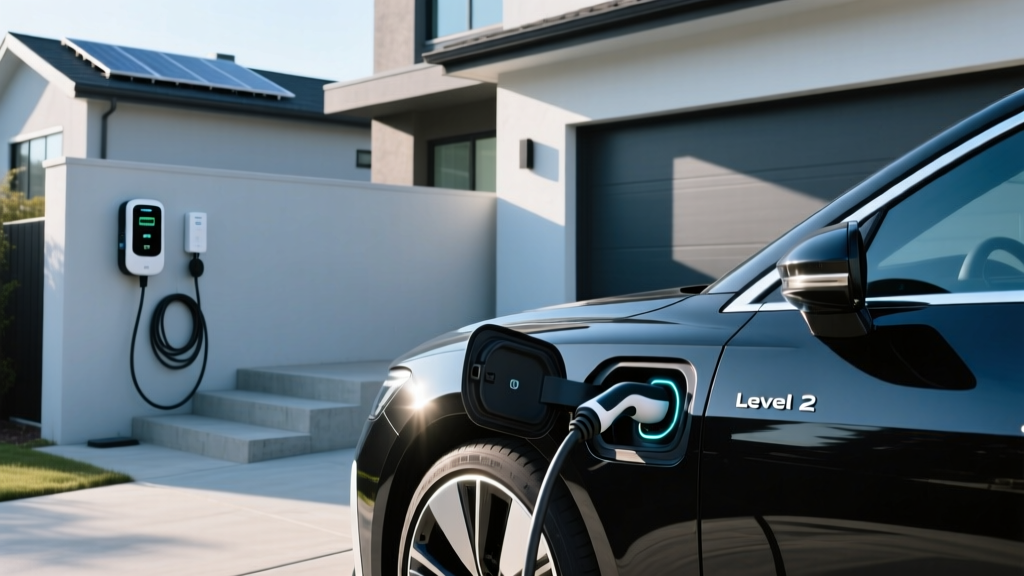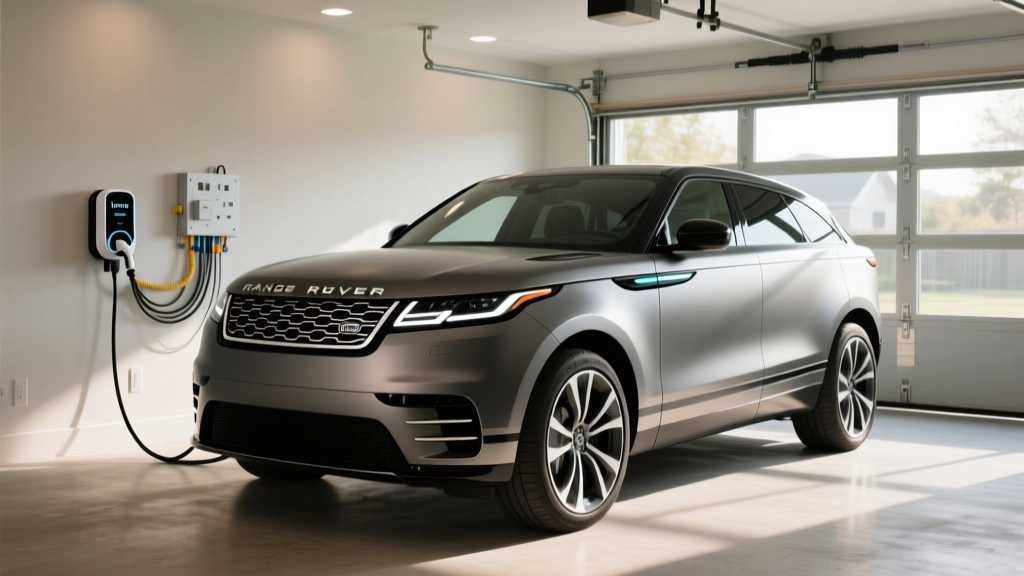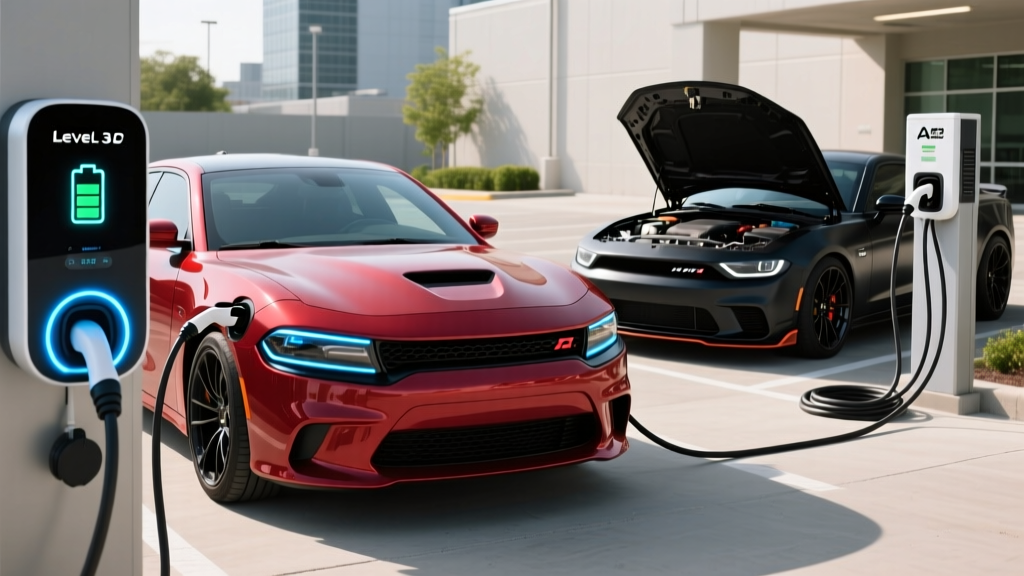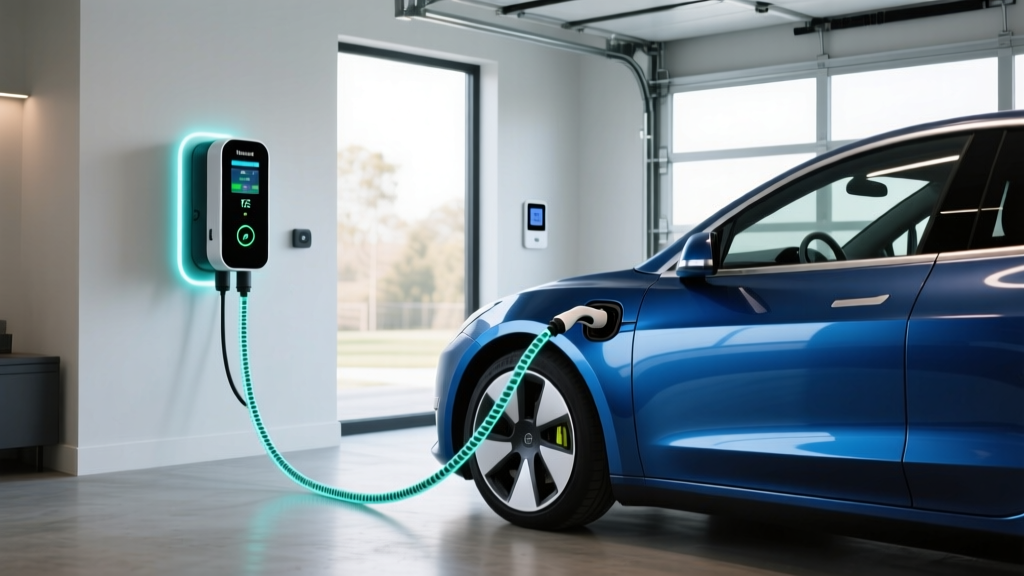
If you've ever sat at a public DC fast charger for 25 minutes and thought, "I wish I could do this at home," you're not alone. The idea of DC fast charging at home sounds like the ultimate EV convenience — pulling into your garage and adding 200 miles of range in 20 minutes. But the reality of residential DC fast charging involves serious electrical infrastructure, five-figure costs, and trade-offs that make Level 2 the far more practical choice for nearly every EV owner.
This guide breaks down exactly what's involved in installing a DC fast charger at home, what it costs, which equipment exists, and why a high-quality Level 2 charger remains the gold standard for residential charging in 2026.
Charging Levels Explained: kW, Miles Per Hour, and What They Mean
Before evaluating whether DC fast charging at home makes sense, you need to understand the three charging levels and how they differ in power delivery. Note: kW (kilowatts) measures power — the rate of energy flow. kWh (kilohours) measures energy — the total amount stored in your battery. A charger's kW rating tells you how fast it can push energy into your battery; your battery's kWh capacity tells you how much it holds.
| Level | Voltage | Max Power (kW) | Miles of Range Per Hour | Typical Use Case |
|---|---|---|---|---|
| Level 1 | 120V AC | 1.4 kW | 3–5 mi/hr | Overnight trickle; PHEVs; emergency |
| Level 2 | 240V AC | 7.2–19.2 kW | 20–75 mi/hr | Home daily charging; workplace |
| DC Fast (Level 3) | 400–900V DC | 50–350+ kW | 150–1,200+ mi/hr | Public highway corridors; commercial fleets |
A typical Level 2 home charger at 11.5 kW adds roughly 40–45 miles of range per hour of charging — enough to fully replenish most EVs overnight in 6–10 hours. A 150 kW DC fast charger, by contrast, can push a compatible vehicle from 10% to 80% state of charge in roughly 18–25 minutes, depending on the vehicle's charge curve and battery size.
DC Fast Charging at Home: What's Actually Involved
Residential DC fast chargers do exist, but they're fundamentally different from the wall-mounted Level 2 units most EV owners install. Here's what a home DC fast-charging setup requires:
Electrical Service Requirements
A 50 kW DC fast charger — the smallest commonly available residential unit — typically requires 480V three-phase power or a dedicated 240V single-phase service with 200+ amps of dedicated capacity. Most US homes have 200-amp main panels serving the entire house. A DC fast charger alone could demand 60–125 amps of continuous draw, which would consume a majority of your panel's capacity.
Realistically, this means one of two things:
- Panel upgrade: Upgrading to a 400-amp service or adding a secondary meter/sub-panel specifically for the charger. Cost: $3,000–$8,000+ depending on your utility and local code.
- Utility service upgrade: Requesting three-phase power from your utility, which may not be available in residential areas and can cost $10,000–$50,000+ if new transformer or line work is needed.
Charging Time Examples by Battery Size
To put charging speeds in context, here's how long common EV battery sizes take at each level (10%–80% state of charge, which is the recommended fast-charging window to preserve battery health):
| Battery Size (kWh) | Example Vehicles | Level 2 (11.5 kW) | DC Fast (50 kW) | DC Fast (150 kW) |
|---|---|---|---|---|
| 62 kWh | Nissan Leaf, base Bolt | ~4.5 hours | ~55 min | N/A (vehicle-limited ~50 kW) |
| 77 kWh | Tesla Model Y LR, Ioniq 5 | ~5.5 hours | ~70 min | ~18–22 min |
| 100 kWh | F-150 Lightning Ext., Model S | ~7 hours | ~90 min | ~25–32 min |
Charge curve reality check: No EV sustains peak charging kW for the entire session. A vehicle rated for 250 kW peak might sustain that rate only between 10%–30% SoC before tapering to 150 kW, then 75 kW, then 25 kW above 80%. This is why manufacturers quote 10–80% times rather than 0–100%.
Home EV Charger Installation Cost Breakdown
Here's what you can actually expect to spend on a home charging setup, whether you go Level 2 (the realistic choice) or pursue DC fast charging at home:
| Component | Level 2 (Typical) | DC Fast (Residential) |
|---|---|---|
| Charger equipment | $400–$1,200 | $10,000–$45,000 |
| Electrician labor | $600–$2,500 | $3,000–$10,000 |
| Electrical permit | $50–$300 | $200–$1,000 |
| Panel upgrade (if needed) | $1,500–$4,000 | $3,000–$15,000+ |
| Utility service upgrade | Rarely needed | $5,000–$50,000+ |
| Total estimated range | $1,050–$8,000 | $21,200–$121,000+ |
For the vast majority of EV owners, a Level 2 installation lands between $1,200 and $3,500 all-in, assuming no panel upgrade is needed. The IRS §30C alternative fuel vehicle refueling property credit can cover up to 30% of home charging equipment and installation costs (capped at $1,000) — check current-year eligibility on IRS.gov as sourcing and census-tract requirements apply.
Electrical Upgrades You Might Need
Even for Level 2, older homes may require:
- Dedicated circuit: A 40-amp or 60-amp breaker on a 240V circuit, exclusive to the charger. This is standard code for hardwired Level 2 units.
- Panel capacity check: If your main panel is 100A and you already run electric HVAC, dryer, and stove, adding a 40A charger may exceed safe continuous load limits. An electrician will perform a load calculation per NEC Article 220.
- GFCI protection: The 2023 NEC requires GFCI protection for EV receptacles (NEMA 14-50). Hardwired chargers with integrated ground-fault protection may not require an additional GFCI breaker.
- Outdoor rating: If your charger is installed outside or in an unconditioned garage, ensure the unit carries a NEMA 4 or NEMA 4X rating for weather resistance.
Connector Compatibility: NACS, CCS1, and CHAdeMO
Before choosing any charger — Level 2 or DC fast — you need to match the connector to your vehicle. The North American market has largely consolidated around NACS (the Tesla-designed connector, now formally SAE J3400), but CCS1 remains on many 2022–2025 model-year vehicles, and CHAdeMO persists on older Nissan Leafs.
| Connector | Brands Using It (2026) | Adapter Availability |
|---|---|---|
| NACS (J3400) | Tesla, Ford, GM, Rivian, Volvo, Polestar, Hyundai/Kia (2025+), BMW, Mercedes | CCS-to-NACS adapters widely available ($200–$400) |
| CCS1 | VW ID.4 (pre-2026), some Stellantis, legacy Hyundai/Kia | NACS-to-CCS adapters available; Tesla Supercharger access via adapter |
| CHAdeMO | Nissan Leaf (all years), Mitsubishi Outlander PHEV | Limited adapters; declining public infrastructure |
For Level 2 home charging, nearly all chargers use a J1772 connector (or NACS for Tesla Wall Connectors). If your EV has a NACS port, you'll either use a Tesla Wall Connector directly or a J1772-to-NACS adapter. If your EV has CCS1, a standard J1772 Level 2 charger works natively — J1772 handles AC charging on both CCS and NACS vehicles.
Charging Cost Per Mile: Home vs. Public vs. Gas
The economics of EV charging depend heavily on where and when you charge. Here's a realistic cost comparison for 2026:
| Scenario | Cost per kWh | Efficiency Assumption | Cost Per Mile |
|---|---|---|---|
| Home Level 2 (off-peak utility rate) | $0.08–$0.14 | 3.0 mi/kWh (avg EV) | $0.03–$0.05 |
| Home Level 2 (standard rate) | $0.14–$0.22 | 3.0 mi/kWh | $0.05–$0.07 |
| Public Level 2 (ChargePoint, etc.) | $0.20–$0.40 | 3.0 mi/kWh | $0.07–$0.13 |
| Public DC Fast (Electrify America, EVgo) | $0.35–$0.55 | 3.0 mi/kWh | $0.12–$0.18 |
| Tesla Supercharger (average) | $0.28–$0.40 | 3.2 mi/kWh (Tesla efficiency) | $0.09–$0.13 |
| Gas vehicle (25 MPG, $3.40/gal) | — | 25 MPG | $0.14 |
| Gas vehicle (30 MPG, $3.40/gal) | — | 30 MPG | $0.11 |
The takeaway: home Level 2 charging at off-peak rates is the cheapest way to "fuel" any vehicle, at roughly $0.03–$0.05 per mile. Public DC fast charging, while convenient for road trips, often costs more per mile than a fuel-efficient gas car. This is a key reason DC fast charging at home doesn't pencil out for most owners — you'd be paying premium equipment costs for the same electricity you could draw slowly and cheaply overnight.
Recommended Home EV Chargers (Level 2)
Rather than pursuing DC fast charging at home, here are the Level 2 units we recommend for 2026, based on reliability, smart features, and real-world charging performance:
Tesla Wall Connector (J3400 / NACS)
- Power output: Up to 11.5 kW (48A) on a 60A circuit
- Connector: NACS (J3400) — native for Tesla and 2025+ Ford, GM, Rivian, Hyundai/Kia
- Cable length: 24 ft
- Smart features: Wi-Fi, OTA updates, Tesla app integration, power sharing between multiple units
- Price: ~$475
- Best for: Tesla owners and NACS-equipped vehicles; cleanest integration if you're in the Tesla ecosystem
ChargePoint Home Flex (J1772)
- Power output: Up to 12 kW (50A) configurable on 40A–60A circuits
- Connector: J1772 (works with all EVs; NACS vehicles use adapter)
- Cable length: 23 ft
- Smart features: Wi-Fi, ChargePoint app scheduling, Alexa integration, flexible amperage settings
- Price: ~$699
- Best for: Multi-EV households with mixed connector types; flexible amperage lets you match your circuit
Emporia Vue Level 2 Charger
- Power output: Up to 11.5 kW (48A) on a 60A circuit
- Connector: J1772
- Cable length: 24 ft
- Smart features: Wi-Fi, Emporia energy monitoring integration, solar-aware scheduling, load management
- Price: ~$399
- Best for: Budget-conscious buyers; solar-panel owners who want energy-tracking integration
Grizzl-E Smart (J1772)
- Power output: Up to 10 kW (40A) on a 50A circuit
- Connector: J1772
- Cable length: 24 ft
- Smart features: Wi-Fi, OCPP compatibility, adjustable amperage, built-in thermal protection
- Price: ~$549
- Best for: Cold-climate and outdoor installations; rugged build with NEMA 4 rating
Safety and Electrical Code Considerations
Whether you install a Level 2 or pursue the far more complex DC fast charging at home, these safety and code requirements are non-negotiable:
- Dedicated circuit: NEC Article 625 requires EV charging equipment to be on a dedicated branch circuit. No sharing with other outlets or appliances.
- Continuous load derating: EV chargers are classified as continuous loads (running 3+ hours). A 48A charger requires a breaker rated for 60A (80% rule: 48A ÷ 0.80 = 60A minimum circuit).
- GFCI protection: The 2023 NEC (and most 2026 local adoptions) requires GFCI protection for EV receptacles. Hardwired units with built-in ground-fault detection may satisfy this requirement — confirm with your inspector.
- Permit and inspection: Virtually all jurisdictions require an electrical permit for EV charger installation. The work must pass inspection before energizing. Skipping this step risks insurance denial in the event of an electrical fire.
- Outdoor rating: Any charger installed outdoors or in an unconditioned space must carry at minimum a NEMA 3R rating (rain protection). NEMA 4 (splash and hose protection) is preferred for exposed locations.
- Wire gauge: A 60A circuit typically requires 6 AWG copper wire (THHN in conduit or NM-B cable). Longer runs may need 4 AWG to prevent voltage drop. Your electrician will calculate this per NEC Article 210.
The Verdict: Level 2 Is the Right Home Charger for 99% of EV Owners
DC fast charging at home is technically possible but economically impractical for individual residential use. The equipment alone costs $10,000–$45,000, electrical service upgrades can exceed $15,000, and the charging speed advantage over Level 2 is largely unnecessary for a vehicle that charges overnight while you sleep.
Consider the math: a Level 2 charger at 11.5 kW fully recharges a 77 kWh battery (Tesla Model Y Long Range) in about 7 hours. Plug in at 10 PM, and you're at 100% by 5 AM — every morning, at $0.03–$0.05 per mile. A home DC fast charger would do the same job in 35 minutes but cost 15–30× more to install, with no meaningful lifestyle benefit since you're asleep either way.
DC fast charging is infrastructure best suited for highway corridors, fleet depots, and commercial locations where vehicles need rapid turnaround. For your home, invest in a quality Level 2 charger, a proper electrical installation, and keep your public DC fast-charging budget for road trips.
Frequently Asked Questions
How much does it cost to install a home EV charger?
A typical Level 2 home charger installation costs $1,200–$3,500 all-in (equipment, electrician, permit) when no panel upgrade is needed. If your electrical panel requires an upgrade to 200A or higher, add $1,500–$4,000. DC fast charging at home, by contrast, starts around $21,000 and can exceed $100,000 with utility upgrades.
How fast will each charging level add range?
Level 1 (120V) adds 3–5 miles per hour. Level 2 (240V, 11.5 kW) adds roughly 40–45 miles per hour. DC fast charging at 150 kW can add 150–300+ miles in a 20-minute session, though the charge curve tapers significantly above 80% state of charge.
Which connector or charger is compatible with my EV?
For 2026 models, most new EVs use the NACS (J3400) connector — this includes Tesla, Ford, GM, Rivian, Hyundai, Kia, BMW, and Volvo. Some 2022–2025 models still have CCS1. The Nissan Leaf uses CHAdeMO. For Level 2 home charging, a J1772 charger works with all vehicles (NACS vehicles use an adapter), while a Tesla Wall Connector uses native NACS.
How much does charging cost per mile vs. gas?
Home Level 2 charging at off-peak rates costs roughly $0.03–$0.05 per mile — about one-quarter to one-third the cost of a 25 MPG gas car at $3.40/gallon ($0.14/mile). Public DC fast charging at $0.35–$0.55/kWh costs $0.12–$0.18 per mile, which is comparable to or more expensive than gas.
What electrical upgrades might I need?
For Level 2: you'll need a dedicated 240V circuit (40A–60A breaker). If your home has a 100A main panel with existing heavy loads (electric HVAC, dryer, range), you may need a panel upgrade to 200A ($1,500–$4,000). For DC fast charging at home: expect a 400A service upgrade, possible three-phase power from your utility, and costs ranging from $8,000 to $50,000+ for electrical work alone.