The Reality of Cybertruck Towing Range
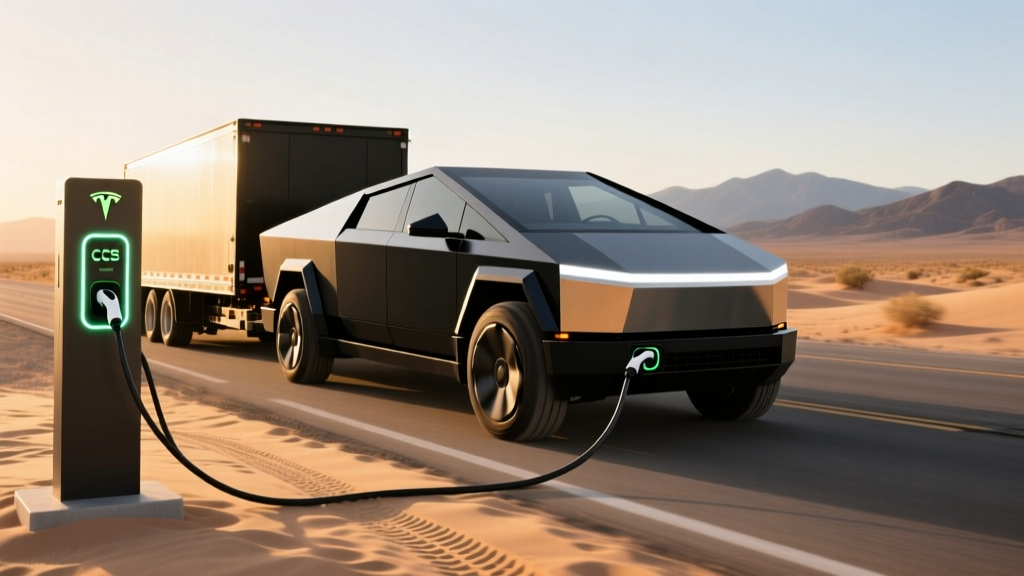
The Tesla Cybertruck's EPA-estimated range reaches up to 340 miles for the AWD trim and 320 miles for the Beast model. But when you hitch a trailer, those numbers collapse. In real-world towing scenarios, expect a 40-50% range reduction depending on trailer weight, aerodynamics, and terrain. That 340-mile Cybertruck AWD suddenly delivers 170-200 miles of practical range while towing a 5,000-pound trailer.
Cybertruck AWD: EPA 340 mi → Towing range: ~170-200 mi
Cybertruck Beast: EPA 320 mi → Towing range: ~160-190 mi
Variables: trailer weight (1,000-11,000 lb max), frontal area, speed, elevation, temperature
This isn't a flaw—it's physics. Towing multiplies energy consumption through increased rolling resistance and aerodynamic drag. A boxy travel trailer creates more drag than a sleek boat trailer. Highway speeds above 65 mph compound the penalty. Cold weather (below 40°F) can slice another 15-25% off your already-reduced range.
Charging Levels Explained: Speed and Range Recovery
Understanding charging speeds is critical when your towing range shrinks to under 200 miles. Here's what each level delivers:
| Level | Power (kW) | Voltage/Amps | Miles Added/Hour | Best Use Case |
|---|---|---|---|---|
| Level 1 | 1.4-1.9 kW | 120V / 12-16A | 3-5 mi/hr | Emergency/overnight trickle |
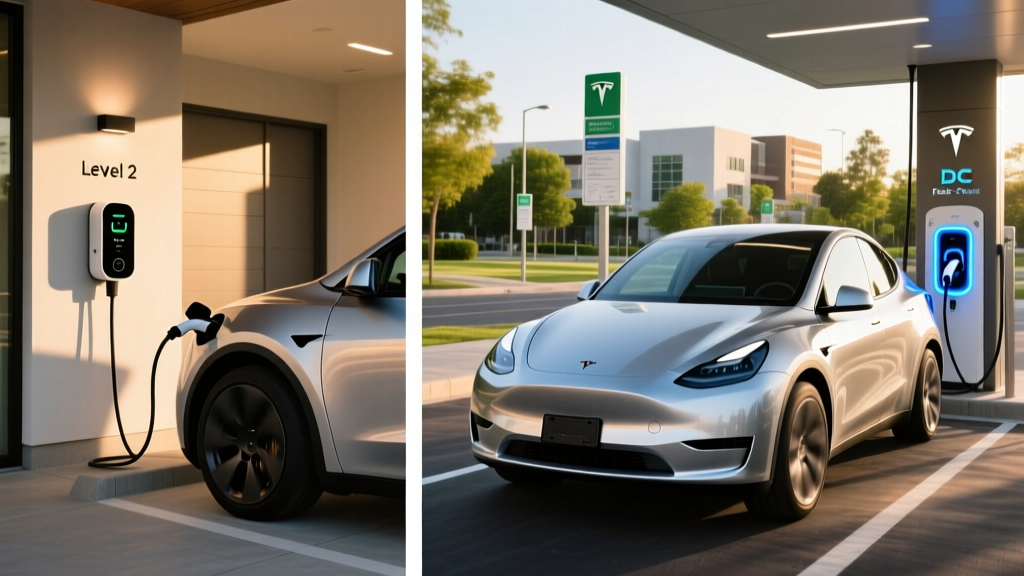
| Level 2 | 7.2-19.2 kW | 240V / 30-80A | 20-55 mi/hr | Home/workplace daily charging |
| DC Fast | 50-250+ kW | 400-800V DC | 150-700+ mi/hr | Road trips, towing recovery |
For Cybertruck owners, the 123 kWh battery pack means Level 1 charging is impractical (24+ hours for a full charge). Level 2 home charging at 11.5 kW (48A) adds roughly 30 miles per hour—adequate for daily use but insufficient for quick turnaround when towing. DC fast charging is your lifeline on the road.
The Cybertruck supports peak DC charging at 250 kW, though real-world sessions follow a charge curve: peak speed sustains only from 10-40% State of Charge (SoC), then tapers. Expect 10-80% in approximately 30-35 minutes at a 250 kW Supercharger. Above 80%, charging slows dramatically to protect battery health—plan your stops around 10-80% sessions rather than topping to 100%.
Home Charger Installation: Costs and Electrical Requirements
Installing a Level 2 home charger is essential for Cybertruck ownership, especially if you tow frequently and need predictable overnight range recovery. Here's what's involved:
Electrical Requirements
The Cybertruck's onboard charger accepts up to 11.5 kW (48A at 240V). To deliver this, you need a dedicated 60-amp circuit (electricians follow the 80% rule: continuous loads can't exceed 80% of circuit capacity, so 48A requires a 60A breaker). The charger hardwires directly to your electrical panel—no plug.
If you opt for a 40A charger (9.6 kW), you'll need a 50A circuit. This still adds ~25 miles per hour, sufficient for most overnight recovery.
Panel Upgrade Reality
Homes built before 2000 often have 100-amp or 150-amp electrical panels. Adding a 60A EV circuit may push you near or over capacity, especially if you run electric HVAC, a dryer, and an oven simultaneously. An electrician will perform a load calculation per NEC Article 220. If your panel maxes out, you'll need a 200A upgrade—a $2,000-$5,000 expense that dwarfs the charger installation itself.
| Component | Cost Range | Notes |
|---|---|---|
| Level 2 Charger (48A) | $500-$800 | Tesla Wall Connector, ChargePoint Home Flex |
| Electrician Labor | $600-$2,500 | Depends on panel distance, wall type |
| Permit & Inspection | $100-$400 | Required in most jurisdictions |
| Panel Upgrade (if needed) | $2,000-$5,000 | 100A → 200A service upgrade |
| Total (no panel upgrade) | $1,200-$3,700 | Typical installation |
| Total (with panel upgrade) | $3,200-$8,700 | Older homes |
Get 2-3 quotes from licensed electricians. Ask specifically about the load calculation and whether your panel can handle a 60A circuit. Some utilities offer rebates ($200-$1,000) for smart charger installations—check with your provider.
Connector Compatibility: NACS and Adapters
The Cybertruck uses the North American Charging Standard (NACS) connector natively—the same connector Tesla has used since 2012 and which Ford, GM, Rivian, and others adopted starting in 2025. This gives you direct access to Tesla's Supercharger network (20,000+ stalls in North America) without adapters.
| Network/Charger | Connector | Cybertruck Compatibility |
|---|---|---|
| Tesla Supercharger | NACS | ✓ Native (no adapter) |
| Electrify America, EVgo, ChargePoint | CCS1 | Requires NACS-to-CCS adapter ($150-$250) |
| Older public chargers | CHAdeMO | Rare; adapter available but not recommended |
| Home Level 2 (J1772) | J1772 | Tesla Mobile Connector includes J1772 adapter |
For road trips, stick with Superchargers when possible. They're reliable, fast (250 kW), and integrated into the Cybertruck's navigation system for battery preconditioning. If you need to use Electrify America or other CCS networks (useful in rural areas or certain corridors), purchase Tesla's official NACS-to-CCS adapter or a third-party option from Lectron or A2Z.
Charging Cost: Per Mile vs. Gas
One advantage of EV towing: electricity costs less than gasoline per mile, even when consumption doubles. Here's the math:
| Scenario | Cost per kWh | Efficiency (mi/kWh) | Cost per Mile |
|---|---|---|---|
| Home (off-peak rate) | $0.12 | 2.0 mi/kWh (no trailer) | $0.06 |
| Home (towing) | $0.12 | 1.0 mi/kWh (5,000 lb trailer) | $0.12 |
| Public Level 2 | $0.30 | 1.0 mi/kWh (towing) | $0.30 |
| DC Fast (Supercharger) | $0.35 | 1.0 mi/kWh (towing) | $0.35 |
| Gas Truck (15 MPG towing, $3.50/gal) | — | — | $0.23 |
At home, towing with the Cybertruck costs roughly half what a gas truck spends. On the road at DC fast chargers, you'll pay 50% more than gas per mile—but you're also paying for convenience and speed. Plan your towing trips around Supercharger locations to minimize costs.
Equipment Recommendations: Home Chargers for Cybertruck
Tesla Wall Connector (Gen 3)
- Power: 11.5 kW (48A, 240V)
- Connector: NACS (native)
- Cable Length: 24 feet
- Smart Features: Wi-Fi, power sharing (link multiple units), OTA updates
- Price: $475
- Why Choose: Seamless Tesla integration, fast charging, clean design
ChargePoint Home Flex
- Power: Up to 12 kW (50A, 240V) — configurable
- Connector: J1772 (includes Tesla adapter)
- Cable Length: 23 feet
- Smart Features: Wi-Fi, app scheduling, Alexa/Google Home, load management
- Price: $699
- Why Choose: Flexible amperage, robust app, works with non-Tesla EVs
Emporia Vue Level 2 Charger
- Power: 11.5 kW (48A, 240V)
- Connector: J1772 (Tesla adapter included)
- Cable Length: 24 feet
- Smart Features: Energy monitoring, solar integration, load balancing
- Price: $599
- Why Choose: Pairs with home solar, detailed energy tracking
For Cybertruck owners, the Tesla Wall Connector is the obvious choice—native NACS, fast charging, and reliable. If you own other EVs or want load-management features, the ChargePoint Home Flex is excellent. Avoid cheap Amazon chargers with poor safety certifications; look for UL or ETL listing.
Safety and Electrical Code Considerations
EV charging draws sustained high current for hours—far longer than a dryer or oven cycle. Safety isn't optional:
- Dedicated Circuit: Your charger must have its own breaker. Never share a circuit with other appliances.
- GFCI Protection: NEC 2020 requires GFCI breakers for outdoor EV chargers and garage installations in some jurisdictions. This prevents shock hazards.
- Outdoor Rating: If mounting outside, ensure the charger is NEMA 4 rated (weatherproof). The Tesla Wall Connector and ChargePoint Home Flex both qualify.
- Wire Gauge: A 60A circuit requires 6 AWG copper wire (or 4 AWG aluminum). Your electrician will size this correctly.
- Permit and Inspection: Most municipalities require an electrical permit and post-installation inspection. Skipping this voids insurance coverage if a fire occurs.
Never use extension cords or adapters to plug a Level 2 charger into a dryer outlet. The sustained load will overheat undersized wiring.
FAQ: Cybertruck Towing and Charging
How much does it cost to install a home EV charger?
Expect $1,200-$3,700 for a typical Level 2 installation (charger + electrician + permit) if your electrical panel has capacity. Homes needing a 200A panel upgrade will pay $3,200-$8,700 total. Get multiple quotes and verify the electrician performs a load calculation.
How fast will each charging level add range?
Level 1 (120V): 3-5 miles per hour. Level 2 (240V, 48A): ~30 miles per hour. DC Fast (250 kW): 150-700+ miles per hour peak, though the Cybertruck's charge curve tapers above 80% SoC. For a 10-80% session at a 250 kW Supercharger, plan on 30-35 minutes.
Which connector/charger is compatible with my Cybertruck?
The Cybertruck uses NACS natively, giving you direct access to Tesla Superchargers. For CCS networks (Electrify America, EVgo), you'll need a NACS-to-CCS adapter ($150-$250). Home Level 2 chargers with J1772 connectors work via the Tesla Mobile Connector's included adapter.
How much does charging cost per mile vs. gas?
At home ($0.12/kWh), the Cybertruck costs $0.06/mile unloaded and $0.12/mile while towing. At a Supercharger ($0.35/kWh), towing costs $0.35/mile. A comparable gas truck (15 MPG towing, $3.50/gallon) costs $0.23/mile. Home charging saves 50% vs. gas; DC fast charging costs 50% more.
What electrical upgrades might I need?
If your home has a 100A or 150A electrical panel, adding a 60A EV circuit may require a panel upgrade to 200A ($2,000-$5,000). An electrician will perform a load calculation to determine if your panel can handle the added circuit. Homes built after 2000 typically have 200A service and won't need an upgrade.
Can I tow and still make long road trips work?
Yes, but plan carefully. With 170-200 miles of real-world towing range, you'll stop every 2-3 hours at Superchargers. Use Tesla's trip planner (built into the Cybertruck's navigation) to route through Supercharger locations. Precondition the battery before charging stops to maximize charge speed. Avoid charging above 80% unless necessary—it's slow and unnecessary for most trips.
For official Cybertruck specifications, see Tesla's Cybertruck page. For EPA range and efficiency data, check fueleconomy.gov. For home electrical safety standards, consult the National Electrical Code (NEC).