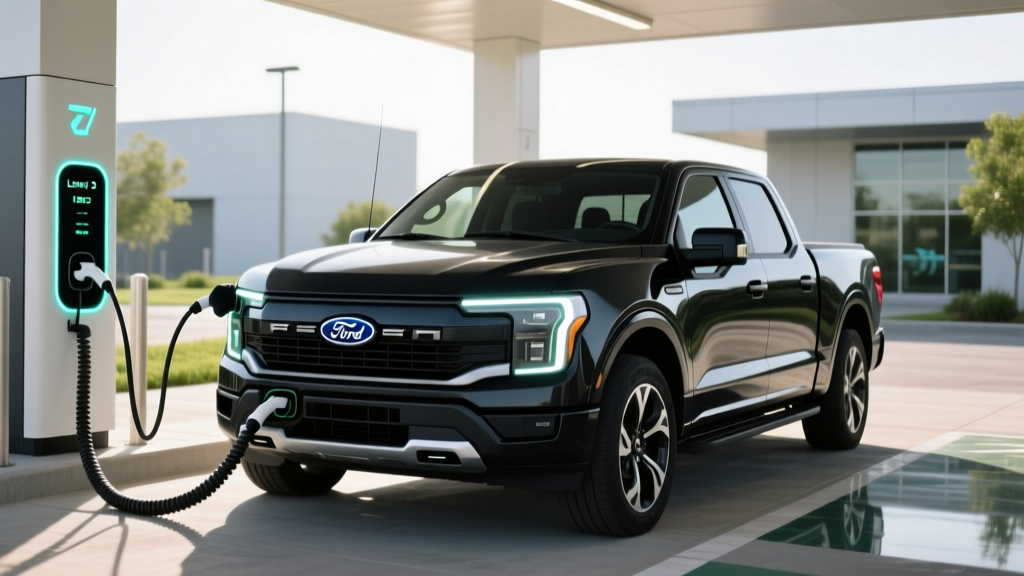
If you're shopping for an electrified Ford F-150, you've likely encountered two very different powertrains: the all-electric F-150 Lightning and gas-powered F-150s equipped with a supercharged V8 (such as the Raptor R or aftermarket supercharger kits). One plugs in; the other fills up at the pump. This guide focuses squarely on the charging side — how to set up home charging for an F-150 Lightning, what public charging looks like in 2026, what equipment to buy, and what it actually costs per mile compared to a supercharged gasoline truck.
Whether you're comparing a Lightning against a supercharged F-150 for your next purchase, or you've already ordered a Lightning and need to prepare your garage, this guide covers the exact electrical requirements, costs, and equipment you'll need.
Charging Levels Explained: Level 1, Level 2, and DC Fast Charging
EV charging is measured in kW (kilowatts), which is a rate of power delivery — think of it like the flow rate of a hose. Your battery capacity is measured in kWh (kilowatt-hours), which is the total energy stored — like the size of the bucket. Confusing these two is the most common EV mistake. A 131 kWh battery charged at 19.2 kW takes roughly 6.8 hours from empty to full. That same battery at a 150 kW DC fast charger recovers a portion of its capacity in minutes.
| Level | Voltage | Power (kW) | Miles of Range Added Per Hour | Best For |
|---|---|---|---|---|
| Level 1 | 120V AC | 1.0–1.4 kW | ~2–3 miles/hr | Overnight top-ups, low-mileage drivers |
| Level 2 | 240V AC | 3.3–19.2 kW | ~10–52 miles/hr | Daily home charging, work charging |
| DC Fast (Level 3) | 200–500V DC | 50–350 kW | ~150–400+ miles/hr (peak) | Road trips, rapid top-ups |
For the F-150 Lightning with the extended-range 131 kWh battery, Level 1 charging is impractical as a primary method — adding only ~2 miles per hour means a full charge would take over 50 hours. Level 2 at 19.2 kW is the practical home standard, while DC fast charging handles road-trip needs.
Home Charger Installation: Electrical Requirements and Costs
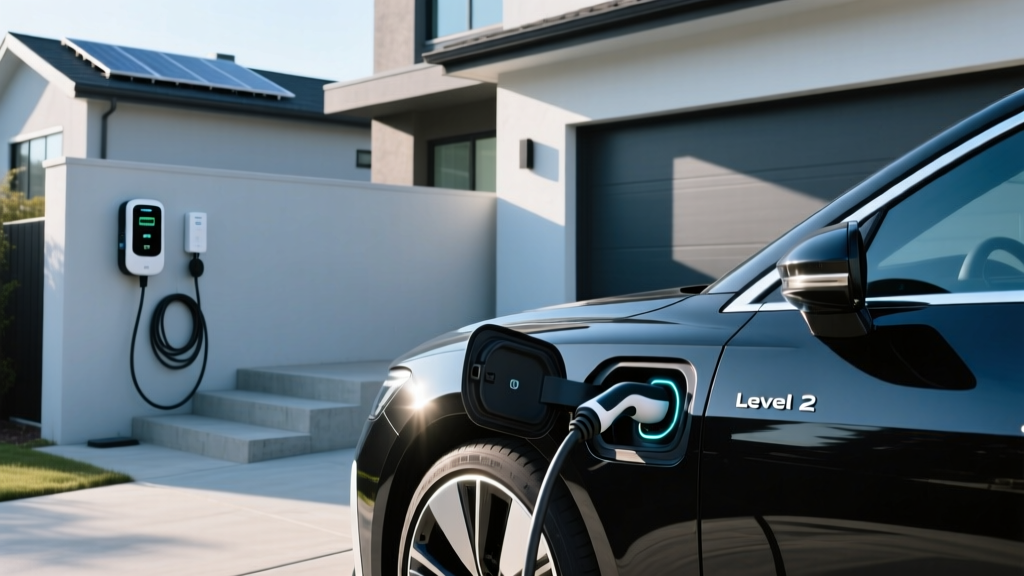
The F-150 Lightning's onboard charger accepts up to 19.2 kW on Level 2 (80 amps at 240V). This is among the highest AC charge rates available on any consumer EV, and it requires serious electrical infrastructure. Here's what you need to know.
Circuit and Panel Requirements
To deliver 19.2 kW, you need a dedicated 100-amp circuit (EVSE rated for 80A continuous draw require a circuit rated 25% higher per the National Electrical Code). Most homes have 100A or 200A main service panels. A 100A dedicated circuit on a 200A panel is usually feasible. On a 100A main panel, you'll almost certainly need a panel upgrade to 200A or 400A, which is a significant added cost.
For a more modest 48A EVSE delivering 11.5 kW, you need a 60-amp dedicated circuit. This is the most common home installation and provides roughly 30 miles of range per hour — enough to fully replenish a Lightning's standard-range 98 kWh battery overnight.
| Item | 48A / 11.5 kW Setup | 80A / 19.2 kW Setup |
|---|---|---|
| EVSE (charger hardware) | $500–$800 | $700–$1,500 |
| Electrician labor (run conduit, wire, mount) | $600–$1,500 | $1,000–$2,500 |
| Electrical permit | $50–$200 | $50–$250 |
| Panel upgrade (if needed) | $1,500–$3,500 | $1,500–$3,500 |
| Total (no panel upgrade) | $1,150–$2,500 | $1,750–$4,250 |
| Total (with panel upgrade) | $2,650–$6,000 | $3,250–$7,750 |
These ranges reflect national averages as of early 2026. Labor costs vary significantly by region — expect higher quotes in California, New York, and the Pacific Northwest, and lower costs in the Southeast and Midwest. Always get at least three quotes from licensed electricians, and confirm they pull a local permit. Unpermitted work can void insurance coverage and create a fire hazard.
Federal Tax Credit for Home Charging Equipment
Under IRS §30D and the Alternative Fuel Vehicle Refueling Property Credit (IRC §134), homeowners may qualify for a 30% tax credit on EV charger equipment and installation, up to $1,000. Eligibility depends on whether your census tract qualifies as a "low-income" or "non-urban" area under current IRS guidance. Check the IRS refueling property credit page for the latest mapping tool and eligibility rules. This credit is separate from the vehicle purchase credit and can be claimed in the tax year the installation is completed.
Connector Compatibility: NACS, CCS1, and the Adapter Landscape
The connector situation for the F-150 Lightning has shifted significantly. Here's where things stand for the 2025–2026 model years.
| Connector | Network Access | F-150 Lightning Compatibility |
|---|---|---|
| NACS (Tesla-style) | Tesla Superchargers, growing Electrify America / EVgo / others | Native on 2025+ models; adapter required for 2022–2024 models |
| CCS1 | Electrify America, EVgo, ChargePoint, most non-Tesla networks | Native on 2022–2024 models; still widely supported |
| CHAdeMO | Largely deprecated in the US | Not compatible; no adapter needed |
Ford began equipping the F-150 Lightning with a native NACS charge port starting with the 2025 model year. If you own a 2022–2024 Lightning with a CCS1 port, Ford has provided a Tesla-approved NACS adapter that grants access to the Supercharger network. This adapter typically supports up to 150 kW on DC fast charging. For home Level 2 charging, a NACS-to-J1772 adapter may be needed if your wall connector uses a different plug standard — though most 2026-era home chargers now ship with NACS connectors natively.
Charging Speeds and Times for the F-150 Lightning
The F-150 Lightning comes in two battery configurations. According to fueleconomy.gov, here are the specifics:
- Standard-range: 98 kWh usable battery, EPA range ~230 miles
- Extended-range: 131 kWh usable battery, EPA range ~300–320 miles (varies by trim and wheel size)
Real-world caveat: Expect ~15–20% range reduction at sustained highway speeds above 70 mph, and up to 30% reduction in sub-freezing temperatures. A 320-mile EPA extended-range Lightning may deliver 250–270 miles in real-world highway driving in moderate weather, and closer to 220 miles in cold conditions.
| Charging Scenario | Standard Range (98 kWh) 10–80% | Extended Range (131 kWh) 10–80% |
|---|---|---|
| Level 1 (1.4 kW, 120V) | ~48 hours | ~64 hours |
| Level 2 (11.5 kW, 48A) | ~6 hours | ~8 hours |
| Level 2 (19.2 kW, 80A) | ~3.5 hours | ~4.8 hours |
| DC Fast (150 kW peak) | ~41 minutes | ~45–50 minutes |
| DC Fast (peak rate, 10–80%) | ~38–44 min (varies by charger) | ~41–50 min (varies by charger) |
The Lightning's DC fast charging peaks around 150 kW on extended-range models, though the charge curve tapers significantly above 80% State of Charge. This is normal — lithium-ion batteries accept charge more slowly at high SoC to protect cell longevity. Plan your road-trip stops around 10–80% charges for the fastest turnaround; charging from 80–100% can add another 20–30 minutes at rapidly declining power.
Cost Per Mile: Lightning Charging vs. Supercharged F-150 Gas
One of the most compelling arguments for the Lightning over a supercharged gas F-150 (which might return 12–15 MPG combined) is operating cost. Here's how charging costs break down across scenarios, using a national average electricity rate of ~$0.16/kWh and gasoline at ~$3.40/gallon (2026 averages):
| Scenario | Cost per kWh / Gallon | Cost per Mile (Lightning) | Cost per Mile (Supercharged F-150, 14 MPG) |
|---|---|---|---|
| Home charging (off-peak utility rate) | $0.10/kWh | $0.03 | — |
| Home charging (standard rate) | $0.16/kWh | $0.05 | — |
| Public Level 2 (network pricing) | $0.30/kWh | $0.09 | — |
| DC Fast Charging (public) | $0.40/kWh | $0.12 | — |
| Gasoline (supercharged F-150) | $3.40/gal | — | $0.24 |
The Lightning consumes roughly ~2.0–2.2 kWh per mile in mixed driving (approximately 48–50 MPGe combined per EPA data). Even at the most expensive DC fast-charging rates, the Lightning costs roughly half per mile compared to a supercharged V8 F-150. For home charging on an off-peak utility plan, the savings are dramatic: roughly $0.03/mile vs. $0.24/mile, a savings of about $2,100 per year at 10,000 miles driven.
Recommended Home Charging Equipment for the F-150 Lightning
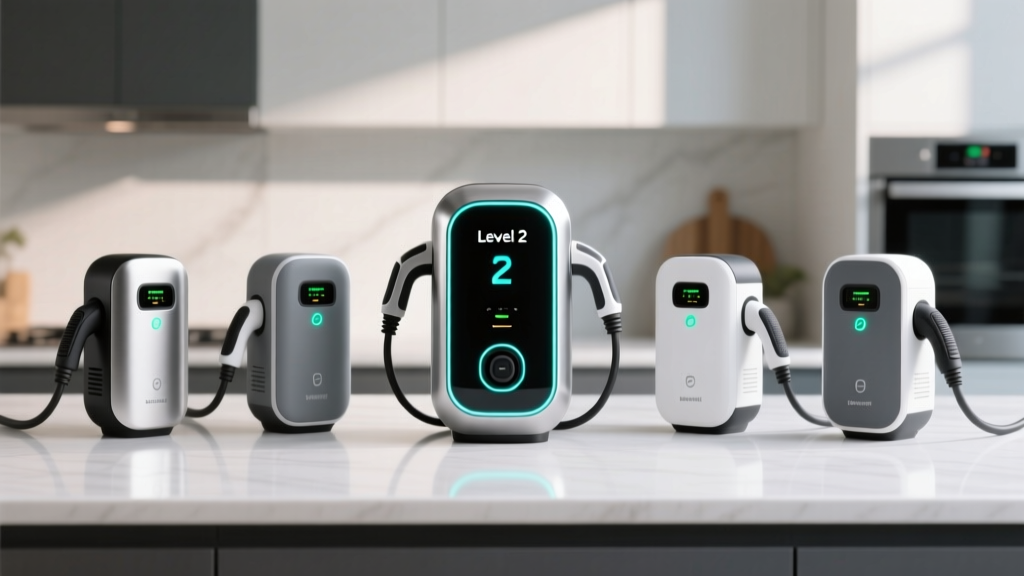
Given the Lightning's 19.2 kW maximum AC acceptance rate, you have flexibility. Here are proven chargers that match well, with specifics on power, connector, and features:
Ford Charge Station Pro (80A / 19.2 kW)
- Power output: 19.2 kW (240V, 80A)
- Connector: NACS (2025+), CCS1 (2022–2024 models)
- Cable length: 25 feet
- Smart features: FordPass integration, scheduled charging, bi-directional charging support (V2H with Home Integration System)
- Price: ~$1,100–$1,300 (hardware only)
- Note: Requires a 100A dedicated circuit. This is the only charger that enables the Lightning's bi-directional power capability.
Wallbox Pulsar Plus (48A / 11.5 kW)
- Power output: 11.5 kW (240V, 48A)
- Connector: NACS or J1772 (configurable)
- Cable length: 25 feet
- Smart features: Wi-Fi, app-based scheduling, load balancing, Power Sharing for dual-charger setups
- Price: ~$550–$650
- Note: Requires a 60A circuit. Excellent value for most Lightning owners who charge overnight.
ChargePoint Home Flex (up to 50A / 12 kW)
- Power output: Up to 12 kW (240V, 50A, adjustable down)
- Connector: NACS or J1772 (swappable pigtail)
- Cable length: 23 feet
- Smart features: App scheduling, Alexa integration, detailed energy reporting
- Price: ~$600–$700
- Note: Amperage is DIP-switch configurable from 16A to 50A, making it ideal for homes with limited panel capacity.
Safety, Code, and Installation Best Practices
EV charging draws sustained high current for hours — this is fundamentally different from typical household loads. The National Electrical Code (NEC) treats EVSE installations as continuous loads, requiring circuits rated at 125% of the charger's maximum draw. A 48A charger requires a 60A breaker; an 80A charger requires a 100A breaker.
- Dedicated circuit: Your EVSE must be on its own dedicated circuit. Sharing with other appliances is a code violation and fire risk.
- GFCI protection: NEC 2020 and later require GFCI protection for outdoor receptacles used for EV charging. Hardwired EVSE installations may have different GFCI requirements depending on local code — your electrician will determine this.
- Outdoor rating: If mounting outdoors, ensure the EVSE carries a NEMA 4 or NEMA 4X rating for weather resistance. All three chargers recommended above carry outdoor ratings.
- Wire gauge: 48A circuits typically require 6 AWG copper wire; 80A circuits require 2 AWG or larger. Longer wire runs from the panel increase material cost.
- Permit and inspection: Virtually all jurisdictions require an electrical permit and post-installation inspection for EVSE. This protects your home insurance coverage and ensures code compliance. Budget $50–$250 for the permit fee.
Frequently Asked Questions
How much does it cost to install a home EV charger for the F-150 Lightning?
For a standard 48A/11.5 kW installation on an existing 200A panel, expect $1,150–$2,500 total (hardware, labor, and permit). If you need a panel upgrade from 100A to 200A, add $1,500–$3,500. An 80A/19.2 kW installation runs higher — $1,750–$4,250 without a panel upgrade. Always get multiple quotes from licensed electricians.
How fast will each charging level add range to the Lightning?
Level 1 (120V) adds roughly 2–3 miles per hour — too slow for daily use on a large-battery truck. Level 2 at 11.5 kW adds ~30 miles per hour, and at 19.2 kW adds ~50 miles per hour. DC fast charging at 150 kW can add up to ~150+ miles in 20 minutes under optimal conditions, though the charge curve slows significantly past 80%.
Which connector does my F-150 Lightning use?
The 2025–2026 F-150 Lightning uses a native NACS (Tesla-style) connector. The 2022–2024 models use CCS1. Ford has provided NACS adapters for earlier model-year owners to access Tesla Superchargers. For home Level 2 charging, most modern wall connectors now ship with NACS plugs or offer configurable pigtails.
How does charging cost compare to fueling a supercharged F-150?
A supercharged 5.2L V8 F-150 (like the Raptor R) averages roughly 12–14 MPG combined. At $3.40/gallon, that's ~$0.24–$0.28 per mile. The Lightning on home charging at $0.16/kWh costs ~$0.05 per mile — roughly 5× cheaper. Even on expensive public DC fast chargers ($0.40/kWh), the Lightning costs about $0.12/mile, still half the cost of gasoline.
What electrical upgrades might I need?
If your home has a 100A main service panel, you'll likely need a panel upgrade to 200A (or even 400A) to support an 80A EVSE circuit — this costs $1,500–$3,500. Homes with 200A panels can usually accommodate a 48A or even 80A EVSE without an upgrade, but your electrician must perform a load calculation to confirm. Older homes with 60A or 100A service will almost certainly need an upgrade.
Can I use the Lightning to power my home?
Yes — with the optional Ford Intelligent Backup Power system (Home Integration System + Ford Charge Station Pro), the extended-range Lightning's 131 kWh battery can supply up to 9.6 kW to your home during an outage, potentially powering essential circuits for up to three days. This requires a transfer switch installed by a licensed electrician and the 80A Ford Charge Station Pro specifically.