Why Cybertruck Tow Range Demands a Charging Strategy
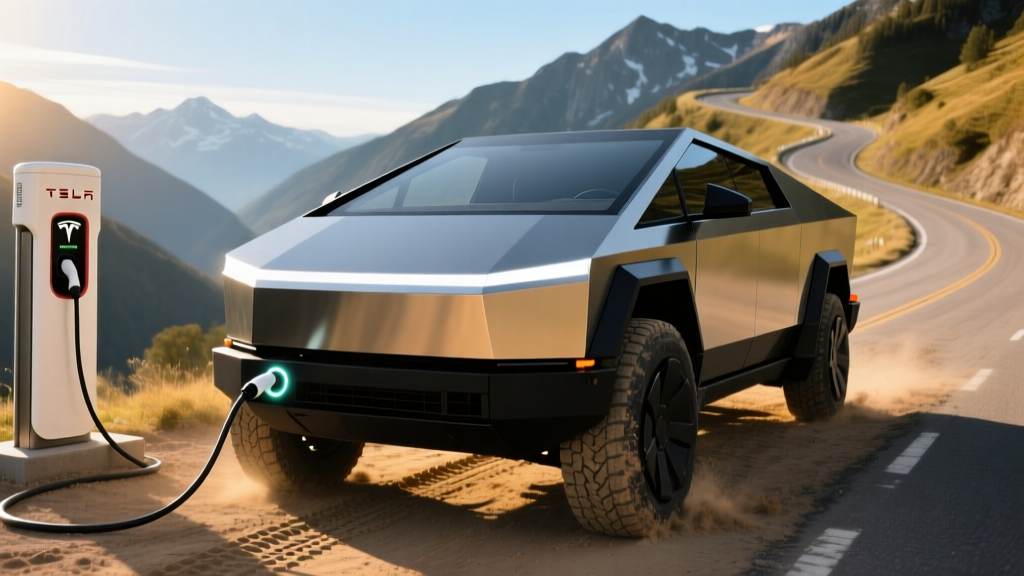
The Tesla Cybertruck AWD carries an EPA-estimated range of up to 340 miles on its ~123 kWh usable battery pack. Hitch a 7,500-pound trailer to its integrated tow hitch, and that range collapses to roughly 150–180 miles depending on trailer aerodynamics, terrain, and ambient temperature. Towing an enclosed cargo trailer or a large travel trailer at 70 mph can push consumption above 600 Wh/mi—nearly double the truck's solo highway efficiency of ~320 Wh/mi.
This reality makes a disciplined charging plan non-negotiable for Cybertruck owners who tow. Whether you're installing a Level 2 home charger, mapping DC fast-charging stops, or calculating your cost per mile versus a diesel truck, the numbers below give you the exact framework to plan around.
EPA sticker: 340 mi (AWD, 20" wheels) | Real-world solo highway: ~280–310 mi | Towing 7,500 lb trailer: ~150–180 mi | Cold-weather towing (below 30°F): ~120–150 mi
Charging Levels Explained: Speeds, kW, and Miles Per Hour
Before planning your charging setup, understand the three tiers available. Power is measured in kilowatts (kW)—the rate of energy delivery—while battery capacity is measured in kilowatt-hours (kWh), the total energy stored. Confusing these two is the most common EV literacy mistake; think of kW as the width of a hose and kWh as the size of the bucket.
| Level | Voltage / Phase | Typical Power (kW) | Miles Added per Hour (Cybertruck) | Best Use Case |
|---|---|---|---|---|
| Level 1 | 120V / 1-phase | 1.2–1.9 kW | ~3–5 mi/hr | Emergency / overnight trickle |
| Level 2 (Home/Public) | 240V / 1-phase | 7.2–19.2 kW | ~20–55 mi/hr | Daily home charging, destination |
| DC Fast Charging | 400V–800V DC | 50–350 kW | ~150–750 mi/hr (peak) | Road trips, towing recovery |
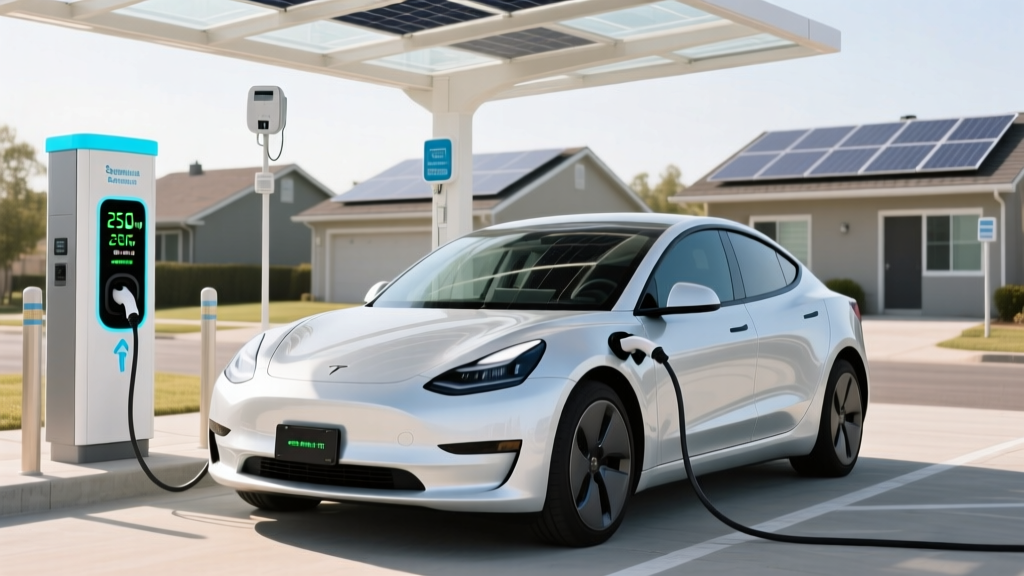
For the Cybertruck's ~123 kWh battery, Level 1 is essentially useless for towing recovery—it would take over 60 hours to fill the pack from empty. Level 2 at 11.5 kW (48A) adds roughly 33 miles of solo range per hour, or about 17 miles of tow range per hour. DC fast charging is where towing logistics live: the Cybertruck supports up to ~350 kW peak at V4 Superchargers, though sustained rates taper significantly above 60% State of Charge (SoC).
Cybertruck Towing Efficiency and Charging Time Examples
Here is what charging actually looks like when you account for the Cybertruck's massive battery and the brutal efficiency hit from towing.
| Charging Scenario | Power | 10–80% Time | Effective Tow Range Added (30 min) |
|---|---|---|---|
| Home Level 2 (Wall Connector, 48A) | 11.5 kW | ~9.5 hours | N/A (overnight charge) |
| Tesla V3 Supercharger | 250 kW peak | ~35–40 min | ~75–90 mi |
| Tesla V4 Supercharger | ~350 kW peak | ~28–33 min | ~90–110 mi |
| Electrify America 350 kW (NACS adapter) | 350 kW peak | ~30–35 min | ~85–105 mi |
Charge-curve reality: The Cybertruck's peak charge rate of ~350 kW is sustained only between roughly 10–35% SoC. Between 35–60%, expect ~200–250 kW. Above 80%, the rate drops below 60 kW to protect battery health. If you're towing and arrive at a charger at 10% SoC, a 25-minute stop will realistically get you to about 60–65%—enough for another 90–100 miles of tow range, not the 170 miles a naive calculation might suggest.
Home Charger Installation: Electrical Requirements and Costs
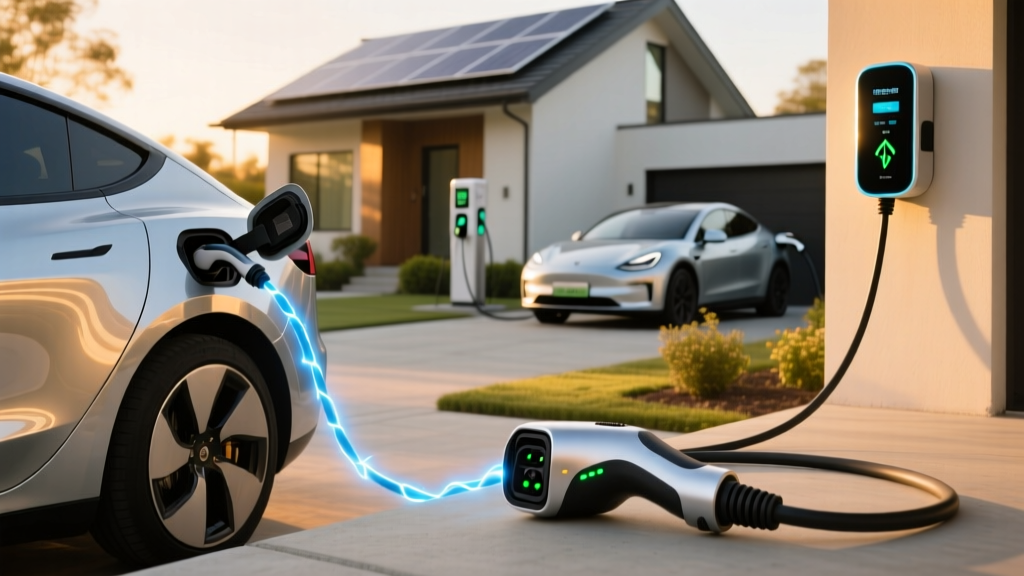
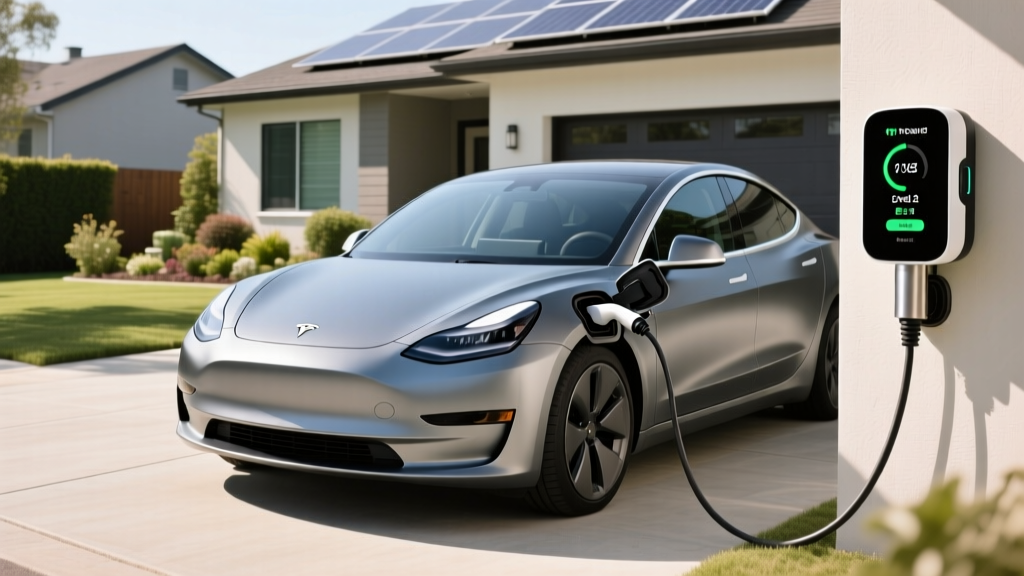
A proper Level 2 home installation is the backbone of any Cybertruck ownership experience, especially for tow-heavy users who need a full battery every morning. Here is what the electrical side actually requires.
Electrical Specifications
- Circuit: Dedicated 60A breaker (for 48A continuous charging) on a 240V single-phase circuit
- Wire: 6 AWG copper (THHN in conduit or NM-B/Romex depending on local code)
- Panel capacity: Minimum 200A main service panel recommended; a 100A panel will likely require an upgrade
- Permit: Required in virtually all US jurisdictions for new 240V circuits
- GFCI: NEC 2020 and later require GFCI protection for outdoor receptacles; hardwired units may be exempt in some jurisdictions
Panel Upgrade Reality
Homes built before 2000 frequently have 100A or 150A service panels. Adding a 60A EV circuit to an already-loaded panel may exceed the panel's rated bus-bar capacity (the "120% rule" per NEC 220.82). A panel upgrade to 200A typically costs $1,800–$3,500 depending on utility coordination, meter base replacement, and local labor rates. In rare cases, a 400A service upgrade runs $4,000–$7,000. Always have a licensed electrician perform a load calculation before assuming your existing panel can handle the circuit.
| Component | Typical Cost Range | Notes |
|---|---|---|
| Level 2 Charger (hardware) | $400–$750 | Smart Wi-Fi-enabled units; Tesla Wall Connector ~$450 |
| Electrician labor (standard install) | $600–$1,800 | Depends on run length, conduit, panel proximity |
| Electrical permit | $50–$250 | Varies by municipality |
| Panel upgrade (if needed) | $1,800–$3,500 | 200A upgrade; 400A costs more |
| Total (no panel upgrade) | $1,050–$2,800 | Most common scenario for newer homes |
| Total (with panel upgrade) | $2,850–$6,300 | Older homes with 100A service |
Connector Compatibility: NACS, CCS, and Adapters
The Cybertruck ships with the North American Charging Standard (NACS) connector natively—the same connector used across Tesla's entire lineup and increasingly adopted by Ford, GM, Rivian, and others for 2025–2026 models. This means direct compatibility with all Tesla Supercharger stations (V2, V3, V4) without adapters.
| Connector | Cybertruck Compatible? | Adapter Required? | Network Access |
|---|---|---|---|
| NACS (native) | Yes — built-in | No | Tesla Supercharger, many new third-party stations |
| CCS1 | Yes — with adapter | Tesla CCS Adapter (~$250) | Electrify America, EVgo, ChargePoint DC stations |
| CHAdeMO | Limited — with adapter | Third-party CHAdeMO-to-NACS (if available) | Legacy Nissan Leaf-era stations (declining) |
| J1772 (Level 2) | Yes — with adapter | J1772-to-NACS adapter (included with Cybertruck) | Public Level 2 stations, non-Tesla destination chargers |
For towing: Carry the Tesla CCS adapter at all times. While the Supercharger network is the most reliable for road-trip towing, having CCS access doubles your available DC fast-charging footprint—critical when towing through regions with sparse Supercharger coverage. Tesla's official CCS adapter supports up to 250 kW on compatible third-party chargers.
Cost to Charge: Per-Mile Breakdown vs. Diesel Trucks
The Cybertruck's towing efficiency directly determines your fueling cost. At ~600 Wh/mi while towing, here is what different charging scenarios cost compared to a diesel truck achieving 10–12 MPG under similar loads.
| Charging Scenario | Rate ($/kWh) | Cost per Mile (Towing) | Equivalent Gas/Diesel MPG at $3.80/gal |
|---|---|---|---|
| Home Level 2 (off-peak utility rate) | $0.10–$0.14 | $0.06–$0.08 | 47–63 MPG |
| Home Level 2 (standard rate) | $0.16–$0.22 | $0.10–$0.13 | 29–38 MPG |
| Tesla Supercharger (avg 2026) | $0.28–$0.36 | $0.17–$0.22 | 17–22 MPG |
| Electrify America / third-party DC | $0.32–$0.48 | $0.19–$0.29 | 13–20 MPG |
| Diesel truck (12 MPG, $3.80/gal) | — | $0.32 | 12 MPG |
| Gas truck (10 MPG, $3.50/gal) | — | $0.35 | 10 MPG |
Even at public DC fast-charging rates, the Cybertruck costs less per mile to tow than a comparable diesel or gas truck—provided you can charge at home most nights. The cost advantage narrows significantly when relying exclusively on public fast charging, which is a critical consideration for apartment dwellers or frequent long-haul tow users without home charging access.
Recommended Home Chargers for Cybertruck Owners
Tesla Wall Connector (Gen 3)
- Power: Up to 11.5 kW (48A on 60A circuit)
- Connector: NACS native — no adapter needed
- Cable length: 24 ft
- Smart features: Wi-Fi, OTA updates, load sharing (pair two units on one circuit), power management
- Price: ~$450
- Best for: Cybertruck owners wanting seamless integration and Tesla's best-supported hardware
ChargePoint Home Flex (NACS version)
- Power: Up to 12 kW (50A adjustable on 60A circuit)
- Connector: NACS (2025+ models) or J1772 with adapter
- Cable length: 23 ft
- Smart features: Wi-Fi, Alexa, scheduling, energy tracking, amperage adjustment via app
- Price: ~$550–$650
- Best for: Multi-EV households (mix of NACS and J1772 vehicles)
Emporia Vue Level 2 Charger
- Power: Up to 11.5 kW (48A)
- Connector: J1772 (use included NACS adapter) or NACS version
- Cable length: 24 ft
- Smart features: Wi-Fi, solar integration, real-time energy monitoring, scheduling
- Price: ~$400
- Best for: Budget-conscious owners or homes with solar panels seeking energy-aware charging
Safety, Code, and Outdoor Installation Considerations
Level 2 EV charging draws sustained high current for hours—unlike any other household appliance. Cutting corners on installation invites fire risk, failed inspections, and voided insurance coverage.
- Dedicated circuit: The EV charger must be on its own breaker. Never share a 60A circuit with a dryer, oven, or HVAC unit unless using a certified load-management device (e.g., NeoCharge Smart Splitter or Tesla Wall Connector power sharing).
- Hardwired vs. plug: Hardwired installations (no NEMA receptacle) are preferred for outdoor mounts—eliminates GFCI nuisance trips required by NEC 625.54 on outdoor receptacles and provides a cleaner weather seal.
- Outdoor rating: All three chargers listed above carry NEMA 4 (outdoor) ratings. Ensure conduit entries and cable management are rated for UV and moisture exposure.
- Cable management: Use a holster or retractable cable reel to prevent the connector from contacting the ground, which accelerates contact wear and introduces contamination risk.
- Inspection: Most jurisdictions require an electrical inspection after installation. The inspector will verify breaker sizing, wire gauge, grounding, and GFCI compliance. Factor 1–3 weeks for inspection scheduling into your timeline.
Frequently Asked Questions
How much does it cost to install a home EV charger for a Cybertruck?
A standard Level 2 installation with a Tesla Wall Connector on an existing 200A panel costs $1,050–$2,800 including equipment, electrician labor, and permits. If your home requires a panel upgrade from 100A to 200A service, total costs rise to $2,850–$6,300. Always get a load calculation from a licensed electrician before committing.
How fast will each charging level add range to the Cybertruck?
Level 1 (120V) adds ~3–5 miles per hour—essentially useless for a 123 kWh battery. Level 2 at 48A (11.5 kW) adds ~33 solo miles or ~17 tow miles per hour. DC fast charging at a V4 Supercharger peaks at ~350 kW, adding over 200 solo miles per hour at peak—but sustained rates taper, and a realistic 10–80% session takes 28–40 minutes depending on charger generation.
Which connector is compatible with the Cybertruck?
The Cybertruck uses NACS natively, giving it direct access to all Tesla Superchargers. For CCS1 stations (Electrify America, EVgo), you need the Tesla CCS Adapter (~$250). A J1772-to-NACS adapter is included with the vehicle for public Level 2 stations. CHAdeMO compatibility is limited and not recommended for 2026 planning.
How much does charging the Cybertruck cost per mile vs. a gas truck when towing?
Charging at home off-peak ($0.12/kWh), the Cybertruck costs roughly $0.07/mile while towing—equivalent to a 54 MPG gas vehicle. At Tesla Supercharger rates (~$0.32/kWh), that rises to ~$0.19/mile, still below a diesel truck at 12 MPG ($0.32/mile). Home charging is where the Cybertruck delivers its strongest cost advantage.
What electrical upgrades might I need for a home charger?
The most common upgrade is a 200A service panel replacement, needed in older homes with 100A panels that cannot accommodate a new 60A circuit under NEC load calculations. Other potential upgrades include a new meter base ($200–$500), trenching for detached garages ($500–$2,000), and sub-panel installation for long wire runs. A licensed electrician's load calculation is the definitive first step.
Does the Cybertruck's battery warranty cover degradation from frequent DC fast charging?
Tesla covers the Cybertruck battery for 8 years or 120,000 miles (whichever comes first) with a minimum 70% capacity retention threshold. Tesla does not void the warranty for DC fast-charging use, though sustained exclusive use of high-power DC charging may accelerate long-term degradation compared to predominantly Level 2 charging. For towing-heavy owners, overnight Level 2 charging with strategic DC stops for road trips is the optimal longevity strategy.