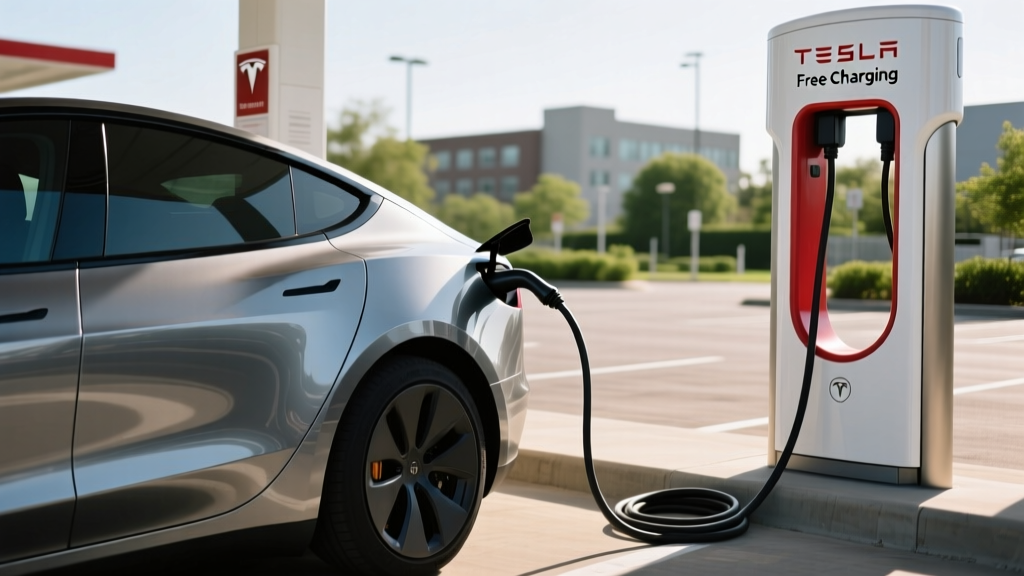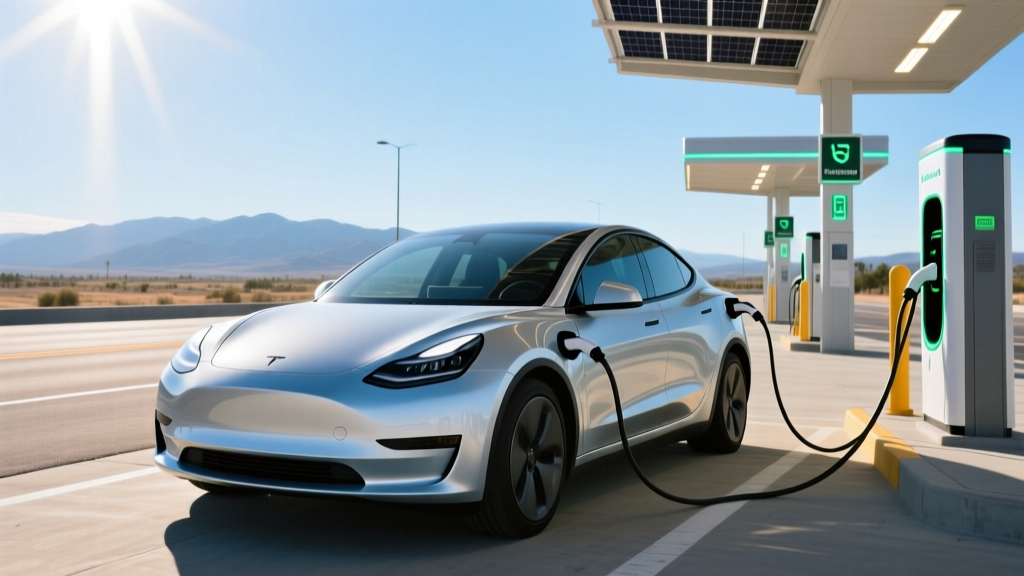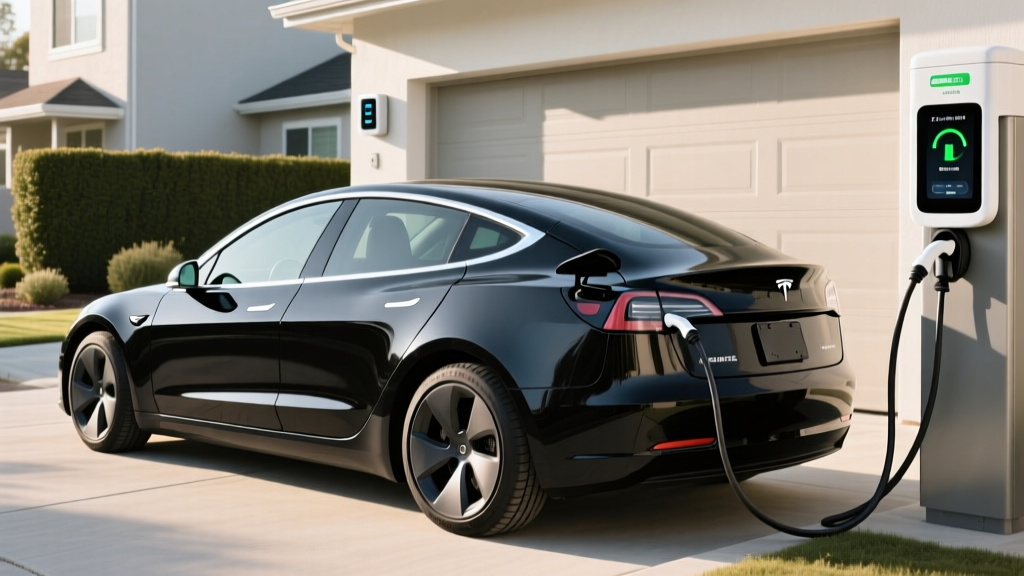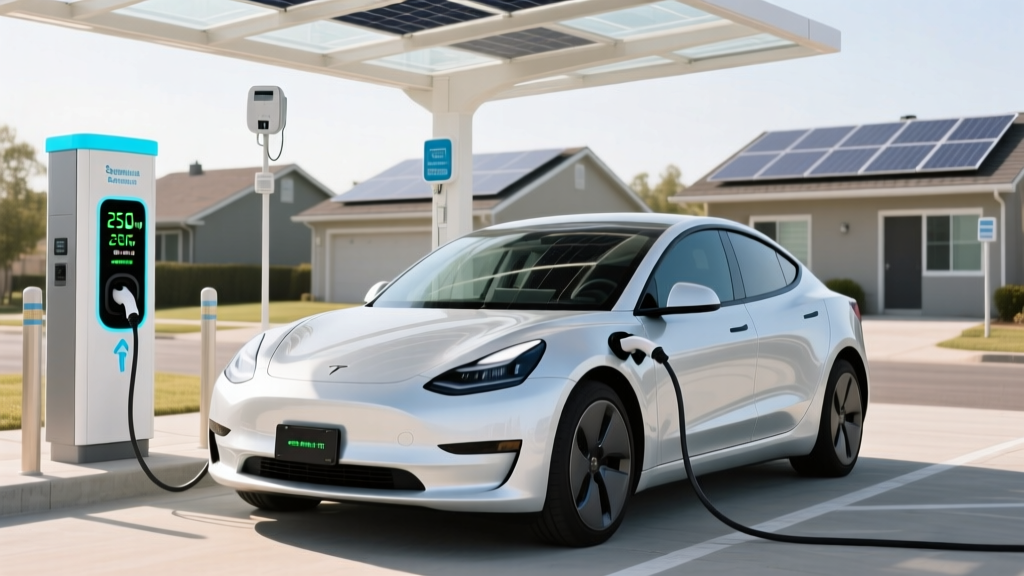
If you've pulled up to a Tesla Supercharger and watched the per-kWh price fluctuate between $0.28 and $0.58 depending on the time of day, you're not alone in wondering: is public fast charging still cheaper than gas? The answer depends on where, when, and how you charge. Understanding Supercharger rates in context — against home Level 2 charging, third-party DC fast networks, and gasoline — is the single most impactful thing an EV owner can do for their wallet.
This guide breaks down every charging tier with exact kW speeds, real-world cost-per-mile math, home installation expenses (including the panel upgrade nobody warns you about), and the equipment worth buying in 2026.
Charging Levels Explained: Speed, Power, and What They Mean
The most common mistake new EV buyers make is confusing kW (kilowatts) with kWh (kilowatt-hours). Think of it this way: kW is the speed of water flowing through a hose (charge rate), while kWh is the total volume of water in the bucket (battery energy capacity). A 72 kWh battery charged at 11.5 kW takes roughly 6.3 hours from empty; that same battery at a 150 kW DC fast charger can reach 80% in about 25 minutes.
| Level | Voltage | Max Power (kW) | Miles of Range Added Per Hour | Typical Use Case |
|---|---|---|---|---|
| Level 1 | 120V AC | 1.4–1.9 kW | 3–5 miles | Overnight top-ups, PHEVs, emergency |
| Level 2 | 240V AC | 7.2–19.2 kW | 20–60 miles | Home daily charging, workplaces |
| DC Fast Charging | 400–800V DC | 50–350 kW | 150–1,200 miles (equivalent/hr) | Road trips, commercial fleets |
A few real-world nuances matter here. DC fast charging speeds are peak rates — your vehicle will only sustain the maximum kW for a portion of the session. Most EVs taper charging speed significantly above 80% State of Charge (SoC) to protect battery health. A Hyundai Ioniq 5 with its 800V architecture peaks at 240 kW and charges 10–80% in roughly 18 minutes, but the final 20% can take another 20+ minutes at a fraction of that rate. That charge-curve taper is why you'll see experienced EV road-trippers charge to 80% and move on.
Supercharger Rates in 2026: What You'll Actually Pay
Tesla's Supercharger network — now open to non-Tesla EVs via the North American Charging Standard (NACS) — remains the most reliable DC fast charging network in the US. But rates vary dramatically by location, time of day, and whether your vehicle is a Tesla or a third-party EV using an adapter.
As of early 2026, typical Supercharger rates break down as follows:
- Off-peak (overnight, midday lulls): $0.25–$0.32/kWh at most urban and suburban stations
- Peak (evening commute, holiday travel): $0.38–$0.58/kWh at high-demand corridors
- Non-Tesla vehicles: Often 10–15% higher per kWh unless enrolled in Tesla's membership plan (~$12.99/month for discounted rates)
- Idle fees: $0.50–$1.00/minute if you remain plugged in after reaching your charge limit at a busy station
For a Tesla Model Y Long Range (75 kWh usable battery, ~310 miles EPA range), a 10–80% Supercharger session adds about 52.5 kWh. At $0.35/kWh average, that's roughly $18.38 for ~215 miles of range. At peak rates of $0.52/kWh, the same session jumps to $27.30.
Cost to Charge Per Mile: Supercharger vs. Home vs. Gas
The only comparison that matters for your budget is cost per mile. Here's how the scenarios stack up for a typical mid-size electric SUV (3.5 miles per kWh efficiency, comparable to a Tesla Model Y or Ford Mustang Mach-E):
| Charging Scenario | Rate ($/kWh) | Cost Per Mile | Annual Cost (12,000 mi) |
|---|---|---|---|
| Home Level 2 (national avg electricity) | $0.16 | $0.046 | $552 |
| Home Level 2 (off-peak TOU rate) | $0.09 | $0.026 | $312 |
| Tesla Supercharger (off-peak) | $0.28 | $0.080 | $960 |
| Tesla Supercharger (peak) | $0.48 | $0.137 | $1,644 |
| Electrify America / EVgo DC Fast | $0.43–$0.56 | $0.123–$0.160 | $1,476–$1,920 |
| Gas vehicle (28 MPG avg, $3.40/gal) | — | $0.121 | $1,457 |
The takeaway is stark: home charging at off-peak rates is 4–5× cheaper per mile than gasoline. But if you rely exclusively on peak-rate Superchargers or third-party DC fast networks, your per-mile cost can equal or exceed a fuel-efficient gas car. The economics of EV ownership are overwhelmingly favorable — if you can charge at home.
According to the U.S. Department of Energy's fueleconomy.gov, the national average electricity rate for EV charging is approximately $0.16/kWh, though this varies from $0.10/kWh in Louisiana to $0.30/kWh in California and Hawaii.
Home EV Charger Installation: Real Costs and Electrical Requirements
Installing a Level 2 home charger is the single best investment an EV owner can make. But the total cost varies enormously depending on your home's electrical panel, the distance from panel to charger location, and local permitting requirements.
Electrical Requirements for a Level 2 Charger
Most Level 2 home chargers operate on a 240V dedicated circuit, similar to an electric dryer or oven. The most common setup is a 40-amp or 50-amp circuit, which requires a NEMA 14-50 outlet (for plug-in chargers) or direct hardwiring (for permanently mounted units). The National Electrical Code (NEC) requires that continuous loads like EV chargers use only 80% of a circuit's rated capacity — so a 40A circuit delivers 32A (7.7 kW) of continuous charging, and a 50A circuit delivers 40A (9.6 kW).
The Panel Upgrade Question
Homes built before 2000 often have 100-amp or 125-amp electrical panels. Adding a 40–50A EV circuit to an already-loaded panel may require a panel upgrade to 200 amps, which is the single largest variable in installation cost. Signs you might need an upgrade: your panel is near capacity with existing appliances, you have a fuse box rather than a breaker panel, or your electrician's load calculation shows insufficient headroom.
| Component | Simple Install (panel has capacity, short run) | Complex Install (panel upgrade needed, long run) |
|---|---|---|
| Level 2 Charger Equipment | $350–$700 | $350–$700 |
| Electrician Labor (2–4 hrs simple / 8–16 hrs complex) | $300–$800 | $1,200–$3,000 |
| Electrical Panel Upgrade (if needed) | $0 | $1,500–$4,000 |
| Permit & Inspection | $50–$200 | $100–$350 |
| Conduit, Wiring, Misc Materials | $50–$200 | $200–$600 |
| Total Estimated Cost | $750–$1,900 | $3,350–$8,650 |
Some utility companies offer rebates of $200–$500 for Level 2 charger installation, and the federal Residential Clean Energy Credit may cover 30% of charger equipment and installation costs (up to $1,000) if you meet eligibility requirements — check current-year IRS rules as these provisions have specific timelines and income considerations.
Connector Compatibility: NACS, CCS, and CHAdeMO in 2026
The connector landscape has consolidated significantly since Tesla opened its Supercharger network and the North American Charging Standard (NACS) was adopted as SAE J3400. Here's where things stand for 2026 model-year vehicles:
| Connector Type | Native Vehicles | Access to Tesla Superchargers | Adapter Needed? |
|---|---|---|---|
| NACS (Tesla / SAE J3400) | Tesla (all), Ford (2025+), GM (2025+), Rivian (2025+), Volvo, Polestar, Fisker, Lucid | Yes — native | No |
| CCS1 (Combined Charging System) | Hyundai, Kia, BMW, VW, Audi, Porsche, Mercedes, Stellantis | Yes — with NACS adapter (Magic Dock at some stations, or OEM-provided adapter) | Yes — NACS-to-CCS adapter ($100–$250) |
| CHAdeMO | Nissan Leaf (legacy), Mitsubishi Outlander PHEV (legacy) | No | No compatible adapter; network is shrinking |
If you're buying a new EV in 2026, NACS is the clear standard to choose for maximum charging flexibility. CCS1 vehicles can access Superchargers via adapters, but the experience isn't always seamless — some CCS vehicles have experienced slower-than-expected charge rates on Superchargers due to communication protocol differences. CHAdeMO is effectively a legacy standard with declining station availability.
Best Home EV Chargers for 2026: Equipment Picks
Not all Level 2 chargers are equal. Here are four proven units across different budgets, with the specs that matter:
Tesla Wall Connector (Gen 4)
- Power Output: Up to 11.5 kW (48A on 60A circuit)
- Connector: NACS native
- Cable Length: 24 feet
- Smart Features: Wi-Fi, OTA updates, power sharing between multiple units, Tesla app integration
- Price: ~$475
- Best For: Tesla owners, NACS-equipped Fords/GMs
ChargePoint Home Flex
- Power Output: Up to 12 kW (50A, adjustable down to 16A)
- Connector: NACS or CCS1 (J1772 with adapter)
- Cable Length: 23 feet
- Smart Features: Wi-Fi, Alexa, scheduling, energy tracking, amperage adjustable to match your circuit
- Price: ~$599–$699
- Best For: Multi-EV households, adjustable amperage needs
Emporia Level 2 EV Charger
- Power Output: Up to 11.5 kW (48A)
- Connector: NACS or J1772
- Cable Length: 24 feet
- Smart Features: Wi-Fi, energy monitoring, solar integration, load management, works with Emporia Vue panel monitor
- Price: ~$399
- Best For: Budget-conscious buyers, solar homes
Grizzl-E Smart
- Power Output: Up to 10 kW (40A)
- Connector: NACS or J1772
- Cable Length: 24 feet
- Smart Features: Wi-Fi, OCPP compatibility, extreme cold rated (-40°F), rugged aluminum case
- Price: ~$499
- Best For: Cold climates, outdoor/garage installs, durability
All four units are hardwirable or available with a NEMA 14-50 plug. We recommend hardwiring for installations above 40A, as NEMA 14-50 outlets have been associated with overheating in high-draw EV charging applications — a NHTSA-documented concern with certain outlet brands under sustained load.
Safety, Electrical Code, and Installation Best Practices
EV charging places a sustained, high-draw load on your electrical system unlike anything else in a typical home. Follow these non-negotiable safety requirements:
- Dedicated circuit: Your EV charger must be on its own dedicated breaker — never shared with other appliances.
- GFCI protection: NEC 2023 and later require Ground Fault Circuit Interrupter protection for all EV charging outlets. Hardwired units have GFCI built in; receptacle-based installs need a GFCI breaker.
- Outdoor rating: If installing outdoors, ensure the charger is NEMA 4 rated (weatherproof). Use an in-use cover for NEMA 14-50 receptacles.
- Wire gauge: A 50A circuit requires 6 AWG copper wire (or 4 AWG aluminum) minimum. Longer runs may need thicker wire to prevent voltage drop.
- Permit and inspection: Virtually all jurisdictions require an electrical permit for EV charger installation. Skipping the inspection can void your homeowner's insurance in the event of an electrical fire.
- Load calculation: A licensed electrician should perform an NEC Article 220 load calculation before installation to verify your panel can handle the additional draw.
Charging Time Examples: 10–80% for Common EV Batteries
Here's how long a 10–80% charge session takes for popular 2026 EVs across different charging levels. These times assume optimal conditions (battery preconditioned, moderate temperatures) — expect 15–30% longer in cold weather or if the battery hasn't been preconditioned via navigation routing.
| Vehicle | Battery (kWh usable) | Level 2 @ 11.5 kW | DC Fast (peak kW) | 10–80% DC Fast Time |
|---|---|---|---|---|
| Tesla Model Y Long Range | 75 kWh | ~4.5 hours | 250 kW (NACS) | ~25 min |
| Hyundai Ioniq 5 (Long Range) | 77.4 kWh | ~4.7 hours | 240 kW (800V) | ~18 min |
| Ford Mustang Mach-E Extended | 91 kWh | ~5.5 hours | 150 kW (NACS) | ~38 min |
| Chevrolet Equinox EV | 85 kWh | ~5.2 hours | 150 kW (NACS) | ~35 min |
| BMW i4 eDrive40 | 81.5 kWh | ~5.0 hours | 200 kW (CCS) | ~31 min |
Remember: the 10–80% time tells only part of the story. The charge curve matters. A vehicle that peaks at 250 kW may sustain that rate from 10–40% SoC, then taper to 150 kW through 60%, and drop below 80 kW past 70%. The Hyundai Ioniq 5's 800V architecture is notable because it sustains higher rates deeper into the charge session, which is why its 10–80% time beats vehicles with nominally similar peak rates.
Frequently Asked Questions
How much does it cost to install a home EV charger?
A straightforward Level 2 installation with an adequate electrical panel typically costs $750–$1,900 (equipment + electrician + permit). If your home needs a 200A panel upgrade, total costs can range from $3,350–$8,650. Always get a load calculation from a licensed electrician before committing.
How fast will each charging level add range?
Level 1 (120V) adds 3–5 miles per hour. Level 2 (240V) adds 20–60 miles per hour depending on amperage. DC Fast Charging adds the equivalent of 150–1,200 miles per hour at peak rates, though real sessions are measured in minutes for a 10–80% fill, typically 18–40 minutes.
Which connector is compatible with my EV?
2026 Teslas, Fords, GMs, Rivians, Volvos, and Polestars use NACS natively. Hyundai, Kia, BMW, VW, and most legacy brands use CCS1 and can access Superchargers with a NACS adapter. CHAdeMO is limited to older Nissan Leafs and is being phased out. Check your vehicle's charge port before purchasing a home charger.
How much does charging cost per mile vs gas?
Home charging at the national average electricity rate ($0.16/kWh) costs about $0.046/mile — roughly 60% less than a 28 MPG gas car at $3.40/gallon ($0.121/mile). Peak Supercharger rates can push EV cost per mile to $0.137, which exceeds a fuel-efficient gas car. Off-peak home charging remains the cheapest option by far.
What electrical upgrades might I need for a home charger?
The most common upgrade is a panel replacement from 100A or 125A to 200A service ($1,500–$4,000). You may also need a new dedicated circuit with appropriate wire gauge, a GFCI breaker, and possibly a sub-panel if the charger is far from your main panel (e.g., a detached garage). A licensed electrician's load calculation will determine exactly what's needed.
Are Supercharger rates the same everywhere?
No. Tesla uses location-based and time-of-use pricing. Rates vary by state, city, specific station, and time of day. Urban stations in California often charge $0.40–$0.58/kWh during peak hours, while rural stations in the Midwest may charge $0.25–$0.32/kWh. Always check the Tesla app for real-time pricing before routing to a station.