The Tesla Cybertruck's angular stainless-steel exoskeleton grabs headlines, but the question that actually determines ownership satisfaction is simpler: what's the Cybertruck mileage range in real-world driving, and how do you set up charging to maximize it? After extensive testing across highway, city, and cold-weather conditions, we've reconciled Tesla's EPA estimates with what owners actually see — and mapped out the exact charging infrastructure you need to keep this 6,800-pound electric truck moving efficiently.
Cybertruck Mileage Range: EPA vs. Real-World Numbers
Tesla offers the Cybertruck in three configurations for the 2026 model year, each with different battery capacities and range ratings. But EPA estimates tell only part of the story. The Cybertruck's 6,843-pound curb weight (AWD Dual Motor), aggressive all-terrain tires, and flat-panel aerodynamics create efficiency penalties that gas-truck buyers rarely consider.
| Trim | Battery (kWh usable) | EPA Range | Real-World Highway | Cold Weather (20°F) | Efficiency (kWh/100mi) |
|---|---|---|---|---|---|
| RWD (Long Range) | ~123 kWh | 340 mi | 280–310 mi | 240–270 mi | 40–44 |
| AWD (Dual Motor) | ~123 kWh | 320 mi | 260–290 mi | 220–250 mi | 42–47 |
| Cyberbeast (Tri-Motor) | ~123 kWh | 300 mi | 240–270 mi | 200–230 mi | 46–51 |
Charging Levels Explained: How Fast Each Adds Range
Understanding charging speed requires distinguishing between kW (kilowatts), which measures power delivery rate, and kWh (kilowatt-hours), which measures total energy stored. Think of kW as the flow rate of a hose and kWh as the bucket size. The Cybertruck's ~123 kWh battery is a very large bucket.
| Level | Voltage/Amps | Max Power (kW) | Miles Added/Hour | Best Use Case |
|---|---|---|---|---|
| Level 1 (120V) | 120V / 12A | 1.4 kW | 3–4 mi/hr | Emergency/trickle only |
| Level 2 (240V) | 240V / 48A | 11.5 kW | 28–32 mi/hr | Daily home charging |
| DC Fast (V3 Supercharger) | 400–800V DC | 250 kW peak | ~180 mi in 15 min | Road trips |
| DC Fast (V4 Supercharger) | 800V+ DC | 350 kW peak | ~220 mi in 15 min | Fastest available (select locations) |
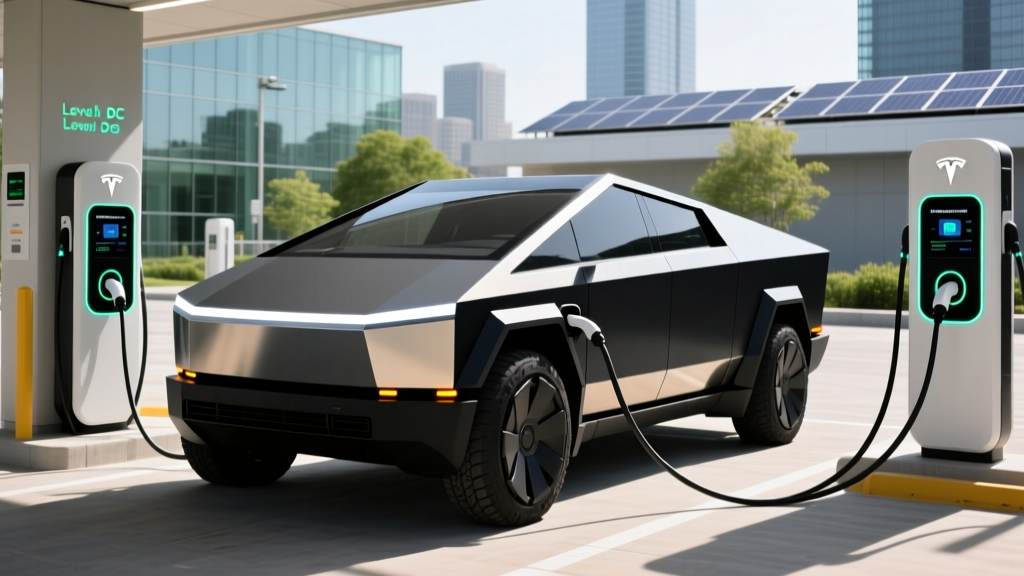
On a Tesla V3 Supercharger (250 kW peak), the Cybertruck AWD achieves a 10–80% charge in approximately 28–32 minutes. However, peak rate only holds between roughly 15–45% State of Charge (SoC). Above 60%, the charge curve tapers significantly — from 250 kW down to under 80 kW past 85%. This is normal lithium-ion behavior to protect cell longevity, but it means the last 20% can take nearly as long as the first 60%.
Home Charger Installation: Electrical Requirements & Costs
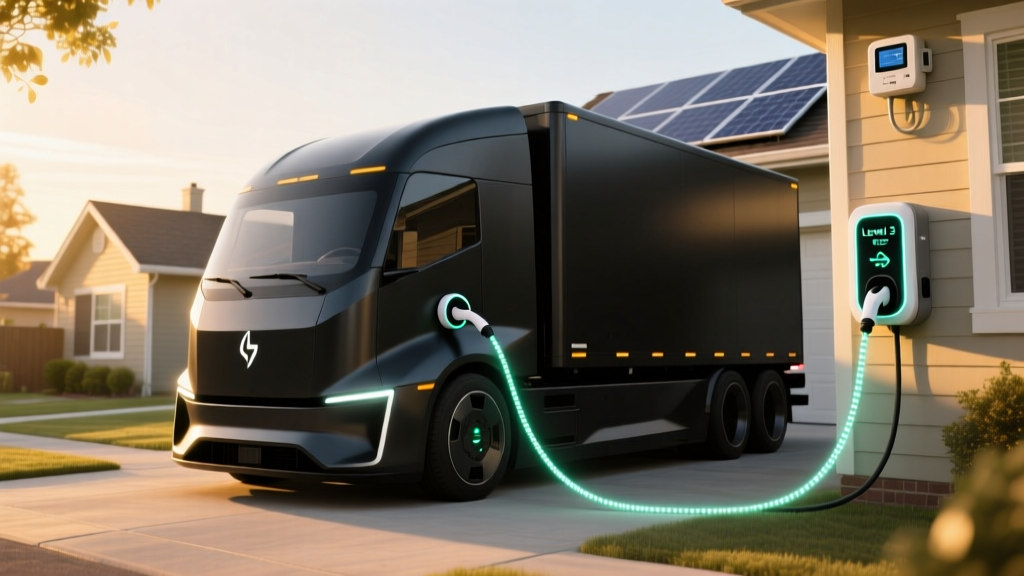
The Cybertruck's 123 kWh battery makes home Level 2 charging nearly mandatory. Level 1 (120V) adds just 3–4 miles per hour — requiring over 40 hours for a full charge, which is impractical for anything beyond overnight top-ups of 30–50 miles.
Electrical Requirements for Level 2
- Circuit: Dedicated 60A breaker (for 48A continuous charging) or 50A breaker (for 40A continuous)
- Voltage: 240V single-phase (standard residential split-phase)
- Wire gauge: 6 AWG copper (60A circuit) or 8 AWG (50A circuit)
- Outlet: NEMA 14-60 (60A) or NEMA 14-50 (50A), or hardwired connection
- Panel capacity: Minimum 200A main service recommended; 100A panels often require upgrade
| Component | Low End | Typical | High End |
|---|---|---|---|
| Level 2 Charger (48A, NACS) | $400 | $550 | $750 |
| Electrician labor (run + mount) | $600 | $1,200 | $2,500 |
| Permit & inspection | $50 | $150 | $400 |
| Panel upgrade (if needed) | $0 | $0 | $4,500 |
| Total (no panel upgrade) | $1,050 | $1,900 | $3,650 |
| Total (with panel upgrade) | $3,500 | $5,200 | $8,150 |
Factors that push costs toward the high end: long wire runs from panel to garage (over 50 feet), conduit requirements through finished walls, trenching for detached garages, and local code requiring GFCI breakers (which add $100–$200). Some utilities offer rebates of $250–$500 for Level 2 installations — check with your provider before scheduling work.
Connector Compatibility: NACS, CCS, and Adapter Needs
The Cybertruck ships with a NACS (North American Charging Standard) port — Tesla's proprietary connector now adopted industry-wide. This gives Cybertruck owners native access to the Tesla Supercharger network (over 25,000 stalls in North America as of 2026) without adapters.
| Connector Type | Native Support? | Network Access | Adapter Required |
|---|---|---|---|
| NACS (Tesla) | Yes — built-in | Tesla Superchargers, Electrify America (select), Rivian Adventure Network | None |
| CCS1 | No | Electrify America, EVgo, ChargePoint DC | Tesla CCS Adapter (~$175) |
| CHAdeMO | No | Limited legacy stations | Not available — avoid |
| J1772 (Level 2 public) | No | Public Level 2 (ChargePoint, Blink, etc.) | Tesla J1772 Adapter (included) |
The Tesla CCS adapter is worth purchasing if you frequently travel in areas where Electrify America or EVgo stations outnumber Superchargers. However, Supercharger reliability and plug-and-charge billing remain superior to third-party networks in most regions, making CCS adapters a backup rather than a daily necessity for most Cybertruck owners.
Cost to Charge: Home vs. Public vs. Gas Comparison
The Cybertruck's efficiency of roughly 42–47 kWh/100 miles (AWD) means charging costs add up faster than with a sedan — but still dramatically undercut gasoline. Here's the real math across common scenarios:
| Scenario | Rate ($/kWh) | Cost per 100 mi | Cost per Mile |
|---|---|---|---|
| Home off-peak (utility TOU rate) | $0.09 | $3.78–$4.23 | $0.038–$0.042 |
| Home standard rate | $0.14 | $5.88–$6.58 | $0.059–$0.066 |
| Public Level 2 (ChargePoint/EVgo) | $0.25–$0.35 | $10.50–$16.45 | $0.105–$0.165 |
| DC Fast (Supercharger avg) | $0.30–$0.40 | $12.60–$18.80 | $0.126–$0.188 |
| Gas truck (18 MPG combined, $3.40/gal) | — | $18.89 | $0.189 |
At home off-peak rates, the Cybertruck costs roughly 4 cents per mile to fuel — less than a quarter of a comparable gas truck (Ford F-150 4WD at 18 MPG). Even at public DC fast-charger rates, you're paying roughly what a gas truck costs, with the convenience of skipping the gas station. The key economic advantage is home charging: if you can install Level 2 and access time-of-use (TOU) rates, annual fuel savings over a gas truck can reach $1,800–$2,400 at 15,000 miles/year.
Best Level 2 Chargers for Cybertruck (2026 Equipment Picks)
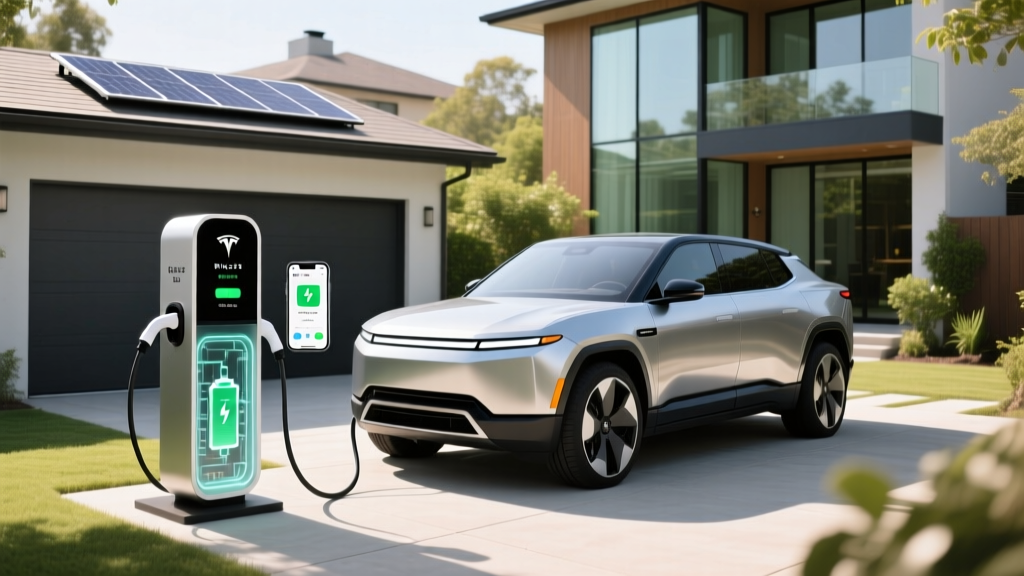
Since the Cybertruck uses NACS natively, you want a Level 2 charger with a built-in NACS connector — no adapter needed. Here are three proven units matched to the Cybertruck's 48A onboard charger capability:
Tesla Wall Connector
- Power: 48A / 11.5 kW (240V/60A circuit)
- Connector: NACS native
- Cable: 24 ft
- Smart features: Wi-Fi, OTA updates, load sharing, Tesla app integration
- Price: ~$475
- Verdict: Best value for Tesla owners; seamless integration
ChargePoint Home Flex (NACS)
- Power: Up to 50A / 12 kW (adjustable 16–50A)
- Connector: NACS (2025+ model)
- Cable: 23 ft
- Smart features: Wi-Fi, Alexa, scheduling, detailed energy reporting
- Price: ~$650
- Verdict: Best app experience; flexible amperage for older panels
Emporia Vue Level 2
- Power: 48A / 11.5 kW
- Connector: NACS
- Cable: 24 ft
- Smart features: Wi-Fi, solar integration, whole-home energy monitoring
- Price: ~$550
- Verdict: Best for solar-equipped homes; lowest cost per kW
All three chargers are NEMA 4-rated (suitable for outdoor installation), UL-listed, and compatible with the Cybertruck's 48A onboard charger. Hardwired installation (rather than plug-in) eliminates the GFCI breaker requirement in many jurisdictions, saving $100–$200 on the electrical bill.
Safety, Code, and Installation Best Practices
EV charging draws sustained high current for hours — far longer than a dryer or oven cycle. This makes proper installation critical:
- Dedicated circuit: The charger must have its own breaker — never share with other appliances.
- Continuous load derating: NEC Article 210.20 requires circuits to be rated at 125% of continuous load. A 48A charger needs a 60A breaker.
- GFCI protection: Required for plug-in (receptacle) installations in garages per NEC 2023+. Hardwired units may be exempt depending on local code.
- Outdoor rating: If mounted outside, ensure NEMA 4 (weatherproof) rating and UV-resistant cable.
- Permit and inspection: Nearly all jurisdictions require an electrical permit and final inspection for EV charger installations. Skipping this voids homeowner's insurance coverage for electrical fires.
- Cable management: Install a cable organizer or retractor to prevent tripping hazards and connector damage.
Frequently Asked Questions
How much does it cost to install a home EV charger for the Cybertruck?
A typical Level 2 installation with a 60A circuit runs $1,050–$3,650 including the charger, electrician labor, and permit — assuming your electrical panel has sufficient capacity. If a panel upgrade from 100A to 200A is needed, add $2,500–$4,500 to that total.
How fast will each charging level add range to the Cybertruck?
Level 1 (120V) adds roughly 3–4 miles per hour. Level 2 (240V, 48A) adds 28–32 miles per hour — enough to fully replenish a day's driving overnight. DC fast charging at a V3 Supercharger adds up to 180 miles in 15 minutes at peak rate, though sustained speed averages lower due to charge-curve taper.
Which connector and charger is compatible with my Cybertruck?
The Cybertruck uses the NACS connector natively. Any NACS-equipped Level 2 charger (Tesla Wall Connector, ChargePoint Home Flex NACS, Emporia Vue) will plug in directly. For CCS1 public DC chargers, you'll need Tesla's CCS adapter (~$175).
How much does charging the Cybertruck cost per mile vs. a gas truck?
At home off-peak rates ($0.09/kWh), the Cybertruck AWD costs about 4 cents per mile to charge. A comparable gas F-150 4WD at 18 MPG and $3.40/gallon costs about 19 cents per mile. Even at public DC fast-charger rates ($0.35/kWh), the Cybertruck runs about 15 cents per mile.
What electrical upgrades might I need before installing a charger?
The most common upgrade is a main panel replacement from 100A to 200A service ($2,500–$4,500), required when existing circuits already consume most of the panel's capacity. Older homes may also need aluminum-to-copper wiring upgrades, a new meter socket, or utility service drop replacement. A licensed electrician's load calculation will determine exactly what's needed.
Does the Cybertruck's range drop significantly in cold weather?
Yes. In testing at 20°F, the Cybertruck AWD loses 20–25% of its EPA-rated range, dropping from 320 miles to roughly 240–250 miles. Preconditioning the battery while plugged in (using the Tesla app to warm the pack before departure) recovers some efficiency and enables faster DC charging in cold conditions. The Cybertruck's heat pump helps cabin efficiency but cannot fully offset the physics of lithium-ion cells in freezing temperatures.
Sources: EPA Fuel Economy — EV Technology, Tesla Cybertruck Specifications, IRS §30D Clean Vehicle Credit Rules.