Does the Tesla Cybertruck Come With Free Supercharging?
If you're researching Cybertruck free Supercharging, the short answer for 2026 model-year purchases is: no, Tesla no longer includes unlimited free Supercharging with new Cybertruck deliveries. The promotional free-Supercharging credits that Tesla occasionally offered on select trims during 2024–2025 launch windows have largely expired. As of 2026, new Cybertruck buyers should expect to pay standard Tesla Supercharger rates for DC fast charging unless Tesla announces a new limited-time promotion at the point of sale.
This doesn't mean Supercharging is a bad deal — it remains one of the most reliable and widespread DC fast-charging networks in North America. But understanding the actual costs, and how home charging can dramatically undercut public rates, is essential for any Cybertruck owner or prospective buyer. This guide covers every charging scenario: Supercharger network pricing, home Level 2 installation, connector compatibility, equipment picks, and real cost-per-mile math.
- Battery: ~123 kWh usable (NMC chemistry)
- EPA range: 340 miles (AWD) / 320 miles (Cyberbeast)
- Peak DC fast charge rate: 250 kW (Supercharger V3/V4)
- 10–80% DC fast charge time: ~35 minutes
- Level 2 onboard charger: 11.5 kW (48A)
- Connector: NACS (native Tesla, no adapter needed)
- Supercharger average cost: $0.28–$0.40/kWh (varies by location and time)
Understanding Charging Levels: Speeds, kW, and Range Added Per Hour
Before we get into costs, let's clarify the most common EV confusion: kW (kilowatts) measures power — the rate at which energy flows into the battery. kWh (kilowatt-hours) measures energy — the total capacity stored. Think of kW as the flow rate of a hose and kWh as the size of the tank. You'll see both throughout this guide, and they are never interchangeable.
| Level | Voltage | Max Power (kW) | Miles of Range Added Per Hour | Best Use Case |
|---|---|---|---|---|
| Level 1 | 120V AC | 1.4–1.9 kW | 3–5 miles | Overnight trickle; emergency top-ups |
| Level 2 | 240V AC | 7.2–19.2 kW | 20–55 miles | Daily home and workplace charging |
| DC Fast Charging | 400–800V DC | 50–350 kW | 150–600+ miles (peak rate) | Road trips and rapid top-ups |
Real-world Cybertruck context: The Cybertruck's massive ~123 kWh battery means Level 1 charging is essentially impractical for anything beyond maintaining charge — it would take over 72 hours to fill from empty. Level 2 at 11.5 kW (the Cybertruck's onboard charger limit) adds roughly 30–35 miles of range per hour, meaning a full 10–100% session takes about 11 hours. That's fine for overnight charging. On a 250 kW V3 Supercharger, the Cybertruck peaks near 250 kW but tapers significantly above 60% state of charge (SoC), which is why the 10–80% time of ~35 minutes is the meaningful benchmark, not the peak rate alone.
Tesla Supercharger Network: Pricing, Availability, and the Cybertruck Experience
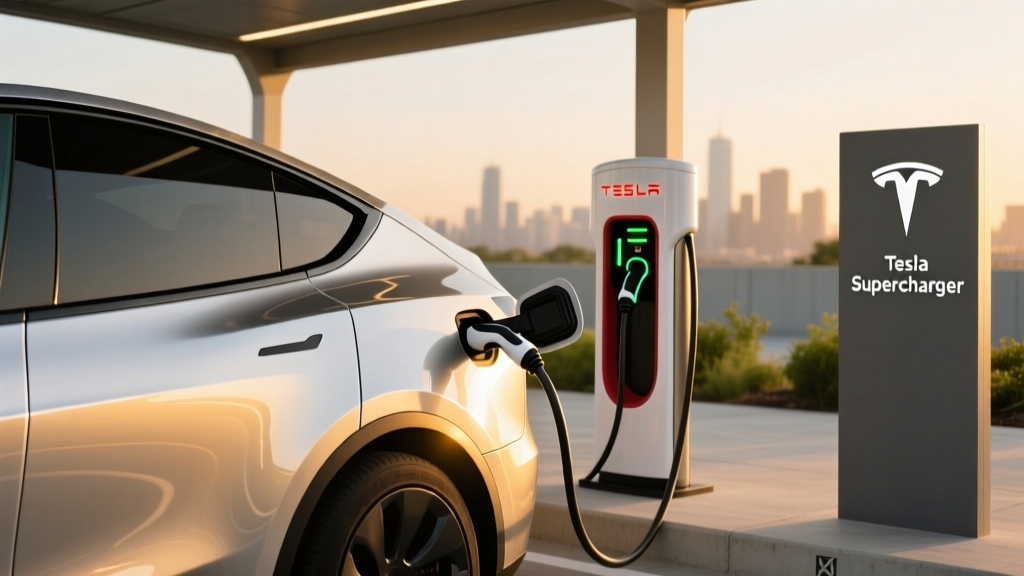
Tesla's Supercharger network remains the gold standard for DC fast charging in North America, with over 6,500 stations and 30,000+ individual stalls in the U.S. as of early 2026. For Cybertruck owners, the experience is native — the truck uses the NACS (North American Charging Standard) connector, so there's no adapter fumbling, and the vehicle's navigation automatically routes through Superchargers and preconditions the battery for optimal charge speed.
Supercharger pricing in 2026 varies by location, time of day, and local utility rates. Expect to pay between $0.28 and $0.40 per kWh at most U.S. stations, with some urban or peak-time locations reaching $0.48/kWh. Tesla does not charge idle fees if you move your vehicle within 5 minutes of a full charge, but repeated idle fee violations can add up.
Cost example: Charging a Cybertruck from 10% to 80% (roughly 86 kWh added) at $0.35/kWh costs approximately $30.10 and takes about 35 minutes. That adds ~230 miles of real-world range. For comparison, fueling a similarly capable gas truck (like a Ford F-150 at 18 MPG combined) for the same 230 miles at $3.50/gallon would cost roughly $44.72. Supercharging is cheaper than gas, but not as cheap as home charging.
What about Cybertruck free Supercharging promotions? Tesla has historically used free Supercharging as a sales incentive — sometimes for referrals, sometimes as a limited-time delivery incentive. If you purchased a Cybertruck during a specific promotional window in 2024 or 2025, you may have received a set number of free Supercharging miles or a time-limited unlimited plan (typically 1–3 years). Check your Tesla account under "Charging" to verify whether any credits remain. For 2026 deliveries, plan your budget assuming standard pay-per-kWh rates.
How Much Does It Cost to Install a Home EV Charger for a Cybertruck?
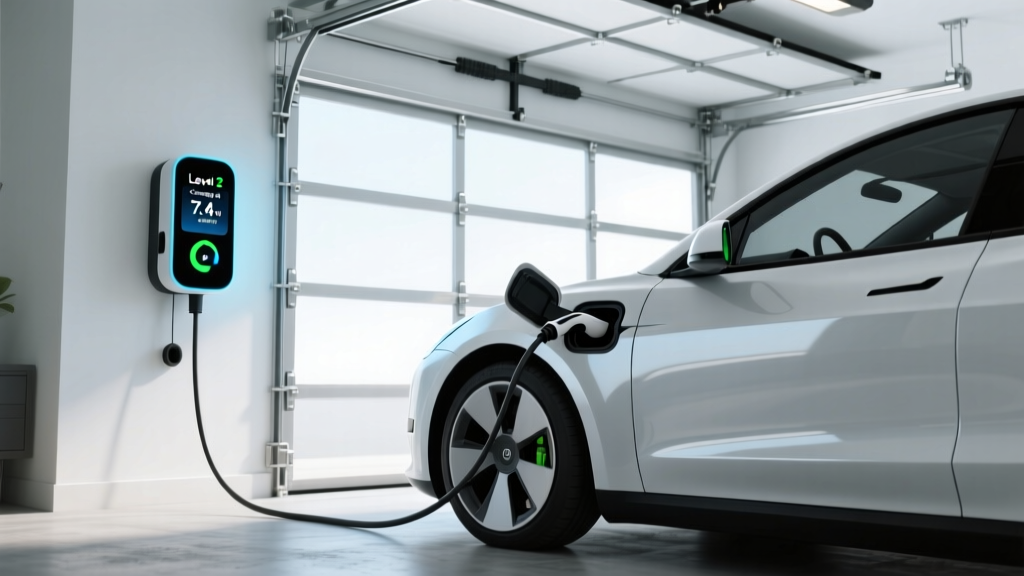
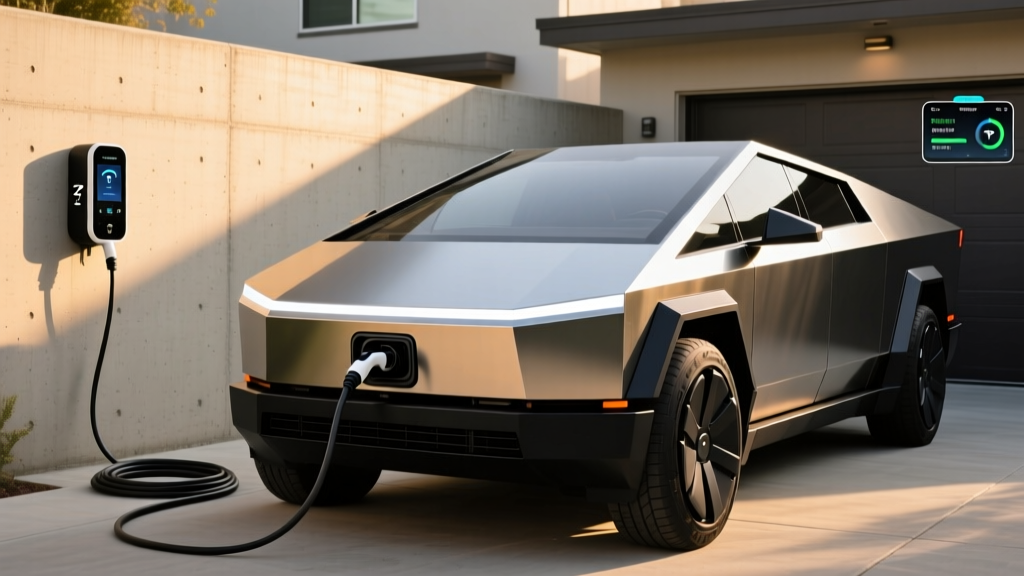
Home charging is where the Cybertruck's economics really shine. The vast majority of Cybertruck owners will do 80–90% of their charging at home, and the installation of a Level 2 charger is a one-time cost that pays for itself within 12–24 months through fuel savings.
Electrical requirements for Cybertruck home charging: The Cybertruck's onboard charger accepts up to 11.5 kW (48 amps). To deliver this, you need a dedicated 240V circuit rated at 60 amps (the National Electrical Code requires circuits to be rated at 125% of the continuous load, so 48A continuous requires a 60A breaker). If you're willing to accept slower charging, a 40A circuit (delivering ~7.7 kW / 32A continuous) is also common and less expensive to install.
| Component | Simple Install (Near Panel) | Complex Install (Long Run / Panel Upgrade) |
|---|---|---|
| Level 2 Charger Equipment | $400–$700 | $400–$700 |
| Electrician Labor (2–8 hrs @ $85–$150/hr) | $170–$400 | $680–$1,200 |
| Electrical Permit | $50–$150 | $50–$200 |
| Conduit, Wiring, Misc. Materials | $50–$150 | $200–$600 |
| Electrical Panel Upgrade (if needed) | N/A | $1,500–$3,500 |
| Total Estimated Cost | $670–$1,400 | $2,930–$6,200 |
The panel upgrade question: Many homes built before 2000 have 100-amp electrical panels, and adding a 60A EV circuit may exceed the panel's capacity — especially if you also run electric HVAC, a dryer, and an oven. A licensed electrician will perform a load calculation to determine if an upgrade to 200A service is necessary. This is the single biggest variable in installation cost. Homes with modern 200A panels and a garage adjacent to the panel will be at the low end of the range. Always get at least two quotes and confirm the electrician will pull a permit — unpermitted work can void homeowner's insurance claims.
Which Connector and Charger Is Compatible With the Cybertruck?
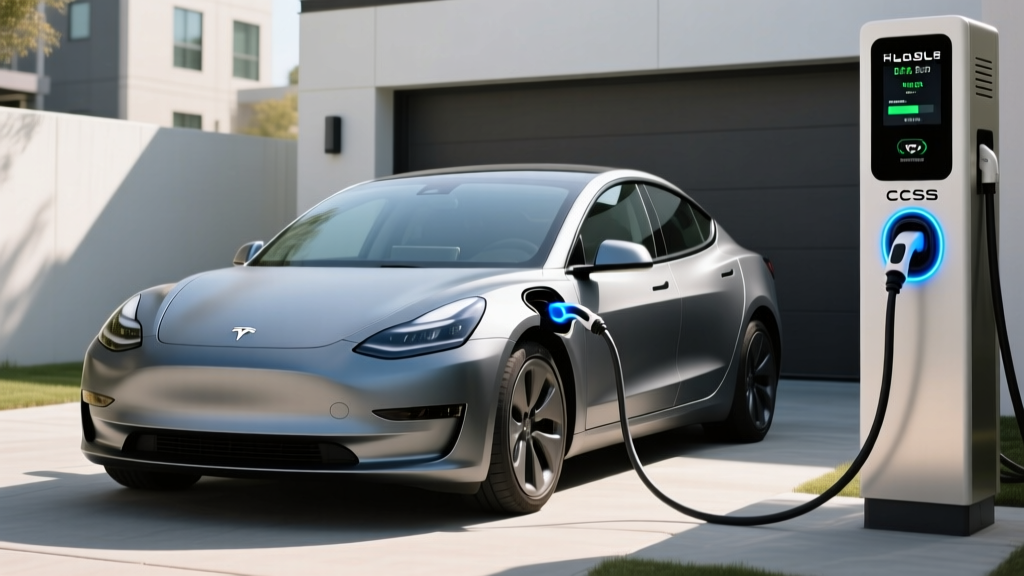
The Cybertruck uses the NACS (North American Charging Standard) connector — the Tesla-designed plug that has now been adopted by Ford, GM, Rivian, Volvo, and most major automakers for 2025+ models. This means the Cybertruck plugs directly into any Tesla Supercharger, Tesla Wall Connector, or third-party NACS-equipped charger with no adapter required.
| Connector Type | Cybertruck Compatible? | Other Vehicles Using This Standard | Adapter Needed for Cybertruck? |
|---|---|---|---|
| NACS (Tesla) | Yes — native | Tesla (all), Ford F-150 Lightning (2025+), GM Ultium (2025+), Rivian (2025+) | No |
| CCS1 | With adapter | Hyundai Ioniq 5, VW ID.4, BMW iX, older Ford/GM EVs | Yes — CCS-to-NACS adapter ($150–$250) |
| CHAdeMO | With adapter (rare) | Nissan Leaf, Mitsubishi Outlander PHEV | Yes — limited availability, not recommended |
Practical advice: If you plan to use non-Tesla public chargers (Electrify America, EVgo, ChargePoint), invest in a quality CCS-to-NACS adapter. The Tesla CCS Combo Adapter (when available) or third-party options from Lectron or A2Z allow the Cybertruck to access CCS stations. However, the Supercharger network's reliability and the Cybertruck's native NACS integration make Tesla's network the primary choice for DC fast charging.
Cost to Charge: Home vs. Supercharger vs. Gas — Real $/Mile Numbers
The Cybertruck's large battery makes cost-per-kWh the most impactful variable in ownership economics. Here's how common scenarios break down:
| Charging Scenario | Cost per kWh | Cost to Add 200 Miles | Cost Per Mile |
|---|---|---|---|
| Home (off-peak utility rate) | $0.08–$0.14 | $5.60–$9.80 | $0.03–$0.05 |
| Home (standard residential avg.) | $0.16 | $11.20 | $0.056 |
| Tesla Supercharger (avg.) | $0.35 | $24.50 | $0.12 |
| Non-Tesla DC Fast (EA, EVgo) | $0.38–$0.55 | $26.60–$38.50 | $0.13–$0.19 |
| Gas Truck (F-150 4WD, 18 MPG) | $3.50/gal | $38.89 | $0.19 |
Annual savings math: Driving 15,000 miles per year, a Cybertruck charged primarily at home ($0.14/kWh average) costs roughly $840/year in electricity. A comparable gas truck at 18 MPG and $3.50/gallon costs $2,917/year in fuel. That's over $2,000 in annual savings — and the home-charging scenario means you start every morning with a full "tank" without a single gas station visit.
For Cybertruck owners who relied on free Supercharging credits, the transition to paid charging will increase per-mile costs, but home charging still delivers the steepest savings. Even at peak Supercharger rates, the Cybertruck is cheaper per mile than a gas truck of similar capability.
Best Level 2 Home Chargers for the Cybertruck (2026 Equipment Picks)
Because the Cybertruck's onboard charger maxes out at 11.5 kW (48A), you'll want a Level 2 unit that can deliver at least that rate to take full advantage of overnight charging. Here are three proven options:
Tesla Wall Connector
Power: Up to 11.5 kW (48A)
Connector: NACS (native)
Cable Length: 24 ft
Smart Features: Wi-Fi, OTA updates, Power-Share (load balancing with multiple units), Tesla app integration
Price: ~$475
Verdict: The default choice for Cybertruck owners. Seamless integration, no adapter needed, and the NACS plug means future compatibility with non-Tesla NACS vehicles.
ChargePoint Home Flex
Power: Up to 12 kW (50A, configurable down to 16A)
Connector: NACS (2025+ model) or J1772 with adapter
Cable Length: 23 ft
Smart Features: Wi-Fi, app scheduling, utility demand-response programs, Alexa integration
Price: ~$599
Verdict: Best for multi-EV households or buyers who want flexible amperage settings to match their circuit capacity.
Emporia Level 2 Smart Charger
Power: Up to 11.5 kW (48A)
Connector: NACS or J1772 (configurable)
Cable Length: 24 ft
Smart Features: Wi-Fi, real-time energy monitoring, solar integration, budget-friendly app
Price: ~$399
Verdict: Best value pick. Excellent energy monitoring and solar-aware scheduling at a lower price point.
All three units are hardwired (recommended for 48A+ circuits) or available with NEMA 14-50 plug configurations. Hardwired installations are generally safer and more code-compliant for high-amperage circuits. If you choose a plug-in model, ensure your electrician installs a high-quality industrial-grade NEMA 14-50 receptacle — cheap outlets have been linked to overheating in EV charging applications.
Safety, Electrical Code, and Installation Best Practices
Charging a Cybertruck at 48 amps continuously for hours places a sustained load on your home's electrical system that few other appliances match. Safety and code compliance aren't optional extras — they're critical.
- Dedicated circuit: Your Level 2 charger must be on its own dedicated breaker — never shared with other appliances. A 60A breaker for a 48A continuous load is NEC-mandated.
- GFCI protection: The 2023 NEC (and most 2026 local adoptions) requires GFCI protection for outdoor receptacles used for EV charging. Hardwired installations may not require a GFCI breaker (the charger itself has ground-fault protection), but check with your local inspector.
- Outdoor rating: If your charger is installed outside (driveway or exterior wall), ensure the unit is rated NEMA 4 or IP55+ for weather resistance. The Tesla Wall Connector and ChargePoint Home Flex both meet outdoor ratings.
- Wire gauge: A 60A circuit requires 6 AWG copper wire (or 4 AWG aluminum) for runs up to ~100 feet. Longer runs may require upsizing to prevent voltage drop. Your electrician will calculate this.
- Permit and inspection: Always pull an electrical permit. The inspection ensures the installation meets code and protects your home insurance coverage. Permit costs are typically $50–$200.
- EV charger tax credit: Under the IRS Residential Clean Energy Credit (as extended), you may be eligible for a 30% credit on charger equipment and installation costs, up to $1,000, if you live in an eligible census tract. Confirm current-year eligibility with a tax professional — rules have shifted in recent legislative updates.
Frequently Asked Questions
Can I charge a Cybertruck on a standard 120V outlet?
Yes, but it's impractical for regular use. A standard 120V/15A outlet delivers roughly 1.4 kW, adding about 3–4 miles of range per hour. Charging the Cybertruck's ~123 kWh battery from empty would take over 72 hours. Level 1 is useful only for maintaining charge or emergency top-ups when no Level 2 option exists.
How fast does the Cybertruck charge at a Tesla Supercharger?
The Cybertruck peaks at approximately 250 kW on V3 and V4 Superchargers. However, like all EVs, the charge rate tapers as the battery fills. Expect a 10–80% session to take about 35 minutes. Charging from 80–100% slows dramatically to protect battery health, so plan to charge to 80% on road trips and top up at the next station if needed.
Will Tesla bring back free Supercharging for Cybertruck?
Tesla has used free Supercharging promotions sporadically as sales incentives, but there is no standing free Supercharging program for new Cybertruck purchases in 2026. If a promotion is active, it will be disclosed at the point of sale or in your Tesla account. Don't purchase based on the assumption of free charging — budget for standard rates.
Do I need a panel upgrade to charge a Cybertruck at home?
Possibly. If your home has a 100A electrical panel, adding a 60A EV circuit may exceed capacity, especially with other large loads (electric oven, dryer, HVAC). An electrician will perform a load calculation. If an upgrade to 200A service is needed, expect an additional $1,500–$3,500. Homes with existing 200A panels typically don't need an upgrade.
Is the Cybertruck compatible with non-Tesla charging networks?
Yes, with an adapter. The Cybertruck's native NACS connector works directly with Tesla Superchargers and any NACS-equipped third-party station. For CCS1 stations (Electrify America, EVgo, most non-Tesla DC fast chargers), you'll need a CCS-to-NACS adapter ($150–$250). Tesla's own CCS Combo Adapter, when available, is the recommended option for seamless app integration.
What's the real-world range of the Cybertruck vs. the EPA estimate?
The Cybertruck AWD carries an EPA-estimated 340 miles of range. In real-world highway driving at 70–75 mph, expect approximately 280–310 miles. In cold weather (below 30°F), range can drop 15–25%, yielding roughly 240–270 miles. The Cybertruck's angular stainless-steel body creates more aerodynamic drag than a sleek sedan, which disproportionately affects highway efficiency. For authoritative EPA figures, check fueleconomy.gov.