The Real Cost to Use a Tesla Supercharger in 2026
If you own a Tesla — or any EV with a NACS charge port — the Supercharger network is the gold standard for road-trip charging. But what does a session actually cost your wallet? The cost to use a Tesla Supercharger varies by location, time of day, and vehicle, but most U.S. stations in 2026 charge between $0.25 and $0.55 per kWh, with a national average hovering near $0.35/kWh.
For a Tesla Model Y Long Range (75 kWh usable battery, ~320 miles EPA range), a typical 10–80% session adds roughly 52.5 kWh. At $0.35/kWh, that's about $18.38 per session, translating to roughly $0.065 per mile. Compare that to a 30 MPG gas car at $3.50/gallon ($0.117/mile), and Supercharging still wins — but not by the landslide that home charging delivers.
Charging Levels Explained: Speed, Cost, and Range Added
Understanding the three charging levels is essential before comparing costs. Each level delivers energy at a different rate, and each has a distinct cost profile.
| Level | Voltage | Power (kW) | Miles of Range per Hour | Typical Use Case |
|---|---|---|---|---|
| Level 1 | 120V AC | 1.0–1.4 kW | 3–5 mi/hr | Overnight trickle, PHEVs, emergencies |
| Level 2 | 240V AC | 3.3–19.2 kW | 12–70 mi/hr | Daily home and workplace charging |
| DC Fast Charging (incl. Supercharger) | 400–800V DC | 50–350 kW | 150–800+ mi/hr | Road trips, quick top-ups |
A Tesla V4 Supercharger delivers up to 250 kW peak to compatible vehicles (Model 3/Y on the 400V architecture), tapering significantly above 80% State of Charge to protect the battery. A full 10–80% session on a Model Y Long Range takes roughly 25–30 minutes under ideal conditions — including battery preconditioning via the car's navigation system routing you to the stall.
Colder ambient temperatures can add 5–10 minutes to that session because the thermal management system must warm the battery before it accepts peak power. This charge-curve taper is why the 10–80% metric matters more than "0–100%" claims.
Supercharger Pricing vs Home Charging vs Gas: Per-Mile Cost Breakdown
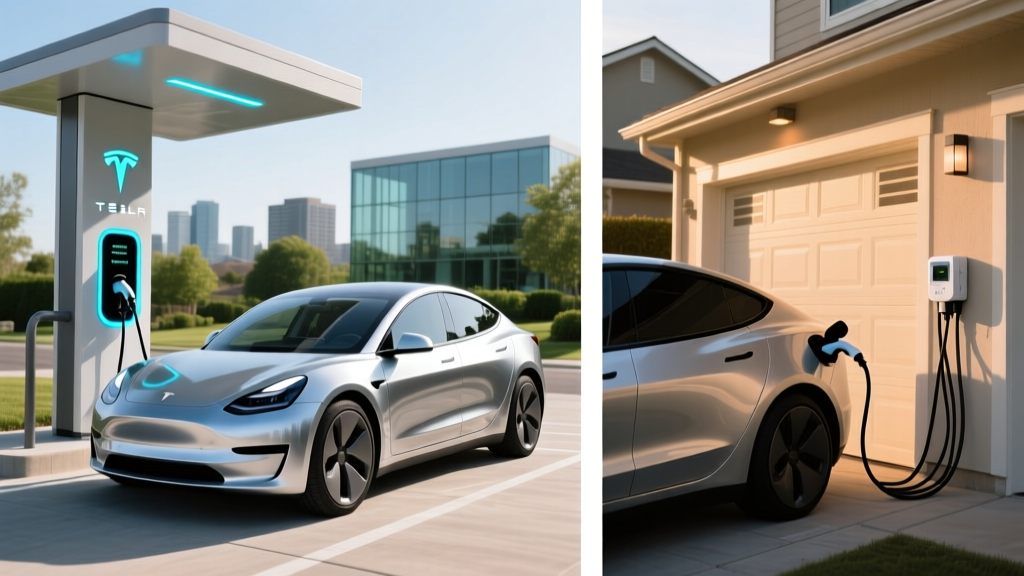
The cost to use a Tesla Supercharger is just one scenario. To make a smart ownership decision, you need to see how it stacks up against home Level 2 charging and gasoline.
| Scenario | Rate | Cost per Mile (Model Y LR, ~3.5 mi/kWh) | Cost for 300-Mile Trip |
|---|---|---|---|
| Home Level 2 (national avg electricity) | $0.16/kWh | $0.046 | $13.80 |
| Home Level 2 (off-peak TOU rate) | $0.08/kWh | $0.023 | $6.90 |
| Tesla Supercharger (avg U.S.) | $0.35/kWh | $0.100 | $30.00 |
| Tesla Supercharger (peak urban, CA) | $0.55/kWh | $0.157 | $47.10 |
| Electrify America / CCS public DCFC | $0.48/kWh | $0.137 | $41.10 |
| Gas car (30 MPG, $3.50/gal) | $3.50/gal | $0.117 | $35.00 |
| Gas car (25 MPG, $3.50/gal) | $3.50/gal | $0.140 | $42.00 |
Key takeaways from this data:
- Home charging is 3–7× cheaper than Supercharging per mile, depending on your utility rate and time-of-use plan.
- Supercharging at average rates roughly matches a 30 MPG gas car per mile. In expensive markets (California urban stations at peak hours), Supercharging can actually exceed gas cost per mile.
- Off-peak home charging is unbeatable — under $7 for 300 miles of range if your utility offers time-of-use rates below $0.10/kWh.
Tesla also offers membership pricing at some stations for non-Tesla EVs, and idle fees of $0.50–$1.00/minute can add up if you leave your car plugged in after reaching your charge limit.
Home EV Charger Installation: Costs, Electrical Requirements, and Gotchas
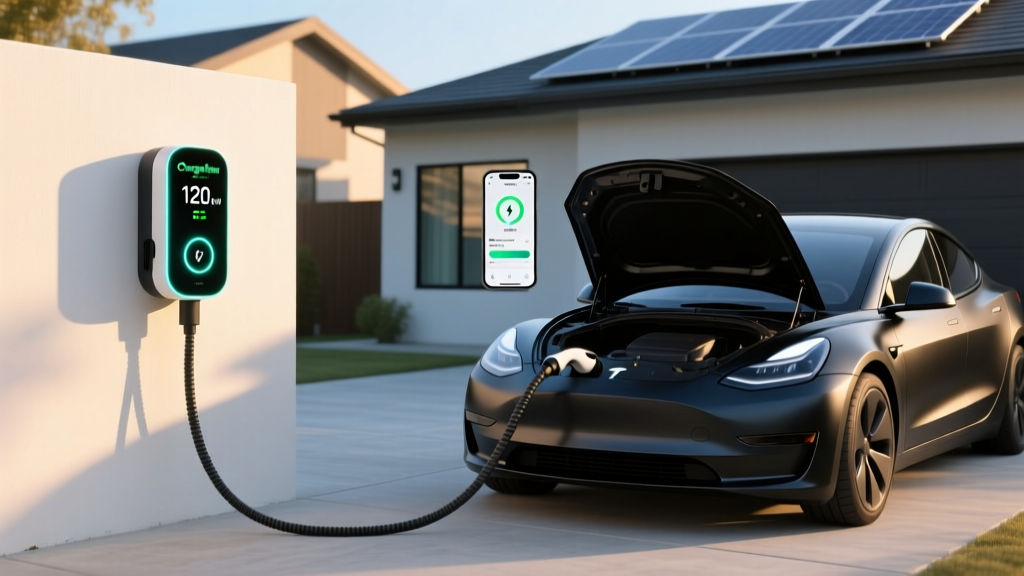
The single biggest cost-saving move an EV owner can make is installing a Level 2 home charger. But the upfront investment varies enormously depending on your home's electrical infrastructure.
Electrical Requirements for a Level 2 Charger
A typical home Level 2 setup requires a 240-volt dedicated circuit — the same type of outlet your electric dryer or oven uses. Most EV owners install a NEMA 14-50 outlet (rated for 50 amps, supporting continuous 40-amp charging) or hardwire a wall connector directly to a breaker.
For a 48-amp charger like the Tesla Wall Connector, you need a 60-amp dedicated breaker (NEC code requires circuits rated at 125% of continuous load). If your electrical panel is already near capacity — common in homes built before 2000 with 100-amp service — you may need a panel upgrade to 200 amps, which is the most expensive variable in the entire installation.
Installation Cost Breakdown
| Component | Best Case | Typical | Complex (Panel Upgrade) |
|---|---|---|---|
| Level 2 charger hardware | $200 (basic 32A) | $400–$500 (48A smart) | $400–$500 |
| Electrician labor (outlet or hardwire) | $300–$500 | $600–$1,200 | $1,000–$2,000 |
| Electrical panel upgrade (if needed) | $0 (not needed) | $0 | $1,500–$3,500 |
| Permit and inspection | $50–$100 | $100–$250 | $150–$300 |
| Total installed cost | $550–$800 | $1,000–$1,950 | $3,050–$6,300 |
The IRS Residential Clean Energy Credit (IRC §25C) covers up to 30% of charger hardware and installation costs, capped at $1,000, for equipment placed in service through 2032. This credit applies to your federal tax liability and requires that you itemize — consult a tax professional to confirm eligibility.
Connector Compatibility: NACS, CCS, and CHAdeMO in 2026
The connector landscape has shifted dramatically. As of 2026, the North American Charging Standard (NACS) — originally Tesla's proprietary connector — has become the dominant standard, adopted by Ford, GM, Rivian, Hyundai, Kia, BMW, and most major automakers for new vehicles.
| Connector | Brands Using It (Native) | Adapter Needed for Superchargers? |
|---|---|---|
| NACS (Tesla) | Tesla, Ford (2025+), GM (2025+), Rivian (2025+), Hyundai/Kia (2026+), BMW, Mercedes | No — native access |
| CCS1 | VW ID.4 (older), some 2024-and-earlier non-Tesla EVs | Yes — CCS-to-NACS adapter ($150–$250) for Supercharger access |
| CHAdeMO | Nissan Leaf (legacy only) | No adapter available — CHAdeMO stations are separate network |
If you drive a CCS-equipped EV from model year 2024 or earlier, you can access Tesla Superchargers using a Tesla-approved CCS-to-NACS adapter. These adapters cost $150–$250 and must be the Tesla-certified version to ensure proper communication with the Supercharger stall. Third-party adapters exist but may not support full charge speeds or may void warranty claims.
For home Level 2 charging, virtually all non-Tesla EVs still use the J1772 connector. Tesla provides a J1772-to-NACS adapter with every vehicle, and third-party chargers with J1772 connectors work seamlessly with Teslas via this adapter.
Best Home Level 2 Chargers: Equipment Recommendations
Here are three top-performing Level 2 chargers we recommend based on power output, reliability, smart features, and value.
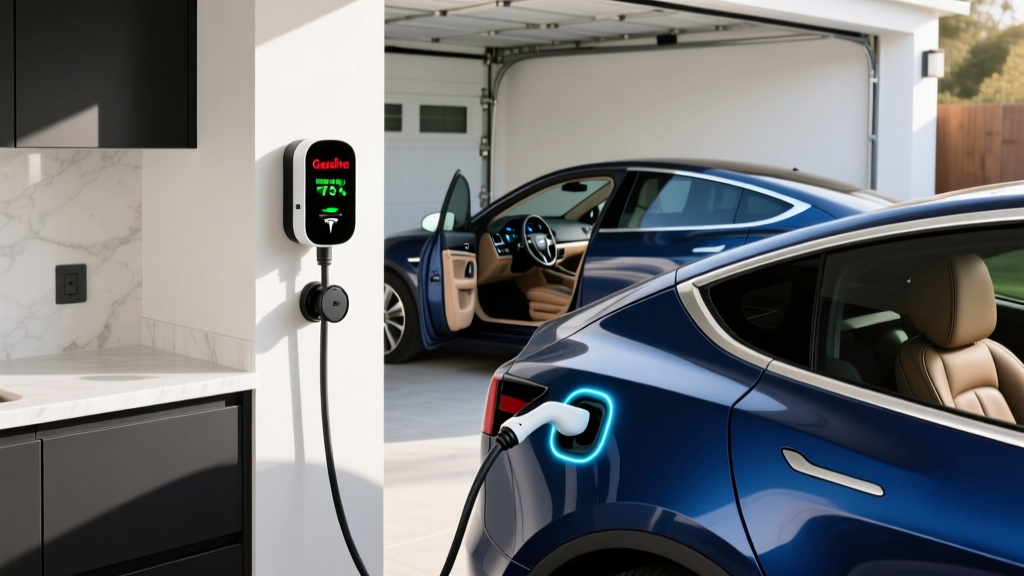
Tesla Wall Connector (Gen 3)
- Power: 48A / 11.5 kW (on 60A circuit)
- Connector: NACS native; J1772 adapter included
- Cable length: 24 ft
- Smart features: Wi-Fi, OTA updates, load sharing (pair two units on one circuit), Tesla app integration
- Price: ~$420
- Best for: Tesla owners, NACS-native EVs
ChargePoint Home Flex
- Power: Up to 50A / 12 kW (adjustable 16–50A)
- Connector: J1772 (NACS adapter available)
- Cable length: 23 ft
- Smart features: Wi-Fi, Alexa, scheduling, energy tracking, adjustable amperage to match your circuit
- Price: ~$550
- Best for: Non-Tesla EVs, flexible amperage needs
Emporia Level 2 Smart Charger
- Power: 48A / 11.5 kW (on 60A circuit)
- Connector: J1772
- Cable length: 24 ft
- Smart features: Wi-Fi, solar integration, real-time energy monitoring via Emporia app, scheduling
- Price: ~$350
- Best for: Budget-conscious buyers, solar-panel homes
All three chargers are UL-listed and rated for indoor or outdoor installation (NEMA 4 rating for weather resistance). Hardwiring is recommended over plug-in for maximum amperage and to avoid the NEC requirement for GFCI breakers on receptacle-based installations — a GFCI breaker for a 50A/240V circuit can add $100–$150 to your install cost and is prone to nuisance tripping.
Safety, Electrical Code, and Permit Requirements
EV charging draws sustained high current for hours — it's one of the most demanding continuous loads in a residential electrical system. Cutting corners here creates fire risk.
- Dedicated circuit required: Your EV charger must have its own breaker — never share a circuit with other appliances.
- NEC continuous-load rule: Circuit breaker must be rated at 125% of the charger's max draw. A 48A charger needs a 60A breaker. A 32A charger needs a 40A breaker.
- GFCI protection: The 2020 NEC and later require GFCI protection for receptacle-based EV charging circuits (NEMA 14-50 outlets). Hardwired installations are exempt from this requirement, which is one reason hardwiring is preferred.
- Outdoor rating: If your charger is mounted outside, ensure both the unit and any conduit/junction boxes carry a NEMA 4 or NEMA 4X rating for water and dust resistance.
- Permit and inspection: Virtually all jurisdictions require an electrical permit for a new 240V circuit. The inspection ensures proper wire gauge (typically 6 AWG copper for 50A, 4 AWG for 60A), correct breaker sizing, and safe grounding. Skipping the permit risks insurance denial in the event of an electrical fire.
Charging Time Examples: How Long Does Each Level Take?
Charge times depend on battery size, charge rate acceptance, and the state of charge. Here are realistic estimates for common EV battery sizes using each level.
| Battery Size (usable kWh) | Example Vehicles | Level 1 (1.2 kW) | Level 2 (11.5 kW / 48A) | DC Fast (250 kW peak) |
|---|---|---|---|---|
| 60 kWh | Tesla Model 3 RWD, Chevy Equinox EV | ~35 hours | ~3.6 hours | ~22 min |
| 75 kWh | Tesla Model Y LR, Ford Mustang Mach-E ER | ~44 hours | ~4.5 hours | ~27 min |
| 90 kWh | Tesla Model S, Rivian R1S (Max Pack) | ~52 hours | ~5.5 hours | ~32 min |
| 100+ kWh | GMC Hummer EV, Silverado EV | ~60+ hours | ~6.5+ hours | ~35–45 min (varies by architecture) |
Note: DC fast-charge times assume battery preconditioning is active and ambient temperature is moderate (60–80°F). In sub-40°F conditions, add 20–40% to these times due to reduced charge acceptance in cold lithium-ion cells.
Frequently Asked Questions
How much does it cost to install a home EV charger?
A straightforward Level 2 installation with an existing 200-amp panel and short conduit runs typically costs $1,000–$1,950 including equipment, electrician labor, and permits. If your home needs a panel upgrade from 100A to 200A service, total costs can reach $3,000–$6,300. Always get at least two quotes from licensed electricians.
How fast will each charging level add range?
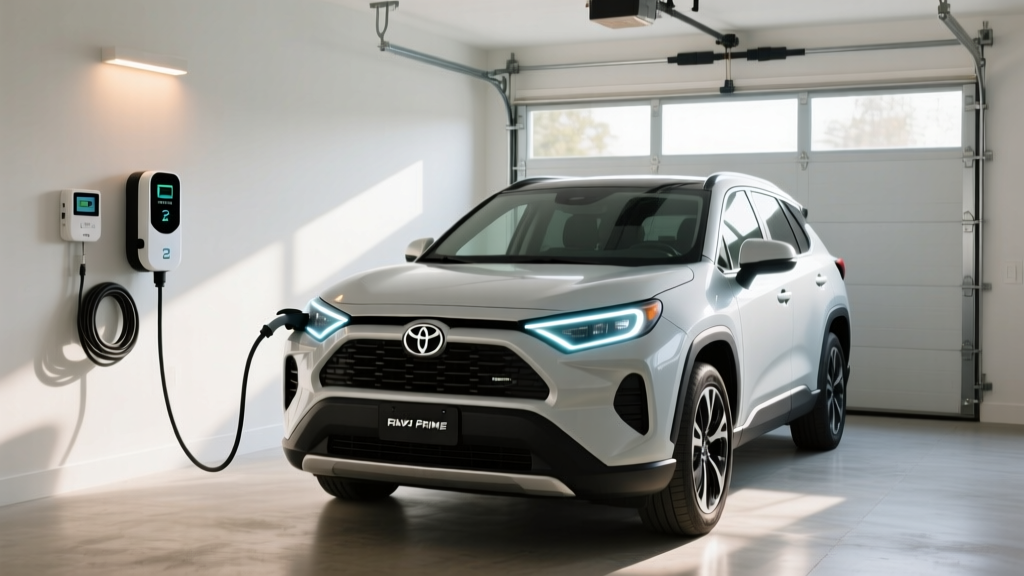
Level 1 (120V) adds roughly 3–5 miles of range per hour. Level 2 (240V, 48A) adds approximately 35–45 miles per hour for most EVs. DC fast charging at a Tesla Supercharger (250 kW) can add up to 200 miles in about 15 minutes under ideal conditions, though the charge rate tapers significantly above 80% SoC.
Which connector or charger is compatible with my EV?
For 2025–2026 model-year EVs from Tesla, Ford, GM, Rivian, Hyundai, and Kia, the NACS connector is native. Older CCS-equipped EVs need a CCS-to-NACS adapter (~$200) to use Tesla Superchargers. For home charging, any J1772 Level 2 charger works with all EVs except Tesla (which requires the included J1772 adapter) — or you can choose a NACS-native charger like the Tesla Wall Connector.
How much does charging cost per mile vs gas?
Home Level 2 charging averages $0.03–$0.05 per mile depending on your electricity rate. Tesla Supercharging averages $0.08–$0.16 per mile depending on location and time of day. A comparable 30 MPG gas car at $3.50/gallon costs about $0.12 per mile. Home charging is the cheapest option; Supercharging is competitive with or slightly cheaper than gas, except in high-cost urban markets.
What electrical upgrades might I need?
The most common upgrade is a new 240V dedicated circuit with appropriate amperage (40A or 60A breaker). Older homes with 100-amp electrical panels may need a full panel upgrade to 200 amps ($1,500–$3,500) to safely support EV charging alongside existing loads. Homes with aluminum wiring, Federal Pacific/Zinsco panels (recalled for fire risk), or insufficient physical space in the panel for a new double-pole breaker will also require remediation. A licensed electrician can assess your panel's spare capacity in a 30-minute site visit.
For current Supercharger station locations and real-time pricing, check the Tesla Find Us map or your vehicle's built-in navigation, which displays per-kWh pricing at each station before you arrive.