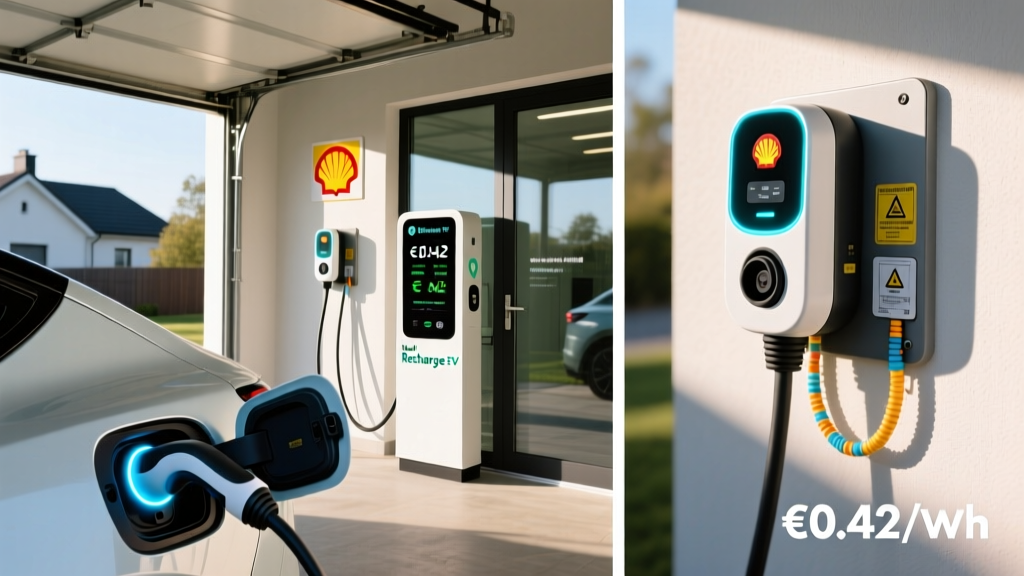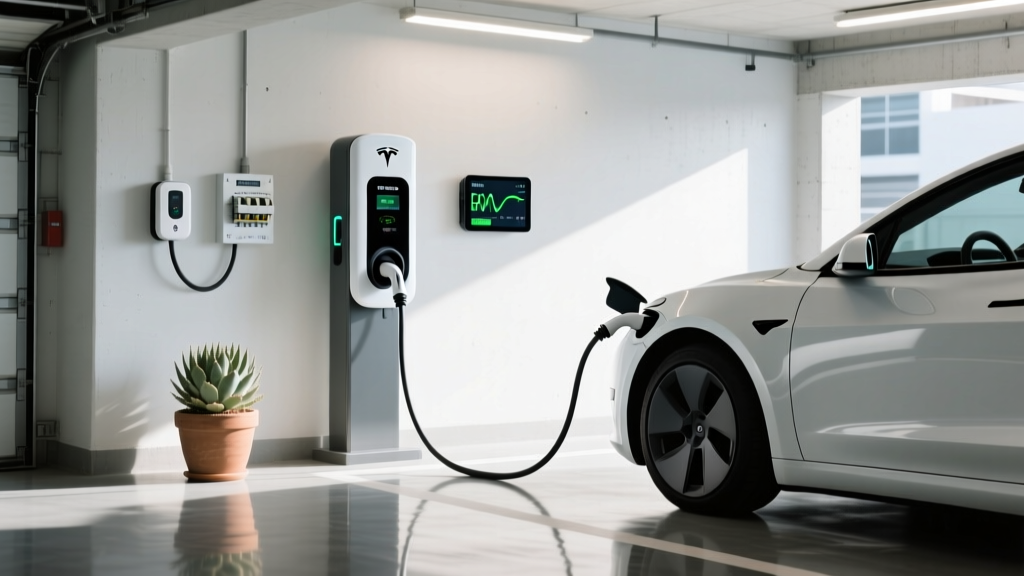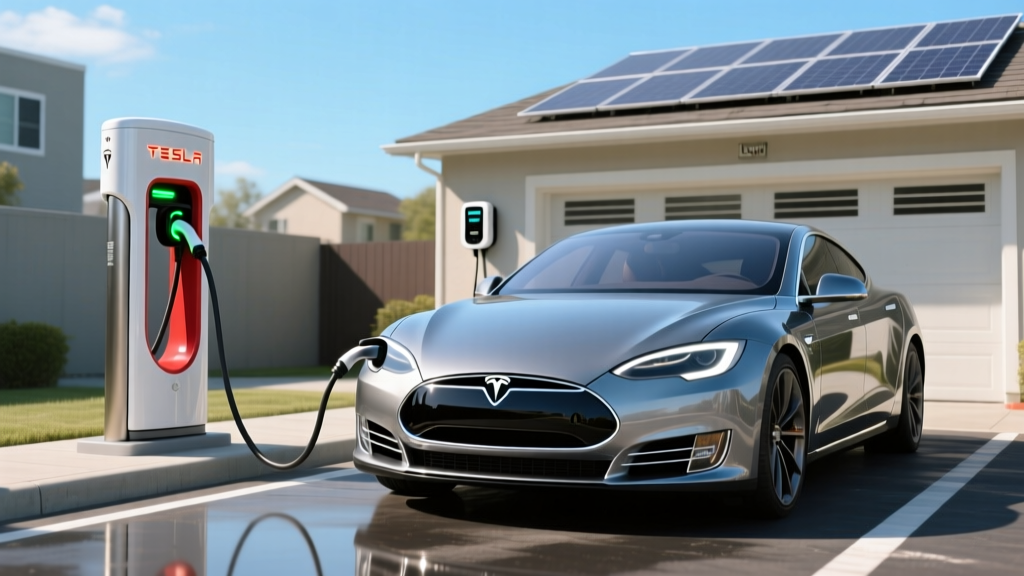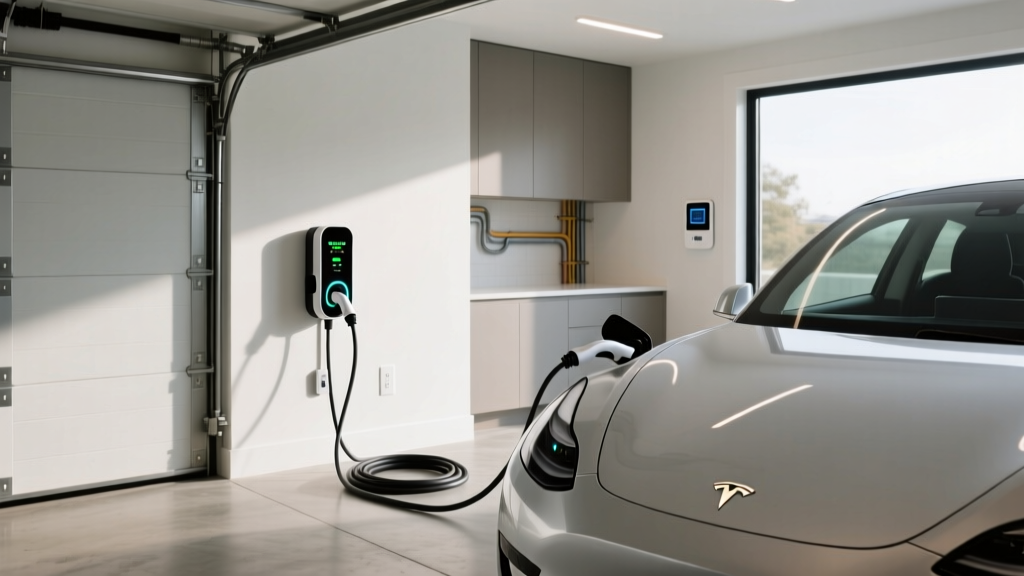
Understanding the True Cost of a Tesla Charging Station at Home
When EV buyers ask about the cost of a Tesla charging station, they're usually referring to one of two things: the price of the Tesla Wall Connector hardware, or the full cost to purchase, wire, permit, and commission a Level 2 home charging setup. Those numbers are very different.
The Wall Connector itself retails for around $425 as of early 2026 — a reasonable price for a 48-amp, Wi-Fi-enabled Level 2 charger with an 18-foot cable and integrated NACS (North American Charging Standard) plug. But the total installed cost depends heavily on your home's electrical panel, the distance from panel to parking spot, and local permitting requirements. For most homeowners, the full project lands between $800 and $2,500, with panel upgrades pushing the high end past $4,000.
This guide breaks down every cost layer, from the charger hardware to the electrician's invoice, and shows how home charging compares to gas and public DC fast charging on a per-mile basis.
Charging Levels Explained: Speed, Power, and Miles Added Per Hour
Before pricing anything, it's essential to distinguish between the three charging levels available to Tesla owners (and, increasingly, to NACS-equipped EVs from other automakers). The critical unit here is kW (kilowatts), which measures the rate of power delivery — not kWh (kilowatt-hours), which measures total energy stored in your battery.
| Level | Voltage | Power (kW) | Miles of Range Per Hour | Typical Use Case |
|---|---|---|---|---|
| Level 1 | 120V AC | 1.0–1.4 kW | 3–5 mi/hr | Overnight trickle; emergency top-up |
| Level 2 (Home) | 240V AC | 7.2–11.5 kW | 25–44 mi/hr | Daily home charging; primary method |
| DC Fast Charge | 400–800V DC | 50–250+ kW | 150–1,000+ mi/hr (peak) | Road trips; Superchargers, EA, EVgo |
A Tesla Model Y Long Range with its ~75 kWh usable battery gains roughly 44 miles of range per hour on a full-power 11.5 kW Wall Connector. That means an overnight session of 8 hours can add ~350 miles — more than enough to fully replenish even after a heavy driving day. By contrast, Level 1 on a standard 120V outlet adds only about 30 miles over 8 hours, making it impractical as a primary charging method for most drivers.
How Much Does It Cost to Install a Tesla Home Charger?
The installed cost of a Tesla Wall Connector depends on four components: the charger hardware, the electrical labor, the permit, and any panel or service upgrades your home may require.
| Component | Low Estimate | High Estimate | Notes |
|---|---|---|---|
| Tesla Wall Connector (48A, NACS) | $425 | $425 | Fixed retail price; J1772 version also $425 |
| Electrician labor (run 60A circuit, mount, wire) | $300 | $1,500 | Varies by run length, wall type, conduit needs |
| Electrical permit & inspection | $50 | $250 | Local jurisdiction dependent |
| Panel upgrade (if needed: 100A → 200A service) | $1,500 | $3,500 | Older homes with 100A panels often require this |
| Total (no panel upgrade) | $775 | $2,175 | Most common scenario for modern homes |
| Total (with panel upgrade) | $2,275 | $5,675 | Common in pre-1990 homes |
When Will You Need a Panel Upgrade?
A Tesla Wall Connector configured for 48 amps of continuous draw requires a 60-amp dedicated circuit (the National Electrical Code requires circuits to be rated at 125% of continuous load). If your home has a 200-amp service panel with available capacity, an electrician can usually add this circuit without issue. But if your panel is already near capacity — common in homes with electric ranges, dryers, and HVAC — or if you have an older 100-amp service, a panel upgrade becomes necessary.
Signs you may need an upgrade:
- Your panel is 100 amps or less
- You have fewer than 4–6 open breaker slots
- Your electrician's load calculation shows you're above 80% of panel capacity with the new circuit added
- You have a Federal Pacific or Zinsco panel (known safety hazards that insurers may require replacing)
Always have a licensed electrician perform a load calculation before committing to a charger install. This is a non-negotiable safety step, not an upsell.
Connector Compatibility: NACS, CCS, and Adapter Requirements
As of 2026, the connector landscape has consolidated significantly around NACS (the Tesla-designed plug now adopted by Ford, GM, Rivian, Hyundai, and most major automakers). But if you own a non-Tesla EV or are considering a universal charger, compatibility matters.
| Connector | Native Brands | Adapter Needed For |
|---|---|---|
| NACS (Tesla plug) | Tesla, Ford, GM, Rivian, Hyundai/Kia (2025+), Volvo, Polestar | Older CCS vehicles using a NACS-to-CCS adapter |
| CCS1 | Legacy VW ID.4, older BMW iX, pre-2025 Hyundai/Kia | Tesla Superchargers via Tesla CCS adapter (~$175) |
| CHAdeMO | Nissan Leaf (discontinued), Mitsubishi Outlander PHEV | Limited public network; no direct NACS adapter widely available |
| J1772 (Level 2) | All non-Tesla EVs for Level 2 AC charging | Tesla vehicles use included J1772-to-NACS adapter |
The Tesla Wall Connector ships with a native NACS plug. If you need to charge a CCS-equipped vehicle at home, Tesla also sells a J1772 version of the Wall Connector at the same $425 price, and most CCS vehicles can accept J1772 Level 2 charging natively. For DC fast charging on the road, Tesla's CCS adapter allows non-Tesla CCS vehicles to use some Superchargers, though availability varies — check Tesla's in-app map for open stations per the Tesla NACS support page.
How Much Does Charging Cost Per Mile vs. Gas?
The economics of home charging are where EV ownership shines — but the savings depend heavily on your local electricity rate and whether you can charge during off-peak hours.
| Scenario | Rate / Price | Cost Per Mile (Model Y, ~3.5 mi/kWh) |
|---|---|---|
| Home off-peak (utility time-of-use) | $0.10/kWh | $0.029/mi |
| Home standard rate | $0.16/kWh | $0.046/mi |
| Public Level 2 (ChargePoint, EVgo L2) | $0.25/kWh | $0.071/mi |
| Tesla Supercharger (DC fast) | $0.32/kWh (avg) | $0.091/mi |
| Electrify America / third-party DC | $0.48/kWh (avg) | $0.137/mi |
| Gas vehicle (30 MPG, $3.40/gal) | $3.40/gal | $0.113/mi |
| Gas vehicle (22 MPG, $3.40/gal) | $3.40/gal | $0.155/mi |
At off-peak home rates, charging a Tesla Model Y costs roughly $0.03 per mile — about one-quarter the cost of fueling a 30 MPG gas car. Even at standard residential rates, you're paying under $0.05/mile. The gap narrows at public DC fast chargers, where Tesla Superchargers average ~$0.09/mile and third-party networks can exceed $0.13/mile — comparable to or slightly above gas. This is why home charging access is the single biggest factor in EV ownership economics.
For a driver covering 12,000 miles per year, home off-peak charging costs approximately $343 annually versus $1,360 for gas at 30 MPG — a savings of over $1,000 per year. Source: fueleconomy.gov EV side-by-side comparison tool.
Charging Time Examples: What to Expect From 10% to 80%
Charging speed is not linear. EVs accept peak power only at low states of charge (SoC); as the battery fills, the charge rate tapers to protect cell health. Here's what real-world 10–80% sessions look like for common Tesla battery sizes:
- Tesla Model 3 RWD (~57.5 kWh LFP battery): 10–80% on a 250 kW Supercharger in approximately 25 minutes. Peak rate ~170 kW, tapering to ~50 kW above 60% SoC. LFP chemistry tolerates frequent 100% charging, so Tesla recommends daily charging to 100% for this trim.
- Tesla Model Y Long Range (~75 kWh NMC battery): 10–80% on a 250 kW Supercharger in approximately 27 minutes. Peak rate ~200 kW. NMC chemistry benefits from staying between 20–80% for daily use; set charge limit to 80% and reserve 100% for road trips.
- Tesla Model S (~95 kWh NMC battery): 10–80% on a 250 kW Supercharger in approximately 32 minutes. Larger battery means more total energy to add, even at high peak rates.
- Home Level 2 (Wall Connector at 11.5 kW): A Model Y Long Range going from 20% to 80% (~45 kWh to add) takes approximately 4 hours. This is the "plug in when you get home, wake up full" scenario that defines daily EV life.
One nuance many new owners miss: preconditioning. If you navigate to a Supercharger using the Tesla's built-in navigation, the car preheats the battery en route, enabling it to accept peak charge rates immediately upon arrival. Without preconditioning — for example, if you drive to a charger without using nav — cold batteries may accept only 30–50 kW initially, adding 5–10 minutes to your session.
Recommended Home Chargers: Tesla Wall Connector and Alternatives
If you own a Tesla or a NACS-equipped vehicle, the Tesla Wall Connector is the default recommendation — but it's worth comparing alternatives, especially if you need a longer cable, a J1772 plug, or smart load-management features.
Tesla Wall Connector (NACS)
- Power output: Up to 11.5 kW (48A on a 60A circuit)
- Connector: NACS (native Tesla plug)
- Cable length: 18 feet
- Smart features: Wi-Fi for OTA updates, power sharing with a second Wall Connector on one circuit, access control via Tesla app
- Price: ~$425
- Best for: Tesla owners who want seamless integration and don't need a longer cable
ChargePoint Home Flex (NACS or J1772)
- Power output: Up to 12 kW (50A on a 60A circuit); adjustable down to 16A for lower-capacity panels
- Connector: Available in NACS or J1772
- Cable length: 23 feet (5 feet longer than Tesla)
- Smart features: Wi-Fi, Alexa integration, detailed energy tracking in ChargePoint app, flexible amperage settings
- Price: ~$599–$649
- Best for: Multi-EV households or homes needing adjustable amperage to avoid a panel upgrade
Emporia Vue Level 2 Charger
- Power output: Up to 11.5 kW (48A)
- Connector: J1772 (NACS adapter included for Tesla vehicles)
- Cable length: 24 feet
- Smart features: Integration with Emporia home energy monitor, solar-aware charging, scheduling
- Price: ~$399
- Best for: Budget-conscious buyers who want a long cable and energy-monitoring integration
For most Tesla owners, the Wall Connector is the right call: it's competitively priced, reliable, and receives firmware updates. But if you need 25 feet of cable to reach a parking spot, or if you want to dial the amperage down to 32A (on a 40A circuit) to avoid a panel upgrade, the ChargePoint Home Flex offers more flexibility.
Safety, Electrical Code, and Installation Best Practices
EV charging draws sustained, high-current loads for hours — more similar to running an electric furnace than plugging in a laptop. Proper installation isn't optional; it's a fire-safety requirement.
- Dedicated circuit: Your Level 2 charger must be on its own dedicated breaker. Sharing a circuit with other appliances violates NEC (National Electrical Code) and creates a fire risk.
- GFCI protection: NEC 2020 and later require GFCI (Ground Fault Circuit Interrupter) protection for outdoor EV outlets. Hardwired installations (like the Wall Connector) are generally exempt from the GFCI requirement, which is one reason hardwiring is preferred over a plug-in NEMA 14-50 outlet for permanent installs.
- Outdoor rating: If your charger is mounted outside, ensure the unit is rated for outdoor use (the Wall Connector is NEMA 4 rated for rain and dust). The connector holster should shield the plug from direct weather exposure.
- Wire gauge: A 60A circuit requires 4 AWG copper wire (or 3 AWG aluminum) for runs up to ~100 feet. Longer runs may require thicker wire to prevent voltage drop. Your electrician will calculate this.
- Permit and inspection: Most jurisdictions require an electrical permit for a new 240V circuit. The inspection ensures the work meets code — skip this step and you risk voiding your homeowner's insurance in the event of an electrical fire.
For a full overview of NEC requirements as they apply to EV supply equipment, see the National Fire Protection Association's NEC resource page.
Federal Tax Credit for Home Charger Installation
The IRS §30C Alternative Fuel Vehicle Refueling Property Credit covers 30% of the cost of home EV charging equipment and installation, up to $1,000. This credit applies to the Wall Connector hardware and the electrician's labor, but eligibility depends on several factors:
- The charger must be installed at your primary residence
- The property must be located in an eligible census tract (generally non-urban or low-income areas — check your address via the IRS eligibility tool)
- The credit is non-refundable: it reduces your tax liability but won't generate a refund beyond zero
- Equipment must be new and placed in service during the tax year
This means if your total install (hardware + labor + permit) is $1,800 and you live in an eligible census tract, you could claim $540 back on your federal taxes. Consult a tax professional and review current IRS §30C guidelines for the latest rules, as census-tract eligibility maps are updated periodically.
Frequently Asked Questions
Can I install a Tesla Wall Connector myself?
Tesla sells the Wall Connector as a hardwired unit, meaning installation requires connecting wires directly to your electrical panel inside a junction box. Unless you are a licensed electrician, this is not a DIY project. Improper wiring of a 60-amp, 240-volt circuit poses serious fire and electrocution risks, and unpermitted work can void your home insurance.
Do I need a Tesla to use a Tesla Wall Connector?
The Wall Connector with a NACS plug will physically connect to any vehicle with a NACS charge port — which, as of 2026, includes Ford, GM, Rivian, and most major-brand EVs. For CCS-equipped vehicles, you'd need the J1772 version of the Wall Connector or a NACS-to-CCS adapter (for Level 2, the adapter situation is less standardized than for DC fast charging).
Is a NEMA 14-50 outlet better than hardwiring?
A NEMA 14-50 outlet (50A circuit, delivering up to 40A continuous / 9.6 kW) offers portability — you can unplug the charger and take it with you when you move. However, hardwiring the Wall Connector to a 60A circuit enables the full 48A / 11.5 kW output, charging roughly 20% faster. Hardwired installs also avoid the NEC GFCI breaker requirement for outdoor outlets, which can cause nuisance trips. For most homeowners who plan to stay put, hardwiring is the better choice.
How does cold weather affect home charging speed?
In freezing temperatures, your Tesla may use some of the incoming power to heat the battery before it can accept a full charge. This is normal thermal management behavior and can add 10–20 minutes to a charging session in sub-30°F conditions. Setting a scheduled departure time in the Tesla app triggers preconditioning, which mitigates this effect. Cold weather also reduces regenerative braking efficiency until the battery warms up on the road.
What if I live in an apartment or don't have a garage?
Home Level 2 charging requires dedicated parking with electrical access. If you park on the street or in a shared garage without EV-ready wiring, your options are: workplace charging, public Level 2 networks (ChargePoint, EVgo), or relying on DC fast charging (Superchargers). Some municipalities and HOAs are now required by "right-to-charge" laws to allow residents to install chargers — check your state's regulations.