How Much Does It Cost to Install a Tesla Home Charger?
If you've ordered a Tesla or any EV with a NACS charge port, home Level 2 charging is the single biggest quality-of-life upgrade you can make. But the total cost of installing a Tesla home charger varies enormously — from roughly $500 to over $4,000 — depending on your home's electrical panel, the distance between the panel and your parking spot, and which charger you choose.
This guide breaks down every cost component for 2026, including equipment pricing, electrician labor, permits, and the often-overlooked panel-upgrade scenario. We'll also cover charging speeds, connector compatibility, and how home charging costs compare to gas per mile.
Understanding Charging Levels: Speeds and What They Mean
Before evaluating costs, you need to understand the three charging levels and how they differ in power delivery. A critical distinction: kW (kilowatts) measures power — the rate at which energy flows. kWh (kilowatt-hours) measures energy — the total amount stored in your battery. Think of kW as the speed of water flowing through a hose, and kWh as the total gallons in your bucket.
| Level | Voltage / Amperage | Power (kW) | Miles of Range Added Per Hour | Typical Use Case |
|---|---|---|---|---|
| Level 1 | 120V / 12A | 1.4 kW | 3–5 mi/hr | Overnight trickle; PHEV top-ups |
| Level 2 | 240V / 32–48A | 7.7–11.5 kW | 25–44 mi/hr | Home charging; workplace; hotels |
| DC Fast | 400–800V DC | 50–350 kW | 150–1,000+ mi/hr (peak) | Road trips; highway corridors |
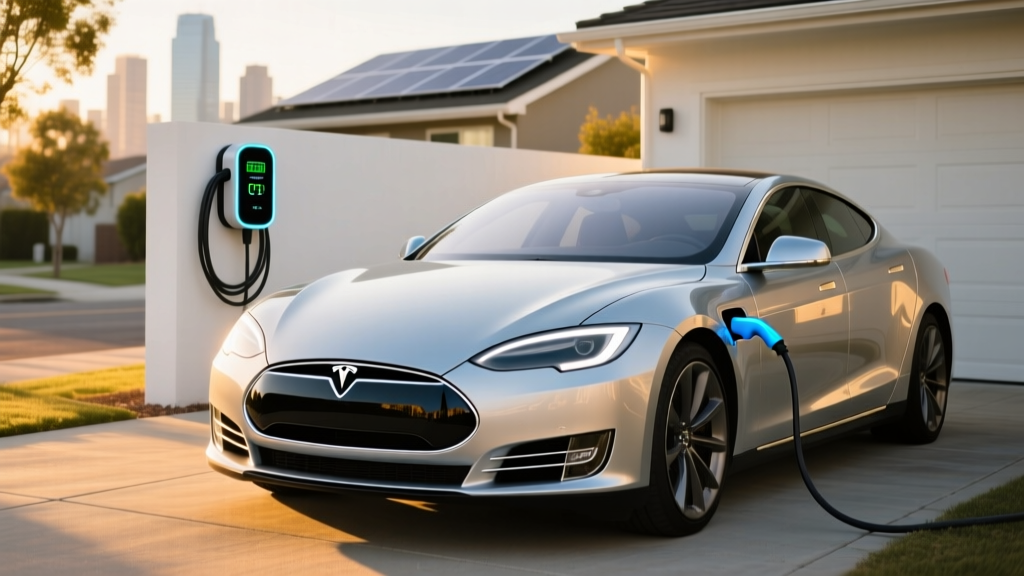
For most Tesla owners, a Level 2 home charger is the practical target. A Tesla Model Y Long Range with its 75 kWh (usable) battery can go from 10% to 80% in roughly 7–9 hours on an 11.5 kW Wall Connector — perfect for overnight charging. Level 1 on a standard 120V outlet would take over 40 hours for the same swing, making it viable only for plug-in hybrids with smaller batteries or as an emergency backup.
DC fast charging is reserved for public stations. Tesla Superchargers deliver up to 250 kW (V3) or 350 kW (V4), adding up to 200 miles in 15 minutes on a Model Y. These are not installable at home — they require commercial-grade electrical infrastructure costing $100,000+.
Equipment Cost: Tesla Wall Connector vs. Alternatives
The Tesla Wall Connector remains the default choice for Tesla owners, but the 2026 market offers strong NACS-compatible alternatives. Here's how the top options compare:
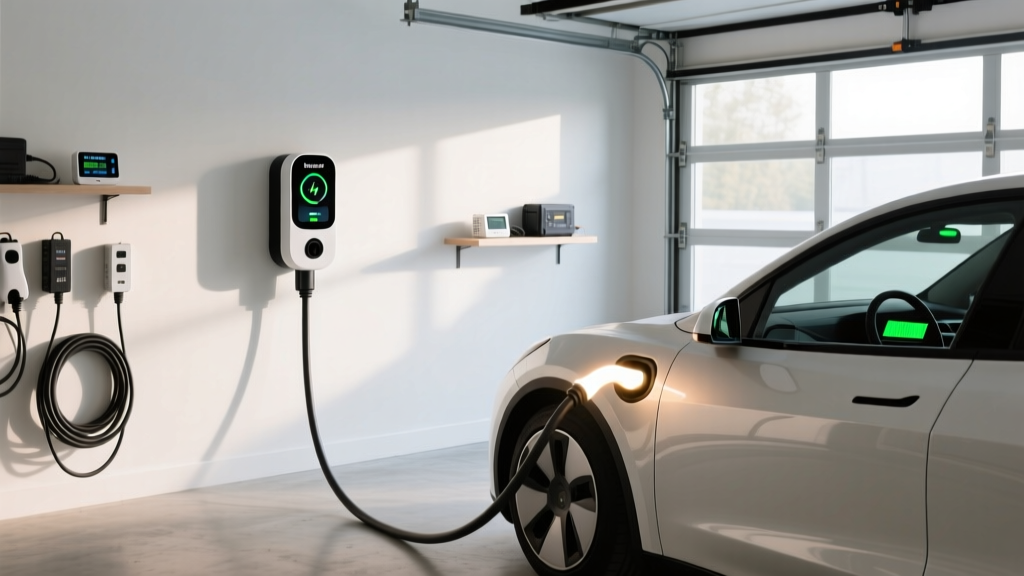
Tesla Wall Connector (Gen 4)
- Power: 11.5 kW (48A) max on a 60A circuit
- Connector: NACS (native Tesla)
- Cable length: 24 ft
- Smart features: Wi-Fi, OTA updates, power sharing between two units, Tesla app integration
- Price: $420 (direct from Tesla)
- Best for: Tesla-only households wanting seamless integration
Emporia Vue EV Charger
- Power: 11.5 kW (48A) max, configurable down to 16A
- Connector: NACS or J1772 (configurable)
- Cable length: 24 ft
- Smart features: Energy monitoring, solar integration, scheduling, load management
- Price: $399
- Best for: Solar-home owners wanting energy tracking
ChargePoint Home Flex (NACS)
- Power: 12 kW (50A) max on a 60A circuit; configurable 16–50A
- Connector: NACS (2025+ models) or J1772 with adapter
- Cable length: 23 ft
- Smart features: Alexa, scheduling, charge history, flexible amperage dial
- Price: $549
- Best for: Mixed-EV households needing amperage flexibility
Key insight: The Tesla Wall Connector's 11.5 kW output is excellent, but it requires a dedicated 60-amp circuit. If your panel has limited spare capacity, a charger with adjustable amperage (like the ChargePoint Home Flex) lets you dial down to 32A or 40A — requiring only a 40A or 50A circuit — without an expensive panel upgrade.
Installation Cost Breakdown: Electrician, Permit, and Panel
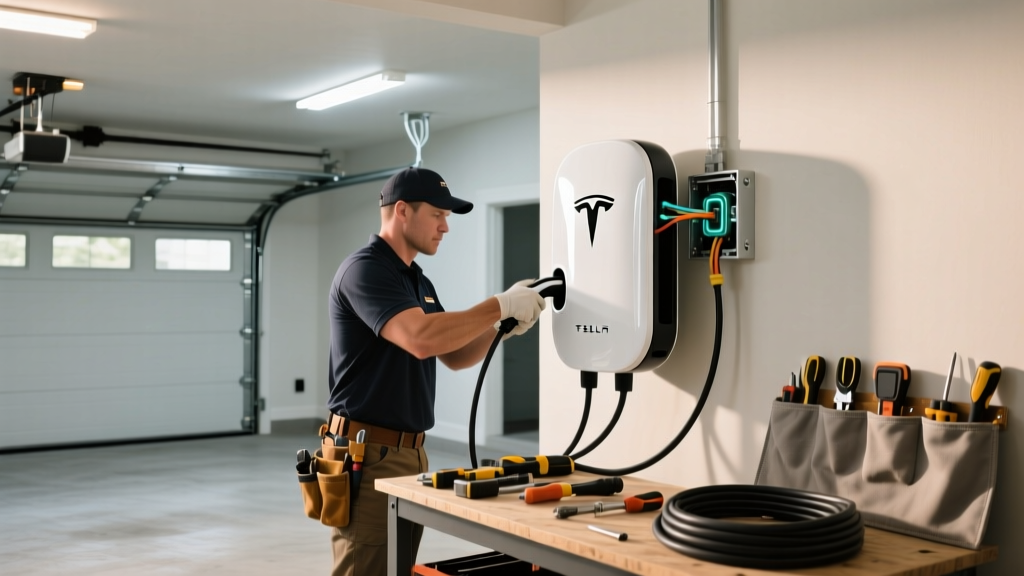
Equipment is only part of the equation. The real variable in the cost of installing a Tesla home charger is the electrical work. Here's a realistic breakdown based on 2026 national averages:
| Component | Simple Install (panel nearby, spare capacity) |
Moderate Install (40–80 ft run, conduit) |
Complex Install (panel upgrade needed) |
|---|---|---|---|
| Charger unit | $400–$550 | $400–$550 | $400–$550 |
| Electrician labor | $300–$600 | $600–$1,400 | $800–$1,500 |
| Materials (wire, conduit, breaker) | $50–$150 | $150–$400 | $200–$500 |
| Permit fee | $50–$200 | $50–$200 | $100–$300 |
| Panel upgrade (100A → 200A) | N/A | N/A | $1,500–$3,500 |
| Total estimated cost | $800–$1,500 | $1,200–$2,550 | $3,000–$6,350 |
What drives cost up?
- Distance: Every foot of 6-gauge copper wire (required for 60A circuits) adds $3–$8 in material. Runs over 80 feet may require thicker 4-gauge wire to prevent voltage drop, adding $5–$12/ft.
- Conduit: If the run goes through a finished wall, underground, or along an exterior wall, your electrician will need to install EMT or PVC conduit — adding labor and materials.
- Panel capacity: A 60A charger circuit requires your panel to have at least 60A of spare capacity. Homes with 100A panels or heavily loaded 200A panels (electric HVAC, dryer, oven, water heater) may need a panel upgrade or a smart load-management device.
- Permit and inspection: Most jurisdictions require an electrical permit for a new 240V circuit. Permit fees range from $50 in smaller municipalities to $300+ in major metro areas. A post-install inspection is typically required before the circuit is energized.
The panel-upgrade reality
This is the cost that catches many homeowners off guard. If your home was built before 2000 with a 100-amp service panel, you likely lack the capacity for a 60A EV circuit alongside existing loads. Upgrading to a 200A panel costs $1,500–$3,500 depending on your utility's requirements and local labor rates.
Workaround: Instead of a full panel upgrade, consider a smart load-management system like the Emporia Smart Load Center or a Tesla Wall Connector with power-sharing. These devices dynamically throttle the charger when other high-draw appliances are running, allowing a 40A or even 32A circuit on a panel that couldn't otherwise support 60A. This can save $1,000–$2,500 versus a panel swap.
Charging Times: How Long Does a Full Charge Take at Home?
Charging time depends on your battery size, the charger's power output, and the charging curve. EVs don't charge at peak power the entire session — the rate tapers significantly above 80% State of Charge (SoC) to protect battery health. Here are realistic 10–80% times for common Tesla models on an 11.5 kW Level 2 charger:
| Vehicle | Usable Battery (kWh) | EPA Range | 10–80% on 11.5 kW | Miles Added in 8 Hours |
|---|---|---|---|---|
| Tesla Model Y Long Range (2026) | 75 kWh | 320 mi | ~5.5 hours | ~260 mi |
| Tesla Model 3 Long Range (2026) | 75 kWh | 341 mi | ~5.5 hours | ~280 mi |
| Tesla Model S (2026) | 95 kWh | 402 mi | ~7 hours | ~320 mi |
| Tesla Cybertruck AWD | 123 kWh | 340 mi | ~9 hours | ~250 mi |
Real-world note: These times assume you're charging from 10% SoC. Most daily driving uses 20–40% of the battery, meaning a typical overnight top-up from 60% to 80% takes only 1.5–2 hours on an 11.5 kW charger. Set your Tesla's charge limit to 80% for daily use (per Tesla's battery-care guidance for NMC chemistry) and you'll rarely need a full session.
Connector Compatibility: NACS, CCS, and Adapters
As of 2026, the North American Charging Standard (NACS) — originally Tesla's proprietary connector — has become the dominant light-vehicle charging connector in the U.S. Nearly every major automaker has adopted NACS for new models starting with the 2025 model year. Here's where things stand:
| Connector | Brands Using It (Native) | Adapter Needed for Tesla Charger? |
|---|---|---|
| NACS | Tesla, Ford, GM, Rivian, Hyundai/Kia (2025+), BMW, Mercedes, Volvo, Polestar, Lucid | No — plug directly into Tesla Wall Connector |
| CCS1 | Legacy models (2024 and earlier from most brands); some Stellantis models | Yes — requires a NACS-to-CCS adapter (~$200–$300) |
| CHAdeMO | Nissan Leaf (discontinued 2025); Mitsubishi Outlander PHEV (older) | Yes — CHAdeMO-to-NACS adapters are rare and expensive (~$400+) |
If you own a non-Tesla EV with a NACS port (Ford F-150 Lightning, GM Equinox EV, Hyundai Ioniq 5 2025+), the Tesla Wall Connector works natively — no adapter required. For older CCS1-equipped vehicles, Tesla sells a NACS-to-J1772 adapter for Level 2 use ($150), and third-party NACS-to-CCS DC adapters are available for fast charging.
Cost to Charge: Home Electricity vs. Gas per Mile
One of the strongest arguments for home charging is the per-mile cost advantage. Let's run the numbers using a Tesla Model Y Long Range (2026), which averages roughly 28 kWh per 100 miles (or about 3.6 mi/kWh) according to EPA data on fueleconomy.gov.
| Scenario | Rate | Cost per 100 mi | Cost per Mile |
|---|---|---|---|
| Home — national avg electricity ($0.17/kWh) | $0.17/kWh | $4.76 | $0.048 |
| Home — off-peak TOU rate ($0.08/kWh) | $0.08/kWh | $2.24 | $0.022 |
| Tesla Supercharger (avg $0.30/kWh) | $0.30/kWh | $8.40 | $0.084 |
| Public Level 2 (avg $0.25/kWh) | $0.25/kWh | $7.00 | $0.070 |
| Gas vehicle (28 MPG avg, $3.40/gal) | $3.40/gal | $12.14 | $0.121 |
The takeaway: Charging at home on an off-peak rate costs roughly one-fifth of what you'd spend on gas per mile. Even at the national average electricity rate, home charging saves about 60% versus gas. Public DC fast charging narrows the gap but still undercuts gas by roughly 30%.
For a driver covering 12,000 miles per year, the annual fuel cost difference is stark:
- Gas (28 MPG, $3.40/gal): ~$1,457/year
- Home charging (avg rate): ~$571/year
- Annual savings from home charging: ~$886/year
At those savings, a $1,500 charger installation pays for itself in roughly 20 months.
Safety, Electrical Code, and Smart Installation Practices
EV charging places a sustained high-current load on your home's electrical system — far more continuous than a dryer or oven. Proper installation isn't optional; it's critical for safety and insurance compliance.
Code requirements to verify with your electrician
- Dedicated circuit: NEC Article 625 requires EV chargers to be on a dedicated circuit — it cannot share a breaker with any other outlet or appliance.
- Breaker sizing: The breaker must be rated at 125% of the continuous load. A 48A charger requires a 60A breaker; a 32A charger requires a 40A breaker.
- GFCI protection: The 2023 NEC update (adopted by most states by 2026) requires GFCI protection for all 240V EV charging outlets. Hardwired chargers like the Tesla Wall Connector have built-in ground-fault protection and typically satisfy this requirement without a separate GFCI breaker.
- Outdoor rating: If installing outside, the charger must be rated for outdoor use (NEMA 4 or IP65). The Tesla Wall Connector carries a NEMA 4 rating. All outdoor conduit and junction boxes must be weatherproof.
- Wire gauge: 6 AWG copper for 60A circuits; 8 AWG for 40A circuits. Aluminum wire is cheaper but requires larger gauge (4 AWG for 60A) and is not always accepted by local inspectors for EV circuits.
Practical tips from real installations
- Get three quotes. Electrician pricing varies 2–3x for the same job. Ask for a detailed scope: wire gauge, conduit type, breaker brand, and whether the quote includes permit and inspection.
- Request a load calculation. Before committing to a 60A circuit, your electrician should perform a NEC Article 220 load calculation to verify your panel can handle the additional draw.
- Consider future-proofing. If you're running conduit anyway, ask your electrician to install a larger conduit (1-inch instead of 3/4-inch) to accommodate thicker wire for a future higher-power charger or a second EV.
- Check utility rebates. Many utilities offer $200–$500 rebates for home charger installation, especially if you enroll in a time-of-use (TOU) rate plan. Some cover the cost of a smart charger entirely.
Federal Tax Credit for Home Charger Installation
The IRS Residential Clean Energy Credit (IRC §25D) covers 30% of the cost of home EV charging equipment and installation, up to a maximum credit of $1,000 per year. This applies to both the charger hardware and the electrical labor.
For example, if your total installation costs $1,800 (charger + electrician + permit), you'd claim a $540 federal tax credit, bringing your net cost to $1,260. Note this is a non-refundable credit — it reduces your tax liability but won't generate a refund if you owe less than the credit amount.
Frequently Asked Questions
Can I install a Tesla Wall Connector myself?
Technically, a licensed electrician is required for any new 240V circuit in virtually every U.S. jurisdiction. DIY installation of a 60A circuit risks fire, voids your homeowner's insurance if a claim arises, and will fail inspection if you sell your home. Tesla's warranty also requires professional installation. Budget $300–$1,400 for an electrician — it's not worth the risk to skip.
Do I need a Tesla Wall Connector, or can I use the Mobile Connector?
The Tesla Mobile Connector (included with most new Teslas) delivers up to 3.8 kW on a 240V NEMA 14-50 outlet — roughly one-third the speed of a Wall Connector. If you already have a 14-50 outlet (common for dryers and RVs), the Mobile Connector is a viable zero-installation-cost option. However, Tesla recommends against daily use of the 14-50 plug for charging due to thermal stress on the receptacle. For daily charging, a hardwired Wall Connector is safer and faster.
What if my home only has a 100-amp panel?
A 100A panel can typically support a 32A (7.7 kW) charger circuit without an upgrade, assuming your other loads aren't maxing out the panel. Your electrician will run a load calculation. If 32A isn't enough, a smart load-management device can dynamically share capacity, or you can upgrade to a 200A panel ($1,500–$3,500).
How long does the installation take?
A straightforward install (panel to garage wall, under 30 feet) typically takes 2–4 hours. Complex runs through finished walls, attics, or underground conduit can take 6–8 hours or span two visits. Factor in 1–3 weeks for permit approval and scheduling, depending on your area.
Will installing a home charger increase my home's value?
Studies from Zillow and Redfin suggest homes with EV charging infrastructure sell for 1–3% more than comparable homes without it. A professionally installed, permitted Level 2 charger is increasingly seen as a desirable feature, especially in markets with high EV adoption like California, Washington, Colorado, and the Northeast.
What's the best time-of-use rate for EV charging?
Most utilities offer overnight off-peak rates between 10 PM and 6 AM at $0.06–$0.10/kWh — roughly half the standard rate. Use your Tesla's scheduled charging feature (or your charger's app) to automatically start charging during these windows. Over a year, TOU scheduling can cut your home-charging bill by 40–50%.