What Is a Charger Wagon — And Why It Matters for Your EV
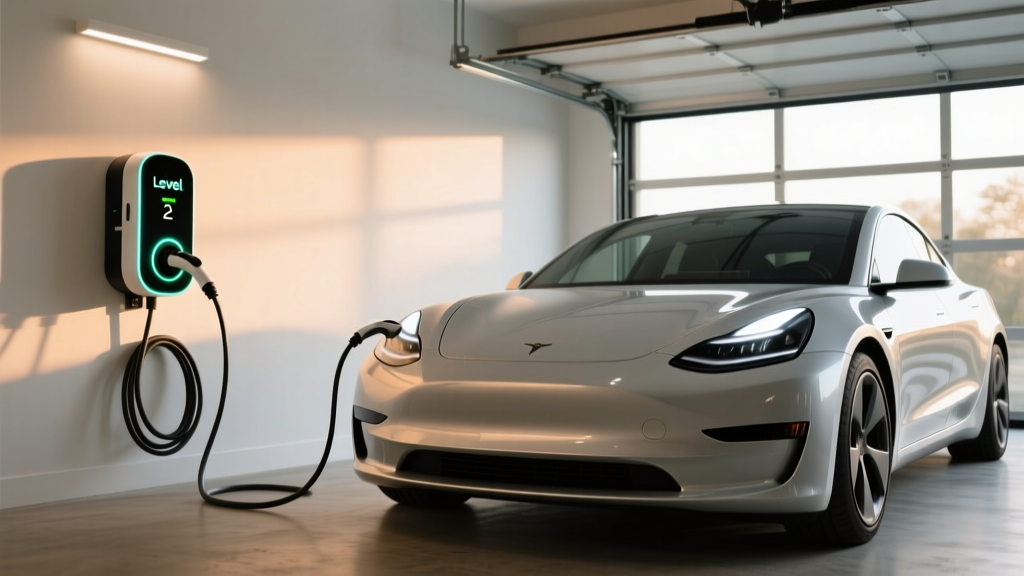
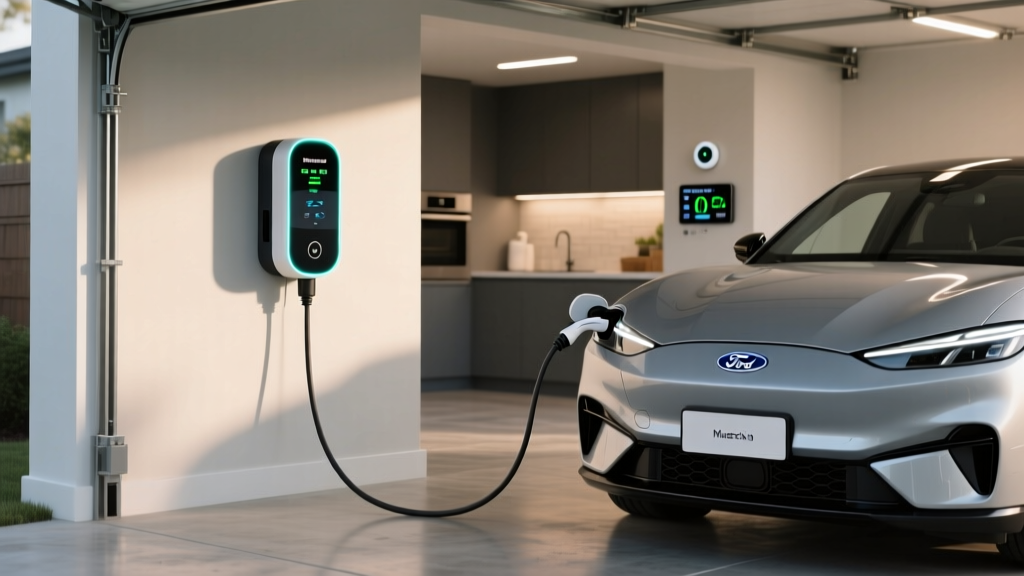
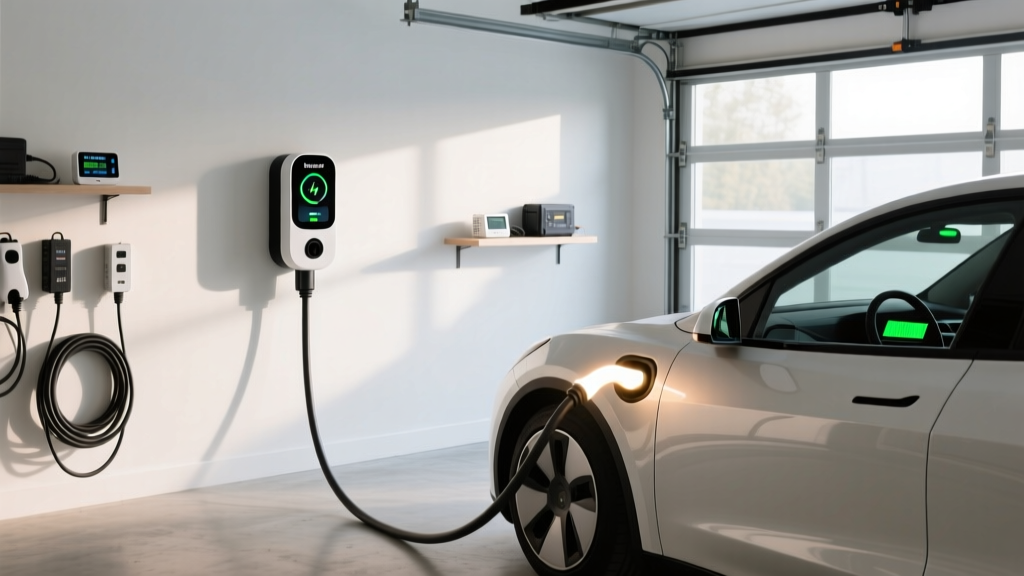
If you've been searching for a "charger wagon" solution, you're likely looking for a complete home EV charging setup — the charger unit, the cable management, and the electrical infrastructure that turns your garage or driveway into a personal fueling station. Think of it as your EV's pit crew: a dedicated Level 2 charging station mounted on your wall or a mobile cart that keeps your equipment organized, protected, and ready to deliver electrons every night.
Getting this setup right is the single highest-impact decision you'll make as an EV owner. Home charging is where 80–90% of all EV charging happens, and a properly installed Level 2 station adds 25–44 miles of range per hour — enough to fully replenish any EV battery overnight. But the gap between a smooth installation and a costly surprise is significant: total project costs range from $500 for a simple plug-in setup to over $4,000 if your home needs an electrical panel upgrade.
This guide breaks down every component of a charger wagon build: charging speeds, electrical requirements, connector compatibility, real per-mile costs, and the specific hardware worth your money in 2026.
Charging Levels Explained: Speeds in kW and Miles Per Hour
Before selecting equipment, you need to understand the three charging levels and what each delivers. The critical distinction: kW (kilowatts) measures power — how fast energy flows into your battery. kWh (kilowatt-hours) measures energy — the total capacity of your battery. Think of kW as the width of a hose and kWh as the size of the bucket.
| Level | Voltage | Power (kW) | Miles of Range/Hour | Best For |
|---|---|---|---|---|
| Level 1 | 120V AC | 1.0–1.4 kW | 3–5 mi/hr | PHEVs, overnight trickle, emergency backup |
| Level 2 | 240V AC | 3.3–19.2 kW | 12–44+ mi/hr | Daily home charging (primary use case) |
| DC Fast Charging | 200–500V DC | 50–350 kW | 150–800+ mi/hr | Road trips, highway corridors |
For a typical BEV with a 75–85 kWh battery, Level 1 charging from 20% to 80% would take 40–60 hours — essentially useless as a primary strategy. Level 2 at 11.5 kW (the most common home circuit configuration) accomplishes the same 20–80% charge in roughly 4.5–5.5 hours. That's why a Level 2 charger wagon is the standard for any serious EV owner.
DC fast charging is for road trips, not daily use. Peak rates of 150–350 kW can add 10–80% in 18–25 minutes on compatible vehicles, but sustained rates taper significantly above 80% State of Charge to protect the battery. You'll also pay a premium — typically $0.30–$0.55/kWh at public DC fast stations versus $0.08–$0.18/kWh at home.
Home Installation: Electrical Requirements and Real Costs
The most common question from new EV buyers: How much does it cost to install a home EV charger? The honest answer depends entirely on your home's existing electrical capacity.
Standard Level 2 Electrical Requirements
Most home Level 2 chargers run on a 240V dedicated circuit, identical in concept to what powers your electric dryer or oven. The two most common configurations:
- 40-amp circuit / 32-amp continuous draw: Delivers up to 7.7 kW. This is the sweet spot for most homes — it adds roughly 25–30 miles of range per hour and rarely requires a panel upgrade.
- 60-amp circuit / 48-amp continuous draw: Delivers up to 11.5 kW. Adds 35–44 miles per hour. Requires sufficient panel capacity and is ideal for larger-battery EVs like the Ford F-150 Lightning or Rivian R1S.
The National Electrical Code (NEC) requires that continuous loads (anything running 3+ hours, which includes EV charging) not exceed 80% of the circuit rating. So a 40A breaker supports 32A continuous charging; a 60A breaker supports 48A continuous.
Do You Need a Panel Upgrade?
This is where costs can spike. Most modern homes built after 1990 have a 200-amp main service panel. If your panel is already running near capacity — multiple electric appliances, central AC, electric water heater — adding a 40A or 60A EV circuit may push you over the limit. Signs you might need an upgrade:
- Your main panel is rated at 100 amps (common in homes built before 1985)
- You have fewer than 4–6 open breaker slots
- Your electrician's load calculation shows you're above 80% of panel capacity with the EV circuit added
- You already have multiple 240V appliances on a 150A panel
A panel upgrade from 100A to 200A typically costs $1,500–$3,500. Upgrading to 400A (increasingly common for homes adding solar, battery storage, and EV charging) runs $3,000–$5,000+. Some homeowners opt for a smart load-management device like the Emporia VUE or Span smart panel, which dynamically throttles EV charging when other high-draw appliances activate — potentially avoiding a panel upgrade entirely.
| Component | Typical Range | Notes |
|---|---|---|
| Level 2 charger unit (hardwired or plug-in) | $300–$700 | Varies by brand, power output, smart features |
| Electrician labor (standard install) | $500–$1,500 | Depends on run length from panel to garage |
| Electrical materials (wire, conduit, breaker) | $150–$500 | Longer runs and thicker gauge wire cost more |
| Permit and inspection | $50–$250 | Required by most jurisdictions; varies by locality |
| Panel upgrade (if needed) | $1,500–$3,500 | 100A to 200A service upgrade |
| Total (no panel upgrade) | $1,000–$2,950 | Most common scenario for modern homes |
| Total (with panel upgrade) | $2,500–$5,700 | Older homes or high-load households |
Always get at least two quotes from licensed electricians who have specific EV charger installation experience. Ask for a detailed load calculation per NEC Article 220 before committing to any work.
Connector Compatibility: NACS, CCS1, and CHAdeMO in 2026
The connector landscape has consolidated significantly. Here's what fits what:
| Connector | Brands Using It | Home Charger Availability |
|---|---|---|
| NACS (North American Charging Standard / Tesla connector) | Tesla (all models), Ford, GM, Rivian, Volvo, Polestar, Mercedes-Benz, BMW, Hyundai, Kia (2025+ models), Nissan (2025+) | Tesla Wall Connector, ChargePoint Home Flex (NACS version), Lectron Vortex |
| CCS1 (Combined Charging System) | Volkswagen, Audi, BMW (pre-2025), Stellantis (Jeep, Dodge, Chrysler EVs), Honda, Subaru, legacy Hyundai/Kia | ChargePoint Home Flex, Emporia Vue, Enel X Way JuiceBox |
| CHAdeMO | Nissan Leaf (legacy, pre-2025), Mitsubishi Outlander PHEV (legacy) | Limited; most new home chargers don't include CHAdeMO |
If you own a non-Tesla EV with a CCS1 port but want access to Tesla Superchargers, you'll need a CCS-to-NACS adapter. Ford, GM, and Rivian include these adapters with their vehicles. Standalone adapters from Tesla or Lectron cost $150–$250. For home charging, the adapter isn't needed — you simply buy a Level 2 charger with the matching connector for your vehicle's port.
The safest approach: buy a charger with the native connector that matches your EV. If you plan to switch vehicles in the next few years, consider a charger with a swappable connector head or invest in a quality adapter.
Cost to Charge: Per-Mile Comparison vs Gasoline
How much does charging actually cost per mile compared to a gas car? Let's run real numbers.
| Scenario | Cost per kWh | EV Efficiency (kWh/mi) | Cost per Mile | Gas Equivalent (28 MPG at $3.40/gal) |
|---|---|---|---|---|
| Home Level 2 (off-peak utility rate) | $0.09 | 0.30 kWh/mi | $0.027 | $0.121 |
| Home Level 2 (standard rate) | $0.16 | 0.30 kWh/mi | $0.048 | $0.121 |
| Public Level 2 (network pricing) | $0.25 | 0.30 kWh/mi | $0.075 | $0.121 |
| DC Fast Charging (Electrify America, EVgo) | $0.42 | 0.30 kWh/mi | $0.126 | $0.121 |
The takeaway: home charging at off-peak rates is roughly 75–80% cheaper per mile than gasoline. Even at standard residential rates, you're saving $0.07–$0.08 per mile. Over 12,000 miles per year, that's $840–$960 in annual fuel savings with home charging.
DC fast charging on road trips, however, can actually exceed the cost of gasoline per mile at current network pricing. This is the trade-off for speed and convenience. Plan road-trip charging around networks with competitive pricing — Tesla Superchargers average $0.25–$0.30/kWh, making them significantly cheaper than Electrify America or EVgo's peak rates.
Check whether your utility offers a dedicated EV rate plan. Many utilities (PG&E, Southern California Edison, Xcel Energy, Duke Energy) offer time-of-use plans with rates as low as $0.05–$0.09/kWh during overnight hours (typically 12 AM–6 AM). Scheduling your charger wagon to charge during these windows maximizes savings.
Charging Time Examples: What to Expect with Common Battery Sizes
Real charging times depend on your battery's usable capacity (in kWh), the charger's power output (in kW), and the charge curve — batteries charge fastest between 10–80% SoC and taper significantly above 80% to protect cell health.
Here are representative 10–80% charging times for popular battery sizes:
- 40 kWh battery (Nissan Leaf, base EVs): ~2.0 hours at 7.7 kW / ~1.4 hours at 11.5 kW
- 65 kWh battery (Tesla Model 3 RWD, Hyundai Ioniq 6 SE): ~3.3 hours at 7.7 kW / ~2.2 hours at 11.5 kW
- 82 kWh battery (Tesla Model Y LR, Ford Mustang Mach-E Extended): ~4.2 hours at 7.7 kW / ~2.8 hours at 11.5 kW
- 100 kWh battery (GMC Hummer EV, Ford F-150 Lightning Extended): ~5.1 hours at 7.7 kW / ~3.4 hours at 11.5 kW
- 130 kWh battery (Rivian R1T Max Pack, Silverado EV): ~6.6 hours at 7.7 kW / ~4.5 hours at 11.5 kW
For daily use, most EV owners charge from 30–40% to 80% — a much shorter session. With a 75 kWh battery at 11.5 kW, that 30–80% top-up takes roughly 3.2 hours, easily accomplished while you sleep. Battery manufacturers and fueleconomy.gov recommend keeping daily charging between 20–80% to maximize long-term battery health, particularly for NMC chemistry cells.
Equipment Recommendations: Best Level 2 Chargers for Your Charger Wagon Setup
Not all Level 2 chargers are equal. Here are the units that earn our recommendation based on power output, build quality, smart features, and value:
Tesla Wall Connector (Gen 3) — NACS
Power: Up to 11.5 kW (48A) on a 60A circuit
Cable length: 24 feet
Smart features: Wi-Fi connectivity, over-the-air updates, power sharing (link multiple units on one circuit), scheduled charging via Tesla app
Price: ~$425
Best for: Tesla owners and NACS-equipped Ford/GM/Rivian vehicles. Excellent power output and the most reliable connector ecosystem. Power sharing is a standout feature for two-EV households — two Wall Connectors can share a single 60A circuit, dynamically allocating power.
ChargePoint Home Flex — CCS1 or NACS
Power: Up to 12 kW (50A) on a 60A circuit; configurable down to 16A for smaller circuits
Cable length: 23 feet
Smart features: Wi-Fi, ChargePoint app with detailed session data, Alexa/Google Home integration, flexible amperage adjustment via app (no need to reconfigure DIP switches)
Price: ~$550–$650 depending on connector
Best for: Multi-EV households with mixed connectors, or anyone wanting granular control over amperage. The adjustable output means you can install on a 40A circuit today and reconfigure to 60A if you upgrade your panel later.
Emporia Level 2 EV Charger — CCS1 or NACS
Power: Up to 11.5 kW (48A) on a 60A circuit
Cable length: 24 feet
Smart features: Wi-Fi, Emporia app with energy monitoring, integration with Emporia VUE home energy monitor for whole-home load visibility, solar-aware charging (charge only when solar panels are producing excess)
Price: ~$350–$400
Best for: Budget-conscious buyers who don't want to sacrifice smart features. The solar integration is genuinely useful for homes with rooftop solar — you can configure the charger to draw only surplus solar energy, effectively charging for free.
Lectron Vortex NACS — Hardwired
Power: Up to 11.5 kW (48A)
Cable length: 20 feet
Smart features: Basic app, LED status indicators, NEMA 4 outdoor rating
Price: ~$300–$350
Best for: Straightforward, no-frills NACS charging at the lowest price point. Solid build quality without the smart-home ecosystem of ChargePoint or Tesla.
Safety, Code, and Installation Best Practices
Your charger wagon setup must comply with the National Electrical Code (NEC Article 625) and your local building department's requirements. Key safety considerations:
- Dedicated circuit: Your Level 2 charger must be on its own dedicated breaker — never shared with other outlets or appliances. This prevents overloads and ensures consistent power delivery.
- GFCI protection: NEC 2020 and later requires GFCI (Ground Fault Circuit Interrupter) protection for all EV charging outlets. Hardwired chargers have built-in ground-fault protection; plug-in units on a NEMA 14-50 receptacle require a GFCI breaker, which adds $50–$100 to the installation.
- Outdoor rating: If your charger is mounted outside, it must carry at least a NEMA 4 (weather-resistant) rating. All recommended units above meet this standard. Ensure the connector holster keeps the plug off the ground and protected from rain and debris.
- Wire gauge: A 60A circuit requires 6 AWG copper wire (or 4 AWG aluminum). A 40A circuit requires 8 AWG copper. Your electrician will size wire based on run length — longer runs may need thicker wire to prevent voltage drop.
- Permit and inspection: Most jurisdictions require an electrical permit for EV charger installation. The inspection verifies proper wire sizing, grounding, GFCI protection, and load calculation compliance. Skipping the permit risks insurance coverage denial if an electrical fire occurs and can cause issues at home resale.
One often-overlooked detail: if you install a NEMA 14-50 receptacle (plug-in style) rather than hardwiring, ensure the receptacle is rated for the continuous load. Commercial-grade receptacles from Hubbell or Bryant ($75–$120) are significantly more durable than residential-grade units and handle the sustained heat of nightly charging sessions far better.
Frequently Asked Questions
How much does it cost to install a home EV charger?
A standard Level 2 installation with no panel upgrade typically costs $1,000–$2,950 total (charger unit + electrician labor + materials + permit). If your home needs a 200A panel upgrade, add $1,500–$3,500. The national average for a straightforward garage install is approximately $1,800–$2,200.
How fast will each charging level add range?
Level 1 (120V) adds 3–5 miles per hour. Level 2 at 7.7 kW adds 25–30 miles per hour. Level 2 at 11.5 kW adds 35–44 miles per hour. DC fast charging adds 150–800+ miles per hour at peak rates, though sustained rates taper above 80% SoC. For context, most EVs need only 3–5 hours on Level 2 to fully replenish overnight.
Which connector and charger is compatible with my EV?
Check your vehicle's charging port. Tesla, Ford (2024+), GM (2025+), Rivian, and most new 2025–2026 models use NACS. Volkswagen, Stellantis, Honda, Subaru, and older Hyundai/Kia models use CCS1. The Nissan Leaf (pre-2025) uses CHAdeMO. Match your home charger's connector to your vehicle's port — or use a CCS-to-NACS adapter if needed for public charging access.
How much does EV charging cost per mile vs gas?
Home charging at off-peak rates ($0.09/kWh) costs roughly $0.027 per mile for an average EV — about 77% cheaper than a 28 MPG gas car at $3.40/gallon ($0.121/mile). Even at standard residential rates ($0.16/kWh), you'll pay about $0.048/mile. Public DC fast charging at $0.42/kWh roughly equals gasoline cost per mile, so it's best reserved for road trips.
What electrical upgrades might I need for a charger wagon setup?
If your home has a 200A panel with available breaker slots and headroom on the load calculation, you likely need no upgrade beyond a new 40A or 60A breaker and a wire run to your garage. If your panel is 100A, fully loaded, or lacks open slots, you'll need a panel upgrade ($1,500–$3,500). Smart load-management devices can sometimes avoid this by dynamically sharing capacity between your EV charger and other appliances. Consult a licensed electrician for a formal NEC Article 220 load calculation before purchasing equipment.
Can I install a Level 2 charger myself?
If you're using a plug-in unit on an existing NEMA 14-50 outlet (like one previously used for a dryer), yes — simply plug in and mount the charger holster. But any new circuit installation, hardwiring, or panel work must be performed by a licensed electrician to meet code and maintain your home insurance coverage. The IRS alternative fuel vehicle refueling property credit (§30C) may cover up to $1,000 of home charging equipment and installation costs for eligible taxpayers — consult a tax professional to determine eligibility based on your income and census tract.