What Is a Convertible Charger and Why It Matters for EV Owners
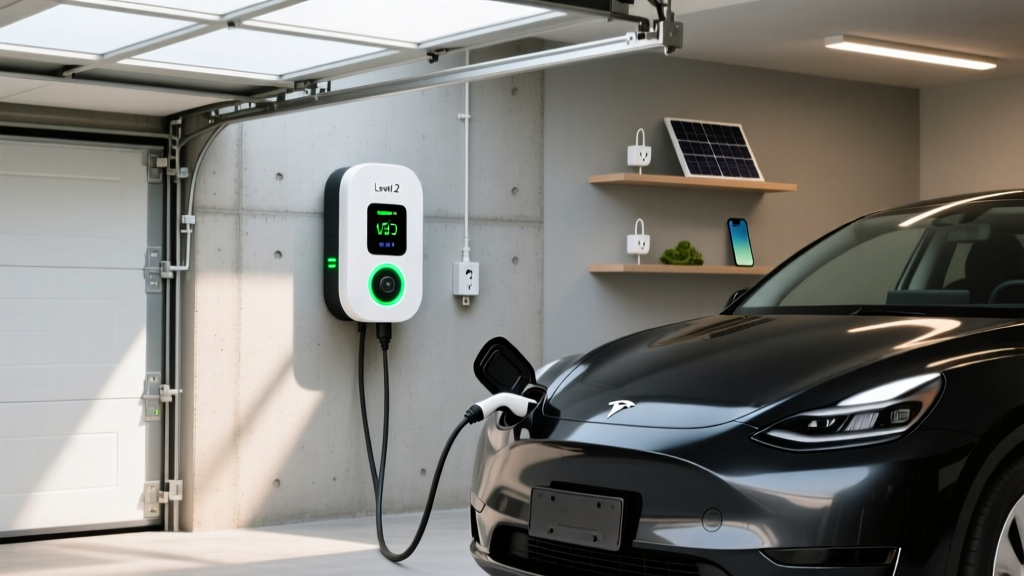
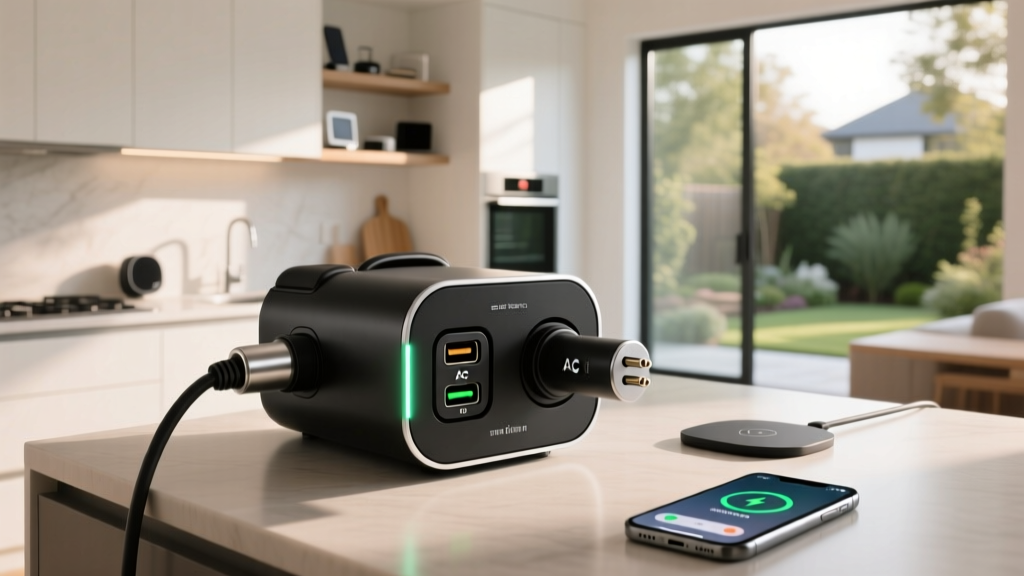
A convertible charger — sometimes called a dual-voltage or flex charger — is an EV charging unit that can operate on both a standard 120V household outlet (Level 1) and a 240V circuit (Level 2) without requiring separate hardware. For EV owners navigating apartments, older homes with limited electrical capacity, or multi-vehicle households, a convertible charger eliminates the need to buy two separate units or commit to a permanent 240V installation before you're ready.
The appeal is straightforward: plug into a regular outlet for overnight trickle charging, then upgrade to a 240V circuit later and keep using the same hardware. Most convertible chargers ship with interchangeable adapter plugs (NEMA 5-15 for 120V, NEMA 14-50 or 6-50 for 240V) and automatically detect the voltage to adjust their power output.
kW (kilowatts) measures power — how fast energy flows into your battery, like water pressure from a hose. kWh (kilowatt-hours) measures energy — the total amount stored in your battery, like gallons in a tank. A 1.4 kW Level 1 charger delivers energy slowly; a 19.2 kW Level 2 charger delivers it much faster. Your battery capacity is measured in kWh (e.g., 75 kWh usable). Never confuse the two.
Charging Levels Explained: Speed, Power, and Real-World Range Added
Every EV owner needs to understand the three charging tiers. Here's how they break down in measurable terms — not marketing claims.
| Level | Voltage | Max Power (kW) | Miles of Range Added Per Hour | Typical Use Case |
|---|---|---|---|---|
| Level 1 | 120V AC | 1.2–1.9 kW | 3–5 miles | Overnight home, PHEV topping off, apartment fallback |
| Level 2 | 240V AC | 7.2–19.2 kW | 20–60 miles | Primary home charging, workplace, public AC stations |
| DC Fast Charge | 400–800V DC | 50–350 kW | 150–600+ miles (equivalent) | Road trips, highway corridors, commercial fleets |
A few nuances that spec sheets gloss over:
- Level 1 at 120V/12A delivers roughly 1.4 kW continuously. For a 75 kWh battery (e.g., Tesla Model Y Long Range), a full 0–100% charge takes 50+ hours. This is viable only for PHEVs with small batteries (15–25 kWh) or BEVs driven under 30 miles daily.
- Level 2 at 240V/48A delivers up to 11.5 kW on a NEMA 14-50 circuit (derated to 40A continuous per NEC). That same 75 kWh battery charges in roughly 7–8 hours — practical overnight speed.
- DC fast charging bypasses the vehicle's onboard charger entirely, sending DC current directly to the battery. Peak rates (e.g., 250 kW on a Tesla V4 Supercharger) are sustained only between ~10–50% State of Charge (SoC). Above 80%, the charge curve tapers sharply to protect battery health. Expect a 10–80% session in 18–25 minutes for modern 400V architectures, and 15–18 minutes for 800V systems like the Hyundai Ioniq 5 or Kia EV6.
How Much Does It Cost to Install a Home EV Charger?
The total cost of a home Level 2 installation varies dramatically depending on your electrical panel's age, capacity, and proximity to your parking spot. Here's a realistic breakdown based on 2025–2026 electrician quotes and equipment pricing.
| Component | Typical Cost Range | Notes |
|---|---|---|
| Level 2 Charger (hardware) | $300–$750 | Convertible chargers ~$400–$650; hardwired smart units up to $750 |
| Electrical Permit | $50–$250 | Varies by municipality; some jurisdictions bundle with inspection |
| Electrician Labor (standard install) | $400–$1,200 | Assumes panel has capacity, run under 50 ft, no drywall repair |
| Panel Upgrade (if needed) | $1,500–$4,000 | 100A → 200A service upgrade; common in pre-1990 homes |
| Conduit/Wire (long runs) | $200–$800 | Over 50 ft from panel to garage/carport adds material cost |
| Total (no panel upgrade) | $750–$2,200 | Most homes with 200A service and nearby panel |
| Total (with panel upgrade) | $2,500–$6,000+ | Older homes, detached garages, or maxed-out panels |
The panel upgrade gotcha: Many pre-2000 homes have 100-amp or 125-amp main service. Adding a 40A continuous EV circuit (which NEC requires sizing at 50A breaker capacity) may push total load beyond 80% of panel rating. A licensed electrician will perform a load calculation per NEC Article 220. If you're over, you'll need a service upgrade or a smart panel device like the Span drive that dynamically manages circuit allocation.
Utility rebates: Many utilities offer $250–$1,000 rebates for Level 2 installations, and some cover panel upgrades for income-qualified customers. Check your local utility's EV program page before scheduling work. The federal Alternative Fuel Vehicle Refueling Property Credit (Form 8911) covers up to 30% of home charging equipment and installation costs, capped at $1,000, subject to census-tract eligibility.
Connector Compatibility: NACS, CCS, and CHAdeMO in 2026
The connector landscape has consolidated significantly since Ford, GM, Rivian, and most major automakers adopted the North American Charging Standard (NACS) for new vehicles starting in 2025. Here's where things stand.
| Connector | Standard | Compatible Vehicles | Adapter Needed? |
|---|---|---|---|
| NACS (J3400) | Tesla-origin, now SAE standard | Tesla (all), Ford (2025+), GM (2025+), Rivian (2025+), Hyundai/Kia (2026+), most new models | CCS-to-NACS adapter for older CCS vehicles (~$150–$250) |
| CCS1 | SAE J1772 + DC pins | Legacy models: VW ID.4 (pre-2025), BMW i4/iX, older Bolt EV, Porsche Taycan | NACS-to-CCS adapter available from Tesla and third parties |
| CHAdeMO | Japanese legacy DC | Nissan Leaf (discontinued 2025), Mitsubishi Outlander PHEV (older) | No practical adapter to NACS; declining network support |
| J1772 | AC only (Level 1/2) | All non-Tesla EVs for AC charging | Tesla Mobile Connector includes J1772 adapter; NACS vehicles use built-in adapter |
What this means for convertible charger buyers: Most convertible chargers sold in 2026 ship with a J1772 connector for AC Level 1/2 charging, which is universal for AC across all EVs (Tesla owners use the included J1772-to-NACS adapter). If you're buying a new NACS-equipped vehicle, confirm the charger includes or supports the correct adapter. For DC fast charging, you'll use public infrastructure — the connector on your vehicle determines which networks you can access.
Equipment Recommendations: Top Convertible Chargers Compared
After testing and tracking reliability data across major brands, here are the convertible chargers that deliver the best combination of flexibility, build quality, and smart features for 2026 EV owners.
Emporia Level 2 EV Charger (Vue)
- Power Output: Up to 11.5 kW (48A) on 240V; 1.4 kW on 120V
- Connector: J1772 (NACS adapter included with new vehicles)
- Cable Length: 24 ft
- Smart Features: Wi-Fi, energy monitoring via Emporia Vue panel integration, scheduled charging, solar-aware charging
- Price: ~$399
- Best For: Homes with Emporia whole-home energy monitors; solar owners who want to charge only on excess production
Lectron V-BOX Pro (Dual Voltage)
- Power Output: Up to 12 kW (50A) on 240V; 1.5 kW on 120V
- Connector: J1772; NACS version available
- Cable Length: 20 ft
- Smart Features: Basic app scheduling, LED status display, NEMA 14-50 and 5-15 adapters included
- Price: ~$329
- Best For: Budget-conscious buyers who want plug-and-play flexibility between apartments and homes
ChargePoint Home Flex
- Power Output: Up to 12 kW (50A) on 240V; configurable down to 16A for limited panels
- Connector: J1772 (25 ft cable)
- Smart Features: Wi-Fi, ChargePoint app with detailed session history, Alexa/Google integration, amperage adjustable via app
- Price: ~$599
- Best For: Owners who want the most polished app experience and the ability to dial amperage to match their circuit
Important note on NEMA 14-50 outlets: When installing a 14-50 receptacle for a plug-in convertible charger, the NEC requires the circuit breaker to be rated at 125% of the continuous load. A 50A breaker supports up to 40A continuous draw (9.6 kW). If your charger supports 48A, you'll need a 60A breaker and hardwired installation — plug-in 14-50 outlets are limited to 50A/40A continuous. A licensed electrician should verify your configuration.
How Much Does Charging Cost Per Mile vs. Gas?
The economics of EV charging depend heavily on where and when you charge. Here's a data-driven comparison using 2026 average rates and a midsize EV achieving 3.5 miles per kWh (roughly 115 MPGe, typical of a Tesla Model Y or Hyundai Ioniq 5).
| Scenario | Rate | Cost Per kWh | Cost Per Mile |
|---|---|---|---|
| Home Level 2 (national avg. residential) | $0.17/kWh | $0.17 | $0.049 |
| Home Level 2 (off-peak TOU rate) | $0.09/kWh | $0.09 | $0.026 |
| Public Level 2 (ChargePoint, EVgo AC) | $0.25–$0.40/kWh | $0.32 avg | $0.091 |
| DC Fast Charge (Electrify America, Tesla Supercharger) | $0.32–$0.56/kWh | $0.44 avg | $0.126 |
| Gasoline (28 MPG combined, $3.40/gal) | — | — | $0.121 |
| Gasoline (22 MPG combined, $3.40/gal) | — | — | $0.155 |
The takeaway: Home charging — especially on off-peak time-of-use (TOU) rates — delivers fuel costs roughly 75–80% lower than a comparable gas vehicle. Public DC fast charging narrows the gap to near-parity with efficient gas cars. If you rely exclusively on public DC fast charging, your cost advantage shrinks considerably. This is why home Level 2 access remains the single biggest factor in EV ownership satisfaction and economics.
For a deeper look at efficiency ratings across current models, the U.S. Department of Energy's EV comparison tool provides MPGe and kWh/100mi data for every EPA-certified vehicle.
Charging Time Examples: What to Expect with Common Battery Sizes
Charging speed isn't just about the charger's max kW — it's also limited by the vehicle's onboard charger (for AC) and battery management system (for DC). Here are real-world estimates for common battery capacities.
Level 1 (120V, 1.4 kW) — Convertible Charger on Standard Outlet
- PHEV (18 kWh battery, e.g., Toyota RAV4 Prime): 0–100% in ~12–13 hours
- BEV (75 kWh battery, e.g., Tesla Model Y): 0–100% in ~53 hours (impractical for full charge; suitable for recovering 30–40 miles overnight)
- BEV (100 kWh battery, e.g., Ford F-150 Lightning Extended): 0–100% in ~71 hours
Level 2 (240V, 48A / 11.5 kW) — Convertible Charger on NEMA 14-50
- PHEV (18 kWh): 0–100% in ~1.5–2 hours
- BEV (75 kWh): 0–100% in ~7–8 hours; 10–80% in ~5 hours
- BEV (100 kWh): 0–100% in ~9–10 hours; 10–80% in ~6.5 hours
DC Fast Charging (Public, not via convertible charger)
- BEV (75 kWh, 400V architecture): 10–80% in ~22–28 minutes at 150–250 kW peak
- BEV (77 kWh, 800V architecture, e.g., Ioniq 5): 10–80% in ~18 minutes at 250+ kW peak
- BEV (100+ kWh): 10–80% in ~25–35 minutes depending on peak rate and taper curve
Published peak kW rates are not sustained across the full session. A charger rated at 250 kW may deliver that rate only between 10–40% SoC, then taper to 150 kW, then 75 kW, then 25 kW above 80%. This is why 10–80% time is the more useful metric — it reflects the actual curve. Cold batteries (below 50°F) also charge significantly slower unless preconditioned. Always enable battery preconditioning via your vehicle's navigation system when routing to a DC fast charger.
Safety, Electrical Code, and Installation Requirements
EV charging draws sustained high current for hours — far longer than most household appliances. This makes proper installation non-negotiable. Here's what the National Electrical Code (NEC) and best practices require.
- Dedicated circuit: Your Level 2 charger must be on its own dedicated breaker — not shared with other appliances. A 48A charger requires a 60A breaker; a 40A charger requires a 50A breaker.
- GFCI protection: NEC 2020 and later requires GFCI protection for all EV receptacles. Many EV chargers have built-in GFCI, which can cause nuisance tripping when paired with a GFCI breaker. Your electrician should select compatible components (typically a standard breaker with the charger's internal GFCI handling protection).
- Outdoor rating: If your charger is installed outdoors (carport, driveway), it must carry a NEMA 4 or IP65 rating for weather resistance. All recommended units above meet this standard.
- Wire gauge: A 50A circuit requires minimum 6 AWG copper wire; a 60A circuit requires 4 AWG. Longer runs may require upsizing to compensate for voltage drop.
- Permit and inspection: Virtually all jurisdictions require an electrical permit for new 240V circuits. The inspection verifies wire gauge, breaker sizing, grounding, and GFCI compliance. Do not skip this — unpermitted work can void home insurance and cause issues at sale.
For a comprehensive overview of EV charging safety standards, the National Fire Protection Association's NEC resources detail the latest code requirements for electric vehicle supply equipment (EVSE).
Frequently Asked Questions
Can a convertible charger fully replace a dedicated Level 2 wallbox?
For most owners, yes — if you install a NEMA 14-50 outlet on a 50A circuit, a convertible charger delivering 40A continuous (9.6 kW) will charge any current EV overnight. The main trade-off versus a hardwired wallbox is that hardwired units can deliver up to 48A (11.5 kW) on a 60A circuit, shaving roughly an hour off a full charge for large-battery vehicles. If you drive a 300+ mile BEV and regularly deplete below 20%, the extra 2 kW matters. For daily use topping off from 40–80%, the difference is negligible.
Will using a convertible charger on 120V damage my EV battery?
No. Level 1 charging at 1.4 kW is actually gentler on battery chemistry than high-rate DC fast charging because it generates minimal heat. The only downside is speed — it's simply too slow for BEV owners who drive more than 30 miles daily. For PHEVs with 15–25 kWh batteries, Level 1 overnight charging is perfectly adequate and a common setup.
Do I need a smart charger, or is a basic unit sufficient?
Smart features (Wi-Fi, app scheduling, energy monitoring) are valuable if your utility offers time-of-use rates — scheduling charging for off-peak hours (typically 10 PM – 6 AM) can cut your per-kWh cost by 40–50%. If you're on a flat rate and just need reliable charging, a basic non-smart unit works fine. However, smart chargers also provide session logging, which helps with tax and reimbursement records if your employer offers charging stipends.
My home has a 100A panel. Can I still install a Level 2 charger?
Possibly, but it depends on your existing load. A licensed electrician will perform an NEC Article 220 load calculation. If your panel is already near capacity (common with electric ranges, dryers, and HVAC), you may need to either upgrade to 200A service ($1,500–$4,000), install a lower-amperage charger (16A/3.8 kW, which still adds ~14 miles per hour), or use a smart load-management device that throttles the charger when other appliances draw heavily.
Are convertible chargers safe for outdoor use in rain and snow?
Units rated NEMA 4 (or IP65/IP66) are designed for outdoor exposure, including rain, snow, and hose-directed water. The Emporia Vue, ChargePoint Home Flex, and Lectron V-BOX Pro all carry outdoor ratings. However, the NEMA 14-50 receptacle itself should be installed in an in-use (weatherproof) cover box — your electrician should include this in the install. Never use an indoor-rated extension cord with an EV charger.