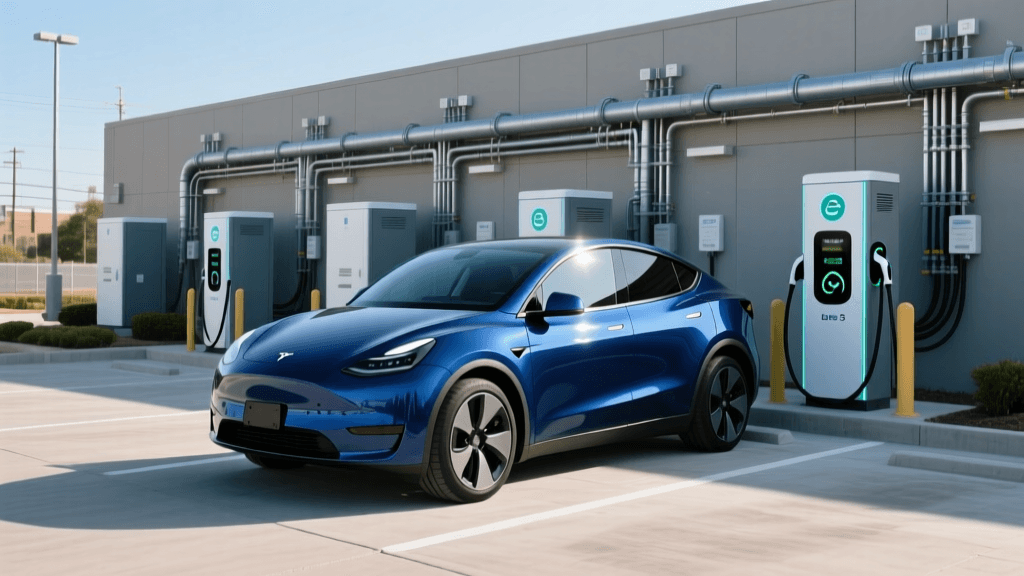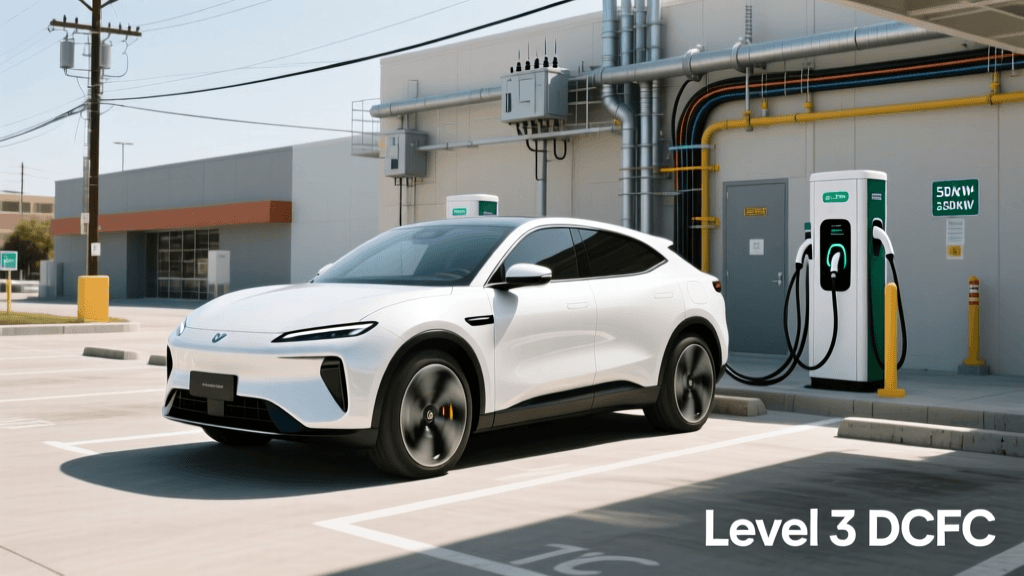
The Shift to Commercial DC Fast Charging
Deploying Level 3 Direct Current Fast Chargers (DCFC) in commercial environments represents a massive leap in infrastructure capability compared to residential Level 2 setups. While Level 2 chargers operate on 208V or 240V AC power and deliver up to 19.2 kW, commercial DCFC stations bypass the vehicle's onboard charger to supply DC power directly to the battery. This allows for power delivery ranging from 50 kW to over 350 kW, capable of adding 100 to 200 miles of range in just 15 to 20 minutes. However, this immense power transfer requires rigorous site planning, heavy-duty electrical infrastructure, and significant capital investment. As a commercial site host or fleet operator, understanding the nuances of DCFC deployment is critical to avoiding costly delays and ensuring long-term reliability.
Utility Coordination and Power Infrastructure
The most significant bottleneck in any commercial DCFC project is utility coordination. A single 350 kW charger requires roughly the same amount of power as a small neighborhood of homes. Before purchasing any hardware, you must engage your local utility provider to conduct a load study and assess the existing grid capacity at your site.
- Transformer Upgrades: Most commercial sites will require a new pad-mounted transformer to step down utility distribution voltage (often 12kV or 4kV) to the 480V 3-phase power required by DCFC cabinets. Lead times for custom transformers can currently range from 6 to 14 months due to global supply chain constraints.
- Switchgear and Metering: You will need to install a new utility meter and heavy-duty switchgear to manage the 480V 3-phase service. This equipment must be rated for outdoor use and properly grounded according to the National Electrical Code (NEC).
- Demand Charges: Commercial electricity bills include demand charges based on your highest 15-minute power draw. Installing a 350 kW charger can trigger massive demand spikes. Consult with your utility about EV-specific commercial rate structures or consider integrating on-site battery energy storage systems (BESS) to buffer peak demand.
Site Preparation and Civil Engineering
Physical site preparation for DCFC stations goes far beyond pouring a simple concrete slab. The civil engineering requirements must account for heavy equipment, deep trenching, and strict traffic flow management.
Trenching and Conduit
Running 480V 3-phase power from the utility transformer to the power cabinets and dispensers requires deep trenching. Local codes typically mandate a minimum trench depth of 36 inches for high-voltage commercial lines. You must use heavy-duty Schedule 80 PVC or rigid metal conduit (RMC) to protect the massive, stiff copper conductors (often 500 MCM or larger) required to carry 350 kW of power without excessive voltage drop. Expert best practice dictates laying multiple empty, capped conduits during the initial trenching phase to accommodate future charger additions without having to tear up the asphalt again.
Concrete Pads and Equipment Mounting
DCFC power cabinets and dispensers are incredibly heavy, often weighing between 1,500 and 3,000 pounds each. The concrete pads must be engineered to support this static load, as well as the dynamic load of vehicles. Pads should be poured with a minimum of 4,000 PSI concrete, reinforced with rebar, and elevated at least 6 inches above the surrounding grade to prevent water pooling and snow accumulation. Furthermore, steel bollards filled with concrete must be installed in front of all dispensers and cabinets to protect the multi-million-dollar infrastructure from accidental vehicle impacts.
Hardware Selection: Power Cabinets vs. Standalone
When selecting hardware, commercial operators generally choose between standalone pedestal chargers and modular power cabinet architectures. For sites requiring 150 kW or more per port, modular systems are the industry standard.
In a modular system, pioneered by brands like ChargePoint (Express Plus), Tritium (RTM50/RT175), and ABB (Terra 360), the heavy AC-to-DC conversion equipment is housed in a centralized, weather-rated power cabinet located away from the parking spaces. Thin, liquid-cooled cables then run underground to the slim dispensers at the parking spots. Liquid-cooled cables are essential for high-power charging (HPC) because they allow for smaller, lighter, and more flexible cables that can deliver up to 600 amps to the vehicle without overheating. This architecture also makes maintenance easier, as technicians can service the power electronics without blocking the charging stalls.
Commercial DCFC Installation Cost Breakdown
The capital expenditure for commercial DCFC deployment is substantial. According to data analyzed by the National Renewable Energy Laboratory (NREL), the costs vary wildly based on existing site infrastructure and utility distance. Below is an estimated cost breakdown for a dual-port 350 kW DCFC station.
| Cost Category | Estimated Range (USD) | Details & Variables |
|---|---|---|
| Hardware (Dispensers & Cabinets) | $70,000 - $120,000 | Depends on power output, liquid cooling, and brand. |
| Utility Upgrades & Transformer | $30,000 - $150,000+ | Highest variable. Includes new transformer, switchgear, and grid tie-ins. |
| Civil Work (Trenching & Concrete) | $25,000 - $60,000 | Asphalt cutting, 36-inch trenching, Schedule 80 conduit, and pad pouring. |
| Electrical Labor & Materials | $30,000 - $70,000 | Pulling heavy-gauge copper wire, terminations, and grounding. |
| Permitting, Design & Soft Costs | $15,000 - $35,000 | Engineering stamps, AHJ permits, utility interconnection agreements. |
| Total Estimated Project Cost | $170,000 - $435,000 | Excludes ongoing network fees and maintenance contracts. |
Navigating Permits, ADA Compliance, and NEVI Funding
Commercial installations are subject to intense scrutiny from the Authority Having Jurisdiction (AHJ). You will need comprehensive electrical, structural, and civil engineering plans stamped by a licensed Professional Engineer (PE). Furthermore, the Americans with Disabilities Act (ADA) mandates that a specific percentage of charging stalls must be accessible. This includes wider parking spaces, specific aisle widths, and ensuring that the charger screen and cable reach heights comply with ADA guidelines. Failure to design for ADA compliance from day one can result in failed inspections and costly retrofitting.
To offset the high capital costs, site hosts should actively pursue government incentives. The Federal Highway Administration's NEVI program (National Electric Vehicle Infrastructure Formula Program) is currently deploying billions of dollars to build out a national DCFC network along designated Alternative Fuel Corridors. If your commercial site is located near a major highway corridor, you may be eligible for substantial rebates that can cover up to 80% of the total installation and hardware costs, provided you meet strict uptime and payment processing requirements.
Expert Best Practices for Long-Term Reliability
Installing the hardware is only the first step; ensuring it remains operational is where the real challenge lies. DCFC stations experience high thermal stress and heavy mechanical wear. Implement the following best practices to maximize uptime:
- Mandate OCPP Compliance: Ensure your chargers support the Open Charge Point Protocol (OCPP) 1.6J or 2.0.1. This prevents vendor lock-in, allowing you to switch network management software providers (e.g., from ChargePoint to EV Connect or AmpUp) without replacing the physical hardware.
- Hardwired Ethernet over Cellular: While many DCFCs come with cellular modems, commercial sites should pull Cat6a fiber or shielded Ethernet cables directly to the power cabinets. Cellular dead zones in concrete-heavy commercial areas can cause chargers to drop offline, preventing payment processing and resulting in lost revenue.
- Implement Active Preventative Maintenance: Do not wait for a failure. Schedule bi-annual inspections to clean cabinet air filters, check liquid coolant levels, inspect cable retraction mechanisms, and run thermal imaging scans on all electrical terminations to detect loose connections before they cause a fire.
- Dynamic Load Management (DLM): If your site has limited electrical capacity but you want to install multiple chargers, utilize DLM software. This allows the system to intelligently distribute available power among multiple vehicles, prioritizing those with lower state-of-charge or shorter dwell times, without tripping the main site breaker.
For a comprehensive overview of national deployment strategies and technical requirements, commercial planners should also review the resources provided by the U.S. Department of Energy's EV Charging Infrastructure portal. By treating your DCFC deployment as a major civil and electrical construction project rather than a simple appliance installation, you will build a robust, future-proof charging hub that delivers reliable service for the next decade and beyond.