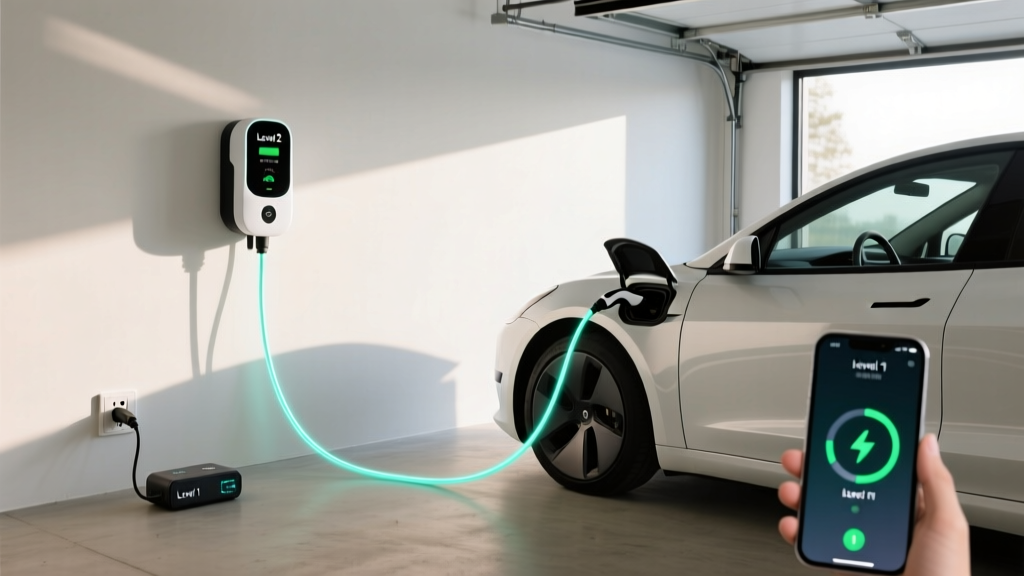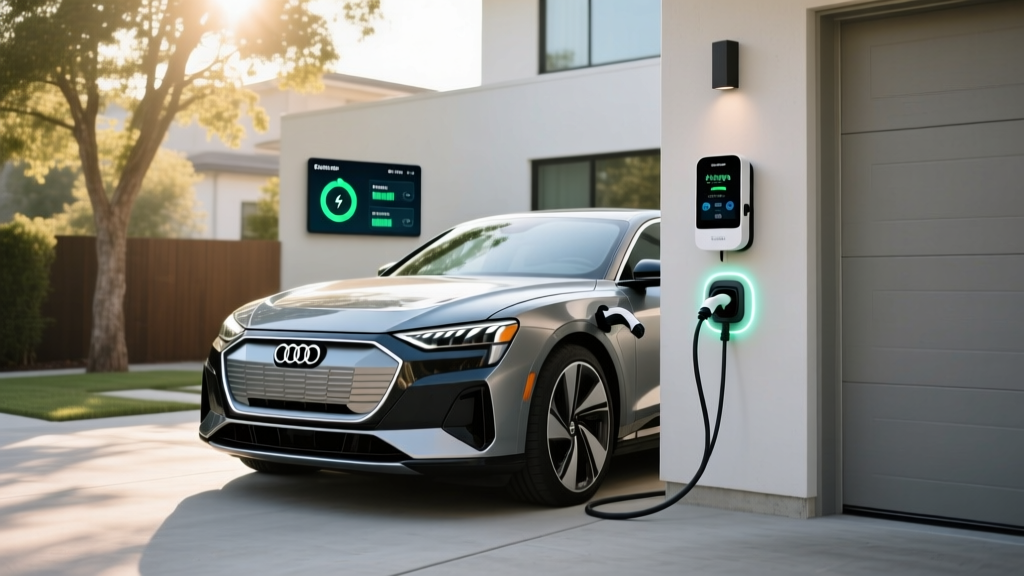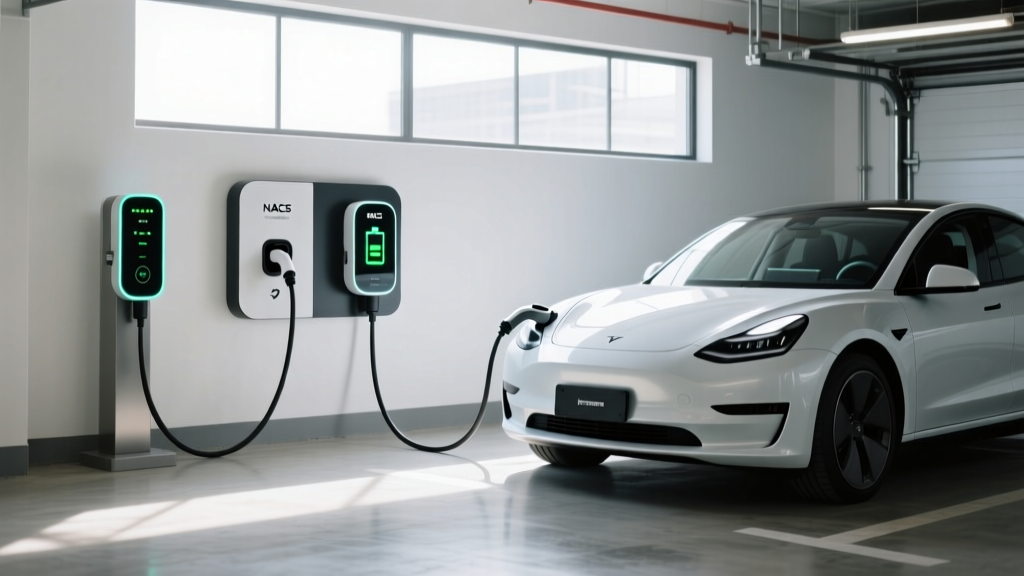
The North American charging landscape has undergone a seismic shift over the past three years. What was once a fragmented mess of incompatible plugs has consolidated around two dominant standards — the Combined Charging System (CCS1) and the North American Charging Standard (NACS, originally Tesla's proprietary connector). Meanwhile, CHAdeMO is fading into legacy status. If you're shopping for an EV or planning a home charging setup in 2026, understanding these connector ecosystems isn't optional — it determines where you can charge, how fast, and what equipment you need.
This guide breaks down the Combined Charging System and its competitors, maps out every charging level with real speed data, and walks through the true cost of installing a home Level 2 charger — including the panel upgrades that catch many buyers off guard.
What Is the Combined Charging System (CCS)?
The Combined Charging System — commonly called CCS or CCS1 in North America — is an open charging standard developed by the Society of Automotive Engineers (SAE) and adopted by most legacy automakers. The name "combined" refers to the connector's design: it merges the standard J1772 AC charging plug (used for Level 1 and Level 2 charging) with two additional DC fast-charging pins below it, creating a single unified inlet on the vehicle.
This means a CCS-equipped vehicle can accept both AC charging (home and destination) and DC fast charging (public highway corridors) through the same port — no adapter needed for CCS-native stations. The standard supports DC fast charging up to 350 kW at compatible stations, though most vehicles peak between 150 kW and 270 kW depending on battery architecture.
As of the 2025-2026 model years, most non-Tesla EVs sold in North America still ship with CCS1 inlets, though nearly every major automaker — Ford, GM, Rivian, Volvo, Polestar, Hyundai, Kia, and others — has committed to switching to NACS for future models. Some 2025 and 2026 models already feature native NACS ports. The transition period means CCS remains widely supported at public stations, and adapters are available for cross-compatibility.
Charging Levels: Speed, Power, and Range Added Per Hour
Before comparing connectors, you need to understand the three charging levels. The critical distinction: kW (kilowatts) measures power — how fast energy flows into your battery. kWh (kilowatt-hours) measures energy — the total capacity of your battery. Think of kW as the width of a hose and kWh as the size of the bucket.
| Level | Voltage | Power (kW) | Miles of Range Added Per Hour | Typical Use Case |
|---|---|---|---|---|
| Level 1 | 120V AC | 1.0–1.4 kW | 3–5 mi/hr | Overnight top-up; PHEVs; low daily mileage |
| Level 2 | 240V AC | 3.3–19.2 kW | 12–75 mi/hr | Home primary charging; workplace; destination |
| DC Fast Charge | 400–800V DC | 50–350 kW | 150–1,000+ mi/hr (equivalent) | Road trips; highway corridor charging; 10–80% top-ups |
Real-world context matters here. A Level 2 charger delivering 11.5 kW (48A on a 60A circuit) will add roughly 40–45 miles of range per hour to a mid-size SUV like the Hyundai Ioniq 5 or Tesla Model Y. That's enough to fully replenish a 75 kWh battery overnight in about 7 hours. DC fast charging speeds are not linear — peak kW applies only during a narrow window (typically 10–40% state of charge), then the charge curve tapers significantly to protect the battery. A "250 kW capable" vehicle might average 130–150 kW across a full 10–80% session.
Connector Compatibility: CCS1, NACS, and CHAdeMO
Your EV's inlet determines which public chargers you can use natively and which require an adapter. Here's the current compatibility landscape for 2025–2026 model-year vehicles:
| Connector | AC Charging | DC Fast Charging | Brands Using It (Native) | Adapter Availability |
|---|---|---|---|---|
| CCS1 (Combined Charging System) | J1772 (integrated) | CCS DC pins | Hyundai, Kia, VW, ID.4, BMW iX, Mercedes EQE/EQS (2024–2025 models), many 2024 and earlier non-Tesla EVs | CCS-to-NACS adapters available from Tesla and third parties (~$200–$250) |
| NACS (North American Charging Standard) | NACS AC | NACS DC | Tesla (all models), Ford F-150 Lightning/Mustang Mach-E (2025+), GM Ultium vehicles (2025+), Rivian (2025+), Volvo/Polestar (2025+) | NACS-to-CCS adapters available for charging at Electrify America and other CCS networks (~$200–$230) |
| CHAdeMO | J1772 (separate port) | CHAdeMO DC | Nissan Leaf (legacy); Mitsubishi Outlander PHEV (older models) | Limited; no CHAdeMO-to-NACS adapter widely available. New CHAdeMO stations are rare. |
The practical takeaway: If you're buying a new EV in 2026, you'll likely choose between a CCS1 or NACS inlet. CCS1 vehicles can access Tesla Superchargers using a Tesla-provided adapter (check Tesla's adapter page for eligibility). NACS-native vehicles can access Electrify America and other CCS networks with a CCS adapter. Either way, you'll have broad public charging access — but the adapter situation adds cost and a small convenience penalty.
CHAdeMO is effectively a dead end. Nissan's next-generation Leaf is expected to adopt NACS, and virtually no new CHAdeMO stations are being installed. If you own a CHAdeMO vehicle, public fast-charging options will continue shrinking.
Home Level 2 Charger Installation: Electrical Requirements and Real Costs
Most EV owners do 80% or more of their charging at home. A properly installed Level 2 charger on a 240V circuit is the single biggest quality-of-life upgrade in EV ownership. But installation costs vary enormously based on your home's electrical infrastructure.
Electrical Requirements
A typical home Level 2 setup requires:
- 240V dedicated circuit — the same voltage as your electric dryer or oven
- 40A to 60A breaker — a 48A charger requires a 60A circuit (NEC code mandates circuits be rated at 125% of the continuous load)
- Sufficient panel capacity — most homes need at least a 100A main panel; 200A is preferred
- Proper wire gauge — typically 6 AWG copper for a 60A circuit, 8 AWG for 40A
Panel Upgrade Reality
Here's what many online guides gloss over: if your home has a 100A panel that's already near capacity (common in homes built before 1990, or homes with electric heat, AC, and appliances), adding a 60A EV circuit may require a panel upgrade to 200A. This isn't a minor add-on — it's a significant electrical project.
Signs you might need a panel upgrade:
- Main breaker is 100A or less
- Panel is already heavily loaded (few or no open breaker slots)
- Your utility service drop is undersized for modern loads
- You already have large 240V loads (electric range, dryer, heat pump, hot tub)
Some homeowners can avoid a full panel upgrade by using a lower-amperage charger (e.g., 32A on a 40A circuit) or by installing a load-management device that shares capacity between the EV charger and other circuits. Your electrician can perform a load calculation to determine what's feasible.
Installation Cost Breakdown
| Component | Simple Install (panel nearby, 200A service) | Moderate Install (longer wire run, 200A) | Complex Install (panel upgrade needed) |
|---|---|---|---|
| Level 2 charger (equipment) | $350–$700 | $350–$700 | $350–$700 |
| Electrical permit | $50–$150 | $50–$150 | $50–$200 |
| Electrician labor + materials (wire, conduit, breaker) | $400–$800 | $800–$1,500 | $1,200–$2,500 |
| Panel upgrade (if needed) | $0 | $0 | $1,500–$3,500 |
| Total estimated cost | $800–$1,650 | $1,200–$2,350 | $3,100–$6,900 |
Always hire a licensed electrician and pull a permit. Unpermitted EV charger installations can void home insurance claims and create fire risk. The National Electrical Code (NEC) requires GFCI protection for outdoor receptacles and specific clearances for indoor installations.
What Does Charging Cost Per Mile vs. Gas?
One of the most compelling EV ownership arguments is fuel cost savings — but the actual number depends heavily on where and when you charge. Electricity pricing is measured in $/kWh (dollars per kilowatt-hour of energy delivered to your battery).
| Scenario | Rate ($/kWh) | Vehicle Efficiency (kWh/mi) | Cost Per Mile |
|---|---|---|---|
| Home charging (off-peak utility rate) | $0.10–$0.14 | 0.28–0.35 | $0.03–$0.05 |
| Home charging (standard residential rate) | $0.15–$0.20 | 0.28–0.35 | $0.04–$0.07 |
| Public Level 2 (ChargePoint, workplace) | $0.20–$0.35 | 0.28–0.35 | $0.06–$0.12 |
| DC fast charging (Electrify America, EVgo) | $0.35–$0.55 | 0.28–0.35 | $0.10–$0.19 |
| Gasoline comparison (30 MPG, $3.40/gal) | — | — | $0.11 |
At home off-peak rates, charging an EV costs roughly $0.03–$0.05 per mile — about one-third the cost of a 30 MPG gas car at $3.40/gallon. Even at DC fast-charging prices, EVs can be cost-competitive with gasoline, though frequent exclusive use of DC fast chargers erodes the savings advantage significantly.
To estimate your personal cost, find your utility's $/kWh rate on your electric bill and multiply by your vehicle's efficiency (listed as kWh/100mi on fueleconomy.gov — divide by 100 to get kWh/mi). Time-of-use plans that offer cheaper overnight rates can dramatically reduce charging costs.
Charging Time Examples: 10–80% for Common Battery Sizes
Real-world charging times depend on battery size (kWh), the vehicle's maximum accepted charge rate (kW), and the charging curve. Here are representative 10–80% times for popular 2025–2026 EVs at compatible DC fast chargers:
- Hyundai Ioniq 5 (77.4 kWh battery, NMC, peak 240 kW): 10–80% in approximately 18 minutes on a 350 kW charger. The Ioniq 5's 800V architecture sustains high charge rates longer than most 400V competitors, though expect tapering above 60% SoC.
- Tesla Model Y Long Range (~75 kWh battery, peak 250 kW): 10–80% in approximately 25–28 minutes on a V3 Supercharger. Tesla's charge curve is aggressive in the 10–50% range but tapers notably above 70%.
- Ford F-150 Lightning Extended Range (131 kWh battery, peak 155 kW): 10–80% in approximately 45–50 minutes on a 150+ kW charger. Large batteries take longer even at high kW — the physics of filling a bigger bucket.
- Chevrolet Equinox EV (85 kWh battery, peak 150 kW): 10–80% in approximately 30–35 minutes on a 150+ kW CCS charger.
- Level 2 home charging (11.5 kW) for a 77 kWh battery: 10–80% in approximately 4.5–5 hours. This is the "wake up full every morning" use case that makes home charging the default for most EV owners.
Remember: peak kW ratings are not sustained averages. A vehicle rated for 250 kW peak may average 130–160 kW across a full 10–80% session. Always look for real-world 10–80% times, not just peak numbers.
Recommended Home Level 2 Chargers (2026)
The home charger market has matured significantly. Here are proven picks across budget and feature tiers, with exact specifications:
Emporia Vue Level 2 EV Charger
- Power output: Up to 11.5 kW (48A on a 60A circuit)
- Connector: J1772 (compatible with all CCS and non-Tesla EVs; NACS vehicles need adapter)
- Cable length: 24 feet
- Smart features: Wi-Fi connected, app scheduling, energy monitoring, integrates with Emporia home energy monitors
- Price: ~$350–$400
- Best for: Budget-conscious buyers who want smart scheduling and energy tracking
ChargePoint Home Flex
- Power output: Up to 12 kW (50A, configurable from 16A–50A to match your circuit)
- Connector: J1772 (NACS version available for 2025–2026)
- Cable length: 23 feet
- Smart features: Wi-Fi, Alexa integration, detailed app with charging history, flexible amperage configuration
- Price: ~$550–$650
- Best for: Flexibility across circuit sizes; strong app ecosystem
Tesla Wall Connector
- Power output: Up to 11.5 kW (48A on a 60A circuit)
- Connector: NACS native (also available with J1772 adapter cable for non-Tesla EVs)
- Cable length: 24 feet
- Smart features: Wi-Fi, over-the-air updates, power sharing between multiple Wall Connectors, load management
- Price: ~$450–$500
- Best for: Tesla owners or households with NACS-native vehicles; multi-charger garages
Grizzl-E Smart
- Power output: Up to 10 kW (40A on a 50A circuit)
- Connector: J1772
- Cable length: 24 feet
- Smart features: Wi-Fi, OCPP-compatible, adjustable amperage, built-in RFID
- Price: ~$450–$550
- Best for: Cold-climate durability (rated to -40°F); Canadian-built; rugged outdoor installs
All of these chargers are UL-listed (or equivalent), NEMA 4-rated for outdoor use, and support hardwired installation (preferred) or NEMA 14-50 plug connection. Hardwired installs avoid the GFCI breaker requirement that applies to plug-in receptacles under NEC 2020/2023 — a detail your electrician will factor in.
Safety, Code, and Installation Best Practices
EV charging draws sustained high current for hours — this is fundamentally different from intermittent loads like a microwave. Safety shortcuts here carry real consequences.
- Dedicated circuit: Your EV charger must be on its own dedicated breaker — never shared with other appliances.
- GFCI protection: Required for outdoor receptacles (NEMA 14-50). Hardwired installations typically don't require a GFCI breaker, which avoids nuisance tripping issues common with EV loads.
- NEMA 4 rating: If installing outdoors, ensure the charger enclosure is rated for weather exposure (rain, snow, dust). All the chargers recommended above carry this rating.
- Wire gauge: Undersized wire creates heat and fire risk. For a 60A circuit, 6 AWG copper is standard; aluminum requires a larger gauge. Your electrician will size this to NEC Table 310.16.
- Permit and inspection: Required in virtually all jurisdictions. The inspection verifies proper wire sizing, breaker rating, grounding, and GFCI compliance. Skipping this step risks insurance denial in the event of an electrical fire.
- Load calculation: A licensed electrician will perform a NEC Article 220 load calculation to verify your panel can handle the additional circuit without exceeding 80% of the main breaker rating.
Frequently Asked Questions
How much does it cost to install a home EV charger?
A straightforward Level 2 installation on an existing 200A panel with a short wire run typically costs $800–$1,650 all-in (equipment, labor, permit). If your panel needs upgrading to 200A, expect $3,100–$6,900 total. Get at least two quotes from licensed electricians and verify they include permit costs.
How fast will each charging level add range?
Level 1 (120V) adds 3–5 miles per hour — sufficient for PHEVs with small batteries or drivers covering under 30 miles daily. Level 2 (240V, 48A) adds roughly 40–45 miles per hour for a typical EV. DC fast charging adds the equivalent of 150–1,000+ miles per hour, though sessions are measured in minutes (typically 18–45 minutes for 10–80%), not hours.
Which connector/charger is compatible with my EV?
Check your vehicle's charging port. If it has five large pins plus two small DC pins below, it's CCS1. If it's a smaller, single-row connector (Tesla-style), it's NACS. If it's a large round connector with four heavy pins (older Nissan Leaf), it's CHAdeMO. Home Level 2 chargers use J1772 (for CCS vehicles) or NACS (for Tesla and 2025+ NACS-native vehicles). Adapters bridge the gap in both directions.
How much does charging cost per mile vs. gas?
Home charging at off-peak rates costs approximately $0.03–$0.05 per mile, compared to $0.11 per mile for a 30 MPG gas car at $3.40/gallon. Even standard residential rates ($0.15–$0.20/kWh) keep EV fueling at $0.04–$0.07/mile. DC fast charging ($0.35–$0.55/kWh) narrows the gap to $0.10–$0.19/mile — roughly equivalent to gas.
What electrical upgrades might I need?
The most common surprise is needing a panel upgrade from 100A to 200A service, which costs $1,500–$3,500. Other potential upgrades include adding a new breaker slot, upgrading the service drop from the utility, or installing a sub-panel closer to the garage. A licensed electrician's load calculation will reveal exactly what's required before you commit to equipment purchases.
Is the Combined Charging System being phased out?
Not immediately, but the long-term trend favors NACS. Most automakers are transitioning to NACS inlets for 2025–2027 model-year vehicles. However, CCS1 infrastructure remains widespread — Electrify America, the largest non-Tesla DC fast-charging network, uses CCS1 and is adding NACS cables to new stations. CCS1 vehicle owners will have adapter access to Tesla Superchargers, and CCS1 public stations will continue operating for years. If you buy a CCS1 vehicle today, you won't be stranded — but NACS is the direction the market is heading.