Understanding the Cobalt Supercharger Network
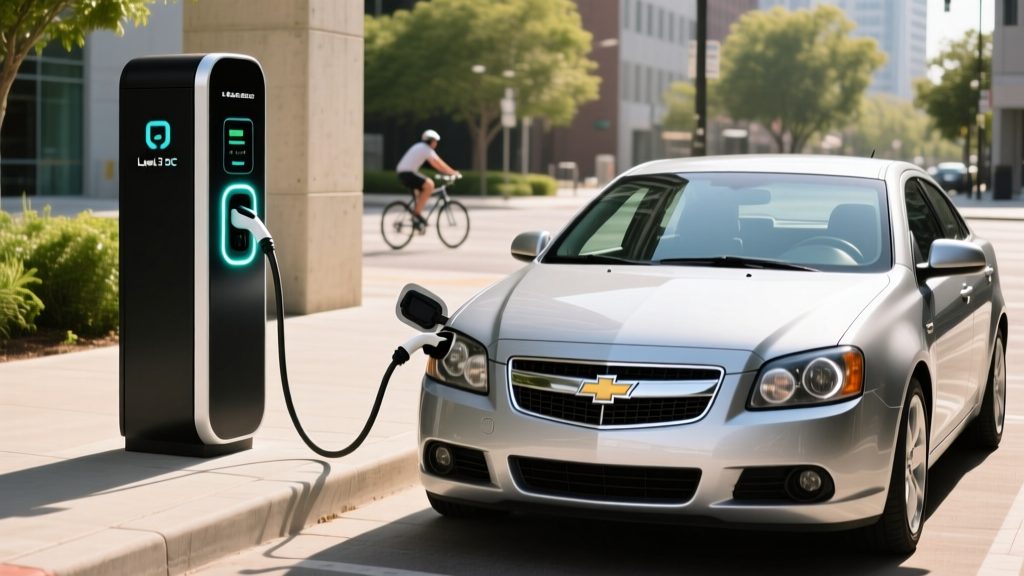
The Cobalt Supercharger network is one of several DC fast-charging networks expanding across the United States, offering high-power charging stations capable of delivering up to 350 kW of direct current (DC) power. For EV owners and prospective buyers, understanding how this network fits into the broader charging ecosystem—alongside home Level 2 charging and other public networks—is essential for practical daily ownership.
Before we break down speeds, costs, and equipment, let's clarify the single most important distinction in EV charging: kW (kilowatts) measures power—the rate at which energy flows into your battery. kWh (kilowatt-hours) measures energy—the total capacity of your battery or the amount of energy delivered in a session. A 350 kW charger delivers energy very quickly; an 80 kWh battery holds a fixed amount of energy. Confusing these two is the most common EV literacy mistake new owners make.
Charging Levels Explained: Speeds and Range Added
Every EV owner will encounter three charging levels. Here's how they compare in real-world terms:
| Level | Voltage | Max Power (kW) | Miles of Range Added Per Hour | Typical Use Case |
|---|---|---|---|---|
| Level 1 | 120V AC | 1.2–1.9 kW | 3–5 miles | Overnight top-up, PHEV charging |
| Level 2 | 240V AC | 7.2–19.2 kW | 20–60 miles | Home daily charging, workplace |
| DC Fast (including Cobalt Supercharger) | 400–800V DC | 50–350 kW | 150–800+ miles (equivalent rate) | Road trips, rapid top-ups |
At a Cobalt Supercharger station rated for 350 kW, a compatible vehicle with an 800V architecture—such as the Hyundai Ioniq 5 or Kia EV6—can accept peak power near that maximum. However, no EV sustains peak charge rate for the entire session. The charge curve tapers significantly above 80% state of charge (SoC) to protect battery health. Expect a 350 kW-capable vehicle to add 10–80% in roughly 18–25 minutes depending on battery size and chemistry, while a 50 kW DC fast charger would take 60–90 minutes for the same range.
Connector Compatibility: NACS, CCS1, and CHAdeMO
The Cobalt Supercharger network, like most public DC fast-charging infrastructure in 2026, primarily supports the CCS1 (Combined Charging System) connector, which is the standard adopted by most legacy automakers. However, the industry-wide shift toward the NACS (North American Charging Standard)—originally developed by Tesla—has accelerated. Ford, GM, Rivian, Volvo, and others have adopted NACS for their 2025–2026 model-year vehicles.
| Connector | Primary Brands Using It (2026) | DC Fast Charge Support | Adapter Needed? |
|---|---|---|---|
| NACS (Tesla) | Tesla, Ford, GM, Rivian, Volvo, Polestar | Yes | CCS-to-NACS adapter for non-Tesla Superchargers |
| CCS1 | Hyundai/Kia, VW, BMW, Mercedes, Stellantis | Yes | NACS-to-CCS adapter if vehicle is NACS-equipped |
| CHAdeMO | Nissan Leaf (legacy), Mitsubishi Outlander PHEV | Yes (limited stations) | Rare; most networks phasing out |
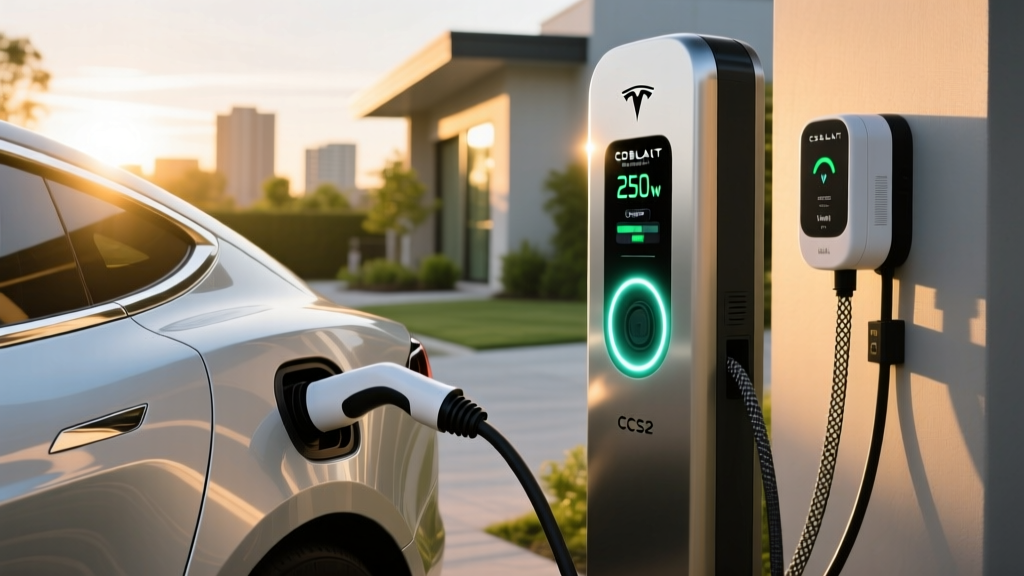
Adapter note: If your EV uses NACS but you need to access a CCS1-equipped Cobalt Supercharger station, you'll need an adapter. Tesla and several third-party manufacturers sell CCS-to-NACS adapters rated for up to 250 kW DC charging, typically priced between $150–$250. Verify the adapter's power rating before purchasing—cheap adapters may limit charge speed or lack proper thermal management.
For home Level 2 charging, most chargers ship with a J1772 connector (the AC standard). NACS-equipped vehicles either come with a J1772-to-NACS adapter in the box or you can purchase one separately. Always confirm your vehicle's included adapters before buying additional hardware.
Home Level 2 Charger Installation: Costs and Requirements
Installing a Level 2 home charger is the single most impactful upgrade for EV ownership convenience. Here's what's involved electrically and financially.
Electrical Requirements
A Level 2 charger requires a 240V dedicated circuit, similar to what powers an electric dryer or oven. Common configurations:
- 40-amp circuit (delivers ~9.6 kW to the vehicle): Most common for residential installs; requires 50-amp breaker (NEC requires 125% overhead for continuous loads)
- 48-amp circuit (delivers ~11.5 kW): Requires 60-amp breaker; common for higher-power chargers
- 60-amp circuit (delivers ~14.4 kW): Requires hardwired connection; less common in homes
Your charger's amperage should not exceed 80% of the circuit breaker rating. A 48-amp charger needs a 60-amp breaker minimum.
Panel Upgrade Considerations
Homes with 100-amp electrical service panels may require a panel upgrade to 200 amps to safely add a dedicated EV charging circuit alongside existing loads (HVAC, water heater, kitchen appliances). A licensed electrician will perform a load calculation per NEC Article 220 to determine if your panel can handle the additional draw. Skipping this assessment risks tripped breakers or fire hazards.
| Component | Cost Range (2026) | Notes |
|---|---|---|
| Level 2 Charger Equipment | $350–$750 | Varies by power output and smart features |
| Electrician Labor (standard install) | $500–$1,500 | Depends on run length, conduit, and wall material |
| Permit Fees | $50–$200 | Varies by municipality |
| Panel Upgrade (if needed) | $1,500–$4,000 | 100A to 200A upgrade; not always required |
| Total (no panel upgrade) | $900–$2,450 | Typical scenario for most modern homes |
| Total (with panel upgrade) | $2,400–$6,450 | Older homes with 100A service |
Check with your utility company before installing—many offer rebates of $200–$500 for Level 2 charger installation, and some utilities offer reduced electricity rates for EV charging on off-peak schedules.
Safety and Code Requirements
- Dedicated circuit: Your EV charger must have its own breaker—never share a circuit with other major appliances
- GFCI protection: NEC 2023 and later require GFCI (ground-fault circuit interrupter) protection for all EV charging outlets; hardwired installations may have different requirements depending on jurisdiction
- Outdoor rating: If installing outside, ensure the charger carries an NEMA 4 or IP55+ rating for weather resistance
- Cable management: Choose a cable length (18–25 feet typical) that reaches your charge port without stretching across walkways
- Wi-Fi connectivity: Smart chargers with Wi-Fi enable scheduling, energy monitoring, and utility demand-response programs
Level 2 Charger Equipment Recommendations
These are proven, widely available Level 2 chargers suited for home installation in 2026:
ChargePoint Home Flex
- Power: Up to 12 kW (50 amps), adjustable down to 16 amps
- Connector: J1772 (NACS adapter included for select bundles)
- Cable length: 23 feet
- Smart features: Wi-Fi, app scheduling, Alexa integration, energy reports
- Price: ~$550–$650
Emporia Level 2 EV Charger
- Power: Up to 11.5 kW (48 amps)
- Connector: J1772
- Cable length: 24 feet
- Smart features: Wi-Fi, app control, solar integration, load management
- Price: ~$400–$500
Wallbox Pulsar Plus
- Power: Up to 11.5 kW (48 amps)
- Connector: J1772 (NACS version available)
- Cable length: 25 feet
- Smart features: Wi-Fi, Bluetooth, app scheduling, Power Sharing for dual installs
- Price: ~$500–$600
Tesla Wall Connector
- Power: Up to 11.5 kW (48 amps)
- Connector: NACS (J1772 adapter available separately)
- Cable length: 24 feet
- Smart features: Wi-Fi, over-the-air updates, power sharing, access control
- Price: ~$425–$475
For homes with limited electrical capacity, consider a charger with dynamic load management (such as the Emporia or Wallbox). These devices monitor your home's real-time power draw and reduce charging current when other appliances activate, potentially avoiding a costly panel upgrade.
Cost to Charge: Home vs. Public vs. Gas
One of the strongest economic arguments for EV ownership is lower per-mile energy cost—but the savings depend heavily on where and when you charge.
| Scenario | Cost per kWh | Efficiency (kWh/100 mi) | Cost per Mile | Annual Cost (12,000 mi) |
|---|---|---|---|---|
| Home off-peak (utility rate) | $0.08–$0.14 | 28 kWh | $0.022–$0.039 | $264–$468 |
| Home standard rate | $0.14–$0.20 | 28 kWh | $0.039–$0.056 | $468–$672 |
| Public Level 2 (network) | $0.25–$0.45 | 28 kWh | $0.070–$0.126 | $840–$1,512 |
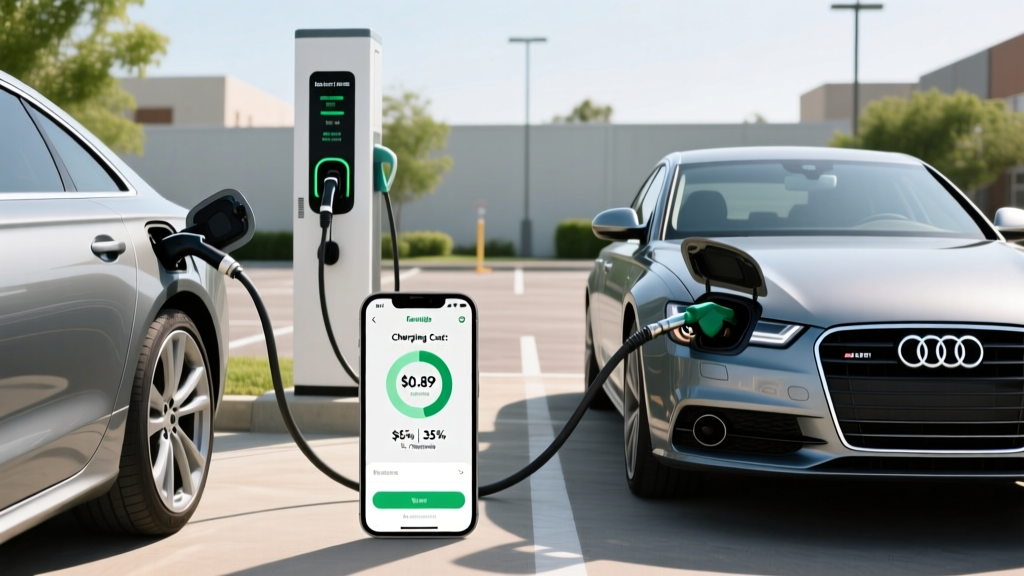
| DC Fast Charging (Cobalt Supercharger, EA, etc.) | $0.35–$0.55 | 28 kWh | $0.098–$0.154 | $1,176–$1,848 |
| Gasoline vehicle (28 MPG combined, $3.50/gal) | — | — | $0.125 | $1,500 |
Key takeaways: Home off-peak charging delivers the lowest cost by a wide margin—often 70–80% cheaper per mile than gasoline. DC fast charging on road trips narrows the gap, and in some regions with high per-kWh pricing, a single fast-charge road trip may cost comparably to a gas car. Plan your daily driving around home Level 2 charging and reserve DC fast chargers like Cobalt Supercharger stations for road trips to maximize savings.
For real-world efficiency data on specific vehicles, the EPA's fueleconomy.gov database provides kWh/100mi figures for every rated EV sold in the US.
Charging Time Examples by Battery Size
Charging speed depends on your battery's capacity (kWh), its maximum accepted charge rate (kW), and the charger's output. Here are representative 10–80% charge times for common EV battery sizes at different charging levels:
| Battery Size | Vehicle Examples | Level 2 (11.5 kW) | DC Fast (150 kW peak) | DC Fast (350 kW peak) |
|---|---|---|---|---|
| 58 kWh (usable) | VW ID.4 Standard, base Leaf | ~4.5 hours | ~35 min | ~22 min* |
| 77 kWh (usable) | Ford Mustang Mach-E ER, Tesla Model Y LR | ~6 hours | ~40 min | ~25 min* |
| 84 kWh (usable) | Hyundai Ioniq 5, Kia EV6 | ~6.5 hours | ~38 min | ~18 min |
| 100 kWh (usable) | Tesla Model S, Lucid Air, Rivian R1T | ~8 hours | ~50 min | ~30 min* |
*Vehicles limited to 250 kW max charge rate (e.g., most Tesla models) cannot fully utilize 350 kW stations; the charge curve tapers at the vehicle's maximum accepted power. Always check your vehicle's peak DC charge rate spec—not just the charger's capability.
Frequently Asked Questions
How much does it cost to install a home EV charger?
A typical Level 2 home charger installation runs $900–$2,450 including equipment ($350–$750), electrician labor ($500–$1,500), and permits ($50–$200). If your home has a 100-amp electrical panel that needs upgrading to 200 amps, add $1,500–$4,000 to the total. Get at least two quotes from licensed electricians and ask for a NEC Article 220 load calculation before committing.
How fast will each charging level add range?
Level 1 (120V) adds roughly 3–5 miles of range per hour—adequate for plug-in hybrids with small batteries but impractical for full EVs. Level 2 (240V, 40–48 amps) adds 20–40 miles per hour, easily replenishing a daily commute overnight. DC fast charging at 150–350 kW can add 150–300+ miles in 20–30 minutes, but charge speed tapers above 80% SoC.
Which connector and charger is compatible with my EV?
Check your vehicle's charge port. 2026 models from Tesla, Ford, GM, Rivian, and Volvo use NACS. Most Hyundai, Kia, VW, and BMW models still use CCS1. The Nissan Leaf (now discontinued) used CHAdeMO. For home Level 2 charging, all vehicles accept J1772 (NACS vehicles via adapter). For DC fast charging on networks like Cobalt Supercharger, verify whether the station provides your connector type or if you need to bring an adapter.
How much does charging cost per mile compared to gas?
Home off-peak charging costs roughly $0.02–$0.04 per mile, compared to $0.12–$0.14 per mile for a 28 MPG gas vehicle at $3.50/gallon. Even at standard residential rates, EV charging costs 50–70% less per mile. Public DC fast charging ($0.35–$0.55/kWh) narrows the gap to $0.10–$0.15 per mile—comparable to gasoline. Maximize savings by charging at home whenever possible.
What electrical upgrades might I need for a home charger?
If your home has a 200-amp panel with available capacity, you likely need only a dedicated 50–60 amp breaker and a wiring run to your garage or parking spot. Homes with 100-amp panels, older wiring (knob-and-tube or aluminum), or already-heavy electrical loads (electric heat, hot tub, workshop) may require a panel upgrade to 200 amps. A licensed electrician can assess this with a load calculation. Some utilities offer rebates or financing for panel upgrades tied to EV adoption.
For the latest federal incentive information related to home charging equipment, consult the IRS Alternative Fuel Vehicle Refueling Property Credit page, which covers up to 30% of home charger installation costs (capped at $1,000) for eligible taxpayers in qualifying census tracts.