If you are finally retiring a beloved 2006 Chevrolet Cobalt SS Supercharged — that punchy 2.0L Ecotec with its Eaton M62 blower pushing roughly 205 hp and 22 mpg combined — and stepping into your first battery-electric vehicle, the single biggest ownership shift is not the silence or the instant torque. It is the fueling paradigm. You no longer visit a gas station. You plug in at home, at work, at the grocery store, or at a highway DC fast charger. Understanding those options, in exact kilowatts (kW) and kilowatt-hours (kWh), is what separates a smooth EV transition from a frustrating one.
This guide is written for drivers coming from older, enthusiast-oriented gas cars like the supercharged Cobalt SS. We will cover the three charging levels with real speeds, the electrical work your house may need, which connector your new EV uses, what charging actually costs per mile versus premium unleaded, and which Level 2 home chargers are worth buying in 2026.
Charging Levels Explained: Level 1, Level 2, and DC Fast Charging
EV charging falls into three tiers. The critical literacy point: kW (kilowatts) measures power — how fast energy flows into the car. kWh (kilowatt-hours) measures energy — how much the battery holds. A 77 kWh battery charged at 11.5 kW takes roughly 6.7 hours from 0% to 100%. Confusing these two is the single most common EV mistake.
| Level | Voltage / Amps | Power (kW) | Miles of Range Added per Hour | Typical Use Case |
|---|---|---|---|---|
| Level 1 | 120V / 12A | ~1.4 kW | 3–5 mi/hr | Overnight top-off, PHEVs, low-mileage drivers |
| Level 2 (home/public) | 240V / 32–48A | 7.7–11.5 kW | 25–44 mi/hr | Primary home charging, workplace, destinations |
| DC Fast Charging | 400–800V DC | 50–350 kW peak | 150–1,000+ mi/hr (at peak) | Highway road trips, quick top-ups |
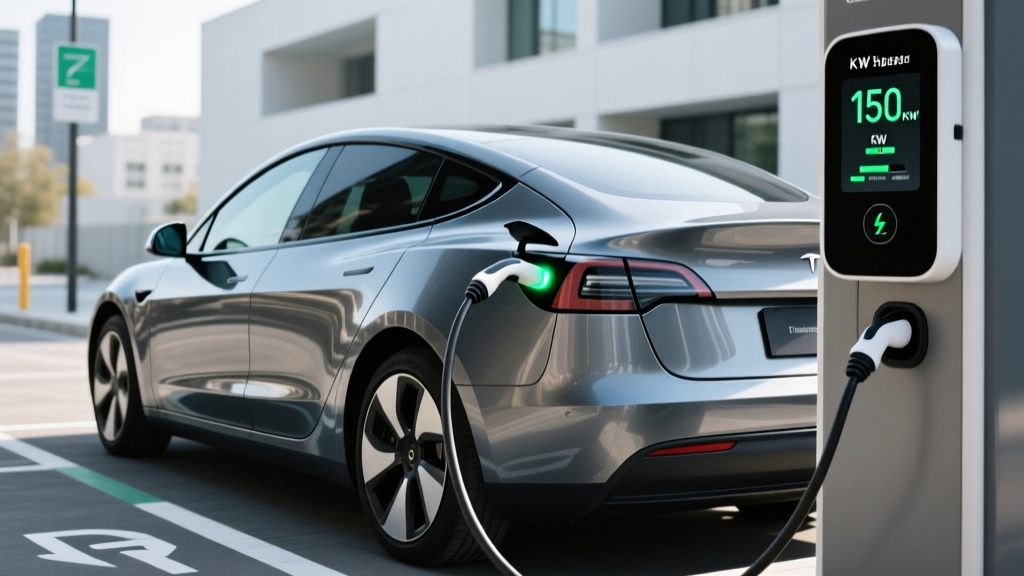
Real-world nuance matters here. A Level 2 charger rated at 11.5 kW (48A on a 60A circuit) will add roughly 36–44 miles of range per hour to a midsize EV like the Hyundai Ioniq 6 or Tesla Model 3. DC fast charging is never sustained at peak: a vehicle that advertises "250 kW peak" typically holds that rate only between roughly 10% and 40% state of charge, then tapers. A realistic 10–80% session on a 150 kW-capable EV at a 350 kW Electrify America stall takes 20–28 minutes depending on battery temperature and preconditioning.
How Fast Will Each Charging Level Add Range?
Coming from a Cobalt SS Supercharged that could refuel its 16-gallon tank in about four minutes for roughly 350 highway miles, EV charging requires recalibration. Here are representative 10–80% times for common battery sizes:
- 60 kWh pack (e.g., base RWD EVs): Level 2 at 7.7 kW — approximately 5.5 hours. DC fast at 150 kW peak — approximately 18–22 minutes.
- 77–82 kWh pack (e.g., Tesla Model Y LR, Ioniq 5): Level 2 at 11.5 kW — approximately 5 hours. DC fast at 250 kW peak — approximately 18 minutes (with preconditioning).
- 100+ kWh pack (e.g., Ford F-150 Lightning Extended, Rivian R1S Max): Level 2 at 11.5 kW — approximately 7–8 hours. DC fast at 350 kW peak on an 800V architecture — approximately 20–25 minutes.
Level 1 charging at 1.4 kW is viable only for plug-in hybrids with small batteries (10–20 kWh) or BEV owners driving under 30 miles per day with disciplined overnight plug-in. For a 77 kWh BEV, Level 1 from 20% to 80% takes more than 35 hours — impractical as a primary strategy.
Home Charger Installation: Electrical Requirements, Panel Upgrades, and Cost
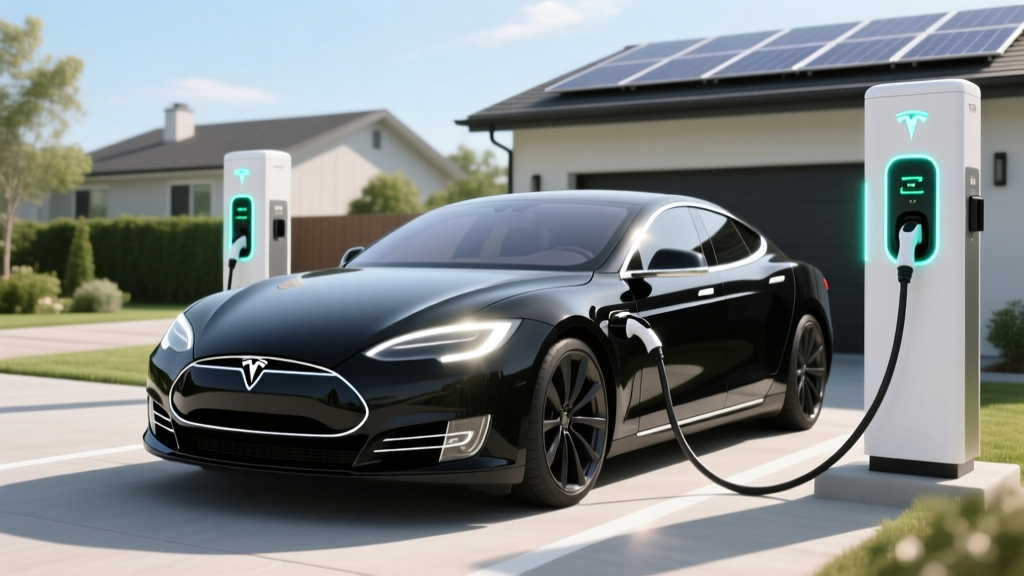
A Level 2 home charger is the backbone of practical EV ownership. Most EV owners do 80% or more of their charging at home, according to the U.S. Department of Energy. The installation, however, is where surprises happen — particularly in older homes built before modern electrical codes.
Electrical Requirements
A 48-amp Level 2 charger requires a dedicated 60-amp, 240-volt circuit (the National Electrical Code requires continuous loads to be sized at 125% of the circuit rating). A 40-amp charger needs a 50-amp circuit. Common dryer outlets (NEMA 14-50) can serve a 40A charger on a 50A breaker, but hardwiring is preferred for reliability and higher amperage.
Panel Upgrade Reality
Homes with 100-amp service — common in houses built before the 1990s — often cannot accommodate a 60A EV circuit without a panel upgrade to 200A. This is the single largest variable in installation cost and can add $2,000–$5,000 to the project. Even 200A panels may need a load calculation if they are already near capacity with HVAC, electric range, and dryer circuits.
| Component | Typical Cost Range |
|---|---|
| Level 2 charger hardware (40–48A, smart) | $400 – $750 |
| Electrician labor (standard install, short run) | $600 – $1,500 |
| Permit and inspection | $50 – $250 |
| Long conduit run (50+ ft, attic/crawlspace) | +$500 – $1,500 |
| Panel upgrade to 200A (if needed) | $2,000 – $5,000 |
| Total (no panel upgrade) | $1,050 – $2,500 |
| Total (with panel upgrade) | $3,050 – $7,500 |
The IRS Residential Clean Energy Credit (§25D) covers 30% of home charging equipment and installation costs, up to $1,000 annually, through 2032. This can bring a standard $1,800 install down to roughly $1,260 after the credit. Confirm eligibility with a tax professional — rules on principal residence and income phase-outs apply.
Connector Compatibility: NACS, CCS1, CHAdeMO, and Adapter Needs
The North American EV market has largely standardized on NACS (the Tesla-originated connector, now formally SAE J3400) for new vehicles from 2025 onward. Legacy CCS1 vehicles remain on the road and at most non-Tesla DC fast chargers. CHAdeMO is effectively discontinued for new U.S. passenger vehicles.
| Connector | Used By (2026 Models) | Adapter Needed? |
|---|---|---|
| NACS (J3400) | Tesla (all), Ford, GM, Rivian, Volvo, Polestar, Hyundai/Kia (2025+), BMW, Mercedes | No (native); CCS-to-NACS adapter for legacy CCS stalls |
| CCS1 | Legacy VW ID.4 (pre-2025), older Hyundai/Kia, BMW i4 (pre-2025), Stellantis | NACS-to-CCS adapter needed at Tesla Superchargers |
| CHAdeMO | Nissan Leaf (legacy only — discontinued) | Limited adapter options; network shrinking |
If you are buying a 2026 model-year EV, expect a native NACS port on nearly every mainstream brand. A quality CCS-to-NACS adapter ($150–$250) from Tesla or Lectron provides access to legacy Electrify America and EVgo CCS stalls during the network transition.
Cost to Charge per Mile vs. Gas: The Real Math
Here is where leaving a 2006 Cobalt SS Supercharged behind pays dividends — especially if that Eaton supercharger was thirsty under boost. The Cobalt SS averaged roughly 22 mpg combined on premium (required for the supercharged Ecotec). At $3.80/gallon for premium, that is approximately $0.173 per mile in fuel alone.
| Charging Scenario | Rate ($/kWh) | Efficiency (kWh/100mi) | Cost per Mile |
|---|---|---|---|
| Home, off-peak utility rate | $0.10 | 28 | $0.028 |
| Home, average U.S. rate | $0.16 | 28 | $0.045 |
| Public Level 2 (ChargePoint, etc.) | $0.30 | 28 | $0.084 |
| DC fast charging (EA, EVgo) | $0.48 | 28 | $0.134 |
| Tesla Supercharger (member rate) | $0.30 | 26 | $0.078 |
| 2006 Cobalt SS SC (premium gas) | $3.80/gal | 22 mpg | $0.173 |
At home on an average rate, an efficient EV costs roughly $0.04–$0.05 per mile — about a quarter of what the supercharged Cobalt SS costs in fuel. Even exclusive DC fast charging on road trips undercuts premium gasoline on a per-mile basis. Over 15,000 miles annually, the difference is roughly $1,800–$2,200 in fuel savings versus the Cobalt SS.
Recommended Level 2 Home Chargers for 2026
These are the chargers I recommend based on sustained real-world use, build quality, connector options, and smart features. Every recommendation below states its power output and connector — non-negotiable specs for a purchase decision.
ChargePoint Home Flex (Gen 2)
- Power: Up to 11.5 kW (48A) on a 60A circuit
- Connector: NACS native (2025+ models); J1772 with adapter available
- Cable length: 23 ft
- Smart features: Wi-Fi, scheduled charging, Alexa, utility demand-response
- Price: ~$599
Emporia Vue Level 2 Charger
- Power: Up to 11.5 kW (48A)
- Connector: NACS or J1772 options
- Cable length: 24 ft
- Smart features: Energy monitoring, solar integration, app control
- Price: ~$399 (best value)
Tesla Wall Connector
- Power: Up to 11.5 kW (48A)
- Connector: NACS native; J1772 adapter included
- Cable length: 24 ft
- Smart features: Wi-Fi, OTA updates, Power-Share between two units
- Price: ~$475
Grizzl-E Smart
- Power: Up to 10 kW (40A) on a 50A circuit
- Connector: NACS or J1772
- Cable length: 24 ft
- Smart features: OCPP-compatible, adjustable amperage, extreme-cold rated (-40°F)
- Price: ~$449
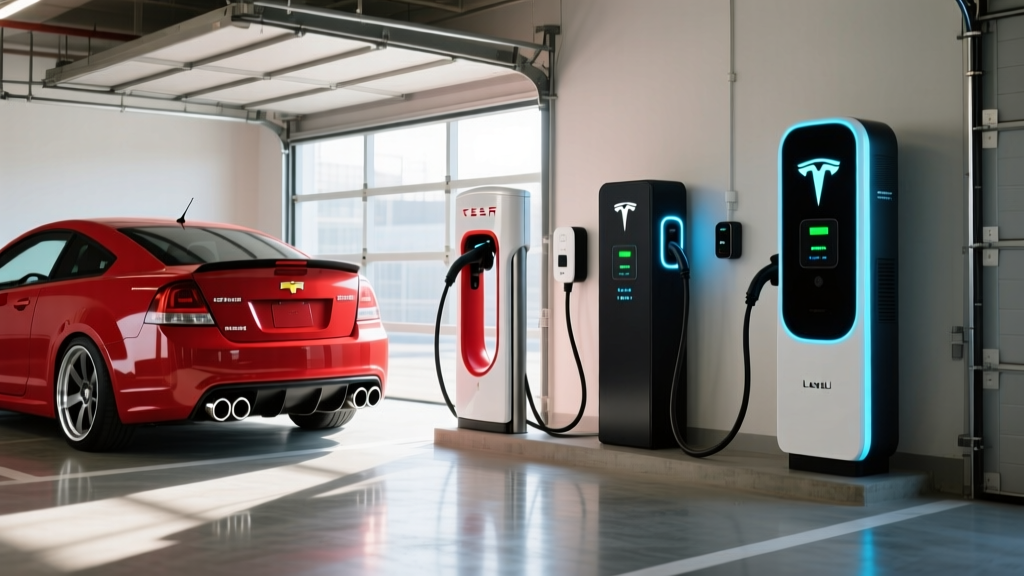
For most homeowners, the ChargePoint Home Flex or Tesla Wall Connector is the right call — both deliver the full 11.5 kW that most EVs can accept onboard, and both integrate with utility time-of-use scheduling to keep costs at off-peak rates.
Safety, Code, and Installation Best Practices
Do not cut corners on EV charging electrical work. A Level 2 charger draws a continuous high-amperage load for hours — far more demanding than intermittent appliances. Key code and safety considerations:
- Dedicated circuit: Your Level 2 charger must have its own dedicated circuit — not shared with any other outlet or appliance.
- GFCI protection: The NEC requires GFCI protection for outdoor receptacles; hardwired installations often avoid nuisance tripping versus receptacle-based setups.
- Outdoor rating: If your charger mounts outdoors, it must carry a NEMA 4 or IP65 weatherproof rating. All units recommended above meet this standard.
- Permit and inspection: Nearly all jurisdictions require an electrical permit for a new 240V circuit. Skipping the permit risks insurance claim denial if a fire originates from unpermitted work.
- Licensed electrician: Always use a licensed electrician. Ask for a load calculation before committing to the circuit amperage — this prevents overloading an older panel.
Frequently Asked Questions
How much does it cost to install a home EV charger?
A standard Level 2 home charger installation runs $1,050–$2,500 total (equipment, electrician, and permit) when no panel upgrade is needed. If your home requires a 200A service upgrade, add $2,000–$5,000. The IRS §25D credit covers 30% of the cost, up to $1,000.
How fast will each charging level add range?
Level 1 (120V) adds 3–5 miles per hour. Level 2 (240V, 48A) adds 25–44 miles per hour depending on vehicle efficiency. DC fast charging adds 150–1,000+ miles per hour at peak rate, but sessions taper significantly above 80% state of charge.
Which connector or charger is compatible with my EV?
For 2026 model-year vehicles, nearly all mainstream EVs use NACS (SAE J3400). Older CCS1 vehicles need an adapter for Tesla Superchargers. CHAdeMO is effectively obsolete for new purchases. Check your vehicle's charge port before buying a home charger.
How much does charging cost per mile versus gas?
Home charging at average U.S. electricity rates costs roughly $0.04–$0.05 per mile. A 2006 Cobalt SS Supercharged on premium gasoline costs approximately $0.17 per mile. Even DC fast charging on road trips ($0.13/mile) undercuts premium fuel.
What electrical upgrades might I need?
Homes with 100-amp electrical service typically need a panel upgrade to 200A before adding a 48A EV circuit — a $2,000–$5,000 job. Even 200A panels may need a professional load calculation if HVAC, electric range, and dryer circuits are already drawing heavily. Always request this assessment before purchasing equipment.
Transitioning from a supercharged gas car to an EV is one of the most rewarding ownership shifts available — but only if your charging infrastructure is set up correctly from day one. Invest in a proper Level 2 installation, understand your connector, and take advantage of off-peak utility rates. The Cobalt SS Supercharged was a blast in its era; your EV will be faster, quieter, and dramatically cheaper to run.