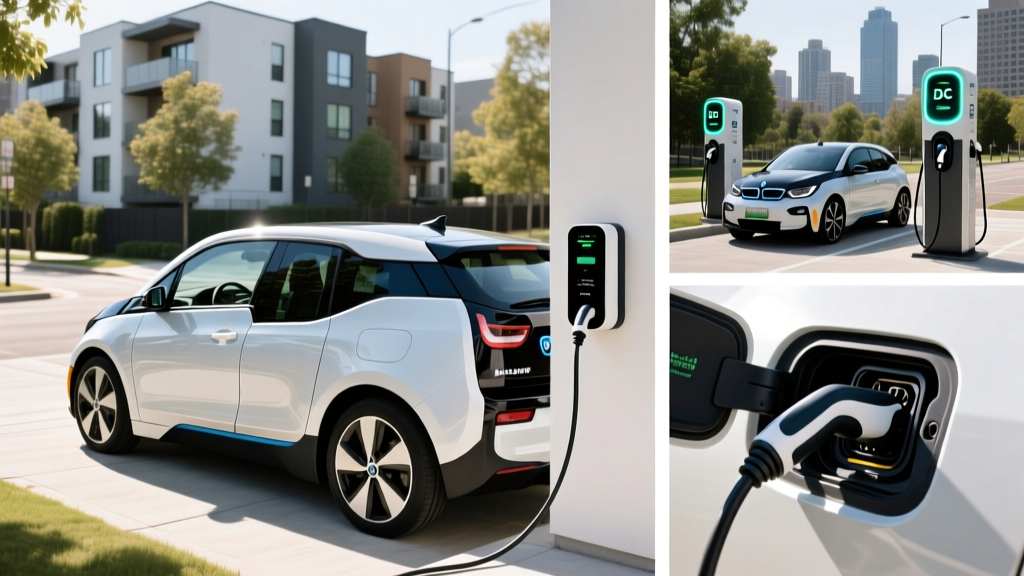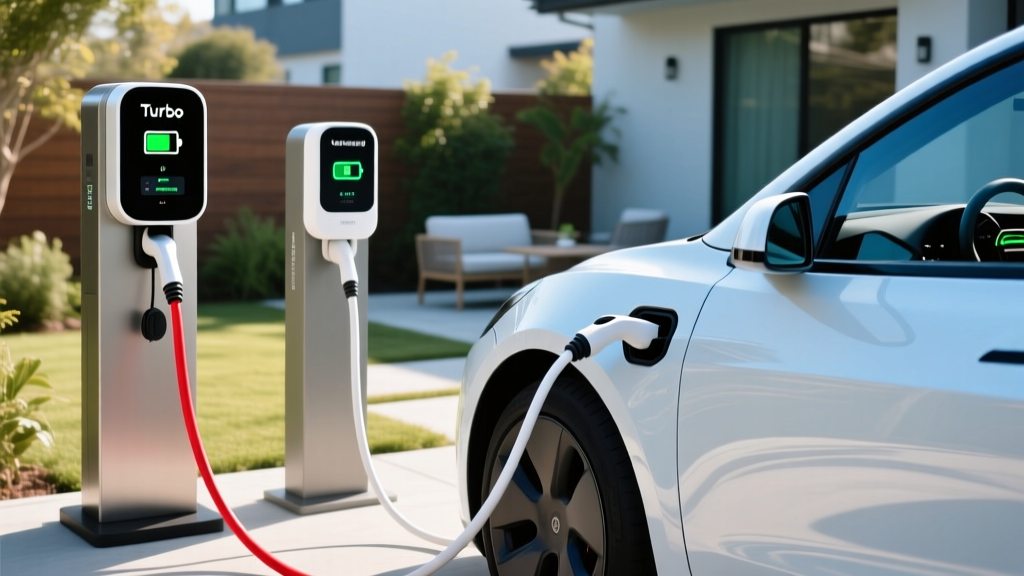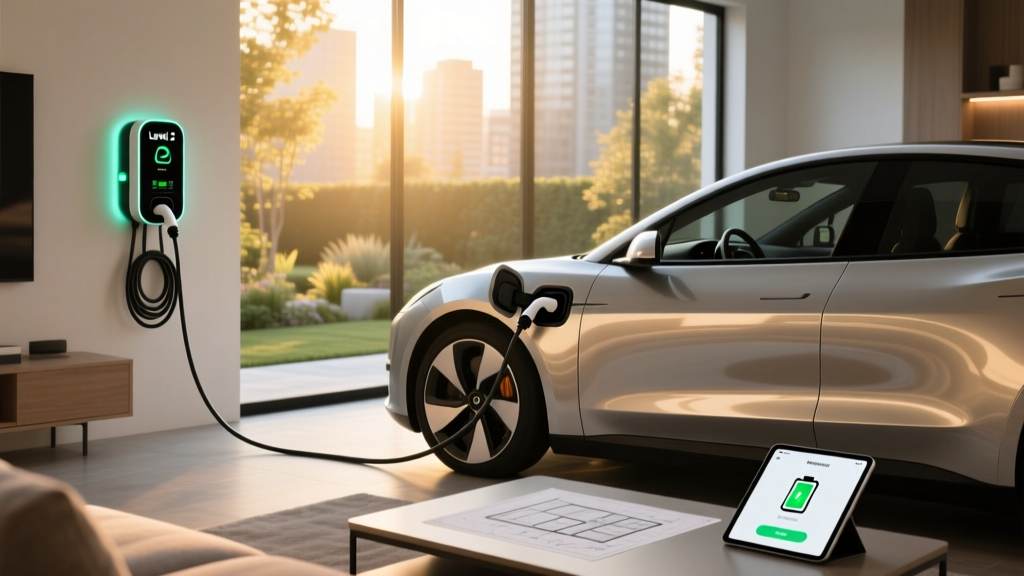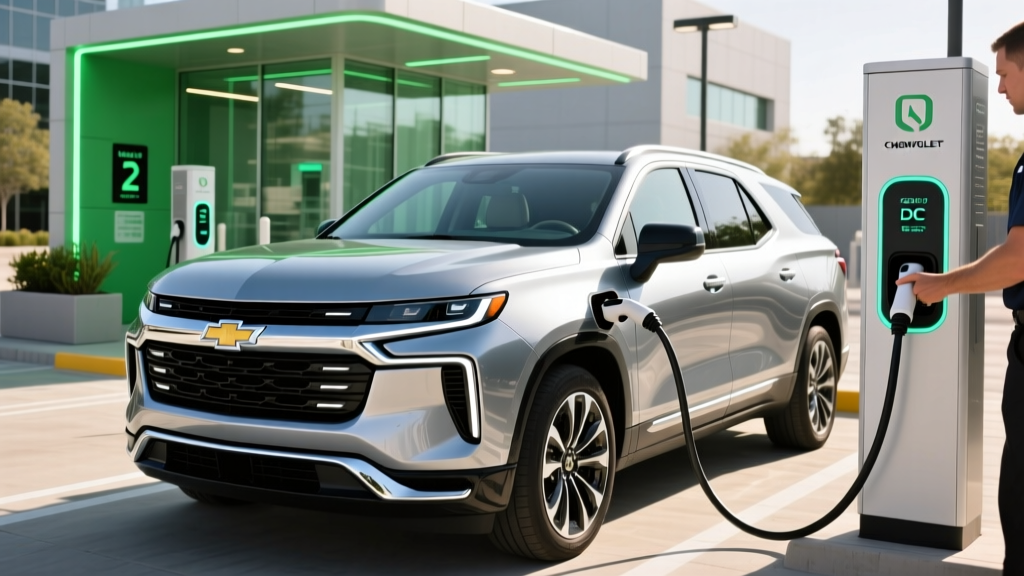
If you've searched for a "Chevy supercharged truck" in 2026, you've likely landed in a tangled intersection of Chevrolet's electrified and high-performance lineup. The term gets thrown around forums and dealer lots to describe everything from the Chevrolet Silverado EV (which packs up to 754 hp and 785 lb-ft of torque from its Ultium battery platform — no supercharger required) to the Silverado ZR2 Bison with its supercharged-adjacent high-output turbo V8, to aftermarket supercharger kits on the 6.2L V8 Silverado. Each has radically different fueling and charging needs.
This guide untangles the charging reality for every interpretation of the Chevy supercharged truck buyer: the Silverado EV owner needing a 240V home setup, the PHEV Silverado driver balancing electric and gas, and the supercharged ICE owner who needs to know that no, you can't plug in a blower-equipped V8. We'll cover exact kW charge rates, real installation costs, connector compatibility, and per-mile economics with the numbers to back it up.
Which Chevy Truck Are You Actually Charging?
Before sizing up a charger, you need to identify your exact powertrain. The charging hardware, connector type, and electrical requirements differ completely across these three categories:
| Model / Type | Powertrain | Battery (Usable kWh) | Max DC Fast Charge (kW) | Onboard AC Charger (kW) | Connector |
|---|---|---|---|---|---|
| Silverado EV 4WT (2026) | BEV (Ultium) | ~200 kWh | 350 kW (peak) | 19.2 kW | NACS (native) |
| Silverado EV RST (2026) | BEV (Ultium) | ~200 kWh | 350 kW (peak) | 19.2 kW | NACS (native) |
| Silverado 1500 PHEV (announced) | Plug-in Hybrid | ~18-22 kWh (est.) | N/A (AC only) | 7.7 kW (est.) | NACS (2026+) |
| Silverado 1500 6.2L V8 + Supercharger Kit | ICE (aftermarket SC) | 0 (12V aux only) | N/A | N/A | N/A — gas only |
Charging Levels Explained: kW Speeds and Miles Per Hour
The most common EV literacy mistake is confusing kW (kilowatts — the rate of power delivery, like water pressure from a hose) with kWh (kilowatt-hours — the total energy stored, like the size of the bucket). A 200 kWh battery charged at 19.2 kW doesn't fill in 10 hours because of charge-curve tapering, efficiency losses, and the fact that you rarely charge from 0–100%. Here's how each level actually performs:
| Level | Voltage / Amperage | Max Power (kW) | Miles Added Per Hour (Silverado EV) | Best For |
|---|---|---|---|---|
| Level 1 (120V) | 120V / 12A | ~1.4 kW | ~3–4 mi/hr | Emergency top-ups, overnight trickle for PHEVs |
| Level 2 (240V) | 240V / 40–80A | 9.6–19.2 kW | ~25–52 mi/hr | Daily home charging, overnight full recharge |
| DC Fast Charge | 400–800V DC | 150–350 kW | ~500–1,000+ mi/hr (peak) | Road trips, rapid top-ups |
For the Silverado EV's ~200 kWh battery, a full Level 2 charge at 19.2 kW (80A) takes approximately 11–12 hours from 10% to 90% SoC. On a 350 kW DC fast charger, Chevrolet claims a 10–80% charge in roughly 20 minutes under ideal conditions — though sustained rates taper significantly past 60% SoC. Expect real-world 10–80% times closer to 25–30 minutes at a 350 kW station, and 35–45 minutes at a more common 150 kW unit.
Home Charger Installation: Electrical Requirements and Real Costs
Installing a Level 2 home charger for a Silverado EV isn't a simple plug-and-play job. The 19.2 kW onboard charger can accept up to 80 amps, which means you need a dedicated 100A circuit (electrical code requires circuits rated at 125% of continuous load). Most homes built before 2010 have 100A or 150A main panels that simply can't accommodate this without an upgrade.
Electrical Requirements for Silverado EV Home Charging
- Minimum practical circuit: 240V / 60A breaker (supports 48A continuous, ~11.5 kW) — delivers ~30 mi/hr
- Optimal circuit: 240V / 100A breaker (supports 80A continuous, 19.2 kW) — delivers ~52 mi/hr
- Main panel capacity: Minimum 200A service recommended for 60A+ EV circuits
- Wire gauge: 6 AWG copper for 60A; 3 AWG or 1/0 aluminum for 100A
- Code requirements: GFCI protection for outdoor installations (NEC 2023/2026 Article 625), dedicated circuit, proper grounding
| Item | Standard Install (60A) | High-Power Install (100A) | With Panel Upgrade |
|---|---|---|---|
| Level 2 Charger Equipment | $500–$750 | $600–$1,200 | $600–$1,200 |
| Electrician Labor | $600–$1,500 | $1,200–$3,000 | $2,500–$5,000 |
| Permit & Inspection | $100–$300 | $150–$500 | $200–$600 |
| Panel Upgrade (if needed) | N/A | N/A | $2,000–$5,000 |
| Total Estimated Cost | $1,200–$2,550 | $1,950–$4,700 | $5,300–$11,800 |
The panel upgrade is the cost variable that catches most truck buyers off guard. If your home has a 100A or 150A main panel and you want a 60A+ EV circuit, you'll likely need a service upgrade to 200A or even 400A, which adds $2,000–$5,000 depending on your utility's requirements and local labor rates. Always get a licensed electrician to perform a load calculation before committing to a charger purchase.
Connector Compatibility: NACS, CCS, and the 2026 Landscape
For 2026 model-year Chevrolet EVs, the connector question has largely been settled: GM adopted the North American Charging Standard (NACS) — originally Tesla's proprietary connector — across its entire EV lineup starting with 2025 models. The Silverado EV ships with a native NACS port, giving it direct access to Tesla's Supercharger network (over 25,000 stalls in North America) without an adapter.
| Connector | Silverado EV (2025+) | Older GM EVs (Bolt, early) | Non-GM EVs (Ford, Rivian, etc.) |
|---|---|---|---|
| NACS (Tesla-style) | ✅ Native — no adapter | ❌ Requires CCS-to-NACS adapter | ✅ Most 2025+ models native |
| CCS1 | ❌ Requires NACS-to-CCS adapter | ✅ Native | ⚠️ Legacy, being phased out |
| CHAdeMO | ❌ Not compatible | ❌ Not compatible (Nissan only) | ❌ Essentially discontinued |
For Silverado EV owners, the main adapter you might need is a NACS-to-CCS adapter (~$200–$300) if you want to use Electrify America or other CCS-only public DC fast chargers. However, with Tesla opening Superchargers to NACS-equipped vehicles and most new charging infrastructure deploying NACS connectors, this is increasingly a niche need. Keep one in the truck for road trips through areas with limited Supercharger coverage.
Charging Cost Per Mile vs. Gas: The Real Economics
The Silverado EV 4WT achieves approximately 59 MPGe combined (per EPA methodology), translating to roughly 1.7 kWh per mile driven. Here's what that costs across different charging scenarios compared to a gas-powered Silverado 1500 with the 5.3L V8 (approximately 19 MPG combined):
| Scenario | Rate | Cost Per Mile (Silverado EV) | Cost Per Mile (Gas Silverado 5.3L) |
|---|---|---|---|
| Home Charging (off-peak utility rate) | $0.09/kWh | $0.15 | $0.18 (at $3.40/gal) |
| Home Charging (standard rate) | $0.16/kWh | $0.27 | $0.18 (at $3.40/gal) |
| Public Level 2 (ChargePoint, etc.) | $0.25–$0.49/kWh | $0.43–$0.83 | $0.18 (at $3.40/gal) |
| DC Fast Charging (Electrify America) | $0.48–$0.64/kWh | $0.82–$1.09 | $0.18 (at $3.40/gal) |
| Tesla Supercharger (NACS) | $0.28–$0.36/kWh | $0.48–$0.61 | $0.18 (at $3.40/gal) |
The takeaway is clear: home charging is where the Silverado EV delivers cost savings, beating gas at off-peak utility rates and roughly breaking even at standard residential rates. Public DC fast charging is significantly more expensive per mile than gasoline — a reality many EV truck owners learn the hard way on road trips. If you can't charge at home or at work, the economic case for the Silverado EV weakens considerably compared to the gas or hybrid Silverado.
Recommended Level 2 Chargers for the Silverado EV
Because the Silverado EV can accept up to 19.2 kW (80A), you'll want a charger that can deliver at least 48A to make overnight charging practical for this massive battery. Here are our top picks based on real-world performance, build quality, and smart features:
🏆 Best Overall: ChargePoint Home Flex
- Power Output: Up to 19.2 kW (80A) on 100A circuit
- Connector: NACS (2025+ models) or J1772 with adapter
- Cable Length: 23 feet
- Smart Features: Wi-Fi, scheduling, Alexa integration, energy tracking
- Price: $699–$799
- Outdoor Rating: NEMA 4 (weather-resistant)
⚡ Best Value: Emporia Level 2 Charger
- Power Output: Up to 11.5 kW (48A) on 60A circuit
- Connector: J1772 (NACS adapter included with 2026 models)
- Cable Length: 24 feet
- Smart Features: Wi-Fi, load management, solar integration
- Price: $399–$449
- Outdoor Rating: NEMA 4
🔧 Best Hardwired: Tesla Wall Connector
- Power Output: Up to 11.5 kW (48A) on 60A circuit
- Connector: NACS native
- Cable Length: 24 feet
- Smart Features: Wi-Fi, OTA updates, power sharing (multiple units)
- Price: $475
- Outdoor Rating: NEMA 3R
🏗️ Best for 80A: Grizzl-E Smart
- Power Output: Up to 19.2 kW (80A) on 100A circuit
- Connector: J1772 (NACS adapter available)
- Cable Length: 24 feet
- Smart Features: OCPP compatible, adjustable amperage
- Price: $649–$749
- Outdoor Rating: NEMA 4X (fully sealed)
For the Silverado EV specifically, we recommend the ChargePoint Home Flex configured at 80A if your electrical panel supports a 100A circuit. This delivers the full 19.2 kW the truck can accept, adding roughly 52 miles of range per hour — enough to fully replenish a day of driving in 4–5 hours. If your panel maxes out at a 60A circuit, the Tesla Wall Connector at 48A (11.5 kW) is the cleanest NACS-native solution at roughly 30 miles of range per hour.
Safety, Permits, and Code Considerations
EV charger installation isn't optional DIY territory — the National Electrical Code (NEC Article 625) classifies EV charging equipment as a specific use category with mandatory requirements:
- Dedicated circuit: Your EV charger must be on its own breaker — no sharing with dryers, ranges, or HVAC
- GFCI protection: Required for all outdoor receptacles and increasingly mandated for indoor EV installations per NEC 2023/2026 updates
- Permit requirements: Nearly all jurisdictions require an electrical permit for EV charger installation — skipping this can void home insurance coverage in the event of a fire
- Utility notification: Some utilities require advance notice for high-draw EV circuits (60A+) and may offer time-of-use rate plans that dramatically reduce charging costs
- Load management: If your panel is near capacity, consider a smart load-management device (like the Emporia or Sense Energy Monitor) that throttles charger amperage when other major appliances are running
The National Fire Protection Association maintains the NEC standards governing EV installations. Always hire a licensed electrician who specifically advertises EV charger experience — general electricians sometimes undersize wire or skip GFCI requirements, creating both safety hazards and code violations that surface during home inspections.
Frequently Asked Questions
How much does it cost to install a home EV charger for a Chevy Silverado EV?
A standard 60A Level 2 installation runs $1,200–$2,550 including equipment, electrician labor, and permits. A full-power 100A installation (to unlock the Silverado EV's 19.2 kW capability) costs $1,950–$4,700. If your home needs a panel upgrade from 100A/150A to 200A service, add $2,000–$5,000, bringing the total to $5,300–$11,800. Always get a licensed electrician's load calculation first.
How fast will each charging level add range to the Silverado EV?
Level 1 (120V) adds approximately 3–4 miles per hour — impractical for a 200 kWh battery. Level 2 at 48A (11.5 kW) adds ~30 mi/hr; at 80A (19.2 kW) it adds ~52 mi/hr. DC fast charging at a 350 kW station can add 100+ miles in 10 minutes under peak conditions, though the charge curve tapers significantly above 60% State of Charge, so expect 10–80% in roughly 25–30 minutes.
Which connector does the 2026 Chevy Silverado EV use?
The 2025+ Silverado EV uses the NACS (North American Charging Standard) connector natively. This gives direct access to Tesla Superchargers and new NACS-equipped public stations without an adapter. For CCS1 stations (like some Electrify America locations), you'll need a NACS-to-CCS adapter (~$200–$300). CHAdeMO is not compatible.
How much does charging cost per mile vs. gas for a Chevy truck?
At home with off-peak electricity ($0.09/kWh), the Silverado EV costs approximately $0.15/mile — cheaper than the gas Silverado 1500 at $0.18/mile ($3.40/gal, 19 MPG). At standard residential rates ($0.16/kWh), EV cost rises to $0.27/mile, making gas cheaper. Public DC fast charging ($0.48–$0.64/kWh) costs $0.82–$1.09/mile — significantly more expensive than gasoline. Home charging access is essential for EV truck economics.
What electrical upgrades might I need for a Silverado EV home charger?
The most common upgrade is a main panel service increase from 100A or 150A to 200A (or even 400A for 80A EV circuits), costing $2,000–$5,000. You'll need a dedicated circuit (60A minimum, 100A for full 19.2 kW), appropriate wire gauge (6 AWG for 60A, 3 AWG for 100A), and GFCI protection for outdoor installations. Homes built after 2015 typically have 200A panels and may only need a new breaker and run. Check IRS.gov for any available residential energy credits that may offset installation costs.
Can I charge a supercharged gas Silverado at an EV station?
No. A supercharged 6.2L V8 Silverado (whether factory or aftermarket) is a conventional internal combustion engine vehicle. It has no traction battery, no charge port, and runs exclusively on premium gasoline. Supercharger refers to the forced-induction air compressor on the engine — entirely unrelated to EV charging infrastructure. If you're considering an aftermarket supercharger kit (like those from ProCharger or Whipple, adding 150–250 hp), expect fuel economy to drop to 12–14 MPG combined under spirited driving.
Does the Silverado EV qualify for the federal EV tax credit?
For 2026, the IRS §30D Clean Vehicle Credit offers up to $7,500 for qualifying new EVs, but eligibility depends on multiple factors: the vehicle's MSRP must not exceed $80,000 for trucks, buyer AGI must be under $300,000 (joint) / $225,000 (head of household) / $150,000 (single), and the battery must meet critical mineral and component sourcing requirements that tighten annually. The Silverado EV's higher trims (RST at ~$105,000 MSRP) exceed the cap, while the 4WT base model may qualify depending on battery sourcing. The credit can now be transferred to the dealer at point of sale. Always verify current eligibility at IRS.gov before purchasing.
Whether your "Chevy supercharged truck" is the 754-hp Silverado EV RST, a future PHEV Silverado, or a blown 6.2L V8, understanding the fueling infrastructure — electrical or petroleum — is the key to ownership satisfaction. For EV buyers, invest in a proper home charging setup before the truck arrives; for supercharged ICE owners, budget for premium fuel and accept that the nearest "charger" is a gas station.