The Silverado EV Range Record: What the EPA Says vs. Real-World Driving
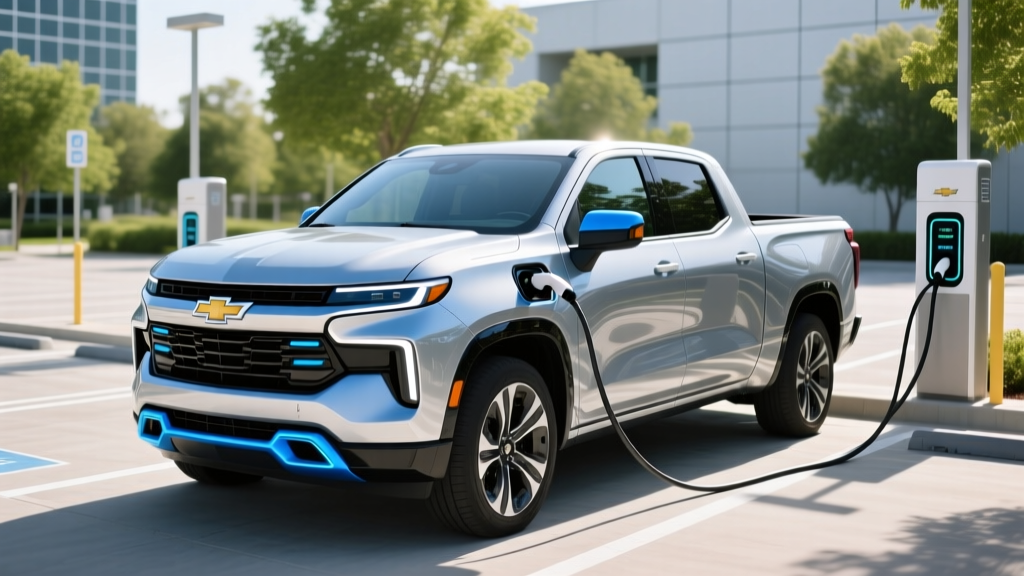
The 2025/2026 Chevrolet Silverado EV 4WT and RST variants have pushed the boundaries of electric pickup range, with the Silverado EV RST achieving an EPA-estimated 450 miles — a record for a full-size electric truck in the Chevy lineup. But range stickers don't tell the full story for truck buyers hauling, towing, or driving in cold climates.
- EPA sticker: 450 miles (RST, 2WD, standard wheels)
- Real-world highway (70 mph, no load): ~340–370 miles
- With 5,000-lb trailer: ~200–240 miles (towing cuts range roughly in half)
- Cold weather (below 32°F): ~280–320 miles (15–25% loss typical for NMC packs)
Source: fueleconomy.gov
The Silverado EV uses GM's Ultium platform with an NMC (nickel manganese cobalt) lithium-ion battery pack. The massive 240 kWh usable capacity (RST/4WT) is the largest battery GM has ever put in a production vehicle, and it's the primary reason the truck achieves its record-breaking range. However, that enormous battery also makes charging strategy critical — a full charge from empty at Level 2 would take well over 24 hours.
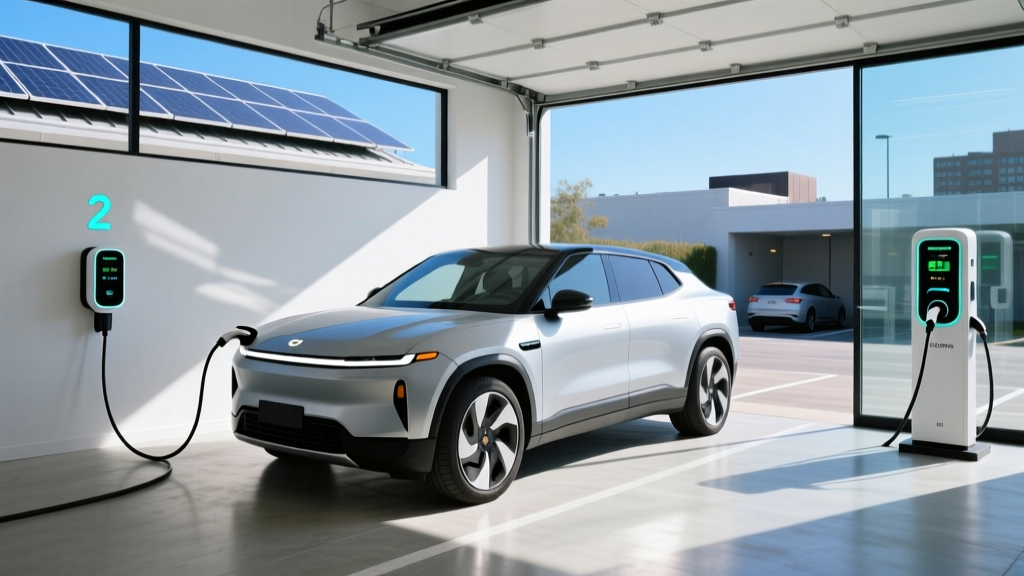
Charging Levels Explained: How Fast Can You Add Range?
Understanding the difference between kW (kilowatts — the rate of power delivery, like water pressure in a hose) and kWh (kilowatt-hours — the total energy stored, like the size of the tank) is essential. The Silverado EV's 240 kWh battery is the tank; the charger's kW rating determines how quickly you fill it.
| Level | Voltage / Amps | Max Power (kW) | Miles of Range Added per Hour | Best Use Case |
|---|---|---|---|---|
| Level 1 (120V) | 120V / 12A | ~1.4 kW | ~3–4 miles/hr | Emergency top-up only |
| Level 2 (240V) | 240V / 48A (11.5 kW) | 11.5 kW | ~30–34 miles/hr | Daily home charging |
| Level 2 (240V, 80A) | 240V / 80A (19.2 kW) | 19.2 kW | ~50–55 miles/hr | Heavy-use home / fleet |
| DC Fast Charge | 400–800V DC | Up to 350 kW (peak) | ~200+ miles in 10 min (peak) | Road trips, rapid top-up |
The Silverado EV's onboard AC charger supports up to 19.2 kW (80A at 240V), which is among the highest in any production EV. On DC fast charging, the truck can accept a peak rate of 350 kW on compatible CCS or NACS chargers — though sustained rates taper significantly above 80% state of charge (SoC), as is standard for all lithium-ion packs to protect cell longevity.
- Level 1 (1.4 kW): 10–80% in ~118 hours (impractical)
- Level 2 (11.5 kW, 48A): 10–80% in ~14.5 hours
- Level 2 (19.2 kW, 80A): 10–80% in ~8.75 hours
- DC Fast (350 kW peak): 10–80% in ~45 minutes (curve tapers above 60%)
Home Charger Installation: Requirements, Costs, and Gotchas
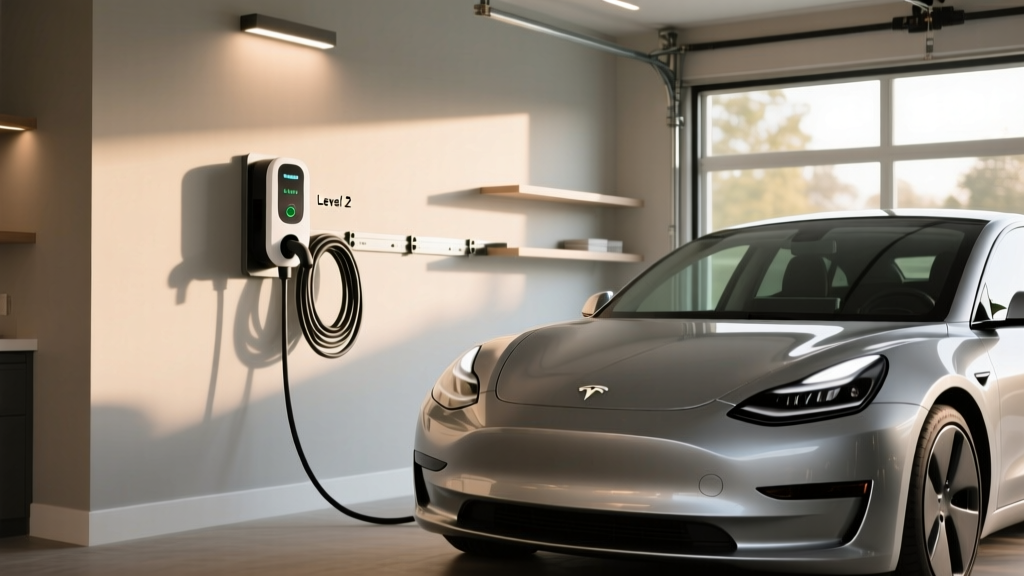
Charging a 240 kWh battery at home demands serious electrical infrastructure. Here's what the Silverado EV requires and what it will cost.
Electrical Requirements
- Level 2, 48A charging: Requires a 240V dedicated circuit with a 60A breaker (NEC code mandates circuits be rated 125% of continuous load — 48A × 1.25 = 60A).
- Level 2, 80A charging (19.2 kW): Requires a 240V dedicated circuit with a 100A breaker. This is a major draw — many homes have 150A or 200A total panel capacity, and adding a 100A dedicated EV circuit may consume half your panel's headroom.
- Wire gauge: 6 AWG copper for 60A; 3 AWG copper for 100A runs.
Panel Upgrade Considerations
Homes with 100A or 150A main panels will likely need a panel upgrade to 200A (or even 400A with a sub-panel) to support 80A EV charging alongside existing loads like electric ranges, dryers, and HVAC. A panel upgrade typically adds $1,500–$4,000 to your project and may require utility coordination.
For homes already at 200A with sufficient spare breaker slots, a 60A circuit (48A charging) is usually achievable without a panel upgrade.
| Item | Estimated Cost Range | Notes |
|---|---|---|
| Level 2 Charger (Hardware) | $400 – $1,200 | Depends on brand, amperage, smart features |
| Electrician Labor (standard install) | $600 – $2,000 | Varies by run length, wall type, accessibility |
| Permit & Inspection | $100 – $400 | Required in most jurisdictions; varies by locality |
| Electrical Panel Upgrade (if needed) | $1,500 – $4,000 | 200A to 400A upgrade; includes utility coord. |
| Total (no panel upgrade) | $1,100 – $3,600 | Typical for most modern homes |
| Total (with panel upgrade) | $2,600 – $7,600 | Older homes, high-amperage charging |
Always get a licensed electrician to perform a load calculation per NEC Article 220 before installing. Some utilities offer rebates of $250–$1,000 for EV charger installations — check your local provider.
Connector Compatibility: NACS, CCS1, and Adapter Needs
The connector landscape has shifted dramatically. For 2025–2026, GM has adopted the NACS (North American Charging Standard / Tesla-style) port on the Silverado EV, replacing the CCS1 connector used on earlier GM EVs. Here's what that means for your charging options:
| Connector | Native or Adapter? | Network Access | Max DC Fast Rate |
|---|---|---|---|
| NACS (Tesla-style) | Native port | Tesla Superchargers, Electrify America (new stalls), Rivian Adventure Network | Up to 350 kW (V4 Supercharger) |
| CCS1 | NACS-to-CCS adapter (included or ~$200–$250 aftermarket) | Electrify America, EVgo, ChargePoint DC, Ionity (EU) | Up to 350 kW |
| CHAdeMO | Not supported (no adapter available) | Nissan Leaf legacy network | N/A |
| J1772 (Level 2 AC) | NACS-to-J1772 adapter (~$100–$150) | Public Level 2 stations, most home chargers | Up to 19.2 kW AC |
For home Level 2 charging, most hardwired chargers now ship with NACS connectors natively, or include a J1772 connector with an adapter. If you already own a J1772 home charger, a simple NACS-to-J1772 adapter lets you charge without replacing equipment.
Cost to Charge: Silverado EV vs. Gas Truck Per Mile
The 240 kWh battery is large, but electricity remains far cheaper per mile than gasoline — especially when charging at home on off-peak rates.
| Scenario | Rate / Price | Cost per Mile (EV) | Cost per Mile (Gas, 19 MPG) |
|---|---|---|---|
| Home off-peak (utility TOU) | $0.09/kWh | $0.030 | $0.184 (at $3.50/gal) |
| Home standard rate | $0.14/kWh | $0.047 | $0.184 |
| Public Level 2 (ChargePoint, EVgo) | $0.30/kWh | $0.100 | $0.184 |
| DC Fast Charging (public, peak) | $0.48/kWh | $0.160 | $0.184 |
| DC Fast (Electrify America idle fees avoided) | $0.55/kWh | $0.183 | $0.184 |
At home on off-peak electricity, the Silverado EV costs roughly 83% less per mile than a comparable gas Silverado 1500 (EPA 19 MPG combined). Even on the most expensive public DC fast chargers, the EV is competitive with gas — and you eliminate oil changes, transmission fluid, and exhaust system maintenance.
The Silverado EV achieves approximately 2.0–2.2 kWh per mile in mixed driving (per EPA data), which translates to roughly 67 MPGe combined. Towing or aggressive driving pushes consumption above 3.0 kWh/mile.
Recommended Home Charging Equipment for the Silverado EV
Given the truck's massive battery, we recommend 48A minimum for practical daily charging. If your panel supports it, an 80A charger dramatically cuts overnight charge times.
ChargePoint Home Flex (NACS)
- Power Output: Up to 12 kW (50A) / 240V
- Connector: NACS native (2025+ models); J1772 with adapter
- Cable Length: 24 ft
- Smart Features: Wi-Fi, app scheduling, load sharing, Alexa
- Price: ~$599 (hardware)
- Best For: Most homes; sufficient for overnight 10–80% in ~16 hrs
Grizzl-E Smart (NACS)
- Power Output: Up to 11.5 kW (48A) / 240V
- Connector: NACS or J1772 options
- Cable Length: 24 ft
- Smart Features: OCPP 1.6, app control, outdoor-rated (NEMA 4)
- Price: ~$549
- Best For: Outdoor installs, cold climates (-40°C rated)
Tesla Wall Connector (NACS)
- Power Output: Up to 11.5 kW (48A) / 240V; supports 80A circuit
- Connector: NACS native
- Cable Length: 24 ft
- Smart Features: Wi-Fi, OTA updates, power sharing (up to 6 units), load management
- Price: ~$475
- Best For: NACS-native vehicles, best value, multi-EV households
Emporia Vue EV Charger
- Power Output: Up to 11.5 kW (48A) / 240V
- Connector: NACS or J1772
- Cable Length: 24 ft
- Smart Features: Integrated energy monitoring, solar integration, app scheduling
- Price: ~$399
- Best For: Solar homes, budget-conscious buyers, energy tracking
For Silverado EV owners who want the fastest possible home charge (19.2 kW / 80A), options are currently limited — the ChargePoint Home Flex with an 80A hardwired configuration is one of the few consumer units that supports it, but verify your electrician confirms your panel can handle a 100A breaker.
Safety, Code, and Installation Best Practices
Installing a high-amperage EV charger is not a DIY project. Here are the non-negotiable safety and code requirements:
- Dedicated circuit: Your EV charger must be on its own dedicated breaker — never shared with other appliances.
- GFCI protection: NEC 2020/2023 requires GFCI protection for all outdoor receptacles used for EV charging. Hardwired installations may bypass this requirement depending on local code — ask your electrician.
- Outdoor rating: If installing outdoors, the charger must be rated NEMA 4 (or IP55+) for weather resistance. All chargers listed above meet this standard.
- Permit required: Nearly all jurisdictions require an electrical permit for EV charger installation. Unpermitted work can void home insurance claims and complicate resale.
- Wire sizing: Undersized wire causes overheating and fire risk. Your electrician will size wire per NEC Table 310.16 based on amperage and run length.
- Surge protection: Consider a whole-panel surge protector ($200–$400 installed) — the Silverado EV's $15,000+ battery pack is sensitive to voltage spikes.
Frequently Asked Questions
How much does it cost to install a home EV charger for the Silverado EV?
Expect $1,100–$3,600 for a standard installation (48A Level 2 charger, electrician labor, permit) if your panel has sufficient capacity. If your home needs a panel upgrade from 100A/150A to 200A, add $1,500–$4,000, bringing the total to $2,600–$7,600.
How fast will each charging level add range to the Silverado EV?
Level 1 (120V) adds about 3–4 miles per hour — essentially useless for a 240 kWh pack. Level 2 at 48A (11.5 kW) adds roughly 30–34 miles per hour. Level 2 at 80A (19.2 kW) adds about 50–55 miles per hour. DC fast charging at peak 350 kW can add over 200 miles in 10 minutes, though the charge curve tapers significantly above 60% SoC.
Which connector and charger are compatible with the Silverado EV?
The 2025–2026 Silverado EV uses a native NACS port. For CCS1 public chargers, you'll need a NACS-to-CCS adapter (GM may include one; aftermarket adapters run $200–$250). For home Level 2, any NACS-equipped charger works natively; J1772 chargers work with a NACS-to-J1772 adapter (~$100–$150). CHAdeMO is not supported.
How much does charging cost per mile vs. gas?
At home on off-peak electricity ($0.09/kWh), the Silverado EV costs about $0.03/mile — roughly 83% cheaper than a gas Silverado 1500 at $3.50/gallon and 19 MPG ($0.184/mile). Even on expensive public DC fast chargers at $0.48–$0.55/kWh, the EV is competitive with gas at $0.16–$0.18/mile.
What electrical upgrades might I need for the Silverado EV?
The most common upgrade is a panel upgrade from 100A or 150A to 200A (or 400A with a sub-panel), needed when your existing panel lacks the headroom for a 60A or 100A dedicated EV circuit. Homes with electric heat, electric dryers, and electric ranges are the most likely candidates. A licensed electrician will perform a NEC Article 220 load calculation to determine if an upgrade is required.
Does the Silverado EV qualify for the federal EV tax credit?
Under current IRS §30D rules, the Silverado EV may qualify for up to $7,500 in federal tax credits, subject to buyer income caps ($150K single / $300K joint), MSRP limits ($80K for trucks), battery sourcing requirements, and point-of-sale transfer eligibility. The Silverado EV is assembled in the U.S. (Factory ZERO, Michigan), but critical mineral and battery component sourcing requirements change annually. Verify current eligibility at IRS.gov or through your dealer at point of sale.