If you're coming from a high-performance gas car like the Chevy Monte Carlo SS supercharged — with its 3.8L supercharged V6 delivering around 240 hp and roughly 18 MPG combined — the switch to an electric vehicle raises immediate questions. How much does charging actually cost per mile? What equipment do you need at home? And how do real-world charging speeds compare to a quick stop at the gas pump? This guide answers those questions with exact numbers, from kilowatt rates to installation costs, so you can plan an EV transition without guesswork.
Charging Levels Explained: Speeds, kW, and Miles Per Hour
EV charging falls into three tiers. The critical distinction: kW (kilowatts) measures power — how fast energy flows into the battery. kWh (kilowatt-hours) measures energy — the total capacity stored. Think of kW as the width of a hose and kWh as the size of the bucket. Here's how each level performs:
| Level | Voltage | Max Power (kW) | Miles of Range Per Hour | Best For |
|---|---|---|---|---|
| Level 1 | 120V AC | 1.4–1.9 kW | 3–5 mi/hr | Overnight top-ups, low-mileage drivers |
| Level 2 | 240V AC | 7.2–19.2 kW | 20–60 mi/hr | Daily home charging, full overnight recharge |
| DC Fast Charge | 400–800V DC | 50–350 kW | 150–1,000+ mi/hr (peak) | Road trips, rapid top-ups |
A few realities the spec sheet won't tell you: DC fast charging speeds peak only at low state-of-charge (SoC). A vehicle rated for 250 kW peak may only sustain that rate between 10–30% SoC, then taper progressively. By 80% SoC, most EVs have slowed to under 50 kW to protect battery health. This is the "charge curve" — and it's why manufacturers quote 10–80% times rather than 0–100% times. For a typical 75 kWh battery (like the Chevrolet Blazer EV or Hyundai Ioniq 5), expect a 10–80% session in roughly 18–25 minutes at a 150+ kW station, depending on battery temperature and preconditioning.
Home Charger Installation: Electrical Requirements and Real Costs
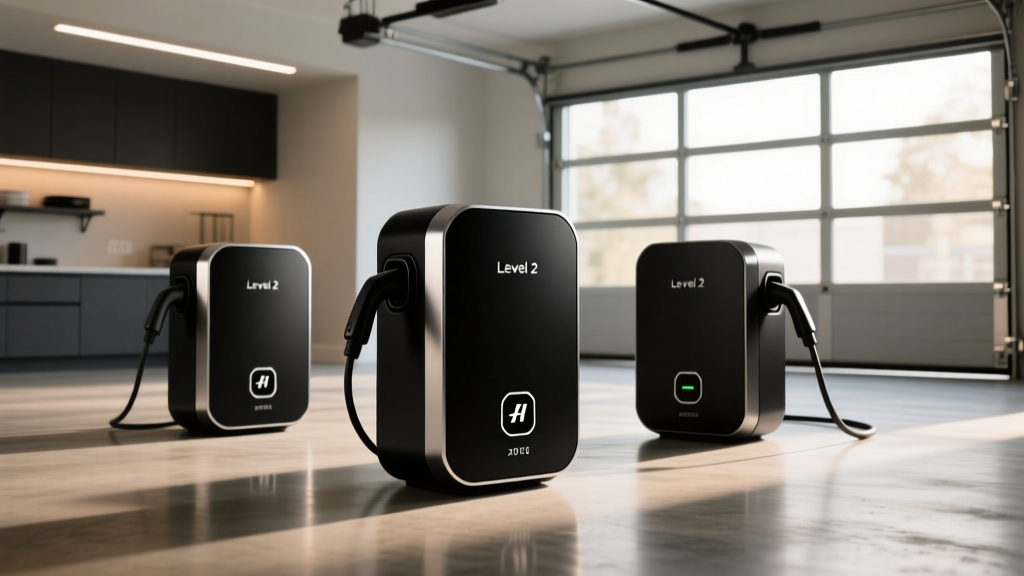
Most EV owners charge at home, and a Level 2 station is the practical standard. Here's what the electrical side actually demands:
Circuit requirements: A typical 48-amp Level 2 charger requires a dedicated 60-amp, 240-volt circuit (the National Electrical Code requires circuits rated at 125% of continuous load). The charger hardwires or plugs into a NEMA 14-50 outlet. For a 40-amp charger, you need a 50-amp circuit.
Panel capacity: Most modern homes with 200-amp service can accommodate a 60-amp EV circuit without issue. Older homes with 100-amp panels often cannot — especially if you're also running electric dryers, ranges, or HVAC. A panel upgrade to 200 amps typically runs $1,500–$3,500 before permits. Some utilities offer load-management devices that let you avoid an upgrade by throttling charger draw when other heavy appliances are running.
| Component | Typical Cost Range | Notes |
|---|---|---|
| Level 2 Charger (Equipment) | $350–$750 | 40–48A smart chargers; Wi-Fi enabled |
| Electrician Labor | $500–$2,000 | Depends on run length from panel to garage |
| Electrical Permit | $50–$250 | Varies by municipality |
| Panel Upgrade (if needed) | $1,500–$3,500 | 100A → 200A service upgrade |
| NEMA 14-50 Outlet (optional) | $100–$300 | Allows portable charger use; GFCI breaker required in many jurisdictions |
| Total (no panel upgrade) | $900–$3,000 | Most common scenario for modern homes |
| Total (with panel upgrade) | $2,400–$6,500 | Older homes with 100A service |
Always get a licensed electrician to assess your panel before purchasing equipment. Some utilities, such as those participating in the DOE's home charging resources, offer rebates that can offset $250–$1,000 of installation costs. The federal Alternative Fuel Vehicle Refueling Property Credit (§30C) may cover up to 30% of home charging equipment and installation costs (up to $1,000), subject to income and location requirements — check current IRS guidelines for eligibility.
Connector Compatibility: NACS, CCS, and CHAdeMO
As of 2026, the North American connector landscape has largely consolidated around NACS (the Tesla-designed standard now formally SAE J3400). Here's where things stand by brand:
| Connector | Brands Using It (2026 Models) | Adapter Needed? |
|---|---|---|
| NACS (J3400) | Tesla, Ford, GM (Chevrolet, Cadillac), Rivian, Volvo, Polestar, Fisker | No — native on new models; CCS-to-NACS adapters available for older EVs |
| CCS1 | Hyundai, Kia, BMW, Volkswagen, Stellantis (most 2025–2026 models still CCS; transitioning to NACS by 2027) | NACS-to-CCS adapter required for Tesla Supercharger access |
| CHAdeMO | Nissan Leaf (legacy); effectively discontinued on new models | Limited DC fast-charging network; no practical adapter path |
If you're buying a 2026 GM product — say, a Chevrolet Blazer EV or Silverado EV — it ships with a native NACS port and full access to Tesla's Supercharger network (17,000+ stalls in North America). If you're looking at a Hyundai Ioniq 5 or Kia EV6, they still use CCS1 but can access Superchargers via a manufacturer-provided or third-party adapter (typically $200–$300). Always verify adapter compatibility with your specific model year before purchasing.
Cost Per Mile: EV Charging vs. the Monte Carlo SS Supercharged
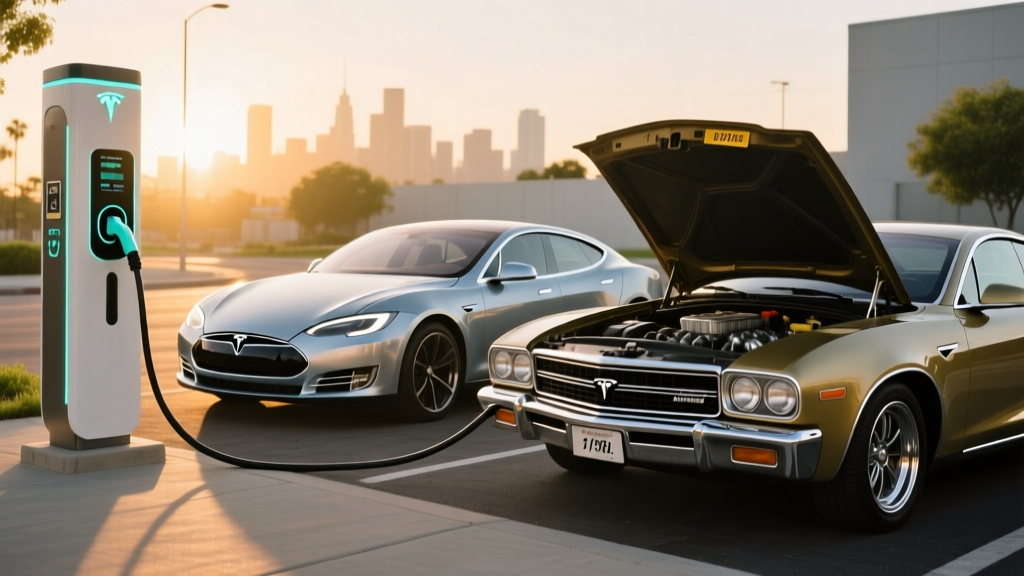
The Chevy Monte Carlo SS supercharged (produced through 2007) averages roughly 18 MPG combined with its 3.8L supercharged V6. At $3.40/gallon (a reasonable 2026 national average for regular unleaded), that's about $0.189 per mile in fuel alone. Let's compare that to EV charging scenarios using a vehicle with average efficiency of 3.0 miles per kWh (typical of a mid-size crossover EV like the Blazer EV or Model Y):
| Charging Scenario | $/kWh | Cost Per Mile | Annual Cost (12,000 mi) |
|---|---|---|---|
| Home Off-Peak (utility rate) | $0.09–$0.13 | $0.030–$0.043 | $360–$516 |
| Home Standard Rate | $0.14–$0.18 | $0.047–$0.060 | $564–$720 |
| Public Level 2 (ChargePoint, etc.) | $0.25–$0.39 | $0.083–$0.130 | $996–$1,560 |
| DC Fast Charge (Electrify America, EVgo) | $0.35–$0.55 | $0.117–$0.183 | $1,404–$2,196 |
| Monte Carlo SS Supercharged (gas) | $3.40/gal | $0.189 | $2,268 |
The takeaway: if you charge primarily at home on off-peak rates, an EV costs roughly 75–85% less per mile to "fuel" than the Monte Carlo SS. Even exclusive DC fast charging — the most expensive scenario — roughly matches or slightly beats the gas car. Most owners fall somewhere in the middle, mixing home and public charging for an effective cost of $0.05–$0.08 per mile.
• Level 1 (1.4 kW): ~37 hours — impractical for full recharge
• Level 2, 48A (11.5 kW): ~4.5 hours — overnight is plenty
• DC Fast (150 kW peak, tapered): ~25–30 minutes average — road-trip viable
• DC Fast (350 kW peak, 800V architecture): ~18 minutes — vehicles like Ioniq 5, Taycan
Recommended Home Level 2 Chargers (2026 Picks)
Not all Level 2 chargers are equal. Here are three proven units with distinct strengths:
ChargePoint Home Flex
- Power: Up to 12 kW (50A), adjustable down to 16A
- Connector: NACS or CCS (J1772 with adapter)
- Cable length: 23 feet
- Smart features: Wi-Fi, app scheduling, Alexa, load sharing
- Price: ~$550–$650
- Best for: Flexible amperage for older panels; UL-listed
Tesla Wall Connector
- Power: Up to 11.5 kW (48A)
- Connector: Native NACS (J1772 adapter included)
- Cable length: 24 feet
- Smart features: Wi-Fi, OTA updates, power sharing with multiple units, vehicle integration
- Price: ~$475
- Best for: NACS-native EVs (Tesla, GM, Ford, Rivian); cleanest ecosystem integration
Emporia Level 2 EV Charger
- Power: Up to 11.5 kW (48A)
- Connector: J1772 (NACS adapter available)
- Cable length: 24 feet
- Smart features: Wi-Fi, energy monitoring, solar integration, scheduling
- Price: ~$350–$400
- Best for: Budget-conscious buyers wanting full smart features; energy tracking
All three are hardwired or NEMA 14-50 compatible, rated for indoor or outdoor use (NEMA 4 enclosure), and carry at least a 3-year warranty. Choose based on your EV's connector, your budget, and whether you want solar-aware charging.
Safety, Code, and Installation Non-Negotiables
EV charging involves sustained high-current draw — often for 6–10 hours continuously. This is not the same load profile as a dryer that cycles on and off. Key safety and code requirements include:
- Dedicated circuit: Your EV charger must have its own breaker — never share a circuit with other appliances.
- GFCI protection: The 2020 and 2023 NEC require GFCI protection for 14-50 receptacles in garages. Hardwired installations often bypass this requirement (and avoid nuisance tripping), which is why many electricians now recommend hardwiring.
- Outdoor rating: If installing outside, ensure the charger carries a NEMA 4 or NEMA 4X rating for weather resistance.
- Wire gauge: A 60-amp circuit requires 6 AWG copper wire (or 4 AWG aluminum). Your electrician will size this correctly; don't cut corners here.
- Permit and inspection: Nearly all jurisdictions require a permit for new 240V circuits. The inspection ensures the work meets NEC code — skip it and you risk insurance denial in the event of an electrical fire.
- Load calculation: A licensed electrician should perform a whole-home load calculation per NEC Article 220 before adding a 60-amp circuit. If your panel is near capacity, a load-management device (such as the Emporia VUE with smart breaker) can dynamically throttle charger amperage to prevent panel overload without requiring a full service upgrade.
According to NHTSA's EV safety guidance, properly installed home charging equipment poses minimal risk. The vast majority of EV-related electrical incidents involve unpermitted or DIY wiring — not the vehicles or certified chargers themselves.
Charging Time Examples: What to Expect With Common Battery Sizes
Charge times depend on battery capacity (kWh), the charger's power output (kW), and the vehicle's onboard charger limit. Here are practical 10–80% estimates for three common battery sizes:
| Battery Size | Example Vehicles | Level 2 (11.5 kW) 10–80% | DC Fast (150 kW) 10–80% | DC Fast (250+ kW) 10–80% |
|---|---|---|---|---|
| 60 kWh | Chevy Equinox EV, Volvo EX30 | ~3.5 hours | ~28 minutes | ~22 minutes |
| 75–80 kWh | Tesla Model Y, Blazer EV, Ioniq 5 | ~4.5–5 hours | ~30 minutes | ~18 minutes |
| 100+ kWh | Silverado EV, F-150 Lightning (Ext.) | ~6–7 hours | ~40 minutes | ~28 minutes |
Note that vehicles with 800-volt architectures (Hyundai Ioniq 5, Kia EV6, Porsche Taycan, GM's Ultium-based vehicles on 2026+ models) sustain higher charge rates longer, reducing real-world session times versus 400V competitors with similar peak ratings. Preconditioning — warming the battery before arriving at a DC fast charger — can cut 10–80% times by 20–40% in cold weather. Most modern EVs do this automatically when you navigate to a charger.
Frequently Asked Questions
How much does it cost to install a home EV charger?
Expect $900–$3,000 for a standard Level 2 installation in a home with adequate panel capacity (200A service). If your home has a 100-amp panel and needs a service upgrade, total costs can reach $2,400–$6,500. The equipment itself (a quality smart charger) runs $350–$750, with electrician labor making up most of the remainder. Get at least two quotes and verify the electrician is licensed and will pull a permit.
How fast will each charging level add range?
Level 1 (120V) adds 3–5 miles of range per hour — enough for plug-in hybrids or low-mileage daily driving. Level 2 (240V) adds 20–60 miles per hour depending on amperage, fully recharging most EVs overnight. DC fast charging adds hundreds of miles per hour at peak rates, though the charge curve tapers significantly above 80% SoC. A 10–80% DC fast session takes 18–35 minutes for most modern EVs.
Which connector and charger is compatible with my EV?
For 2026 models: GM (Chevrolet, Cadillac), Tesla, Ford, Rivian, and Volvo use NACS natively. Hyundai, Kia, BMW, and Volkswagen still primarily use CCS1, though most are transitioning to NACS by 2027. CHAdeMO is effectively discontinued. If your EV has CCS and you want Supercharger access, a CCS-to-NACS adapter ($200–$300) bridges the gap. Always match your home charger's connector to your vehicle's native port to avoid daily adapter hassle.
How much does EV charging cost per mile compared to gas?
Home charging at off-peak utility rates ($0.09–$0.13/kWh) costs roughly $0.03–$0.04 per mile for an average-efficiency EV — about 75–85% less than fueling a 18 MPG gas car at $3.40/gallon ($0.19/mile). Public DC fast charging ($0.35–$0.55/kWh) narrows the gap to roughly $0.12–$0.18 per mile, comparable to or slightly cheaper than gas. Most EV owners charge 80%+ at home and spend $500–$800 annually on electricity versus $2,000+ on gasoline for a comparable-performance gas vehicle.
What electrical upgrades might I need for a home charger?
If your home has 200-amp electrical service and spare breaker slots, you likely need only the dedicated 60-amp circuit and charger installation. If you have 100-amp service, a panel upgrade to 200 amps ($1,500–$3,500) is typically required. Alternatives include installing a lower-amperage charger (32A/7.7 kW instead of 48A/11.5 kW) or using an automatic load-management device that throttles the charger when other heavy appliances are running — potentially avoiding the panel upgrade entirely. A licensed electrician can assess your specific situation.