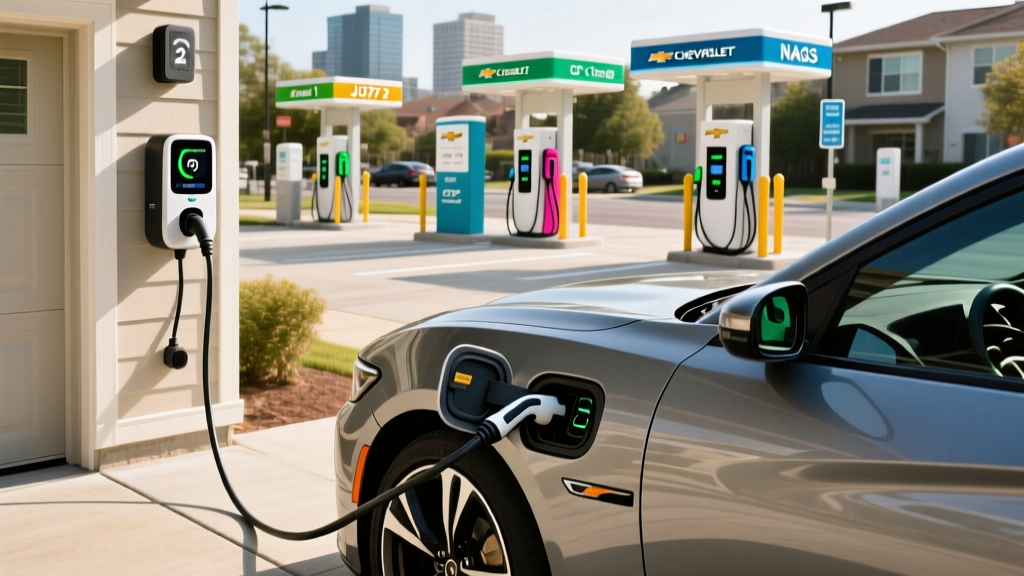
If you own or are shopping for a Chevrolet electric vehicle — whether it's the Equinox EV, Blazer EV, Silverado EV, or the refreshed Bolt EV — understanding your charging options is the single biggest factor in daily satisfaction. Chevy's current EV lineup uses the NACS (Tesla-style) connector natively on 2025+ models, while earlier models like the original Bolt EV use CCS1. This guide breaks down every charging scenario a Chevy EV owner will face, with exact kW figures, real-world charge times, home installation costs, and what you'll actually pay per mile.
Charging Levels Explained: Speeds in kW and Miles Per Hour
Every Chevy EV can use three tiers of charging. The right level depends on whether you're topping up overnight at home, grabbing a quick charge on a road trip, or trickling from a standard outlet in a pinch.
| Level | Voltage / Amps | Power (kW) | Miles of Range / Hour | Best Use Case |
|---|---|---|---|---|
| Level 1 | 120V / 12A | ~1.4 kW | 3–5 mi/hr | Overnight trickle, PHEVs, low-mileage drivers |
| Level 2 | 240V / 32–48A | 7.7–11.5 kW | 25–44 mi/hr | Daily home charging, workplace, destination |
| DC Fast | 400–800V DC | 50–350 kW (peak) | 150–1,000+ mi/hr (at peak) | Road trips, highway corridors |
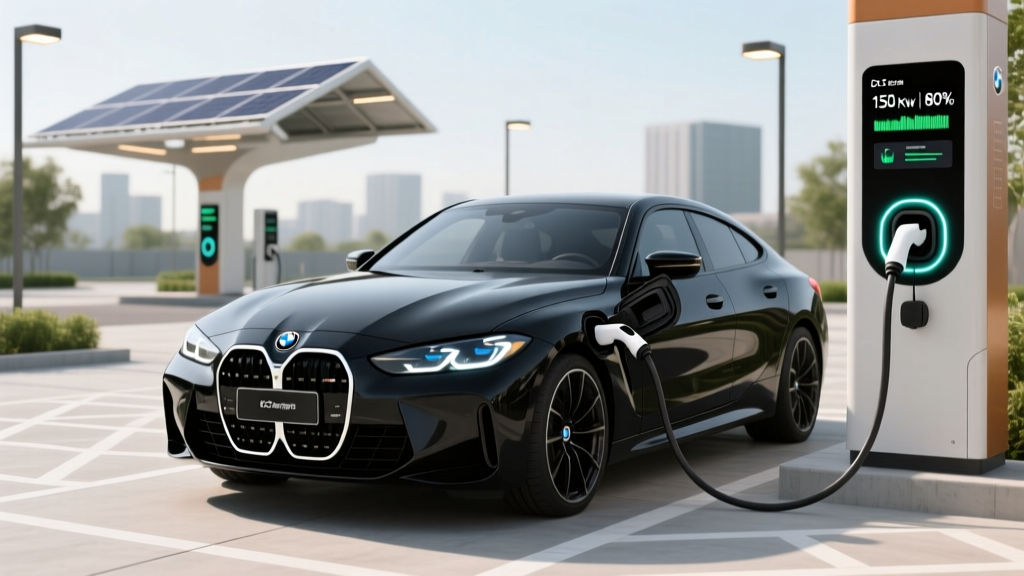
Real-world context: A Chevy Equinox EV (85 kWh usable battery, EPA 319 miles) charging on Level 2 at 11.5 kW will add roughly 40 miles of range per hour. That means a 10–80% session takes about 5.5 hours at home — perfectly suited to overnight charging. On a DC fast charger rated at 150 kW (the Equinox EV's peak acceptance rate), a 10–80% charge takes approximately 30–35 minutes, though the charge curve tapers significantly above 80% State of Charge (SoC). Expect roughly 20 minutes for 10–60%, then a noticeable slowdown as the battery management system protects cell health.
Home Charger Installation: Electrical Requirements, Costs & Panel Upgrades
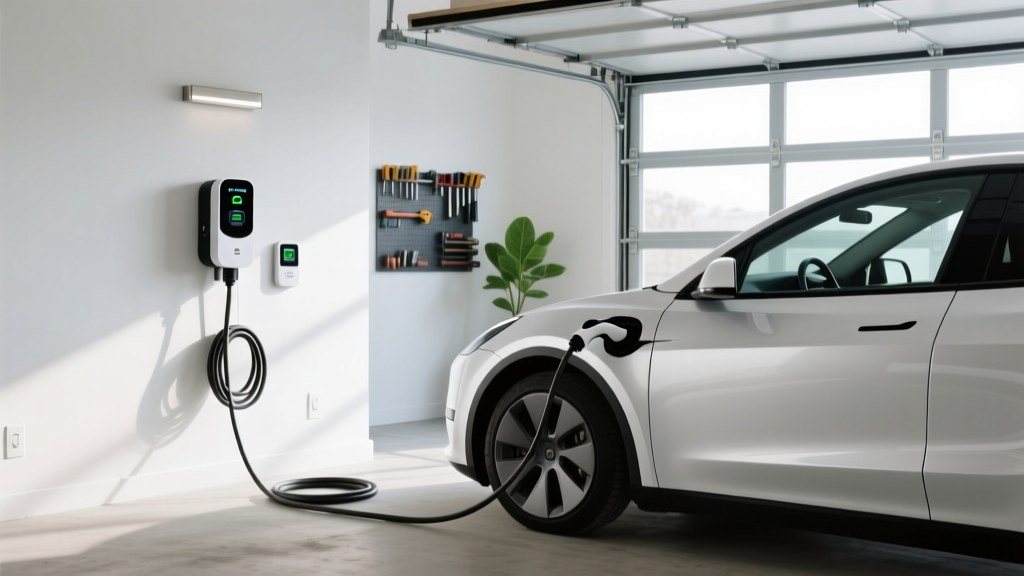
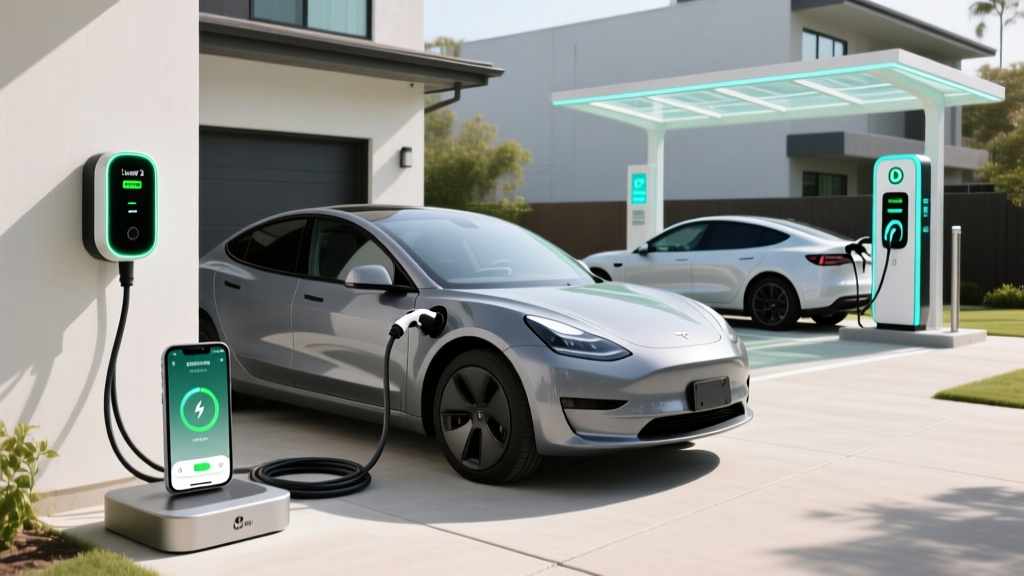
Installing a dedicated Level 2 home charger is the most impactful upgrade a Chevy EV owner can make. Here's what the project actually involves and what it costs in 2026.
Electrical Requirements
A typical Level 2 charger for a Chevy EV requires a 240V dedicated circuit — the same voltage as your electric dryer or oven. Common configurations:
- 40-amp circuit (delivers 32A continuous / 7.7 kW) — sufficient for most Chevy EVs with smaller onboard chargers
- 50-amp circuit (delivers 40A continuous / 9.6 kW) — recommended for Silverado EV and Equinox EV to maximize overnight speed
- 60-amp circuit (delivers 48A continuous / 11.5 kW) — future-proof option, requires thicker 6 AWG wire
Your charger must be hardwired or use a NEMA 14-50 outlet installed by a licensed electrician. The circuit must be dedicated — sharing with other appliances is a code violation and a fire risk.
Panel Upgrade Reality
Homes built before 2000 often have 100-amp or 150-amp electrical panels. Adding a 50-amp EV circuit to an already-loaded panel may require a panel upgrade to 200 amps, which adds $1,500–$3,000 to your project. Signs you might need one:
- Your panel is at or near capacity (electrician will do a load calculation per NEC Article 220)
- You have a Federal Pacific or Zinsco panel (known safety hazards, often flagged by insurers)
- You're also adding solar, a heat pump, or other high-draw equipment
Some utilities and states offer rebates specifically for panel upgrades tied to EV adoption — check with your local provider.
Installation Cost Breakdown
| Component | Basic Install | Complex Install |
|---|---|---|
| Level 2 charger (equipment) | $350–$600 | $500–$750 |
| Electrician labor (2–6 hrs) | $300–$600 | $800–$1,500 |
| Permit & inspection | $50–$150 | $100–$300 |
| Wire run (if panel is far from garage) | $0–$200 | $400–$1,200 |
| Panel upgrade (if needed) | N/A | $1,500–$3,000 |
| Total | $700–$1,550 | $3,300–$6,750 |
For a straightforward install (panel near garage, 200A service already in place), most Chevy EV owners spend between $1,000 and $1,800 all-in. The IRS Residential Clean Energy Credit does not cover EV chargers after 2022 for most homeowners, though some states and utilities still offer rebates of $250–$1,000 for smart Level 2 equipment.
Connector Compatibility: NACS, CCS1 & What Chevy Uses in 2026
Chevrolet's connector strategy shifted dramatically starting with the 2025 model year. Here's where each current and recent Chevy EV stands:
| Chevy Model | Model Years | Native Connector | Adapter Needed? |
|---|---|---|---|
| Bolt EV / Bolt EUV | 2017–2023 | CCS1 | CCS-to-NACS adapter for Tesla Superchargers |
| Equinox EV | 2024–2026 | NACS (2025+), CCS1 (2024) | NACS-to-CCS adapter for Electrify America / EVgo CCS stalls |
| Blazer EV | 2024–2026 | NACS (2025+), CCS1 (2024) | NACS-to-CCS adapter for non-Tesla DC networks |
| Silverado EV | 2024–2026 | NACS | NACS-to-CCS adapter for non-Tesla DC networks |
What this means in practice: If you drive a 2025+ Chevy EV with a native NACS port, you get seamless access to Tesla's Supercharger network — the largest and most reliable DC fast-charging network in North America, with over 30,000 stalls. For Electrify America, EVgo, and other CCS-based networks, you'll need a NACS-to-CCS adapter (typically $150–$250). GM provides a complimentary adapter to many 2025+ EV buyers; check with your dealer.
For Level 2 home and public AC charging, the NACS port accepts the same J1772-standard AC current via the integrated pins — no separate adapter needed for home Level 2 units with NACS connectors. If you have an older J1772 home charger, GM includes a J1772-to-NACS adapter in the vehicle.
Charging Cost Per Mile: Home, Public & DC Fast vs Gasoline
The economics of charging a Chevy EV depend heavily on where you charge. Here's a realistic breakdown using the Equinox EV (319 EPA miles, ~3.3 mi/kWh efficiency) as the baseline, compared to a comparable gas SUV averaging 28 MPG combined.
| Scenario | Rate | Cost Per kWh | Cost Per Mile |
|---|---|---|---|
| Home (off-peak utility rate) | Time-of-use plan | $0.08–$0.12 | $0.024–$0.036 |
| Home (standard rate) | Flat rate | $0.14–$0.18 | $0.042–$0.055 |
| Public Level 2 | ChargePoint / EVgo | $0.25–$0.49 | $0.075–$0.148 |
| DC Fast Charging | Tesla Supercharger / EA | $0.28–$0.48 | $0.085–$0.145 |
| Gasoline (28 MPG SUV) | $3.30/gallon (2026 avg) | — | $0.118 |
The bottom line: Charging at home on an off-peak rate costs roughly one-quarter what gasoline costs per mile. Even DC fast charging on a road trip is competitive with gas. However, if you rely exclusively on expensive public Level 2 chargers (some urban stations charge $0.49/kWh), your per-mile cost can exceed gasoline — which is why home charging access remains the single most important factor in EV economics.
For a Chevy Equinox EV driven 12,000 miles per year with 80% home charging at $0.12/kWh and 20% DC fast charging at $0.38/kWh, the annual "fuel" cost is approximately $530. The equivalent gas SUV at 28 MPG and $3.30/gallon costs about $1,414 — a savings of roughly $884 per year for the EV.
Charge Time Examples: 10–80% for Current Chevy EVs
Charge times depend on both the vehicle's maximum acceptance rate and the charger's output. The vehicle will only draw what it's designed to accept, even at a 350 kW station.
| Chevy Model | Battery (kWh usable) | Peak DC Rate (kW) | 10–80% DC Fast | 10–80% Level 2 (11.5 kW) |
|---|---|---|---|---|
| Bolt EV (2022–2023) | 65 kWh | 55 kW | ~60 min | ~5.5 hrs |
| Equinox EV (2025) | 85 kWh | 150 kW | ~30 min | ~5.5 hrs |
| Blazer EV (2025) | 102 kWh | 190 kW | ~28 min | ~7 hrs |
| Silverado EV (2025) | 200 kWh (Max Range) | 350 kW | ~25 min | ~14 hrs |
Charge curve reality check: Those peak kW figures apply only between roughly 10–40% SoC. Above 60%, the charge rate tapers to protect battery health. On the Silverado EV at a 350 kW station, you might see peak rates near 300 kW early in the session, dropping to under 100 kW past 70%. This is why 10–80% times are more meaningful than "peak kW" alone.
Best Home Chargers for Chevy EVs: 2026 Equipment Picks
These Level 2 chargers pair well with Chevy's current lineup. All support NACS natively or via included adapters, and all are UL-listed for safety.
ChargePoint Home Flex (NACS)
- Power: Up to 11.5 kW (48A) on a 60A circuit
- Connector: Native NACS (2025+ version)
- Cable length: 23 feet
- Smart features: Wi-Fi, app scheduling, Alexa, utility demand-response
- Price: ~$599
Best for: Most Chevy EV owners. Flexible amperage via DIP switches lets you match your circuit.
Tesla Wall Connector (NACS)
- Power: Up to 11.5 kW (48A)
- Connector: Native NACS
- Cable length: 24 feet
- Smart features: Wi-Fi, OTA updates, Power-Sharing (multiple units on one circuit), load management
- Price: ~$475
Best for: Chevy EV owners with NACS ports who want the most affordable smart charger. Fully compatible with 2025+ Equinox, Blazer, and Silverado EV.
Grizzl-E Smart (NACS)
- Power: Up to 9.6 kW (40A) on a 50A circuit
- Connector: NACS (2025+ version)
- Cable length: 24 feet
- Smart features: OCPP-compatible, works with multiple apps, adjustable amperage
- Price: ~$449
Best for: Outdoor installations. IP67-rated, built in Canada for extreme cold. Excellent for driveway mounting in harsh climates.
Safety, Electrical Code & Permitting Essentials
EV charging involves sustained high-current draw — often 8+ hours at a time. This is fundamentally different from short-burst appliances like microwaves. Proper installation isn't optional; it's a safety requirement.
- Dedicated circuit: Your Level 2 charger must have its own breaker. Sharing a circuit with other loads violates NEC Article 625 and creates overheating risk.
- GFCI protection: NEC 2020+ requires GFCI (Ground Fault Circuit Interrupter) protection for all EV charging outlets. Hardwired installations may have different requirements — your electrician will ensure compliance with your local code.
- Outdoor rating: If your charger is mounted outside, it must be rated for outdoor use (look for NEMA 4 or IP65/IP67 ratings). The connector holster should keep the plug face protected from rain and debris.
- Permit and inspection: Most jurisdictions require an electrical permit for a new 240V circuit. The inspection verifies wire gauge, breaker sizing, grounding, and code compliance. Don't skip this — unpermitted work can void homeowner's insurance claims.
- Wire gauge: A 50-amp circuit requires 6 AWG copper wire for runs up to ~50 feet. Longer runs may need 4 AWG to prevent voltage drop. Your electrician calculates this based on your specific layout.
For authoritative guidance on EV charging electrical safety, the National Fire Protection Association's NEC Article 625 governs all EV charging equipment installation in the United States.
Frequently Asked Questions
How much does it cost to install a home EV charger for my Chevy?
A straightforward Level 2 installation (200A panel, short wire run, no panel upgrade) typically costs $1,000–$1,800 including equipment, electrician labor, and permit. If your home needs a panel upgrade to 200A service, total costs can reach $3,500–$6,750. Always get 2–3 quotes from licensed electricians who have specific EV charger installation experience.
How fast will each charging level add range to my Chevy EV?
Level 1 (120V) adds 3–5 miles per hour — enough for PHEVs or very low daily mileage. Level 2 (240V) adds 25–44 miles per hour depending on amperage, fully replenishing most Chevy EVs overnight. DC fast charging adds 150+ miles in 20–30 minutes at peak rates, though the charge curve tapers above 60–70% SoC.
Which connector and charger is compatible with my Chevy EV?
2025+ Chevy EVs (Equinox, Blazer, Silverado) use the NACS connector natively and can charge at Tesla Superchargers without an adapter. The 2017–2023 Bolt EV/EUV uses CCS1 and needs a CCS-to-NACS adapter for Tesla Supercharger access. For home Level 2 charging, all current Chevy EVs accept NACS or J1772 (via included adapter).
How much does charging cost per mile compared to gas?
Home charging at off-peak rates ($0.08–$0.12/kWh) costs approximately $0.025–$0.036 per mile in a Chevy Equinox EV — about one-quarter the cost of a 28 MPG gas SUV at $3.30/gallon ($0.118/mile). Public DC fast charging ($0.28–$0.48/kWh) costs $0.085–$0.145 per mile, still competitive with gasoline.
What electrical upgrades might I need for a home charger?
If your home has a 200-amp electrical panel with available capacity, you likely need only a new dedicated 50- or 60-amp breaker and a wire run to your garage or driveway. Homes with 100A or 150A panels, older Federal Pacific/Zinsco panels, or panels already near capacity may need a panel upgrade to 200A ($1,500–$3,000). A licensed electrician performs a NEC Article 220 load calculation to determine your specific needs.
Can I use a Tesla Supercharger with my Chevy EV?
Yes — if your Chevy EV has a native NACS port (2025+ Equinox EV, Blazer EV, Silverado EV), you can plug directly into any Tesla Supercharger V3 (150 kW) or V4 (up to 350 kW) stall. GM has enabled Supercharger access through the myChevrolet app and OnStar integration. Bolt EV owners with CCS1 ports can use Tesla Superchargers with a GM-approved CCS-to-NACS adapter, though not all Supercharger stalls may be accessible due to cable-reach limitations for non-Tesla vehicles.