If you've spent years wringing every ounce of boost out of a 2.0L supercharged Ecotec in a 2005 Chevy Cobalt SS, the jump to an electric vehicle is going to feel like a different kind of performance. Instant torque, no supercharger whine to rebuild, and—critically—a fuel source you can tap at home while you sleep. But the transition from gas pumps to charging plugs comes with a learning curve that catches many first-time EV buyers off guard.
This guide is built for drivers coming from the world of internal combustion—especially enthusiasts who understand forced induction, power curves, and mechanical complexity—and want to know exactly what home charging, public networks, and electrical requirements look like in 2026.
Charging Levels Explained: Speeds, Power, and What You Actually Get
EV charging is categorized into three levels, each defined by its power delivery in kilowatts (kW). Power (kW) is the rate of energy transfer—think of it like water pressure in a hose. Energy (kWh) is the total amount stored in your battery—think of it like the size of the tank. These terms are not interchangeable, and confusing them is the single most common mistake new EV owners make.
| Level | Voltage | Typical Power (kW) | Miles of Range Added Per Hour | Best Use Case |
|---|---|---|---|---|
| Level 1 (120V) | 120V AC | 1.0–1.4 kW | 3–5 miles | Overnight top-off, PHEVs, low-mileage drivers |
| Level 2 (240V) | 240V AC | 3.3–19.2 kW | 12–70 miles | Daily home charging, workplace, destinations |
| DC Fast Charging | 400–800V DC | 50–350+ kW | 150–1,200+ miles/hr equivalent | Road trips, quick top-ups on the go |
Level 1 uses a standard household 120V outlet. It comes free with most EVs (the mobile charging cord). For a 75 kWh battery, a full charge from empty takes 50+ hours—impractical for most BEVs but fine for a PHEV with a 30–40 mile electric range.
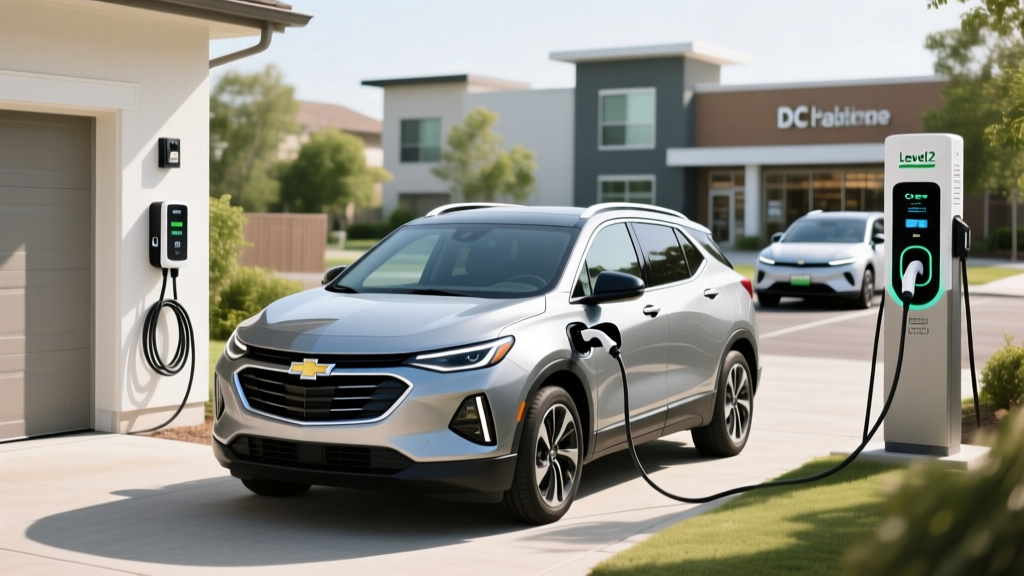
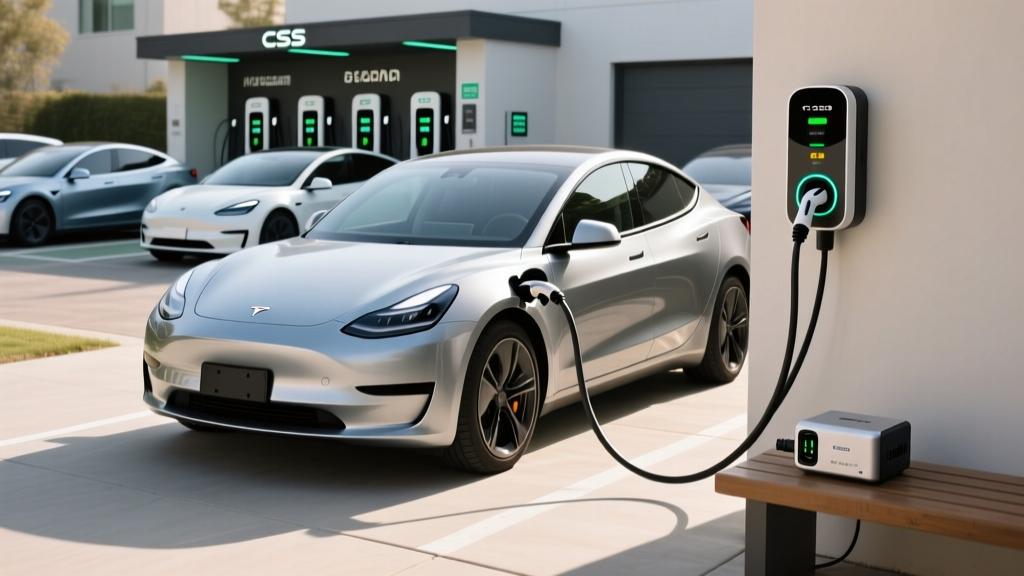
Level 2 is the home-charging standard. A 240V circuit—the same voltage as your dryer or oven—delivers enough power to fully recharge most EVs overnight. A 48-amp Level 2 charger on a 60-amp circuit delivers up to 11.5 kW, adding roughly 40–45 miles of range per hour. For a 75 kWh battery starting at 20%, you'd reach 80% in about 4–5 hours.
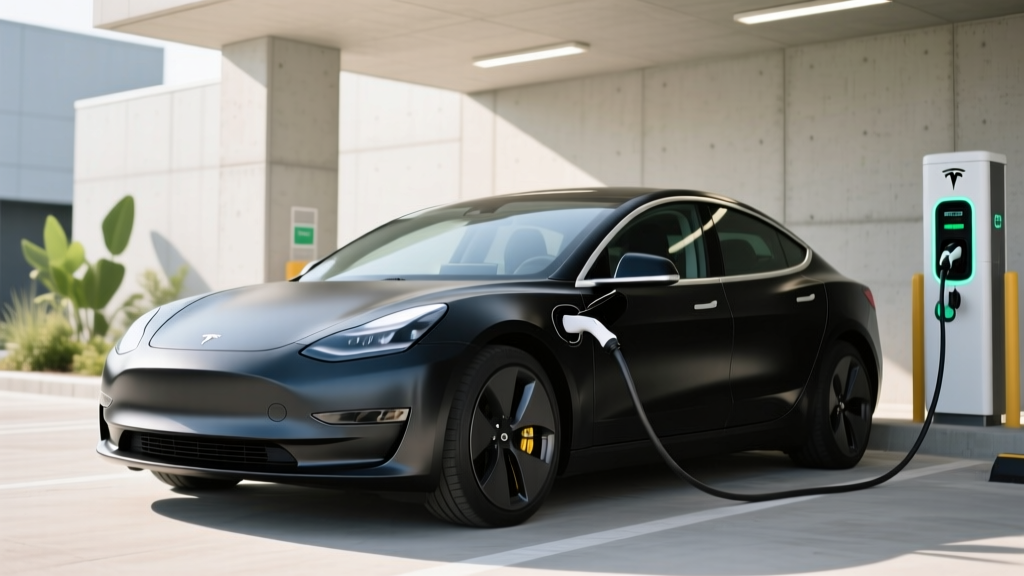
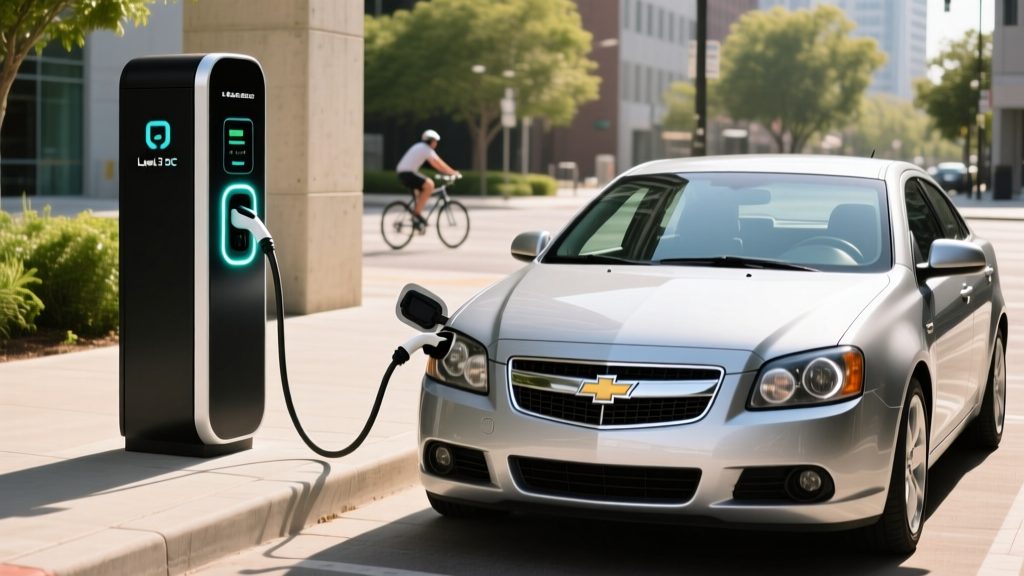
DC Fast Charging bypasses the vehicle's onboard charger entirely and feeds DC current straight to the battery. Peak rates of 250–350 kW can take a battery from 10% to 80% in 15–25 minutes. However, charging speed tapers significantly above 80% to protect battery health—so the last 20% can take as long as the first 60%.
- 60 kWh battery (e.g., base Nissan Ariya): ~20 min at a 150 kW DCFC, ~5.5 hours at 11.5 kW Level 2
- 82 kWh battery (e.g., Tesla Model Y Long Range): ~18 min at a 250 kW Supercharger, ~7 hours at 11.5 kW Level 2
- 100 kWh battery (e.g., Ford F-150 Lightning Extended Range): ~25 min at a 350 kW DCFC, ~8.5 hours at 11.5 kW Level 2
How Much Does It Cost to Install a Home EV Charger?
This is the question that stops most prospective EV buyers. The answer varies wildly depending on your home's electrical panel, the distance from the panel to your garage or driveway, and local permit costs. Here's a realistic breakdown for a typical Level 2, 48-amp wall-mounted charger installation in 2026:
| Component | Low Estimate | High Estimate | Notes |
|---|---|---|---|
| Level 2 Charger (Equipment) | $350 | $750 | 48A smart charger, 18–25 ft cable, Wi-Fi enabled |
| Electrician Labor | $400 | $1,500 | Depends on run length, wall type, conduit needs |
| Electrical Permit | $50 | $300 | Varies by municipality; some jurisdictions waive for EV installs |
| Panel Upgrade (if needed) | $1,500 | $4,000+ | Required if your panel lacks capacity or open breaker slots |
| Total (No Panel Upgrade) | $800 | $2,550 | |
| Total (With Panel Upgrade) | $2,300 | $6,550+ |
The panel upgrade gotcha: Many homes built before 2005—the same era as your Cobalt SS—have 100-amp or 150-amp electrical panels. Adding a 60-amp dedicated circuit for a 48-amp Level 2 charger may exceed your panel's capacity, especially if you're already running central A/C, an electric range, and a dryer. An electrician will perform a load calculation to determine whether a panel upgrade to 200 amps is required. Don't skip this step—overloading a panel is a fire hazard and a code violation.
Some utilities and states offer rebates that offset installation costs by $250–$1,000. Check your local utility's EV program page and the Alternative Fuels Data Center state law database for current incentives.
Which Connector Is Compatible with My EV?
The connector landscape has consolidated significantly by 2026, but it's still important to know what you're plugging into. Here's the current state of play:
| Connector | Used By | Level 2 (AC) | DC Fast Charging | Status in 2026 |
|---|---|---|---|---|
| NACS (North American Charging Standard / Tesla) | Tesla (all), Ford, GM, Rivian, Volvo, Polestar, and most new OEMs | Yes | Yes (up to 350+ kW) | Becoming the dominant North American standard |
| CCS1 (Combined Charging System) | Hyundai, Kia (some), VW ID.4, BMW iX, legacy models | Yes (via J1772) | Yes (up to 350 kW) | Phasing out but widely supported at existing stations |
| CHAdeMO | Nissan Leaf (older), Mitsubishi Outlander PHEV | No | Yes (up to 100 kW typically) | Legacy; no new vehicles use it |
| J1772 | All non-Tesla EVs (Level 2 AC only) | Yes | No | Standard for Level 2; NACS adapters available |
What this means practically: If you buy a new 2025–2026 Ford, GM, or Rivian, it will ship with a NACS port. For Level 2 home charging, most smart chargers now ship with either a NACS or J1772 plug. If your charger has J1772 and your car has NACS, a simple adapter (typically $50–$100) bridges the gap. For DC fast charging, NACS-equipped vehicles can access the full Tesla Supercharger network—over 25,000 stalls in North America as of 2026—plus Electrify America and other networks via adapters.
If you're buying a used EV with a CHAdeMO port (like a 2018–2023 Nissan Leaf), be aware that new CHAdeMO infrastructure is essentially nonexistent. You'll rely on CCS/NACS stations with an adapter, and fast-charging speeds will be capped at the vehicle's onboard limit (typically 50–100 kW).
Cost to Charge: $/kWh and Cost Per Mile vs. Gas
Coming from a Cobalt SS that got roughly 25 MPG combined (and considerably less when you were enjoying that Eaton M62 supercharger), the economics of EV charging are where the real ownership advantage emerges.
| Scenario | Average $/kWh or $/gallon | Vehicle Efficiency | Cost Per Mile |
|---|---|---|---|
| Home Level 2 (off-peak utility rate) | $0.10–$0.14/kWh | 3.5 miles/kWh (avg BEV) | $0.03–$0.04 |
| Home Level 2 (standard rate) | $0.14–$0.18/kWh | 3.5 miles/kWh | $0.04–$0.05 |
| Public Level 2 (network pricing) | $0.20–$0.35/kWh | 3.5 miles/kWh | $0.06–$0.10 |
| DC Fast Charging (public) | $0.30–$0.55/kWh | 3.0 miles/kWh (highway) | $0.10–$0.18 |
| Gasoline (2026 national avg ~$3.40/gal) | $3.40/gallon | 25 MPG (Cobalt SS avg) | $0.136 |
| Gasoline (premium, 28 MPG highway) | $3.80/gallon | 28 MPG | $0.136 |
At home with off-peak rates, you're paying roughly $0.03–$0.04 per mile—about one-quarter the cost of fueling that Cobalt SS. Even at public DC fast chargers, you're typically matching or slightly beating gas costs. The savings are most dramatic for drivers who can charge at home overnight, where a full "tank" (75 kWh) costs $7.50–$12.00 versus $45–$60 for a tank of premium.
Many utilities offer time-of-use (TOU) rates that make overnight charging even cheaper. If your utility offers a $0.08/kWh super-off-peak rate between midnight and 6 AM, your cost per mile drops to roughly $0.023.
Recommended Home Level 2 Chargers for 2026
Not all Level 2 chargers are created equal. Here are four proven options that cover different budgets and needs, all supporting at least 48 amps on a 60-amp circuit:
Tesla Wall Connector (Gen 4)
- Power: 11.5 kW (48A)
- Connector: NACS native; J1772 adapter included
- Cable: 24 ft
- Smart features: Wi-Fi, OTA updates, power sharing (up to 6 units on one circuit), access control
- Price: ~$475
- Best for: NACS-vehicle owners, multi-EV households
ChargePoint Home Flex
- Power: Up to 12 kW (50A, configurable down to 16A)
- Connector: J1772 or NACS (selectable at purchase)
- Cable: 23 ft
- Smart features: Wi-Fi, app scheduling, Alexa integration, flexible amperage to match your circuit
- Price: ~$550–$650
- Best for: Homes with limited panel capacity (can dial down to 32A/40A circuit)
Emporia Vue Level 2 Charger
- Power: 11.5 kW (48A)
- Connector: J1772 (NACS adapter available)
- Cable: 24 ft
- Smart features: Wi-Fi, energy monitoring, solar integration, scheduling
- Price: ~$399
- Best for: Budget-conscious buyers, solar-panel owners
Grizzl-E Smart
- Power: 10 kW (40A)
- Connector: J1772 or NACS
- Cable: 24 ft
- Smart features: Wi-Fi, OCPP compatibility, adjustable amperage, built-in holster
- Price: ~$449
- Best for: Cold-climate durability (rated to -40°F), outdoor installs
Safety, Code, and Electrical Requirements
A Level 2 charger installation is not a DIY project unless you're a licensed electrician. Here's what the National Electrical Code (NEC) and most local jurisdictions require:
- Dedicated circuit: Your charger needs its own breaker—no sharing with other appliances. A 48-amp charger requires a 60-amp breaker (NEC requires circuits to be rated at 125% of continuous load).
- GFCI protection: The 2020 NEC and later require GFCI (Ground Fault Circuit Interrupter) protection for EV charging circuits. Some chargers have built-in GFCI; if yours doesn't, your electrician will install a GFCI breaker.
- Outdoor rating: If your charger is installed outside (carport, driveway pedestal, or exterior wall), it must be rated for outdoor use. Look for NEMA 4 or NEMA 4X enclosure ratings, which protect against rain, dust, and ice.
- Wire gauge: A 60-amp circuit typically requires 6 AWG copper wire (or 4 AWG aluminum). Longer runs may need thicker wire to prevent voltage drop.
- Permit and inspection: Virtually all jurisdictions require a permit for a new 240V circuit. The inspection ensures the installation meets code—don't skip this, as unpermitted work can void insurance claims and create resale issues.
Public Charging: What to Expect on Road Trips
Home charging handles 85–95% of most EV owners' needs. But when you take a road trip—the same weekend drives where the Cobalt SS really shined—you'll use DC fast charging networks. Here's the 2026 landscape:
- Tesla Supercharger network: Now open to NACS-equipped Fords, GMs, Rivians, and others via the native port. Over 25,000 stalls, V4 cabinets delivering up to 350 kW. Reliability remains the industry benchmark—consistently above 97% uptime.
- Electrify America: Largest non-Tesla DCFC network, with 4,000+ stalls. CCS1 and NACS connectors available at newer stations. Pricing typically $0.35–$0.48/kWh. Reliability has improved but still trails Tesla.
- EVgo / ChargePoint / others: Growing networks, often co-located at shopping centers and highway rest stops. Pricing and reliability vary by location.
Preconditioning matters: Most modern EVs will warm the battery to optimal charging temperature when you navigate to a DC fast charger. This is called preconditioning, and it can shave 5–10 minutes off your 10–80% charge time in cold weather. If your EV supports it, always use the in-car navigation to set the charger as your destination—it triggers preconditioning automatically.
Frequently Asked Questions
How much does it cost to install a home EV charger?
A typical Level 2 home charger installation runs $800–$2,550 without a panel upgrade, and $2,300–$6,550+ if your electrical panel needs upgrading to 200 amps. The equipment itself costs $350–$750; the rest is electrician labor, wire, conduit, and permits.
How fast will each charging level add range?
Level 1 (120V) adds 3–5 miles per hour. Level 2 (240V, 48A) adds roughly 40–45 miles per hour. DC fast charging at 250 kW can add 200+ miles in 15–20 minutes, though speed tapers significantly above 80% state of charge.
Which connector/charger is compatible with my EV?
In 2026, most new EVs use NACS (Tesla's connector, now the North American standard). Hyundai, Kia, and some legacy models still use CCS1. Older Nissan Leafs use CHAdeMO. For home Level 2 charging, a J1772 charger works with CCS vehicles natively and NACS vehicles with an adapter. Check your vehicle's charge port before purchasing a charger.
How much does charging cost per mile vs gas?
Home charging at off-peak rates costs roughly $0.03–$0.04 per mile. Public DC fast charging costs $0.10–$0.18 per mile. A 25 MPG gas car at $3.40/gallon costs $0.136 per mile. Home charging is consistently 3–4x cheaper per mile than gasoline.
What electrical upgrades might I need?
The most common upgrade is a panel capacity increase from 100A or 150A to 200A, which costs $1,500–$4,000+. You may also need a new breaker slot, upgraded wire from the utility meter, or a whole-home surge protector. A licensed electrician's load calculation will determine exactly what your home requires.