Understanding Chevy Bolt kWh Per Mile Efficiency
If you own or are shopping for a Chevy Bolt, one of the most practical metrics to master is kWh per mile — the measure of how much electrical energy the car consumes to travel one mile. For the 2025 Chevy Bolt EV, the EPA combined efficiency rating translates to approximately 0.30–0.33 kWh per mile (or 120–115 MPGe). The upcoming next-generation Bolt (built on GM's Ultium platform, expected late 2025/early 2026) aims for similar or slightly improved figures thanks to a lighter battery pack and updated powertrain.
This number matters because it directly determines your fuel cost, your charging time, and how you size a home charger. Let's break down exactly what the Bolt's efficiency means for your wallet — and how to charge it at every level.
Bolt Efficiency by the Numbers: EPA and Real-World
According to fueleconomy.gov, the Chevy Bolt EV achieves:
- EPA Combined: 120 MPGe (~0.30 kWh/mi)
- City: 131 MPGe (~0.28 kWh/mi)
- Highway: 109 MPGe (~0.34 kWh/mi)
- EPA Range: 259 miles (65 kWh battery, ~58 kWh usable)
Charging Levels Explained: Speeds, kW, and Miles Per Hour
Every Bolt owner needs to understand the three charging levels. Here's how each translates to real range added per hour, using the Bolt's ~0.31 kWh/mi average efficiency:
| Level | Voltage | Power (kW) | Miles of Range Per Hour | Typical Use Case |
|---|---|---|---|---|
| Level 1 | 120V AC | 1.2–1.4 kW | ~4 miles/hr | Overnight top-up, emergency |
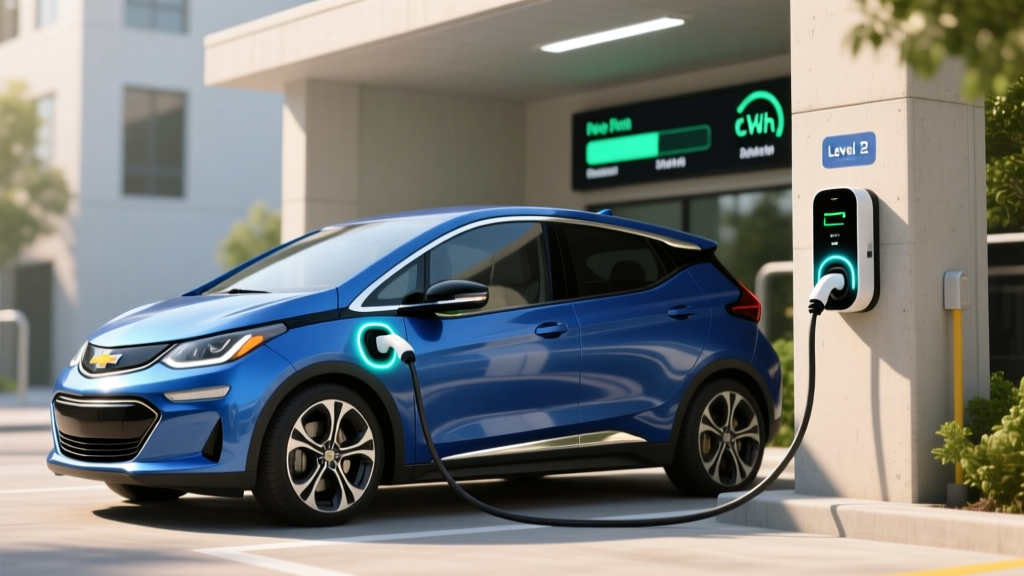
| Level 2 | 240V AC | 7.2–11.5 kW | ~23–37 miles/hr | Home daily charging, workplace |
| DC Fast Charge | 400V+ DC | Up to 55 kW (CCS) | ~140–180 miles/hr (peak) | Road trips, quick top-ups |
Important charging-curve reality: The Bolt's DC fast-charging peak of ~55 kW only sustains from roughly 10–55% state of charge (SoC). Above 60%, the rate tapers significantly. A 10–80% DC fast charge takes approximately 55–65 minutes — slower than many competitors. This is the Bolt's most-cited charging limitation. For daily driving, Level 2 at home is where 90%+ of your charging should happen.
Charging Time Examples for the Bolt's 65 kWh Battery
- Level 1 (1.4 kW), 10–80%: ~32 hours — practical only for overnight top-ups of 20–30 miles
- Level 2 (11.5 kW), 10–80%: ~4.5 hours — easily covers a full overnight charge
- Level 2 (7.2 kW), 10–80%: ~6.5 hours — still overnight-friendly
- DC Fast (55 kW peak), 10–80%: ~55–65 minutes with taper
Home Charger Installation: Electrical Requirements and Costs
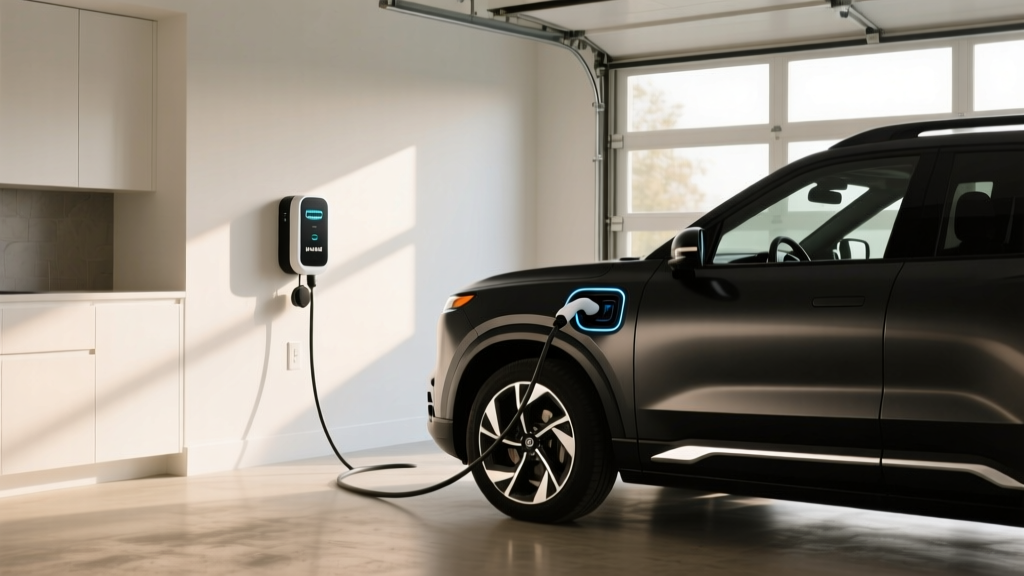
Installing a Level 2 home charger for your Bolt is one of the highest-impact ownership upgrades. Here's what's involved electrically:
Electrical Requirements
- Circuit: A dedicated 240V circuit — typically 40A or 50A (NEMA 14-50 outlet or hardwired)
- Breaker: For a 40A charger, you need a 50A breaker (NEC requires 125% headroom for continuous loads)
- Wire gauge: 6 AWG copper for 50A circuits (your electrician will confirm based on run length)
- Panel capacity: Your main electrical panel must have spare amperage. Most modern 200A panels handle a 50A EV circuit without issue. Older 100A panels may require a panel upgrade to 200A — a significant added cost.
- GFCI protection: NEC 2020+ requires GFCI protection for outdoor receptacles; hardwired chargers often avoid this requirement
- Permit: Most jurisdictions require an electrical permit for new 240V circuits ($50–$200)
How Much Does It Cost to Install a Home EV Charger?
| Item | Low End | High End | Notes |
|---|---|---|---|
| Level 2 Charger (Equipment) | $300 | $700 | 32A–48A, 240V, NACS or CCS connector |
| Electrician Labor | $400 | $1,500 | Depends on panel proximity, wall/foundation type |
| Electrical Permit | $50 | $200 | Varies by municipality |
| Panel Upgrade (if needed) | $1,500 | $3,500 | Only if upgrading from 100A to 200A service |
| Total (No Panel Upgrade) | $750 | $2,400 | Typical scenario for most homes |
| Total (With Panel Upgrade) | $2,250 | $5,900 | Older homes with 100A service |
Always get 2–3 quotes from licensed electricians. Some utilities offer rebates of $250–$500 for Level 2 charger installation — check with your local provider. The IRS Residential Clean Energy Credit (§25C) may cover 30% of charger equipment and installation costs, up to $1,000, for qualifying homes. Confirm eligibility with a tax professional, as income and location restrictions apply.
Connector Compatibility: What Plugs Into the Chevy Bolt?
The Bolt's connector depends on model year and charging level:
| Connector | Charging Type | Bolt Compatibility | Notes |
|---|---|---|---|
| J1772 | Level 1 & Level 2 (AC) | All Bolt EV/EUV model years | Standard AC connector; included mobile cord works with 120V/240V |
| CCS1 (Combined Charging System) | DC Fast Charge | 2017–2025 Bolt EV/EUV | J1772 + two DC pins below; ~55 kW peak |
| NACS (Tesla-style) | Level 2 & DC Fast | Next-gen Bolt (expected 2026+) | GM adopted NACS; future Bolts will have native NACS port |
| CHAdeMO | DC Fast Charge | Not compatible | Nissan Leaf standard; no Bolt support |
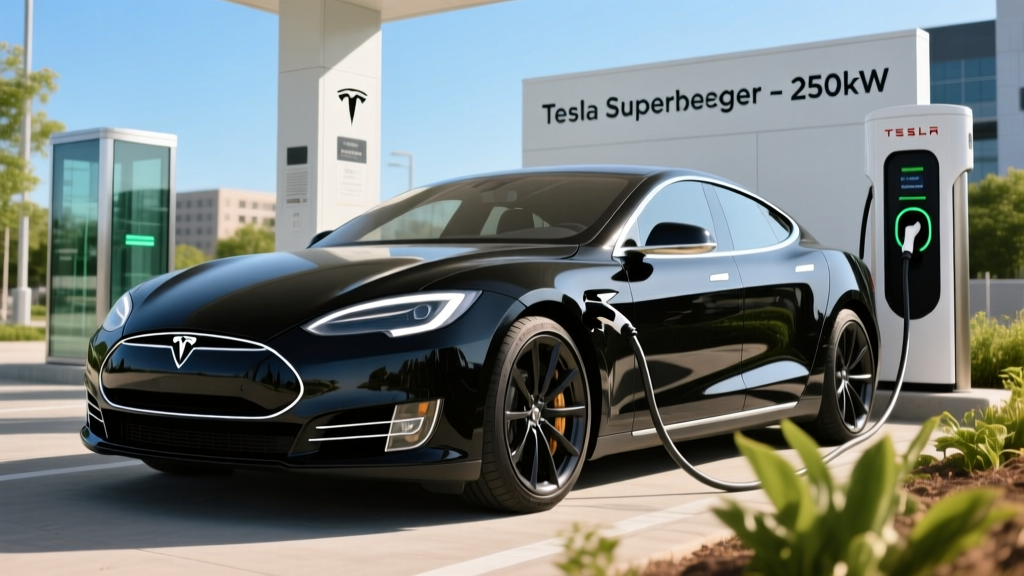
For current Bolt owners wanting Tesla Supercharger access: GM has rolled out Supercharger access for CCS-equipped GM EVs via an approved NACS-to-CCS adapter (approximately $200–$250 from authorized suppliers). You'll need to activate access through the myChevrolet app. This dramatically expands your DC fast-charging network — Tesla's Supercharger network has far better uptime than most third-party CCS networks.
Charging Cost Per Mile: Bolt vs Gas Car
This is where the Bolt's 0.30–0.33 kWh/mi efficiency translates to real savings. Here's a cost comparison across common charging scenarios:
| Scenario | Rate ($/kWh or $/gal) | Cost Per Mile (Bolt) | Equivalent Gas Car (30 MPG @ $3.50/gal) |
|---|---|---|---|
| Home — Off-Peak TOU Rate | $0.10/kWh | $0.031/mi | $0.117/mi |
| Home — Average Residential | $0.16/kWh | $0.050/mi | $0.117/mi |
| Home — Peak TOU Rate | $0.28/kWh | $0.087/mi | $0.117/mi |
| Public Level 2 (ChargePoint, etc.) | $0.25–$0.40/kWh | $0.078–$0.124/mi | $0.117/mi |
| DC Fast (Electrify America) | $0.35–$0.55/kWh | $0.109–$0.171/mi | $0.117/mi |
| Tesla Supercharger (via adapter) | $0.28–$0.40/kWh | $0.087–$0.124/mi | $0.117/mi |
The bottom line: If you charge primarily at home on an off-peak rate, the Bolt costs roughly $0.03–$0.05 per mile to "fuel" — about one-third to one-half the cost of a 30 MPG gas car at $3.50/gallon. Over 12,000 miles per year, that's a fuel savings of $800–$1,050 annually. Even exclusive public DC fast charging at premium rates still often matches or slightly beats gas on a per-mile basis, though you lose the cost advantage.
To maximize savings, enroll in your utility's time-of-use (TOU) plan and schedule charging for off-peak hours (typically 10 PM – 6 AM). The Bolt's infotainment system and most Level 2 smart chargers support scheduled charging.
Recommended Home Chargers for the Chevy Bolt
The Bolt EV's onboard charger accepts up to 11.5 kW (48A at 240V) on AC Level 2. Here are three proven options across price points:
Emporia Vue Level 2 (Budget Pick)
- Power: 48A / 11.5 kW (hardwired) or 40A / 9.6 kW (plug-in)
- Connector: J1772 (CCS-compatible)
- Cable: 24 ft
- Smart Features: Wi-Fi, scheduling, energy monitoring via app, solar integration
- Price: ~$350–$400
Verdict: Excellent value. Full 48A output maxes out the Bolt's onboard charger. Requires hardwiring for max power.
ChargePoint Home Flex (Best Overall)
- Power: Up to 50A / 12 kW (adjustable via DIP switches)
- Connector: J1772 (NACS version now available)
- Cable: 23 ft
- Smart Features: Wi-Fi, Alexa/Google Home, detailed app, scheduling, utility demand-response
- Price: ~$550–$650
Verdict: The industry standard. Rock-solid reliability, excellent app, and the adjustable amperage means you can match it to your panel's capacity.
Grizzl-E Smart (Rugged/Outdoor Pick)
- Power: 40A / 9.6 kW
- Connector: J1772 or NACS
- Cable: 24 ft
- Smart Features: OCPP-compatible, basic scheduling, works with SmartThings
- Price: ~$400–$500
Verdict: Built like a tank — IP67-rated, -40°F to +122°F operating range. Ideal for unheated garages or outdoor mounting in cold climates.
Safety note: Whichever charger you choose, ensure it's UL-listed (or ETL-listed to UL standards). Avoid uncertified chargers from marketplace sellers — they may lack overcurrent, ground-fault, and thermal protections required by NEC. For outdoor installations, confirm the unit is rated NEMA 4 (weatherproof). Your electrician should install a dedicated circuit — never share the EV circuit with other high-draw appliances.
Frequently Asked Questions
How much does it cost to install a home EV charger for the Chevy Bolt?
For most homes with an existing 200A electrical panel, expect $750–$2,400 total (charger equipment, electrician labor, and permit combined). If your home has an older 100A panel that needs upgrading to 200A, the total rises to $2,250–$5,900. Always get multiple quotes and ask your utility about installation rebates.
How fast will each charging level add range to the Bolt?
Level 1 (120V) adds about 4 miles per hour. Level 2 at 11.5 kW (48A) adds about 37 miles per hour — enough to fully replenish a daily commute overnight. DC fast charging peaks at ~55 kW, adding roughly 140–180 miles per hour at peak, but the rate tapers significantly above 60% SoC.
Which connector and charger is compatible with my Chevy Bolt?
All Bolt EV and EUV models (2017–2025) use J1772 for Level 1/Level 2 AC charging and CCS1 for DC fast charging. The next-generation Bolt (expected 2026) will switch to NACS (Tesla-style) as GM transitions its fleet. For current Bolt owners, a GM-approved NACS-to-CCS adapter unlocks Tesla Supercharger access.
How much does charging the Bolt cost per mile compared to gas?
At home on an average residential rate ($0.16/kWh), the Bolt costs about $0.05 per mile — roughly half the cost of a 30 MPG gas car at $3.50/gallon ($0.12/mi). Off-peak utility rates can drop this to $0.03/mi. Public DC fast charging at $0.40–$0.55/kWh narrows the gap to roughly $0.11–$0.17/mi, sometimes matching or exceeding gas costs.
What electrical upgrades might I need for a Bolt home charger?
The most common upgrade is a panel capacity increase from 100A to 200A ($1,500–$3,500), needed in older homes where the existing panel can't safely support a new 50A dedicated circuit. Other potential upgrades include: running new conduit for long wire runs from panel to garage, replacing a Federal Pacific or Zinsco panel (insurance may require this), or adding a sub-panel if your garage is detached. A licensed electrician's load calculation will determine what's needed — this should be part of any quote.