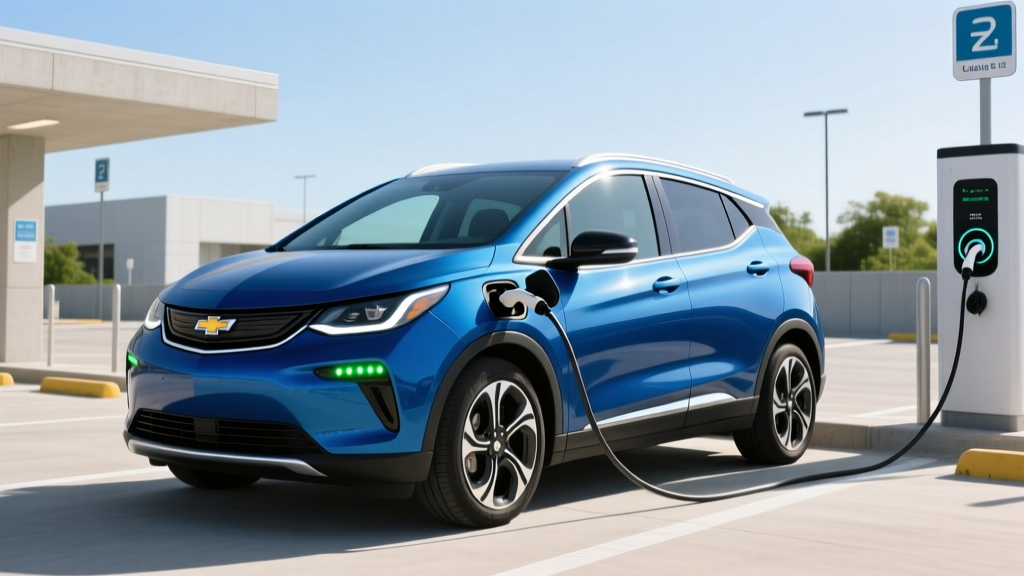
The 2022 Chevrolet Bolt EUV remains one of the most affordable long-range electric vehicles on the used market, offering an EPA-estimated 247 miles of range and a combined 115 MPGe from its 65 kWh (usable) lithium-ion battery. But understanding the Bolt EUV's real-world efficiency and its 240V charging time requires more than reading a window sticker — it demands a clear grasp of charging levels, home electrical requirements, and the actual cost of electrons versus gasoline.
This guide uses the 2022 Bolt EUV as our reference vehicle to walk through every charging scenario you'll encounter: overnight Level 2 at home, DC fast charging on road trips, connector compatibility, installation costs, and the per-mile economics that determine whether going electric actually saves you money in 2026.
| Spec | Value |
|---|---|
| EPA Range | 247 miles |
| Combined MPGe | 115 MPGe |
| Energy Consumption | 29 kWh / 100 mi |
| Battery Capacity (Usable) | 65 kWh (NMC lithium-ion) |
| Onboard Charger (Level 2) | 11.5 kW max (48A) |
| Level 2 (240V) Charge Time 0–100% | ~7 hours |
| DC Fast Charge Peak | 55 kW (CCS1) |
| DC Fast 10–80% | ~45 minutes |
| Level 1 (120V) Charge Rate | ~1.4 kW (~4 mi/hr) |
Charging Levels Explained: kW, Miles Per Hour, and What They Mean
The single most common point of confusion for new EV owners is the difference between kW (kilowatts — a measure of power, or how fast energy flows) and kWh (kilowatt-hours — a measure of energy capacity, like gallons in a fuel tank). The Bolt EUV's battery holds 65 kWh of usable energy. A charger delivering 11.5 kW can theoretically fill that battery in about 5.7 hours, though real-world charging includes tapering near full capacity.
| Level | Voltage | Power (kW) | Miles of Range Added Per Hour | Best Use Case |
|---|---|---|---|---|
| Level 1 | 120V AC | 1.2–1.9 kW | 3–5 mi/hr | Emergency / overnight top-off |
| Level 2 | 240V AC | 3.3–19.2 kW | 12–75 mi/hr | Daily home / workplace charging |
| DC Fast Charge | 400–800V DC | 50–350 kW | 150–1,000+ mi/hr (peak) | Road trips, rapid top-ups |
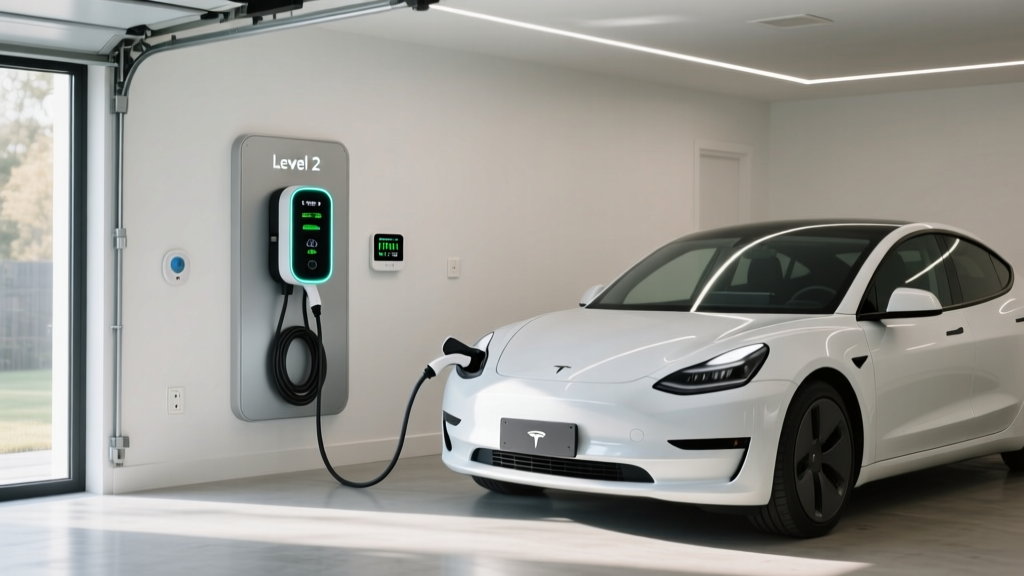
For the 2022 Bolt EUV specifically, Level 2 charging at 240V is the practical daily standard. The vehicle's onboard charger accepts up to 11.5 kW (48 amps), meaning a properly configured 240V/48A circuit can add roughly 35–39 miles of range per hour of charging. A full 0–100% charge takes approximately 7 hours — ideal for overnight replenishment.
DC fast charging on the Bolt EUV peaks at 55 kW via the CCS1 connector. While this is slower than newer EVs capable of 150–350 kW, it still delivers a 10–80% charge in roughly 45 minutes at a compatible station. The charge curve tapers significantly above 80% State of Charge (SoC) to protect battery health — a universal EV behavior, not a Bolt-specific limitation.
240V Home Charging Setup: Electrical Requirements and Installation Costs
Installing a Level 2 home charger is the single highest-impact upgrade an EV owner can make. For the Bolt EUV to reach its 11.5 kW maximum, you need a 240V circuit rated for at least 60 amps (EV chargers are considered continuous loads under the National Electrical Code, meaning the circuit must be rated at 125% of the charger's maximum draw — a 48A charger requires a 60A breaker).
Here's what a typical installation involves:
- Dedicated 240V circuit: 60A breaker with 6 AWG copper wire (or 4 AWG aluminum) for a hardwired 48A charger. If you opt for a NEMA 14-50 outlet instead, you'll use a 50A breaker and the charger will be limited to 40A (9.6 kW).
- Electrical panel capacity: Your main panel must have sufficient amperage headroom. Most modern 200A panels can accommodate a 60A EV circuit. Older homes with 100A service may require a panel upgrade ($1,500–$3,500).
- Permit: Most jurisdictions require an electrical permit for new 240V circuits ($50–$250 depending on locality).
- Inspection: A post-installation inspection ensures code compliance and is typically included in the permit fee.
| Component | Typical Range | Notes |
|---|---|---|
| Level 2 Charger (Equipment) | $300–$700 | Smart Wi-Fi chargers; dumb units from $200 |
| Electrician Labor | $400–$1,500 | Depends on wire run length, wall type, conduit |
| Electrical Permit | $50–$250 | Varies by municipality |
| Panel Upgrade (if needed) | $1,500–$3,500 | 100A → 200A service upgrade |
| Total (no panel upgrade) | $750–$2,450 | Most homes with 200A service |
| Total (with panel upgrade) | $2,250–$5,950 | Older homes with 100A service |
The federal Alternative Fuel Vehicle Refueling Property Credit (IRS Form 8911) may cover up to 30% of home charger equipment and installation costs, capped at $1,000, subject to income and census-tract eligibility. Check irs.gov for current-year rules and consult a tax professional before claiming.
Connector Compatibility: NACS, CCS1, and the Bolt EUV's CCS1 Port
The 2022 Chevrolet Bolt EUV uses the CCS1 (Combined Charging System) connector for both Level 2 AC charging (the upper J1772 portion) and DC fast charging (the lower DC pins). This was the North American standard for all non-Tesla EVs at the time of the Bolt EUV's production.
However, the charging landscape has shifted significantly since 2022. Ford, GM, Rivian, Hyundai, and most other automakers have adopted the NACS (North American Charging Standard) — Tesla's connector — as the standard for new vehicles beginning in the 2025 model year. This means:
| Connector | Used By | Level 2 AC | DC Fast | Notes |
|---|---|---|---|---|
| CCS1 | 2022 Bolt EUV, pre-2025 non-Tesla EVs | Yes (J1772) | Yes | Phasing out on new models |
| NACS (Tesla) | Tesla (all years), 2025+ GM/Ford/Rivian/Hyundai | Yes | Yes | Becoming the dominant standard |
| CHAdeMO | Nissan Leaf (legacy) | No (uses J1772 for AC) | Yes | Effectively discontinued |
For Bolt EUV owners: You can charge at any CCS1-equipped public station (Electrify America, EVgo, many ChargePoint locations). As networks add NACS cables, CCS1 availability may decrease over time. GM has stated that CCS1-to-NACS adapters will be available for legacy GM EVs, allowing Bolt EUV owners to access Tesla Superchargers. Verify adapter availability and compatibility through Chevrolet's official channels before purchasing a third-party adapter, as improper adapters can damage vehicle charging systems.
Cost to Charge: Home Electricity vs. Public DC Fast Charging vs. Gasoline
The Bolt EUV's 29 kWh/100 mi consumption rate (per fueleconomy.gov) makes it one of the most efficient electric crossovers available. Let's translate that into real dollars.
| Scenario | Cost per kWh or Gallon | Cost Per Mile (Bolt EUV) | Cost Per Mile (25 MPG Gas) |
|---|---|---|---|
| Home Charging (national avg. residential) | $0.16/kWh | $0.046 | $0.132 ($3.30/gal) |
| Home Off-Peak (time-of-use rate) | $0.09/kWh | $0.026 | $0.132 |
| Public Level 2 (ChargePoint, etc.) | $0.25–$0.40/kWh | $0.073–$0.116 | $0.132 |
| DC Fast Charging (Electrify America) | $0.38–$0.55/kWh | $0.110–$0.160 | $0.132 |
The takeaway: home charging on an off-peak rate is roughly 5× cheaper per mile than gasoline. Even public DC fast charging at premium rates is often comparable to or slightly cheaper than gas — though frequent DC fast charging will cost more than home Level 2 and will accelerate battery wear over time.
For a driver covering 12,000 miles per year, the Bolt EUV charged at home at $0.16/kWh costs approximately $552 annually in electricity. A 25 MPG gas vehicle at $3.30/gallon costs $1,584. That's roughly $1,032 in annual fuel savings — though actual savings depend on your local electricity rates, driving patterns, and gas prices.
Recommended Level 2 Home Chargers for the Bolt EUV
The Bolt EUV's 11.5 kW onboard charger means you benefit from a 48A-capable Level 2 unit. Here are three proven options that match the vehicle's capabilities:
ChargePoint Home Flex (NEMA 14-50 or Hardwired)
- Power Output: Up to 12 kW (50A) via NEMA 14-50; up to 19.2 kW (80A) hardwired
- Connector: J1772 (CCS1-compatible)
- Cable Length: 23 feet
- Smart Features: Wi-Fi, app scheduling, energy tracking, Alexa integration
- Price: ~$550–$650
- Best For: Bolt EUV owners who want app control and detailed charging analytics
Emporia Vue Smart Home EV Charger
- Power Output: Up to 11.5 kW (48A) hardwired
- Connector: J1772 (CCS1-compatible)
- Cable Length: 24 feet
- Smart Features: Wi-Fi, solar integration, energy monitoring, load management
- Price: ~$400–$500
- Best For: Budget-conscious owners or those with solar panels seeking integrated energy management
Grizzl-E Smart (United Chargers)
- Power Output: Up to 10 kW (40A) via NEMA 14-50
- Connector: J1772 (CCS1-compatible)
- Cable Length: 24 feet
- Smart Features: Wi-Fi, OCPP protocol, adjustable amperage
- Price: ~$450–$550
- Best For: Cold-climate owners — rated to -40°F with a rugged, outdoor-rated enclosure
Note that the Grizzl-E maxes at 40A (9.6 kW), so the Bolt EUV will charge slightly slower than its 11.5 kW maximum. The ChargePoint Home Flex and Emporia Vue can fully utilize the Bolt EUV's onboard charger when hardwired at 48A or higher.
Safety, Electrical Code, and Installation Best Practices
A Level 2 charger installation is not a DIY project. Improper wiring can cause fires, void your homeowner's insurance, and damage your vehicle's charging system. Key code and safety requirements include:
- Dedicated circuit: Your EV charger must have its own dedicated breaker — it cannot share a circuit with other appliances.
- GFCI protection: The 2023 NEC (National Electrical Code) requires GFCI (Ground Fault Circuit Interrupter) protection for outdoor receptacles used for EV charging. Hardwired installations may not require a GFCI breaker depending on local code interpretation, but many electricians include one as best practice.
- Outdoor rating: If your charger is mounted outdoors, the unit must carry a NEMA 4 (or higher) weather-resistance rating. All three chargers recommended above meet this standard.
- Wire gauge: 6 AWG copper for 48–60A circuits; 4 AWG for longer wire runs (>50 feet) to minimize voltage drop.
- Load management: If your electrical panel is near capacity, a smart load-management system (like Emporia's or the Sense Energy Monitor) can dynamically throttle charger draw to prevent tripping the main breaker — potentially avoiding a costly panel upgrade.
Always hire a licensed electrician and pull a permit. Unpermitted work can create liability issues during a home sale and may void equipment warranties.
Charging Time Examples: Bolt EUV and Common Battery Sizes
To put the Bolt EUV's charging speed in context, here's how various battery sizes charge at different Level 2 power levels:
| Battery Size | Example Vehicle | 7.7 kW (32A) | 9.6 kW (40A) | 11.5 kW (48A) | 19.2 kW (80A) |
|---|---|---|---|---|---|
| 65 kWh | 2022 Bolt EUV | ~8.5 hrs | ~6.8 hrs | ~5.7 hrs* | ~5.7 hrs (vehicle-limited)** |
| 77 kWh | Ford Mustang Mach-E ER | ~10 hrs | ~8 hrs | ~6.7 hrs | ~4.8 hrs |
| 82 kWh | Hyundai Ioniq 5 | ~10.6 hrs | ~8.5 hrs | ~7.1 hrs | ~4.3 hrs |
| 100 kWh | Tesla Model Y LR | ~13 hrs | ~10.4 hrs | ~8.7 hrs | ~5.2 hrs |
*The Bolt EUV's onboard charger caps at 11.5 kW, so connecting to a 19.2 kW (80A) charger will not reduce charging time — the vehicle limits intake to 48A.
**This is why overspending on a 19.2 kW home charger provides no benefit for the Bolt EUV. A 48A or 60A circuit is the optimal investment.
Frequently Asked Questions
How much does it cost to install a home EV charger for the Bolt EUV?
For most homes with a 200A electrical panel, expect $750–$2,450 total (charger + electrician + permit). If your home has older 100A service and needs a panel upgrade, costs can reach $2,250–$5,950. The federal refueling property credit may offset up to $1,000 of these costs if you meet income and location requirements.
How fast will each charging level add range to the Bolt EUV?
Level 1 (120V): approximately 4 miles of range per hour. Level 2 (240V at 48A): approximately 35–39 miles per hour. DC fast charging (55 kW peak): approximately 150–180 miles in 30 minutes under optimal conditions, though the charge curve tapers significantly above 80% SoC.
Which connector and charger is compatible with my 2022 Bolt EUV?
The Bolt EUV uses the CCS1 connector (J1772 for AC, CCS Combo for DC fast). Any J1772 Level 2 charger will work for home and public AC charging. For DC fast charging, use CCS1-equipped stations (Electrify America, EVgo, select ChargePoint). A CCS1-to-NACS adapter may be available from GM for future Tesla Supercharger access — check Chevrolet's official communications for availability.
How much does charging cost per mile compared to gasoline?
At the national average residential electricity rate of $0.16/kWh, the Bolt EUV costs approximately $0.046 per mile to fuel. A comparable 25 MPG gas vehicle at $3.30/gallon costs $0.132 per mile — nearly 3× more. Off-peak home rates can push the Bolt EUV's cost to under $0.03/mile. Public DC fast charging at $0.45/kWh raises the cost to ~$0.13/mile, roughly matching gasoline.
What electrical upgrades might I need for a Level 2 charger?
If your home has a 200A panel with available breaker slots and sufficient load headroom, you likely need only a new 60A dedicated circuit. Homes with 100A service, full panels, or long wire runs from the panel to the garage may need a panel upgrade ($1,500–$3,500), a sub-panel installation, or smart load-management hardware. A licensed electrician can perform a load calculation to determine your exact needs.
What is the 2022 Chevrolet Bolt EUV's combined MPGe?
The EPA rates the 2022 Bolt EUV at 115 MPGe combined (125 MPGe city / 104 MPGe highway). MPGe (miles per gallon equivalent) converts electricity consumption into a gasoline-equivalent metric for comparison purposes. The Bolt EUV's actual energy consumption is 29 kWh per 100 miles — among the most efficient electric crossovers in its class, per fueleconomy.gov.