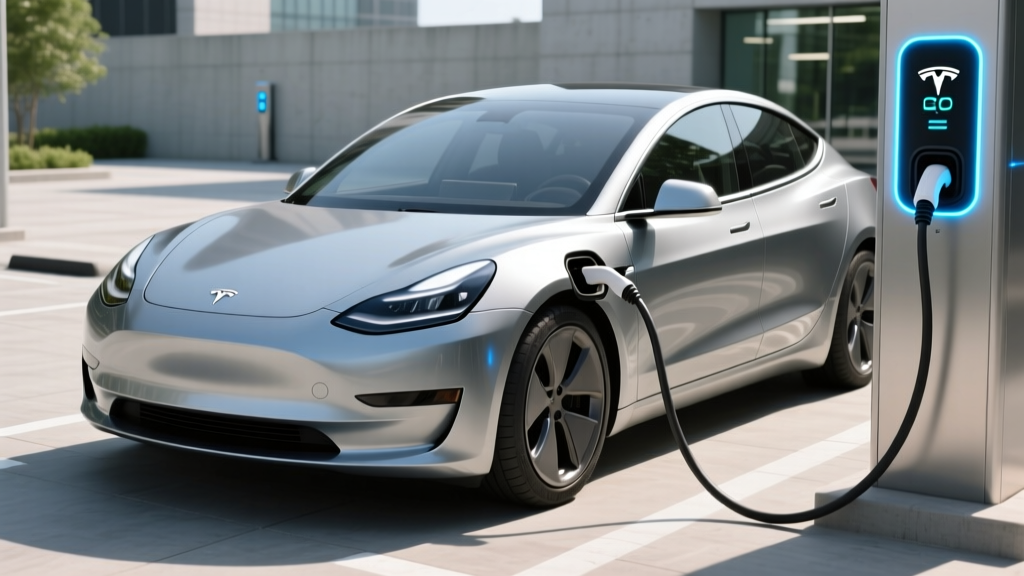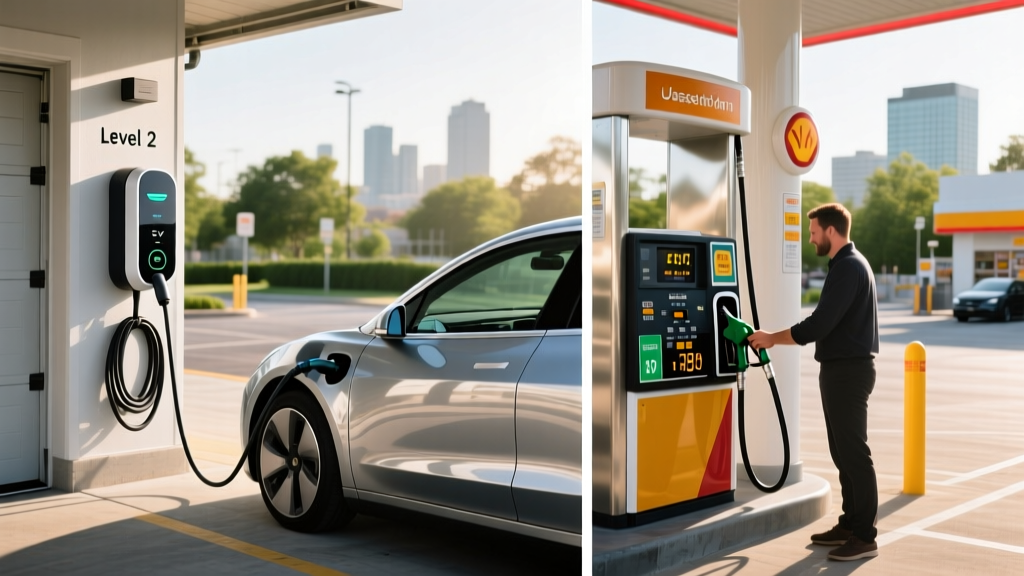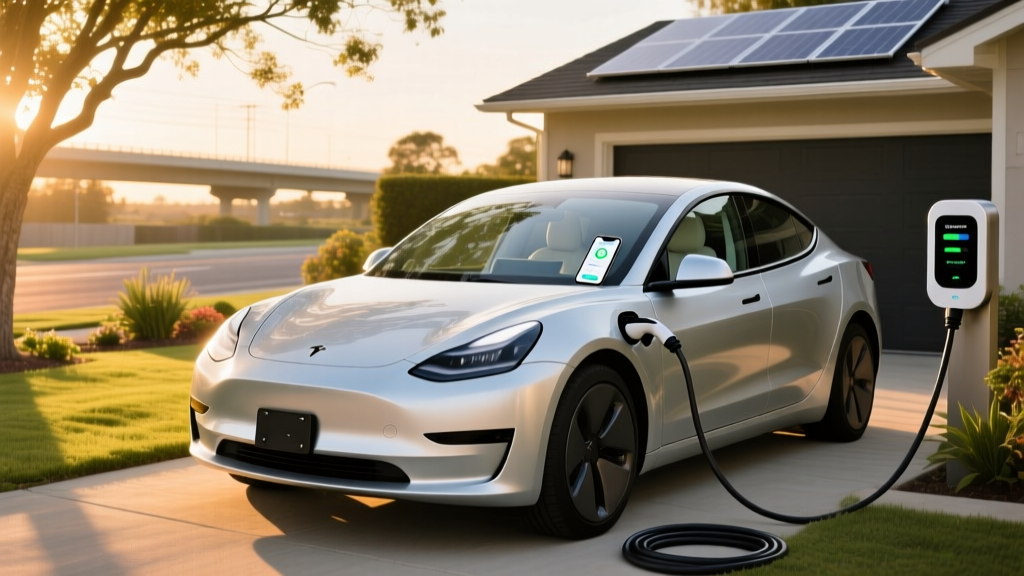
Owning a long range electric car — one packing 300+ miles of EPA-rated range from a 75–100+ kWh battery — changes the charging calculus. You'll visit public DC fast chargers less often, but when you do plug in, you're refilling a massive energy reservoir. That means home charging infrastructure, connector compatibility, and charge-curve behavior matter more than ever. This guide breaks down exactly what it takes to keep a high-capacity EV charged efficiently, safely, and affordably in 2026.
Charging Levels Explained: How Fast Will Each Level Add Range?
The single most important distinction in EV charging is between kW (kilowatts — the rate of power delivery, like water pressure from a hose) and kWh (kilowatt-hours — the total energy stored in your battery, like the size of the tank). Charging speed is measured in kW; your battery capacity is measured in kWh. Confusing them is the most common EV literacy mistake.
Here's how each charging level performs with typical long range electric cars (80–100 kWh batteries):
| Level | Voltage | Power (kW) | Miles of Range Added/Hour | Best For |
|---|---|---|---|---|
| Level 1 (120V) | 120V AC | 1.0–1.4 kW | 3–5 miles | Emergency top-offs, PHEVs, overnight trickle |
| Level 2 (240V) | 240V AC | 3.3–19.2 kW | 12–60 miles | Daily home/work charging, overnight full refill |
| DC Fast Charging | 200–800V DC | 50–350 kW | 150–1,000+ miles/hr (peak) | Road trips, rapid replenishment |
- 82 kWh battery (e.g., Tesla Model 3 Long Range): ~27 min at a 250 kW Supercharger; ~9.5 hours on a 7.7 kW Level 2; ~57 hours on Level 1.
- 100 kWh battery (e.g., Rivian R1S, Lucid Air): ~22 min at 300+ kW DCFC (with preconditioning); ~12 hours on a 7.7 kW Level 2; impractical on Level 1.
- 77 kWh battery (e.g., Hyundai Ioniq 5 Long Range): ~18 min at a 350 kW charger (800V architecture); ~10 hours on 7.7 kW Level 2.
DC fast charging speeds peak in the 10–50% SoC window and taper significantly above 80%. That's why manufacturers quote 10–80% times — charging from 80–100% can take as long as the 10–80% session.
Home Charger Installation: Costs, Electrical Requirements & Panel Upgrades
For long range electric cars, a Level 2 home charger is essentially mandatory. Level 1 (120V) adds only 3–5 miles per hour — meaning a full charge of a 100 kWh battery could take 4+ days. A properly installed Level 2 station refills overnight, every night.
Electrical Requirements
Most residential Level 2 installations use a 240V circuit at 40–60 amps, delivering 7.7–11.5 kW continuously. The National Electrical Code (NEC) requires EV circuits to be rated at 125% of the continuous load, so a 40A charger needs a 50A breaker; a 48A charger needs a 60A breaker.
Do You Need a Panel Upgrade?
This is where costs can escalate. Many older homes have 100A or 150A main service panels. Adding a 50–60A EV circuit may exceed available capacity, especially if you also run electric HVAC, a dryer, and an electric range. A licensed electrician will perform a load calculation to determine if your panel can handle the additional draw.
- 200A panel with spare capacity: Typically no upgrade needed. Most straightforward install.
- 100–150A panel near capacity: May require a panel upgrade to 200A ($1,500–$3,500) or a smart load-management device like the Span Drive or Myenergi zappi that throttles charger amperage based on real-time household load.
- Condo/townhouse with shared electrical: May require HOA approval and shared-meter solutions.
| Component | Cost Range | Notes |
|---|---|---|
| Level 2 Charger (Equipment) | $350–$750 | Smart Wi-Fi chargers (ChargePoint, Wallbox, Emporia) |
| Electrician Labor (standard install) | $500–$1,500 | Varies by run length, conduit, wall material |
| Electrical Permit | $50–$250 | Required in most jurisdictions; varies by municipality |
| Panel Upgrade (if needed) | $1,500–$3,500 | 100A→200A service upgrade; not always required |
| Load Management Device (optional) | $200–$500 | Alternative to panel upgrade; throttles charge rate |
| Total (no panel upgrade) | $900–$2,500 | Typical scenario for homes with 200A panels |
| Total (with panel upgrade) | $2,400–$6,250 | Older homes or high-load households |
Some utilities offer rebates of $250–$1,000 for Level 2 installations, and certain states offer additional incentives. Check your local utility and state incentive database before scheduling work.
Connector Compatibility: NACS, CCS1 & CHAdeMO in 2026
The connector landscape has consolidated dramatically. Tesla's North American Charging Standard (NACS) is now the dominant connector for new EVs sold in North America, with nearly every major automaker adopting it for 2025+ model-year vehicles. Here's where things stand:
| Connector | Brands Using It (Native) | Adapter Needed For |
|---|---|---|
| NACS (Tesla standard) | Tesla, Ford, GM, Rivian, Volvo, Polestar, Mercedes-Benz, BMW, Hyundai (2025+), Kia (2025+), Lucid, Fisker | Older CCS vehicles visiting Superchargers (CCS→NACS adapter, ~$200–$250) |
| CCS1 | Legacy models (pre-2025 VW ID.4, older Hyundai/Kia, Stellantis, some BMW) | NACS Superchargers (via adapter); most Electrify America & EVgo stations still have CCS |
| CHAdeMO | Nissan Leaf (discontinued), Mitsubishi Outlander PHEV | Largely deprecated; limited public infrastructure remaining |
For home Level 2 charging, all non-Tesla EVs use a J1772 connector, while Teslas use the NACS connector (which also handles Level 2 AC). Most aftermarket Level 2 chargers ship with J1772; Tesla owners use the included Mobile Connector or a Tesla Wall Connector. Adapters (J1772→NACS or NACS→J1772) cost $100–$200 and work seamlessly for home charging.
Cost to Charge: Home vs. Public vs. Gas — The Per-Mile Math
Long range electric cars have big batteries, which means the cost per full charge is higher than smaller EVs — but the cost per mile remains dramatically lower than gasoline. Here's the breakdown:
| Scenario | $/kWh (Avg) | Cost for 80 kWh Fill | Cost Per Mile (3.5 mi/kWh) |
|---|---|---|---|
| Home (off-peak utility rate) | $0.08–$0.14 | $6.40–$11.20 | $0.023–$0.040 |
| Home (standard rate, no TOU) | $0.14–$0.20 | $11.20–$16.00 | $0.040–$0.057 |
| Public Level 2 (ChargePoint, etc.) | $0.20–$0.35 | $16.00–$28.00 | $0.057–$0.100 |
| DC Fast (Tesla Supercharger) | $0.25–$0.40 | $20.00–$32.00 | $0.071–$0.114 |
| DC Fast (Electrify America/EVgo) | $0.35–$0.55 | $28.00–$44.00 | $0.100–$0.157 |
| Gas vehicle (28 MPG, $3.40/gal) | — | — | $0.121 |
Recommended Home Level 2 Chargers for Long Range EVs
When you're refilling an 80–100 kWh battery nightly, charger quality, amperage, and cable length matter. Here are three proven units well-suited to high-capacity EVs:
Emporia Vue Level 2 EV Charger
- Power Output: Up to 11.5 kW (48A on a 60A circuit) — among the fastest residential Level 2 options
- Connector: J1772 (NACS adapter available)
- Cable Length: 24 feet
- Smart Features: Wi-Fi scheduling, solar integration with Emporia Vue energy monitor, load management, utility TOU optimization
- Price: ~$400–$500 (charger only)
- Best for: Owners who want maximum Level 2 speed and energy monitoring on a budget
ChargePoint Home Flex
- Power Output: Up to 12 kW (50A, configurable from 16A–50A to match your circuit)
- Connector: J1772 (NACS version available for 2025+)
- Cable Length: 23 feet
- Smart Features: Wi-Fi, ChargePoint app scheduling, Alexa integration, flexible amperage dial
- Price: ~$550–$700
- Best for: Flexibility across different circuit sizes; strong app ecosystem and public-charger network integration
Tesla Wall Connector (Gen 4)
- Power Output: Up to 11.5 kW (48A on a 60A circuit)
- Connector: NACS native (J1772 adapter included)
- Cable Length: 24 feet
- Smart Features: Wi-Fi, power sharing between multiple Wall Connectors, OTA updates, Tesla app integration
- Price: ~$475
- Best for: Tesla owners and households with multiple NACS-equipped EVs (power sharing lets two chargers split one 60A circuit)
For long range EVs with 90–100+ kWh batteries, prioritize a 48A charger on a 60A circuit. This delivers a full overnight charge in 8–10 hours — comfortably covering even the largest batteries by morning.
Safety, Electrical Code & Installation Best Practices
A Level 2 EV charger draws significant continuous current for hours at a time. Proper installation isn't optional — it protects your home, your car, and your insurance coverage.
- Dedicated circuit: Your EV charger must be on its own dedicated breaker. Never share a circuit with other high-draw appliances.
- GFCI protection: The 2023 NEC (and subsequent adoptions through 2026) requires GFCI protection for outdoor EV charging outlets. Hardwired installations may have different requirements depending on jurisdiction — your electrician will know local code.
- Outdoor rating: If installing outdoors, ensure the charger carries a NEMA 4 (weatherproof) rating. Most major chargers (ChargePoint, Wallbox, Emporia, Tesla) are rated for indoor/outdoor use.
- Hardwired vs. plug: Hardwired installations (no plug) are preferred for 48A+ chargers, as NEMA 14-50 receptacles can overheat under sustained high-amperage loads. If using a 14-50 outlet, invest in a commercial-grade receptacle (Hubbell or Bryant, ~$75–$120) — cheap residential-grade outlets have been linked to melting under continuous EV loads.
- Permits and inspection: Most municipalities require a permit and post-installation inspection. Skipping this can void home insurance claims related to electrical fires. Budget $50–$250 for the permit.
- Load management: If your panel is near capacity, devices like the Emporia Smart Load Management or Span Drive can dynamically reduce charger amperage when other household loads spike — avoiding a costly panel upgrade.
Public DC Fast Charging: Maximizing Speed on Road Trips
Long range electric cars shine on road trips because they need fewer stops — but when you do stop, you want maximum speed. Here's how to optimize:
- Precondition your battery. Most EVs (Tesla, Hyundai/Kia 800V models, Ford, GM) will warm or cool the battery to optimal temperature when you navigate to a charger. This can add 30–50% to your peak charge rate. Without preconditioning, a cold battery might accept only 50–80 kW instead of its rated 200+ kW.
- Charge from 10–80%, not 0–100%. The charge curve tapers aggressively above 80%. Charging from 80–100% can take as long as 10–80%. Plan to arrive at chargers with ~10–15% SoC and depart at ~80%.
- Seek high-power chargers. Tesla Superchargers (250 kW V3, 350 kW V4), Electrify America 350 kW stations, and EVgo 350 kW stalls deliver the fastest fills. Older 50 kW CHAdeMO or CCS stations are painfully slow for 80+ kWh batteries.
- 800V architectures charge faster. Vehicles built on 800V platforms (Hyundai Ioniq 5/6, Kia EV6/EV9, Porsche Taycan, Lucid Air) can sustain higher charge rates longer. The Ioniq 5, for example, can hit 10–80% in roughly 18 minutes at a 350 kW charger.
For real-time charger availability and reliability data, apps like PlugShare and A Better Routeplanner (ABRP) are essential for trip planning in long range EVs.
Frequently Asked Questions
How much does it cost to install a home EV charger?
A typical Level 2 home charger installation costs $900–$2,500 if your electrical panel has spare capacity. If a panel upgrade from 100A to 200A is required, total costs can reach $2,400–$6,250. The charger unit itself runs $350–$750; the rest is electrician labor, materials, and permitting. Always get 2–3 quotes from licensed electricians, and confirm they have specific EV charger installation experience.
How fast will each charging level add range?
Level 1 (120V) adds 3–5 miles per hour — impractical for daily use with a long range EV. Level 2 (240V, 48A) adds roughly 35–45 miles per hour, enough to fully refill an 80–100 kWh battery overnight in 8–12 hours. DC fast charging adds 150–1,000+ miles per hour at peak rates, with 10–80% fills taking 18–35 minutes depending on battery size, charger power, and battery temperature.
Which connector/charger is compatible with my EV?
For 2025–2026 model-year vehicles, nearly all new EVs use the NACS connector natively. Older EVs (pre-2025) may have CCS1. For home Level 2 charging, non-Tesla EVs use J1772, while Teslas use NACS — adapters are readily available in both directions. Check your vehicle's charge port or owner's manual to confirm, and buy a charger matching your connector or invest in a $100–$200 adapter.
How much does charging cost per mile vs gas?
Home charging on off-peak rates costs roughly $0.03–$0.04 per mile — about 70–75% less than a 28 MPG gas vehicle at $3.40/gallon ($0.12/mile). Even public DC fast charging at $0.35–$0.55/kWh costs $0.10–$0.16 per mile, roughly comparable to gas. The savings are maximized when you charge at home, which most long range EV owners do for 85–95% of their energy needs.
What electrical upgrades might I need?
The most common upgrade is a panel capacity increase from 100A or 150A to 200A ($1,500–$3,500), needed when your existing panel can't handle a new 50–60A circuit alongside existing loads. Alternatives include smart load-management devices ($200–$500) that throttle charger power dynamically, or simply installing a lower-amperage charger (32A/7.7 kW instead of 48A/11.5 kW) that still refills overnight but draws less peak current. A licensed electrician's load calculation will determine which path is required. Consult NECA guidelines and your local building department for code-specific requirements.