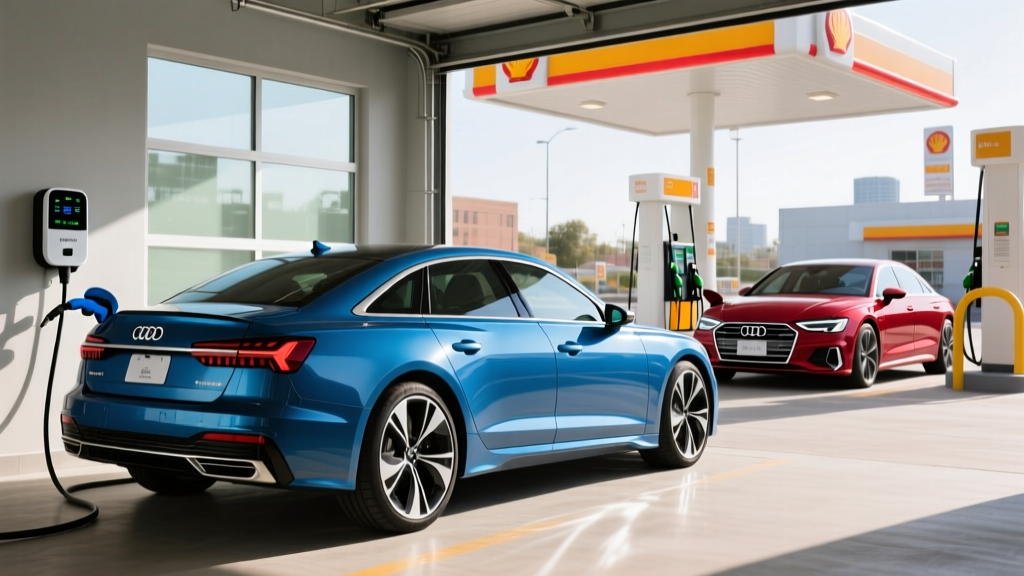
If you've been searching for audi a6 supercharged models, you've likely noticed the landscape shifting. The traditional supercharged 3.0L V6 Audi A6 — last offered in the U.S. as the C7-generation S6 and in various supercharged trims through the mid-2010s — has given way to electrification. For 2026, Audi's A6 lineup is anchored by the A6 e-tron, built on the PPE (Premium Platform Electric) architecture co-developed with Porsche. Whether you're cross-shopping a used supercharged A6 against the new e-tron or planning your EV charging setup, this guide covers exactly what it takes to charge, what it costs, and how the numbers stack up against pumping gas.
Audi A6 e-tron 2026: The Charging Specs That Matter
Before we break down home and public charging, here are the hard numbers for the 2026 Audi A6 e-tron (rear-wheel-drive, 100 kWh battery pack, NMC chemistry):
| Spec | 2026 Audi A6 e-tron (RWD) |
|---|---|
| Battery (usable) | ~94.9 kWh (NMC) |
| EPA Range | ~321 miles (est. based on WLTP 750 km / EPA conversion) |
| Max DC Fast Charge | 270 kW peak |
| 10–80% DC Fast Charge | ~21 minutes (with preconditioning) |
| Level 2 AC Charge Rate | 11 kW onboard charger |
| Connector | NACS (native Tesla Supercharger access in North America) |
| 0–60 mph | ~6.0 seconds (RWD), ~4.3 seconds (quattro) |
| Horsepower | 362 hp (RWD) / 456 hp (quattro) |
| Base MSRP | ~$65,000 (est.) |
Charging Levels Explained: kW, Speed, and What Each Adds
The single most important distinction in EV charging: kW (kilowatts) measures power — how fast energy flows into the battery. kWh (kilowatt-hours) measures energy — the total capacity of the battery, like gallons in a fuel tank. Confusing these is the #1 mistake new EV buyers make.
| Level | Voltage | Power (kW) | Miles Added/Hour | Best For |
|---|---|---|---|---|
| Level 1 | 120V AC | 1.0–1.4 kW | 3–5 mi/hr | Overnight trickle, PHEVs, emergencies |
| Level 2 | 240V AC | 7.2–19.2 kW | 25–65 mi/hr | Daily home charging, workplace |
| DC Fast Charge | 400–800V DC | 50–350 kW | 150–800+ mi/hr (peak) | Road trips, rapid top-ups |
For the A6 e-tron with its ~94.9 kWh usable battery:
- Level 1 (1.4 kW): A full 0–100% charge would take roughly 68 hours. Impractical for daily use on a large battery.
- Level 2 at 11 kW (A6 e-tron's max AC rate): A full charge takes approximately 8.5 hours, or roughly 9 hours from 10–100%. Ideal for overnight charging.
- DC Fast at 270 kW peak: 10–80% in approximately 21 minutes with proper battery preconditioning. Note: the A6 e-tron's 800V architecture sustains high charge rates longer than 400V competitors — you'll see 200+ kW well past 50% SoC before tapering.
Home Charger Installation: Electrical Requirements, Costs, and Panel Upgrades
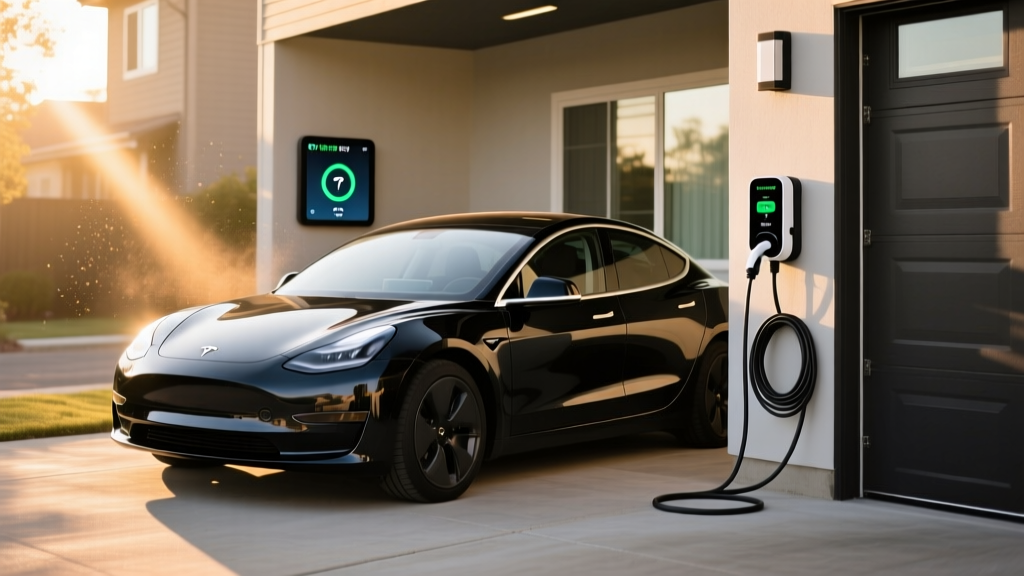
Installing a Level 2 home charger is the single biggest ownership decision for an A6 e-tron buyer. Here's what's involved electrically and financially.
Electrical Requirements
- Circuit: A dedicated 240V circuit is required. For a 48-amp charger (the sweet spot for the A6 e-tron's 11 kW onboard limit), you need a 60-amp breaker (NEC requires circuits rated at 125% of continuous load).
- Wire: 6 AWG copper for runs up to ~50 feet; 4 AWG for longer runs.
- Panel capacity: Most modern 200-amp panels can accommodate a 60A EV circuit. Older homes with 100A or 150A panels may need an upgrade.
- Permit: Required in virtually all U.S. jurisdictions. Typical cost: $50–$200.
- GFCI: NEC 2020+ requires GFCI protection for outdoor receptacles; hardwired installations may not require a GFCI breaker depending on local code.
Installation Cost Breakdown
| Component | Typical Range | Notes |
|---|---|---|
| Level 2 Charger (hardware) | $400–$750 | Smart Wi-Fi chargers, 48A, 25ft cable |
| Electrician Labor | $500–$2,000 | Depends on panel proximity, wall material, conduit run |
| Permit & Inspection | $50–$200 | Varies by municipality |
| Panel Upgrade (if needed) | $1,500–$4,000 | 100A→200A service upgrade; ~20% of homes need this |
| Total (no panel upgrade) | $950–$2,950 | Most common scenario for homes built after 2000 |
| Total (with panel upgrade) | $2,450–$6,950 | Older homes, full service replacement |
Connector Compatibility: NACS, CCS, and Adapter Needs
The 2026 Audi A6 e-tron sold in North America ships with a NACS (North American Charging Standard) port — the Tesla-style connector now adopted by nearly every major automaker. This is a significant shift from Audi's earlier CCS1-equipped e-tron GT and Q8 e-tron models.
| Connector | Used By | A6 e-tron (2026) Compatibility |
|---|---|---|
| NACS (Tesla-style) | Tesla, Ford, GM, Rivian, Audi (2026+), Hyundai, BMW, and most new EVs | Native — no adapter needed |
| CCS1 | Older VW/Audi/Porsche EVs, legacy Electrify America stations | Adapter needed (NACS-to-CCS1, ~$200–$300) |
| CHAdeMO | Nissan Leaf (legacy), Mitsubishi Outlander PHEV | Not applicable; adapters rare and limited to ~50 kW |
Practical implication: With a native NACS port, the A6 e-tron can charge at Tesla Supercharger V3/V4 stalls (up to 250–350 kW) without any adapter. For older Electrify America or EVgo stations still equipped only with CCS1 cables, you'll want to carry a NACS-to-CCS adapter (available from Audi or third-party manufacturers like Lectron). Most new public chargers installed in 2025–2026 include NACS cables alongside CCS.
Charging Cost Per Mile: A6 e-tron vs. Supercharged Gas A6
This is where the math gets compelling. Let's compare the 2026 A6 e-tron against a representative supercharged 3.0T V6 Audi A6 (the C7 S6 rated at ~22 MPG combined, per EPA fueleconomy.gov).
| Scenario | Cost/kWh or $/Gallon | Cost per 100 Miles | Cost per Mile |
|---|---|---|---|
| A6 e-tron — Home (off-peak) | $0.13/kWh | $3.68 | $0.037 |
| A6 e-tron — Home (peak TOU) | $0.28/kWh | $7.92 | $0.079 |
| A6 e-tron — Public Level 2 | $0.35/kWh | $9.90 | $0.099 |
| A6 e-tron — DC Fast (Electrify America) | $0.48/kWh | $13.58 | $0.136 |
| Supercharged Gas A6 (22 MPG) | $3.40/gallon | $15.45 | $0.155 |
Key takeaway: Charging at home on off-peak rates saves roughly 76% per mile compared to premium gasoline in a supercharged V6 A6. Even at the most expensive DC fast-charging rates, the A6 e-tron breaks even or slightly undercuts gas. The A6 e-tron's efficiency of approximately 2.8–3.0 kWh/mile (or ~112 MPGe) is competitive for a large luxury sedan.
Assuming 12,000 miles/year and 80% home charging at $0.15/kWh average:
- A6 e-tron annual fuel cost: ~$510
- Supercharged gas A6 annual fuel cost: ~$1,855 (premium required)
- Annual savings: ~$1,345
Level 2 Charger Recommendations for the Audi A6 e-tron
The A6 e-tron's 11 kW onboard charger means you'll max out at 48 amps on a 240V circuit (11.5 kW). Here are three chargers that match this capability:
ChargePoint Home Flex
- Power: Up to 50A (12 kW) — adjustable
- Connector: NACS (2025+ models)
- Cable: 23 feet
- Smart features: Wi-Fi, app scheduling, energy tracking, Alexa
- Price: ~$549
- Best for: Flexible amperage if your panel can't support 60A
Tesla Wall Connector (NACS)
- Power: Up to 48A (11.5 kW)
- Connector: NACS native
- Cable: 24 feet
- Smart features: Wi-Fi, OTA updates, load sharing (pair two units on one circuit)
- Price: ~$475
- Best for: Value and proven reliability; works with all NACS EVs
Emporia Vue + EV Charger
- Power: Up to 48A (11.5 kW)
- Connector: NACS (with adapter included)
- Cable: 24 feet
- Smart features: Whole-home energy monitoring integration, solar-aware charging, TOU scheduling
- Price: ~$599 (charger) + $100 (Vue monitor)
- Best for: Solar owners and energy-conscious households
Public Charging Networks: Where the A6 e-tron Fits
With a native NACS port and 270 kW DC fast-charge capability, the A6 e-tron has access to the broadest charging network in North America:
- Tesla Supercharger: 20,000+ stalls in the U.S. V3 stalls deliver up to 250 kW; V4 cabinets support up to 350 kW. Expect 10–80% in ~22–25 minutes on V3.
- Electrify America: 4,000+ stalls, many now with NACS cables alongside CCS. 350 kW-capable stalls can push the A6 e-tron near its 270 kW peak.
- EVgo / IONNA (formerly ChargePoint fast charging): Growing NACS availability; 350 kW stalls at newer locations.
Road-trip planning tip: Use the A6 e-tron's built-in route planner, which automatically precondition the battery when a DC fast charger is set as your destination. Preconditioning warms the battery to optimal temperature (typically 30–40°C), enabling the full 270 kW peak rate. Without preconditioning — especially in cold weather — you may see peak rates limited to 100–150 kW, adding 10+ minutes to your stop.
Safety, Code, and Best Practices
EV charger installation must comply with the National Electrical Code (NEC) Article 625 and local amendments. Key requirements:
- Dedicated circuit: Your Level 2 charger must be on its own dedicated breaker — no sharing with other appliances.
- Hardwired vs. plug-in: Hardwired installations (no receptacle) are preferred for 48A+ chargers. A NEMA 14-50 receptacle is common for 40A chargers but must be installed with proper torque specifications — loose 14-50 outlets are a documented fire risk.
- Outdoor rating: If installing outdoors, the charger must carry a NEMA 4 or IP55+ rating for weather resistance.
- GFCI: Required for outdoor receptacles per NEC 2020+. Hardwired units typically exempt from GFCI breaker requirement.
- Utility notification: Many utilities require you to notify them before adding a Level 2 charger. Some offer time-of-use (TOU) rate plans that dramatically reduce off-peak charging costs.
Frequently Asked Questions
How much does it cost to install a home EV charger for the Audi A6 e-tron?
Expect $950–$2,950 for a standard installation (charger + electrician + permit) in a home with a 200A panel and a nearby garage. If your home needs a panel upgrade from 100A to 200A, add $1,500–$4,000. Always get a load calculation from a licensed electrician first.
How fast will each charging level add range to the A6 e-tron?
Level 1 (120V): approximately 3–5 miles per hour. Level 2 (240V, 48A): approximately 35–40 miles per hour. DC Fast Charging (270 kW peak): up to 200+ miles in 10 minutes at peak rate, though the charge curve tapers significantly above 60% SoC.
Which connector is compatible with the 2026 Audi A6 e-tron?
The 2026 A6 e-tron uses a NACS connector natively in North America. This gives direct access to Tesla Superchargers and all new NACS-equipped public stations. For legacy CCS-only stations, a NACS-to-CCS1 adapter (~$200–$300) is required.
How much does charging the A6 e-tron cost per mile vs. a supercharged gas A6?
At home off-peak rates (~$0.13/kWh), the A6 e-tron costs approximately $0.037 per mile. A supercharged 3.0T gas A6 at $3.40/gallon premium and 22 MPG costs ~$0.155 per mile. Home charging saves roughly 76% on fuel costs. Even the most expensive DC fast charging (~$0.48/kWh) costs $0.136/mile — still under gas.
What electrical upgrades might I need for a Level 2 charger?
The most common upgrade is a panel replacement from 100A to 200A service ($1,500–$4,000). You'll need a dedicated 60-amp breaker for a 48A charger. If your panel is far from the garage, longer wire runs increase labor costs. Homes with solar panels or battery storage may need a load-management device to prevent over-draw.
Does the A6 e-tron qualify for the federal EV tax credit?
Federal §30D credit eligibility depends on MSRP caps ($55,000 for sedans — the A6 e-tron at ~$65,000 likely exceeds this), buyer income limits ($150K single / $300K joint), and battery critical-mineral sourcing requirements. As of 2026, most luxury European EVs do not qualify for the full $7,500 credit. Check current rules at IRS.gov and consult a tax professional. Point-of-sale transfer is available for eligible vehicles.
Bottom Line: Charging the A6 e-tron vs. Fueling a Supercharged A6
The transition from a supercharged 3.0T V6 Audi A6 to the A6 e-tron isn't just a powertrain swap — it's a fundamental shift in how you "refuel." Home Level 2 charging at $0.04/mile replaces $3.40/gallon premium fills, and the A6 e-tron's 800V architecture with 270 kW DC fast charging makes road trips viable with ~20-minute stops. The upfront cost of a home charger installation ($1,000–$3,000 typically) pays for itself within 1–2 years of fuel savings alone.
If you're holding onto a used supercharged A6 for its simplicity and no-charging-needed lifestyle, that's valid — but the per-mile cost gap is now substantial enough to justify the switch for most drivers who can install home charging. Get an electrician quote, verify your panel capacity, and choose a 48A NACS charger. The A6 e-tron's 11 kW onboard charger and native Supercharger access make it one of the most charging-friendly luxury sedans on the market in 2026.