High range EVs — think 350+ miles of EPA-rated range from vehicles like the Lucid Air Grand Touring (516 mi), Tesla Model S Long Range (402 mi), and Rivian R1T Max Pack (420 mi) — change the charging calculus. Bigger batteries (typically 100–131 kWh usable) mean more miles between stops, but they also demand higher-power home and public charging infrastructure to avoid 20-hour Level 1 refills. This guide breaks down exactly what it takes to keep a long-range EV charged, from electrical panel requirements to DC fast-charging curves and real cost-per-mile figures.
Why High Range EVs Need a Different Charging Strategy
A 131 kWh battery pack (like the Lucid Air's) is roughly double the capacity of a 65 kWh pack in a mid-range crossover. That extra capacity buys cross-country range but creates a home-charging bottleneck: at a standard 120V Level 1 outlet delivering ~1.4 kW, replenishing 80% of a 131 kWh pack takes over 75 hours. Even at Level 2 (240V), a 40A circuit adds only ~32 miles of range per hour on a large, heavy sedan — meaning a full overnight charge from 20% to 80% requires 8–10 hours on an 11.5 kW charger.
The practical takeaway: if you own or plan to buy a high range EV, a dedicated Level 2 home charger on a 48A or 60A circuit is not optional — it's the minimum viable setup. And DC fast charging on road trips requires understanding charge-curve taper, because a 300 kW peak rate rarely sustains past 50% state of charge (SoC).
Charging Levels Explained: kW, Miles per Hour, and Real Times
Before comparing equipment, the critical distinction: kW (kilowatts) measures power — the rate of energy delivery, like water pressure in a hose. kWh (kilowatt-hours) measures energy — the total amount stored in your battery, like gallons in a tank. A 100 kWh battery charged at 10 kW takes 10 hours; at 100 kW, one hour.
| Level | Voltage / Amps | Power (kW) | Miles of Range Added per Hour | 10–80% Time (100 kWh pack) | Typical Use |
|---|---|---|---|---|---|
| Level 1 | 120V / 12A | 1.4 kW | 3–5 mi/hr | 50+ hours | Emergency / trickle |
| Level 2 (standard) | 240V / 32A | 7.7 kW | 22–28 mi/hr | 9–10 hours | Home overnight (mid-range EVs) |
| Level 2 (high-power) | 240V / 48A | 11.5 kW | 32–42 mi/hr | 6–7 hours | Home overnight (high range EVs) |
| Level 2 (max) | 240V / 80A | 19.2 kW | 52–65 mi/hr | ~4 hours | Home (requires 100A circuit) |
| DC Fast (150 kW) | 400–800V DC | 150 kW | N/A (session-based) | 32–38 min | Public road trips |
| DC Fast (350 kW) | 800V DC | 350 kW peak | N/A (session-based) | 18–25 min* | Public (compatible vehicles) |
*10–80% times assume the vehicle can accept the charger's peak rate. Many 400V-architecture EVs peak at 200–250 kW even on a 350 kW stall. 800V vehicles (Lucid Air, Hyundai Ioniq 5, Porsche Taycan) sustain higher rates longer. Charge curves taper significantly above 80% SoC to protect battery health — expect the final 20% to take as long as the first 60%.
Home Charger Installation: Electrical Requirements and Cost Breakdown
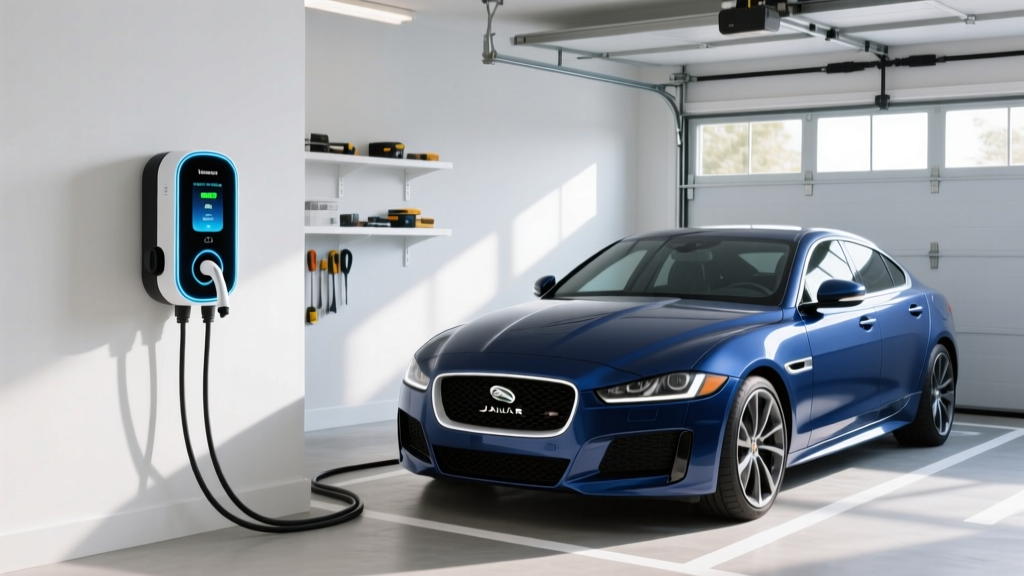
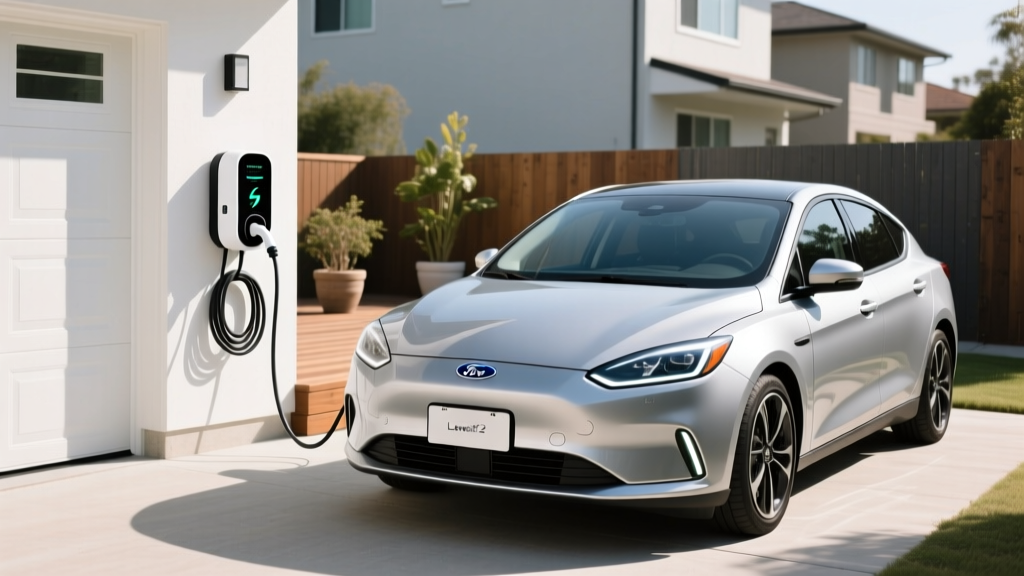
Installing a Level 2 home charger for a high range EV typically requires a 240V dedicated circuit with a NEMA 14-50 outlet or a hardwired connection. Here's what that involves and what it costs.
Electrical Requirements
- Circuit amperage: A 48A charger requires a 60A breaker (NEC code mandates a 125% safety margin: 48A × 1.25 = 60A). A 40A charger needs a 50A breaker.
- Wire gauge: 6 AWG copper for 60A circuits; 4 AWG for 80A circuits.
- Panel capacity: Your home's main panel must have enough spare amperage. A 200A panel with existing heavy loads (electric heat, dryer, oven, AC) may need a panel upgrade to 300–400A or a load-management device. Panel upgrades cost $2,000–$5,000+.
- Permit: Most jurisdictions require an electrical permit ($50–$200) and a post-installation inspection.
| Component | Low Estimate | High Estimate | Notes |
|---|---|---|---|
| Level 2 Charger (hardware) | $350 | $750 | 40A–48A Wi-Fi-enabled units |
| Electrician labor (standard install) | $600 | $1,800 | Depends on panel-to-garage distance |
| Electrical permit | $50 | $200 | Varies by municipality |
| Conduit, wire, breaker | $150 | $500 | Longer runs cost more |
| Panel upgrade (if needed) | $2,000 | $5,000+ | Older homes with 100–150A panels |
| Total (no panel upgrade) | $1,150 | $3,250 | Most typical scenario |
| Total (with panel upgrade) | $3,150 | $8,250+ | Older or high-load homes |
Connector Compatibility: NACS, CCS1, and CHAdeMO
As of 2026, the North American charging landscape has consolidated heavily around the NACS (North American Charging Standard), originally developed by Tesla. Nearly every major automaker — Ford, GM, Rivian, Hyundai, Kia, BMW, Mercedes-Benz, and others — has adopted NACS for new vehicles. CCS1 remains on many 2022–2025 models still on the road, and CHAdeMO is effectively legacy (Nissan Leaf being the primary holdout).
| Connector | Brands Using It (2026 MY) | Adapter Needed for Other Networks? |
|---|---|---|
| NACS (Tesla / J3400) | Tesla, Ford, GM, Rivian, Hyundai, Kia, BMW, Mercedes, Volvo, Polestar, Lucid | CCS adapter for older Electrify America / non-Tesla stalls |
| CCS1 | Remaining 2022–2025 models (VW ID.4 early years, some Stellantis) | NACS adapter needed for Tesla Superchargers (Magic Dock or third-party) |
| CHAdeMO | Nissan Leaf (legacy) | No viable adapter to NACS/CCS for DC fast charging |
For high range EV buyers in 2026: If you're purchasing a new Lucid Air, Tesla Model S, Rivian R1T/R1S (updated), or any Ford/GM/Hyundai EV, you'll have a native NACS port. This gives you direct access to the Tesla Supercharger network (over 25,000 stalls in North America) without an adapter. For public CCS-based networks like Electrify America, a NACS-to-CCS adapter ($150–$250) is still useful as infrastructure transitions.
Cost to Charge: Per-Mile Comparison with Gasoline
One of the strongest arguments for high range EVs is fuel cost savings — but the savings depend heavily on where and when you charge. Here's a realistic breakdown.
| Scenario | Rate | Cost per kWh | Cost per Mile* | Annual Cost (12,000 mi) |
|---|---|---|---|---|
| Home Level 2 (off-peak utility rate) | Time-of-use | $0.08–$0.14 | $0.03–$0.04 | $360–$480 |
| Home Level 2 (standard rate, no TOU) | Flat | $0.15–$0.20 | $0.04–$0.06 | $480–$720 |
| Public Level 2 (workplace / retail) | Per kWh or session | $0.20–$0.35 | $0.06–$0.10 | $720–$1,200 |
| DC Fast Charging (public, peak) | Per kWh | $0.35–$0.55 | $0.10–$0.16 | $1,200–$1,920 |
| Gasoline (25 MPG avg, $3.50/gal) | — | — | $0.14 | $1,680 |
| Gasoline (25 MPG avg, $4.50/gal) | — | — | $0.18 | $2,160 |
*Based on a high range EV averaging 3.0–3.5 miles per kWh (typical for a Lucid Air at ~130 MPGe combined, or ~3.5 mi/kWh; a Tesla Model S at ~124 MPGe, ~3.2 mi/kWh; a Rivian R1T at ~2.2 mi/kWh due to weight and aero). Source: fueleconomy.gov.
Recommended Level 2 Home Chargers for High Range EVs
For 100+ kWh battery packs, you want a charger that can deliver at least 11.5 kW (48A) to achieve a practical overnight charge. Here are top picks for 2026:
ChargePoint Home Flex
- Power: Up to 12 kW (50A), adjustable down to 16A
- Connector: NACS (2025+ models) or J1772 with adapter
- Cable: 23 ft
- Smart features: Wi-Fi, app scheduling, Alexa, load sharing
- Price: ~$550–$650
- Best for: Flexibility across amperages; works with panels that can't support 60A
Tesla Wall Connector
- Power: Up to 11.5 kW (48A)
- Connector: Native NACS
- Cable: 24 ft
- Smart features: Wi-Fi, OTA updates, Power-Share (load balancing between two units)
- Price: ~$475
- Best for: Tesla and NACS-equipped EVs; cleanest integration
Emporia Vue Level 2 Charger
- Power: Up to 11.5 kW (48A)
- Connector: J1772 (NACS adapter available)
- Cable: 24 ft
- Smart features: Wi-Fi, energy monitoring, solar integration, EV + home panel monitoring
- Price: ~$400
- Best for: Budget-conscious buyers who want energy visibility
DC Fast Charging High Range EVs: What to Expect on Road Trips
High range EVs shine on road trips because they need fewer stops — but when you do stop, charge speed matters enormously. Here's what real-world DC fast charging looks like for popular long-range models:
- Lucid Air Grand Touring (112 kWh usable, 900V+ architecture): Peaks at ~300 kW on a 350 kW CCS/NACS stall. 10–80% in approximately 20–22 minutes. Sustains above 200 kW through ~55% SoC thanks to high-voltage architecture.
- Tesla Model S Long Range (100 kWh, 400V architecture): Peaks at ~250 kW at V3/V4 Superchargers. 10–80% in approximately 27–30 minutes. Tapers sharply above 60% SoC.
- Rivian R1T Max Pack (141 kWh, 400V): Peaks at ~220 kW. 10–80% in approximately 38–42 minutes due to the massive pack. Plan for longer stops.
- Hyundai Ioniq 5 (84 kWh, 800V): Peaks at ~240 kW. 10–80% in approximately 18 minutes. One of the fastest-charging EVs available, though range (305 mi EPA) is mid-tier.
Safety, Code, and Installation Best Practices
EV charging circuits draw sustained high current for hours — more like an electric furnace than a typical appliance. Proper installation is non-negotiable.
- Dedicated circuit: Your EV charger must have its own dedicated breaker — never share a circuit with other appliances.
- GFCI protection: NEC 2020+ requires GFCI (Ground Fault Circuit Interrupter) protection for outdoor receptacles. Hardwired chargers may not require a GFCI breaker (which can cause nuisance tripping), but consult your local code and electrician.
- Outdoor rating: If your charger is mounted outside or in an unsealed garage, ensure it carries a NEMA 4 or IP65 rating for weather resistance.
- Cable management: Use a holster or retractor to prevent cable damage and tripping hazards.
- Utility incentives: Many utilities offer rebates ($250–$1,000) for Level 2 charger installation and time-of-use rate plans. Check with your local provider before installing.
Frequently Asked Questions
How much does it cost to install a home EV charger?
A typical Level 2 home charger installation costs $1,150–$3,250 including the charger unit ($350–$750), electrician labor ($600–$1,800), permit ($50–$200), and materials ($150–$500). If your home needs an electrical panel upgrade (common in pre-2000 homes with 100–150A panels), add $2,000–$5,000+. Always get a load calculation from a licensed electrician first.
How fast will each charging level add range to a high range EV?
Level 1 (120V) adds 3–5 miles per hour — impractical for a 100+ kWh pack. Level 2 at 48A (240V) adds 32–42 miles per hour, sufficient for overnight charging. DC fast charging at 150–350 kW can add 150–300+ miles in a 20–30 minute session, depending on the vehicle's architecture and state of charge.
Which connector/charger is compatible with my EV?
Most 2025–2026 EVs use the NACS connector (Tesla's standard, now adopted industry-wide). Older 2022–2024 models may have CCS1. The Nissan Leaf uses CHAdeMO. Check your vehicle's charge port — if it's the smaller, rounder NACS plug, you have native Supercharger access. Adapters ($150–$300) bridge between standards for public charging.
How much does charging cost per mile vs gas?
Home charging on off-peak rates costs $0.03–$0.04 per mile for a typical high range EV (3.0–3.5 mi/kWh). Gasoline at $3.50/gal and 25 MPG costs $0.14 per mile — roughly 3.5–4.5x more. Even public DC fast charging at $0.35–$0.55/kWh ($0.10–$0.16/mi) is competitive with gasoline.
What electrical upgrades might I need?
The most common upgrade is a panel replacement (100A → 200A or 200A → 300–400A), required when your existing panel lacks capacity for a 60A EV circuit alongside existing loads. Other potential needs: a new conduit run from panel to garage ($150–$500+ depending on distance), a sub-panel if your main panel is full, or an energy management device (like the Emporia VUE or Span smart panel) that dynamically limits EV charging when other loads spike, avoiding a full panel upgrade.