If you are buying an electric vehicle, the single most impactful ownership decision is charging EV at home. A properly installed home charger eliminates gas station detours, slashes per-mile fuel costs, and preserves battery health by avoiding daily DC fast charging. But the path from an empty garage wall to a fully charged EV involves electrical panels, amperage math, connector standards, and equipment choices that trip up even seasoned car buyers.
This guide breaks down the exact numbers behind home EV charging in 2026: what each charging level delivers in real miles per hour, what your electrical panel actually needs to support, how much installation really costs (including the panel upgrade scenario nobody warns you about), and which chargers deliver the best mix of power, reliability, and smart features.
Understanding EV Charging Levels: Speeds and Real-World Range Added
EV charging is measured in kilowatts (kW), which is a unit of power — the rate at which energy flows into your battery. Your battery capacity is measured in kilowatt-hours (kWh), which is a unit of energy — the total amount of electricity stored. Think of kW as the flow rate of a hose and kWh as the size of the bucket. Confusing these two is the most common mistake in EV literacy.
| Level | Voltage / Amps | Power (kW) | Miles of Range Added Per Hour | Typical Use Case |
|---|---|---|---|---|
| Level 1 | 120V / 12A | ~1.4 kW | 3–5 mi/hr | Overnight top-up for PHEVs or low-mileage BEV drivers |
| Level 2 | 240V / 32A–48A | 7.7–11.5 kW | 25–44 mi/hr | Primary home charging; full overnight recharge for all BEVs |
| DC Fast Charge | 400V–800V DC | 50–350 kW | 150–1,200+ mi/hr (peak) | Road trips; 10–80% in 15–30 min depending on vehicle |
Real-world context: A Level 1 outlet adds roughly 40 miles of range over a 10-hour night — adequate for a plug-in hybrid with 30 miles of electric range, but inadequate for a battery-electric vehicle with a 250–350 mile battery that you drive 40+ miles daily. Level 2 at 48 amps adds roughly 35–44 miles per hour, meaning an 8-hour overnight session replenishes 280–350 miles — enough to refill virtually any BEV on the market.
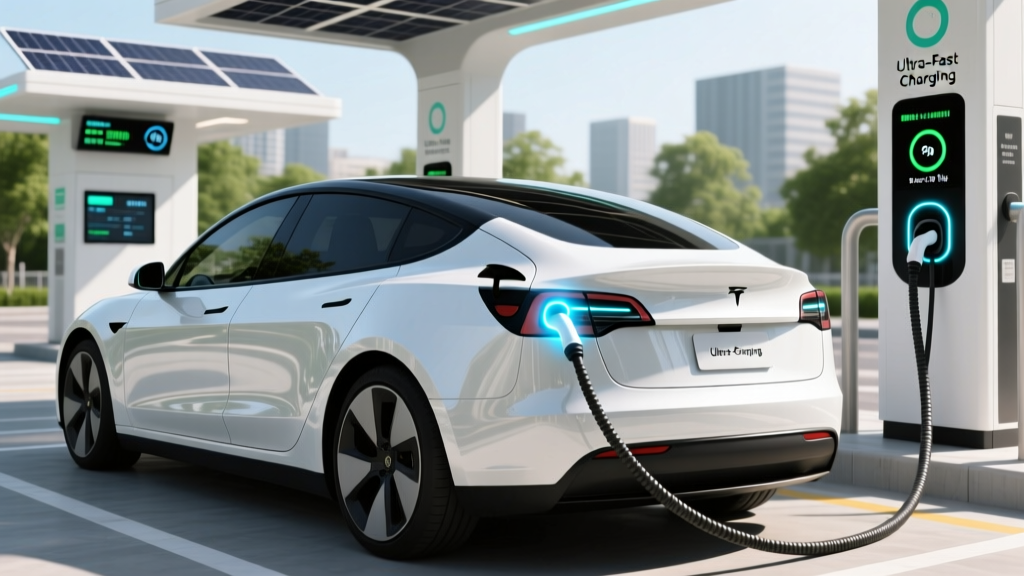
DC fast charging is not a home option, but understanding it matters for road trips. A vehicle like the Hyundai Ioniq 5 (84 kWh battery, 800V architecture) can accept a peak 240 kW at a 350 kW Electrify America station, reaching 10–80% in approximately 18 minutes. However, that peak rate only holds between roughly 10–55% state of charge; above 80%, the charge curve tapers sharply to protect battery chemistry, dropping to under 50 kW.
Home Electrical Requirements: What Your Panel Needs to Support
Installing a Level 2 home charger is fundamentally an electrical project, not an automotive one. The charger is a relatively simple device — most of the complexity and cost lies in your home's electrical infrastructure.
Circuit and Amperage Basics
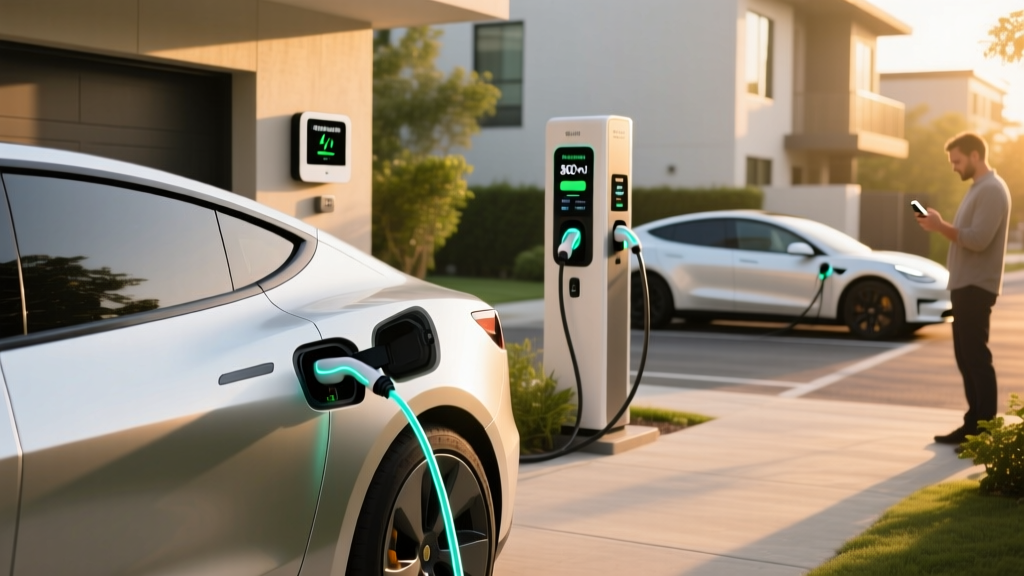
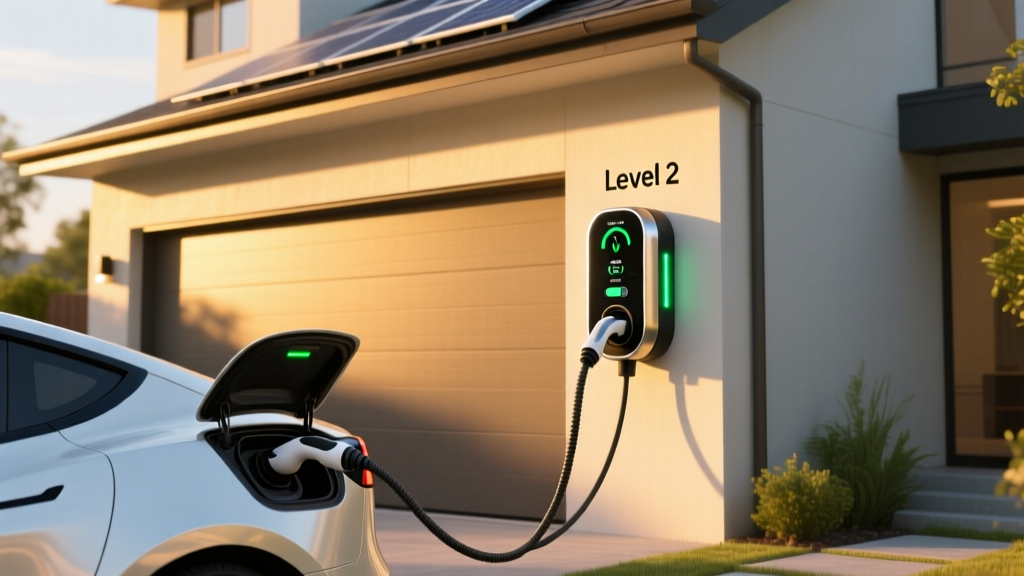
A Level 2 charger requires a dedicated 240-volt circuit, identical in concept to what powers your electric dryer or oven. The circuit amperage determines your charging speed:
- 40-amp circuit → supports a 32-amp charger (7.7 kW). The National Electrical Code (NEC) requires circuits to be rated at 125% of the continuous load, so a 32A charger needs a 40A breaker.
- 50-amp circuit → supports a 40-amp charger (9.6 kW). Common for homes with adequate panel capacity.
- 60-amp circuit → supports a 48-amp charger (11.5 kW). Delivers the fastest residential Level 2 speeds but demands significant panel headroom.
Panel Capacity and the Upgrade Reality
Most modern homes have a 200-amp main electrical panel. An electrician will perform a load calculation — adding up your existing circuits (HVAC, water heater, dryer, range) to determine whether spare capacity exists for a 40–60 amp EV circuit. Homes with gas appliances and minimal electric loads often have ample room. All-electric homes with older 100-amp or 150-amp panels frequently do not.
If your panel is maxed out, you face two options:
- Panel upgrade to 200A or 400A: Costs $1,500–$4,000+ depending on your utility's requirements, the panel location, and whether a new service drop from the utility pole is needed. This is the single biggest variable in home charging costs.
- Smart panel load management: Devices like the Span smart panel or Emporia load-management module can dynamically share amperage between your charger and other circuits, avoiding a full upgrade. Adds $500–$1,500 in equipment.
Permitting and Code
Virtually every jurisdiction in the U.S. requires an electrical permit for a new 240V circuit. Permit fees typically range from $50 to $250. The installation must pass inspection — the inspector will verify wire gauge, breaker sizing, grounding, and whether the outlet or hardwired connection meets code. Skipping the permit risks voiding homeowner's insurance coverage for any electrical fire originating from that circuit.
Home EV Charger Installation Costs: The Full Breakdown
Installation costs vary enormously based on your home's electrical readiness and the distance between your panel and the desired charger location. Here is a realistic 2026 cost breakdown based on national electrician rates and typical project scopes.
| Component | Simple Install (panel nearby, no upgrade) | Complex Install (long run or panel upgrade) |
|---|---|---|
| Level 2 charger unit (hardware) | $350–$700 | $350–$700 |
| Electrician labor (2–8 hours @ $85–$150/hr) | $170–$500 | $600–$1,200 |
| Materials (wire, conduit, breaker, junction box) | $50–$150 | $200–$500 |
| Permit fee | $50–$250 | $50–$250 |
| Panel upgrade (if needed) | $0 | $1,500–$4,000 |
| Total estimated cost | $620–$1,600 | $2,700–$6,650 |
Key cost driver: The distance from your electrical panel to the charging location. A panel in the garage next to where you park might require 15 feet of wire and a straightforward $600–$900 total. A panel in the basement with a charger mounted on an exterior carport 80 feet away requires trenching or conduit runs, pushing costs toward $1,500–$2,500 even without a panel upgrade.
Federal and Utility Incentives
The federal Alternative Fuel Vehicle Refueling Property Credit (IRS Form 8911) covers 30% of home charging equipment and installation costs, up to $1,000 — but only for taxpayers in eligible census tracts (typically lower-income or rural areas). Check your eligibility on the IRS site. Many utilities also offer rebates of $250–$750 for installing a smart Level 2 charger; check with your local provider.
Connector Compatibility: NACS, CCS, and CHAdeMO in 2026
The connector landscape has consolidated significantly since Ford, GM, Rivian, and most other automakers adopted Tesla's North American Charging Standard (NACS) for their EVs starting in 2025. Here is where each connector stands for the 2026 model year:
| Connector | Brands Using It (Native) | Home Charger Availability |
|---|---|---|
| NACS (Tesla standard) | Tesla, Ford, GM, Rivian, Volvo, Polestar, Mercedes-Benz, Nissan (new models) | Widely available — Tesla Wall Connector, ChargePoint, Emporia, Grizzl-E |
| CCS1 (Combo) | Hyundai, Kia, BMW, Volkswagen, legacy models from Ford/GM (pre-2025) | Widely available — ChargePoint, Emporia, JuiceBox, Grizzl-E |
| CHAdeMO | Nissan Leaf (legacy); essentially discontinued for new models | Limited — mostly older chargers; adapters available |
Adapter reality: If you own a CCS-equipped vehicle but want to use Tesla Superchargers or a NACS home charger, CCS-to-NACS adapters are available from Tesla and third-party manufacturers for $150–$250. The reverse (NACS vehicle to CCS charger) also works with adapters. For home charging, the simplest approach is to buy a charger with the connector that natively matches your vehicle — adapters add a point of failure and slight resistance loss.
Cost to Charge at Home vs. Gas: Per-Mile Economics
Home charging is where EVs deliver their most dramatic cost advantage. The exact savings depend on your local electricity rate and the vehicle's efficiency, measured in kWh per 100 miles (the EV equivalent of MPG — lower is better).
| Scenario | Rate | Vehicle Efficiency | Cost Per Mile |
|---|---|---|---|
| Home, off-peak utility rate | $0.12/kWh | 30 kWh/100mi (e.g., Tesla Model 3) | $0.036 |
| Home, average U.S. rate | $0.17/kWh | 30 kWh/100mi | $0.051 |
| Home, high-cost state (CA, HI) | $0.30/kWh | 30 kWh/100mi | $0.090 |
| Public Level 2 (ChargePoint, etc.) | $0.30–$0.45/kWh | 30 kWh/100mi | $0.09–$0.135 |
| DC Fast Charging (Electrify America) | $0.40–$0.60/kWh | 30 kWh/100mi | $0.12–$0.18 |
| Gasoline vehicle (30 MPG combined) | $3.40/gal (2026 avg) | 30 MPG | $0.113 |
The takeaway: At the U.S. average electricity rate of ~$0.17/kWh, home charging costs roughly $0.05/mile — about half the per-mile cost of a 30-MPG gas car at $3.40/gallon. Over 15,000 miles per year, that is approximately $945 in electricity vs. $1,700 in gasoline, saving $755 annually. Over five years, home charging saves roughly $3,750 in fuel costs alone, which typically covers the installation cost of a Level 2 charger multiple times over. Data from fueleconomy.gov confirms that most current BEVs achieve 100–130 MPGe combined, translating to 25–34 kWh/100mi.
Time-of-use rates matter: Many utilities offer off-peak rates 40–60% lower than peak rates. Scheduling your charger to run between 11 PM and 6 AM (a feature built into every smart charger listed below) can drop your effective rate from $0.17 to $0.08–$0.10/kWh, cutting your per-mile cost to under $0.03.
Best Home EV Chargers for 2026: Equipment Picks
The home charger market has matured considerably. In 2026, a good Level 2 charger should offer at least 40 amps (9.6 kW), a cable of 18–25 feet, Wi-Fi connectivity for scheduling and energy tracking, and NEMA 4 outdoor rating if mounted outside. Here are the models that deliver the best combination of performance, reliability, and value:
ChargePoint Home Flex (NACS or CCS)
- Power output: Up to 11.5 kW (48A) on a 60A circuit; adjustable down to 16A for smaller circuits
- Cable length: 23 feet
- Smart features: Wi-Fi, app scheduling, energy reporting, Alexa/Google integration, utility demand-response compatible
- Connector options: NACS or CCS1 (select at purchase)
- Price: ~$550–$650
- Best for: Drivers who want a reliable, well-supported smart charger with broad utility integration
Tesla Wall Connector (NACS)
- Power output: Up to 11.5 kW (48A) on a 60A circuit
- Cable length: 24 feet
- Smart features: Wi-Fi, over-the-air updates, power sharing (link multiple units on one circuit), Tesla app integration
- Connector: NACS native; CCS vehicles require an adapter
- Price: ~$475
- Best for: Tesla owners and NACS-adopting brand owners who want the cleanest integration and best price-to-performance ratio
Emporia Vue Level 2 Charger (NACS or CCS)
- Power output: Up to 11.5 kW (48A)
- Cable length: 24 feet
- Smart features: Wi-Fi, real-time energy monitoring (pairs with Emporia Vue panel monitor), solar-aware scheduling, load management
- Connector options: NACS or CCS1
- Price: ~$400–$500
- Best for: Homes with solar panels or those wanting detailed whole-home energy visibility; excellent value
Grizzl-E Smart (NACS or CCS)
- Power output: Up to 10 kW (40A) on a 50A circuit
- Cable length: 24 feet
- Smart features: Wi-Fi, app scheduling, OCPP protocol for utility programs
- Connector options: NACS or CCS1
- Price: ~$400–$450
- Built: Canadian-made, NEMA 4 outdoor rated, -40°F operating range
- Best for: Cold-climate and outdoor installations where durability is the priority
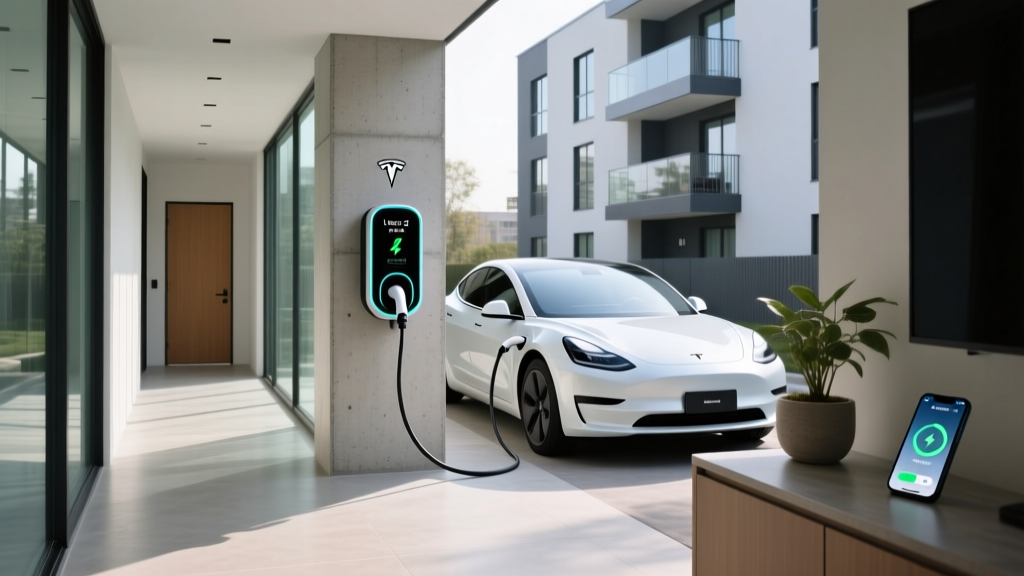
Hardwired vs. plug-in: Most of these chargers are available in both hardwired and NEMA 14-50 plug-in configurations. Hardwired installations eliminate the receptacle (one fewer failure point), can support the full 48A, and are preferred for permanent setups. Plug-in units using a NEMA 14-50 outlet are limited to 40A (per NEC receptacle rating limits) but offer portability — useful if you may move or want to take the charger with you.
Charging Times for Common EV Battery Sizes
Here is how long a full Level 2 home charging session takes for popular 2026 EV models, assuming a 48-amp (11.5 kW) charger. Times reflect 10–80% state of charge, which is the daily charging window most owners use to preserve battery longevity (particularly for NMC chemistry batteries).
| Vehicle | Battery (kWh usable) | 10–80% Charge Time | Range Recovered (EPA) |
|---|---|---|---|
| Tesla Model 3 Long Range | 75 kWh | ~4.5 hours | ~255 miles (of 363 EPA) |
| Ford Mustang Mach-E Extended Range | 91 kWh | ~5.5 hours | ~228 miles (of 320 EPA) |
| Hyundai Ioniq 5 (Long Range AWD) | 84 kWh | ~5.1 hours | ~216 miles (of 305 EPA) |
| Chevrolet Equinox EV (RS) | 85 kWh | ~5.2 hours | ~222 miles (of 319 EPA) |
| BMW i4 eDrive40 | 81.5 kWh | ~5.0 hours | ~215 miles (of 307 EPA) |
Real-world note: These times assume the charger sustains its full 11.5 kW output. In practice, charging speed tapers slightly in the final 10–15% as the battery management system balances cells. For daily driving, charging to 80% is recommended for NMC batteries; LFP batteries (found in base Tesla Model 3 and some other models) can be charged to 100% daily without degradation concerns. All of these vehicles comfortably recharge overnight during an 8-hour sleep window.
Safety, Code, and Installation Best Practices
Home EV charging is extremely safe when installed correctly — there are no flammable fluids, no combustion, and modern chargers include multiple layers of fault protection. But electrical safety is non-negotiable:
- Dedicated circuit: Your Level 2 charger must have its own dedicated circuit with no other loads sharing it. Sharing a circuit with a dryer or HVAC unit risks tripping the breaker or overheating the wire.
- Correct wire gauge: A 60A circuit requires 6 AWG copper wire (or 4 AWG aluminum). A 50A circuit requires 6 AWG. Undersized wire is a fire hazard. Your electrician will handle this, but verifying the wire gauge during inspection is wise.
- GFCI protection: The 2023 NEC (adopted by most states by 2026) requires GFCI protection for all 240V EV charging outlets. Hardwired chargers are typically exempt from this requirement, which is one reason hardwired is preferred — GFCI breakers for 240V circuits cost $80–$150 and can be prone to nuisance tripping.
- Outdoor rating: If your charger is mounted outdoors or in an unenclosed carport, it must carry a NEMA 4 (or NEMA 4X) rating for weather resistance. All four chargers recommended above meet this standard.
- Cable management: A 24-foot charging cable left on the ground is a tripping hazard and degrades from UV exposure and moisture. Wall-mounted cable organizers ($20–$40) keep the connector clean and the garage floor clear.
For a comprehensive overview of electrical code requirements, the National Fire Protection Association's NEC resources provide the baseline that local inspectors enforce.
Frequently Asked Questions
How much does it cost to install a home EV charger?
A straightforward Level 2 installation with an adequate electrical panel and short wire run costs $620–$1,600 total (charger + electrician + permit). If your home needs a panel upgrade from 100A to 200A, expect $2,700–$6,650 all-in. The federal Alternative Fuel Vehicle Refueling Property Credit can offset 30% of costs (up to $1,000) if you are in an eligible census tract, and many utilities offer additional rebates of $250–$750.
How fast will each charging level add range?
Level 1 (120V standard outlet) adds 3–5 miles of range per hour — about 35–50 miles overnight. Level 2 (240V, 48A) adds 25–44 miles per hour, fully replenishing most EVs in 5–8 hours. DC fast charging adds 150–1,200+ miles per hour at peak, achieving 10–80% in 15–30 minutes on the road.
Which connector or charger is compatible with my EV?
For 2026 models, most new EVs from Tesla, Ford, GM, Rivian, Volvo, and others use the NACS connector. Hyundai, Kia, BMW, and Volkswagen still use CCS1 on current models. Check your vehicle's charge port or owner's manual, then buy a home charger with the matching connector. Adapters exist for cross-compatibility but a native match is simpler and more reliable.
How much does charging cost per mile compared to gas?
At the U.S. average home electricity rate of $0.17/kWh and typical EV efficiency of 30 kWh/100mi, home charging costs about $0.05 per mile. A 30-MPG gas car at $3.40/gallon costs about $0.11 per mile. Home charging is roughly half the per-mile cost of gasoline. Off-peak utility rates can push EV charging below $0.03/mile.
What electrical upgrades might I need?
The most common upgrade is a panel capacity increase if your existing service (especially 100A or 150A panels) cannot spare 40–60 amps for a dedicated EV circuit. This costs $1,500–$4,000. Other potential upgrades include replacing a Federal Pacific or Zinsco panel (known fire hazards found in pre-1990 homes, $2,000–$3,500 to replace), adding a sub-panel in the garage if the main panel is far away ($500–$1,200), or installing a smart load-management device to avoid an upgrade entirely ($500–$1,500).
Can I just use a regular 120V outlet instead of installing a Level 2 charger?
You can, but it is only practical if you drive fewer than 30–40 miles per day and can leave the car plugged in for 10+ hours. Level 1 charging at ~1.4 kW adds roughly 40 miles overnight. For PHEV owners with 25–40 miles of electric range, Level 1 is often sufficient. For BEV owners with 250+ mile batteries and commutes over 40 miles, Level 2 is effectively mandatory to avoid chronic undercharging.
Is it safe to charge an EV in the rain or outdoors?
Yes. EV chargers rated NEMA 4 are sealed against rain, snow, and dust. The charging connector is designed so that no current flows until a secure connection is confirmed with the vehicle — you cannot be shocked by touching a plugged-in connector in the rain. That said, avoid charging during active lightning storms, and ensure your outdoor outlet or hardwired connection has proper weatherproof covers.