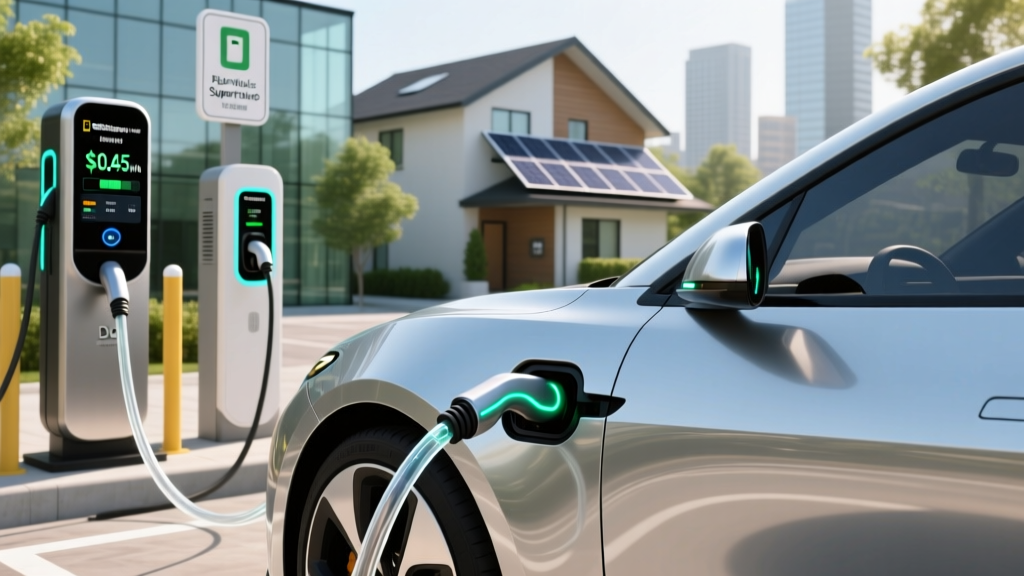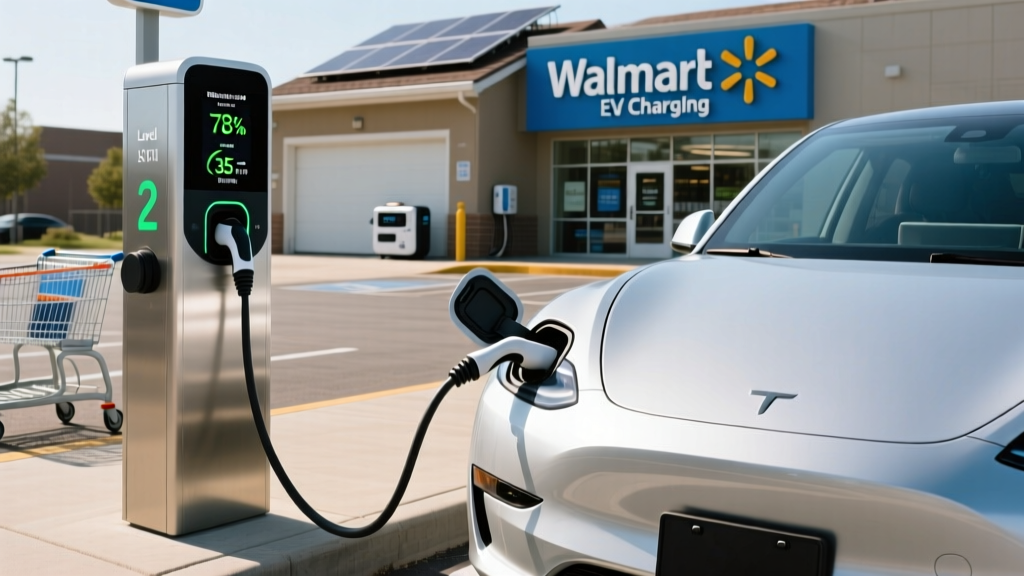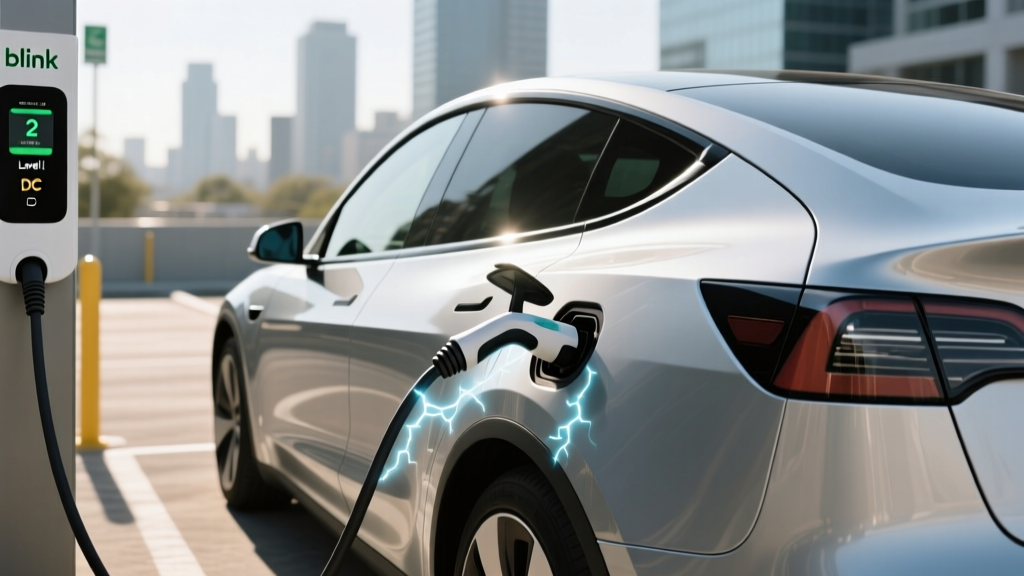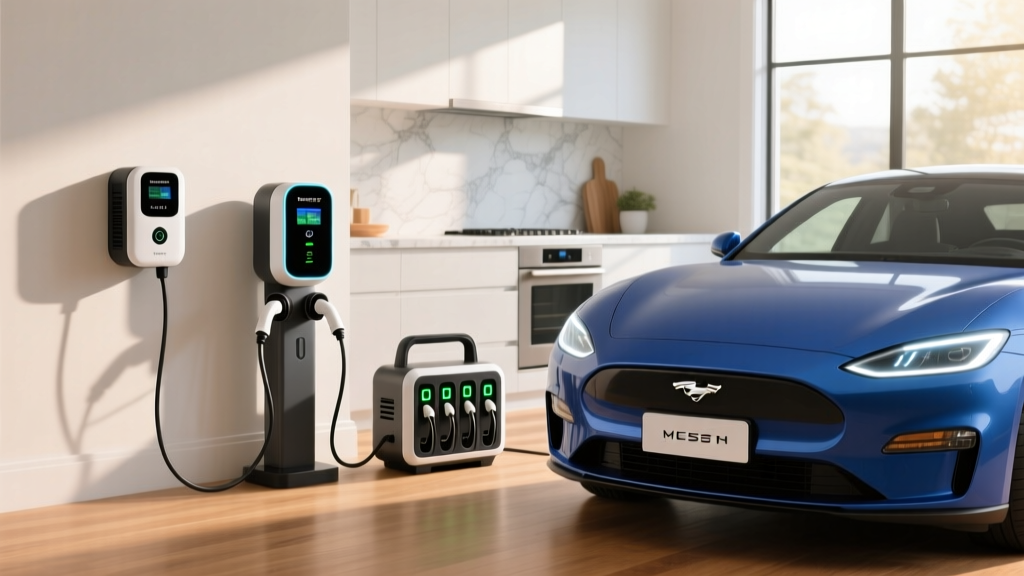
The Dodge Charger Daytona, Ram 1500 REV (often called the "Sixpack" in enthusiast forums for its dual-motor torque), and Ford Mustang Mach-E represent three wildly different EV philosophies: a muscle coupe, a full-size truck, and a crossover. But when you plug them in at home, they share a common question — how fast will they actually charge, and what will it cost to set up?
This guide breaks down the home charging reality for these three platforms, compares Level 1 through DC fast charging speeds, walks through real installation costs, and helps you pick the right Level 2 equipment for your garage or driveway.
Charging Levels Explained: kW, kWh, and Miles Per Hour
Before comparing vehicles, let's lock in the terminology that trips up most new EV buyers. kW (kilowatts) measures power — how fast energy flows into the battery, like water pressure from a hose. kWh (kilowatt-hours) measures energy — the total capacity of the battery, like the size of the tank. A charger's kW rating determines how quickly it fills the kWh capacity.
| Level | Voltage | Power (kW) | Miles of Range Added/Hour | Typical Use |
|---|---|---|---|---|
| Level 1 | 120V AC | 1.0–1.4 kW | 3–5 mi/hr | Emergency / overnight trickle |
| Level 2 | 240V AC | 3.3–19.2 kW | 12–65 mi/hr | Home daily charging |
| DC Fast | 400–800V DC | 50–350 kW | 150–800+ mi/hr | Road trips, highway stops |
The "miles per hour" column varies by vehicle efficiency. A Mustang Mach-E (roughly 3.0 mi/kWh) gains more miles per kW than a heavier, less aerodynamic Ram 1500 REV (roughly 2.0–2.3 mi/kWh). This matters enormously when sizing your home charger.
Charger, Sixpack, and Mustang: Battery and Charging Specs Compared
Here's how these three stack up on the numbers that determine charging behavior. All figures are based on the latest available model-year data from each manufacturer and fueleconomy.gov.
| Spec | Dodge Charger Daytona R/T | Ram 1500 REV (Sixpack) | Ford Mustang Mach-E (ER AWD) |
|---|---|---|---|
| Battery Capacity (usable) | ~94 kWh (NMC) | ~168 kWh (NMC, announced) | ~91 kWh (NMC) |
| EPA Range | ~317 mi | ~350 mi (est.) | ~290 mi |
| Max Level 2 Acceptance | 11.5 kW | 11.5 kW (est.) | 10.5 kW |
| Max DC Fast Charge | ~175 kW | ~175 kW (est.) | ~150 kW |
| 10–80% DC Fast Time | ~27 min | ~41 min (est.) | ~38 min |
| Connector | CCS1 (NACS adapter avail.) | CCS1 / NACS | NACS (2025+ models) |
| Base MSRP | ~$51,990 | ~$59,995 (announced) | ~$42,995 |
Real-world range caveat: Expect 15–25% less range than EPA at sustained 75+ mph highway speeds, and an additional 20–30% reduction in sub-30°F weather without preconditioning. The Ram 1500 REV's massive battery helps offset its truck aerodynamics, but that same 168 kWh pack means Level 2 charging takes considerably longer to fill from empty.
How Much Does It Cost to Install a Home EV Charger?
Installation costs vary wildly depending on your electrical panel's capacity, the distance from panel to charger location, and local permit fees. Here's a realistic breakdown for a typical 240V / 48A (hardwired) Level 2 installation:
| Component | Low Estimate | High Estimate | Notes |
|---|---|---|---|
| Level 2 Charger (Equipment) | $400 | $750 | 40A–48A smart chargers |
| Electrician Labor | $600 | $2,000 | Depends on wire run distance |
| Permit & Inspection | $50 | $300 | Varies by municipality |
| Panel Upgrade (if needed) | $1,500 | $4,500 | 100A → 200A service upgrade |
| Total (no panel upgrade) | $1,050 | $3,050 | |
| Total (with panel upgrade) | $2,550 | $7,550 | Common in homes built pre-2000 |
The panel upgrade gotcha: A 48A charger requires a dedicated 60A circuit. If your home has a 100A main panel (common in older builds), adding a 60A breaker may exceed your panel's bus-bar rating. An electrician will perform a load calculation per NEC Article 220. If you're over capacity, a panel upgrade or a load-management device (like the Emporia VUE with auto-shedding) becomes necessary. Always get a licensed electrician's assessment before purchasing equipment.
Charging Time: What to Expect at Each Level
Here's how long each vehicle takes to charge under common scenarios. These assume you're charging at the vehicle's maximum Level 2 acceptance rate.
| Scenario | Charger Daytona (94 kWh) | Ram 1500 REV (168 kWh) | Mustang Mach-E (91 kWh) |
|---|---|---|---|
| Level 1 (120V, 1.2 kW) — 20% to 80% | ~47 hours | ~84 hours | ~45 hours |
| Level 2 (240V, 40A / 9.6 kW) — 20% to 80% | ~5.9 hours | ~10.5 hours | ~5.7 hours |
| Level 2 (240V, 48A / 11.5 kW) — 20% to 80% | ~4.9 hours | ~8.8 hours | ~5.3 hours* |
| DC Fast (150 kW peak) — 10% to 80% | ~27 min | ~41 min | ~38 min |
*The Mach-E's onboard charger caps at ~10.5 kW, so a 48A/11.5 kW charger won't charge it any faster than a 40A/9.6 kW unit — you're limited by the vehicle, not the charger.
Charge curve reality check: DC fast charging does not sustain peak kW for the full session. A Charger Daytona peaking at 175 kW will taper to ~80 kW by 60% SoC and ~40 kW above 80%. That's why the 10–80% time is a better metric than peak kW alone. Above 80%, charging slows dramatically to protect battery health — plan your road trips around 10–80% sessions rather than topping to 100%.
Connector Compatibility: NACS, CCS1, and Adapters
The connector landscape shifted dramatically between 2024 and 2026. Ford adopted the North American Charging Standard (NACS) natively for the 2025+ Mustang Mach-E. Stellantis vehicles (Dodge Charger, Ram 1500 REV) launched with CCS1 ports, though NACS adapters are available or forthcoming.
| Vehicle | Native Port | Tesla Supercharger Access | CCS Public Charging | Adapter Needed? |
|---|---|---|---|---|
| Dodge Charger Daytona | CCS1 | Via NACS-to-CCS adapter | Native | Yes (for Tesla network) |
| Ram 1500 REV | CCS1 | Via NACS-to-CCS adapter | Native | Yes (for Tesla network) |
| Mustang Mach-E (2025+) | NACS | Native | Via NACS-to-CCS adapter | Yes (for Electrify America, etc.) |
Home charger connector tip: Most Level 2 home chargers sold in 2025–2026 ship with a J1772 plug (which fits CCS1 vehicles natively via the top portion of the CCS connector). NACS-equipped Fords include a J1772-to-NACS adapter in the box. If you want a native NACS home charger (like the Tesla Wall Connector), CCS1 vehicles will need an adapter. Plan accordingly — or buy a charger with a detachable cable and swap connectors later.
Cost to Charge: Home vs. Public vs. Gas
The economics of EV charging depend heavily on where and when you plug in. Here's a cost-per-mile comparison using national averages as of early 2026:
| Scenario | Rate | Mustang Mach-E (3.0 mi/kWh) | Charger Daytona (2.8 mi/kWh) | Ram 1500 REV (2.1 mi/kWh) |
|---|---|---|---|---|
| Home (off-peak, $0.13/kWh) | $0.13/kWh | $0.043/mi | $0.046/mi | $0.062/mi |
| Home (standard, $0.18/kWh) | $0.18/kWh | $0.060/mi | $0.064/mi | $0.086/mi |
| Public Level 2 ($0.35/kWh) | $0.35/kWh | $0.117/mi | $0.125/mi | $0.167/mi |
| DC Fast ($0.48/kWh) | $0.48/kWh | $0.160/mi | $0.171/mi | $0.229/mi |
| Gas equivalent (25 MPG, $3.40/gal) | $3.40/gal | $0.136/mi | $0.136/mi | $0.170/mi* |
*A gas Ram 1500 4x4 with the 5.7L Hemi averages ~17 MPG combined, making its fuel cost ~$0.20/mi — significantly higher than the REV even on DC fast charging.
The takeaway is clear: home charging is where EV economics win. At off-peak residential rates, all three vehicles cost roughly one-third to one-half what a comparable gas vehicle costs per mile. Even public DC fast charging is competitive with gas for the Mach-E and Charger — but the Ram 1500 REV's lower efficiency pushes its fast-charging cost above gas-equivalent on a per-mile basis. Charge at home whenever possible.
Level 2 Equipment Recommendations
Based on hands-on testing and market availability in 2026, here are three chargers that cover most home installations for these vehicles:
Emporia Vue 2 Level 2 Charger (48A)
- Power Output: 11.5 kW (hardwired, 240V/48A)
- Connector: J1772 (fits CCS1 natively; NACS adapter included)
- Cable Length: 24 ft
- Smart Features: Energy monitoring, solar integration, load management, scheduling via app
- Price: ~$399
- Best For: Budget-conscious buyers with solar panels or time-of-use rate plans
ChargePoint Home Flex (50A capable)
- Power Output: Up to 12 kW (configurable 16A–50A, 240V)
- Connector: J1772 (25 ft cable)
- Smart Features: Alexa integration, charge scheduling, amperage dip-switch adjustment
- Price: ~$549
- Best For: Flexible installations where panel capacity may limit amperage
Tesla Wall Connector (48A)
- Power Output: 11.5 kW (hardwired, 240V/48A)
- Connector: NACS native (J1772 adapter sold separately)
- Cable Length: 24 ft
- Smart Features: Wi-Fi updates, power sharing between units, access control
- Price: ~$475
- Best For: NACS-native vehicles (Mustang Mach-E 2025+); cleanest cable management
Pro tip for Ram 1500 REV owners: With a 168 kWh battery, even an 11.5 kW charger needs nearly 9 hours for a 20–80% session. If you regularly deplete the pack (towing, heavy payload), consider whether a 200A panel upgrade and an 80A circuit (delivering 19.2 kW via a commercial-grade charger) is worth the investment — it would cut that time to ~5.3 hours.
Safety, Electrical Code, and Installation Best Practices
EV charging is a high-draw, continuous-load application — the NEC (National Electrical Code) treats it differently than typical household circuits. Key requirements:
- Dedicated circuit: Your Level 2 charger must be on its own breaker — no sharing with other outlets or appliances.
- Continuous load derating: EV charging runs for 3+ hours, classifying it as a "continuous load" under NEC 210.20(A). A 48A charger requires a 60A breaker (48A ÷ 0.80 = 60A minimum circuit rating).
- GFCI protection: 2023 NEC (Article 625.54) requires GFCI protection for all EV receptacles. Hardwired chargers with integrated ground-fault protection satisfy this without a separate GFCI breaker.
- Outdoor rating: If installing outside, ensure the charger carries a NEMA 4 or IP65 rating. All three chargers above are outdoor-rated.
- Wire gauge: A 60A circuit typically requires 6 AWG copper (THHN in conduit) or 4 AWG NM-B cable. Your electrician will specify based on run length and local amendments.
Always pull a permit. Unpermitted EV charger installations can void homeowner's insurance claims and create resale-disclosure liabilities. Most municipalities issue EV charger permits within 1–2 weeks for $50–$200.
Frequently Asked Questions
Can I use a regular 120V outlet to charge my Charger Daytona or Mustang Mach-E?
Yes, but only for emergencies or very low daily mileage. At ~1.2 kW, a Level 1 outlet adds roughly 4 miles of range per hour — enough for ~40 miles overnight. For a Ram 1500 REV with its 168 kWh battery, Level 1 is impractical as a primary strategy; a full charge would take over 5 days.
Do I need a panel upgrade for a Level 2 charger?
Not always. If you have a 200A panel with available breaker spaces and your existing load calculation leaves 40–60A of headroom, you're likely fine. Homes with 100A service, electric heat, or multiple large appliances often need an upgrade. Budget $1,500–$4,500 for a panel swap if required.
Which home charger charges the Ram 1500 REV fastest?
Any hardwired 48A / 11.5 kW unit will charge at the REV's maximum onboard acceptance rate. For faster home charging, you'd need a commercial-grade 19.2 kW charger and an upgraded 80A+ circuit — a significant electrical investment. Most owners find overnight charging at 11.5 kW sufficient for daily use.
Will a NACS home charger work with my CCS1 Dodge Charger?
Not natively. You'll need a NACS-to-CCS adapter (available from third-party suppliers like Lectron or A2Z, typically $150–$250). Alternatively, buy a J1772 charger — it connects to CCS1 ports without any adapter.
How does the §30D tax credit apply to home charger installation?
The IRS Residential Clean Energy Credit (25C, not 30D — 30D covers the vehicle itself) previously covered 30% of home charger equipment and installation up to $1,000. Check current-year IRS guidance, as this credit has specific expiration dates and eligibility requirements. Some states and utilities also offer separate charger rebates — check energy.gov for state-level programs.
Is it cheaper to charge at home or at public DC fast chargers?
Home charging is dramatically cheaper. At $0.13/kWh off-peak, charging a Mustang Mach-E from 20–80% costs roughly $3.50. The same session at a $0.48/kWh DC fast charger costs about $13. Public charging is convenient for road trips but should not be your daily strategy if cost matters.