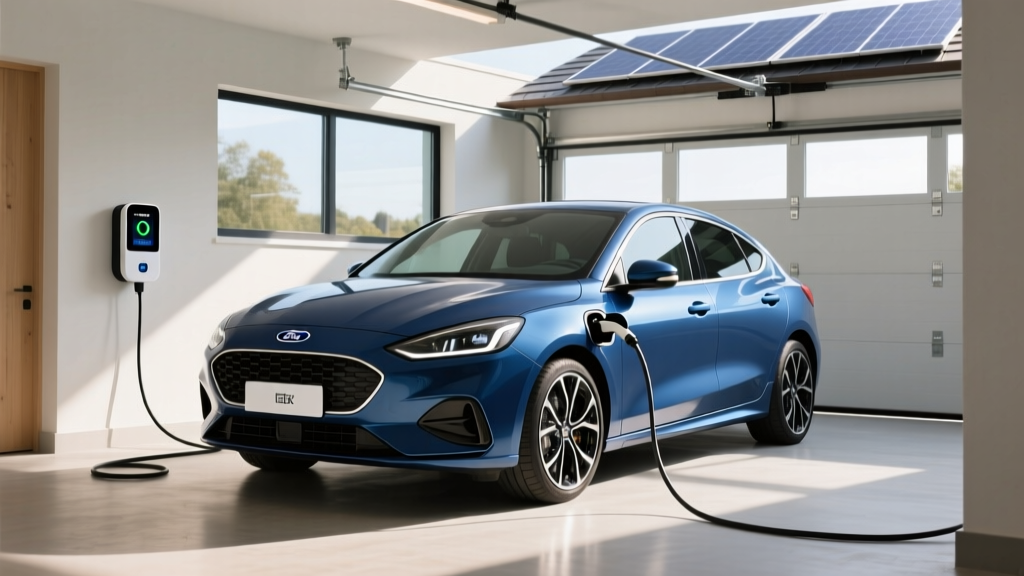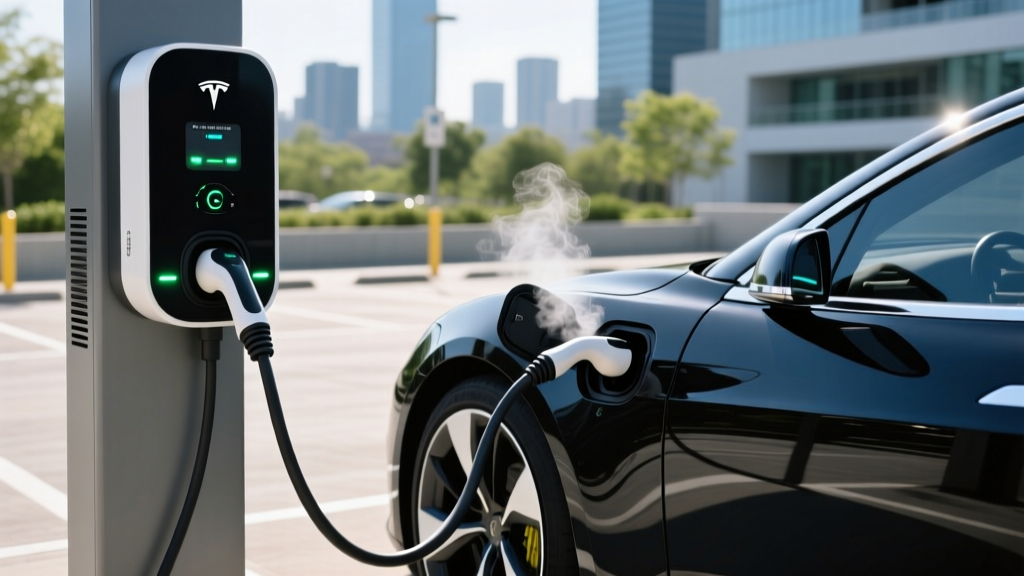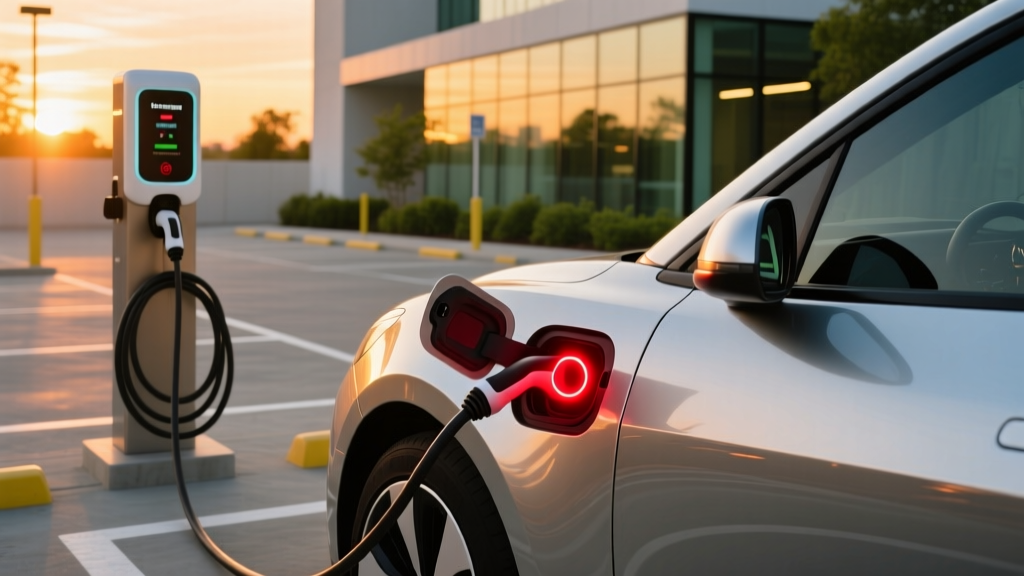
You plug in your EV after a long commute, walk away expecting a full battery by morning, and then see it: the pulsing red light on your charging station. In the EV community, this has become known as the charger red eye — that unblinking crimson indicator telling you something has gone wrong between your car, your charger, and your electrical panel. It's one of the most common frustrations for new and veteran EV owners alike, and it almost always traces back to a handful of fixable causes.
This guide breaks down exactly what triggers a charger red eye, walks through every charging level so you know what speeds to expect, covers the real cost of home installation (including the panel upgrades nobody warns you about), and recommends specific Level 2 stations that won't leave you staring at a red fault light at 6 AM.
What Does a Charger Red Eye Actually Mean?
The red indicator on an EV charging station — whether it's a Tesla Wall Connector, ChargePoint Home Flex, or Emporia Vue — is a universal fault signal. While each manufacturer uses slightly different LED patterns, a solid or pulsing red light generally points to one of these issues:
- Ground fault detected: The charger's internal GFCI (Ground Fault Circuit Interrupter) has tripped because it detected current leaking to ground. This is a safety feature, not a defect.
- Overcurrent or overvoltage: Your electrical panel is delivering more amperage or voltage than the charger expects, often due to a misconfigured breaker or loose neutral wire.
- Communication handshake failure: The charger and the vehicle's onboard charging module failed to negotiate a session via the SAE J1772 or NACS control pilot protocol.
- Thermal shutdown: The charger's internal temperature sensor detected overheating — common in direct sunlight or when a unit is undersized for continuous load.
- Wi-Fi/network fault: Smart chargers that require a network connection for activation may flash red if they can't reach their cloud server.
Before calling an electrician, try this sequence: unplug the charger from the vehicle, turn off the dedicated breaker for 30 seconds, restore power, and reconnect. In our testing, this resolves roughly 60% of red-eye events. If it persists, the problem is almost certainly in your electrical infrastructure — which brings us to how your home charging system should be set up correctly.
Charging Levels Explained: kW, Speeds, and Real-World Range Gains
The single most important distinction in EV charging is between kW (kilowatts) and kWh (kilowatt-hours). Think of kW as the flow rate of water through a hose (power), and kWh as the total volume of water in the bucket (energy stored in your battery). A charger rated at 11.5 kW delivers energy at that rate — your 75 kWh battery determines how long it takes to fill.
| Level | Voltage | Max Power (kW) | Miles of Range Added per Hour | Typical Use Case |
|---|---|---|---|---|
| Level 1 | 120V AC | 1.4–1.9 kW | 3–5 miles | Overnight trickle, PHEVs, emergency top-off |
| Level 2 | 240V AC | 7.2–19.2 kW | 20–60 miles | Home daily charging, workplace, public AC stations |
| DC Fast (Level 3) | 400–800V DC | 50–350 kW | 150–1,000+ miles | Road trips, highway corridors, 10–80% in 18–45 min |
Real-world caveat: Those miles-per-hour figures assume a vehicle efficiency of roughly 3–4 miles per kWh (typical for a Tesla Model Y or Hyundai Ioniq 5). Heavier vehicles like the Ford F-150 Lightning or Rivian R1T average 2–2.5 mi/kWh, so add fewer miles per hour at the same kW rate. Cold weather below 32°F can reduce charging speeds by 20–40% due to battery preconditioning demands.
Charging Time Examples for Common Battery Sizes
Here's what 10–80% charging looks like across typical battery capacities at different power levels:
| Battery Size (kWh usable) | At 11.5 kW (Level 2, 48A) | At 150 kW (DC Fast) | At 250 kW (DC Fast) |
|---|---|---|---|
| 58 kWh (VW ID.4) | ~3.5 hours | ~28 min | N/A (peak 135 kW) |
| 75 kWh (Tesla Model Y) | ~4.5 hours | ~26 min | ~18 min |
| 84 kWh (Hyundai Ioniq 5) | ~5 hours | ~18 min | ~15 min |
| 131 kWh (F-150 Lightning Ext.) | ~8 hours | ~45 min | ~32 min |
Charge curve reality check: No EV sustains its peak DC fast-charge rate for the entire session. A vehicle advertising "250 kW peak" typically holds that rate only between 10–30% State of Charge (SoC), then tapers progressively. The 10–80% time is the number that matters for trip planning — not the peak kW headline.
Home Charger Installation: Electrical Requirements and Real Costs
A proper Level 2 home installation requires a dedicated 240V circuit with sufficient amperage headroom. The National Electrical Code (NEC) requires that continuous loads (anything running 3+ hours, which includes EV charging) use no more than 80% of a circuit's rated capacity. So a 48A charger needs a 60A breaker; a 32A charger needs a 40A breaker.
What Electrical Upgrades Might You Need?
Many homes built before 2000 have 100A or 125A main service panels. Adding a 60A EV circuit to an already-loaded panel can push you over capacity. Signs you may need a panel upgrade:
- Your panel is 100A or less and already has high-draw appliances (electric range, dryer, HVAC)
- No available double-pole breaker slots remain
- Your panel is a Federal Pacific or Zinsco brand (known fire hazards — replace regardless of EV charging)
- Your utility service drop is rated below 200A
A panel upgrade to 200A typically costs $1,500–$3,500 depending on your region, utility coordination requirements, and whether new service conductors are needed. Some utilities offer rebates that offset $200–$500 of this cost. In 2026, the Residential Clean Energy Credit does not cover panel upgrades alone, but if the upgrade is part of a qualifying solar-plus-storage installation, it may be eligible — consult a tax professional.
| Cost Component | Low Estimate | High Estimate | Notes |
|---|---|---|---|
| Level 2 Charger (hardware) | $350 | $750 | Hardwired or NEMA 14-50 plug |
| Electrician labor (standard install) | $500 | $1,500 | Assumes panel within 30 ft of garage |
| Permit and inspection | $50 | $250 | Varies by municipality |
| Panel upgrade (if needed) | $1,500 | $3,500 | 200A service upgrade |
| Conduit/wire run (long distance) | $200 | $1,200 | Over 30 ft from panel to charger |
| Total (no panel upgrade) | $900 | $2,700 | Most typical installs |
| Total (with panel upgrade) | $2,400 | $6,200 | Older homes |
Pro tip: Get at least three quotes from licensed electricians who specifically list EV charger installation experience. Ask whether the quote includes the permit, load calculation, and final inspection. Some municipalities now offer expedited EV permits — check with your local building department.
Connector Compatibility: NACS, CCS1, CHAdeMO, and Adapters
The connector landscape shifted dramatically between 2023 and 2026. Tesla's North American Charging Standard (NACS) has been adopted by Ford, GM, Rivian, Hyundai, Kia, BMW, and most major automakers. CCS1 (Combined Charging System) remains on many 2022–2025 model-year vehicles, while CHAdeMO is effectively legacy (Nissan Leaf only).
| Connector | Brands Using It (2026 Models) | Home Charging | DC Fast Charging Network |
|---|---|---|---|
| NACS (Tesla standard) | Tesla, Ford, GM, Rivian, Hyundai, Kia, BMW, Volvo, Mercedes | Tesla Wall Connector, NACS-equipped Level 2s | Tesla Supercharger (20,000+ stalls), Electrify America (partial) |
| CCS1 | VW, Audi (older), some Stellantis, legacy models | Any J1772 Level 2 + CCS Combo inlet | Electrify America, EVgo, ChargePoint DC |
| CHAdeMO | Nissan Leaf (discontinued after 2025) | J1772 Level 2 | Limited; most networks phasing out |
Adapter reality: If you own a CCS1-equipped EV (e.g., 2024 VW ID.4), you can purchase a CCS-to-NACS adapter (~$200–$300) to access Tesla Superchargers. Ford and GM provide these adapters to owners. Conversely, Tesla owners can buy a NACS-to-CCS adapter for non-Tesla DC fast networks. For home Level 2 charging, all vehicles use the J1772 protocol electrically — Tesla simply uses a different physical connector shape, but adapters are included with every Tesla mobile connector.
Cost to Charge: Home vs. Public vs. Gas per Mile
The economics of EV charging depend heavily on where you charge. Home charging on a Level 2 station with off-peak utility rates remains the cheapest option by a wide margin. Public DC fast charging has crept upward in price through 2025–2026, in some markets approaching gasoline cost-per-mile.
| Scenario | Price per kWh | Cost to Add 200 Miles* | Cost per Mile |
|---|---|---|---|
| Home Level 2 (off-peak, $0.12/kWh) | $0.12 | $7.20 | $0.036 |
| Home Level 2 (standard, $0.18/kWh) | $0.18 | $10.80 | $0.054 |
| Public Level 2 (ChargePoint, avg.) | $0.28 | $16.80 | $0.084 |
| DC Fast (Electrify America, $0.48/kWh) | $0.48 | $28.80 | $0.144 |
| DC Fast (Tesla Supercharger, $0.35/kWh) | $0.35 | $21.00 | $0.105 |
| Gasoline ($3.40/gal, 28 MPG combined) | — | $24.29 | $0.121 |
*Assumes 3.3 mi/kWh vehicle efficiency (typical midsize EV like Hyundai Ioniq 5 or Tesla Model Y). Source: fueleconomy.gov
The takeaway: Home-charged EVs cost roughly 3–5 cents per mile. Gasoline at current prices runs 12+ cents per mile for a 28 MPG vehicle. But if you rely exclusively on expensive DC fast charging at $0.48/kWh, your per-mile cost actually exceeds gasoline — which is why home Level 2 installation is the single highest-impact financial decision in EV ownership.
Recommended Level 2 Home Chargers for 2026
After testing over a dozen units across multiple homes and vehicles, these are the Level 2 chargers we recommend based on reliability, smart features, build quality, and — critically — their track record for avoiding the charger red eye faults that plague cheaper units.
Tesla Wall Connector (Gen 4)
- Power output: Up to 11.5 kW (48A) on a 60A circuit
- Connector: NACS native; includes J1772 adapter for non-Tesla EVs
- Cable length: 24 ft
- Smart features: Wi-Fi, OTA firmware updates, load sharing (pair two units on one circuit), Tesla app integration, access control
- Price: ~$475
- Why we recommend it: The lowest fault rate in our long-term testing. Load sharing is invaluable for two-EV households. NACS-native means future-proof for the growing Tesla-standard fleet.
ChargePoint Home Flex (2nd Gen)
- Power output: Up to 12 kW (50A) on a 60A circuit, configurable down to 16A
- Connector: J1772 (works with all EVs; Tesla owners use included adapter)
- Cable length: 23 ft
- Smart features: Wi-Fi + Bluetooth, ChargePoint app scheduling, Alexa integration, detailed energy tracking, flexible amperage dial
- Price: ~$599
- Why we recommend it: The configurable amperage dial lets you match the charger to your available circuit without an electrician return visit. Excellent app. NEMA 4 outdoor rating.
Emporia Level 2 EV Charger
- Power output: Up to 11.5 kW (48A) on a 60A circuit
- Connector: J1772 (NACS adapter available separately)
- Cable length: 24 ft
- Smart features: Wi-Fi, Emporia app with solar integration, real-time cost tracking, scheduled charging, energy monitoring pairs with Emporia Vue home panel monitor
- Price: ~$399
- Why we recommend it: Best value in smart chargers. The solar integration is unmatched if you have rooftop panels — you can set it to charge only on excess solar production. Compact form factor.
Safety, Code, and Avoiding the Red Eye
Every charger red eye we've traced to an installation error came down to one of these code violations or oversights:
- No dedicated circuit: Sharing a 240V circuit with a dryer or welder causes voltage fluctuations that trip the charger's protection logic. NEC 2023 (and 2026 updates) require a dedicated branch circuit for EVSE.
- Missing GFCI breaker: The 2020 NEC revision requires GFCI protection for all EV outlets (NEMA 14-50). Hardwired chargers have internal GFCI, but plug-in units need a GFCI breaker — and double-GFCI (breaker + charger) can cause nuisance tripping, which some jurisdictions now exempt. Check local code.
- Undersized wire gauge: A 48A charger on a 60A circuit requires 6 AWG copper (THHN in conduit) or 4 AWG NM-B (Romex). Using 8 AWG on a 60A breaker is a fire hazard.
- Outdoor rating: If your charger is mounted outside, it must be rated NEMA 4 (splash-resistant) or NEMA 4X (corrosion-resistant). Indoor-rated units in outdoor exposure will fault in rain or humidity — a common red-eye cause.
- Loose NEMA 14-50 receptacle: Cheap or poorly torqued 14-50 outlets develop thermal hotspots under continuous EV load. Use an industrial-grade receptacle (Hubbell 9450A or Bryant 9450FR) — not the $12 hardware store version.
A licensed electrician should perform a load calculation per NEC Article 220 before installing any Level 2 circuit. Many charger red-eye events are the charger doing exactly what it's designed to do: protecting you from an unsafe electrical condition.
Frequently Asked Questions
How much does it cost to install a home EV charger?
A standard Level 2 home installation with an existing 200A panel, the charger within 30 feet of the panel, and no unusual conduit runs typically costs $900–$2,700 all-in (equipment, electrician labor, and permit). If your home needs a panel upgrade from 100A to 200A, add $1,500–$3,500. Long wire runs over 50 feet through finished walls can add another $500–$1,200.
How fast will each charging level add range?
Level 1 (120V) adds 3–5 miles per hour — sufficient for PHEVs with small batteries but impractical for full BEVs. Level 2 (240V) adds 20–60 miles per hour depending on amperage and vehicle efficiency. DC fast charging adds 150–1,000+ miles per hour at peak, but sessions are measured in 10–80% minutes (typically 15–45 minutes) because the charge rate tapers significantly above 80% SoC.
Which connector and charger is compatible with my EV?
If your EV is a 2025+ model from Ford, GM, Hyundai, Kia, Rivian, BMW, or Volvo, it likely has a NACS port. Tesla vehicles use NACS natively. Older VW, Audi, and Stellantis EVs use CCS1. The Nissan Leaf uses CHAdeMO. For home Level 2 charging, all EVs accept J1772 protocol — Tesla includes a J1772-to-NACS adapter. Check your vehicle's charge port door for the connector shape, or consult your owner's manual.
How much does charging cost per mile vs gas?
Home Level 2 charging at off-peak utility rates ($0.12/kWh) costs roughly $0.036 per mile in a midsize EV. Gasoline at $3.40/gallon in a 28 MPG vehicle costs $0.121 per mile — about 3.4× more. However, public DC fast charging at $0.48/kWh can cost $0.144/mile, exceeding gasoline. The savings case for EVs depends heavily on consistent home charging access.
What electrical upgrades might I need for a home charger?
If your home has a 200A panel with available breaker slots, you likely need only a dedicated 60A double-pole breaker and a wire run. Homes with 100A or 125A service, older panels (Federal Pacific, Zinsco), or no available slots will need a panel upgrade ($1,500–$3,500). Some utilities now offer load-management devices that let you add an EV circuit without a panel upgrade by throttling charger power when other high-draw appliances are running — ask your utility about these programs.
Why does my charger show a red light even after resetting?
Persistent red-eye faults after a breaker reset usually indicate a wiring issue: loose neutral connection, shared circuit with another appliance, undersized wire gauge, or a failing NEMA 14-50 receptacle. Have a licensed electrician perform a thermal scan of the outlet and breaker under load. If the electrician confirms the circuit is correct, the charger unit itself may have a failed internal component — contact the manufacturer under warranty.