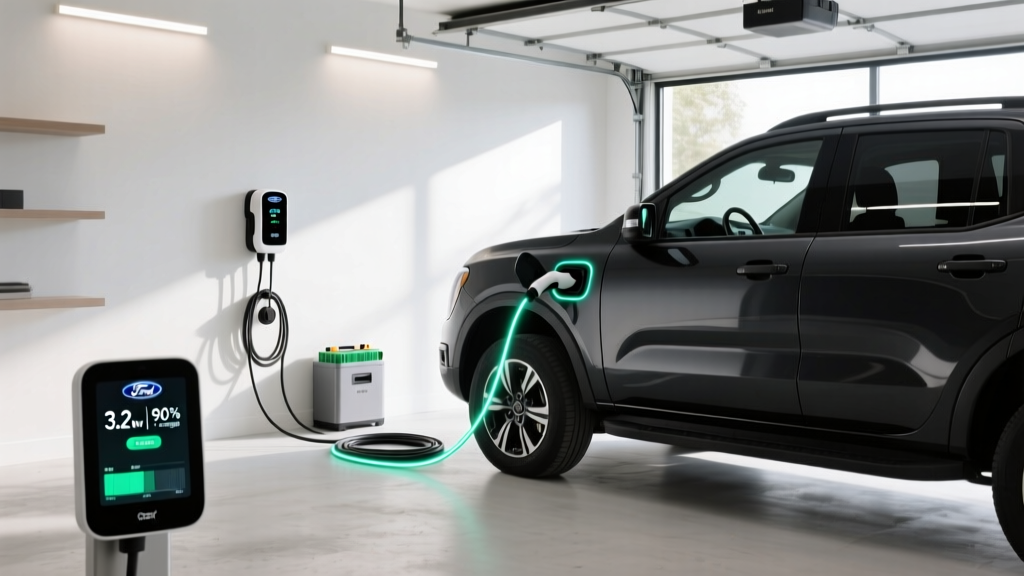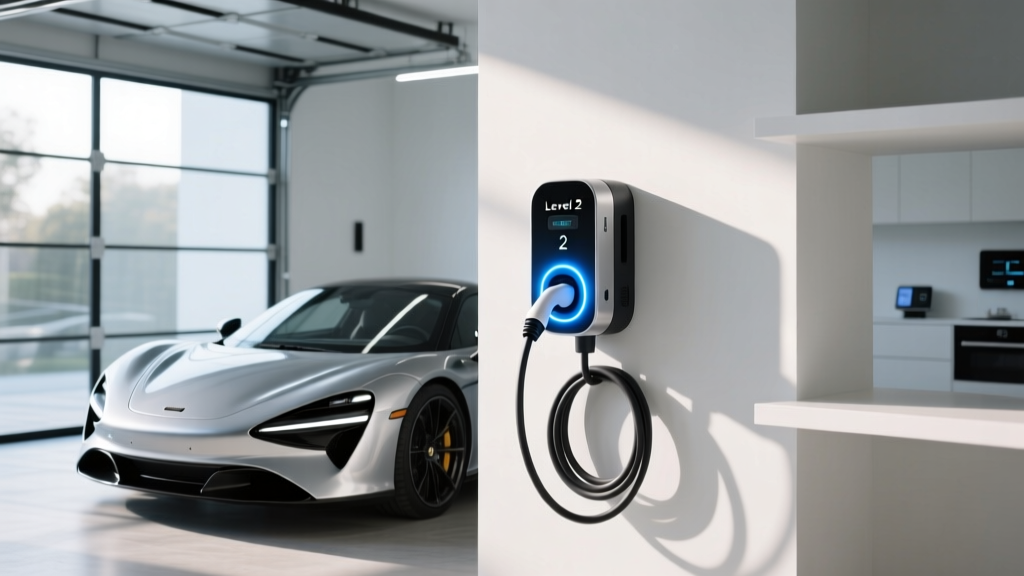
Why Charger Lease Deals Are Trending in 2026
Home Level 2 charging remains the single most impactful upgrade an EV owner can make — and in 2026, more automakers, utilities, and third-party providers are offering charger lease deals as an alternative to outright purchase. The pitch is simple: pay $10–$25 per month for a smart Level 2 wallbox instead of dropping $500–$800 upfront on hardware. But do these lease arrangements actually save money once you factor in installation, electrical upgrades, and long-term ownership? This guide breaks down the full economics of leasing versus buying, alongside the technical fundamentals every EV owner needs — from kW charge rates to connector compatibility.
Charging Levels Explained: Speed, Power, and Real-World Range Added
Before evaluating any charger deal, you need to understand the three charging levels and how they translate into miles on your odometer. The critical distinction: kW (kilowatts) measures power — the rate at which energy flows into your battery. kWh (kilowatt-hours) measures energy — the total capacity stored. A 48A Level 2 charger delivers up to 11.5 kW of power; a 75 kWh battery stores 75 kWh of energy. Confusing these two is the most common EV literacy mistake.
| Level | Voltage | Max Power (kW) | Miles of Range Added Per Hour | Typical Use Case |
|---|---|---|---|---|
| Level 1 | 120V AC | 1.4–1.9 kW | 3–5 mi/hr | Overnight trickle; PHEVs with small batteries |
| Level 2 | 240V AC | 3.3–19.2 kW | 12–75 mi/hr | Home daily charging; workplace; destination |
| DC Fast Charge | 400–800V DC | 50–350+ kW | 150–1,200+ mi/hr (peak) | Road trips; highway corridors |
For a typical 75 kWh battery pack (think Tesla Model Y Long Range or Hyundai Ioniq 5), a 48A / 11.5 kW Level 2 charger will replenish a 10–80% charge in roughly 5 to 6 hours. That same session on a 150 kW DC fast charger takes approximately 18–25 minutes, depending on the vehicle's charge curve and battery preconditioning. DC fast charging slows significantly above 80% State of Charge (SoC) — the charge curve tapers to protect battery chemistry, which is why manufacturers quote 10–80% times rather than 0–100%.
How Much Does It Cost to Install a Home EV Charger?
The sticker price of a Level 2 wallbox is only part of the equation. Professional installation by a licensed electrician, permit fees, and potential electrical panel upgrades represent the real variable cost. Here's a realistic breakdown based on 2026 national averages:
| Component | Low Estimate | High Estimate | Notes |
|---|---|---|---|
| Level 2 Charger Hardware | $350 | $800 | 32A–48A smart chargers; hardwired or NEMA 14-50 plug |
| Electrician Labor | $400 | $1,500 | Depends on run length from panel to garage/carport |
| Electrical Permit | $50 | $300 | Varies by municipality; some jurisdictions bundle |
| Panel Upgrade (if needed) | $1,500 | $4,000 | Required if existing panel lacks capacity for a dedicated 40–60A circuit |
| Conduit & Wiring Materials | $100 | $500 | Longer runs and outdoor conduit increase cost |
| Total (no panel upgrade) | $900 | $3,100 | Most homes with 200A service fall in this range |
| Total (with panel upgrade) | $2,400 | $7,100 | Homes with 100A service or maxed-out panels |
Charger Lease Deals vs Buying: The Real Cost Comparison
Charger lease deals typically come from three sources: automaker programs (e.g., bundled lease with vehicle purchase), utility company subsidies, and third-party charging companies. Here's how the math works over a 5-year ownership horizon:
| Cost Factor | Lease Deal | Outright Purchase |
|---|---|---|
| Hardware Cost | $0–$99 upfront | $500–$700 |
| Monthly Fee | $15–$25/mo ($900–$1,500 over 5 yr) | $0 |
| Installation (same either way) | $900–$3,100 | $900–$3,100 |
| Maintenance/Warranty | Usually included | 2–3 year mfr warranty; then out-of-pocket |
| End of Term | Return, buyout ($150–$300), or renew | You own the asset |
| 5-Year Total (hardware + fees) | $900–$1,599 | $500–$700 |
The verdict: Leasing costs roughly $200–$900 more over five years, but you gain included maintenance, potential hardware upgrades, and lower upfront cash outlay. Leasing makes sense if you plan to move within 3–4 years (hardwired chargers stay with the house), if your utility offers a subsidized lease that includes off-peak demand-response credits, or if you want guaranteed hardware replacement if the unit fails. Buying outright wins on pure cost if you plan to stay put and your charger's warranty covers the ownership period.
Which Connector Is Compatible With Your EV?
The connector landscape has consolidated significantly since 2024, when Ford, GM, Rivian, and most major automakers committed to adopting the North American Charging Standard (NACS) — originally developed by Tesla. As of 2026, nearly all new EVs sold in the U.S. ship with a NACS charge port. Legacy CCS1 vehicles remain on the road and at public stations, making adapter knowledge essential.
| Connector | Brands Using It (2026) | Home Charger Availability | Adapter Needed? |
|---|---|---|---|
| NACS (Tesla-style) | Tesla, Ford, GM, Rivian, Hyundai, Kia, BMW, most new models | Tesla Wall Connector, ChargePoint Home Flex (NACS), Emporia Vue | No — native on new vehicles |
| CCS1 | Legacy VW ID.4 (pre-2025), older BMW i4, some Stellantis models | ChargePoint Home Flex, Emporia Vue, Grizzl-E | NACS-to-CCS adapter (~$150–$250) if using NACS home charger |
| CHAdeMO | Nissan Leaf (discontinued 2025 in U.S.); legacy only | Limited; mostly legacy installations | Not compatible with NACS or CCS without specialized adapter |
If you're buying or leasing a home charger in 2026, choose a NACS-connector unit unless you own a CCS1-legacy vehicle with no plans to upgrade. NACS chargers are now widely available from major brands, and CCS1 owners can use a NACS-to-CCS adapter for home and public charging. At public DC fast stations, networks like Electrify America and EVgo have added NACS cables alongside CCS1, so dual-standard access is increasingly the norm.
Cost to Charge: Home vs Public vs Gas Per Mile
Charging cost is where EVs typically win decisively — but the gap narrows dramatically on public DC fast chargers. Below is a realistic cost-per-mile comparison using national average rates as of early 2026:
| Scenario | Rate | Cost Per Mile (250 Wh/mi EV) | Equivalent Gas Vehicle (28 MPG @ $3.40/gal) |
|---|---|---|---|
| Home Level 2 (national avg $0.17/kWh) | $0.17/kWh | $0.043/mi | $0.121/mi |
| Home off-peak TOU rate ($0.08/kWh) | $0.08/kWh | $0.020/mi | $0.121/mi |
| Public Level 2 ($0.30/kWh avg) | $0.30/kWh | $0.075/mi | $0.121/mi |
| DC Fast Charge ($0.48/kWh avg) | $0.48/kWh | $0.120/mi | $0.121/mi |
| DC Fast Charge premium network ($0.64/kWh) | $0.64/kWh | $0.160/mi | $0.121/mi |
Key takeaway: home charging on an off-peak time-of-use (TOU) plan delivers fuel costs at roughly one-sixth the price of gasoline. But exclusive reliance on premium DC fast charging can actually exceed gas costs per mile. This is why a home Level 2 charger — leased or owned — is the economic foundation of EV ownership. According to fueleconomy.gov, the average EV driver doing 80%+ of charging at home saves $800–$1,200 annually versus a comparable gas vehicle.
Recommended Level 2 Chargers for Home (2026 Picks)
Whether you're evaluating a lease deal or buying outright, these are the chargers we recommend based on power output, reliability, smart features, and connector options:
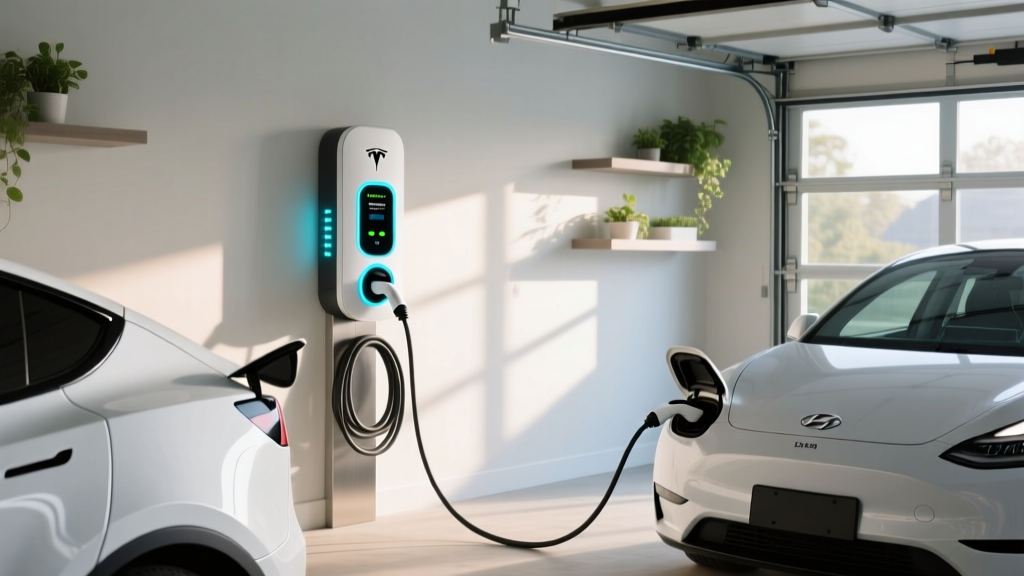
Tesla Wall Connector (NACS)
- Power: Up to 11.5 kW (48A)
- Connector: NACS native
- Cable Length: 24 ft
- Smart Features: Wi-Fi, OTA updates, Tesla app scheduling, power sharing between two units
- Price: ~$475 (purchase); available in some utility lease programs
- Best For: Tesla owners and NACS-equipped Ford/GM/Rivian vehicles
ChargePoint Home Flex
- Power: Up to 12 kW (50A) configurable
- Connector: NACS or CCS1 (select at purchase)
- Cable Length: 23 ft
- Smart Features: Wi-Fi, ChargePoint app, Alexa integration, TOU scheduling, energy reports
- Price: ~$649 (NACS) / ~$599 (CCS1)
- Best For: Multi-EV households; utility demand-response programs
Emporia Vue EV Charger
- Power: Up to 11.5 kW (48A)
- Connector: NACS
- Cable Length: 24 ft
- Smart Features: Integrates with Emporia whole-home energy monitor, solar-aware charging, app control
- Price: ~$399
- Best For: Budget-conscious buyers; solar-panel households
Most charger lease deals from utilities will offer a ChargePoint Home Flex or similar smart charger, because the utility needs Wi-Fi connectivity to manage demand-response events (temporarily reducing charge rate during grid peak hours). If a lease deal includes a "dumb" charger with no smart features, push back — you lose the scheduling and energy-monitoring capabilities that justify the lease premium.
Safety, Electrical Code, and Installation Best Practices
EV charging is a high-draw, continuous-load application. The National Electrical Code (NEC) and local building codes impose specific requirements that protect your home and ensure your installation passes inspection:
- Dedicated circuit: Your Level 2 charger must be on its own dedicated circuit — no sharing with other outlets or appliances. A 48A charger requires a 60A breaker (125% continuous-load rule).
- GFCI protection: NEC 2020 and later require GFCI (ground-fault circuit interrupter) protection for all EV charging outlets. Hardwired installations may have different GFCI requirements depending on jurisdiction.
- Outdoor rating: If your charger is mounted outdoors (carport, driveway wall), it must carry a NEMA 4 or IP65 weather-resistance rating. All major 2026 chargers meet this standard.
- Wire gauge: A 60A circuit typically requires 6 AWG copper wire for runs up to 50 feet; longer runs may need 4 AWG to minimize voltage drop. Your electrician will calculate this.
- Permit and inspection: Virtually all jurisdictions require an electrical permit for EV charger installation. The inspection ensures the circuit, breaker, wire gauge, and grounding meet code. Skipping the permit risks insurance claim denial in the event of an electrical fire.
Frequently Asked Questions
How much does it cost to install a home EV charger?
Expect $900–$3,100 for a standard installation (charger + electrician + permit) if your electrical panel has sufficient capacity. If you need a 200A panel upgrade, add $1,500–$4,000. Charger lease deals can reduce the upfront hardware cost to $0–$99, but installation labor and permits remain your responsibility in most lease structures.
How fast will each charging level add range?
Level 1 (120V) adds 3–5 miles per hour. Level 2 at 48A / 11.5 kW adds roughly 35–45 miles per hour for a typical mid-size EV. DC fast charging at 150 kW can add 150–200+ miles in a 15–20 minute session (10–80% SoC), though speeds taper above 80%.
Which connector/charger is compatible with my EV?
If your EV is a 2025 or newer model from Tesla, Ford, GM, Rivian, Hyundai, Kia, or BMW, it almost certainly uses NACS. Older VW ID.4, some Stellantis, and legacy models use CCS1. The Nissan Leaf (discontinued in the U.S. after 2025) used CHAdeMO. Check your vehicle's charge port or owner's manual, and match your home charger connector accordingly.
How much does charging cost per mile vs gas?
Home charging averages $0.03–$0.05 per mile, compared to $0.10–$0.14 per mile for a 25–30 MPG gas vehicle at 2026 fuel prices. Public DC fast charging at premium rates ($0.48–$0.64/kWh) can match or exceed gas costs — which is why maximizing home charging is essential to EV economics.
What electrical upgrades might I need?
The most common upgrade is a 100A-to-200A panel replacement ($1,500–$4,000), needed when your existing panel lacks spare capacity for a dedicated 60A circuit. Some homes may also need a new conduit run from the panel to the garage, or a sub-panel installation if the charger is far from the main service. A licensed electrician's load calculation is the definitive answer — request one before signing any charger lease agreement.