The Real Story Behind EV Charging Speeds
If you've searched "charger fast and the furious" hoping to understand why some EVs refill in 18 minutes while others take overnight, you've found the right guide. The EV charging landscape in 2026 spans from a humble 120V wall outlet adding 4 miles per hour to 350 kW DC fast chargers that can push 200+ miles of range in 20 minutes. But peak kilowatt ratings don't tell the whole story — sustained charge rates, battery chemistry, thermal management, and connector type all shape your actual charging experience.
This guide breaks down every charging level with exact numbers: kilowatts (kW, the rate of power delivery), kilowatt-hours (kWh, the energy stored in your battery), real 10-80% charge times, home installation costs, and per-mile fueling economics compared to gasoline. Whether you're wiring up a Level 2 charger in your garage or planning road trips on the expanding NACS Supercharger network, you'll leave with the data to make precise decisions.
Charging Levels Explained: Level 1, Level 2, and DC Fast
Every EV sold in the U.S. supports three tiers of charging. Understanding the difference between kW (power — how fast energy flows) and kWh (energy — how much your battery holds) is the single most important concept in EV ownership. A 10 kW charger running for one hour delivers 10 kWh of energy. Simple, but frequently confused.
| Level | Voltage | Power (kW) | Miles Added/Hour | Typical Use Case | 10-80% Time (75 kWh Battery) |
|---|---|---|---|---|---|
| Level 1 (120V) | 120V AC | 1.0–1.4 kW | 3–5 mi/hr | Overnight top-up, PHEVs, emergencies | ~40–50 hours |
| Level 2 (240V) | 240V AC | 3.3–19.2 kW | 12–70 mi/hr | Home daily charging, workplace, destinations | ~3–10 hours |
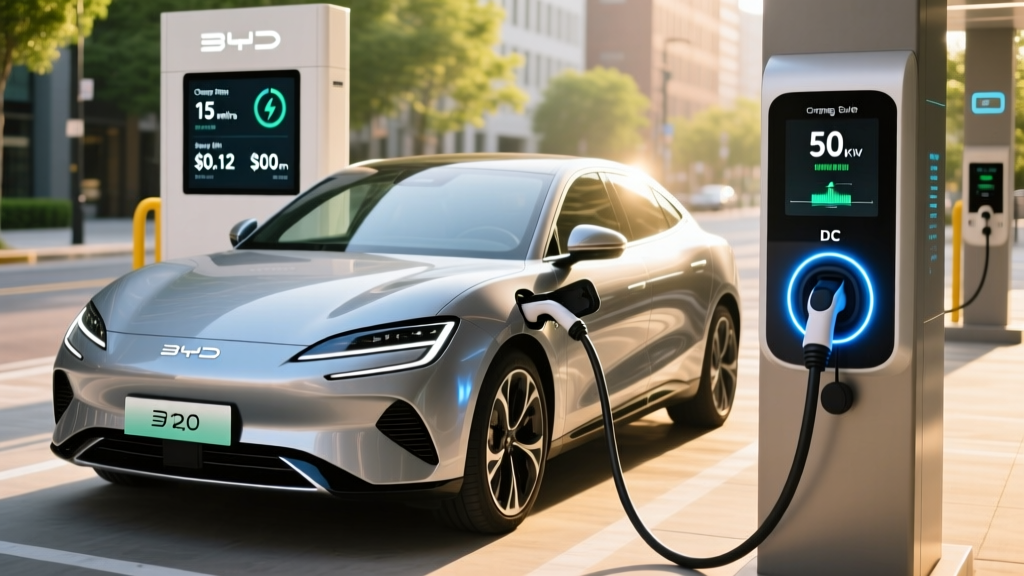
| DC Fast (Level 3) | 200–920V DC | 50–350 kW | 150–1,200+ mi/hr | Road trips, highway corridors, quick top-ups | ~15–45 minutes |
A few critical nuances: DC fast charging bypasses the car's onboard charger and feeds DC current directly to the battery, which is why it's dramatically faster. However, no EV sustains its peak charge rate for the entire session. A vehicle advertising "250 kW peak" might only hold that rate between 10-30% state of charge (SoC), then taper to 150 kW, then 90 kW, and finally trickle below 30 kW above 80%. This charge curve taper is why 10-80% times matter more than peak kW figures.
Home Charger Installation: Electrical Requirements and Costs
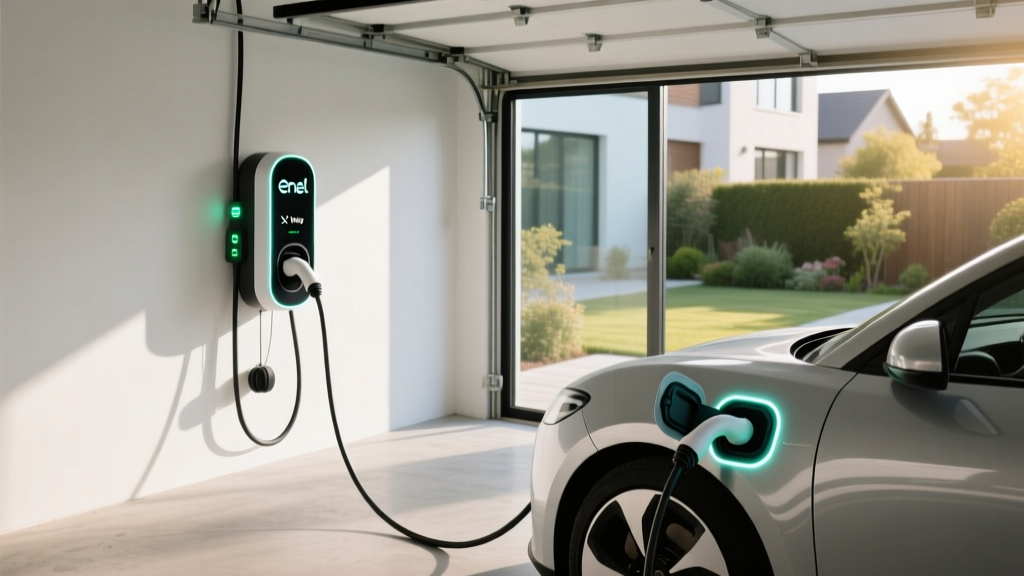
Installing a Level 2 home charger is the single biggest quality-of-life upgrade in EV ownership. You wake up every morning with a full battery, and your cost per mile drops to a fraction of gasoline. But installation costs vary wildly depending on your home's electrical panel, the distance from panel to charger location, and local permit requirements.
Electrical Requirements
Most home Level 2 chargers require a dedicated 240V circuit, similar to what powers an electric dryer or oven. Common configurations include:
- 40-amp circuit / 32-amp continuous: Delivers up to 7.7 kW (240V × 32A). Adequate for most EVs overnight. The National Electrical Code (NEC) requires circuits rated at 125% of continuous load, so a 32A charger needs a 40A breaker.
- 50-amp circuit / 40-amp continuous: Delivers up to 9.6 kW. The sweet spot for most homes — fast enough to fully recharge a 75-100 kWh battery overnight.
- 60-amp circuit / 48-amp continuous: Delivers up to 11.5 kW. Ideal for larger batteries (Ford F-150 Lightning extended range, Rivian R1T) or two-EV households using load-sharing chargers.
- 80-amp circuit / 64-amp continuous: Delivers up to 15.3–19.2 kW. Requires substantial panel capacity and thicker gauge wire — less common in residential installs.
Panel Upgrade Considerations
Many homes built before 2000 have 100-amp or 150-amp main electrical panels. Adding a 50A EV circuit may push total load close to panel capacity, especially if you also run electric heat, an electric dryer, and an electric oven simultaneously. An electrician will perform a load calculation (NEC Article 220) to determine if your panel can handle the addition. If not, a panel upgrade to 200A typically costs $1,500–$3,000 before the charger circuit is even run.
| Component | Low Range | High Range | Notes |
|---|---|---|---|
| Level 2 Charger Equipment | $350 | $750 | Quality smart chargers (Emporia, ChargePoint, Wallbox) |
| Electrician Labor (circuit run) | $400 | $1,500 | Depends on distance from panel, wall type, conduit needs |
| Electrical Materials (wire, conduit, breaker) | $100 | $400 | Longer runs and higher amperage = more copper cost |
| Permit & Inspection | $50 | $300 | Varies by municipality; some jurisdictions waive for EV |
| Panel Upgrade (if needed) | $1,500 | $3,000 | Upgrading from 100A/150A to 200A service |
| Total (no panel upgrade) | $900 | $2,950 | Typical for homes with adequate panel capacity |
| Total (with panel upgrade) | $2,400 | $5,950 | Older homes or high-load households |
Some utilities offer rebates of $250–$500 for Level 2 charger installation, and a few states provide additional incentives. Check with your local utility before scheduling work. As of 2026, the federal Alternative Fuel Vehicle Refueling Property Credit (§30C) can cover up to 30% of home charging equipment and installation costs (capped at $1,000) for eligible taxpayers in qualifying census tracts — consult IRS guidelines and a tax professional for your specific eligibility.
Connector Compatibility: NACS, CCS1, and CHAdeMO in 2026
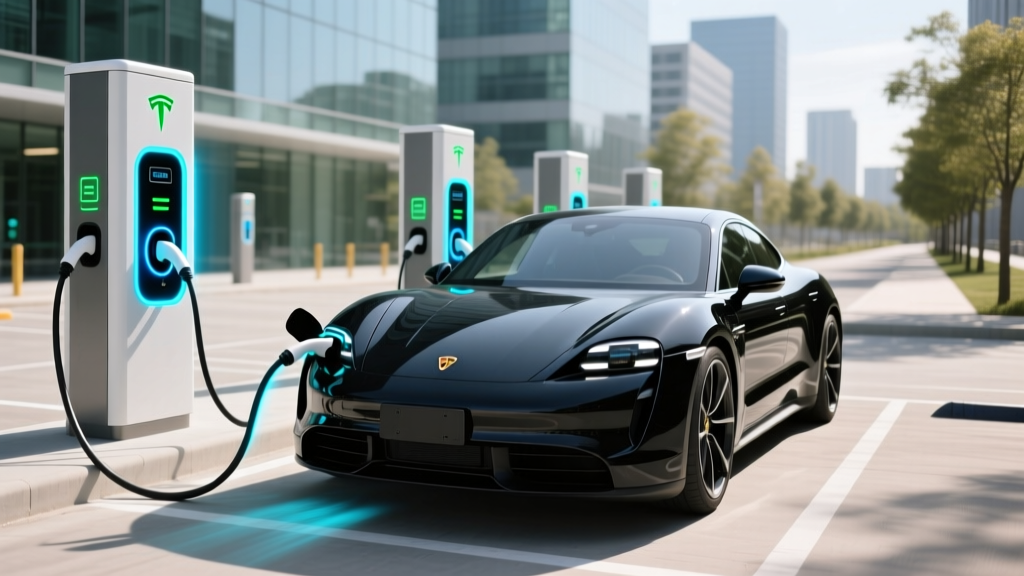
The connector wars have largely resolved in favor of NACS (North American Charging Standard, originally the Tesla connector). As of 2026, virtually every new EV sold in North America ships with a native NACS charge port. Ford, GM, Rivian, Volvo, Polestar, Hyundai, Kia, and BMW have all transitioned. CCS1 persists on some legacy models and remains available at many public stations through adapters or dual-cable dispensers. CHAdeMO is effectively discontinued for new vehicles — the Nissan Leaf (discontinued after 2025 model year) was its last major adopter.
| Connector | Brands Using It (New Vehicles) | DC Fast Charge Compatibility | Adapter Needed? |
|---|---|---|---|
| NACS (Tesla) | Tesla, Ford, GM, Rivian, Hyundai, Kia, Volvo, Polestar, BMW, Mercedes, Subaru, Lucid | Tesla Supercharger + growing NACS stations (EA, EVgo) | CCS-to-NACS adapters available for legacy CCS vehicles (~$150-$200) |
| CCS1 | Legacy models: older Chevy Bolt, VW ID.4 (pre-2025), some BMW iX | Electrify America, EVgo, ChargePoint DC stations | NACS-to-CCS adapter needed for Tesla Superchargers |
| CHAdeMO | Discontinued (Nissan Leaf ended 2025) | Declining station availability | No reliable adapter to NACS/CCS for DC fast charging |
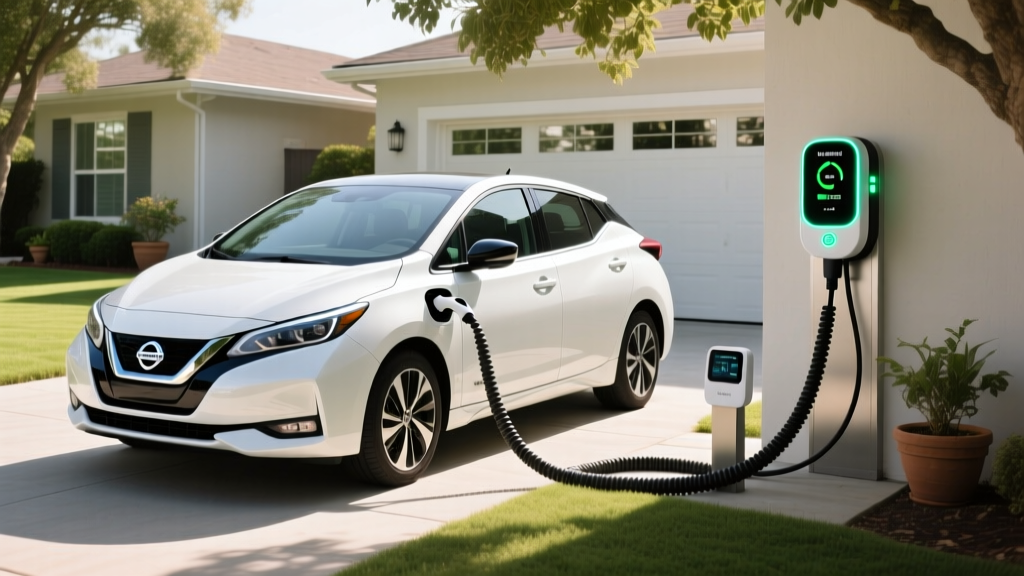
For home Level 2 charging, all connectors use the same J3400 (NACS) or J1772 (legacy) AC plug. Tesla ships a J1772-to-NACS adapter with every vehicle, and most aftermarket Level 2 chargers now offer NACS connectors natively or via included adapter. If you own a CCS-equipped EV, you can still install any Level 2 charger — the J1772 connector handles AC charging regardless of your car's DC fast-charge port.
Cost to Charge: Home vs. Public vs. Gasoline
The economics of EV charging depend heavily on where and when you plug in. Home charging on an off-peak utility rate is dramatically cheaper than gasoline. Public DC fast charging, however, can approach or even exceed gas prices per mile in some markets.
| Scenario | Rate ($/kWh) | Vehicle Efficiency (kWh/100mi) | Cost Per Mile | Equivalent Gas MPG at $3.50/gal |
|---|---|---|---|---|
| Home Off-Peak (utility rate) | $0.08–$0.12 | 28 kWh/100mi | $0.022–$0.034 | 103–159 MPGe |
| Home Standard Rate | $0.14–$0.18 | 28 kWh/100mi | $0.039–$0.050 | 70–90 MPGe |
| Public Level 2 (ChargePoint, etc.) | $0.20–$0.35 | 28 kWh/100mi | $0.056–$0.098 | 36–63 MPGe |
| DC Fast (Electrify America, EVgo) | $0.35–$0.55 | 28 kWh/100mi | $0.098–$0.154 | 23–36 MPGe |
| Tesla Supercharger (varies by location) | $0.25–$0.40 | 28 kWh/100mi | $0.070–$0.112 | 31–50 MPGe |
| Gasoline (30 MPG combined) | $3.50/gallon | — | $0.117 | 30 MPG |
| Gasoline (22 MPG combined, truck/SUV) | $3.50/gallon | — | $0.159 | 22 MPG |
Key takeaway: Home charging saves most EV owners $800–$1,500 per year versus gasoline, depending on mileage and local rates. But if you rely exclusively on public DC fast charging, your per-mile cost can equal or exceed a fuel-efficient gasoline car. This is why home or workplace Level 2 access is the economic backbone of EV ownership.
According to fueleconomy.gov, the average 2026 EV achieves 3.0–3.5 miles per kWh (roughly 28–33 kWh per 100 miles), making efficiency comparisons straightforward. Vehicles like the Tesla Model 3 Long Range (25 kWh/100mi) and Lucid Air Pure (24 kWh/100mi) stretch each dollar further, while heavier vehicles like the GMC Hummer EV (47 kWh/100mi) consume significantly more.
Charging Time Examples: 10-80% for Popular EVs
Here's how long a 10-80% DC fast charge session takes for some of the most popular 2026 EVs, assuming ideal battery temperature and a sufficiently powerful charger:
- Tesla Model 3 Long Range (75 kWh, NMC): Peaks at 250 kW on V3 Supercharger — 10-80% in ~22 minutes. On V4 posts (up to 325 kW capable), newer architectures may see slight improvements.
- Hyundai Ioniq 5 (84 kWh, NMC): Peaks at 240 kW on 800V architecture — 10-80% in ~18 minutes. One of the fastest-charging mainstream EVs available.
- Ford F-150 Lightning Extended Range (131 kWh, NMC): Peaks at 155 kW — 10-80% in ~41 minutes. Large battery means longer sessions despite decent charge rate.
- Chevrolet Equinox EV (85 kWh, NMC): Peaks at 150 kW — 10-80% in ~32 minutes.
- Kia EV6 GT-Line (77.4 kWh, NMC): Peaks at 240 kW on 800V — 10-80% in ~18 minutes.
- Cadillac Lyriq (102 kWh, NMC): Peaks at 190 kW — 10-80% in ~27 minutes.
Recommended Home Level 2 Chargers (2026)
After testing dozens of home chargers across multiple EVs and electrical setups, here are the top picks based on reliability, features, build quality, and value:
Emporia Vue Level 2 Smart Charger — Best Value
- Power Output: 48A / 11.5 kW (on 60A circuit) or configurable down to 32A
- Connector: NACS native (2026 model); J1772 also available
- Cable Length: 24 feet
- Smart Features: Wi-Fi, energy monitoring via Emporia app, solar integration, scheduled charging, load management for multi-charger setups
- Price: ~$399
- Best For: Budget-conscious buyers who want full smart features and energy tracking
ChargePoint Home Flex (2nd Gen) — Best All-Around
- Power Output: Up to 50A / 12 kW (configurable 16A-50A via DIP switches)
- Connector: NACS or J1772 options
- Cable Length: 18 or 23 feet options
- Smart Features: Wi-Fi, ChargePoint app, Alexa/Google Home integration, scheduled charging, detailed session history, works with ChargePoint public network account
- Price: ~$599
- Best For: Reliability-focused owners who want a proven brand with excellent app experience
Wallbox Pulsar Max — Best Compact Design
- Power Output: 48A / 11.5 kW
- Connector: NACS or J1772
- Cable Length: 25 feet
- Smart Features: Wi-Fi + Bluetooth, myWallbox app, Power Sharing (two chargers on one circuit), Eco-Smart mode for solar, IP55 outdoor rating
- Price: ~$549
- Best For: Tight garage spaces, outdoor installs, or dual-EV households needing load sharing
Tesla Wall Connector (Gen 3) — Best for Tesla/NACS Homes
- Power Output: 48A / 11.5 kW
- Connector: NACS native
- Cable Length: 24 feet
- Smart Features: Wi-Fi, over-the-air updates, Power Sharing with other Wall Connectors, access control, integrates seamlessly with Tesla app
- Price: ~$450
- Best For: Tesla owners or all-NACS households wanting the simplest plug-and-charge experience
Safety, Code Compliance, and Installation Best Practices
EV charging involves sustained high-current draw for hours at a time — far longer than a dryer or oven cycle. This makes proper installation non-negotiable. Key safety and code requirements per the National Electrical Code (NEC) Article 625 include:
- Dedicated Circuit: Your EV charger must be on its own dedicated breaker — no sharing with other outlets or appliances.
- GFCI Protection: NEC 2020 and later require GFCI (Ground Fault Circuit Interrupter) protection for all EV charging outlets rated 150V to ground or less and 50A or less. Many hardwired chargers have built-in GFCI protection; receptacle-based installs may need a GFCI breaker.
- Outdoor Rating: If installing outdoors, the charger must carry at least an IP54 rating (splash-resistant). Most quality chargers meet IP55 or IP65. The NEMA 14-50 receptacle, if used outdoors, requires an in-use weatherproof cover.
- Wire Gauge: A 50A circuit requires 6 AWG copper wire (THHN in conduit) or 4 AWG aluminum. A 60A circuit needs 4 AWG copper. Undersized wire is a fire hazard — this is not an area to cut corners.
- Permit and Inspection: Most jurisdictions require an electrical permit for EV charger installation. The inspection ensures the work meets code and protects your home insurance coverage. Unpermitted work can void claims in the event of an electrical fire.
- Cable Management: Wall-mounted cord organizers prevent tripping hazards and cable damage. Never run charging cables across driveways or walkways where vehicles can roll over them.
Always hire a licensed electrician experienced with EV charger installations. Ask for their load calculation documentation and confirm they pull the required permit. The difference between a $1,200 professional install and a $600 unpermitted handyman job can be the difference between safe operation and a house fire.
Frequently Asked Questions
How much does it cost to install a home EV charger?
A typical Level 2 home charger installation costs $900–$2,950 when no panel upgrade is needed, covering the charger unit ($350–$750), electrician labor ($400–$1,500), materials ($100–$400), and permits ($50–$300). If your home needs a panel upgrade from 100A/150A to 200A service, add $1,500–$3,000, bringing the total to $2,400–$5,950. Utility rebates and the federal §30C tax credit (up to $1,000 for qualifying installations) can offset some of these costs.
How fast will each charging level add range?
Level 1 (120V) adds roughly 3–5 miles of range per hour — adequate only for plug-in hybrids or very low daily mileage. Level 2 (240V, 48A/11.5 kW) adds approximately 35–45 miles per hour for an average EV, fully recharging most batteries in 6–10 hours overnight. DC fast charging at 150–350 kW can add 150–1,200+ miles per hour at peak, though sustained rates taper significantly — expect a 10-80% session to take 15–45 minutes depending on the vehicle and conditions.
Which connector/charger is compatible with my EV?
If you bought a new EV in 2025 or 2026, it almost certainly has a NACS charge port (the Tesla-standard connector, now the North American industry standard). For home Level 2 charging, any NACS-equipped or J1772-equipped charger will work — J1772 handles AC charging for all EVs with an adapter if needed. For DC fast charging, NACS vehicles can use Tesla Superchargers and an expanding number of NACS-equipped public stations. CCS1 vehicles can access Electrify America and other CCS networks, and may use a CCS-to-NACS adapter (~$150–$200) for Tesla Supercharger access where supported. CHAdeMO vehicles (legacy Nissan Leaf) face declining public charger availability.
How much does charging cost per mile vs. gas?
Home charging at off-peak utility rates ($0.08–$0.12/kWh) costs roughly $0.02–$0.03 per mile for an efficient EV — equivalent to a gasoline car getting 100–160 MPG. At standard residential rates ($0.14–$0.18/kWh), you're looking at $0.04–$0.05 per mile (70–90 MPGe equivalent). Public DC fast charging at $0.35–$0.55/kWh costs $0.10–$0.15 per mile, which approaches or matches gasoline at $3.50/gallon in a 25–35 MPG vehicle. The economic case for EVs is strongest when you can charge at home or work.
What electrical upgrades might I need?
The most common upgrade is a panel capacity increase from 100A or 150A to 200A, needed when your existing panel lacks headroom for a 40–60A EV circuit. This costs $1,500–$3,000. Other potential upgrades include: running a new dedicated circuit from the panel to your garage or driveway ($400–$1,500 depending on distance and wall penetration), upgrading aluminum wiring to copper in older homes, adding a sub-panel if the main panel is full, or installing a smart load management system (like the Emporia VUE or Wallbox Power Sharing) that dynamically limits charger draw when other appliances are running — this can avoid a panel upgrade entirely in some cases.
Can I just plug into a regular outlet?
Yes — every EV comes with a Level 1 charging cable that plugs into a standard 120V household outlet. At 1.0–1.4 kW, you'll add 3–5 miles of range per hour, or roughly 35–50 miles overnight. This works fine for plug-in hybrids with small batteries (10–20 kWh) or EV owners with very short commutes under 30 miles. For anyone driving more than that, Level 1 is frustratingly slow and you'll want to invest in a Level 2 installation.