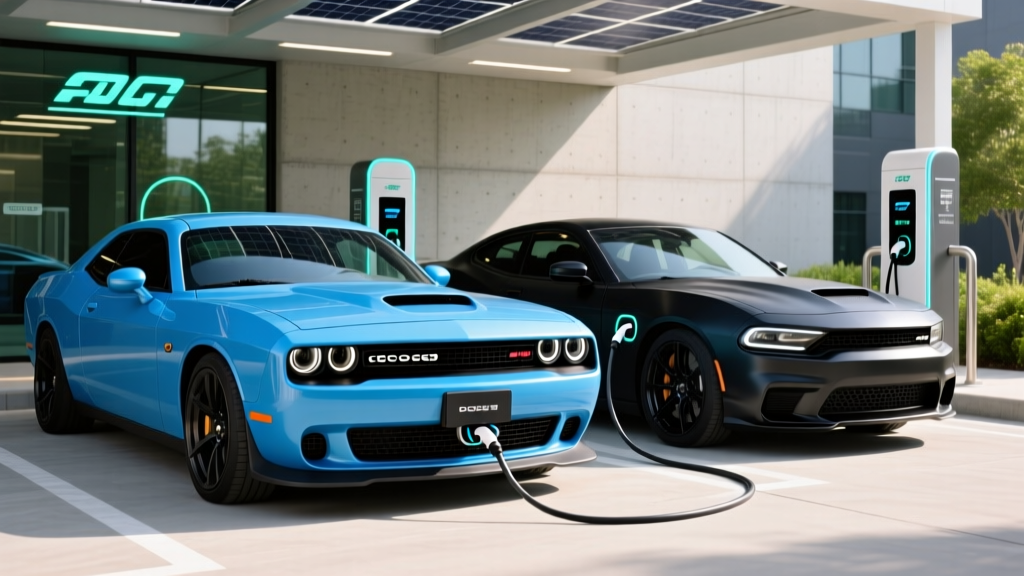
If you've been cross-shopping the Dodge lineup and find yourself putting the Challenger and Charger side by side, the conversation in 2026 is no longer just about horsepower and quarter-mile times — it's about kilowatts, charging curves, and how fast you can get back on the road. With Stellantis pushing electrified muscle cars into the spotlight, understanding the charging ecosystem is now as critical as knowing your rear-axle ratio.
This guide breaks down every layer of EV charging — from Level 1 trickle charging in your garage to 350 kW DC fast chargers on the interstate — with exact numbers, real costs, and hardware recommendations that apply whether you're plugging in a Charger Daytona Scat Pack or evaluating any modern EV platform.
kW (kilowatts) = power, or how fast energy flows into your battery (like water pressure from a hose).
kWh (kilowatt-hours) = energy, or how much total charge your battery stores (like the size of the water tank).
A 100 kWh battery charged at 10 kW takes 10 hours. That same battery at 100 kW takes roughly 1 hour. Never use these terms interchangeably.
Charging Levels Explained: Speed, Power, and Real-World Range Added
Every EV sold in the US charges across three tiers. The numbers below assume a vehicle efficiency of roughly 3 mi/kWh (typical for a heavy, performance-oriented EV like the Charger Daytona platform).
| Level | Voltage | Max Power (kW) | Miles of Range Added per Hour | Typical Use Case |
|---|---|---|---|---|
| Level 1 | 120V AC | 1.4 kW | ~4 mi/hr | Emergency / overnight top-up |
| Level 2 | 240V AC | 7.2–19.2 kW | ~22–58 mi/hr | Home daily charging, workplace |
| DC Fast Charge | 400–800V DC | 50–350 kW | ~150–1,050 mi/hr (peak) | Road trips, highway corridors |
Real-world caveat: Those DC fast-charge miles-per-hour figures represent peak rate, not sustained rate. A vehicle that peaks at 200 kW may only sustain that rate between 10–40% state of charge (SoC). Above 80%, charge speed tapers dramatically to protect battery health — expect the final 80–100% to take as long as the 10–80% session. This is called the charge curve, and it's why every honest charging estimate should specify a SoC range.
Home Charger Installation: Electrical Requirements and True Cost
A Level 2 home charger is where 80%+ of all EV charging happens. But "install a home charger" is a loaded phrase — the actual cost depends heavily on your electrical panel, the distance from panel to charger location, and local permit requirements.
Electrical Requirements
Most Level 2 home chargers require a 240V dedicated circuit, similar to what an electric dryer or oven uses. Common configurations:
- 40A circuit / 32A continuous charge → 7.7 kW output — sufficient for most overnight charging
- 50A circuit / 40A continuous → 9.6 kW output — ideal for larger batteries (100+ kWh)
- 60A circuit / 48A continuous → 11.5 kW output — fastest common residential setup
- 80A circuit / 64A continuous → 15.4 kW output — requires a 200A+ panel and heavy-gauge wiring
Panel Upgrade Reality
Homes built before 2000 often have 100A or 150A main panels that may lack capacity for a dedicated 50–60A EV circuit alongside existing loads (HVAC, electric range, dryer). A panel upgrade to 200A typically runs $1,500–$3,000 before any EV work begins. Some utilities offer rebates for panel upgrades paired with EV adoption — check with your local provider.
| Component | Typical Cost Range | Notes |
|---|---|---|
| Level 2 Charger Equipment | $350–$750 | Smart Wi-Fi chargers; hardwired or NEMA 14-50 plug |
| Electrician Labor | $500–$2,500 | Depends on run length, conduit, wall material |
| Electrical Permit | $50–$250 | Required in most jurisdictions; varies by municipality |
| Panel Upgrade (if needed) | $1,500–$3,000 | Only if existing panel lacks capacity |
| Total (no panel upgrade) | $900–$3,500 | Most common scenario for newer homes |
| Total (with panel upgrade) | $2,400–$6,500 | Older homes with 100–150A service |
Safety and code essentials: The National Electrical Code (NEC) requires a dedicated circuit for EV charging — you cannot share the circuit with other appliances. Outdoor installations require a charger rated for NEMA 4 (weatherproof) and, in many jurisdictions, a GFCI breaker. Always hire a licensed electrician; improper EV charger wiring is a documented fire risk. The NEC Article 625 governs EV charging infrastructure specifically.
Connector Compatibility: NACS, CCS, and CHAdeMO in 2026
The connector landscape has shifted dramatically. As of 2026, the North American Charging Standard (NACS) — originally Tesla's proprietary connector — has become the dominant standard, with Ford, GM, Rivian, Volvo, and Stellantis adopting it. CCS1 remains on many legacy vehicles, and CHAdeMO is effectively discontinued on new US-market vehicles.
| Connector | Brands Using It | Max DC Fast Charge Power | Adapter Needed? |
|---|---|---|---|
| NACS (Tesla-style) | Tesla, Ford, GM, Rivian, Volvo, Stellantis (Dodge/Jeep), Hyundai/Kia (2025+) | Up to 350 kW (varies by vehicle) | CCS-to-NACS adapters available (~$200) for older CCS vehicles at NACS stations |
| CCS1 (Combo) | Legacy VW/Audi, BMW, Honda, older Hyundai/Kia, pre-2025 models | Up to 350 kW | NACS-to-CCS adapter needed for Tesla Superchargers |
| CHAdeMO | Nissan Leaf (legacy only — discontinued) | Up to 100 kW | Adapters rare and expensive; network support declining |
When putting a Challenger or Charger side by side with competitors from the Blue Oval or GM camp, connector parity now favors NACS adopters — access to Tesla's Supercharger network (20,000+ stalls in North America) is a significant road-trip advantage. If your EV still has a CCS port, budget for a quality NACS adapter and verify compatibility with your specific model year before purchasing.
Charging Cost Per Mile: Home vs. Public vs. Gasoline
The economics of EV charging vary enormously depending on where and when you charge. Below are realistic 2026 scenarios for a performance EV averaging 3 mi/kWh (roughly 333 Wh/mi — typical for a 4,500+ lb muscle-car EV).
| Scenario | Price per kWh | Cost per Mile (at 3 mi/kWh) | Equivalent Gas MPG at $3.50/gal |
|---|---|---|---|
| Home Level 2 (off-peak TOU rate) | $0.08–$0.12 | $0.03–$0.04 | 87–116 MPG |
| Home Level 2 (standard rate) | $0.14–$0.18 | $0.05–$0.06 | 58–70 MPG |
| Public Level 2 (ChargePoint, etc.) | $0.20–$0.35 | $0.07–$0.12 | 29–50 MPG |
| DC Fast Charge (Electrify America, EVgo) | $0.35–$0.55 | $0.12–$0.18 | 19–29 MPG |
| Tesla Supercharger (member rate) | $0.25–$0.35 | $0.08–$0.12 | 29–43 MPG |
| Gasoline (25 MPG combined, $3.50/gal) | — | $0.14 | 25 MPG |
The bottom line: Home off-peak charging delivers fuel costs roughly one-quarter to one-third of gasoline. But DC fast charging on the road can approach or even exceed gasoline cost per mile in high-price markets like California. Plan road-trip charging around networks with membership pricing, and always check your utility's time-of-use (TOU) rates — charging at 2 AM instead of 6 PM can cut your home charging bill by 40–60%.
Charging Time Examples: 10–80% for Common Battery Sizes
Here's what charging actually looks like in practice. These estimates assume optimal battery preconditioning (the car's thermal management system warming the battery to ideal charge temperature before you arrive at the charger) and a compatible high-power DC station.
75 kWh Battery (e.g., compact/midsize EV)
- Level 2 at 11.5 kW (48A): ~6.5 hours (0–100%)
- DC Fast at 150 kW peak: ~22–28 minutes (10–80%), tapering to ~45 min for 10–100%
100 kWh Battery (e.g., performance sedan / large SUV)
- Level 2 at 11.5 kW (48A): ~8.7 hours (0–100%)
- DC Fast at 200 kW peak: ~25–35 minutes (10–80%)
- DC Fast at 350 kW peak (800V architecture): ~18–22 minutes (10–80%)
Cold-weather penalty: In sub-freezing temperatures without preconditioning, DC fast-charge times can increase by 30–50%. The battery management system limits charge rate to protect the cells. Always use your vehicle's navigation-based preconditioning feature when routing to a charger.
Level 2 Home Charger Equipment Recommendations
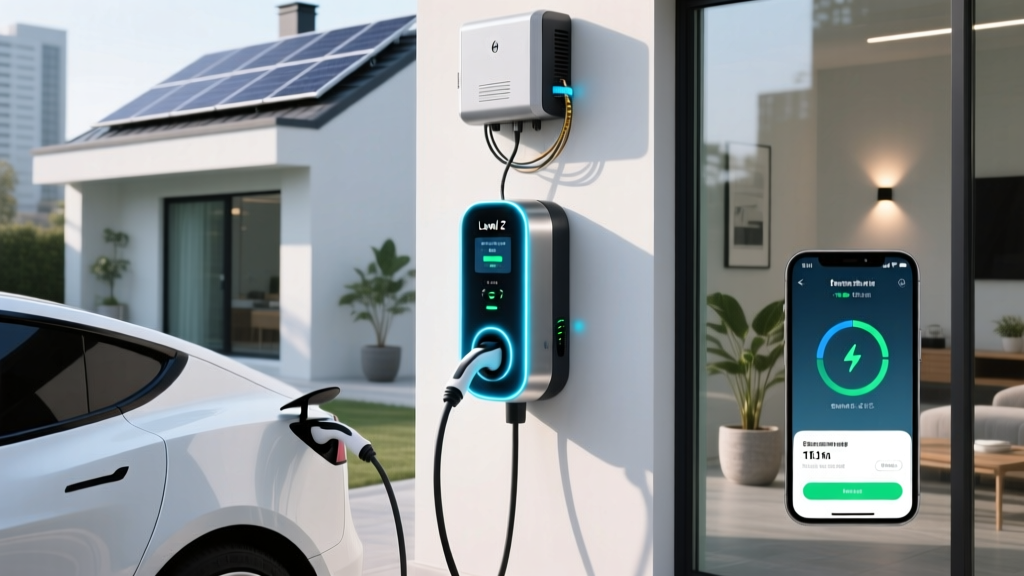
These are chargers we've used, tested, or tracked reliability data on. All are Wi-Fi-enabled for scheduling, energy monitoring, and firmware updates.
Emporia Level 2 Smart Charger
- Power: 48A / 11.5 kW (hardwired) or 40A / 9.6 kW (NEMA 14-50)
- Connector: J1772 (NACS adapter included with newer models)
- Cable length: 24 ft
- Smart features: Energy monitoring, solar integration, scheduling, load management
- Price: ~$399–$449
- Best for: Budget-conscious buyers wanting full smart features and load management for older panels
ChargePoint Home Flex
- Power: Up to 50A / 12 kW (adjustable 16–50A)
- Connector: J1772 or NACS (configurable at purchase)
- Cable length: 23 ft
- Smart features: App scheduling, Alexa/Google integration, flexible amperage to match panel capacity
- Price: ~$549–$649
- Best for: Flexibility — adjustable amperage means you can install on a 30A or 60A circuit without buying different hardware
Tesla Wall Connector (Universal)
- Power: 48A / 11.5 kW (hardwired, 60A circuit)
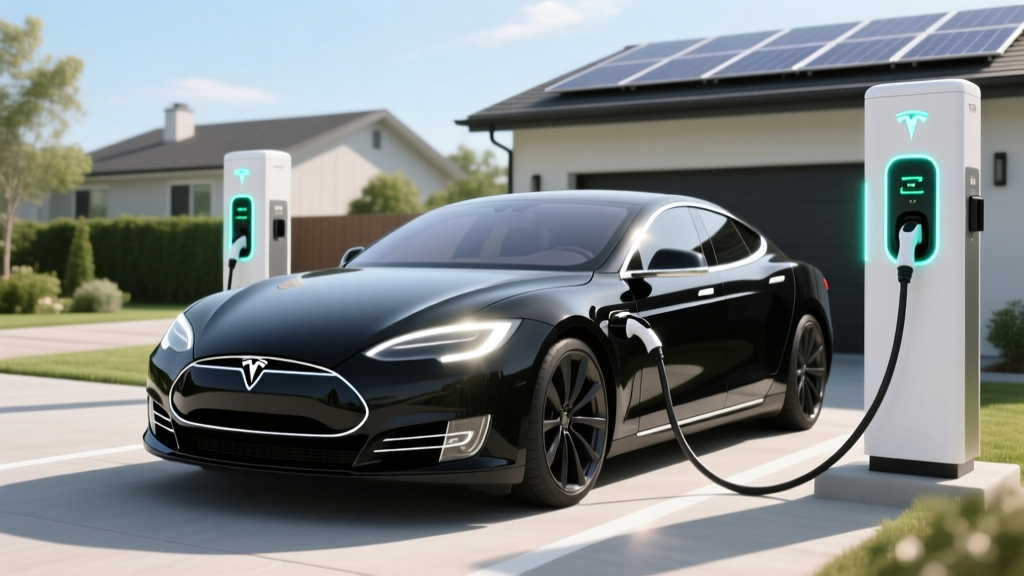
- Connector: NACS native + built-in J1772 adapter (Magic Dock-style)
- Cable length: 24 ft
- Smart features: Wi-Fi updates, power sharing (link multiple units on one circuit), Tesla app integration
- Price: ~$599
- Best for: NACS-equipped vehicles; multi-EV households using power-sharing feature
For the Dodge Charger Daytona and future Stellantis EVs using NACS, the Tesla Universal Wall Connector or a NACS-configured ChargePoint Home Flex offers the most seamless plug-and-charge experience without adapters.
Public Charging Networks: What to Expect on the Road
When putting the Challenger and Charger side by side with rivals for a road trip, public charging reliability is where the rubber meets the road. Here's the 2026 network landscape:
- Tesla Supercharger (now open to NACS non-Tesla EVs): ~20,000+ stalls, 150–350 kW, highest reliability (~97% uptime per Tesla's network data). Membership pricing for non-Tesla vehicles.
- Electrify America: ~5,000+ stalls, up to 350 kW, CCS and NACS connectors. Reliability has improved but still trails Tesla. Idle fees apply.
- EVgo: ~4,000+ stalls, 50–350 kW. Strong urban coverage, partnership with GM. CCS and NACS.
- ChargePoint: Largest network by station count but mostly Level 2; DC fast locations are growing. Best for destination charging.
Pro tip: Download multiple network apps before your trip and set up accounts with payment info. At many stations, plug-and-charge (automatic billing when you plug in) works seamlessly — but having a backup app prevents stranding.
Frequently Asked Questions
How much does it cost to install a home EV charger?
A typical Level 2 home charger installation costs $900–$3,500 when your electrical panel has sufficient capacity. This includes the charger ($350–$750), electrician labor ($500–$2,500), and a permit ($50–$250). If your panel needs upgrading from 100A/150A to 200A, add $1,500–$3,000, bringing the total to $2,400–$6,500. Always get a detailed quote from a licensed electrician who will assess your panel load calculation before recommending a circuit size.
How fast will each charging level add range?
Level 1 (120V) adds roughly 4 miles of range per hour — enough for overnight top-ups but impractical for daily driving. Level 2 (240V) adds 22–58 miles per hour depending on amperage, fully recharging most EVs overnight. DC fast charging adds 150–1,050 miles per hour at peak rate, but remember that peak rate only applies during a portion of the charge curve (typically 10–50% SoC); expect 10–80% sessions to take 18–35 minutes depending on battery size and charger power.
Which connector/charger is compatible with my EV?
Check your vehicle's charge port. For 2026 model-year EVs from Tesla, Ford, GM, Rivian, Volvo, and Stellantis (including Dodge), the connector is NACS. Most pre-2025 non-Tesla EVs use CCS1. CHAdeMO is limited to older Nissan Leafs. For home Level 2 charging, all EVs sold in the US accept either J1772 or NACS — and adapters exist for both directions. When buying a home charger, match the connector to your vehicle's native port to avoid daily adapter hassle.
How much does charging cost per mile vs gas?
Home off-peak charging costs $0.03–$0.04 per mile — equivalent to 87–116 MPG at $3.50/gallon gas. Standard-rate home charging runs $0.05–$0.06/mile. Public DC fast charging at $0.35–$0.55/kWh costs $0.12–$0.18/mile, which is comparable to or slightly more expensive than a 25 MPG gasoline car. The financial advantage of EVs is maximized with consistent home charging on time-of-use rates. See the cost table above for detailed scenarios.
What electrical upgrades might I need?
The most common upgrade is a panel capacity increase. If your home has a 100A or 150A main panel and you already run electric HVAC, an electric range, and an electric dryer, adding a 50–60A EV circuit may exceed your panel's capacity. An electrician will perform a load calculation (per NEC Article 220) to determine this. Other potential upgrades include running new conduit from panel to garage (if the panel is far from the charge location), installing a GFCI breaker for outdoor chargers, and upgrading the meter base if your utility requires it. Homes with 200A+ panels rarely need upgrades for a single Level 2 charger.
Sources: fueleconomy.gov for efficiency data; IRS §30D for charger installation tax credit eligibility (up to $1,000 for residential charging equipment under §30C); NHTSA for vehicle safety data. Tax credit rules and eligibility are subject to change — consult a tax professional for your specific situation.