Why CHAdeMO Owners Are Searching for a CHAdeMO CCS Adapter
If you drive a Nissan Leaf, Mitsubishi Outlander PHEV, or any other CHAdeMO-equipped vehicle, you've likely noticed a frustrating trend: the public DC fast-charging network is consolidating around CCS1 and NACS (Tesla's North American Charging Standard). Electrify America, EVgo, and most new station deployments prioritize CCS connectors, leaving CHAdeMO ports with fewer stalls — or none at all at newer locations.
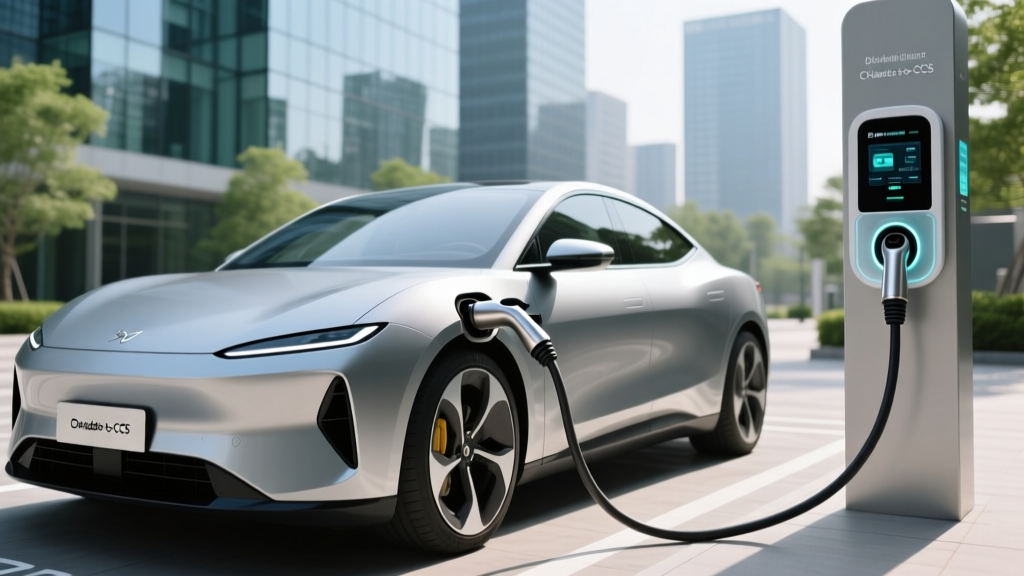
A CHAdeMO CCS adapter sounds like the obvious fix: plug your CHAdeMO car into a CCS station and charge normally. But the reality is more complicated. Unlike the relatively simple J1772-to-Tesla adapters for Level 2 AC charging, DC fast-charging adapters must handle high-voltage communication protocols between the vehicle and the charger. As of early 2026, true CHAdeMO-to-CCS1 adapters remain scarce, expensive, and limited in availability — but the ecosystem is evolving.
This guide covers everything you need to know: the state of CHAdeMO CCS adapters, what connectors your EV actually uses, how each charging level works, and how to set up reliable home charging so you're less dependent on public networks.
Understanding EV Charging Levels: Speeds, Power, and Range Added
Before evaluating any adapter, you need a clear picture of what each charging level delivers. The critical distinction: kW (kilowatts) measures power — the rate of energy flow — while kWh (kilowatt-hours) measures energy — the total capacity stored in your battery. A 150 kW charger delivers energy faster than a 50 kW charger, but both add the same kWh if you charge long enough.
| Level | Voltage | Max Power (kW) | Miles of Range Added per Hour | Typical Use Case |
|---|---|---|---|---|
| Level 1 (120V AC) | 120V | 1.4–1.9 kW | 3–5 miles/hr | Overnight trickle, PHEV topping off |
| Level 2 (240V AC) | 240V | 3.3–19.2 kW | 12–75 miles/hr | Home daily charging, workplace, destinations |
| DC Fast (Level 3) | 400–800V DC | 50–350 kW | 150–1,200+ miles/hr (peak) | Road trips, highway corridors |
Real-world DC fast charging caveat: Peak kW rates are not sustained. A vehicle rated for 100 kW peak CHAdeMO charging might only sustain that rate between 10–40% State of Charge (SoC), then taper significantly. Expect a 40 kWh Nissan Leaf at a 50 kW CHAdeMO station to charge from 10–80% in roughly 45–55 minutes, not the 30 minutes you'd calculate from peak rate alone. Cold batteries further reduce charge speed — preconditioning (warming the battery before arrival) is essential for fast charging in temperatures below 50°F.
Connector Compatibility: CHAdeMO, CCS1, and NACS Explained
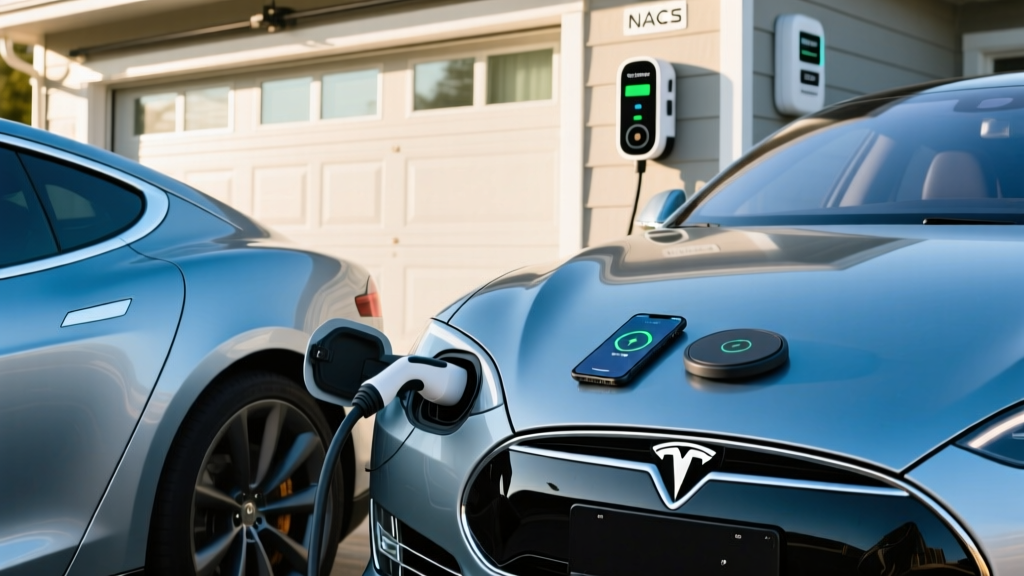
Three DC fast-charging connectors exist in North America as of 2026, and knowing which your vehicle uses determines what adapters you might need:
| Connector | Vehicles Using It (2026) | Network Availability | Adapter Options |
|---|---|---|---|
| CHAdeMO | Nissan Leaf, Mitsubishi Outlander PHEV, some older Kia Soul EV | Declining — fewer stalls at new stations | Limited CHAdeMO-to-CCS adapters; no NACS-to-CHAdeMO yet |
| CCS1 | Hyundai, Kia, VW, BMW, Ford, GM, Rivian (pre-2025), most non-Tesla BEVs | Widely available — Electrify America, EVgo, ChargePoint | NACS-to-CCS adapters now common from Ford, GM, Rivian |
| NACS (Tesla) | All Tesla vehicles; Ford, GM, Rivian, Volvo, Polestar (2025+ models) | Tesla Supercharger network — 25,000+ stalls in North America | CCS-to-NACS adapters widely available; CHAdeMO-to-NACS unavailable |
The CHAdeMO CCS adapter problem: Most CHAdeMO vehicles were designed before the CCS standard gained dominance. The communication protocols differ — CHAdeMO uses CAN bus signaling while CCS uses Power Line Communication (PLC) over the DC lines. Bridging these protocols requires active electronics, not just a passive pin adapter. This is why genuine CHAdeMO-to-CCS adapters cost $400–$800 when available, compared to $150–$250 for passive CCS-to-NACS adapters.
As of 2026, companies like Setec have offered limited-run CHAdeMO-to-CCS adapters, but supply remains inconsistent, and not all CCS stations communicate reliably through them. Before purchasing any adapter, verify compatibility with your specific vehicle model year and the charging networks in your area. Check fueleconomy.gov for your vehicle's official charging specifications.
Home Level 2 Charging: Installation Costs and Electrical Requirements
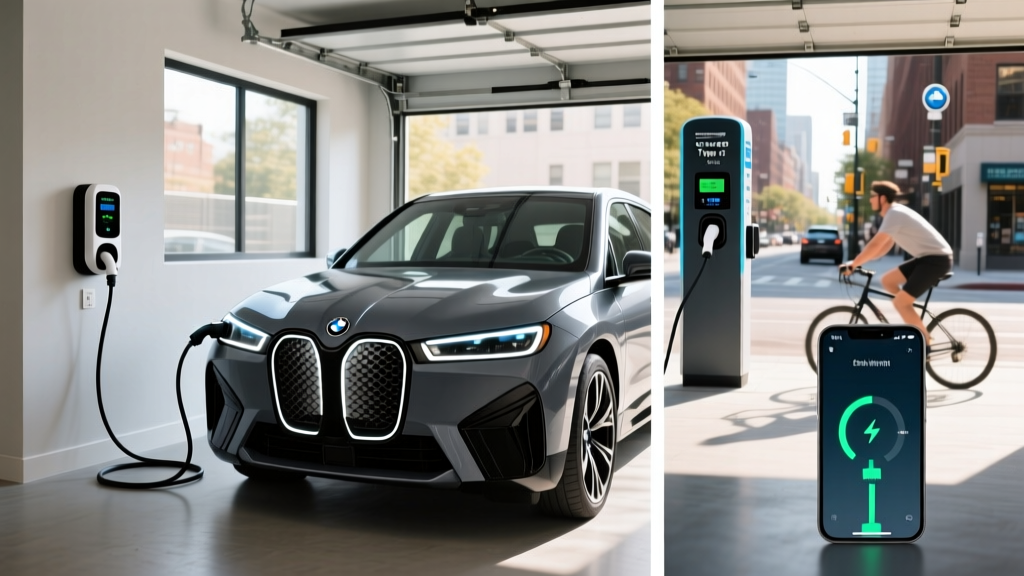
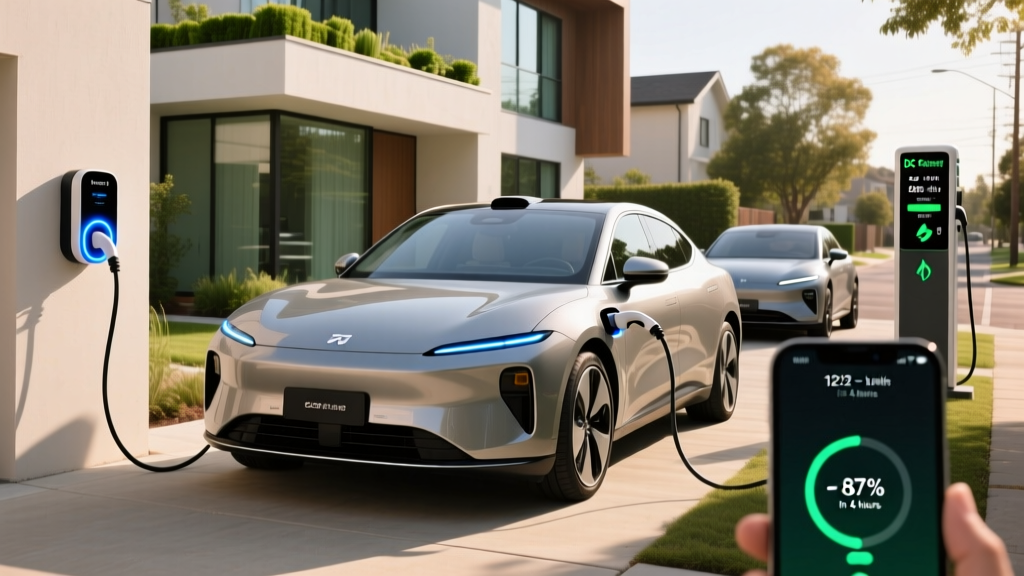
The single best investment for any EV or PHEV owner — CHAdeMO or otherwise — is a home Level 2 charger. With a 240V Level 2 station, most BEVs charge fully overnight, and you eliminate dependence on public network connector availability entirely.
Electrical Requirements
A typical home Level 2 charger requires a 240V dedicated circuit with a breaker rated 125% of the charger's continuous draw. Common configurations:
- 40A circuit / 32A charger (7.7 kW): Sufficient for most EVs, adds ~25–30 miles of range per hour
- 50A circuit / 40A charger (9.6 kW): Faster charging for larger batteries (80+ kWh)
- 60A circuit / 48A charger (11.5 kW): Maximum Level 2 speed; requires a 200A electrical panel minimum
Panel upgrade reality: Many homes built before 2000 have 100A or 150A service panels. Adding a 40–60A EV circuit may require a panel upgrade to 200A, which typically costs $1,500–$3,000. Some homeowners qualify for utility rebates or the federal residential clean energy credit (IRS §25D), which covers 30% of qualified home charging equipment and installation costs through 2032. Consult a licensed electrician and a tax professional to confirm eligibility.
Installation Cost Breakdown
| Component | Simple Install (Near Panel) | Complex Install (Panel Upgrade + Long Run) |
|---|---|---|
| Level 2 Charger Equipment | $350–$700 | $350–$700 |
| Electrical Permit | $50–$200 | $50–$200 |
| Electrician Labor (2–4 hrs simple / 6–12 hrs complex) | $300–$800 | $1,200–$3,000 |
| Panel Upgrade (if needed) | $0 | $1,500–$3,000 |
| Conduit, Wiring, Misc. Materials | $50–$150 | $200–$600 |
| Total Estimated Cost | $750–$1,850 | $3,300–$7,500 |
Safety and Code Considerations
National Electrical Code (NEC) Article 625 governs EV charging installations. Key requirements:
- Dedicated circuit: Your EV charger must have its own breaker — no sharing with other appliances
- GFCI protection: Required for outdoor installations; many modern chargers include built-in GFCI
- NEMA 14-50 outlet vs. hardwired: A NEMA 14-50 receptacle offers portability but requires a GFCI breaker ($80–$150 extra). Hardwired installations are simpler and often cheaper but lock you to one charger
- Outdoor rating: If installing outside, ensure the charger carries an IP65 or higher ingress protection rating
- Permit and inspection: Most jurisdictions require an electrical permit and post-installation inspection — skipping this can void homeowner's insurance coverage for electrical fires
Level 2 Home Charger Recommendations for 2026
Regardless of whether your EV uses CHAdeMO, CCS1, or NACS, all Level 2 home chargers in North America use the J1772 connector (or NACS for Tesla). CHAdeMO and CCS are DC fast-charging standards only — your home Level 2 charging is unaffected by the DC connector debate.
ChargePoint Home Flex
Power Output: Up to 11.5 kW (48A on 60A circuit) or configurable down to 16A
Connector: J1772 (25-foot cable)
Smart Features: Wi-Fi, ChargePoint app scheduling, Alexa integration, energy tracking
Price: ~$550 (equipment only)
Best For: Flexible amperage adjustment for older electrical panels
Emporia Level 2 EV Charger
Power Output: Up to 11.5 kW (48A)
Connector: J1772 (24-foot cable)
Smart Features: Wi-Fi, Emporia app, solar integration, real-time energy monitoring
Price: ~$400 (equipment only)
Best For: Budget-conscious buyers who want smart features and solar pairing
Grizzl-E Smart
Power Output: Up to 9.6 kW (40A)
Connector: J1772 (24-foot cable)
Smart Features: OCPP-compatible, adjustable amperage, extreme cold rating (-40°F)
Price: ~$450 (equipment only)
Best For: Cold-climate durability and outdoor installations
Charging time examples for common battery sizes (Level 2 at 7.7 kW / 32A):
- 40 kWh battery (Nissan Leaf S): 10–80% in approximately 3.5–4 hours
- 62 kWh battery (Nissan Leaf SV/SL): 10–80% in approximately 5.5–6 hours
- 84 kWh battery (Hyundai Ioniq 5): 10–80% in approximately 7.5–8 hours
- 18 kWh battery (Toyota RAV4 Prime PHEV): 0–100% in approximately 2.5 hours
Cost to Charge: Home vs. Public vs. Gas Per Mile
One of the strongest arguments for home charging — especially if you're frustrated with public CHAdeMO availability — is cost. Home electricity rates dramatically undercut public DC fast charging and gasoline on a per-mile basis.
| Scenario | Rate | Vehicle Efficiency | Cost Per Mile |
|---|---|---|---|
| Home Level 2 (off-peak utility rate) | $0.09/kWh | 3.5 mi/kWh (120 MPGe) | $0.026/mile |
| Home Level 2 (average US rate) | $0.16/kWh | 3.5 mi/kWh | $0.046/mile |
| Public Level 2 (network pricing) | $0.25/kWh | 3.5 mi/kWh | $0.071/mile |
| DC Fast Charging (Electrify America) | $0.48/kWh | 3.0 mi/kWh (highway) | $0.160/mile |
| DC Fast Charging (EVgo) | $0.43/kWh | 3.0 mi/kWh | $0.143/mile |
| Gasoline (25 MPG combined, $3.40/gal) | $3.40/gallon | 25 MPG | $0.136/mile |
| Gasoline (30 MPG combined, $3.40/gal) | $3.40/gallon | 30 MPG | $0.113/mile |
The math is clear: home charging at off-peak rates costs roughly one-fifth of gasoline per mile. Even public DC fast charging at premium rates is comparable to or slightly above gasoline costs. This is why investing in a home Level 2 setup pays for itself quickly — typically within 12–18 months for drivers covering 12,000+ miles annually.
For CHAdeMO owners specifically, the cost advantage of home charging also reduces your exposure to the shrinking public CHAdeMO network. If 90% of your charging happens at home, you only need DC fast charging for road trips — and can plan routes around stations that still maintain CHAdeMO stalls.
Practical Strategies for CHAdeMO Owners in a CCS/NACS World
Rather than waiting for a CHAdeMO CCS adapter that may never become widely reliable, consider these proven strategies:
- Maximize home Level 2 charging. A 7.7–9.6 kW home charger handles daily needs completely, regardless of public connector availability.
- Use PlugShare and A Better Routeplanner. Filter for CHAdeMO stations along your planned routes. Many Electrify America and EVgo locations still maintain at least one CHAdeMO connector alongside CCS stalls.
- Consider your next vehicle carefully. If you're approaching a vehicle upgrade, note that Nissan has signaled future models may adopt NACS. The 2026 Leaf (announced) is expected to use the NACS connector, ending Nissan's CHAdeMO era.
- Monitor adapter availability. Check EV forums (InsideEVs, SpeakEV, Reddit r/nissanleaf) for real-world reports on CHAdeMO-to-CCS adapter compatibility before purchasing. The market is still maturing.
- Leverage workplace and destination charging. Many workplace and retail Level 2 chargers use J1772 — fully compatible with all EVs including CHAdeMO vehicles — so take advantage of these whenever available.
Frequently Asked Questions
How much does it cost to install a home EV charger?
A straightforward Level 2 home charger installation near your electrical panel typically costs $750–$1,850 including equipment, permit, and electrician labor. If your home requires a panel upgrade to 200A service or a long conduit run (garage far from the panel), expect $3,300–$7,500. The federal §25D residential clean energy credit covers 30% of qualified costs through 2032 — consult a tax professional for eligibility.
How fast will each charging level add range?
Level 1 (120V) adds 3–5 miles per hour. Level 2 (240V, 32A) adds approximately 25–30 miles per hour for most EVs. DC fast charging at 50 kW adds roughly 150 miles per hour at peak, while 150 kW chargers can add 500+ miles per hour — but these peak rates taper significantly above 50–60% SoC. See the charging levels table above for detailed figures.
Which connector and charger is compatible with my EV?
For home Level 2 charging, all non-Tesla EVs (including CHAdeMO vehicles) use the J1772 connector. Tesla vehicles use NACS but include a J1772 adapter. For DC fast charging, check your vehicle's charge port: CHAdeMO vehicles have a round multi-pin connector, CCS1 vehicles have a combined AC/DC connector, and newer Teslas/Fords/GMs use NACS. The connector compatibility table above breaks this down by manufacturer.
How much does charging cost per mile compared to gas?
Home charging at average US electricity rates ($0.16/kWh) costs approximately $0.04–$0.05 per mile for a typical EV. Gasoline at $3.40/gallon in a 25 MPG vehicle costs $0.136 per mile — roughly three times more. Public DC fast charging at $0.43–$0.48/kWh costs $0.14–$0.16 per mile, comparable to gasoline. See the cost-per-mile table above for detailed scenarios.
What electrical upgrades might I need for a home charger?
If your home has a 200A electrical panel with available breaker slots, you likely need only a dedicated 40–60A circuit — no panel upgrade required. Homes with 100A or 150A panels, or panels with no open slots, may need a service upgrade ($1,500–$3,000). Some utilities offer "make-ready" programs that cover panel upgrades for EV adoption. A licensed electrician can assess your panel's capacity during a site visit. Always pull a permit and schedule an inspection — it protects your safety and your homeowner's insurance coverage.
Does a CHAdeMO CCS adapter actually work reliably?
Results vary significantly. Some CHAdeMO-to-CCS adapters from manufacturers like Setec have worked at select Electrify America and EVgo CCS stations, but communication protocol mismatches cause failures at others. Before investing $400–$800 in an adapter, research your specific vehicle and local station compatibility on EV owner forums. Many CHAdeMO owners find that maximizing home Level 2 charging and planning road trips around remaining CHAdeMO stations is more reliable and cost-effective than depending on an adapter.