If you bought a non-Tesla EV between 2019 and 2024, it almost certainly has a CCS1 charge port. Meanwhile, the Tesla Supercharger network — the most reliable DC fast-charging system in North America — uses the North American Charging Standard (NACS) connector. The good news? Going from CCS to NACS is now straightforward thanks to officially supported adapters and automaker software integrations that unlocked Supercharger access starting in 2024 and expanding through 2026.
This guide breaks down exactly what you need to charge a CCS-equipped EV at a NACS Supercharger, what it costs, how fast you'll charge, and how to set up reliable Level 2 home charging regardless of which connector your car uses.
Understanding kW vs kWh: The Most Important EV Distinction
Before we get into adapters and charging speeds, let's nail down the single most common point of confusion in EV ownership:
- kW (kilowatts) = power, or the rate at which energy flows. Think of it like water pressure from a hose. A 150 kW charger delivers energy faster than a 50 kW charger.
- kWh (kilowatt-hours) = energy, or the total amount stored in your battery. A 77 kWh battery holds 77 kilowatt-hours of energy — like the total volume of a water tank.
When we say a charger "peaks at 250 kW," that's the maximum power rate. When we say your battery is "84 kWh," that's its total capacity. Charging time depends on dividing kWh by kW — but real-world charging is never that simple because of the charge curve.
Charging Levels Explained: Speeds, kW, and Miles Per Hour
Whether you're at home or on a road trip, every EV charge falls into one of three categories. Here's how they compare in real-world terms:
| Level | Power Source | Max Power (kW) | Miles of Range Added Per Hour | Typical Use |
|---|---|---|---|---|
| Level 1 | 120V household outlet | 1.4–1.9 kW | 3–5 miles | Overnight trickle, PHEVs, emergency top-ups |
| Level 2 | 240V (dryer-style circuit) | 7.2–19.2 kW | 25–65 miles | Daily home charging, workplace, shopping centers |
| DC Fast Charge | 480V+ commercial DC supply | 50–350 kW | 150–1,000+ miles (in peak minutes) | Road trips, highway corridors, quick top-ups |
Real-world context: A Level 2 charger at 11.5 kW will add roughly 37 miles of range per hour to a midsize EV like the Hyundai Ioniq 5 (which achieves about 3.2 miles/kWh). Fully recharging a 77 kWh battery from 10% to 100% at that rate takes roughly 6.5 hours — ideal for overnight charging.
For DC fast charging, a Hyundai Ioniq 5 on a 350 kW charger peaks at around 240 kW and charges from 10–80% in approximately 18 minutes under ideal conditions (battery preconditioned, moderate temperature). On a 150 kW charger, that same session stretches to about 25–28 minutes.
CCS to NACS: Adapters, Compatibility, and Supercharger Access
The North American Charging Standard (NACS), originally Tesla's proprietary connector, was opened as an industry standard in late 2022. By 2025, nearly every major automaker — Ford, GM, Rivian, Hyundai/Kia, BMW, Mercedes-Benz, Volvo, and others — adopted NACS on new-production vehicles. But millions of CCS-equipped EVs remain on the road.
Here's the current connector landscape and what you need:
| Brand | Native Connector | Supercharger Access | Adapter Needed? |
|---|---|---|---|
| Tesla (all models) | NACS | Native | No |
| Ford (2025+ F-150 Lightning, Mustang Mach-E) | NACS | Native | No |
| Ford (2024 and earlier CCS models) | CCS1 | Via adapter | Yes — Ford-provided NACS adapter |
| GM (2025+ Ultium-based models) | NACS | Native | No |
| GM (2024 and earlier CCS Bolt EV/EUV, etc.) | CCS1 | Via adapter | Yes — GM-approved adapter |
| Hyundai/Kia (2026+ Ioniq 5/6, EV6/9 refresh) | NACS | Native | No |
| Hyundai/Kia (2025 and earlier CCS models) | CCS1 | Via adapter | Yes — OEM or approved third-party adapter |
| Rivian (2025+ production) | NACS | Native | No |
| Rivian (2024 and earlier) | CCS1 | Via adapter | Yes — Rivian NACS adapter |
| Nissan LEAF | CHAdeMO | Limited — requires CHAdeMO-to-NACS adapter | Yes (third-party, limited availability) |
What CCS-to-NACS Adapters Actually Do
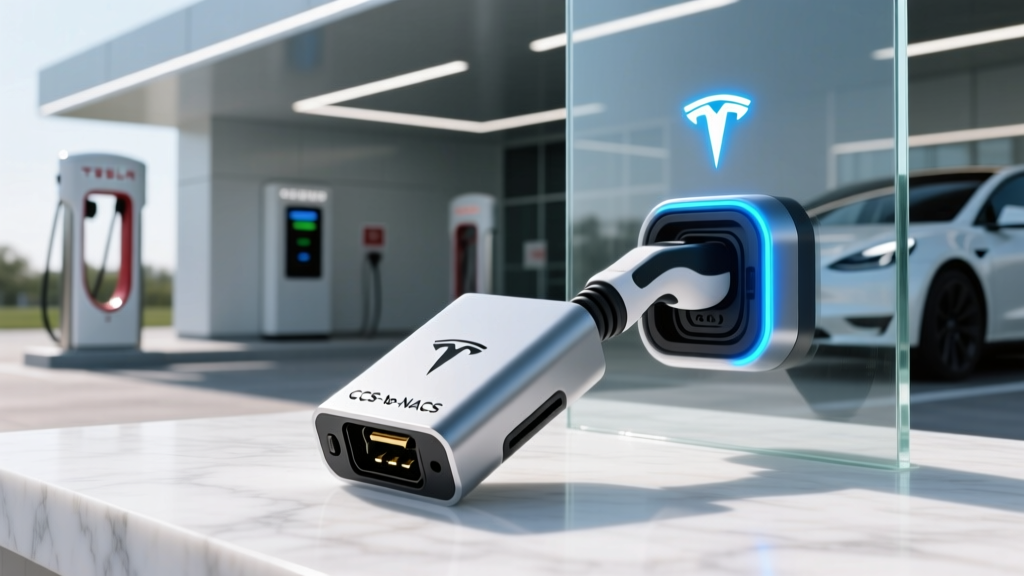
A CCS-to-NACS adapter is a passive physical connector adapter — it doesn't convert voltage or alter charging protocols. Tesla's Supercharger V3 and V4 stalls communicate with the vehicle via the Supercharger network software, which now supports non-Tesla vehicles that have been software-enabled by their manufacturer. The adapter simply bridges the physical connector difference.
Key considerations when buying an adapter:
- OEM adapters (from Ford, GM, Rivian, Hyundai) are the safest bet — they're tested and certified for your specific vehicle's charging protocol.
- Third-party adapters (from brands like Lectron or A2Z) are available for $150–$280 but verify UL certification and your automaker's compatibility list before purchasing.
- Peak power through an adapter: Most CCS-to-NACS adapters support up to 250 kW. You won't exceed your vehicle's native charge rate — a Hyundai Ioniq 5 still peaks at ~240 kW whether using a native CCS station or a NACS Supercharger via adapter.
- V3 vs V4 Superchargers: Tesla V3 stalls peak at 250 kW; V4 stalls are designed for up to 350 kW+ and include a CCS-compliant cabinet, making adapter compatibility more seamless.
Home Level 2 Charger Installation: Costs, Electrical Requirements, and Gotchas
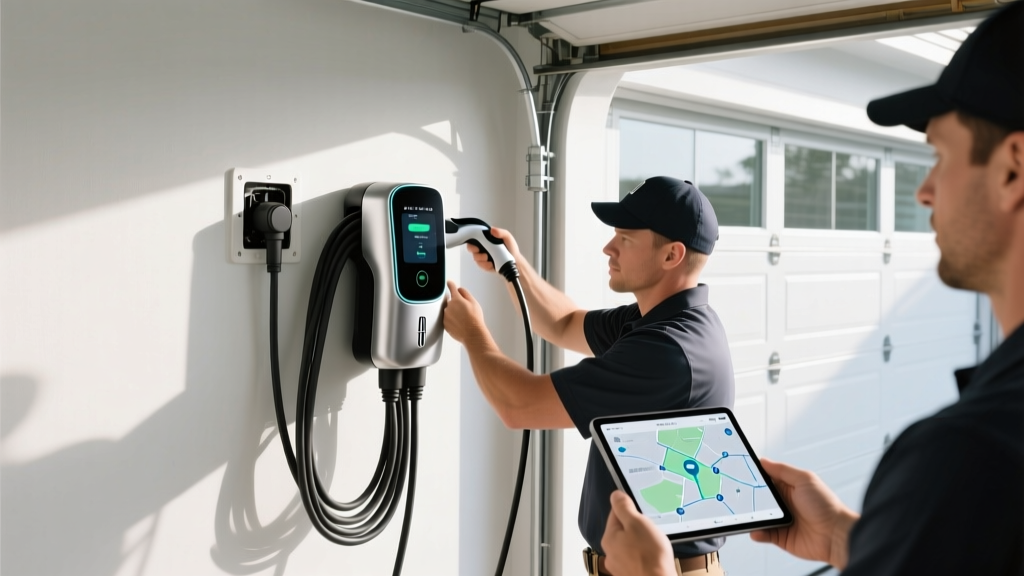
Home Level 2 charging is where most EV owners do 85–95% of their charging. Here's what a proper installation requires and what it actually costs.
Electrical Requirements
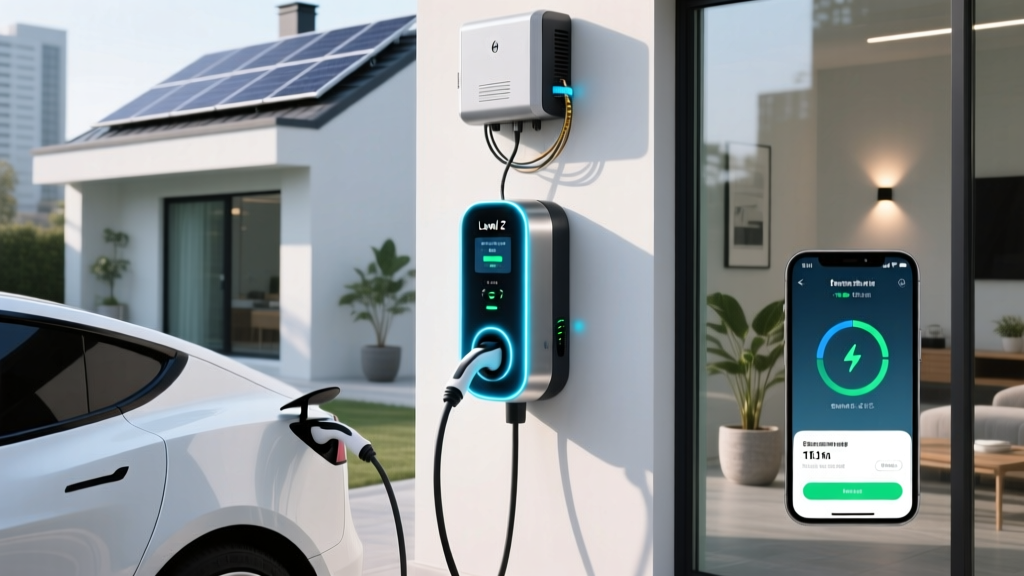
A Level 2 home charger requires a 240V dedicated circuit — the same type of circuit your electric dryer or oven uses. The amperage determines your charging speed:
- 40A circuit / 32A continuous draw: Delivers 7.7 kW — adds ~25 miles of range per hour. Sufficient for most daily driving needs.
- 48A circuit / 40A continuous: Delivers 9.6 kW — adds ~31 miles per hour. Good for larger batteries (100+ kWh trucks/SUVs).
- 60A circuit / 48A continuous: Delivers 11.5 kW — adds ~37 miles per hour. Fastest common residential setup.
- 80A circuit / 64A continuous: Delivers 15.4+ kW — requires a 100A-rated charger (e.g., Tesla Wall Connector at max config). Only necessary if your vehicle's onboard charger supports it; most EVs max out at 11.5 kW onboard.
Panel upgrade reality: Most homes built after 1990 have a 200A electrical panel, which typically supports a 40–60A EV charger circuit without an upgrade. However, older homes with 100A or 150A panels — or homes already running multiple high-draw appliances (electric heat, tankless water heater, double oven) — may need a panel upgrade to 200A or even 400A. This is the single biggest variable in installation cost.
| Component | Simple Install (panel nearby, no upgrade) | Complex Install (long run, panel upgrade) |
|---|---|---|
| Level 2 charger equipment | $400–$700 | $400–$700 |
| Electrician labor (2–6 hours @ $85–$150/hr) | $170–$450 | $500–$1,200 |
| Electrical permit | $50–$200 | $50–$200 |
| Conduit, wiring, and materials | $50–$150 | $200–$600 |
| Panel upgrade (if needed) | N/A | $1,500–$4,000 |
| Total estimated cost | $670–$1,500 | $2,650–$6,700 |
Pro tip: The federal Residential Clean Energy Credit (IRS Form 5695) may cover up to 30% of home charger equipment and installation costs, up to $1,000, for qualifying installations. Check current-year IRS rules and consult a tax professional — eligibility depends on your specific situation.
Safety and Code Requirements
Any licensed electrician will follow the National Electrical Code (NEC) requirements for EV charging circuits:
- Dedicated circuit: Your EV charger must be on its own breaker — it cannot share a circuit with other appliances.
- GFCI protection: NEC 2020 and later requires ground-fault circuit interrupter protection for all EV charging outlets (though hardwired chargers may have GFCI built into the unit).
- Outdoor rating: If your charger is installed outdoors (garage-exterior wall, carport, driveway post), it must carry a NEMA 4 or NEMA 4X weather-resistance rating.
- NEMA 14-50 vs hardwired: A NEMA 14-50 outlet gives you portability (take the charger when you move), while a hardwired installation avoids the outlet cost and allows higher amperage (60A+ circuits typically require hardwiring).
Level 2 Home Charger Recommendations for 2026
These chargers are proven, widely available, and compatible with both NACS-native and CCS vehicles (via adapter or native cable):
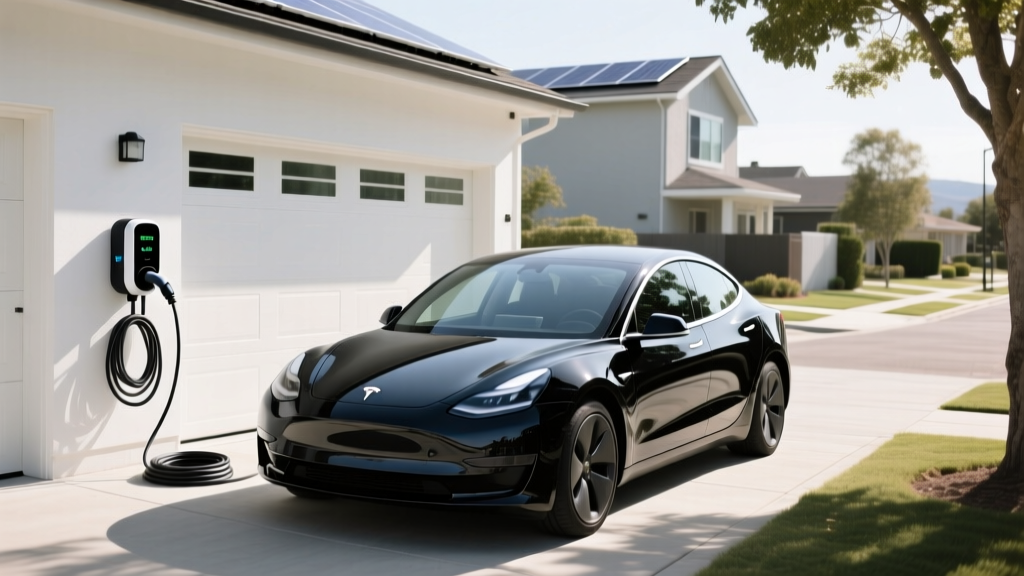
Tesla Wall Connector (Gen 3)
- Power output: Up to 11.5 kW (48A)
- Connector: NACS native
- Cable length: 24 ft
- Smart features: Wi-Fi, OTA updates, power sharing between two units, access control
- Price: ~$475
- Best for: NACS-native vehicles; CCS owners who don't mind plugging in an adapter each session
ChargePoint Home Flex
- Power output: Up to 12 kW (50A) — configurable from 16A to 50A
- Connector: J1772 (CCS-compatible); NACS adapter included in 2025+ kits
- Cable length: 23 ft
- Smart features: Wi-Fi, ChargePoint app scheduling, Alexa integration, energy tracking
- Price: ~$550–$650
- Best for: CCS-vehicle owners who want native plug-and-charge without an adapter
Emporia Vue EV Charger
- Power output: Up to 11.5 kW (48A)
- Connector: J1772 (with NACS adapter option)
- Cable length: 24 ft
- Smart features: Integration with Emporia home energy monitoring, solar-aware scheduling, load management
- Price: ~$400–$500
- Best for: Solar-panel owners and energy-monitoring enthusiasts
Grizzl-E Smart
- Power output: Up to 10 kW (40A)
- Connector: J1772
- Cable length: 24 ft
- Smart features: OCPP-compatible, adjustable amperage via DIP switches, extreme cold rated (-40°F)
- Price: ~$450
- Best for: Cold-climate owners who need rugged, no-frills reliability
What Charging Actually Costs: Home vs Public vs Gas
One of the strongest arguments for EV ownership is lower fueling cost — but the savings depend heavily on where and when you charge.
| Charging Scenario | Typical $/kWh | Cost for 77 kWh Battery (10–100%) | Cost Per Mile (at 3.2 mi/kWh) |
|---|---|---|---|
| Home — off-peak utility rate | $0.08–$0.14 | $6.16–$10.78 | $0.025–$0.044 |
| Home — standard residential rate | $0.13–$0.18 | $10.01–$13.86 | $0.041–$0.056 |
| Home — with solar (marginal cost near zero) | $0.00–$0.04 | $0.00–$3.08 | $0.000–$0.013 |
| Public Level 2 (workplace, shopping) | $0.20–$0.35 | $15.40–$26.95 | $0.063–$0.109 |
| DC Fast Charge — Electrify America / EVgo | $0.35–$0.55 | $26.95–$42.35 | $0.109–$0.172 |
| Tesla Supercharger (V3/V4) | $0.25–$0.40 | $19.25–$30.80 | $0.078–$0.127 |
Gas comparison baseline: A comparable gas-powered midsize SUV getting 28 MPG combined at $3.40/gallon costs roughly $0.121 per mile. So home off-peak charging at $0.03/mile saves about 75% per mile. But frequent exclusive DC fast charging at $0.15/mile narrows that gap considerably — and can exceed gas costs in high-price regions like California.
This is why home Level 2 charging is the economic foundation of EV ownership. If you can charge at home overnight on a time-of-use (TOU) rate plan, your per-mile fuel cost drops to pennies. Relying entirely on public DC fast charging erodes most of the savings advantage.
Charging Time Examples for Common Battery Sizes
How long does a real charging session take? Here are approximate 10–80% times for popular EVs under good conditions (preconditioned battery, moderate temperature):
- Tesla Model Y (75 kWh, NACS native): ~15 minutes on a 250 kW V3 Supercharger
- Hyundai Ioniq 5 (77.4 kWh, CCS via adapter to NACS): ~18 minutes on a 350 kW charger; ~25 minutes on a 250 kW V3 Supercharger
- Ford F-150 Lightning Extended Range (131 kWh, NACS on 2025+): ~25–30 minutes on a 250 kW charger (larger battery takes longer despite fast charge rate)
- Chevrolet Equinox EV (85 kWh, NACS on 2025+): ~22 minutes on a 150+ kW charger
- Nissan LEAF (62 kWh, CHAdeMO): ~45–60 minutes on a 50 kW CHAdeMO station — significantly slower due to older charge architecture
Note that real-world highway road trips involve charging from 15–20% to 80% (you rarely arrive at a charger near-empty), which shaves several minutes off these figures. Plan for a 20-minute stop every 200–250 miles in a well-preconditioned modern EV.
Frequently Asked Questions
How much does it cost to install a home EV charger?
A straightforward Level 2 installation with a 240V/40A circuit near your electrical panel typically costs $670–$1,500 including equipment, electrician labor, permit, and materials. If your home needs a panel upgrade (common in pre-1990 homes with 100A service), total costs can reach $2,650–$6,700. Always get 2–3 quotes from licensed electricians and verify they have EV charger installation experience.
How fast will each charging level add range?
Level 1 (120V) adds 3–5 miles per hour — adequate only for PHEVs or very low daily mileage. Level 2 (240V) at 11.5 kW adds roughly 37 miles per hour, which overnight covers 250+ miles of range. DC fast charging at 150–250 kW can add 150–250 miles in 15–25 minutes, depending on your vehicle's peak charge rate and battery size.
Which connector and charger is compatible with my EV?
Check your vehicle's charge port: if it's a 5-pin oval shape, it's CCS1. If it's a smaller 5-pin design (Tesla-style), it's NACS. If it's a round port with two large pins on top, it's CHAdeMO (Nissan LEAF, Mitsubishi). For CCS vehicles needing NACS/Supercharger access, purchase an OEM adapter from your automaker. For home Level 2 charging, any J1772 or NACS charger will work with the appropriate adapter or native cable.
How much does charging cost per mile vs gas?
Home off-peak charging costs approximately $0.03–$0.05 per mile for a typical EV. Gas at $3.40/gallon for a 28 MPG vehicle costs about $0.12 per mile. Public DC fast charging ranges from $0.08–$0.17 per mile, narrowing the gap. The maximum savings come from consistent home charging, especially with solar or TOU rate plans. According to fueleconomy.gov, EVs typically cost less than half as much per mile to fuel compared to gasoline vehicles when charged at home.
What electrical upgrades might I need?
If your home has a 200A panel with available breaker slots, you likely need nothing beyond the dedicated 240V circuit. Homes with 100A panels, full breaker boxes, or long wire runs from the panel to the garage may need a panel upgrade ($1,500–$4,000), a sub-panel installation, or conduit trenching. An electrician's load calculation — required by code — will determine whether your existing panel can handle the additional draw. Some utilities offer free or discounted pre-installation assessments.
Can I use a CCS-to-NACS adapter for home Level 2 charging?
Technically yes, but it's unnecessary. For home Level 2 charging, simply buy a charger with the connector that matches your car. If you have a CCS vehicle, get a J1772 charger (which natively fits CCS ports for AC Level 2). The CCS-to-NACS adapter is primarily needed for DC fast charging at NACS-only Supercharger stations, not for Level 2 home use.
Will Supercharger speeds be slower through a CCS-to-NACS adapter?
The adapter itself introduces negligible speed loss. Your actual charge speed is limited by your vehicle's onboard BMS and charge-rate capability, not the adapter. A Hyundai Ioniq 5 will peak at ~235–240 kW through an adapter at a V3 Supercharger, nearly identical to its rate at a native CCS Electrify America station. The main variable is whether the specific Supercharger stall is V3 (250 kW max) or V4 (350 kW max).
Sources: U.S. Department of Energy / fueleconomy.gov, IRS Residential Clean Energy Credit, Tesla Supercharger Network.