Why Tesla Owners Need a CCS Adapter in 2026
Tesla's North American Charging Standard (NACS) connector is now the dominant EV plug in the United States, with Ford, GM, Rivian, Hyundai, and most other automakers adopting it for new models. But the transition isn't complete. Thousands of public DC fast chargers — especially Electrify America stations and older ChargePoint deployments — still use the CCS1 (Combined Charging System) connector. If you drive a Tesla and want access to the full public charging network, a CCS adapter for Tesla bridges that gap.
This guide covers which adapters work, how fast you can actually charge through them, what to expect at a CCS station, and how the adapter fits into a broader home and public charging setup.
Understanding Charging Levels and Speeds
Before evaluating adapters, it helps to ground yourself in the three charging levels every EV owner encounters. The critical distinction: kW (kilowatts) measures power — how fast energy flows into your battery. kWh (kilowatt-hours) measures energy — how much your battery holds. A 75 kWh battery charged at 150 kW fills faster than one charged at 50 kW, but both store energy in kWh.
| Level | Voltage | Power (kW) | Miles of Range Added per Hour | Typical Use Case |
|---|---|---|---|---|
| Level 1 | 120V AC | 1.0–1.4 kW | 3–5 mi/hr | Overnight trickle; emergency top-up |
| Level 2 | 240V AC | 3.3–19.2 kW | 12–75 mi/hr | Home daily charging; workplace; hotels |
| DC Fast Charge | 400–800V DC | 50–350 kW | 150–1,000+ mi/hr (peak) | Road trips; rapid public top-ups |
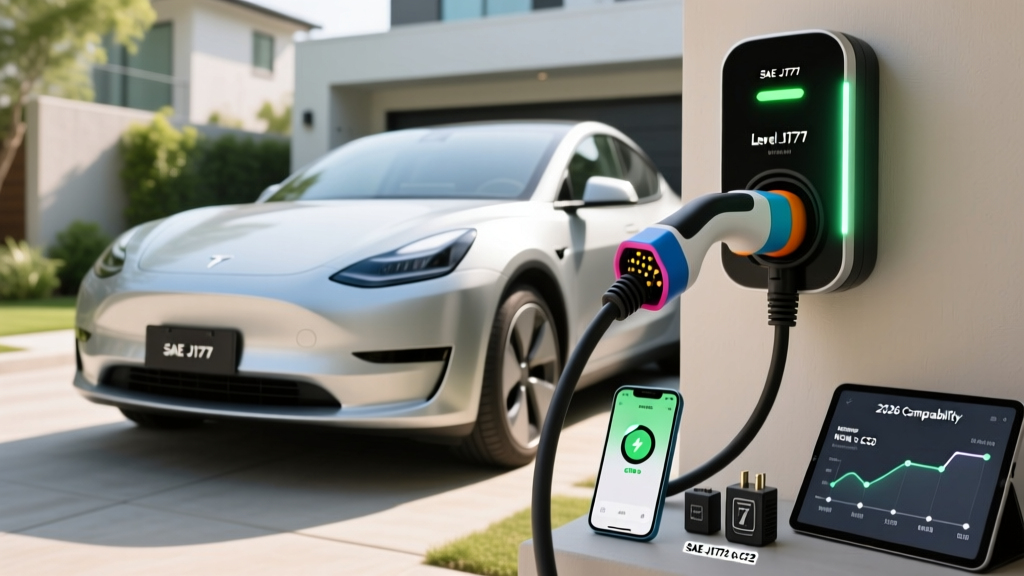
CCS adapters are relevant only for DC fast charging. Level 1 and Level 2 AC charging use the J1772 standard for non-Tesla EVs, and Tesla provides a J1772-to-Tesla adapter with every vehicle for AC compatibility. The CCS adapter is specifically for high-power DC stations with CCS1 plugs.
Which CCS Adapter for Tesla Should You Buy?
Tesla sells an official CCS Combo 1 Adapter through its online store. As of early 2026, it is priced at approximately $175 and supports DC fast charging at up to 250 kW — matching the peak rate of Tesla's V3 Superchargers. The adapter is compact (roughly 6 inches long), weighs under 1 pound, and stores easily in the frunk or glovebox.
Official Tesla CCS Combo 1 Adapter
- Price: ~$175
- Max DC charge rate: 250 kW
- Compatibility: Model 3, Model Y, Model S, Model X (vehicles with CCS charge-port ECU firmware update — most 2021+ vehicles; older cars may need a service-center retrofit)
- Warranty: Tesla-backed; covered under standard accessory warranty
- Pros: Guaranteed firmware compatibility, reliable communication handshake with CCS stations, compact design
- Cons: Frequently out of stock; 250 kW cap may bottleneck on 350 kW stations for future 800V Teslas
Third-Party CCS Adapters
Several aftermarket manufacturers — including Lectron, A2Z EV, and EVC — offer CCS-to-NACS adapters at prices ranging from $120 to $200. These adapters claim compatibility with Tesla vehicles and support charge rates up to 250 kW. In independent testing, most reputable third-party adapters successfully negotiate the CCS communication protocol (PLC — Power Line Communication) and initiate charging sessions without errors.
However, third-party adapters carry risks: firmware incompatibility after Tesla over-the-air updates, inconsistent build quality, and no warranty coverage from Tesla. For a component that handles up to 250 kW and 500+ volts of DC current, the official adapter is the safer investment unless budget is a hard constraint.
Real-World Charging Speeds Through a CCS Adapter
Connecting to a 350 kW Electrify America stall through a CCS adapter does not mean your Tesla will charge at 350 kW. The adapter caps at 250 kW, and your vehicle's onboard charge curve further limits sustained speed. Here's what to expect with common Tesla battery packs:
| Vehicle | Battery (usable kWh) | Peak Charge Rate | 10–80% Time | Notes |
|---|---|---|---|---|
| Model 3 Long Range (2025) | ~75 kWh (NMC) | ~250 kW | ~25–30 min | Peak rate sustained to ~50% SoC, then tapers |
| Model Y Long Range (2025) | ~75 kWh (NMC) | ~250 kW | ~27–32 min | Similar curve to Model 3 LR |
| Model 3 RWD (LFP) | ~57.5 kWh (LFP) | ~175 kW | ~28–35 min | LFP chemistry limits peak rate; can charge to 100% regularly |
| Model S Plaid (2025) | ~95 kWh (NMC) | ~250 kW | ~32–38 min | Larger pack extends time despite same peak rate |
The charge curve matters more than peak kW. A Model 3 Long Range may pull 250 kW from 10% to roughly 45% state of charge (SoC), then taper to ~150 kW through 65%, and drop below 100 kW past 80%. This is why the 10–80% metric is more useful than peak rate alone. Expect CCS adapter charging to mirror Supercharger V3 speeds almost exactly — the adapter adds negligible resistance.
Connector Compatibility Across the EV Market
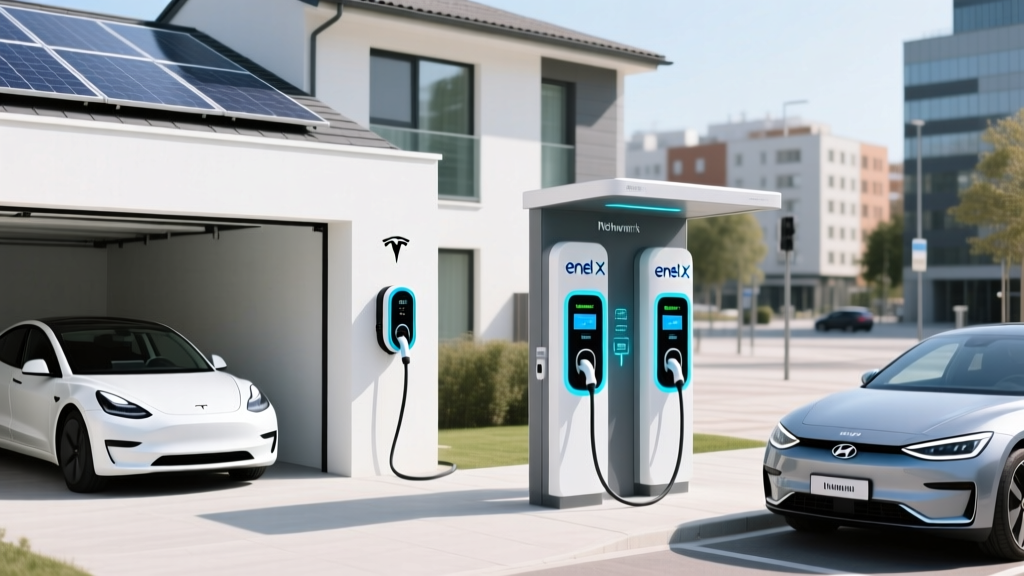
The North American charging landscape in 2026 is in transition. Here's how the three main connectors break down by vehicle brand and station availability:
| Connector | Used By | DC Fast-Charger Availability | Adapter Needed for Tesla? |
|---|---|---|---|
| NACS (Tesla) | Tesla, Ford, GM, Rivian, Hyundai, Kia, Volvo, Polestar, and growing list | Tesla Superchargers (25,000+ stalls); expanding to other networks | None (native) |
| CCS1 | Legacy VW ID.4, older BMW i4/iX, older Hyundai/Kia, Electrify America native | Electrify America, EVgo, ChargePoint, and thousands of legacy stations | Yes — CCS adapter for Tesla required |
| CHAdeMO | Nissan Leaf (discontinued), Mitsubishi Outlander PHEV | Declining; few new installations | Not recommended; no widely available adapter |
The practical takeaway: a CCS adapter for Tesla gives you access to Electrify America's 3,500+ stations and thousands of additional CCS-equipped chargers on EVgo, ChargePoint, and independent networks. This is particularly valuable in rural corridors and regions where Tesla Supercharger density is still limited.
Home Charging Setup: Installation and Costs
While the CCS adapter is for public DC fast charging, most Tesla owners do 80–90% of their charging at home on Level 2. A proper home installation is the foundation of EV ownership. Here's what's involved.
Electrical Requirements
A standard Level 2 home charger for a Tesla requires a 240V dedicated circuit. The most common configuration is a 60-amp breaker delivering up to 48 amps continuous (NEC code requires circuits to be rated 125% above continuous load). This supports the Tesla Wall Connector at its maximum 11.5 kW output (48A × 240V).
If your electrical panel lacks capacity for a 60-amp circuit, a 40-amp breaker (32A continuous, ~7.7 kW) or even a 30-amp breaker (24A continuous, ~5.8 kW) can still provide adequate overnight charging for most drivers. A Tesla Model 3 Long Range adding ~30 miles overnight on a 30-amp circuit covers the average American's daily commute.
Installation Cost Breakdown
| Component | Cost Range | Notes |
|---|---|---|
| Level 2 Charger (hardware) | $350–$650 | Tesla Wall Connector ~$420; ChargePoint Home Flex ~$550; Emporia Vue ~$350 |
| Electrician labor (standard install) | $500–$1,500 | Depends on run length from panel to garage/carport; drywall work adds cost |
| Electrical permit | $50–$200 | Required in most jurisdictions; varies by municipality |
| Panel upgrade (if needed) | $1,500–$3,500 | Older homes with 100A service may need upgrade to 200A; not always required |
| Total (no panel upgrade) | $900–$2,350 | Typical scenario for homes with 200A service and available breaker slots |
| Total (with panel upgrade) | $2,400–$5,850 | Common for pre-1990 homes; get 2–3 electrician quotes |
Always hire a licensed electrician and pull a permit. Unpermitted electrical work can void home insurance and create fire risk. For the final circuit specification and load calculation, defer to your licensed electrician — they will assess your panel's available amperage and determine the safe maximum circuit size.
What Charging Costs Per Mile vs. Gas
One of the strongest arguments for EV ownership is lower fuel cost per mile. Here's how home, public Level 2, and DC fast charging compare to gasoline for a vehicle achieving 30 MPG combined:
| Charging Scenario | Cost per kWh | Efficiency (kWh/100 mi) | Cost per Mile |
|---|---|---|---|
| Home (off-peak utility rate) | $0.08–$0.14 | 25–30 | $0.02–$0.04 |
| Home (standard rate, no TOU) | $0.14–$0.20 | 25–30 | $0.04–$0.06 |
| Public Level 2 (ChargePoint, etc.) | $0.25–$0.49 | 25–30 | $0.06–$0.15 |
| DC Fast (Tesla Supercharger) | $0.28–$0.42 | 28–32 (highway) | $0.08–$0.13 |
| DC Fast (Electrify America / CCS) | $0.35–$0.55 | 28–32 (highway) | $0.10–$0.18 |
| Gasoline (30 MPG, $3.50/gal) | — | — | $0.12 |
| Gasoline (25 MPG, $3.50/gal) | — | — | $0.14 |
Home charging on an off-peak time-of-use (TOU) plan delivers fuel costs roughly 70–80% lower than gasoline. Even public DC fast charging on networks like Electrify America — where you'd use your CCS adapter — typically matches or undercuts gasoline on a per-mile basis. The savings multiply for drivers with solar panels or utility EV-discount rate plans.
Recommended Home Chargers and Equipment
Your CCS adapter handles public DC charging. For home Level 2, these chargers pair well with any Tesla:
Tesla Wall Connector
- Power: Up to 11.5 kW (48A at 240V)
- Connector: Native NACS — no adapter needed for Tesla
- Cable length: 18 ft or 24 ft options
- Smart features: Wi-Fi OTA updates, load sharing (pair two units on one circuit), Tesla app integration
- Price: ~$420
- Best for: Tesla-only households
ChargePoint Home Flex
- Power: Up to 12 kW (50A at 240V); configurable down to 16A
- Connector: J1772 (use Tesla's included J1772 adapter) or NACS version available
- Cable length: 23 ft
- Smart features: ChargePoint app scheduling, Alexa integration, amperage adjustable via app
- Price: ~$550
- Best for: Multi-EV households (Tesla + non-Tesla)
Emporia Level 2 EV Charger
- Power: Up to 11.5 kW (48A at 240V)
- Connector: J1772 (NACS version shipping 2025+)
- Cable length: 24 ft
- Smart features: Energy monitoring via Emporia Vue panel integration, solar-aware charging, scheduling
- Price: ~$350
- Best for: Budget-conscious buyers; solar homes
Safety, Code, and Installation Best Practices
Whether you're installing a Level 2 home charger or using a CCS adapter at a public station, electrical safety is non-negotiable.
Home Installation Code Requirements
- Dedicated circuit: Your Level 2 charger must have its own breaker — no shared circuits with appliances or outlets.
- GFCI protection: NEC 2020 and later require GFCI (Ground Fault Circuit Interrupter) protection for outdoor EV receptacles. Hardwired chargers (like the Tesla Wall Connector) typically have built-in ground-fault protection and may not require an external GFCI breaker — your electrician will determine this based on local code.
- Outdoor rating: If your charger is mounted outdoors or in an uncovered carport, ensure it carries a NEMA 4 (weather-resistant) rating. The Tesla Wall Connector and ChargePoint Home Flex both meet this standard.
- Wire gauge: A 60-amp circuit requires 6 AWG copper wire (or 4 AWG aluminum). Your electrician will size wire based on run length and local amendments to the NEC.
- Permit and inspection: Most municipalities require an electrical permit and post-installation inspection. Skipping this step risks insurance claim denial in the event of an electrical fire.
CCS Adapter Safety at Public Stations
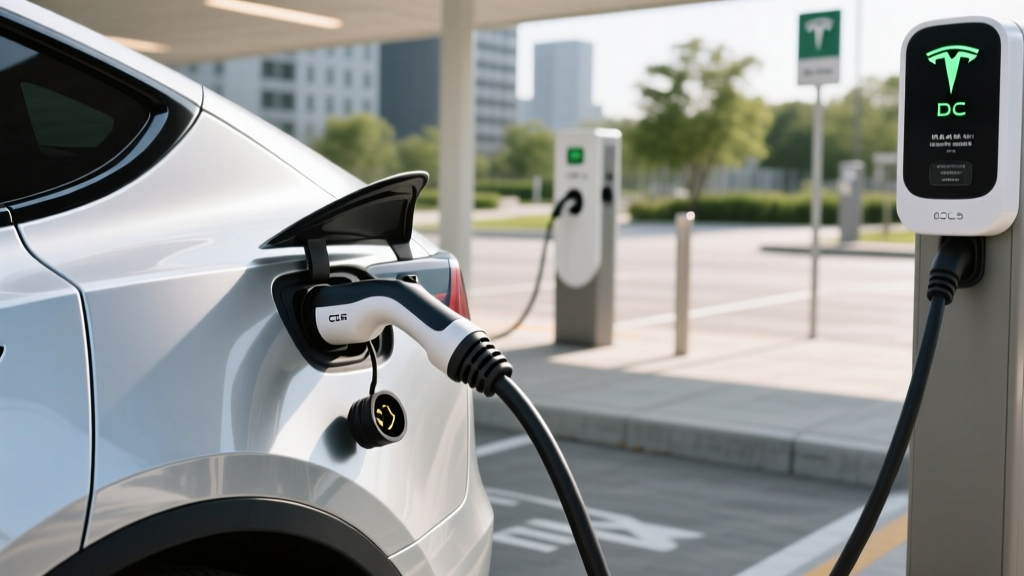
When using your CCS adapter at a public DC fast charger, inspect the CCS cable and connector for visible damage before plugging in. Ensure the adapter clicks firmly into your Tesla's charge port and that the CCS cable locks securely into the adapter. If the station displays a communication error, disconnect and try reseating — handshake failures between CCS stations and adapted Teslas are rare but can occur on older charger firmware.
Frequently Asked Questions
Will using a CCS adapter void my Tesla warranty?
No. The official Tesla CCS Combo 1 Adapter is a Tesla-approved accessory and does not affect your vehicle's battery, powertrain, or general warranty. Third-party adapters exist in a gray area — while using one is unlikely to void your warranty outright, any damage directly caused by a non-OEM adapter (e.g., charge-port pin damage from poor fit) may not be covered. The $175 official adapter is the low-risk choice.
Can I charge at Electrify America with a CCS adapter for Tesla?
Yes. Electrify America stations use CCS1 connectors for DC fast charging. Plug your CCS adapter into your Tesla's NACS charge port, then plug the station's CCS cable into the adapter. You'll need the Electrify America app or a credit card to initiate the session. Charge rates will be limited by the adapter's 250 kW cap and your vehicle's charge curve — expect 10–80% in roughly 25–35 minutes depending on your Tesla model and battery size.
Do I need a CCS adapter if I only use Tesla Superchargers?
If Tesla Superchargers cover all your regular routes, you may not need one today. However, the CCS adapter is valuable insurance for road trips through areas with sparse Supercharger coverage, for accessing Electrify America's network along highway corridors, and for future-proofing as the charging landscape continues consolidating. At $175, most Tesla owners find it worth keeping in the frunk for occasional use.
How does CCS charging speed compare to Tesla Superchargers?
With the official 250 kW CCS adapter, charging speeds are nearly identical to a V3 Supercharger (also 250 kW peak). You won't notice a meaningful speed difference. The newer V4 Supercharger architecture supports higher voltages and may eventually offer faster rates for compatible vehicles, but as of 2026, V3 at 250 kW remains the most common Supercharger type. At a 350 kW CCS station, your adapter caps throughput at 250 kW — you won't benefit from the station's full output.
What about the federal tax credit for home charger installation?
The IRS §30C Alternative Fuel Vehicle Refueling Property Credit covers up to 30% of home charger hardware and installation costs, capped at $1,000. Eligibility depends on your census tract meeting specific low-income or non-urban criteria. Check the IRS website or consult a tax professional for your specific situation — eligibility rules are location-dependent and subject to change.
Sources: Tesla CCS Combo 1 Adapter specifications via Tesla.com; charging efficiency data cross-referenced with fueleconomy.gov; IRS §30C credit rules via irs.gov.