Why Your Car Charger With Wall Plug Matters More Than You Think
Most new EV owners start charging with the mobile cord that ships in the trunk — a basic Level 1 cable that plugs into a standard 120V household outlet. It works, but barely. If you're searching for a better car charger with wall plug setup, you've likely realized that adding 3–5 miles of range per hour isn't going to cut it for a vehicle with a 75–100 kWh battery.
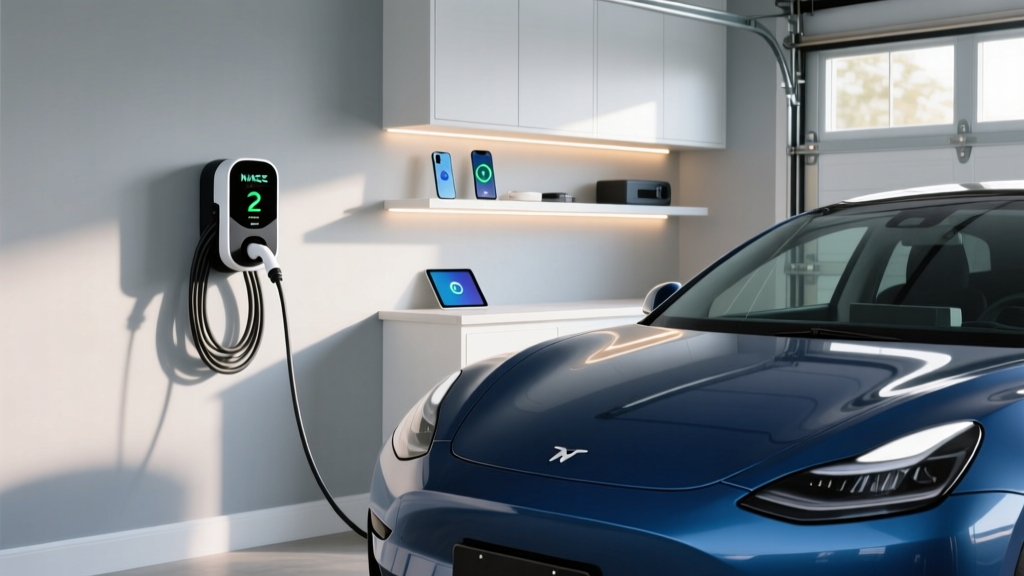
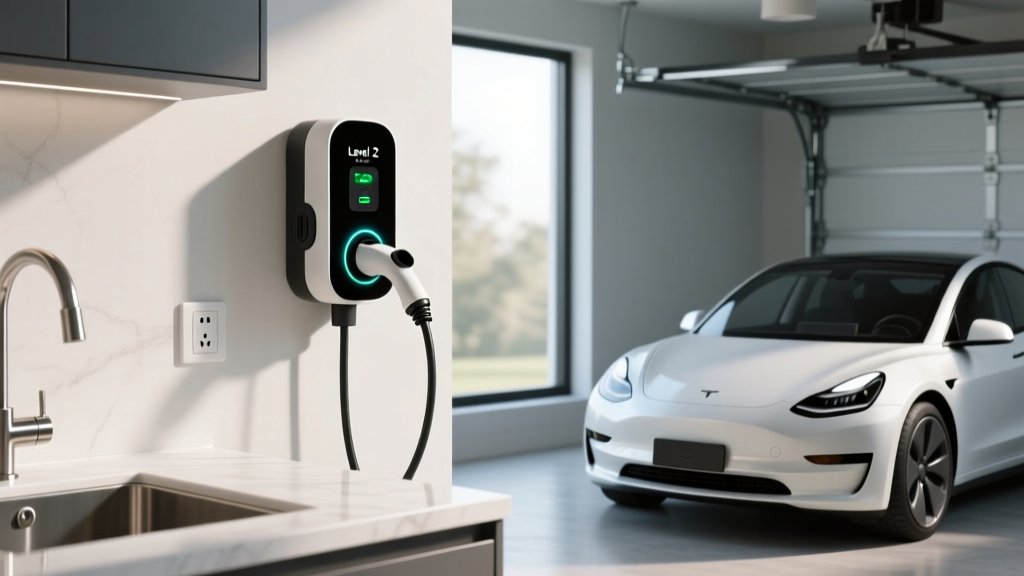
The right home charging setup transforms EV ownership. A properly installed Level 2 wall-mounted charger on a 240V circuit can replenish 25–44 miles of range per hour, meaning a full overnight charge for virtually any EV on the market. But choosing the right equipment, understanding your home's electrical capacity, and budgeting for installation requires sorting through some specifics. This guide breaks down every number you need.
Charging Levels Explained: Speeds, Power, and Real-World Range Added
Before shopping for hardware, let's lock in the critical distinction: kW (kilowatts) measures power — how fast energy flows into your car. kWh (kilowatt-hours) measures energy — the total capacity of your battery. Think of kW as the width of the pipe and kWh as the size of the tank. A charger rated at 11.5 kW delivers energy faster than one rated at 7.2 kW, filling your kWh battery in less time.
| Level | Voltage | Max Power (kW) | Miles of Range Added Per Hour | Typical Use Case |
|---|---|---|---|---|
| Level 1 | 120V AC | 1.4–1.9 kW | 3–5 mi/hr | Overnight trickle; PHEVs; low-mileage commuters |
| Level 2 | 240V AC | 7.2–19.2 kW | 25–44 mi/hr (at 11.5 kW) / 55+ mi/hr (at 19.2 kW) | Primary home charging; workplace; public destinations |
| DC Fast Charging | 400–800V DC | 50–350 kW | 150–800+ mi/hr (burst) | Road trips; highway corridors; commercial fleets |
Real-world charging time examples (10–80% State of Charge):
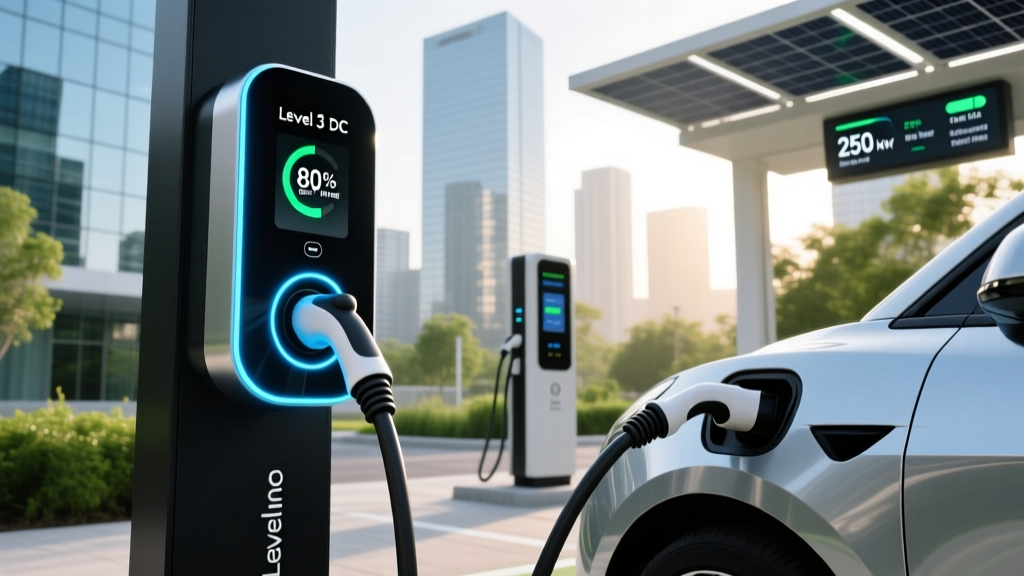
- Tesla Model Y (75 kWh usable battery): ~10.5 hours on a 7.2 kW Level 2 charger; ~5.5 hours on an 11.5 kW unit; ~25 minutes on a 250 kW DC fast charger (peak, before taper).
- Ford F-150 Lightning Extended Range (131 kWh usable): ~18 hours at 7.2 kW; ~9.5 hours at 11.5 kW; ~41 minutes on a 150 kW DCFC.
- Hyundai Ioniq 5 (77.4 kWh usable, 800V architecture): ~11 hours at 7.2 kW; ~5.5 hours at 11.5 kW; ~18 minutes on a 350 kW DCFC (one of the fastest-charging EVs available).
Note that DC fast charging speeds peak at low State of Charge and taper significantly above 80%. That 350 kW peak on the Ioniq 5 sustains only briefly — the average rate across the 10–80% session is closer to 180–200 kW. At home on Level 2, tapering is minimal, so rated kW is a reliable planning number.
How Much Does It Cost to Install a Home EV Charger?
This is where reality sets in. The charger unit itself is often the cheapest part of the equation. Total installed cost depends on your electrical panel's capacity, the distance from panel to charger location, and local permitting requirements.
| Cost Component | Simple Install (Panel Near Garage) | Complex Install (Long Run or Panel Upgrade) |
|---|---|---|
| Level 2 Charger Unit (hardwired or NEMA 14-50 plug) | $350–$700 | $350–$700 |
| Electrician Labor (240V circuit, 40–60A) | $400–$800 | $1,200–$2,500 |
| Electrical Permit | $50–$200 | $50–$200 |
| Panel Upgrade (100A → 200A service, if needed) | N/A | $1,500–$3,500 |
| Conduit, Wiring, Misc. Materials | $100–$300 | $300–$800 |
| Total Estimated Range | $900–$2,000 | $3,100–$7,700 |
The panel upgrade wildcard: Homes built before the 1990s often have 100-amp electrical service. Adding a 40-amp or 50-amp dedicated EV circuit may push total load beyond the panel's capacity, triggering a utility service upgrade. This is the single biggest cost surprise in EV home charging. Have an electrician perform a load calculation before you buy equipment.
Federal incentive note: The IRS Residential Clean Energy Credit (IRC §25C) previously covered 30% of home charging equipment and installation costs up to $1,000. Verify current-year availability with a tax professional, as incentive structures change. Some utilities and states also offer rebates — check your local provider.
Which Connector and Charger Is Compatible With My EV?
The connector landscape has consolidated significantly since 2024, when Ford, GM, Rivian, Volvo, and most major automakers adopted the North American Charging Standard (NACS) — the connector Tesla developed. By the 2026 model year, nearly every new EV sold in the U.S. ships with a native NACS port. CCS1 vehicles from 2022–2024 model years remain on the road and need adapters for NACS-equipped chargers.
| Connector | Brands Using It (Native) | Adapter Needed For |
|---|---|---|
| NACS (Tesla-style) | Tesla, Ford, GM, Rivian, Volvo, Polestar, Mercedes, BMW, Hyundai/Kia (2025+), Honda, Toyota, Subaru, Lucid, Fisker | CCS1 public chargers (NACS-to-CCS adapter, ~$200–$250) |
| CCS1 | 2022–2024 model-year EVs from VW, Hyundai/Kia, BMW, Mercedes, and others pre-NACS switch | NACS/Tesla Superchargers (CCS-to-NACS adapter, often included by OEM) |
| CHAdeMO | Nissan Leaf (legacy); essentially discontinued on new vehicles | Most modern public DCFC networks (CHAdeMO-to-CCS adapters are rare and expensive) |
For Level 2 home charging: All Level 2 chargers sold in the U.S. use a J1772 connector (or a NACS connector that is backward-compatible with J1772 via adapter). If your EV has a native NACS port, buy a NACS-equipped Level 2 charger or use the J1772-to-NACS adapter that most automakers now include. If you drive a CCS1-era EV, a standard J1772 Level 2 charger works natively — no adapter needed for home charging.
Top Car Charger With Wall Plug Picks for 2026
These are wall-mounted Level 2 units designed for permanent installation on a dedicated 240V circuit. Each supports either hardwired connection (preferred for 48A+ units, as the NEC requires hardwiring for circuits above 40A continuous load) or a NEMA 14-50 receptacle plug.
ChargePoint Home Flex (NACS or J1772)
- Power Output: Up to 12 kW (50A) hardwired; up to 9.6 kW (40A) on NEMA 14-50
- Cable Length: 23 feet
- Smart Features: Wi-Fi, ChargePoint app scheduling, Alexa integration, energy tracking
- Connector Options: Available in NACS and J1772 versions
- Price: ~$550–$650
- Best For: Flexible amperage adjustment (dial from 16A to 50A to match your circuit)
Tesla Wall Connector (NACS native)
- Power Output: Up to 11.5 kW (48A) hardwired
- Cable Length: 24 feet
- Smart Features: Wi-Fi, over-the-air updates, power-sharing (link up to 6 units on one circuit), Tesla app integration
- Connector: NACS (includes J1772 adapter for non-Tesla EVs)
- Price: ~$450–$500
- Best For: Tesla owners or multi-EV households wanting power-sharing capability
Emporia Vue Level 2 Smart Charger
- Power Output: Up to 11.5 kW (48A) hardwired; 9.6 kW (40A) on NEMA 14-50
- Cable Length: 24 feet
- Smart Features: Wi-Fi, Emporia energy monitoring ecosystem integration, solar-aware scheduling, utility demand-response compatible
- Connector: J1772 (NACS adapter included)
- Price: ~$400–$500
- Best For: Solar panel owners wanting to charge on excess production; budget-conscious buyers
Grizzl-E Smart (United Chargers)
- Power Output: Up to 9.6 kW (40A) on NEMA 14-50 or hardwired
- Cable Length: 24 feet
- Smart Features: OCPP-compatible, works with multiple smart-home platforms, adjustable amperage
- Connector: J1772 (NACS version available)
- Price: ~$450–$550
- Best For: Extreme cold climates (rated to -40°F); outdoor installations; Canadian-built durability
Charging Cost Per Mile: Home Electricity vs. Gasoline
The financial case for home charging rests on one number: cost per mile. Here's how common scenarios compare against a gasoline baseline of a 30 MPG vehicle at $3.50/gallon.
| Charging Scenario | Rate ($/kWh) | EV Efficiency (kWh/mi) | Cost Per Mile |
|---|---|---|---|
| Home, off-peak utility rate | $0.08–$0.12 | 0.30 (typical midsize EV) | $0.024–$0.036 |
| Home, standard residential rate | $0.14–$0.18 | 0.30 | $0.042–$0.054 |
| Public Level 2 (workplace, shopping) | $0.20–$0.35 | 0.30 | $0.06–$0.105 |
| DC Fast Charging (Electrify America, Tesla Supercharger) | $0.30–$0.55 | 0.30 | $0.09–$0.165 |
| Gasoline (30 MPG, $3.50/gal) | — | — | $0.117 |
At home on off-peak rates, an EV costs roughly one-quarter to one-third per mile compared to gasoline. Even at public DC fast charging rates, most EVs are cost-competitive or cheaper per mile than the average gas car. The savings compound: a driver covering 12,000 miles annually saves approximately $800–$1,200 per year by charging at home versus fueling a 30 MPG gas vehicle, according to fueleconomy.gov efficiency data.
Efficiency varies by model. A Tesla Model 3 achieves roughly 0.25 kWh/mile (highly efficient), while a Ford F-150 Lightning consumes closer to 0.45–0.50 kWh/mile. Heavier vehicles cost more per mile to charge, just as they consume more gallons per mile.
Safety, Electrical Code, and Installation Requirements
EV charging draws sustained high current for hours — a duty cycle far more demanding than a dryer or oven. The National Electrical Code (NEC) treats EV charging as a continuous load, meaning the circuit must be rated for 125% of the charger's maximum draw. A 48A charger requires a 60A circuit. A 40A charger requires a 50A circuit.
- Dedicated circuit: Your EV charger must have its own breaker — no sharing with other appliances.
- GFCI protection: NEC 2020 and later requires GFCI protection for all 240V receptacles in garages. Hardwired installations may be exempt depending on jurisdiction.
- NEMA 14-50 receptacle: If using a plug-in charger (not hardwired), the outlet must be a commercial-grade, properly torqued 14-50R. Multiple EV-related fires have been traced to poorly installed residential-grade receptacles. Specify a Hubbell or Bryant industrial 14-50R to your electrician.
- Outdoor rating: If mounting outside, the charger must carry a NEMA 4 or NEMA 4X rating for weather resistance. All picks above meet this standard.
- Permit and inspection: Most jurisdictions require an electrical permit and post-installation inspection. Skipping this voids homeowner's insurance coverage for electrical fires.
- Wire gauge: 6 AWG copper for 50A circuits; 4 AWG for 60A. Your electrician will size appropriately based on run length and local code amendments.
Frequently Asked Questions
Can I just plug my EV into a regular wall outlet?
Yes, using the Level 1 mobile cord that came with your car. A standard 120V/15A outlet delivers about 1.4 kW — roughly 3–5 miles of range per hour. For a plug-in hybrid with a 15–40 mile electric range, this is often sufficient overnight. For a full battery EV with a 250+ mile range, Level 1 adds only 35–60 miles over a 10-hour night. It works for low-mileage commuters but is impractical as a primary charging strategy for most BEV owners.
Do I need a hardwired charger or a plug-in unit?
It depends on amperage. The NEC requires hardwiring for any continuous load above 40A on a receptacle circuit. If you want maximum speed (48A / 11.5 kW), plan on hardwiring. If you want the flexibility to unplug and take the charger with you when you move, a NEMA 14-50 receptacle at 40A (9.6 kW) is the practical ceiling. Hardwired installations also avoid the GFCI breaker issues that have plagued some NEMA 14-50 setups.
What electrical upgrades might I need for a Level 2 charger?
The most common upgrade is a panel service increase from 100A to 200A, required when your existing panel can't handle the added continuous load. Other scenarios: if your panel is full (no available breaker slots), you may need a sub-panel or tandem breakers. Older homes with aluminum wiring or ungrounded circuits will need new copper runs. A licensed electrician's load calculation — typically $100–$200 as a standalone service — answers this definitively before you commit to equipment.
How fast will each charging level add range to my EV?
Level 1 (120V): 3–5 miles per hour. Level 2 at 7.2 kW (30A): ~25 miles per hour. Level 2 at 11.5 kW (48A): ~40–44 miles per hour. Level 2 at 19.2 kW (80A, rare residential): ~55–65 miles per hour. DC Fast Charging at 150 kW: roughly 150–200 miles in a 20–30 minute session, depending on the vehicle's charge curve and battery size. Your vehicle's onboard charger limits the maximum Level 2 AC rate it can accept — check your owner's manual for the onboard charger rating (commonly 7.2 kW, 11.5 kW, or 19.2 kW).
Is it cheaper to charge at home or use public chargers?
Home charging is almost always cheaper. Residential electricity averages $0.12–$0.18/kWh nationally, while public DC fast chargers charge $0.30–$0.55/kWh and public Level 2 stations charge $0.20–$0.35/kWh. An EV owner who charges 90% at home and 10% on DCFC road trips will see a blended cost of roughly $0.04–$0.06 per mile — about half the fuel cost of an efficient gas car. The financial advantage of EV ownership depends heavily on reliable home charging access.