The Home Charging Landscape: Why the Right Manufacturer Matters
Plug in at home, wake up with 200+ miles of range, and skip the gas station forever. That's the promise of Level 2 home charging, and it's why over 80% of EV charging happens in a residential driveway or garage. But not all home chargers are built the same. The car charger manufacturers behind your wall connector determine everything from charge speed and cable durability to smart-grid features and long-term reliability.
This guide cuts through the marketing to compare the leading residential EV charger makers on the specs that matter: power output in kilowatts (kW), connector type, smart features, build quality, and total installed cost. We'll also break down the electrical requirements, permit realities, and per-mile charging economics so you can budget accurately before you buy.
Charging Levels Explained: kW, Miles Per Hour, and Charge Times
Before comparing manufacturers, you need clarity on the three charging tiers available to EV owners. Power is measured in kilowatts (kW) — the rate at which energy flows into your battery. Energy is measured in kilowatt-hours (kWh) — the total capacity of your battery. Think of kW as the width of the pipe and kWh as the size of the tank.
| Level | Voltage | Max Power (kW) | Miles of Range Added Per Hour | Typical Use Case |
|---|---|---|---|---|
| Level 1 | 120V AC | 1.4–1.9 kW | 3–5 miles | Overnight trickle; PHEVs and low-mileage commutes |
| Level 2 | 240V AC | 7.2–19.2 kW | 20–70 miles | Primary home and workplace charging |
| DC Fast Charging | 400–900V DC | 50–350+ kW | 150–1,200+ miles/hr equivalent | Road trips; 10–80% in 15–30 minutes |
For a typical 75 kWh battery (like the one in a Tesla Model Y Long Range or Hyundai Ioniq 5), here's what real charge times look like:
- Level 1 (1.4 kW): ~54 hours from 10–80% — impractical for BEVs, fine for PHEVs with 15 kWh batteries.
- Level 2 at 11.5 kW (48A): ~5 hours from 10–80% — the sweet spot for overnight home charging.
- Level 2 at 7.7 kW (32A): ~7.5 hours from 10–80% — adequate if your panel limits you to a 40A circuit.
- DC Fast Charging at 250 kW peak: ~18 minutes from 10–80% — note that peak rate isn't sustained; expect tapering above 50–60% SoC.
How Much Does It Cost to Install a Home EV Charger?
This is the question every new EV buyer asks, and the answer depends heavily on your home's electrical infrastructure. Here's a realistic cost breakdown for a 240V / 48A Level 2 installation in 2026:
| Cost Component | Low Estimate | High Estimate | Notes |
|---|---|---|---|
| Level 2 Charger Equipment | $350 | $750 | Varies by brand, power output, smart features |
| Electrician Labor (240V circuit run) | $600 | $2,500 | Depends on distance from panel, wall type, conduit |
| Electrical Permit | $50 | $250 | Required in most jurisdictions; varies by municipality |
| Panel Upgrade (if needed) | $1,500 | $4,500 | 100A → 200A service upgrade; common in pre-2000 homes |
| Total (no panel upgrade) | $1,000 | $3,500 | Typical scenario for modern homes with 200A service |
| Total (with panel upgrade) | $2,500 | $8,000 | Older homes or those with high existing electrical load |
When Do You Need a Panel Upgrade?
A 48A Level 2 charger requires a dedicated 60A breaker (the National Electrical Code requires circuits to be rated at 125% of continuous load). If your home has a 100A main panel that's already running electric heat, a dryer, an oven, and central AC, adding a 60A circuit may exceed your panel's capacity. An electrician will perform a load calculation per NEC Article 220 to determine if an upgrade to 200A service is required. Don't skip this step — overloading a panel is a fire risk and will fail inspection.
According to the National Fire Protection Association's NEC guidelines, all new EV charging circuits must comply with Article 625, which governs electric vehicle charging system equipment and installation.
Connector Compatibility: NACS, CCS1, and CHAdeMO
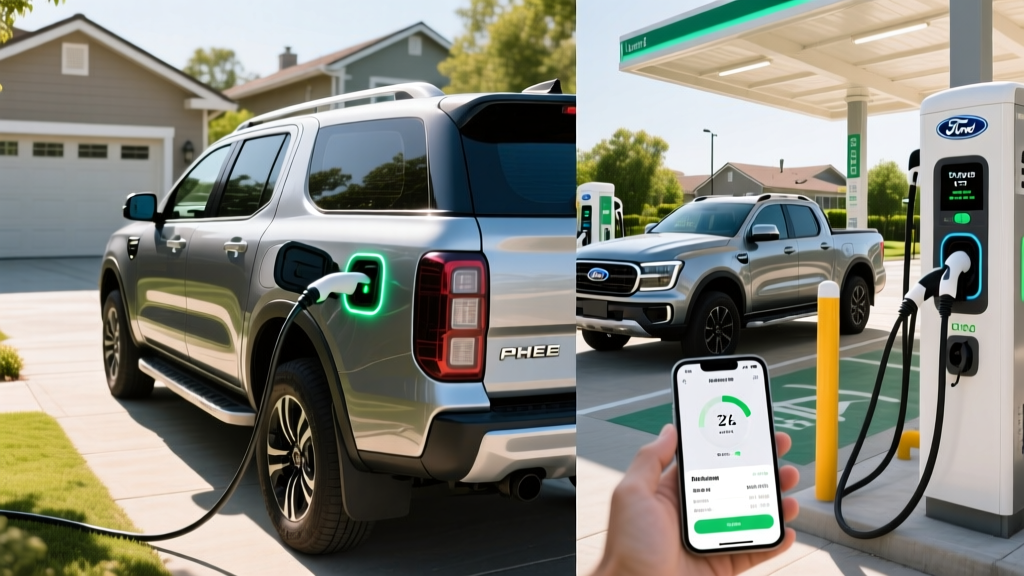
The connector on your charger must match the port on your EV. As of 2026, the North American market has largely standardized around two connectors, with a legacy third still in circulation:
| Connector Type | Brands Using It | Notes |
|---|---|---|
| NACS (North American Charging Standard / Tesla connector) | Tesla, Ford, GM, Rivian, Volvo, Polestar, Mercedes-Benz, Nissan (2026+), Honda (2026+), BMW, Hyundai/Kia (2026+ select models) | Industry standard going forward; smaller, lighter plug |
| CCS1 (Combined Charging System) | Legacy VW ID.4 (pre-2025), older BMW i4/iX, older Hyundai Ioniq 5/6, Stellantis brands (some), Lucid | Being phased out by most automakers in favor of NACS |
| CHAdeMO | Nissan Leaf (2011–2025), Mitsubishi Outlander PHEV (older) | Effectively discontinued; no new vehicles use it |
Adapter reality check: Tesla sells a CCS-to-NACS adapter (~$250) for Supercharger access on CCS vehicles. Ford and GM include NACS adapters for their CCS-ported older models. If you're buying a new EV in 2026, it likely ships with NACS natively. When choosing a home charger, buy one with the connector that matches your vehicle — or choose a dual-standard unit if your household has two EVs with different ports.
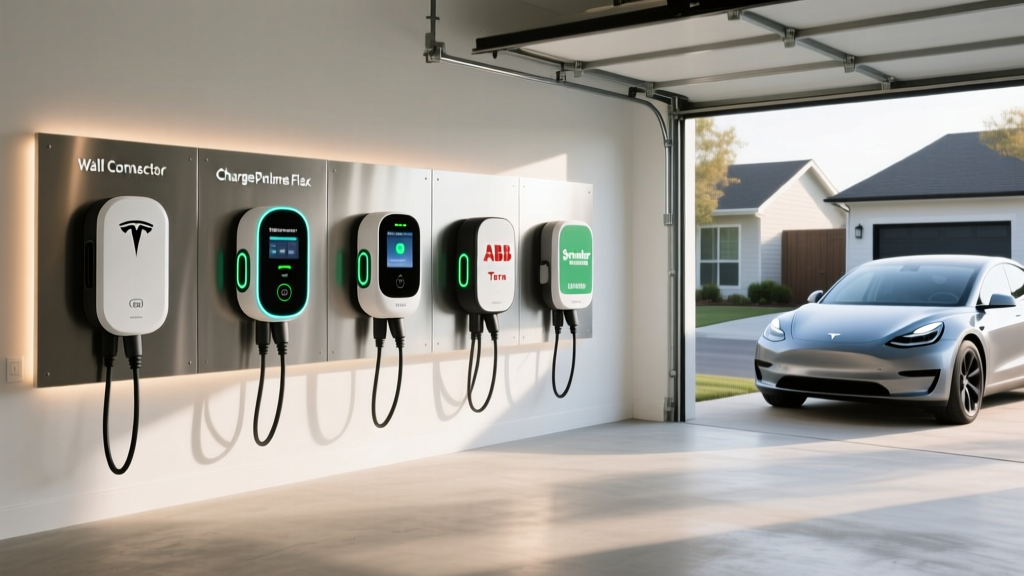
Top Car Charger Manufacturers: Equipment Compared
Here's how the leading residential Level 2 charger manufacturers stack up on the metrics that matter most for daily ownership:
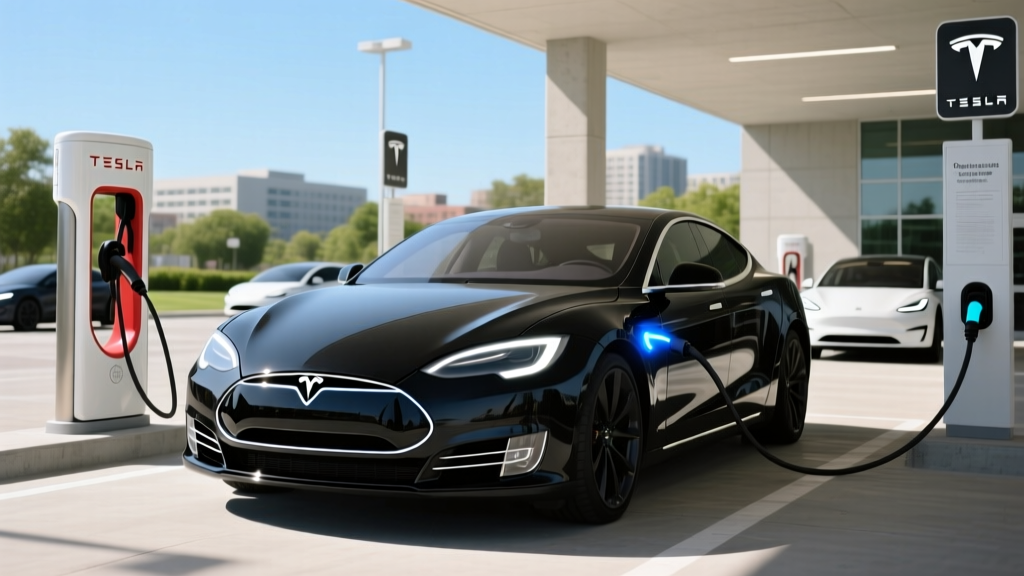
Tesla Wall Connector (Gen 4)
- Power Output: 11.5 kW (48A) at 240V
- Connector: NACS (native); J1772 adapter included
- Cable Length: 24 feet
- Smart Features: Wi-Fi, OTA updates, load sharing between multiple units, Powerwall integration
- Price: ~$475
- Best For: Tesla owners and NACS-equipped households
ChargePoint Home Flex (2nd Gen)
- Power Output: Up to 12 kW (50A) at 240V — adjustable down to 16A for panel-limited homes
- Connector: NACS or J1772 (select at purchase)
- Cable Length: 23 feet
- Smart Features: Wi-Fi, app scheduling, Alexa/Google integration, utility demand-response programs
- Price: ~$550–$650
- Best For: Households needing flexible amperage settings and utility program participation
Emporia Vue Level 2 Charger
- Power Output: 11.5 kW (48A) at 240V
- Connector: J1772 (NACS adapter available)
- Cable Length: 24 feet
- Smart Features: Integrated energy monitoring (pairs with Emporia Vue panel monitor), solar-aware scheduling, load management
- Price: ~$400
- Best For: Solar-equipped homes and budget-conscious buyers wanting energy visibility
Grizzl-E Smart (United Chargers)
- Power Output: 10 kW (40A) at 240V
- Connector: J1772 or NACS
- Cable Length: 24 feet
- Smart Features: Wi-Fi, OCPP-compatible, adjustable amperage (16A–40A)
- Price: ~$450
- Best For: Cold-climate durability (rated to -40°F) and Canadian-built quality
Cost Per Mile: Home Charging vs. Public Charging vs. Gas
The economics of EV ownership hinge on where and when you charge. Here's a real-world cost comparison using a 2026 midsize electric SUV averaging 3.0 miles per kWh (roughly 112 MPGe combined, per fueleconomy.gov data):
| Scenario | Rate ($/kWh) | Cost Per Mile | Equivalent Gas MPG at $3.50/gal |
|---|---|---|---|
| Home charging (off-peak utility rate) | $0.08–$0.12 | $0.03–$0.04 | 87–117 MPG |
| Home charging (standard flat rate) | $0.14–$0.18 | $0.05–$0.06 | 58–70 MPG |
| Public Level 2 (workplace, retail) | $0.20–$0.35 | $0.07–$0.12 | 29–50 MPG |
| DC Fast Charging (Electrify America, Tesla Supercharger) | $0.32–$0.56 | $0.11–$0.19 | 18–32 MPG |
| Gasoline vehicle (28 MPG combined) | — | $0.13 | 28 MPG (baseline) |
The takeaway: home off-peak charging delivers fuel costs roughly one-quarter to one-third of gasoline. Even public DC fast charging at premium rates often matches or slightly beats gas per mile. But if you rely exclusively on public DC fast chargers at $0.50+/kWh, your cost advantage over gas narrows significantly. This is why a home Level 2 installation isn't just a convenience — it's the financial foundation of EV ownership.
Safety, Electrical Code, and Installation Requirements
Every Level 2 home charger installation must meet the National Electrical Code (NEC) Article 625 and local amendments. Here's what your electrician will address:
- Dedicated circuit: Your charger must have its own breaker — no sharing with other appliances. A 48A charger requires a 60A breaker.
- GFCI protection: NEC 2023 and later require ground-fault circuit interrupter protection for all EV charging outlets. Hardwired units may have GFCI built in; plug-in units (NEMA 14-50 receptacle) need a GFCI breaker, which adds ~$50–$100.
- Outdoor rating: If your charger is installed outdoors (driveway, exterior wall), the unit must carry a NEMA 4 or IP65 weather rating. All four chargers above meet this standard.
- Wire gauge: A 60A circuit typically requires 4 AWG copper wire (or 2 AWG aluminum) for runs up to 50 feet. Longer runs may need thicker wire to prevent voltage drop.
- Permit and inspection: Most municipalities require a permit ($50–$250) and a post-installation inspection. Do not skip this — unpermitted work can void your homeowner's insurance in the event of an electrical fire.
Frequently Asked Questions
How much does it cost to install a home EV charger?
Expect $1,000–$3,500 for a typical installation in a home with a 200A panel and a short wire run. If your home needs a panel upgrade from 100A to 200A service, total costs can reach $2,500–$8,000. Equipment (the charger itself) accounts for $350–$750 of that total; the rest is electrician labor, wire, conduit, and permitting.
How fast will each charging level add range?
Level 1 (120V) adds 3–5 miles per hour — adequate only for PHEVs or very low daily mileage. Level 2 (240V) adds 20–70 miles per hour depending on amperage and your vehicle's onboard charger capacity. DC Fast Charging adds 150–1,200+ miles per hour equivalent, though charge speed tapers significantly above 80% state of charge to protect battery health.
Which connector and charger is compatible with my EV?
Check your vehicle's charge port. Most 2026-model EVs from Tesla, Ford, GM, Rivian, Hyundai, Kia, and others now use the NACS (Tesla-style) connector. Older or legacy models from VW, BMW, and Stellantis may still have CCS1. The Nissan Leaf (pre-2026) uses CHAdeMO. Match your home charger's connector to your vehicle's port — or use an adapter if you own multiple EVs with different standards.
How much does charging cost per mile compared to gas?
At typical residential off-peak rates ($0.08–$0.12/kWh), home charging costs $0.03–$0.04 per mile — roughly one-quarter the cost of gasoline at $3.50/gallon in a 28 MPG vehicle. Standard flat-rate home electricity ($0.14–$0.18/kWh) brings the cost to $0.05–$0.06/mile, still about half the cost of gas. Public DC fast charging at $0.40+/kWh narrows the gap to near parity with gasoline.
What electrical upgrades might I need?
The most common upgrade is a main service panel increase from 100A or 150A to 200A, required when your existing panel lacks capacity for a dedicated 60A EV circuit. Other potential upgrades include replacing a Federal Pacific or Zinsco panel (known fire hazards found in pre-1990 homes), adding a sub-panel if the charger is far from the main panel, or upgrading the meter socket if your utility requires it for higher-amperage service.