Can Other EVs Use Tesla Chargers? The Short Answer
Yes — but the details matter. As of 2026, most major automakers have adopted the North American Charging Standard (NACS), the connector Tesla pioneered, and a growing number of non-Tesla EVs can physically plug into Tesla Superchargers. However, compatibility depends on three factors: your vehicle's charge port (NACS native, CCS1, or CHAdeMO), whether Tesla has enabled your specific model in the Supercharger app, and whether you need an adapter.
This guide covers exactly which EVs can use Tesla's Supercharger network today, what adapters you need, how fast each charging level adds range, what home charger installation really costs, and how charging economics compare to gas — with exact numbers, not marketing fluff.
Tesla Supercharger Access for Non-Tesla EVs
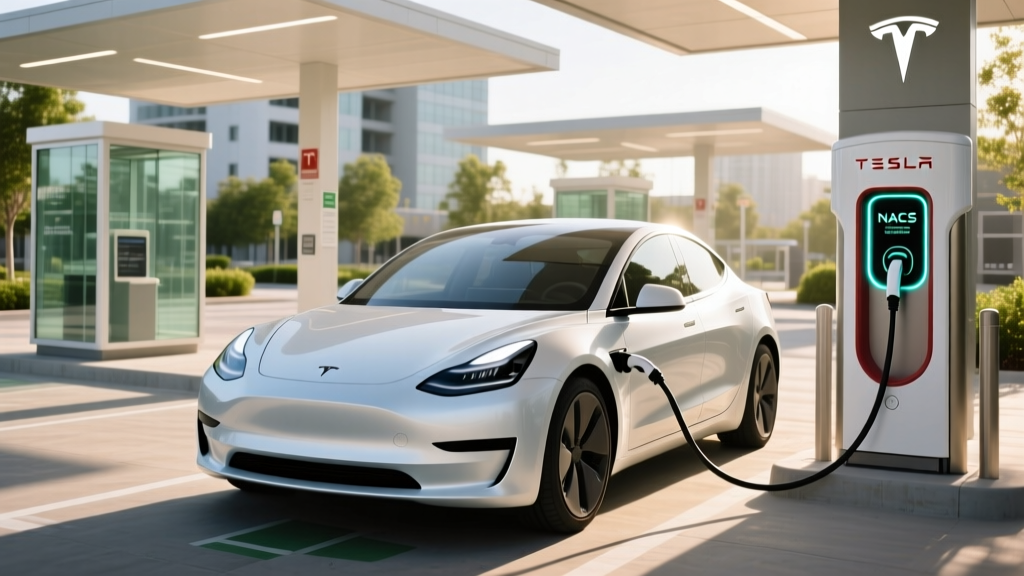
Tesla opened its Supercharger network to non-Tesla vehicles in the US starting in 2024, using the integrated CCS connector cable at select stations and, more broadly, by allowing NACS-equipped vehicles from partner automakers to plug in directly. Here's where things stand in 2026:
| Brand | Native Connector | Tesla Supercharger Access | Adapter Needed? |
|---|---|---|---|
| Tesla (all models) | NACS | Yes — full network | No |
| Ford (F-150 Lightning, Mustang Mach-E) | NACS (2025+) | Yes — full network | No (NACS); CCS adapter for older models |
| Rivian (R1T, R1S) | NACS (2025+) | Yes — full network | No (NACS); CCS adapter for 2022–2024 models |
| GM (Chevy, Cadillac, GMC EVs) | NACS (2025+) | Yes — full network | No (NACS); CCS adapter for Bolt/older |
| Hyundai / Kia | NACS (2025+ models) | Yes — expanding | No (NACS); CCS-to-NACS adapter for older |
| BMW | NACS (2025+) | Yes — expanding | No (NACS) |
| Nissan (Leaf, Ariya) | CHAdeMO (Leaf) / CCS (Ariya) | Limited — Ariya with adapter | Yes (CHAdeMO-to-NACS rare; CCS adapter) |
| Stellantis (Jeep, Dodge, Ram EVs) | NACS (2025+) | Yes — expanding | No (NACS) |
| Volkswagen (ID.4, ID.7) | CCS1 | Via Magic Dock stations | Built-in adapter at select stalls |
Key nuance: Tesla's "Magic Dock" — a built-in CCS adapter at select Supercharger stalls — allows CCS-equipped vehicles like the VW ID.4 to charge without the owner purchasing a separate adapter. However, Magic Dock is only deployed at a subset of Supercharger locations. If your EV has a CCS1 port and you're relying on an adapter you purchase yourself (such as the Lectron or A2Z NACS-to-CCS adapter, typically $180–$280), check the Tesla app for station compatibility before you drive there.
Real-world caveat: Even with a NACS port, some 2025–2026 model-year EVs from partner brands required over-the-air software updates to handshake properly with Superchargers. If you're picking up a new Ford or GM EV, confirm with your dealer that the latest firmware is installed before your first Supercharger session.
Charging Levels Explained: Speeds, kW, and Miles per Hour
The single most important distinction in EV charging is between kW (kilowatts — the rate of power delivery, like water pressure) and kWh (kilowatt-hours — the total energy stored in your battery, like the size of the tank). A 150 kW charger delivers energy fast; your 80 kWh battery holds 80 kWh total. Here's how each level translates to real charging speed:
| Level | Voltage / Phase | Power (kW) | Miles of Range Added per Hour | Typical Use Case |
|---|---|---|---|---|
| Level 1 | 120V AC (standard outlet) | 1.0–1.4 kW | 3–5 miles/hr | Overnight top-up, PHEVs, emergencies |
| Level 2 | 240V AC (dryer-style outlet) | 3.3–19.2 kW | 12–75 miles/hr | Home daily charging, workplaces, hotels |
| DC Fast Charge | 400–800V DC | 50–350 kW | 150–1,000+ miles/hr (peak) | Road trips, highway corridors |
Charging time examples (10–80% SoC):
- 75 kWh battery at 150 kW DC fast charger: ~25–30 minutes (peak rate, with taper above 80%)
- 85 kWh battery at 250 kW (Tesla V3 Supercharger): ~18–22 minutes (peak rate)
- 80 kWh battery at 11.5 kW Level 2 (home): ~7–8 hours (overnight, full charge)
- 60 kWh battery at 1.2 kW Level 1: ~50 hours (not practical for full BEV; fine for PHEV 15 kWh pack: ~12 hours)
Charge curve reality check: Peak kW is never sustained across the entire session. A vehicle rated for 250 kW peak charging may only hold that rate between 10–40% SoC, then taper to 150 kW, then 90 kW, then 40 kW above 80%. The "10–80% time" spec is more meaningful than peak kW alone. Always budget an extra 5–10 minutes beyond the manufacturer's optimistic estimate, especially in cold weather when the battery must warm before accepting peak power.
Home EV Charger Installation: Costs, Electrical Requirements & Upgrades
Most EV owners do 80%+ of their charging at home on a Level 2 charger. Here's what a proper installation actually requires and costs in 2026.
Electrical Requirements
A Level 2 home charger requires a 240-volt dedicated circuit, identical in concept to what your electric dryer or oven uses. The most common setups:
- 40-amp circuit / 32-amp continuous charger: Delivers ~7.7 kW — sufficient for most EVs overnight. Requires 6-gauge copper wire.
- 50-amp circuit / 40-amp continuous charger: Delivers ~9.6 kW — faster, good for larger batteries (100+ kWh trucks). Requires 6-gauge copper wire.
- 60-amp circuit / 48-amp continuous charger: Delivers ~11.5 kW — the maximum most onboard chargers accept. Requires 4-gauge copper wire.
Panel upgrade reality: Most modern homes with a 200-amp electrical panel can accommodate a 40–60 amp EV circuit without a panel upgrade. However, older homes with 100-amp service, or homes already running multiple high-draw appliances (electric heat, dual ovens, hot tub), may need a panel upgrade to 200A. This is the single biggest variable in installation cost.
| Component | Simple Install (panel nearby, no upgrade) | Complex Install (long run, panel upgrade) |
|---|---|---|
| Level 2 Charger Equipment | $350–$700 | $350–$700 |
| Electrician Labor (2–6 hours) | $300–$900 | $800–$2,500 |
| Electrical Permit | $50–$200 | $50–$200 |
| Panel Upgrade (if needed) | $0 | $1,500–$3,500 |
| Conduit, Wire, Misc. Materials | $50–$200 | $200–$800 |
| Total Estimated Cost | $750–$2,000 | $2,900–$7,700 |
Federal incentive: Under the IRS §30D and §25C frameworks, a residential clean energy credit may cover up to 30% of home charger equipment and installation costs (capped at $1,000 for the charger itself). Eligibility depends on your tax liability and specific installation details — consult a tax professional and check irs.gov for current-year rules.
Safety and Code Considerations
- Dedicated circuit: Your EV charger must have its own breaker — never share a circuit with other high-draw appliances.
- GFCI protection: The 2020 NEC and later require GFCI (ground-fault circuit interrupter) protection for outdoor EV receptacles. Many hardwired chargers have built-in GFCI; if you're installing a NEMA 14-50 outlet, your electrician must add a GFCI breaker.
- Outdoor rating: If your charger mounts outdoors, ensure it carries a NEMA 4 or IP65 weather rating. All major chargers listed below meet this standard.
- Permit required: Nearly all jurisdictions require an electrical permit for EV charger installation. Skipping this can void your homeowner's insurance in the event of an electrical fire.
Level 2 Home Charger Equipment Recommendations (2026)
These are proven, widely available Level 2 chargers we recommend based on reliability, power output, connector options, and smart features.
| Charger | Max Power | Connector | Cable Length | Smart Features | Price (MSRP) |
|---|---|---|---|---|---|
| Tesla Wall Connector (Gen 3) | 11.5 kW (48A) | NACS (native); J1772 adapter included | 24 ft | Wi-Fi, OTA updates, load sharing, Powerwall integration | $475 |
| ChargePoint Home Flex | 12 kW (50A adjustable) | J1772 (NACS adapter available) | 23 ft | Wi-Fi, app scheduling, Alexa, utility demand-response | $599–$699 |
| Emporia Level 2 Smart Charger | 11.5 kW (48A) | J1772 (NACS adapter available) | 24 ft | Wi-Fi, solar integration, energy monitoring, scheduling | $399 |
| Grizzl-E Smart | 10 kW (40A) | J1772 or NACS (select at purchase) | 24 ft | Wi-Fi, OCPP, load management, extreme cold rated (-40°F) | $499–$549 |
| Ford Charge Station Pro | 19.2 kW (80A) | NACS | 25 ft | Wi-Fi, Ford app, vehicle-to-home (V2H) capable with F-150 Lightning | $1,399 |
Important note on 19.2 kW chargers: The Ford Charge Station Pro delivers 19.2 kW, but only EVs with an 80A-capable onboard charger can accept that rate. Most EVs (including Teslas) cap at 11.5 kW (48A) onboard. Don't overspend on a 19.2 kW unit unless your vehicle supports it — the F-150 Lightning Extended Range is one of the few that does.
Charging Cost per Mile: Home, Public & Gas Compared
The economics of EV charging depend heavily on where and when you charge. Here's a data-driven comparison using 2026 national averages.
| Scenario | Rate | Vehicle Efficiency | Cost per Mile |
|---|---|---|---|
| Home Level 2 (off-peak utility rate) | $0.08–$0.14/kWh | 3.5 mi/kWh (e.g., Tesla Model Y) | $0.023–$0.040 |
| Home Level 2 (standard rate, no TOU) | $0.16–$0.22/kWh | 3.5 mi/kWh | $0.046–$0.063 |
| Public Level 2 (ChargePoint, EVgo) | $0.25–$0.45/kWh | 3.5 mi/kWh | $0.071–$0.129 |
| DC Fast Charge (Electrify America, Tesla) | $0.30–$0.55/kWh | 3.0 mi/kWh (highway) | $0.100–$0.183 |
| Gas vehicle (30 MPG combined) | $3.30/gal (2026 avg) | 30 mi/gal | $0.110 |
| Gas vehicle (22 MPG combined, truck/SUV) | $3.30/gal | 22 mi/gal | $0.150 |
Bottom line: Home charging on an off-peak rate is 3–5x cheaper per mile than gas. Even DC fast charging on the road is roughly cost-competitive with a 30 MPG gas car, and cheaper than a truck or large SUV. The savings compound: a driver covering 15,000 miles/year charging primarily at home saves $1,000–$1,500 annually vs a 25 MPG gas car, according to fueleconomy.gov comparisons.
Pro tip: Many utilities offer time-of-use (TOU) plans that drop electricity rates to $0.06–$0.10/kWh between 11 PM and 6 AM. Schedule your charger to activate during these windows via the charger app or your vehicle's built-in scheduling. This single habit can cut your home charging cost in half.
Adapters and Connector Standards: What You Need to Know
The connector landscape has consolidated dramatically since 2023. Here's the current state:
- NACS (North American Charging Standard): The Tesla-designed connector, now the dominant North American standard. Smaller, lighter than CCS, used for both Level 2 AC and DC fast charging. Adopted by Ford, GM, Rivian, Hyundai/Kia, BMW, Stellantis, Honda, Nissan (Ariya), and others for 2025+ models.
- CCS1 (Combined Charging System): The previous industry standard. Larger connector with separate AC and DC pins. Still found on 2022–2024 models from VW, older Hyundai/Kia, BMW i4/iX, and others. Being phased out for new models but supported at non-Tesla DC networks (Electrify America, EVgo, ChargePoint).
- CHAdeMO: Legacy DC fast standard used primarily by the Nissan Leaf and Mitsubishi Outlander PHEV. Effectively discontinued for new vehicles. CHAdeMO-to-NACS adapters exist but are expensive ($400+) and scarce.
- J1772: The legacy Level 2 AC connector (non-Tesla). All CCS1 vehicles use J1772 for AC charging. Most non-Tesla Level 2 home chargers ship with J1772. Tesla includes a J1772 adapter with the Wall Connector.
Adapter buying advice: If your EV has a CCS1 port and you want Supercharger access, a NACS-to-CCS adapter (Lectron, A2Z EV, or Tesla's official CCS adapter, ~$200–$280) is your best option. Verify the adapter supports the full amperage your vehicle can accept — cheap adapters may cap at 200A, limiting your DC fast charge rate. For Level 2 home charging, a simple J1772-to-NACS adapter ($50–$100) lets you use any public J1772 station.
Frequently Asked Questions
How much does it cost to install a home EV charger?
A straightforward Level 2 installation with an existing 200-amp panel and short wire run typically costs $750–$2,000 (equipment + electrician + permit). If your home needs a panel upgrade or a long conduit run, expect $2,900–$7,700. Always get at least two quotes from licensed electricians and verify they pull a permit.
How fast will each charging level add range?
Level 1 (120V) adds 3–5 miles of range per hour. Level 2 (240V) adds 12–75 miles per hour depending on amperage and your vehicle's onboard charger. DC fast charging adds 150–1,000+ miles per hour at peak rate, but real-world sessions are measured in 10–80% time (typically 18–35 minutes for modern EVs).
Which connector/charger is compatible with my EV?
Check your vehicle's charge port: NACS (Tesla-style, smaller oval) or CCS1 (larger, with two extra DC pins below). 2025+ models from Ford, GM, Rivian, Hyundai/Kia, BMW, and Stellantis use NACS. Older models and VW use CCS1. Nissan Leaf uses CHAdeMO. Match your home charger's connector to your car, or buy the appropriate adapter.
How much does charging cost per mile vs gas?
Home charging on off-peak rates costs $0.02–$0.04 per mile — roughly 3–5x cheaper than gas at $0.11/mile (30 MPG) or $0.15/mile (22 MPG). Public DC fast charging at $0.35–$0.55/kWh runs $0.10–$0.18/mile, roughly competitive with an efficient gas car but more expensive than home charging.
What electrical upgrades might I need?
If your home has a 200-amp panel with available capacity, you likely need no upgrade. If you have 100-amp service, or your panel is near capacity with existing loads, a 200-amp upgrade ($1,500–$3,500) may be required. An electrician can perform a load calculation per NEC Article 220 to determine this. Some utilities offer rebates for panel upgrades when paired with EV charger installation.
Can I use a Tesla Supercharger with a CCS-equipped EV like the VW ID.4?
Only at Tesla Supercharger locations equipped with the "Magic Dock" — a built-in CCS adapter built into the Supercharger cable. These are available at select locations and are identifiable in the Tesla app (which non-Tesla owners can download to find and pay for sessions). Not all Supercharger stations have Magic Dock, so always check before relying on it for a road trip.
Is preconditioning important for fast charging?
Yes. Most EVs will precondition (warm or cool) the battery when you navigate to a DC fast charger, bringing it to the optimal temperature for peak charge acceptance. Without preconditioning — especially in cold weather — your peak charge rate may be cut by 30–50% for the first 10–15 minutes of the session. Always use your vehicle's navigation to route to a fast charger so preconditioning activates automatically.