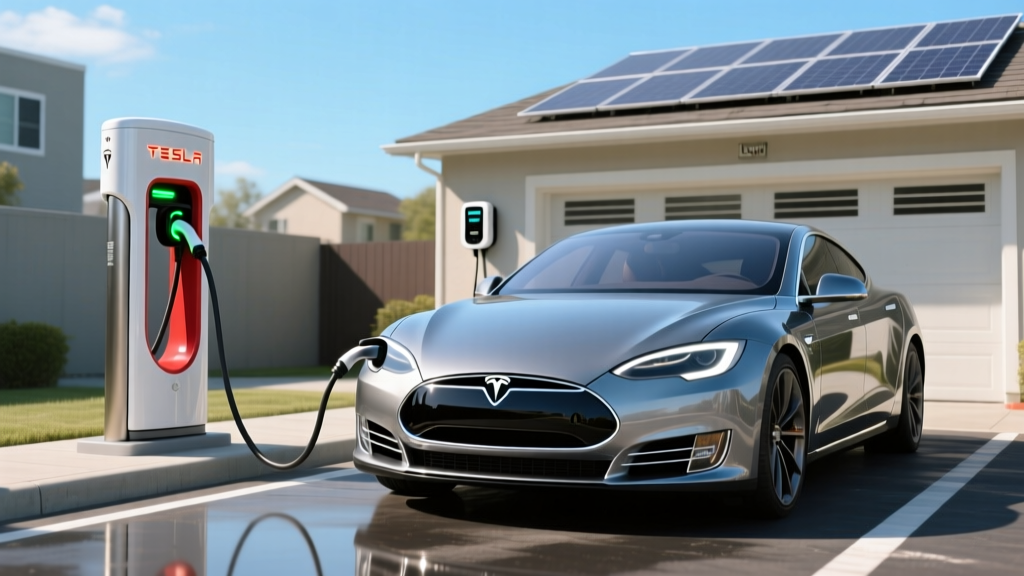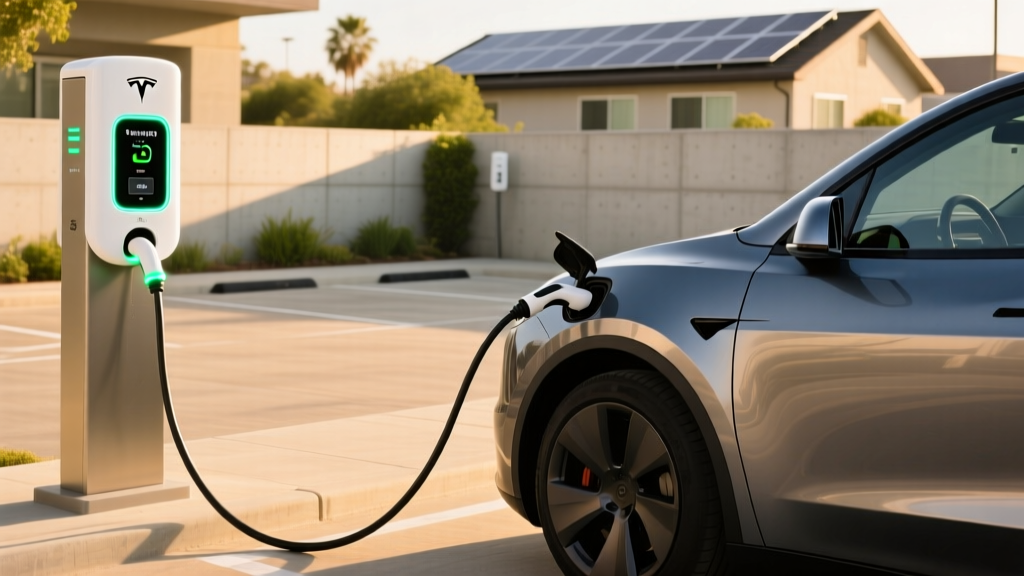
When Tesla marketed free Supercharging as a perk in the 2010s, it cemented a persistent belief that plugging in a Model Y or Model 3 costs nothing. In 2026, the short answer to "is Tesla charging free?" is no — the vast majority of new Teslas pay per kWh at Superchargers, and home charging adds to your electric bill. A small number of legacy vehicles and promotional credits still unlock free sessions, but for most owners, charging is a metered expense. The good news: even at full retail rates, electrons remain cheaper than gasoline per mile, and home charging on off-peak utility rates is where the real savings stack up.
Where Tesla Charging Is (and Isn't) Free in 2026
Tesla phased out unlimited free Supercharging for new vehicle orders back in 2019. Today, free charging shows up only in narrow scenarios:
- Legacy grandfathered vehicles: Model S and Model X purchased before 2017 with VIN-tied unlimited Supercharging — these transfer only on private resale, and Tesla has progressively restricted the perk.
- Promotional referral credits: Tesla occasionally runs limited-time referral or inventory-clearance promos awarding 1,000–10,000 free Supercharger miles. These expire (typically 6–12 months) and are not guaranteed.
- Destination Charging at hotels/restaurants: Many hospitality venues offer complimentary Level 2 Wall Connector access as a guest amenity — typically 11–22 kW, slow but free overnight.
- Workplace chargers: Some employers subsidize Level 2 charging as a benefit; availability varies wildly.
For everyone else, expect to pay per kWh at Superchargers (most common in the U.S.) or per minute in markets that still bill by time. Typical 2026 U.S. Supercharger rates range from $0.28 to $0.52 per kWh depending on location, time-of-use, and whether the station is V3 (250 kW) or V4.
Charging Levels Explained: Speeds, kW, and Miles Per Hour
Before comparing costs, you need the vocabulary straight. kW (kilowatts) measures the rate of power delivery — think of it as how fast water flows through a hose. kWh (kilowatt-hours) measures energy stored or consumed — the bucket's volume. Confusing them is the single most common EV mistake. A 10 kW charger delivering power for 5 hours adds 50 kWh of energy.
| Level | Voltage | Power (kW) | Miles of Range / Hour | Best For |
|---|---|---|---|---|
| Level 1 | 120V AC | 1.0–1.9 kW | 3–5 mi/hr | Overnight top-ups, PHEVs, low-mileage drivers |
| Level 2 | 240V AC | 7.2–19.2 kW | 20–60 mi/hr | Daily home charging, workplaces, hotels |
| DC Fast (V3 Supercharger) | 400V+ DC | 150–250 kW | ~1,000 mi/hr peak | Road trips, 10–80% in 15–25 min |
| DC Fast (V4 Supercharger) | 800V DC | Up to 350 kW | ~1,300+ mi/hr peak | Cybertruck, future 800V Teslas |
Real-world note: peak kW only holds for a narrow state-of-charge window (typically 10–40%). Above 80%, the battery management system tapers current sharply to protect cell longevity — expect the final 80–100% to take as long as the first 80%. Cold batteries (< 40°F) charge even slower unless preconditioned.
Home Charger Installation: Electrical Requirements and Real Costs
Installing a Level 2 home charger is where most Tesla owners unlock their lowest cost per mile. But the sticker price of the Wall Connector is only a fraction of the total bill. According to data aggregated by HomeAdvisor, national averages for a full 240V/48A circuit install range from $500 to $2,500+, with panel upgrades pushing costs well higher.
Electrical Requirements for a Tesla Wall Connector
- Circuit: Dedicated 60A breaker (supports continuous 48A / 11.5 kW), or 50A breaker for 40A / 9.6 kW continuous.
- Wire: 6 AWG copper (THHN in conduit) for 48A; 8 AWG for 40A. Runs over ~75 feet may require 4 AWG for voltage drop.
- Panel capacity: Your main service must have headroom. A 200A panel with existing loads near 160A cannot safely add a 60A EV circuit — a licensed electrician will perform a NEC Article 220 load calculation.
- Permit: Most jurisdictions require an electrical permit ($50–$250) and final inspection.
- Outdoor rating: NEMA 4-rated enclosure if mounted outside; GFCI protection is required by NEC 2023+ for receptacle-based installs (hardwired units often exempt).
| Component | Simple Install | Complex Install | Notes |
|---|---|---|---|
| EVSE hardware (Wall Connector) | $400–$500 | $400–$500 | Tesla Wall Connector Gen 3, 48A |
| Electrician labor | $300–$600 | $800–$1,500 | Short run near panel vs long conduit run |
| Materials (wire, conduit, breaker) | $100–$250 | $250–$600 | Copper price, run length, attic/crawlspace |
| Permit & inspection | $50–$150 | $150–$300 | Varies by municipality |
| Panel upgrade (if needed) | $0 | $1,500–$4,000 | 100A→200A service, older homes |
| Total | $850–$1,500 | $3,100–$6,900 | Panel upgrade is the cost multiplier |
Panel upgrades are the silent budget killer. Homes built before 1990 often have 100A or 125A main service, which may lack headroom for a continuous 48A load. A utility-coordinated upgrade to 200A or installing a smart load-management panel (like Span or Lumin) can avoid the full service upgrade. The federal Energy Efficient Home Improvement Credit (25C) covers 30% of EVSE hardware and installation up to $1,000 through 2032, though it's non-refundable — consult a tax professional.
Charging Time Examples: 10–80% for Common Tesla Battery Sizes
Charge time depends on the battery's usable kWh, the charger's sustained kW, and the vehicle's onboard charger limit (11.5 kW AC for current Model 3/Y). Here's what to expect for a 10–80% session — the practical sweet spot that avoids the slow taper above 80%.
| Vehicle / Battery | Usable kWh | Level 2 (11.5 kW) | V3 Supercharger (250 kW peak) |
|---|---|---|---|
| Model 3 RWD (LFP, ~57 kWh) | 57 | ~4 hours | ~28 minutes |
| Model 3/Y Long Range (NMC, ~75 kWh) | 75 | ~5.2 hours | ~26 minutes |
| Model S/X (NMC, ~95 kWh) | 95 | ~6.6 hours | ~34 minutes |
| Cybertruck AWD (~123 kWh) | 123 | ~8.5 hours | ~38 minutes (V4) |
Real-world caveat: LFP batteries (Model 3 RWD) tolerate regular 100% sessions better than NMC and are recommended to be charged to 100% weekly for cell balancing. NMC owners should set daily charge limits to 80% and reserve 100% for road trips to minimize degradation.
Connector Compatibility: NACS, CCS1, CHAdeMO, and Adapters
Tesla's North American Charging Standard (NACS) has become the de facto U.S. EV connector. As of 2026, Ford, Rivian, GM, Volvo, Hyundai, Kia, and most major OEMs ship vehicles with native NACS ports or offer CCS-to-NACS adapters enabling access to 25,000+ Supercharger stalls.
| Connector | Used By | Max DC kW | Adapter Needed? |
|---|---|---|---|
| NACS (Tesla) | Tesla, Ford, GM, Rivian, Hyundai, Kia, Volvo (2025+) | 250–350 kW | None for native; CCS vehicles need OEM adapter (~$150–$250) |
| CCS1 | Legacy VW ID.4, BMW iX, older Hyundai/Kia | 150–350 kW | NACS-to-CCS adapter for Supercharger access |
| CHAdeMO | Nissan Leaf (discontinued U.S.), Mitsubishi | 50–100 kW | Limited adapter options; network shrinking |
Non-Tesla EVs accessing Superchargers via adapter should verify station compatibility in the Tesla app — some older V2 stalls (150 kW, CCS-only connector layout) don't support adapter-based sessions. V3 and V4 stalls with the Magic Dock (built-in CCS adapter) are universally accessible.
Cost Per Mile: Electricity vs Gasoline in 2026
The most honest way to compare fueling costs is dollars per mile, computed as ($/kWh ÷ vehicle efficiency in mi/kWh) for EVs and ($/gallon ÷ MPG) for gas cars. A Tesla Model Y Long Range averages roughly 3.5 mi/kWh (285 Wh/mi) in mixed driving per fueleconomy.gov.
| Scenario | Rate | Cost / Mile (Tesla) | Cost / Mile (25 MPG Gas SUV @ $3.60/gal) |
|---|---|---|---|
| Home, off-peak utility rate | $0.13/kWh | $0.037 | $0.144 |
| Home, average blended rate | $0.18/kWh | $0.051 | $0.144 |
| Public Level 2 (ChargePoint/EVgo) | $0.35/kWh | $0.100 | $0.144 |
| Tesla Supercharger (avg U.S.) | $0.38/kWh | $0.109 | $0.144 |
| Peak Supercharger (CA, summer) | $0.52/kWh | $0.149 | $0.144 |
The math is stark: home charging at off-peak rates delivers roughly 75% lower cost per mile than a 25 MPG gas SUV. Even at the priciest Superchargers in California during summer peak, Tesla owners pay roughly parity with gas. The breakeven is almost always in the EV's favor — unless you exclusively rely on peak-rate DC fast charging in high-cost states.
2026 Home EV Charger Picks: Equipment Comparison
For Tesla owners, the first-party Wall Connector is the obvious default — but several third-party options offer features Tesla omits (longer cables, displays, load-sharing). All picks below are NACS-native or NACS-compatible, UL-listed, and rated for outdoor use.
| Charger | Max Power | Cable Length | Smart Features | Price |
|---|---|---|---|---|
| Tesla Wall Connector Gen 3 | 11.5 kW (48A) | 24 ft | Wi-Fi, OTA, power-sharing, access control | $475 |
| ChargePoint Home Flex (NACS) | 12 kW (50A) | 23 ft | App scheduling, Alexa, utility DR programs | $699 |
| Emporia Vue EV Charger | 11.5 kW (48A) | 24 ft | Solar integration, energy monitoring, load mgmt | $549 |
| Grizzl-E Smart NACS | 10 kW (40A) | 24 ft | OBDLink telematics, extreme cold rating (-40°F) | $599 |
Buyer's tip: match the charger's max amperage to your circuit. A 60A breaker supports 48A continuous (80% NEC rule). Don't buy a 48A charger and plug it into a 40A circuit — your electrician will flag it. Also confirm your Tesla's onboard charger limit: Model 3/Y accept 11.5 kW AC, so an 80A charger is wasted money.
Safety, Code, and the Panel-Upgrade Gotcha
NEC 2023 (adopted by most states as of 2026) tightened rules around EV charging:
- Dedicated circuit required: EVSE cannot share a circuit with other loads (dryers, HVAC).
- GFCI protection: Required for receptacle-based (NEMA 14-50) installs; hardwired Wall Connectors are generally exempt under 625.54.
- Load calculation: A licensed electrician must verify your panel can handle the continuous load. If the math fails, you'll face a panel upgrade, a smart load-shedding device, or downgrading to a 32A (7.7 kW) charger on a 40A circuit.
- Outdoor rating: NEMA 4 for rain/sleet resistance; avoid indoor-only units in uncovered carports.
Homes built in the 1960s–1980s with original 100A service are the most common candidates for costly upgrades. Budget an extra $2,000–$4,000 and a 4–8 week utility coordination timeline if this applies to you.
Frequently Asked Questions
Is Tesla Supercharging still free for any new cars?
No. Tesla ended unlimited free Supercharging on new orders in 2019. Only legacy Model S/X from pre-2017 retain transferable free charging, and occasional promotional referral credits (1,000–10,000 miles, expiring within a year) are the only free electrons offered today.
How much does it cost to install a home EV charger?
A straightforward 240V/48A hardwired install near your panel typically costs $850–$1,500 all-in (hardware + electrician + permit). Complex runs, conduit through finished walls, or panel upgrades can push total costs to $3,100–$6,900. The federal 25C credit covers 30% of installation up to $1,000 through 2032.
How fast will each charging level add range to my Tesla?
Level 1 (120V) adds 3–5 miles per hour — usable only for PHEVs or low-mileage drivers. Level 2 (240V, 48A) adds roughly 35–45 miles per hour on a Model Y. DC fast charging at a V3 Supercharger peaks near 1,000 miles/hour for the first ~10 minutes, tapering above 80% SoC.
Which connector is compatible with my EV?
All current Teslas use NACS. As of 2026, most new non-Tesla EVs (Ford, GM, Rivian, Hyundai, Kia) also ship with NACS. Older CCS1 vehicles (VW ID.4, BMW iX) require an OEM-supplied CCS-to-NACS adapter ($150–$250) for Supercharger access. CHAdeMO is effectively discontinued in the U.S.
How much does charging cost per mile vs gas?
At home on off-peak rates ($0.13/kWh), a Tesla Model Y costs about $0.037/mile — roughly 75% cheaper than a 25 MPG gas SUV at $3.60/gallon ($0.144/mile). Even at average Supercharger rates (~$0.38/kWh), the Tesla costs $0.109/mile, still cheaper than gas.
What electrical upgrades might I need for a home charger?
If your panel lacks headroom (verified via NEC Article 220 load calculation), you'll need either a service upgrade (100A→200A, $2,000–$4,000) or a smart load-management panel. Older homes with 60A or 100A mains are the most common upgrade candidates. Always get a licensed electrician to perform the calculation before buying hardware.
Can non-Tesla EVs use Superchargers?
Yes. Tesla's Supercharger network is open to NACS-equipped non-Teslas, and CCS1 vehicles can use stalls with the Magic Dock or an OEM adapter. Expect to pay the same per-kWh rate as Tesla owners; some networks charge a small "adapter fee" but Tesla does not as of 2026.
Sources: U.S. Department of Energy fueleconomy.gov, IRS Energy Efficient Home Improvement Credit guidance at irs.gov, and Tesla's official Supercharger and Wall Connector documentation.