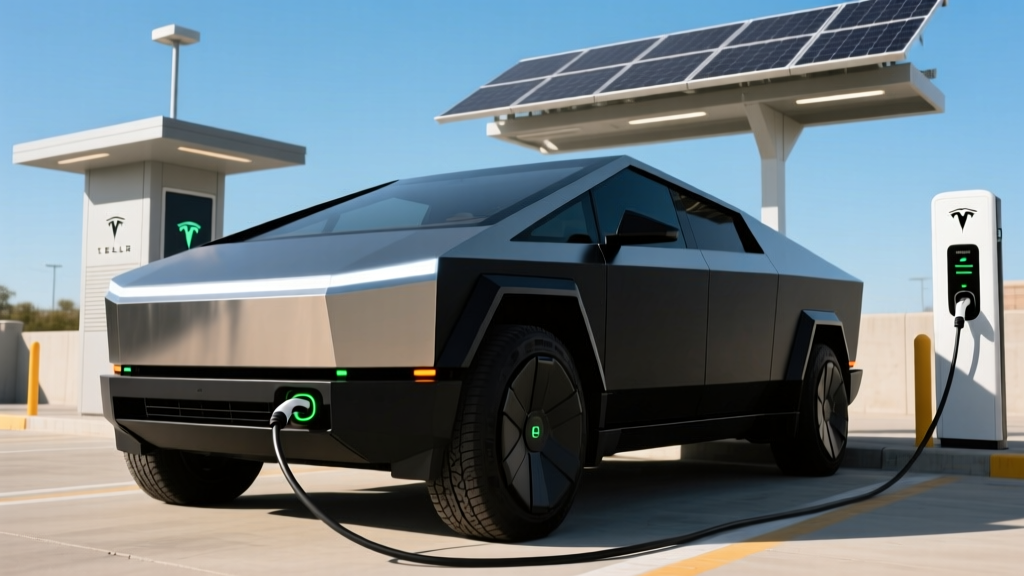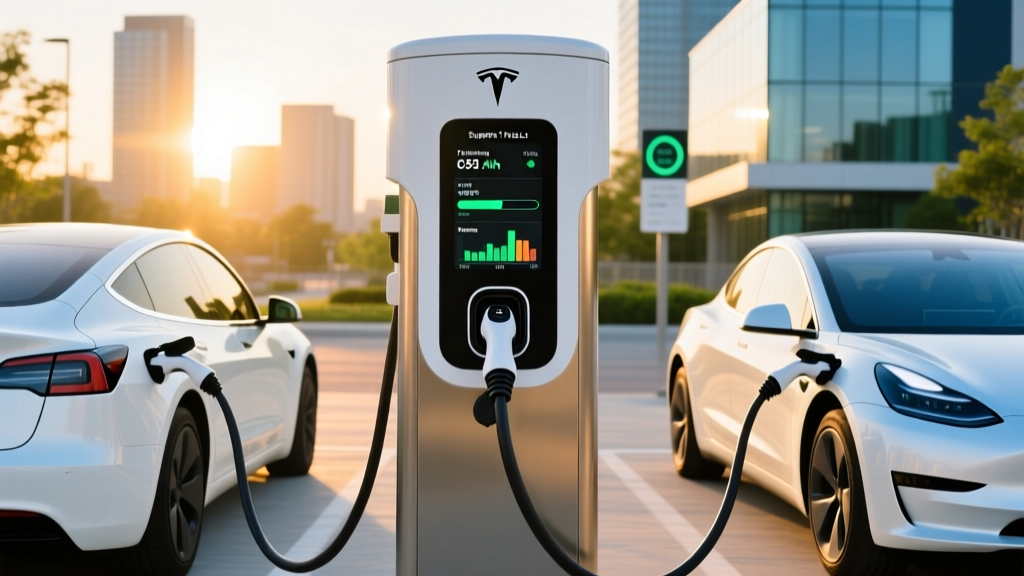
When Tesla owners or prospective buyers ask, "Can I buy a Tesla Supercharger?" the short answer is no — Tesla does not sell its Supercharger cabinets or V3/V4 stalls to individual consumers for home installation. Superchargers are commercial-grade DC fast-charging stations that require utility-level power feeds, proprietary networking, and site agreements that make them impractical (and unavailable) for residential use.
But the real question behind the search is usually: "Can I charge as fast at home as I can at a Supercharger?" or "What's the best home charger I can actually buy?" This guide answers both, with exact numbers, real costs, and equipment picks for 2026.
Why Tesla Won't Sell You a Supercharger
A single Tesla V3 Supercharger stall delivers up to 250 kW of DC power — enough to add roughly 75 miles of range in 5 minutes to a Model 3 Long Range. V4 cabinets push even higher. But that power draw requires a dedicated medium-voltage utility connection, a concrete pad, commercial permitting, and Tesla's own backend billing network.
For context, a typical US home has a 200-amp electrical panel supplying 240V — yielding a theoretical maximum of ~48 kW for the entire house. A single Supercharger stall pulls 5x that. Even if Tesla wanted to sell you one, your home's electrical infrastructure couldn't support it without a utility transformer upgrade costing $20,000–$75,000+.
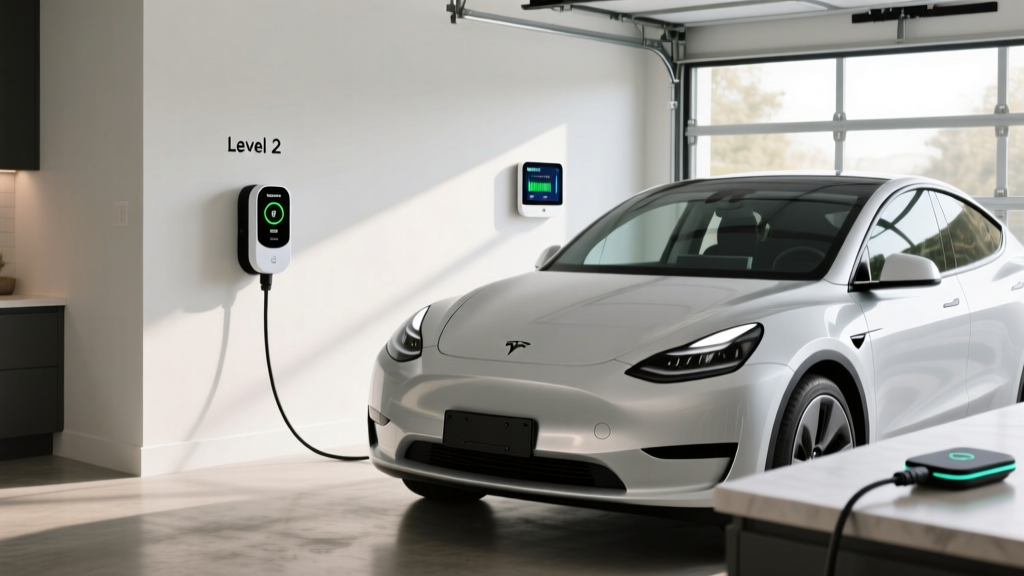
What Tesla does sell for home use is the Tesla Wall Connector — a Level 2, 240V AC charger rated up to 48 amps (11.5 kW). That's the fastest practical home charging solution for Tesla vehicles, and it's excellent. We'll cover it and other options below.
Charging Levels Explained: Speeds in kW and Miles Per Hour
Before picking equipment, you need to understand the three charging levels and what each actually delivers. Remember: kW (kilowatts) measures power — the rate of energy flow. kWh (kilowatt-hours) measures energy — what your battery stores. Think of kW as how fast water flows from a hose, and kWh as how full the bucket gets.
| Level | Voltage / Amps | Max Power (kW) | Miles of Range Per Hour | Typical Use Case |
|---|---|---|---|---|
| Level 1 | 120V / 12A | 1.4 kW | 3–5 mi/hr | Overnight trickle, PHEV topping off |
| Level 2 | 240V / 32A–48A | 7.7–11.5 kW | 25–44 mi/hr | Home daily charging, workplace |
| DC Fast Charging | 400V–800V DC | 50–350 kW | 150–1,000+ mi/hr (peak) | Road trips, public stations (Supercharger, Electrify America) |
For a typical 75 kWh battery (like a Tesla Model Y Long Range), here's what 10–80% charging looks like at each level:
- Level 1 (1.4 kW): ~37 hours — impractical for BEVs, acceptable for PHEVs with 15–40 kWh batteries
- Level 2 at 48A (11.5 kW): ~4.5–5 hours — ideal overnight charge
- Level 2 at 32A (7.7 kW): ~7 hours — adequate for most daily needs
- DC Fast (250 kW peak, e.g., V3 Supercharger): ~25–30 minutes (note: charge curve tapers significantly above 80%, so peak kW is not sustained)
Home Charger Installation: Electrical Requirements and Costs
Installing a Level 2 home charger isn't just buying a box and plugging it in. Here's what's actually involved.
Electrical Requirements
A 48-amp Level 2 charger requires a dedicated 60-amp, 240V circuit (the National Electrical Code requires circuits to be rated at 125% of continuous load: 48A × 1.25 = 60A). The wiring is typically 6 AWG copper for runs under ~50 feet; longer runs may need 4 AWG to limit voltage drop.
A 32-amp charger needs a dedicated 40-amp circuit with 8 AWG wire — a less demanding and sometimes less expensive installation.
Panel Upgrade Reality
This is the cost surprise many homeowners face. If your home has a 100-amp main panel (common in homes built before the 1990s), adding a 60-amp EV circuit may max out your panel's capacity — especially if you already have electric range, dryer, and HVAC loads. An electrician will perform a NEC Article 220 load calculation to determine if your panel can handle the new circuit.
If not, a panel upgrade from 100A to 200A typically costs $1,500–$3,500. In rare cases requiring a full service replacement (new meter, utility drop, mast), costs can reach $5,000–$8,000.
Permits and Inspections
Most jurisdictions require an electrical permit for EV charger installation — typically $50–$250 depending on your locality. The inspection ensures the circuit, wiring, breaker, and grounding meet code. Skipping the permit risks insurance claim denials and home-sale complications.
| Component | Cost Range | Notes |
|---|---|---|
| Charger hardware (Level 2, 32A–48A) | $350–$700 | Smart Wi-Fi models at higher end |
| Electrician labor (standard install, <30 ft run) | $600–$1,500 | Varies by region, wall type, conduit needed |
| Materials (wire, conduit, breaker, junction box) | $150–$500 | Longer runs and outdoor conduit add cost |
| Electrical permit | $50–$250 | Required in most jurisdictions |
| Panel upgrade (if needed) | $1,500–$3,500 | 100A→200A; full service replacement up to $8,000 |
| Total (no panel upgrade) | $1,150–$2,950 | Most common scenario for 200A-panel homes |
| Total (with panel upgrade) | $2,650–$6,450 | Older homes, high-load panels |
Federal tax credit note: The IRS §30C Alternative Fuel Vehicle Refueling Property Credit covers up to 30% of home charger hardware and installation costs (capped at $1,000). Eligibility depends on census-tract requirements and is subject to change — consult a tax professional for your specific situation.
Connector Compatibility: NACS, CCS, and Adapters
The connector landscape has consolidated significantly since 2023, when Ford, GM, Rivian, and most other automakers committed to adopting Tesla's NACS (North American Charging Standard). By 2026, nearly all new EVs sold in North America ship with a native NACS charge port.
| Connector | Compatible Brands (native port) | Adapter Needed For |
|---|---|---|
| NACS (Tesla standard) | Tesla, Ford, GM, Rivian, Hyundai, Kia, BMW, Volvo, Polestar, Mercedes, Toyota (bZ series) | Older CCS vehicles need NACS→CCS adapter for Superchargers |
| CCS1 | Legacy models (pre-2025 VW ID.4, older Bolt EUV, early Ioniq 5) | CCS→NACS adapter ($150–$250) for Tesla Supercharger access |
| CHAdeMO | Nissan Leaf (remaining inventory); effectively discontinued for new models | Limited DC fast-charging network; CHAdeMO→CCS adapters exist but are rare |
For home Level 2 charging: NACS and CCS both use the same J1772 protocol underneath for AC charging. Tesla Wall Connectors use a NACS plug natively. If you own a non-Tesla EV with a NACS port (most 2025+ models), a Tesla Wall Connector works directly. If you have an older CCS-port vehicle, you'll need a NACS-to-J1772 or NACS-to-CCS adapter — or simply choose a charger with a J1772 plug and use your car's included J1772-to-NACS adapter.
Cost to Charge: Home vs. Public vs. Gas
One of the strongest arguments for home Level 2 charging is cost. Here's how the numbers stack up in 2026:
| Scenario | Rate | Cost Per Mile* |
|---|---|---|
| Home Level 2 (off-peak utility rate) | $0.08–$0.14/kWh | $0.024–$0.042 |
| Home Level 2 (standard residential rate) | $0.13–$0.20/kWh | $0.039–$0.060 |
| Tesla Supercharger (average 2026) | $0.25–$0.40/kWh | $0.075–$0.120 |
| Electrify America / public DCFC | $0.35–$0.55/kWh | $0.105–$0.165 |
| Gas car (28 MPG avg, $3.40/gal) | $3.40/gallon | $0.121 |
| Gas car (22 MPG, $3.40/gal) | $3.40/gallon | $0.155 |
*Based on an EV efficiency of ~3.3–3.5 miles/kWh (typical for a Model Y, Ioniq 5, or Equinox EV). Actual efficiency varies with temperature, speed, and terrain. Source: fueleconomy.gov EPA data.
Home off-peak charging is 3–5x cheaper per mile than gasoline. Even at standard residential rates, you're saving $800–$1,200 annually vs. a 28 MPG gas car driving 12,000 miles/year. Public DC fast charging narrows the gap — and on some networks, can approach or exceed gas cost per mile — which is why home charging is the economic foundation of EV ownership.
Best Home EV Chargers for 2026: Equipment Picks
These are the Level 2 chargers we recommend based on power output, build quality, connector options, smart features, and value. All are UL-listed for safety and compatible with NACS-port vehicles (native or via adapter).
Tesla Wall Connector (Gen 3)
- Power output: Up to 11.5 kW (48A on a 60A circuit)
- Connector: NACS native
- Cable length: 24 ft
- Smart features: Wi-Fi, OTA firmware updates, load sharing between multiple units, Tesla app integration
- Price: ~$475
- Best for: Tesla owners, or any NACS-port EV owner who wants the cleanest integration
ChargePoint Home Flex
- Power output: Up to 12 kW (50A, configurable via DIP switch down to 16A for flexible circuit sizing)
- Connector: J1772 (works with NACS vehicles via adapter) or NACS plug option
- Cable length: 23 ft
- Smart features: Wi-Fi, ChargePoint app scheduling, Alexa integration, energy tracking
- Price: ~$550–$650
- Best for: Multi-EV households (mix of NACS and J1772 vehicles), renters who may move the unit
Emporia Level 2 EV Charger
- Power output: Up to 11.5 kW (48A)
- Connector: J1772 or NACS (selectable at purchase)
- Cable length: 24 ft
- Smart features: Wi-Fi, Emporia energy monitoring integration (pairs with Emporia home energy monitor), solar-aware charging, scheduling
- Price: ~$350–$400
- Best for: Budget-conscious buyers who want smart features and solar integration at the lowest hardware cost
Grizzl-E Smart
- Power output: Up to 10 kW (40A) — note: slightly lower than 48A competitors
- Connector: J1772 or NACS
- Cable length: 24 ft
- Smart features: Wi-Fi, OCPP compatibility, adjustable amperage
- Price: ~$400–$500
- Best for: Cold-climate owners (rated to -40°F), outdoor installs, rugged durability priority
Safety and Electrical Code Considerations
A properly installed home charger should be safe, code-compliant, and inspection-ready. Key requirements:
- Dedicated circuit: Your EV charger must be on its own dedicated breaker — not shared with other appliances. A 48A charger requires a 60A breaker; a 32A charger requires a 40A breaker.
- GFCI protection: The 2020 NEC (and later editions adopted by most states by 2026) requires GFCI protection for outdoor receptacles and, in many jurisdictions, for hardwired EV chargers in garages as well. Your electrician will determine the local requirement.
- Outdoor rating: If mounting outdoors, ensure the charger is rated NEMA 4 (weatherproof). All four chargers above carry outdoor ratings, but the connector holster should also be sheltered from direct rain ingress.
- Hardwired vs. plug-in: Hardwired installations (direct wire to junction box) are preferred for 48A chargers — they avoid the NEMA 14-50 receptacle's known thermal issues under continuous high-amperage loads. If using a 14-50 outlet, ensure it's an industrial-grade receptacle (Hubbell or Bryant) — residential-grade outlets have been linked to overheating under sustained EV charging loads.
- Cable management: Keep the charging cable off the ground where possible using the included holster or a cable organizer to prevent trip hazards and cable damage.
Frequently Asked Questions
Can I buy a Tesla Supercharger for my home?
No. Tesla Superchargers are commercial DC fast-charging stations requiring utility-scale power infrastructure (typically 480V three-phase service), commercial site agreements, and Tesla's proprietary network backend. They are not sold to consumers. For home use, the fastest option is the Tesla Wall Connector at 11.5 kW (Level 2), which fully charges most EVs overnight.
How much does it cost to install a home EV charger?
Expect $1,150–$2,950 for a standard Level 2 installation (equipment, electrician, materials, and permit) in a home with an adequate 200-amp panel. If your panel needs upgrading from 100A to 200A, add $1,500–$3,500, bringing the total to $2,650–$6,450. Get 2–3 quotes from licensed electricians — prices vary significantly by region.
How fast will each charging level add range?
Level 1 (120V): 3–5 miles per hour. Level 2 at 48A (240V): 35–44 miles per hour depending on vehicle efficiency. DC Fast Charging (e.g., 250 kW Supercharger): up to 75+ miles in 5 minutes at peak, though the charge curve tapers significantly above 80% state of charge.
Which connector is compatible with my EV?
If your EV is a 2025+ model from Tesla, Ford, GM, Rivian, Hyundai, Kia, BMW, or most other major brands, it has a native NACS port. Older EVs (pre-2025) may have CCS1 or CHAdeMO. For home Level 2 charging, any J1772 or NACS charger will work with any EV using the appropriate adapter — most new EVs include a J1772-to-NACS adapter in the box.
How much does charging cost per mile vs. gas?
Home Level 2 charging at off-peak rates costs roughly $0.024–$0.042 per mile — about 3–5x cheaper than a 28 MPG gas car at $3.40/gallon ($0.121/mile). Public DC fast charging ranges from $0.075–$0.165/mile, which can approach or exceed gas costs. The economic case for EVs depends heavily on access to affordable home charging.
What electrical upgrades might I need?
If your home has a 200-amp panel with available capacity, you likely need only a new 60A breaker and wiring run. Homes with 100-amp panels, high existing electrical loads (electric heat, range, dryer, pool), or older wiring may need a panel upgrade ($1,500–$3,500) or, in rare cases, a full service replacement. A licensed electrician's load calculation will determine this before any work begins.