Can Hyundai Use Tesla Supercharger? The Short Answer for 2026
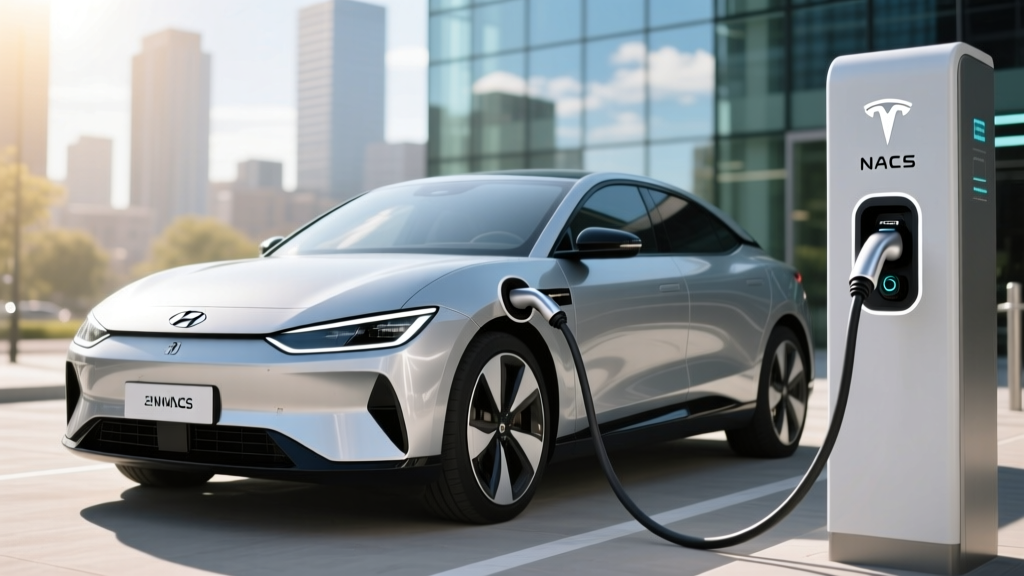
Yes — Hyundai EVs can use Tesla Superchargers in 2026, but how you access them depends on your model year. Hyundai began equipping new EVs with the native NACS (North American Charging Standard) port starting with the 2025 Ioniq 5 refresh, and the 2026 Ioniq 6 also ships with NACS. If you own an earlier Hyundai EV with a CCS1 port — such as a 2022–2024 Ioniq 5 or Kona Electric — you'll need a Hyundai-approved NACS adapter to access Tesla's Supercharger network.
Hyundai joined the NACS coalition alongside Ford, GM, Rivian, and others in late 2023. By mid-2024, Hyundai confirmed that its dealers would supply CCS-to-NACS adapters to existing EV owners. As of 2026, that adapter rollout is well established, and Tesla's Supercharger network — now exceeding 30,000 stalls across North America — is accessible to Hyundai drivers with the proper hardware.
Charging Levels Explained: Speeds, Power, and Real-World Range Added
Understanding charging levels is essential whether you're plugging in at home or pulling up to a Tesla Supercharger. Here's how each level breaks down for Hyundai EVs:
| Level | Voltage / Amps | Power (kW) | Miles of Range Per Hour | Best For |
|---|---|---|---|---|
| Level 1 (120V) | 120V / 12A | ~1.4 kW | 3–5 mi/hr | Overnight top-ups, PHEVs |
| Level 2 (240V) | 240V / 32–48A | 7.7–11.5 kW | 25–40 mi/hr | Daily home charging |
| DC Fast Charging | 400V–800V DC | 50–350 kW | 150–600+ mi/hr (peak) | Road trips, rapid top-ups |
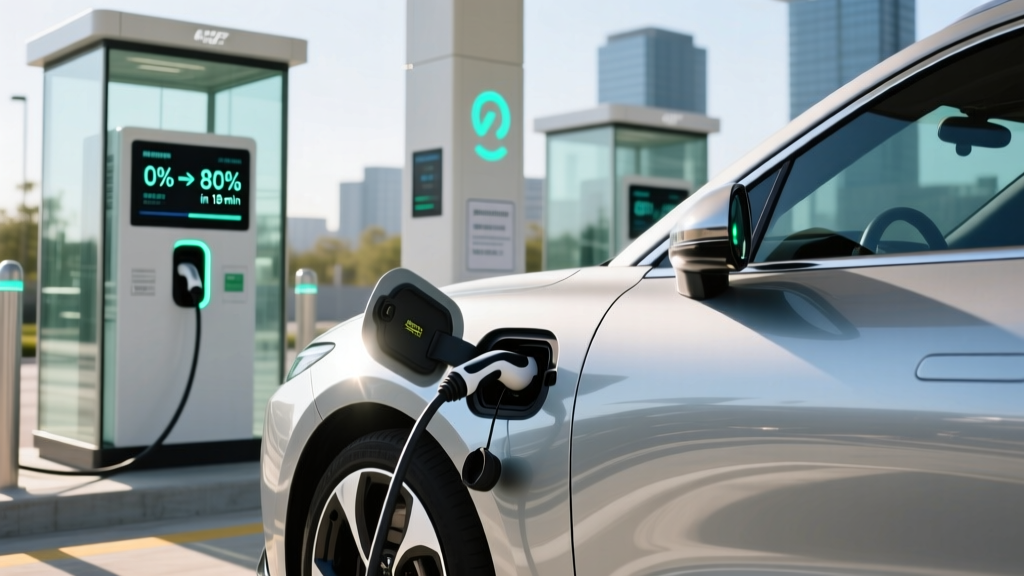
The Hyundai Ioniq 5 (2026 model year) features an 800V battery architecture with a 77.4 kWh usable battery (NMC chemistry). On a 350 kW DC fast charger, Hyundai rates the Ioniq 5 for a 10–80% charge in approximately 18 minutes under ideal conditions. On a Tesla V3 Supercharger (250 kW peak), expect 10–80% in roughly 22–25 minutes, since the Ioniq 5's 800V system is optimized for higher-voltage chargers.
Real-world charging curve reality: Peak kW is never sustained across the entire session. A charger rated at 250 kW will deliver that rate only between roughly 10–40% state of charge (SoC). Above 60%, the charge rate tapers significantly — often dropping below 100 kW past 80%. This is normal battery protection behavior, not a fault.
Connector Compatibility: NACS, CCS1, and What Your Hyundai Needs
Hyundai's connector situation in 2026 depends entirely on your model year. Here's the compatibility breakdown:
| Hyundai Model / Year | Native Port | Tesla Supercharger Access | Adapter Needed? |
|---|---|---|---|
| 2025–2026 Ioniq 5 | NACS | Yes — native plug | No |
| 2026 Ioniq 6 | NACS | Yes — native plug | No |
| 2022–2024 Ioniq 5 | CCS1 | Yes — with adapter | Yes (NACS-to-CCS) |
| 2020–2024 Kona Electric | CCS1 | Yes — with adapter | Yes (NACS-to-CCS) |
| 2024–2026 Ioniq 5 N | CCS1 / NACS (varies by MY) | Yes | Check model year |
Adapter specifics: Hyundai's official CCS-to-NACS adapter is rated for up to 250 kW DC fast charging, which covers Tesla V3 Superchargers. The adapter weighs roughly 2 lbs and stores in the frunk or cargo area. Hyundai initially offered the adapter at no cost to existing CCS-equipped EV owners through dealerships. Replacement adapters purchased separately run approximately $200–$300. Third-party adapters from brands like Lectron are also available, but Hyundai recommends using OEM-certified hardware to maintain warranty coverage.
For CCS-equipped Hyundais, you can still access Electrify America, EVgo, and ChargePoint DC fast chargers natively without any adapter. The NACS adapter is only required for Tesla Superchargers and other NACS-only networks.
Home Charger Installation: Costs, Electrical Requirements, and Panel Upgrades
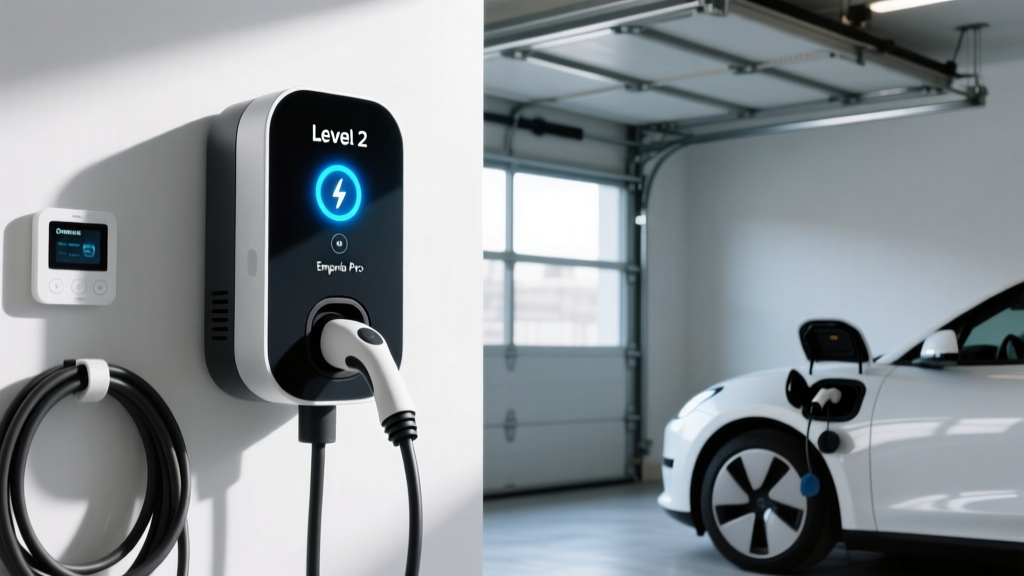
Installing a Level 2 home charger is the single biggest ownership advantage of going electric — waking up to a full battery every morning eliminates most public-charging dependency. But the installation cost varies dramatically based on your home's electrical panel.
Electrical Requirements for a Hyundai Level 2 Charger
A Level 2 charger for the Ioniq 5 or Ioniq 6 requires a dedicated 240V circuit. The Hyundai Ioniq 5's onboard charger accepts up to 10.9 kW (48A), meaning you'll want a 60A circuit with a 48A charger to maximize charging speed. A 40A circuit (with a 32A charger) is the minimum practical setup, delivering 7.7 kW — still enough to fully recharge the Ioniq 5's 77.4 kWh battery overnight in roughly 10 hours.
| Component | Basic Install (Near Panel) | Complex Install (Long Run / Upgrade) |
|---|---|---|
| Level 2 Charger (Equipment) | $350–$700 | $350–$700 |
| Electrician Labor (240V circuit) | $300–$800 | $1,500–$3,000 |
| Permit & Inspection | $50–$200 | $100–$300 |
| Electrical Panel Upgrade (if needed) | $0 (not needed) | $1,500–$4,000 |
| Conduit, Wiring, Misc. Materials | $50–$150 | $300–$800 |
| Total Estimated Cost | $750–$1,850 | $3,750–$8,800 |
The Panel Upgrade Gotcha
Many homes built before 2000 have 100A electrical panels. Adding a 60A EV circuit to an already-loaded 100A panel may exceed capacity, requiring an upgrade to 200A. This is the single largest variable in home charger installation. Before purchasing a charger, have a licensed electrician perform a load calculation on your panel. The National Electrical Contractors Association can help you find qualified local professionals.
Safety and Code Requirements
- Dedicated circuit: Your Level 2 charger must have its own dedicated breaker — never share a circuit with other appliances.
- GFCI protection: The NEC (National Electrical Code) requires GFCI (Ground Fault Circuit Interrupter) protection for outdoor receptacles. Hardwired chargers with built-in GFCI are preferred for outdoor installs.
- Outdoor rating: If mounting outside, ensure the charger carries a NEMA 4 or IP65 rating for weather resistance.
- Permit required: Nearly all jurisdictions require an electrical permit for a new 240V circuit. Skipping the permit can void insurance coverage and complicate home sales.
Charging Cost Breakdown: Home vs. Public vs. Gas per Mile
One of the strongest arguments for EV ownership is fuel cost savings — but the math depends heavily on where and when you charge. Here's a realistic comparison using the 2026 Hyundai Ioniq 5 (EPA-rated 114 MPGe combined, consuming roughly 31 kWh per 100 miles, per fueleconomy.gov):
| Scenario | Rate | Cost per 100 Miles | Cost per Mile |
|---|---|---|---|
| Home charging (off-peak, 10¢/kWh) | $0.10/kWh | $3.10 | $0.031 |
| Home charging (standard, 15¢/kWh) | $0.15/kWh | $4.65 | $0.047 |
| Public Level 2 (ChargePoint, avg) | $0.25/kWh | $7.75 | $0.078 |
| Tesla Supercharger (avg 2026) | $0.35/kWh | $10.85 | $0.109 |
| Electrify America DC Fast | $0.48/kWh | $14.88 | $0.149 |
| Gas car (28 MPG combined, $3.50/gal) | $3.50/gal | $12.50 | $0.125 |
The takeaway: Home charging at off-peak rates is roughly 4x cheaper per mile than gasoline. Even Tesla Supercharger pricing undercuts gas on a per-mile basis. But frequent DC fast charging at premium networks like Electrify America can approach or exceed gas costs — another reason home Level 2 charging is essential for long-term savings.
Recommended Home Chargers for Hyundai EVs (2026)
Here are three Level 2 chargers well-matched to Hyundai's charging capabilities, with specific specs for each:
ChargePoint Home Flex
- Power Output: Up to 11.5 kW (48A) on a 60A circuit
- Connector: NACS (2025+ models) or J1772 (with NACS adapter available)
- Cable Length: 23 feet
- Smart Features: Wi-Fi, app scheduling, Alexa integration, energy tracking
- Price: ~$550–$650
- Best for: Hyundai owners wanting flexible amperage settings (can dial down to 16A for weaker panels)
Emporia Level 2 EV Charger
- Power Output: Up to 11.5 kW (48A)
- Connector: NACS native (2025+ version) or J1772
- Cable Length: 24 feet
- Smart Features: Wi-Fi, app control, solar integration, load management
- Price: ~$350–$450
- Best for: Budget-conscious buyers with solar panels (real-time solar matching)
Tesla Wall Connector
- Power Output: Up to 11.5 kW (48A)
- Connector: NACS native
- Cable Length: 24 feet
- Smart Features: Wi-Fi, OTA updates, power sharing (multiple units on one circuit)
- Price: ~$450–$500
- Best for: Hyundai NACS owners (2025+) who also have a Tesla in the household
Note on the Tesla Wall Connector with Hyundai: If your Hyundai has a native NACS port (2025+ Ioniq 5, 2026 Ioniq 6), the Tesla Wall Connector will plug in directly and deliver full 11.5 kW. If your Hyundai has CCS1, you'd need a NACS-to-J1772 adapter — which is clunky and not recommended for daily use. CCS1 Hyundai owners are better served by a ChargePoint or Emporia with a J1772 connector.
Charging Time Examples: How Long Does Each Hyundai Model Take?
Here are real-world charging time estimates for popular Hyundai EVs across different scenarios:
| Model (Battery) | Level 1 (1.4 kW) 0–100% | Level 2 (10.9 kW) 0–100% | DC Fast 10–80% |
|---|---|---|---|
| Ioniq 5 (77.4 kWh, NMC) | ~55 hours | ~7.5 hours | ~18 min (350 kW) / ~24 min (250 kW) |
| Ioniq 6 (77.4 kWh, NMC) | ~55 hours | ~7.5 hours | ~18 min (350 kW) / ~24 min (250 kW) |
| Kona Electric (64.8 kWh, NMC) | ~46 hours | ~6.5 hours | ~43 min (100 kW peak) |
Federal Tax Credit for Home Charger Installation
The IRS §30C Alternative Fuel Vehicle Refueling Property Credit can offset up to 30% of home EV charger equipment and installation costs, capped at $1,000. This credit applies to both the charger hardware and the electrician's labor. Key eligibility requirements per irs.gov:
- The charger must be installed at your primary residence in the United States.
- The property must be located in an eligible census tract (rural or low-income community — check the IRS eligibility tool).
- The credit is non-refundable — it can reduce your tax liability to zero but won't generate a refund beyond that.
- Eligibility rules are current for 2026 but subject to legislative change — consult a tax professional for your specific situation.
Frequently Asked Questions
Can a Hyundai Ioniq 5 charge at a Tesla Supercharger without an adapter?
If your Ioniq 5 is a 2025 or 2026 model year with a native NACS port, yes — plug directly into any Tesla Supercharger V3 or V4 stall. If your Ioniq 5 is a 2022–2024 model with a CCS1 port, you'll need a Hyundai-approved NACS adapter. The adapter supports up to 250 kW, which covers all current Supercharger hardware.
Will using a NACS adapter void my Hyundai warranty?
Using a Hyundai-supplied or Hyundai-approved NACS adapter will not void your battery or powertrain warranty. Hyundai's 10-year/100,000-mile battery warranty remains intact. However, damage caused by third-party, non-certified adapters may not be covered. Stick with OEM or OEM-approved hardware.
How much does it cost to install a home EV charger for a Hyundai?
A straightforward Level 2 installation (panel nearby, no upgrade needed) typically runs $750–$1,850 including equipment, electrician labor, and permits. Complex installations requiring long wire runs or a 200A panel upgrade can cost $3,750–$8,800. Always get a load calculation from a licensed electrician before committing.
Is it cheaper to charge at home or at a Tesla Supercharger?
Home charging is dramatically cheaper. At an off-peak residential rate of $0.10/kWh, you'll spend about $3.10 per 100 miles in an Ioniq 5. At a Tesla Supercharger averaging $0.35/kWh, that same 100 miles costs $10.85. Home charging is roughly 3.5x cheaper per mile than Supercharging.
Can I use Electrify America with a NACS-equipped Hyundai?
Electrify America is transitioning to include NACS connectors at new and renovated stations, but many existing stalls still use CCS1. If your Hyundai has a native NACS port (2025+), you may need a CCS adapter to use older Electrify America stalls. Check the Electrify America app for connector availability at your specific station before arriving.
What electrical panel size do I need for a Level 2 home charger?
A 200A panel is ideal and can comfortably support a 60A dedicated EV circuit alongside normal household loads. A 100A panel may work if your overall household load is low, but many older homes will require an upgrade. A licensed electrician can perform a NEC Article 220 load calculation to determine if your panel can handle the additional circuit.
Does the Hyundai Ioniq 5 support plug-and-charge at Tesla Superchargers?
As of 2026, Tesla's plug-and-charge (automatic billing when you plug in, no app needed) works with Tesla vehicles and select NACS-equipped partner vehicles. Hyundai NACS models are being onboarded to this feature — check the Tesla app and your Hyundai Blue Link settings for the latest compatibility status. Until plug-and-charge is active, you can initiate sessions via the Tesla app or the touchscreen at the stall.